KOL influencer marketing agency services have become a core channel for Singapore brands. Key Opinion Leaders, often shortened to KOLs, shape how Asian consumers discover, evaluate, and choose products by drawing on the credibility they have built within specific niches such as beauty, finance, parenting, technology, food, and wellness.

A 2026 Southeast Asia influencer marketing report shows that Singapore audiences are 62% more likely to respond to sponsored influencer content, with the majority of consumers acting on creator recommendations within the past six months. KOL influence now drives real purchase decisions. This aligns with the psychology behind influencer marketing strategies that explain why credibility and audience trust shape buying behaviour.
Over the past decade at MediaOne, we have run KOL campaigns across more than 40 product categories for Singapore brands ranging from local F&B chains to listed financial institutions. What we have learned from those campaigns, including the ones that underperformed, has shaped a viewpoint that does not always match the standard agency narrative. This guide reflects that point of view.
More Singapore brands are turning to structured KOL programmes to plan and manage campaigns. Lifestyle brands, restaurants, fintech startups, and retailers now use KOL collaborations to reach audiences in ways that feel more authentic than traditional ads.
Choosing the right KOL programme is not simple. Many providers focus on reach or engagement numbers without explaining how their work drives real business results. Without a clear way to compare options, brands risk running campaigns that generate noise without producing measurable commercial outcomes.

This guide shows how Singapore brands can choose the right KOL influencer marketing agency and build campaigns that focus on what matters. You will learn what to look for in an agency, how to evaluate KOLs, spot warning signs, and apply frameworks that go beyond surface engagement.
Key Takeaways
- Choosing the right KOL influencer marketing approach starts with defining your campaign objective, ranging from awareness through to engagement and conversions.
- Brands should prioritise KOL relevance and audience fit rather than follower count alone. KOLs with smaller but more targeted audiences often deliver stronger commercial impact.
- A strong KOL programme should provide transparent processes for vetting, briefing, contracting, and crisis management, not just creator coordination.
What Is KOL Influencer Marketing?
KOL influencer marketing refers to brand campaigns that work with Key Opinion Leaders, individuals recognised as trusted authorities within a specific industry, niche, or topic. While the broader term influencer can include lifestyle creators and entertainers, a KOL typically carries deeper subject-matter credibility. Examples include a dermatologist building a skincare audience, a fund manager creating investing content, or a chef demonstrating recipes.
KOL marketing originated in mainland China and has become widely adopted across Singapore, Taiwan, Hong Kong, and Southeast Asia, where audiences place strong weight on expertise-driven recommendations.
For the past three years, we have noticed that the term KOL has been diluted in Singapore. Too many providers now label any creator with a niche audience as a KOL, regardless of actual subject-matter credibility. We use a stricter internal definition. A genuine KOL must demonstrate professional credentials, sustained niche output for at least 18 months, and audience interaction patterns that reflect domain conversation rather than entertainment consumption. Brands willing to apply this stricter filter typically see better commercial outcomes than brands working from inflated KOL lists.
How to Choose the Right KOL Influencer Marketing Agency in Singapore
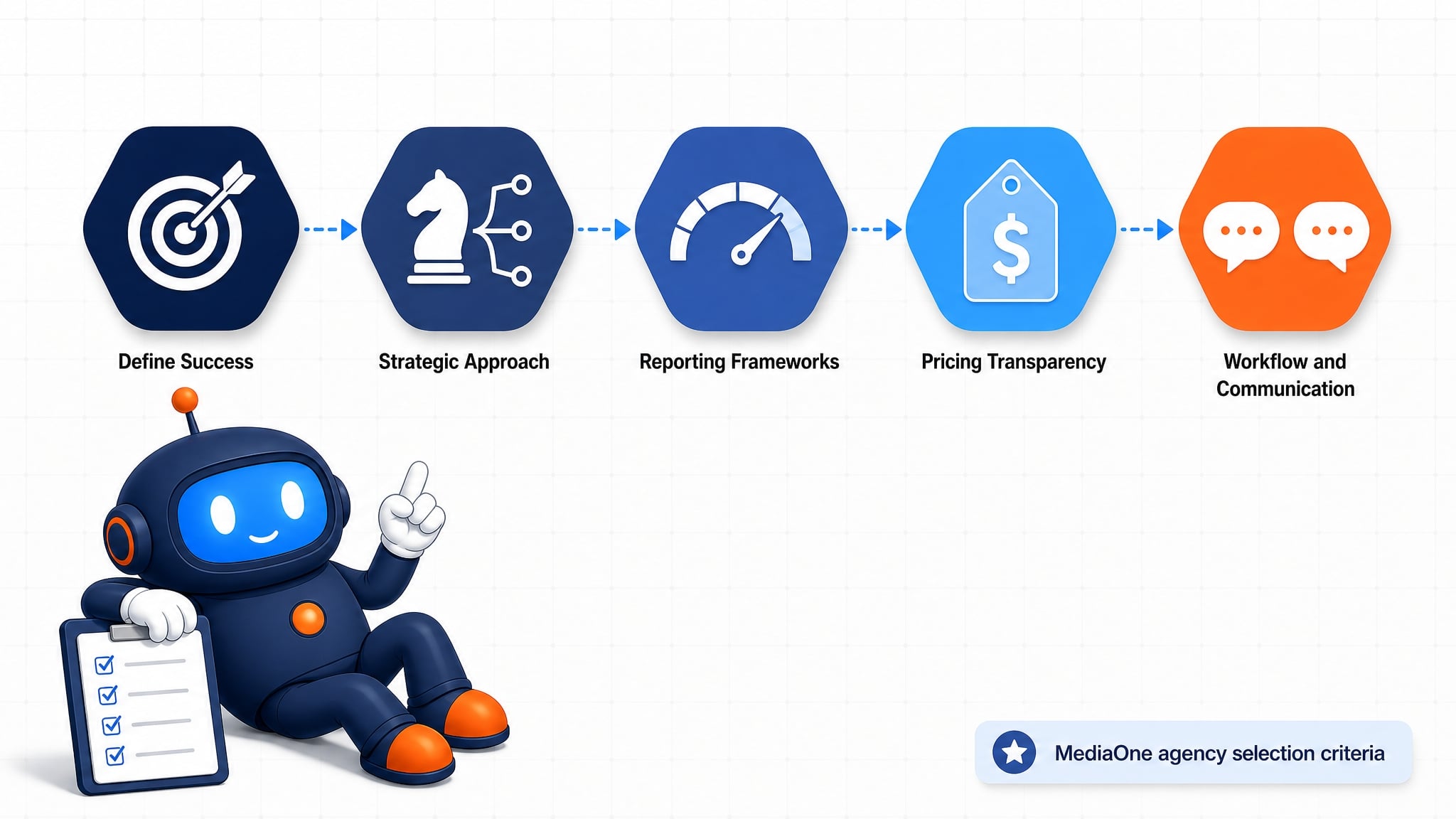
Choosing the right KOL marketing partner starts with understanding what your brand actually needs. Not every provider offers the same approach, network, or level of strategic support. The right partner aligns with your campaign goals, target audience, budget, and expectations for reporting, execution, and long-term brand value.
-
Define what your success looks like
Some brands prioritise awareness, while others measure traffic, leads, or product sales. Clear goals allow KOL partners to recommend relevant creators, platforms, and content strategies.
Evaluate the provider’s strategic approach rather than its KOL database alone. A strong partner explains how KOLs, content formats, and distribution work together to achieve your goal. They demonstrate a structured vetting process aligned with the five-layer trust audit described above.
-
Compare reporting frameworks
KPIs should match your campaign objective. Awareness campaigns may focus on reach and resonance, while performance-driven campaigns prioritise clicks, leads, or conversions.
-
Check pricing transparency
For specific cost considerations, see our influencer marketing pricing in Singapore resource for detailed rate cards. For attribution methodology, see how MediaOne approaches influencer marketing ROI tracking.
-
Assess workflow and communication
A well-structured process keeps campaigns moving on time and reduces friction between brand, partner, and KOL.
A small but telling signal we recommend clients look for is how a potential partner answers questions they cannot fully answer. For example, providers who give confident but vague responses to specific operational questions, such as how they handle takedowns or saturation thresholds, tend to underdeliver later in execution. Partners who say they do not know, but commit to a specific response timeline, are generally more reliable to work with.
The China to Singapore KOL Translation Problem
Many Singapore brands import KOL frameworks directly from mainland China, particularly tactics built around Xiaohongshu, Douyin, and Weibo. These frameworks often fail in Singapore for three reasons.
Regulatory environments differ significantly. Mainland China platforms allow direct in-feed transactions through integrated payment rails. Singapore lacks the equivalent WeChat-style commerce infrastructure, which means the seamless content-to-purchase conversion that drives Chinese KOL campaigns does not translate cleanly.
Consumer cynicism levels differ. Singapore audiences read English content with stronger scepticism toward overt promotional formats, and disclosure expectations are higher.
The trust shortcuts available in mainland China do not exist locally. Singapore consumers respond better to softer integrations, third-party reviews, and content that feels editorial rather than transactional.

In one campaign we ran for a regional skincare brand expanding from Shanghai to Singapore, the original Xiaohongshu-style hard-sell format produced a save-to-view ratio less than half of what the brand expected. When we rebuilt the same campaign around an editorial-style format with the same KOL casting, the engagement quality changed within the first 72 hours. The lesson stuck with our team. Singapore audiences punish promotional formats that work elsewhere in Greater China, and brands that ignore this often spend the first month of a campaign learning what the second month should have been.
A practical translation framework adapts the China-tested KOL formats by retaining the structural rhythm, such as the unboxing reveal, the comparison demo, or the day-in-the-life format, while shifting the tonal cues to Singapore reader expectations.
Multilingual KOL Targeting Across Singapore’s Language Communities
Singapore is one of few markets where four language communities, English, Mandarin, Malay, and Tamil, coexist within the same advertising audience.
A campaign that runs only in English misses Mandarin-speaking households that engage primarily with Xiaohongshu and Mandarin TikTok content. A campaign that runs only in Mandarin misses Malay-speaking audiences that engage with KOLs producing Bahasa Melayu content. Tamil-speaking audiences engage with their own community KOL ecosystem with its own platform preferences and content rhythms.
Effective multilingual KOL targeting layers a campaign across two or three language communities, often using different KOLs to reach the same household through different language entry points, which mirrors patterns covered in our social media influencer marketing strategy guidance. A Mandarin-speaking parent and an English-speaking teen in the same household will encounter the campaign through different KOLs, which strengthens recall through repetition without forcing identical messaging.
From our internal campaign reviews, brands that run dual-language KOL layers consistently produce higher household-level reach than brands running single-language casts, even when total spend is held constant. Our strong opinion is that single-language KOL leaves value on the table for almost every consumer brand in Singapore, regardless of where the primary audience sits on the language spectrum.
KOL Content Half-Life and the Algorithmic Decay Curve
Most KOL campaigns are evaluated within the first 72 hours of a post going live. After that window, traditional engagement reporting tails off and brands assume the campaign has run its course.
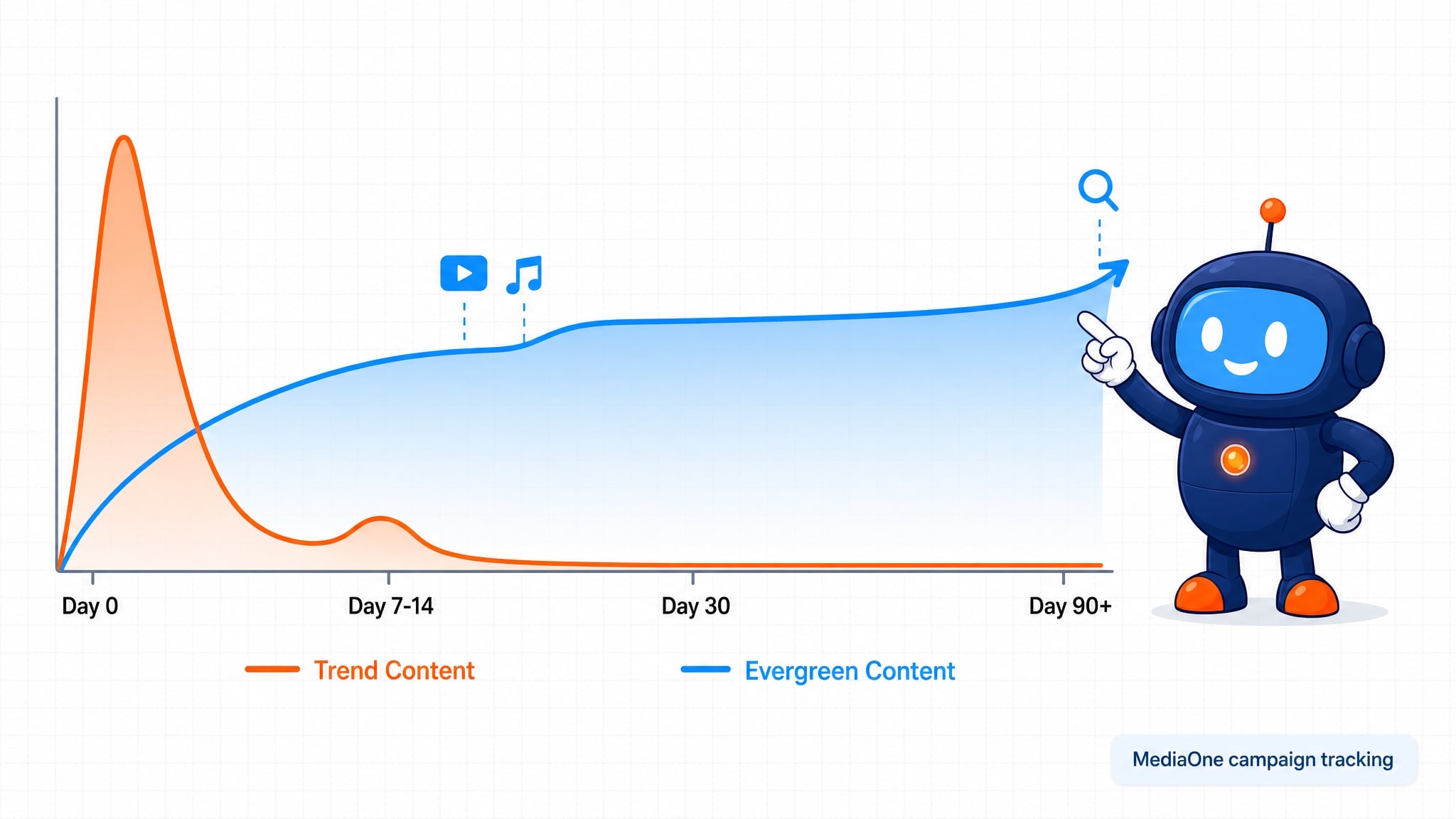
Instagram Reels and TikTok content often see secondary engagement spikes between 7 and 14 days after publishing when the algorithm pushes the content to lookalike audiences. Xiaohongshu content can continue surfacing in search results months after the original post, because the platform behaves more like a search engine than a feed.
Evergreen KOL formats, such as how-to tutorials, structured comparisons, and category explainer videos, extend the commercial half-life by months because they serve continuous discovery intent rather than one-time entertainment.
From our own campaign tracking, evergreen-format KOL posts continue producing measurable engagement and link clicks for our clients well beyond the 30-day mark, sometimes past 90 days. Event-based or trend-tied content rarely sustains beyond two weeks. Our position is firm on this point. If your KOL brief defaults to timely or trend-tied creative without an evergreen anchor, you are underbuilding the campaign before it launches.
Five Layer Trust Audit for Vetting Singapore KOLs Before Contracting
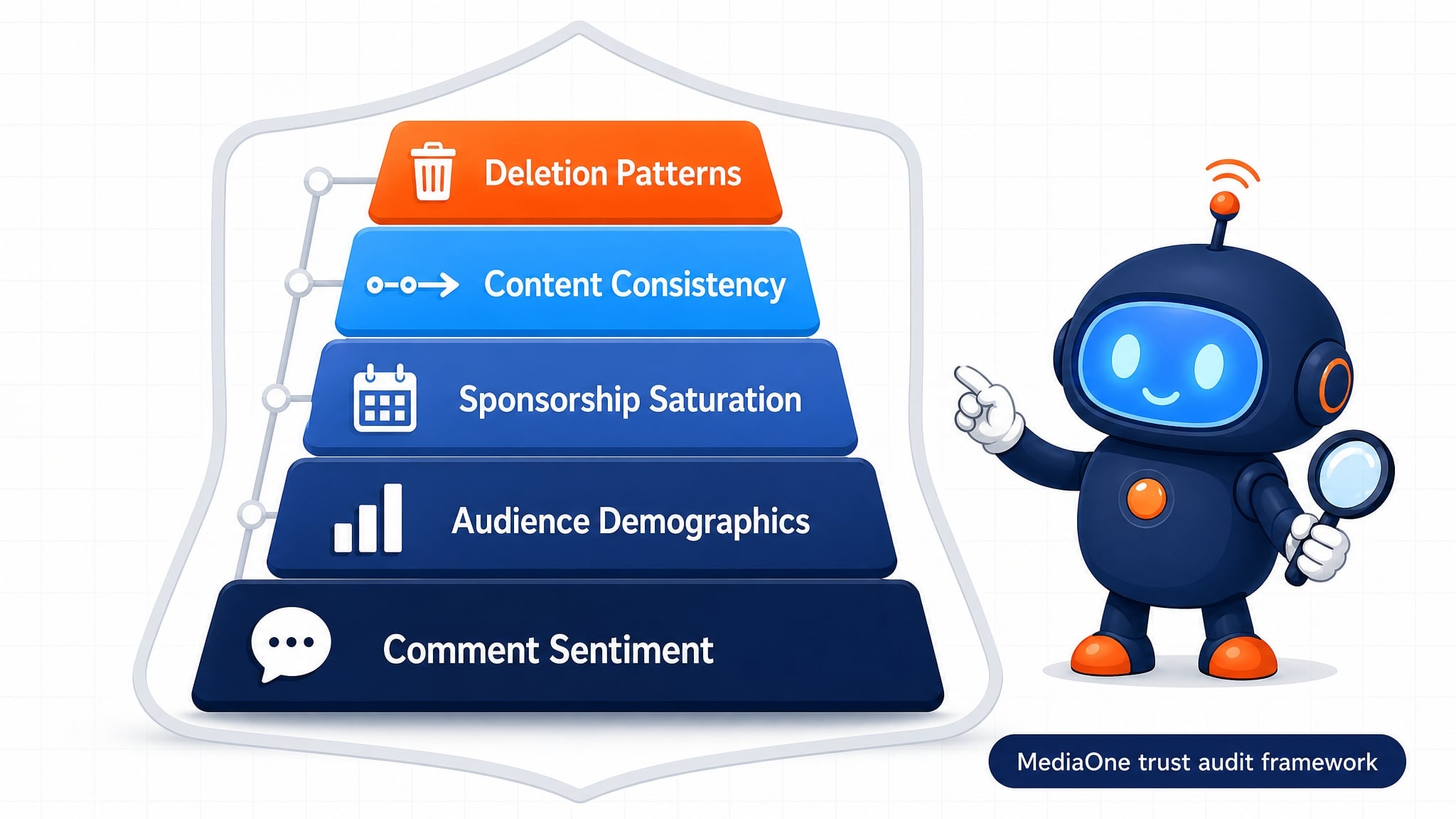
Beyond fake followers and engagement pods, this five-layer trust audit gives brands a defensible due-diligence record before signing a KOL contract. We developed this framework after several campaigns where standard agency vetting missed warning signs that would have been visible with deeper investigation.
-
Comment Sentiment Analysis
Read 50 comments across the KOL’s last 10 posts to identify whether engagement feels organic or templated. Look for repetitive phrasing, generic praise, and emoji-heavy responses that suggest engagement farming.
-
Audience Age-band Verification
Using native platform demographics through TikTok Creator Marketplace or Meta Creator Marketplace. Confirm that the KOL’s stated audience matches the demographics that platforms actually report.
-
Sponsorship Saturation History
Count the number of sponsored posts in the last 90 days. A KOL averaging more than two sponsored posts per week is approaching audience fatigue, regardless of how strong their engagement rate appears at the surface.
-
Content Consistency over 12 Months
Has the KOL maintained the same niche, or have they pivoted topics? Pivot history signals audience instability and weakens the case that current followers reflect the original audience profile.
-
Post-deletion Patterns
A high deletion rate often indicates either community pushback on past content or sponsorship cancellations that were quietly removed.
Brands who insist on this five-layer audit before contracting almost never end up with a problem KOL on their roster. Brands that skip the audit, even one out of five layers, usually discover an issue late in the campaign cycle when the cost of correction is highest.
This investigative framework goes beyond standard agency vetting and produces an audit trail that brands can defend internally, complementing the deeper data driven matching approach explained in how influencer marketing agencies use data to match brands.
KOL Marketing in Restricted Categories Most Providers Avoid
Most KOL providers steer clear of categories that carry complex regulatory or audience sensitivity considerations. The categories below each require their own creative discipline, briefing depth, and contractual safeguards.
Alcohol
Alcohol KOL content in Singapore must comply with platform age gating requirements and avoid any creative that could appeal to audiences under 18. This means no school settings, no youth coded language, no influencers whose audience skews young, and no promotional formats that reward excessive consumption. Brands should also align creative with the Singapore Code of Advertising Practice on alcoholic drinks, which sets specific tone and imagery boundaries that platform rules alone do not cover.
Fertility
Fertility content sits at the intersection of medical sensitivity and emotional vulnerability. KOL briefs in this category should avoid promissory language around success rates, timelines, or guaranteed outcomes. The creative direction should focus on education, support, and access to qualified professionals rather than testimonial style claims. Disclosure of any clinical affiliation between the KOL and the sponsoring brand strengthens audience trust and reduces exposure under the ASAS Guidelines on Interactive Marketing Communication and Social Media.
Mental Health
Mental health KOL content requires creator screening for lived experience credibility, alignment with recognised mental health frameworks, and creative that avoids stigmatising language. Brands should brief KOLs with explicit do not say lists, include signposting to qualified support services, and avoid framing the brand or product as a substitute for professional care. Live formats and comment sections also need active moderation given the risk of distressing exchanges between viewers.
Dietary Supplements
Dietary supplements fall under Health Sciences Authority oversight in Singapore. KOL claim language must stay clear of medical assertions, disease treatment claims, or before and after framings that imply guaranteed physiological outcomes. Brands should also reference the Ministry of Health requirements on health supplement advertisements, which set out the penalties for non compliant promotional content. Briefs should include a pre approved claims library, a list of prohibited phrases, and a clear path for the KOL to escalate creative questions before posting goes live.
Religious Products
Religious products require sensitivity to interfaith dynamics within Singapore’s diverse population. Briefs should be reviewed by team members familiar with the relevant tradition, avoid syncretic imagery that could offend any community, and refrain from comparative framings that position one belief system against another. KOL casting should reflect community standing within the relevant audience rather than general lifestyle appeal.
Political Adjacent Content
Political adjacent content carries elevated brand risk and increased platform moderation exposure. Even when the underlying product is commercial, association with public figures, current affairs commentary, or policy debate can attract scrutiny from regulators and audiences. Brands should restrict KOL creative latitude in this category, require legal review at multiple stages, and avoid creators whose recent content history includes partisan commentary. Personal data captured through campaign activity must also align with the Personal Data Protection Act overview when audience targeting touches on political or sensitive demographic data.
We have taken on KOL campaigns in some of these restricted categories where other providers declined to bid. The lessons from those campaigns shape how we approach sensitive briefs today. We require longer creative review cycles, retain legal review at multiple stages, and brief KOLs with explicit do-not-say lists rather than open creative latitude. Brands operating in these categories should expect higher KOL fees, longer briefing cycles, and contractual clauses that protect both parties from regulatory exposure.
How to Measure KOL Burnout Using the Saturation Index
What happens when a KOL works with too many brands in quick succession?
The audience desensitises. Engagement rates drop. Comment sentiment shifts toward dismissive humour or open scepticism. The KOL becomes a less valuable conversion partner even if their follower count continues to grow.
The saturation index is a simple leading indicator. Count the public sponsored-post markers, #ad, #sp, #gifted, and #endorsed, across the KOL’s last 90 days of content. Divide by total posts in the same window.
A saturation rate above 35% typically signals approaching burnout. Above 50% signals an audience that has tuned out promotional content entirely.
One observation from our shortlisting calls with clients is that the KOLs brands most often requested by name are frequently the most saturated. Popularity within the marketing community does not equal commercial value to your campaign. Singapore brands can use the saturation index to filter potential KOLs during shortlisting, before fee negotiation or contracting.
KOL Crisis Management and Reputation Bleed Protection
Almost no existing KOL content covers the downside scenario. What happens when a KOL faces a personal scandal, public backlash, or regulatory action mid campaign?
Live commerce formats amplify this risk further, since unscripted on camera moments between co hosts can escalate within minutes and spread across short form clips before a brand team can respond. Singapore brands running live shopping activations should treat the live session itself as a higher risk surface than a pre recorded post and write their crisis clauses with that exposure in mind.
Singapore brands should contractually require the following before signing any KOL agreement.
- Morality clauses that allow termination if the KOL engages in conduct that materially damages the brand’s reputation, drafted in line with Singapore contract law.
- Content takedown protocols specify response timelines, who removes what, and how takedowns are coordinated across the KOL’s owned channels and the brand’s amplification placements.
- Joint statement procedures defining who speaks publicly if the campaign is paused or pulled, and which legal team approves the wording before release.
- Indemnification clauses that protect the brand from third-party claims arising from the KOL’s content or actions during the contracted period.
Our firm view is that morality clauses in KOL contracts remain the single most under-discussed protection in the industry. The legal cost of adding one is measured in hundreds of dollars at the contracting stage. The reputational cost of not having one, when a campaign collides with a creator’s personal controversy, is often measured in tens of thousands of dollars in pulled inventory, refunded media spend, and crisis communications. Brands that build these protections into the standard KOL contract template often avoid the most expensive consequences of working with creators who later face public criticism, an issue that becomes more visible as the future of influencer marketing in Singapore shifts toward longer term creator partnerships.
How PDPA and ASAS Guidelines Shape KOL Disclosure in Singapore
The Personal Data Protection Act affects how KOLs collect and process audience research data, particularly when running audience polls or surveys connected to a brand campaign. Brands sponsoring this kind of research must verify that consent flows comply with PDPA expectations.
The Advertising Standards Authority of Singapore sets clear expectations on disclosure language for influencer and social media campaigns. Sponsored content must carry visible markers such as #ad, #sp, or #sponsored on the post itself, not just in profile bio sections.
Disclosure violations have led to public complaints in Singapore, and platforms now apply algorithmic penalties to posts that omit required disclosures. Brands should require KOLs to confirm in writing that all sponsored content carries compliant disclosure language before posting goes live, and that any audience data collected during the campaign aligns with PDPA principles.
Find the Right KOL Influencer Marketing Partner for Your Brand
Building a strong KOL influencer marketing programme in Singapore is the difference between campaigns that generate noise and campaigns that move your brand forward. The real challenge is finding a partner who understands local language communities, applies disciplined trust audits, anticipates burnout patterns, and protects your brand from downside scenarios that less experienced providers ignore.
For brands ready to scope a KOL programme that combines strategy, execution, and protective contracting, MediaOne brings deep Singapore market knowledge through our influencer marketing agency in Singapore. Start the shortlist conversation with MediaOne to map your programme against trust audit, multilingual targeting, and contract protection benchmarks.
Frequently Asked Questions
What Is the Difference Between a KOL and an Influencer?
A KOL, or Key Opinion Leader, is typically recognised for expertise in a specific industry such as finance, beauty, healthcare, or technology, and is followed for their professional credibility. An influencer is a broader term that includes lifestyle creators and entertainers who build audiences through relatability rather than expertise. KOLs generally drive stronger conversion in considered-purchase categories, while influencers often perform better for impulse and lifestyle products.
How Long Does the KOL Burnout Effect Take to Set In?
Burnout signals typically emerge once a KOL averages more than two sponsored posts per week over a 90-day window. Engagement rates begin softening between weeks four and eight of consistent over-posting, and audience comment sentiment becomes the leading indicator before metrics show measurable decline. Brands can monitor the saturation index before contracting to avoid working with KOLs already approaching this point.
Can KOL Influencer Marketing Work Across Different Language Communities in Singapore?
Yes, and layered multilingual KOL casts often outperform single-language campaigns in Singapore. A campaign running across Mandarin and English KOLs simultaneously can reach the same household through different family members, which strengthens recall. Malay and Tamil KOL ecosystems are smaller but highly engaged within their respective communities, making them valuable for category-specific brands.
How Do You Audit a KOL’s Trustworthiness Before Contracting?
Apply a five-layer trust audit covering comment sentiment, audience demographics, sponsorship saturation history, 12-month content consistency, and post-deletion patterns. This goes beyond standard follower checks and produces a defensible due-diligence record for internal stakeholders.
What Crisis Protections Should Be Included in a KOL Contract?
A defensible KOL contract should include morality clauses aligned with Singapore contract law, content takedown protocols with defined response timelines, joint statement procedures for public communication, and indemnification clauses protecting the brand from third-party claims arising from the KOL’s conduct during the contracted period.
How Do I Choose the Right KOL Influencer Marketing Agency in Singapore?
Start by matching the agency’s category experience to your brief, then test their answers to operational questions such as how they handle takedowns, saturation thresholds, and multilingual casting. Ask for two campaign teardowns with named KPIs, the cost per measurable outcome, and the crisis scenarios that arose during execution. Agencies that respond with specific timelines, named tools, and contract clauses tend to be stronger operational partners than those who reply with broad capability claims.