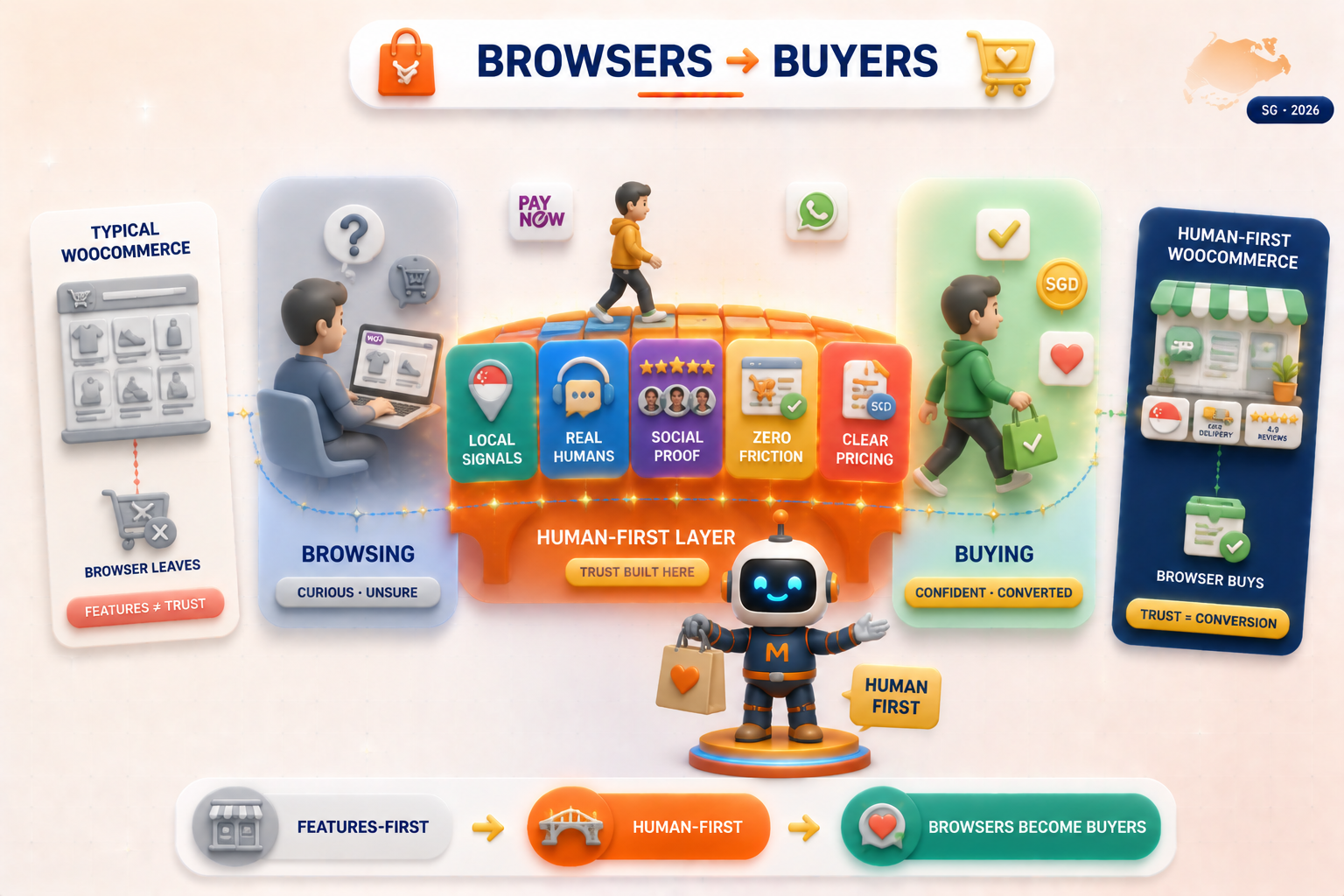
You have built your WooCommerce store. The products are live, the checkout works, and everything looks ready for business.

There is just one rather important thing missing: customers.
Launching an online store does not automatically give people a reason to visit it, trust it, or buy from it. Even attracting thousands of visitors means little if they leave without adding anything to their carts.
That is where WooCommerce marketing comes in to encourage casual browsers to become loyal customers.
Effective ecommerce marketing is not simply about adding another pop-up to an already crowded screen. The hard sell is rarely the answer to actually making a sale. Behind every click is a person deciding whether your product deserves their money and trust.
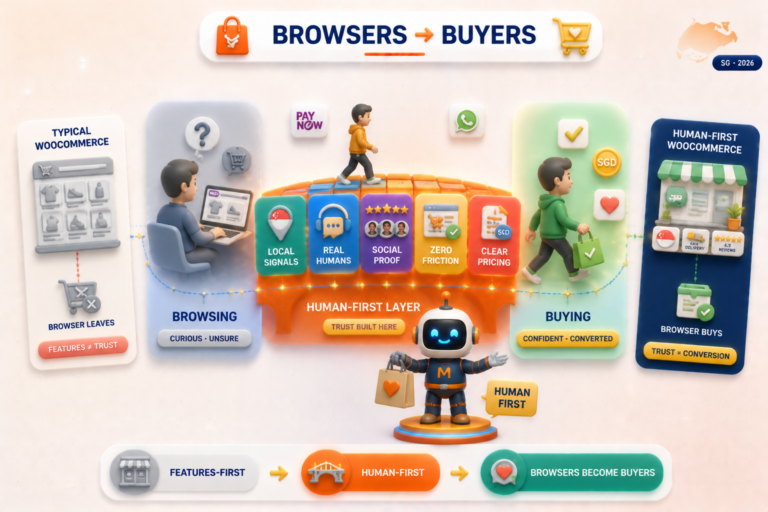
A human-first WooCommerce marketing strategy considers that person at every stage. It helps the right shoppers find you, gives them useful reasons to stay, removes unnecessary barriers to purchasing, and continues the relationship after checkout.
The technology powers the store. Good marketing makes people want to shop there.
Key Takeaways
- Effective WooCommerce marketing covers the entire customer journey, from discovery and product research to checkout and repeat purchases.
- AI-assisted search and shopping are creating new paths to product discovery, making clear, accurate product information increasingly important for both shoppers and emerging search experiences.
- Strong product pages combine search optimization with useful copy, visuals, reviews, and information that addresses real customer questions.
- Cart recovery works best when businesses consider why shoppers leave rather than automatically reaching for another discount.
- Email, content, social media, SEO, and automation should work together instead of operating as disconnected marketing channels.
- The right marketing technology should solve an identifiable customer problem, whether that means recovering an abandoned cart, reducing checkout friction, or improving retention.
- More marketing tools do not necessarily mean better marketing. Start with the customer problem and choose technology that helps solve it.
What Is WooCommerce Marketing?
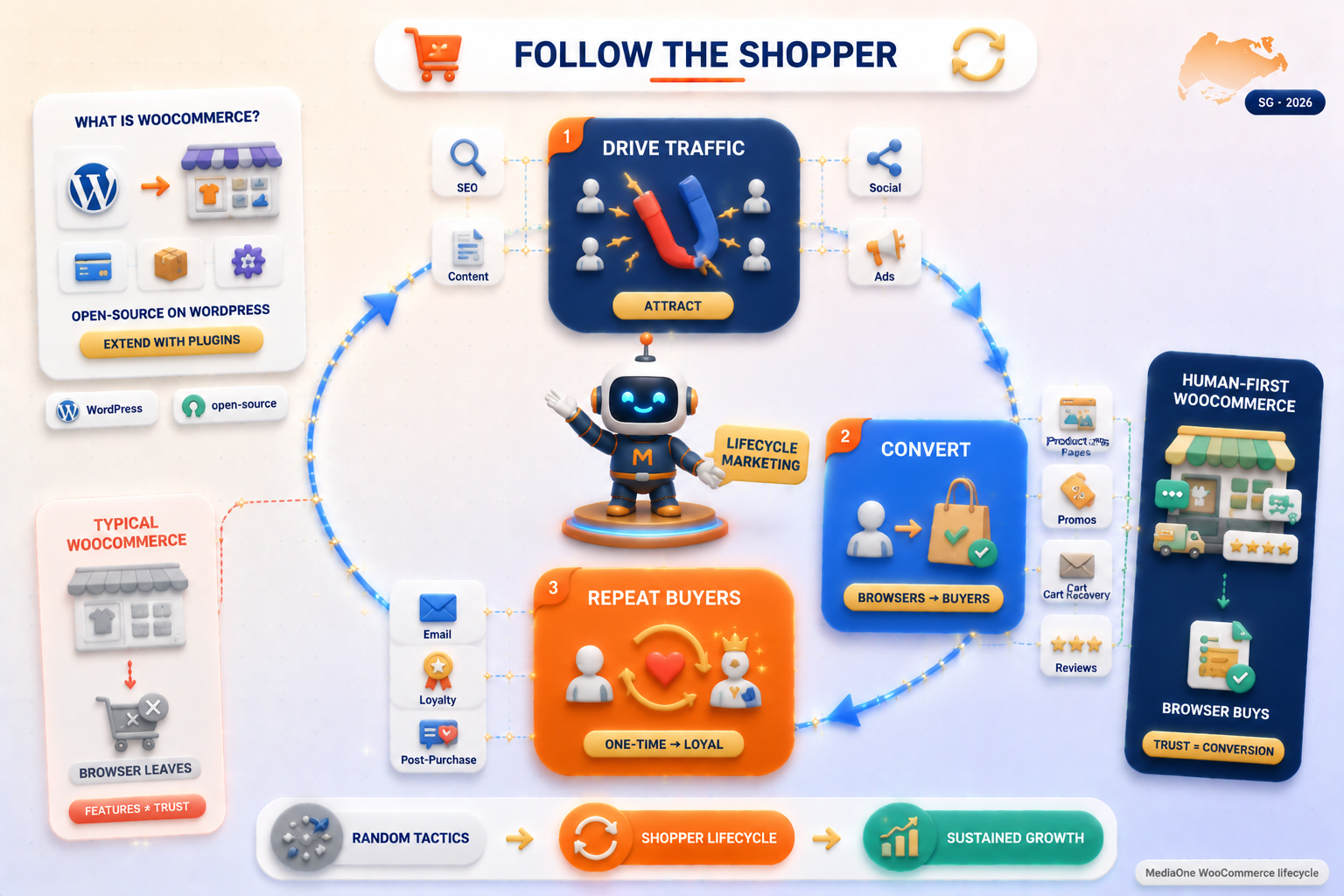
WooCommerce is an open-source ecommerce platform built on WordPress. It allows businesses to transform WordPress websites into online stores where they can showcase products, accept payments, manage orders, configure shipping, and extend functionality through integrations and plugins.
WooCommerce marketing refers to the strategies used to attract potential customers to those stores and encourage them to buy.
That can include the following:
- Search engine optimization (SEO)
- Content marketing
- Email marketing
- Social media
- Paid advertising
- Product page optimization
- Promotions and loyalty programs
- Cart recovery
- Customer reviews
- Post-purchase marketing
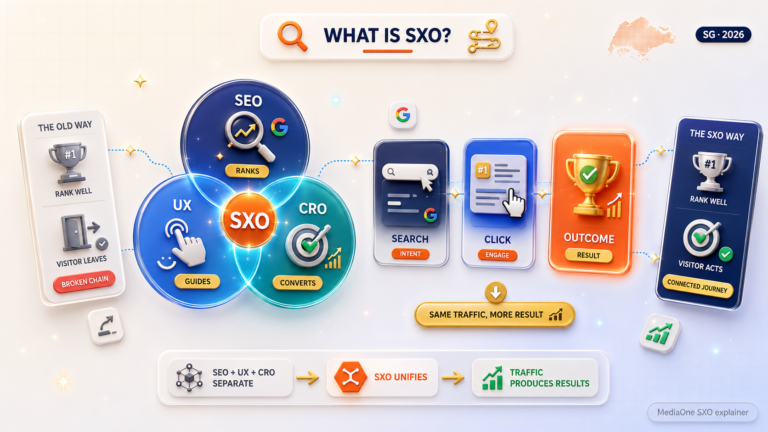
WooCommerce describes its own marketing ecosystem around three particularly useful goals: driving traffic, converting shoppers, and turning one-time buyers into repeat customers.
That is also a useful way to stop thinking about marketing as a collection of unrelated tactics. Instead, follow the shopper.
WooCommerce Marketing for Singapore Shoppers
Human-first marketing also means understanding the market your customers actually live in. For WooCommerce businesses targeting Singapore, that means making the shopping experience feel familiar, convenient, and locally relevant.
Start with checkout. Singapore shoppers are used to a highly digital retail environment, so payment and delivery options can become part of the customer experience rather than mere backend details. WooCommerce supports Singapore merchants and local payment options such as GrabPay through WooPayments.
Clear pricing in SGD, transparent delivery expectations, and familiar payment choices can remove friction before a shopper has time to reconsider the purchase.
Local competition matters too. A WooCommerce store is not only competing with other independent websites. Customers may also be discovering products through marketplaces, social media, and international sellers. To that effect, the following are crucial:
- Locally relevant search terms
- Accurate product information
- Responsive customer service
- Clear shipping policies
Singapore businesses should also consider how customer data is used after the sale. Email automation and personalization can make marketing more relevant, but businesses operating in Singapore still need to handle personal data and marketing consent responsibly under the Personal Data Protection Act (PDPA).
Step 1: Give the Right People a Reason to Click
Before you worry about conversions, your target audience needs to discover your store.

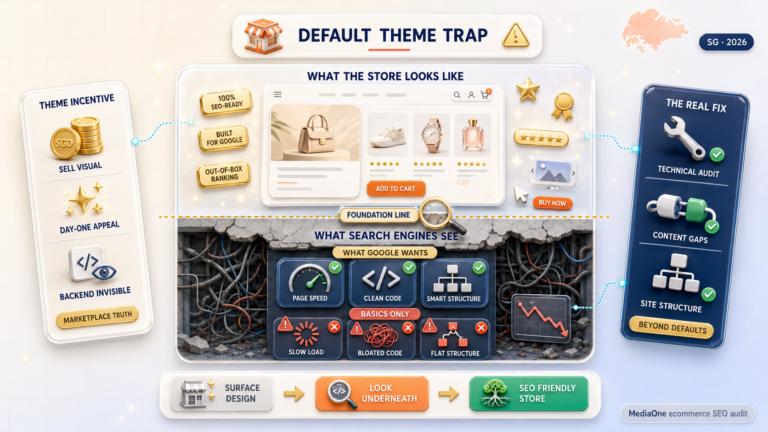
SEO is one obvious starting point. WooCommerce runs on WordPress, giving merchants access to its extensive content publishing capabilities alongside ecommerce functionality. That creates opportunities to target searches beyond individual product names.
Imagine you sell running shoes. A product page optimized only for “women’s running shoes” enters a competitive search environment. Useful content can meet shoppers earlier in their decision-making process through searches such as:
- How should running shoes fit?
- Best running shoes for beginners
- When should you replace running shoes?
- Road vs trail running shoes
- How to choose running shoes for long distances
Keep in mind that the goal is not to squeeze a product link into every paragraph. Answer the question properly, then give readers a logical path toward relevant products.
For a Singapore retailer, that can also mean considering local intent, from searches such as “women’s running shoes Singapore” to questions about local availability, delivery, or store pickup. That local focus matters in a highly connected market, with IMDA tracking online purchasing as one of the key indicators of Singapore’s digital society.
WooCommerce also supports integrations that can connect product catalogs with channels such as Google, Meta, TikTok and Pinterest. This allows products to appear where potential customers are already searching, scrolling, or comparing options.
Nevertheless, visibility is only the first victory. A search result, social post, advertisement, or article still has to make someone care enough to click. This is why appealing to human emotion is the heart of every marketing effort.
Write for search intent, not simply search engines
Keywords tell you what people type. Search intent helps explain what they actually want.
Someone searching “buy blue ceramic coffee mugs” is probably much closer to purchasing than someone searching “best material for coffee mugs.”
Both searches can be valuable. They simply require different content.
Before creating a page, ask:
- What is this person trying to accomplish?
- What information would help them make the next decision?
- Which page on my store can genuinely provide it?
That approach makes SEO considerably more human without making it any less strategic.
Prepare for AI-Assisted Product Discovery
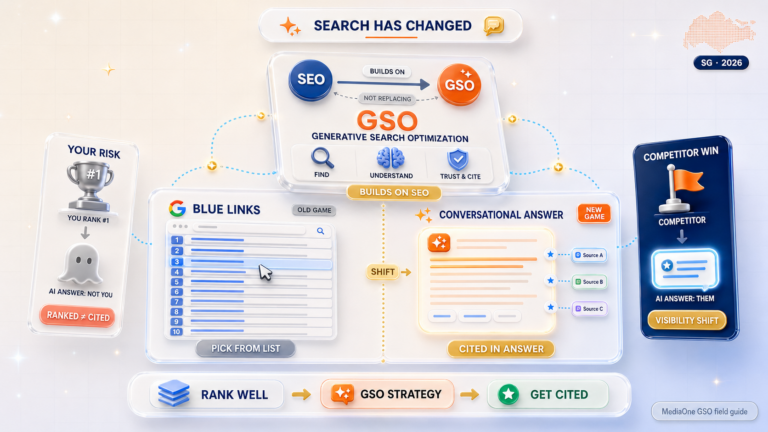
Search discovery is expanding beyond the traditional list of blue links. According to the Adyen Index 2026: Singapore Retail Report, 72% of Singaporeans have already used AI assistants to support their shopping experiences. AI-assisted search and shopping experiences can help shoppers move from broad questions and specific needs to relevant products, potentially shortening the distance between “I need something” and “this might be right for me.”
For WooCommerce stores, that makes accurate product titles, descriptions, pricing, availability, product feeds, and structured data immensely useful. The clearer the product information, the easier it becomes for emerging search experiences to understand what a store sells and surface it when relevant.
However, optimizing for newer discovery experiences should not mean abandoning the customer in favor of the algorithm. Google’s guidance continues to emphasize helpful, people-first content. Give search systems enough information to understand what you sell, but give people enough useful information to decide whether they actually want it.
Step 2: Make Your Product Pages Relatable
Getting the click is one job. Earning the purchase is another.
Product pages often have to answer the questions a salesperson would handle inside a physical shop. What does this do? Is it right for me? How big is it? Why does it cost this much? When will it arrive? Can I return it?

A generic description such as: “Premium water bottle made from high-quality stainless steel. Perfect for everyday use.” technically describes a product. However, it does very little to help someone choose it.
Compare that with:
“Keeps your morning coffee hot through the commute and your water cold through an afternoon workout. The leak-resistant lid means it can travel in your work bag without introducing your laptop to your drink.”
The second version translates product features into everyday value. Don’t tell them that the water bottle is wonderful. Instead, paint them a picture of how that water bottle can make their daily commute more wonderful. That is where human-first product copy becomes commercially useful.
Build product pages around customer questions
Strong WooCommerce product pages should make important information easy to find. Depending on the product, that could include:
- Clear product benefits and specifications
- High-quality images from multiple angles
- Video demonstrations
- Sizing or measurement information
- Delivery estimates
- Return information
- Customer reviews
- Frequently asked questions
- Related products
- A clear call to action
It is not advisable to make customers work unnecessarily hard for information you already have. Trust is often built through small moments of clarity.
Step 3: Treat Social Proof Like Evidence, Not Decoration
A brand saying its own product is great is advertising.
A customer explaining why the product worked for them is evidence.
Ratings, written reviews, customer photos, testimonials, user-generated content, and creator demonstrations can reduce some of the uncertainty surrounding an online purchase.
Still, more social proof is not automatically better social proof.
A vague five-star review saying “Great!” carries less useful information than a customer explaining how the product fits, how long delivery took, or how it performed after several weeks.
Encourage reviews that help future shoppers answer real questions.
You can also reuse genuine customer feedback across marketing channels where appropriate. A useful review can strengthen a product page, inspire social content, or reveal language customers naturally use to describe a product’s benefits.
That last point is particularly valuable. Sometimes customers tell you how to market your product better than the original marketing brief does.
Step 4: Don’t Let “Add to Cart” Become Goodbye
A shopper adds something to their cart.
Success? Not quite.
Until payment is completed, there is still room for hesitation.
People abandon carts for many reasons. Sometimes they are merely browsing. Sometimes the total becomes more expensive than expected. Sometimes checkout feels complicated. Sometimes they get distracted by 17 other open tabs and genuinely forget.
In fact, Baymard Institute places the average documented online shopping cart abandonment rate at 70.22%, based on data from 50 different studies. Its latest research also found that 42% of surveyed US online shoppers had abandoned a cart simply because they were browsing or were not ready to buy.
Before immediately offering 15% off, investigate the possible conversion friction.
Check whether your store has:
- Unexpected costs appearing late in checkout
- Too many form fields
- Unclear delivery information
- Limited payment choices
- Poor mobile usability
- Distracting checkout pages
- Missing trust or security information
For Singapore stores, that audit should also include whether customers can pay in SGD using suitable payment methods and whether local delivery costs and timelines are clear before they reach the final step.
WooCommerce supports abandoned-cart tools and email integrations that can automatically remind known shoppers about unfinished purchases.
It’s worth noting that this message does not need to sound desperate. A simple reminder showing what was left behind, answering likely concerns, and providing a direct route back to checkout may be enough.
Discounts can still work, but using them automatically teaches customers that leaving might earn them a better price.
Solve friction before subsidizing it.
A Real-World Look: When Automation Meets the Moment
A recent WooCommerce customer story offers a practical example. Luxury brand, Melt Chocolates, used WooCommerce with Klaviyo to refine its automated marketing flows, connecting ecommerce activity with targeted communications for different stages of the customer journey, including abandoned carts, abandoned checkouts, and post-purchase follow-ups. Comparing six-month periods in 2024 and 2025, the brand reported abandoned-cart revenue rising from £100 to £2,000 and abandoned-checkout revenue increasing from £4,500 to £12,000. Rather than automating more, the lesson is to make automation useful at the exact moment a shopper needs it.
Step 5: Remember the Customer After Checkout
A surprisingly common ecommerce mistake is treating payment as the finish line.
From the customer’s perspective, it is the beginning of another experience.
They are now waiting for confirmation, shipping information, delivery and, eventually, the product itself. Every one of those moments can strengthen or weaken their impression of your business.
WooCommerce includes transactional emails for events such as order confirmations and status updates, while integrations can extend email marketing into automated and personalized campaigns.
Post-purchase marketing might include:
- Useful product-care instructions
- Setup or styling guides
- Replenishment reminders
- Relevant product recommendations
- Review requests
- Loyalty rewards
- Early access to launches
- Win-back campaigns for inactive customers
The key word is relevant.
Someone who bought a winter coat yesterday probably does not need five emails this week asking whether they would like another winter coat.
Use purchase history and customer behavior to make communication more useful, not merely more frequent.
Step 6: Choose WooCommerce Marketing Tools Based on the Problem
WooCommerce’s flexibility is one of its biggest advantages. Merchants can connect tools for email, advertising, analytics, loyalty, SEO, reviews, cart recovery and much more.
That flexibility can also become a very expensive collection of plugins nobody quite remembers installing.
Start with the marketing problem rather than the tool.
|
If You Need To… |
Useful Approach |
What to Watch |
|
Attract search traffic |
SEO and useful content |
Organic clicks and relevant traffic |
|
Recover unfinished purchases |
Cart recovery automation |
Recovered carts and completed orders |
|
Encourage repeat purchases |
Email automation and loyalty |
Repeat purchase rate |
|
Build product trust |
Reviews and user-generated content |
Review quality and customer engagement |
|
Reach new audiences |
Social and paid advertising |
Qualified traffic and conversions |
|
Understand performance |
WooCommerce and web analytics |
Conversion trends and channel performance |
A Real-World Look: When the Problem Determines the Tool
Do Amore offers a practical example of starting with the problem rather than the technology. According to a WooCommerce customer story, the jewelry brand estimated it was losing at least 10% of ready-to-convert customers because it could not offer flexible payment options.
The company integrated Affirm into its WooCommerce stack to address that specific checkout barrier. Its trailing 12-month revenue from Affirm loans subsequently grew 177% year over year, while purchases made with Affirm recorded a 7.1% higher average order value than the site’s overall AOV. While not every WooCommerce store needs a “buy now, pay later” option, the right tool earns its place by solving an identifiable customer problem.
WooCommerce currently supports marketing integrations across email and CRM platforms, social and advertising channels, content and SEO, promotions, and analytics.
You do not need all of them on day one. Choose tools that solve an identifiable problem, measure whether they help, and expand your stack as your needs become more sophisticated.
Step 7: Measure What Helps You Make Better Decisions
Human-first marketing does not mean ignoring data. It simply means remembering what the data represents.
A falling conversion rate represents more people arriving without purchasing. A high cart-abandonment rate represents shoppers getting close and stopping. Low repeat purchases may suggest customers have little reason to return.
Useful WooCommerce marketing metrics can include:
- Organic traffic
- Product page conversion rate
- Add-to-cart rate
- Checkout completion
- Cart recovery
- Customer acquisition cost
- Average order value
- Repeat purchase rate
- Revenue by marketing channel
You do not need to stare at every number every morning.
Start with the business question.
If traffic is growing but sales are not, investigate what happens after visitors arrive. If first purchases are healthy but customers rarely return, examine retention. If a campaign produces clicks without orders, consider whether the audience, offer, landing page or message matches.
Analytics should tell you where to ask better questions.
Common WooCommerce Marketing Mistakes to Avoid
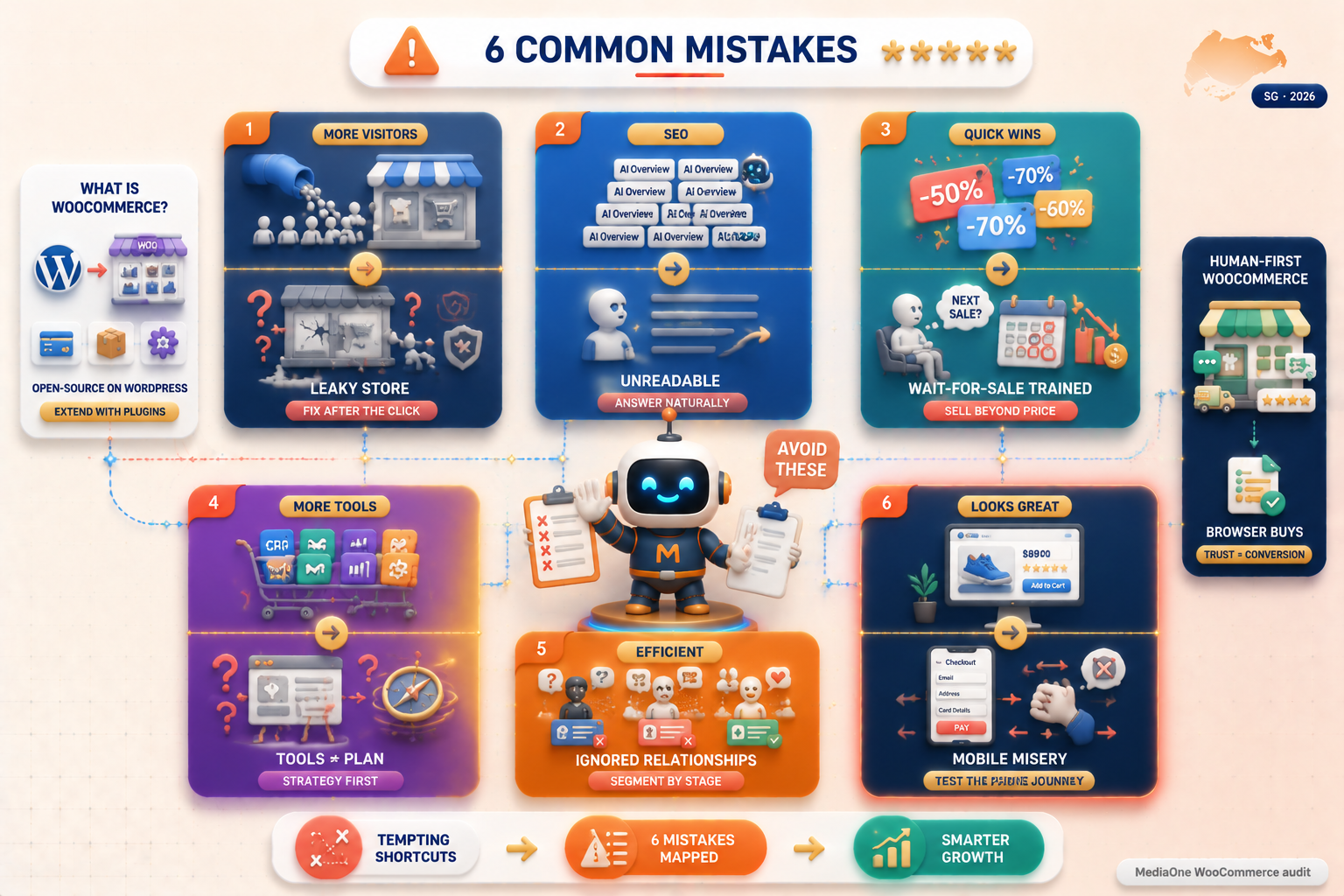
Chasing traffic without fixing the store. More visitors will not solve unclear product pages, a frustrating checkout or weak customer trust. Sometimes the smartest traffic strategy is improving what happens after the click.
Writing for algorithms instead of shoppers. Keywords matter, but awkward repetition makes content harder to read. Use relevant terms naturally while answering the question that brought someone to the page.
Discounting everything. Constant promotions can train customers to wait for the next sale. Give people reasons to buy beyond price, including usefulness, quality, convenience, service and brand experience.
Installing tools without a strategy. A plugin cannot rescue a marketing plan that does not know what problem it is solving.
Treating every customer the same. Equality matters, but good marketing could use a little equity. A first-time visitor, an abandoned-cart shopper, and a loyal repeat buyer have different relationships with your business. The marketing methods should reflect that.
Forgetting mobile shoppers. Check the entire customer journey on a phone, from discovering the page to completing payment. A desktop-perfect store can still create a miserable mobile experience.
A Simple Human-First WooCommerce Marketing Checklist
Before adding another campaign, plugin or promotion, walk through your store as if you were seeing it for the first time.
- Search for your products. Can the right customer realistically discover you?
- Read your product pages. Do they answer buying questions or simply list features?
- Test your store on mobile. Is anything awkward, slow or difficult to understand?
- Check the local experience. Are your currency, payment options, delivery information, and customer communications appropriate for Singapore shoppers?
- Complete your own checkout. Look for unnecessary steps or unpleasant surprises.
- Review your abandoned-cart process. Does it help shoppers return without immediately shouting “DISCOUNT”? The price is not always the deal breaker.
- Read your emails. Are they useful enough that you would want to receive them?
- Check what happens after purchase. Are you giving customers a reason to bookmark your store?
- Review your marketing data. Find one meaningful weakness and improve it before adding another tool.
WooCommerce marketing becomes much less overwhelming when you stop trying to optimize everything simultaneously.
Find the biggest point of friction. Fix it. Measure what changed. Then move to the next one.
Better WooCommerce Marketing Starts With the Shopper
WooCommerce gives businesses an enormous amount of control over how they sell and market online. That freedom is powerful, but it can also make marketing unnecessarily complicated.
It does not have to be. Start with the person on the other side of the screen. Help the right shoppers discover you and give them reasons to stay.
SEO, email, social media, automation, and analytics are tools for making those moments work better. Because ultimately, the best WooCommerce marketing strategy is not the one with the most plugins, campaigns or dashboards. It is the one that makes buying from you feel easy and worth repeating.
Not sure where shoppers are dropping out of your WooCommerce journey? MediaOne can help identify opportunities across search visibility, product pages, checkout, paid media, and customer retention. Speak with our digital marketing team to find out where your store could work smarter for both your customers and your business.
Frequently Asked Questions
What is WooCommerce marketing?
WooCommerce marketing is the combination of strategies used to attract shoppers to a WooCommerce store, convert visitors into customers, and encourage repeat purchases. It can include SEO, content marketing, email, social media, paid advertising, promotions, reviews, cart recovery and customer-retention campaigns.
Is WooCommerce good for marketing?
WooCommerce offers considerable marketing flexibility because it is built on WordPress and supports integrations for SEO, content, email, advertising, analytics, loyalty programs and other ecommerce functions. The best setup depends on the store’s audience, goals, and marketing strategy.
How can I market my WooCommerce store for free?
Start with tactics that require more time than advertising spend. Optimize product pages for relevant searches, publish useful content, improve internal linking, build an email list, encourage customer reviews, and create organic social content around genuine customer interests and questions.
How can I increase WooCommerce sales?
Avoid looking for one universal trick. Determine where shoppers are dropping out of the buying journey first. If traffic is low, focus on discovery. If product views are high but purchases are low, improve product pages and checkout. If customers buy once but rarely return, prioritize retention and post-purchase marketing.
Do I need lots of plugins to market a WooCommerce store?
No. More plugins do not automatically create better marketing. Start with the functions your store genuinely needs, choose reputable tools that solve specific problems, and monitor whether they improve the customer experience or business results.