If you have ever asked, “What is SEO, really?” — you are not alone.
I get this question from business owners in Singapore all the time. Some are launching a new website. Some are tired of paying for every single click. Others know they should be ranking on Google, but are not quite sure how SEO actually works.
After 15 years of helping Singapore businesses grow through search with my SEO agency, I have learned one thing: the best way to explain SEO is to strip away the jargon and focus on what actually matters.
So let me give you the straight answer.
Key Takeaways
- SEO is about improving a website’s visibility so search engines can understand and trust it, and show it to the right audience without paid traffic.
- Strong SEO combines technical structure, useful content, and authority signals to match search intent and improve rankings over time.
- SEO is a long-term growth channel that builds visibility, trust, and reduces reliance on paid ads for Singapore businesses.
- Success depends on aligning content with user intent, improving page experience, and demonstrating expertise, credibility, and trustworthiness.
- Common mistakes include generic content, keyword stuffing, weak service pages, and ineffective performance measurement.
Quick Answer: What SEO Means in Plain English
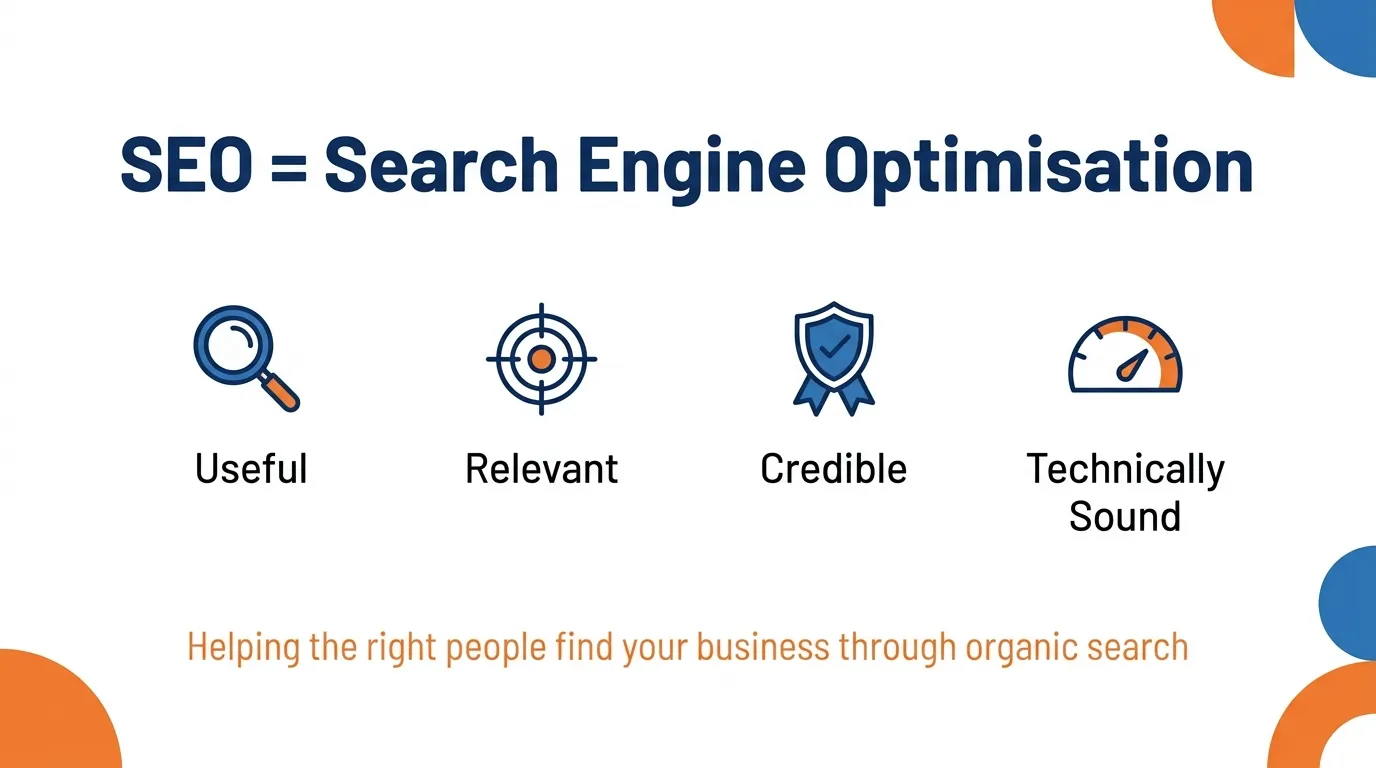
SEO stands for Search Engine Optimisation.
In simple terms, SEO is the process of improving your website so search engines can understand it, trust it, and show it to the right people when they search.
Google’s own beginner documentation explains SEO as helping search engines understand your content and helping users find your site through search.
The shortest version I can give you is this:
SEO helps your business get found online without paying for every visit.
If someone in Singapore searches for a service you offer, SEO helps your website appear in search results.
Not because you got lucky.
Not because you crammed keywords everywhere.
But because your site proves it is:
- useful
- relevant
- trustworthy
- technically sound
That is what good SEO looks like.
And if you only remember one thing from this article, remember this:
SEO is not a trick. It is a system for earning visibility.
Why SEO Matters for Businesses in Singapore
Singapore is a small market, but it is extremely competitive.

Whether you run a law firm, tuition centre, clinic, renovation company, B2B service, or eCommerce brand, your customers are already searching before they contact you.
They search things like:
- “family lawyer singapore”
- “tuition centre tampines”
- “best dentist orchard”
- “payroll software singapore”
- “aircon servicing jurong”
That is why SEO matters.
When your business appears at the exact moment someone is looking for a solution, you are not interrupting them with advertising. You are meeting existing demand.
That changes the quality of the lead.
For Singapore businesses, SEO usually delivers three business benefits at the same time:
| Benefit | What It Means |
| Better visibility | Your business appears when prospects search for what you offer |
| More trust | Organic rankings often feel more credible than ads |
| Lower ad dependence | You reduce the pressure to pay for every click forever |
Many businesses in Singapore have decent websites and good service, but they still lose business to weaker competitors simply because those competitors are easier to find.
That is the commercial significance of SEO.
How Search Engines Work: Crawling, Indexing, Ranking
Most business owners do not need a computer science lecture. But understanding the basics helps you make better decisions.
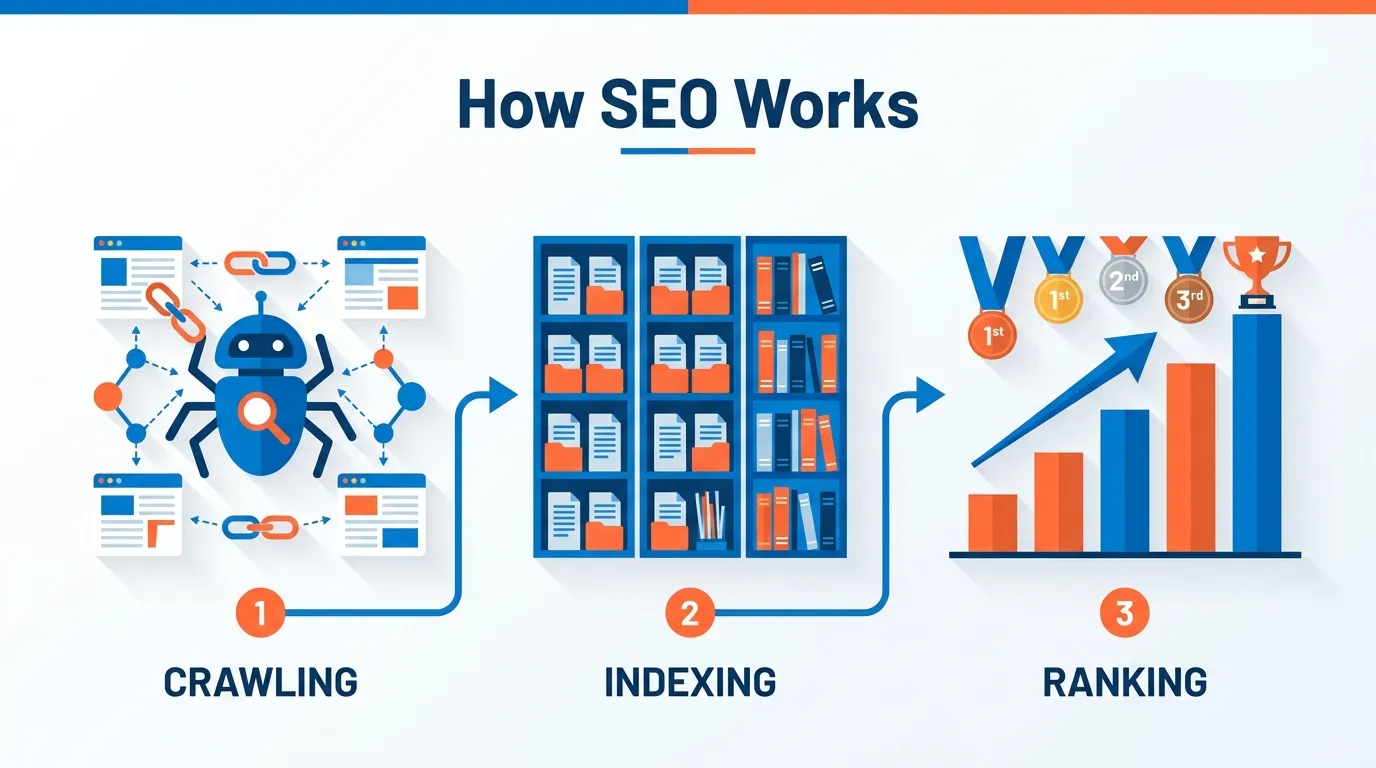
SEO works around three core search engine processes:
The Search Engine Process
You do not need a technical lecture to understand SEO. But you do need one simple mental model.
Search engines work in three stages:
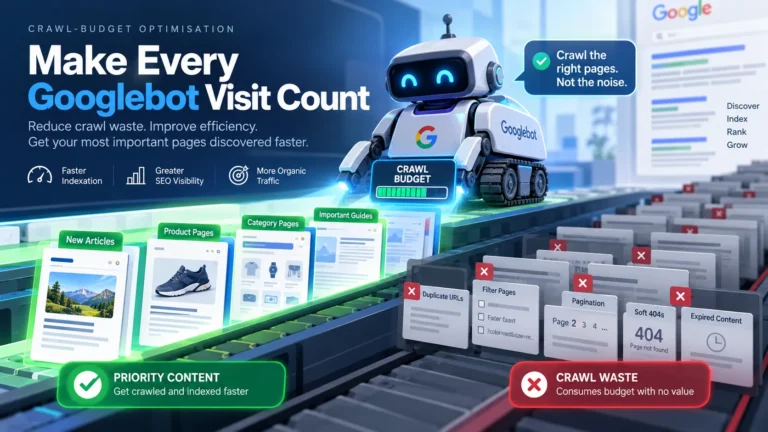
- Crawling: Search engines discover pages by following links and scanning websites with automated systems.
- Indexing: They store and organise those pages in a giant database. If your page is not indexed, it cannot rank.
- Ranking: They decide which pages should appear in search results and in what order.
Google’s beginner SEO guide frames this around helping Google find your content, organising your site well, and making your pages useful and interesting.
Here is the practical version:
- If your page is slow, thin, confusing, outdated, or unhelpful, it is harder to rank.
- If your page is clear, useful, trustworthy, and aligned with what the searcher wants, your chances improve.
That is the game.
What Actually Moves Rankings for a Small Business
If you are a busy business owner, you do not need 200 ranking factors. You need to understand the few things that move the needle most.
1. Search Intent
This is the most important one.
Search intent means: what is the person actually trying to do?
| Intent Type | What the Person Wants | Example Query | Best Page Type |
| Informational | To learn | “what is SEO” | Guide or explainer |
| Commercial | To compare options | “best SEO agency Singapore” | Comparison or category page |
| Transactional | To take action | “SEO services pricing” | Service page |
| Navigational | To find a brand | “MediaOne SEO” | Homepage or brand page |
A common mistake is targeting the right keyword with the wrong page.
If someone searches “what is SEO,” they want an explanation first — not a hard sales pitch.
2. Content Quality
Good SEO content is:
- Accurate
- Complete
- Useful
- Original
- Easy to understand
Google explicitly recommends original information, substantial value, and content that leaves the reader satisfied instead of sending them back to search again.
3. Trust
Trust matters more than polished wording.
Google’s guidance around E-E-A-T makes this clear: experience, expertise, authoritativeness, and trustworthiness all matter, but trust is the most important of the four.
For a Singapore business website, trust usually means showing:
- Who wrote the content
- Why are they qualified
- Who the business is
- How to contact you
- What proof supports your claims
4. Page Experience
A page should be easy to use.
Google’s current Core Web Vitals focus on:
- LCP for loading speed
- INP for responsiveness
- CLS for visual stability
That means your content should not just be good. It should load properly, work on mobile, and feel stable.
The 3 Main Types of SEO
You can still think of SEO in three main buckets — but as a beginner, do not overcomplicate them.
SEO Types Comparison Table
| Type | What It Means | Why It Matters |
| On-page SEO | What is on the page | Helps Google understand the topic |
| Off-page SEO | Trust beyond your site | Builds authority and credibility |
| Technical SEO | Site health and infrastructure | Makes sure search engines can access and interpret your pages |
On-Page SEO
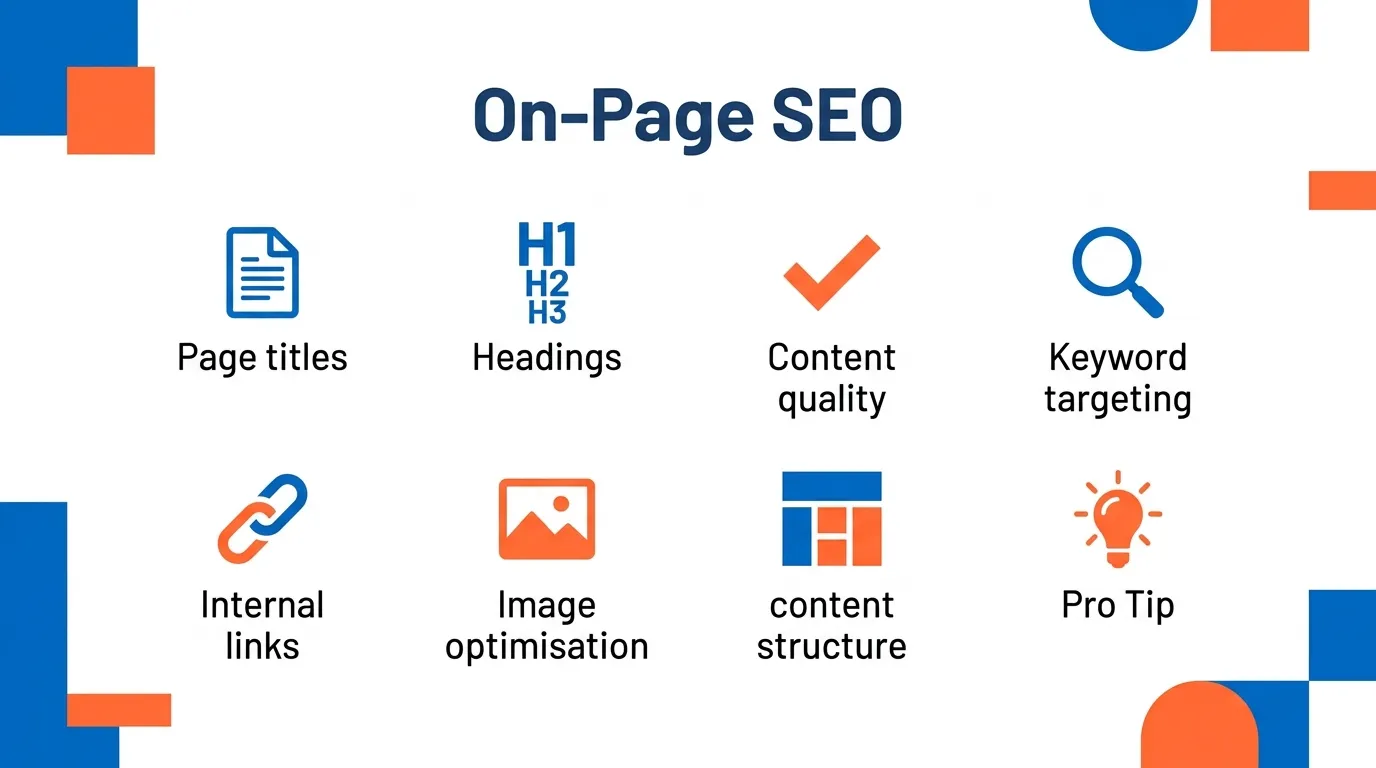
This is everything you optimise on the page itself.
It includes:
- Page titles and meta descriptions
- Headings (H1, H2, H3)
- Content quality and depth
- Keyword targeting and placement
- Internal links between your pages
- Image alt text
- Content structure and formatting
If your page is supposed to answer “what is SEO”, it should do exactly that — quickly and clearly.
Pro tip: I always check whether the page answers the query within the first 100 words. If someone has to scroll endlessly to find the answer, that is a problem.
Off-Page SEO
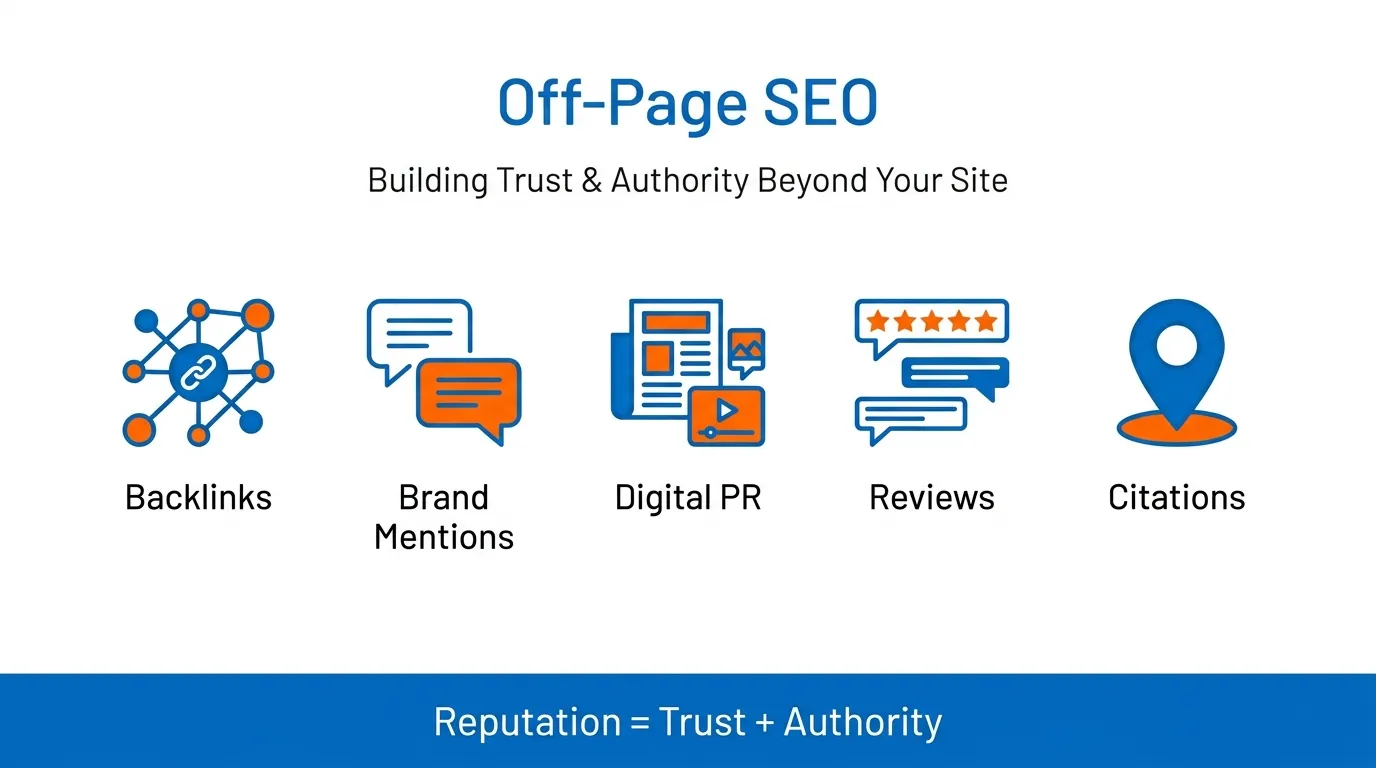
This is about trust and authority beyond your own site.
It includes:
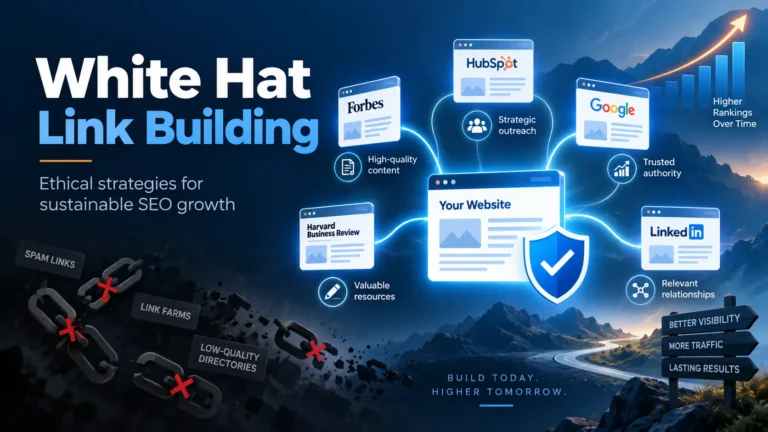
- Backlinks from relevant, reputable websites
- Brand mentions across the web
- Digital PR and media coverage
- Online reviews and ratings
- Citations in directories (especially for local businesses)
A good reputation matters. Google’s quality guidelines highlight reputation, trust, and evidence of authority as important quality signals.
Technical SEO
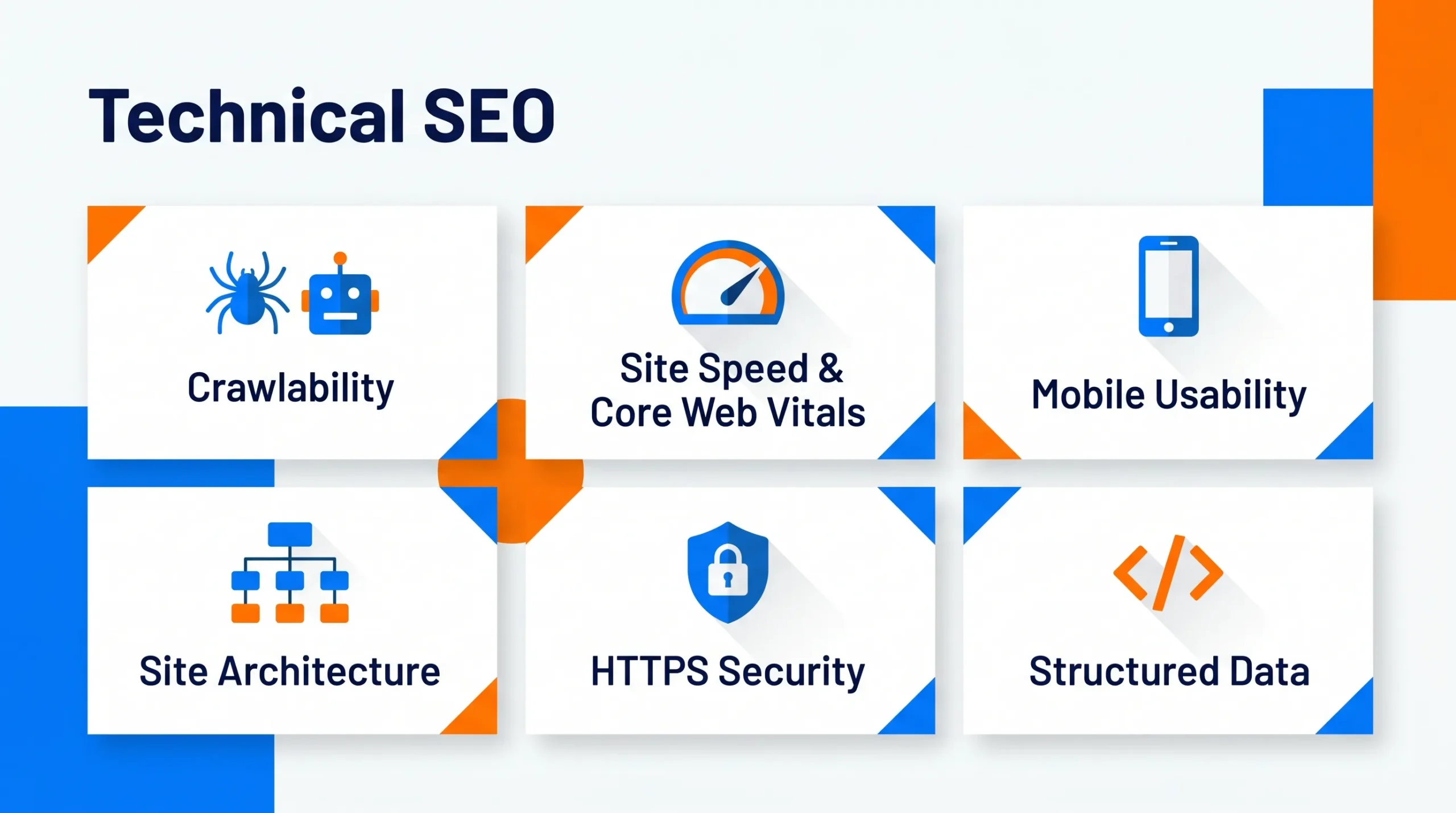
This is the infrastructure behind the scenes.
It includes:
- Crawlability (can Google access your pages?)
- Site speed and Core Web Vitals
- Mobile usability
- Clean site architecture
- HTTPS security
- Structured data (schema markup)
- Proper indexation controls
Technical SEO is rarely the flashy part. But it is often the part that stops good content from performing.
For most Singapore SMEs, the real priority is not mastering all three equally on day one.
It is making sure:
- your main service pages are clear,
- your content matches real searches,
- your site is technically usable.
What Google Actually Wants From SEO Content
This is where many people get confused. Good SEO is not about tricking Google.
Google’s own guidance says helpful content should be created primarily for people, not primarily to manipulate rankings. It also encourages clear authorship, evidence of expertise, and transparency around how content was created.
So what does that mean in practice?
It means your content should answer three questions clearly:
- Who created this? Use a real author name where it makes sense. Link to an author bio. Show qualifications or relevant experience.
- How was this created? If you used research, examples, data, testing, or AI assistance, be transparent where appropriate.
- Why was this created? The answer should be: to help the reader. That is the people-first model.
And that is a much better way to explain SEO in 2026 than old-school keyword tactics.
SEO Myths Singapore Businesses Should Ignore
This section is worth including because too many businesses still get misled by outdated advice. Google’s SEO Starter Guide directly pushes back on several low-value obsessions.
Myth 1: “I need meta keywords”
You do not. Google does not use the keywords meta tag.
Myth 2: “There is a perfect word count for ranking”
There is not. Content length alone does not make a page rank. What matters is whether the content actually satisfies the search.
Myth 3: “I should repeat the keyword as many times as possible”
No. Keyword stuffing hurts readability and can violate spam policies.
Myth 4: “If I put keywords in my domain name, I will rank faster”
Not really. A keyword-heavy domain is not a shortcut.
Myth 5: “Heading order is a ranking hack”
No. Use headings to improve structure for people. Do not obsess over myths about perfect heading order.
Myth 6: “SEO is just publishing lots of blog posts”
No. Weak content at scale is still weak content. Publishing more pages does not help if they add no value.
Myth 7: “E-E-A-T is a direct ranking factor”
Not exactly. It is a framework Google uses conceptually to assess quality and trust, not a simple checkbox signal.
If you are a Singapore business owner, this is liberating. It means you do not need gimmicks. You need a useful website.
Why the Singapore Angle Matters More Than Most Businesses Realise
A lot of SEO advice online is too global and too generic.
But local intent matters.
A person searching for “tuition centre” is not the same as a person searching for “tuition centre tampines.”
A person searching for “accountant” is not the same as a person searching for “small business accountant singapore.”
That local context changes the page you should build.
For local and service businesses in Singapore, strong SEO often depends on:
- A properly set up Google Business Profile
- Location-aware service pages
- Consistent business information across directories
- Genuine local reviews
- Clear geographic relevance in copy, titles, and internal links
Weak local page example
A page titled: “Our Services”
With vague copy like: “We provide quality legal services for all your needs.”
That page is too broad and too weak.
Stronger local page example
A page titled: “Family Lawyer in Singapore for Divorce, Custody, and Maintenance Matters”
With copy that explains:
- Who the service is for
- What matters it covers
- How the process works in Singapore
- When to contact the firm
- Why the firm is credible
That is the difference between a page that exists and a page that competes.
What Good SEO Looks Like in Real Life
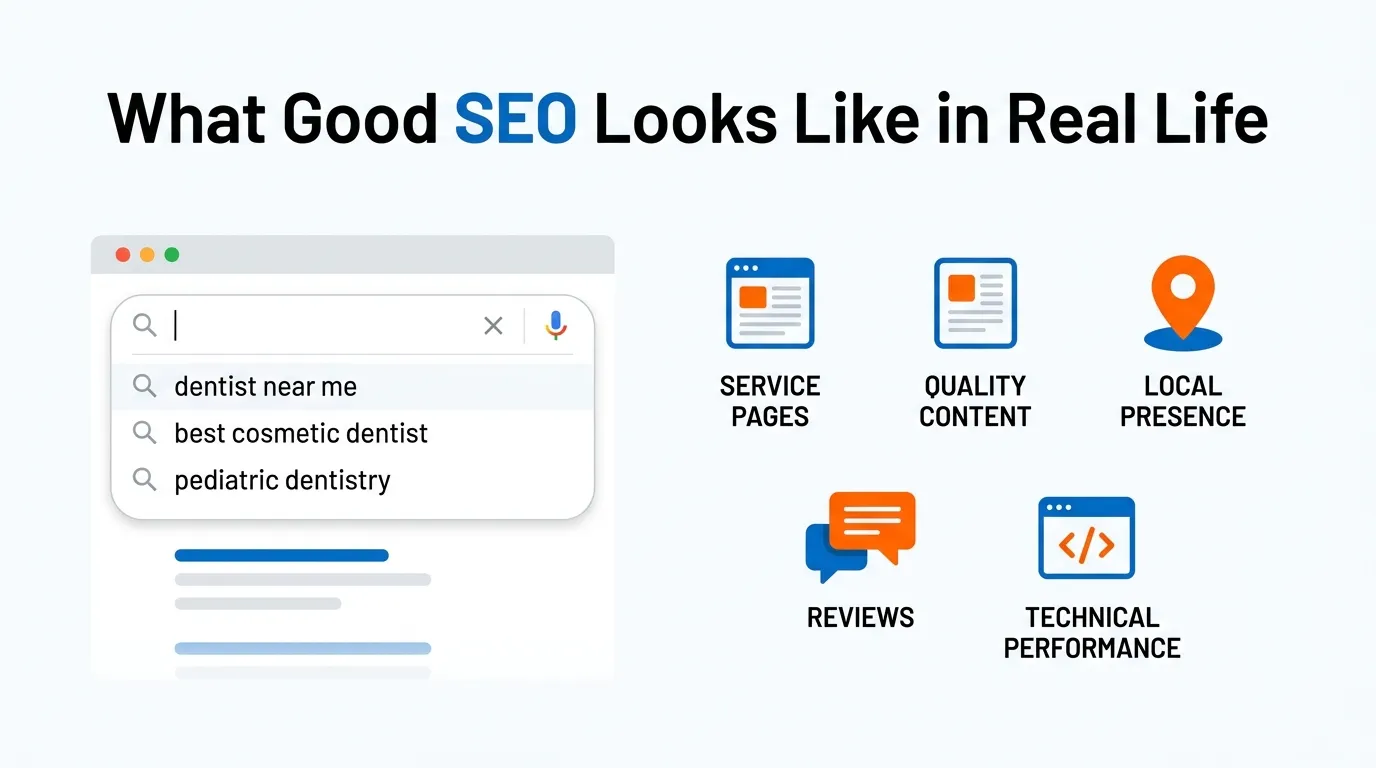
Let me make this concrete.
Imagine you run a dental clinic in Singapore.
A potential patient searches for:
- “best dentist orchard”
- “wisdom tooth removal singapore”
- “emergency dental clinic near me”
If your site has:
- a clear page for each treatment
- useful FAQs written in plain English
- location signals
- strong reviews
- good mobile experience
- fast-loading pages
your chances of appearing improve.
Now compare that with a competitor whose site has:
- one generic services page
- thin copy
- no treatment-specific pages
- no local optimisation
- poor navigation
- slow performance
Who is more likely to win?
That is SEO in action.
A simple first-hand example
I have seen pages improve not because we “did more SEO,” but because we fixed intent.
A weak service page often tries to do everything at once:
- explain the company
- define the service
- rank nationally
- rank locally
- push a lead form immediately
A stronger page focuses on one clear problem, one audience, one service, and one action.
That usually leads to better rankings and better conversions.
SEO vs PPC: What Is the Difference?
These two get mixed up all the time.
| Factor | SEO | PPC |
| Traffic source | Organic search | Paid ads |
| Cost model | Invest in content, site quality, and optimisation | Pay per click |
| Speed | Slower to build | Immediate |
| Durability | Can compound over time | Stops when the budget stops |
| Best use | Long-term growth | Immediate demand capture |
My view is simple:
SEO builds an asset. PPC rents attention.
Most Singapore businesses should not think in terms of SEO versus PPC.
They should think in terms of:
- PPC for speed
- SEO for durability
Your First 30 Days of SEO
This is one of the biggest improvements to make this article more useful for beginners.
If you are just starting, do this first.
Week 1: Get the basics in place
- Set up Google Search Console
- Set up GA4
- Make sure your site is indexable
- Check that your homepage clearly explains what you do
Week 2: Fix your core pages
- Improve your homepage title and headings
- Rewrite weak service pages
- Add clear calls to action
- Make sure each important service has its own page
Week 3: Improve local relevance
- Set up or optimise your Google Business Profile
- Standardise your business name, address, and phone details
- Add Singapore-specific copy where relevant
- Start collecting genuine reviews
Week 4: Publish one useful content piece
Write one genuinely helpful article based on a real customer question, such as:
- “How much does renovation cost in Singapore?”
- “How to choose a tuition centre in Tampines”
- “What to prepare before engaging a divorce lawyer in Singapore”
That is a better start than publishing ten generic blog posts.
Free SEO Tools to Get Started — and When to Use Them
The tools matter less than the workflow.
A beginner does not need a random stack. They need to know what each tool is for.
| Tool | Use It For | Best Time to Use It |
| Google Search Console | See what queries you already appear for, check indexing, monitor impressions and clicks | First setup, then weekly |
| GA4 | Track organic traffic, conversions, and user behaviour | First setup, then monthly review |
| Google Business Profile | Improve local discovery and map visibility | Immediately if you serve a local market |
| PageSpeed Insights | Spot performance problems affecting user experience | During audits and after design changes |
| Screaming Frog SEO Spider | Find broken pages, redirects, duplicate titles, and technical issues | During technical reviews |
| Ubersuggest | Basic keyword ideas | Early research |
| AnswerThePublic | Question-based content ideas | When planning articles and FAQs |
A simple beginner workflow
Use the tools in this order:
- Search Console → What do I already rank for?
- GA4 → Which organic pages actually drive leads?
- PageSpeed Insights → Is performance hurting the experience?
- Google Business Profile → Am I visible locally?
- Screaming Frog → Are technical issues blocking growth?
That turns the tools section from a list into an operating guide.
A Simple Search Console Example
Let’s say Search Console shows this:
- Query: “seo agency singapore”
- Impressions: high
- Clicks: low
- Average position: page 1 or page 2
That tells you something useful.
It may mean:
- your title is weak
- your meta description is unconvincing
- your page does not match the search intent strongly enough
So instead of guessing, you improve the page title, strengthen the intro, tighten the positioning, and clarify the offer.
That is how SEO should work: evidence first, changes second.
How Long Does SEO Take?
Here is the honest answer: SEO takes time.
| Timeframe | What to Expect |
| Month 1–2 | Audit, fixes, and content priorities |
| Month 3–4 | Early movement in impressions and rankings |
| Month 5–6 | Stronger traffic and first organic leads |
| Month 6–12 | More durable rankings and clearer ROI |
Sometimes, technical fixes create faster wins. But meaningful SEO growth usually takes months, not weeks.
That is normal. SEO is a compounding channel.
The work you do now can keep delivering value long after it’s done.
Is SEO Still Worth It in 2026?
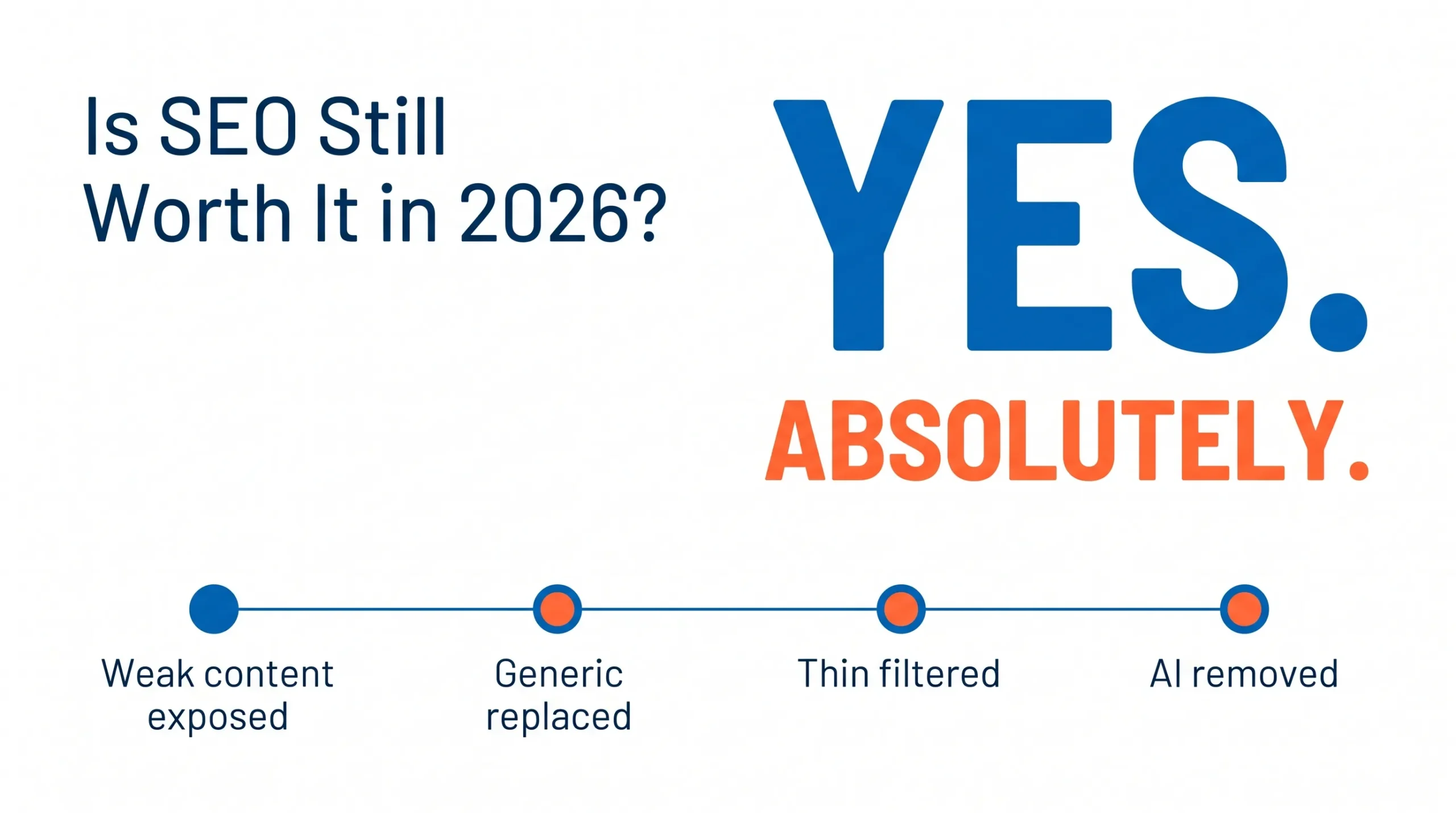
Yes.
But lazy SEO is worth less than ever.
Generic content is easier to replace. Thin pages stand out more quickly. Low-effort AI content is easier to detect. Google continues to emphasise helpful, reliable, people-first content rather than content created mainly to attract search traffic.
That means strong SEO in 2026 depends more on:
- real expertise
- original examples
- clear structure
- stronger brand signals
- trust and transparency
- genuinely useful service pages
So yes, SEO is still worth it.
But not if you approach it like a content factory.
AI and the Future of SEO
This deserves more than a throwaway paragraph now.
Google describes AI Overviews as AI-generated snapshots with links that help users explore the web further. In other words, AI answers still rely on web sources.
That has four major implications.
- AI does not replace SEO fundamentals: If your site is weak, unclear, or untrustworthy, AI search features do not magically make you more visible.
- Authority and trust matter more: As search gets more summarised, the sources that get cited need to look reliable.
- Originality matters more: If your content says the same thing as everyone else, AI can summarise it away. First-hand examples, local context, and real expertise become more valuable.
- AI-assisted content is fine—if humans improve it: Google’s guidance does not ban it. What matters is whether the content is genuinely helpful, transparent where appropriate, and created for people rather than for ranking manipulation.
My prediction is simple:
SEO is not dying. It is becoming less forgiving.
The businesses that win will be the ones that:
- know their audience
- show real expertise
- create stronger pages
- build a brand people recognise and trust
For Singapore businesses, that is good news.
Because it means substance still wins.
Common SEO Mistakes Singapore Businesses Make
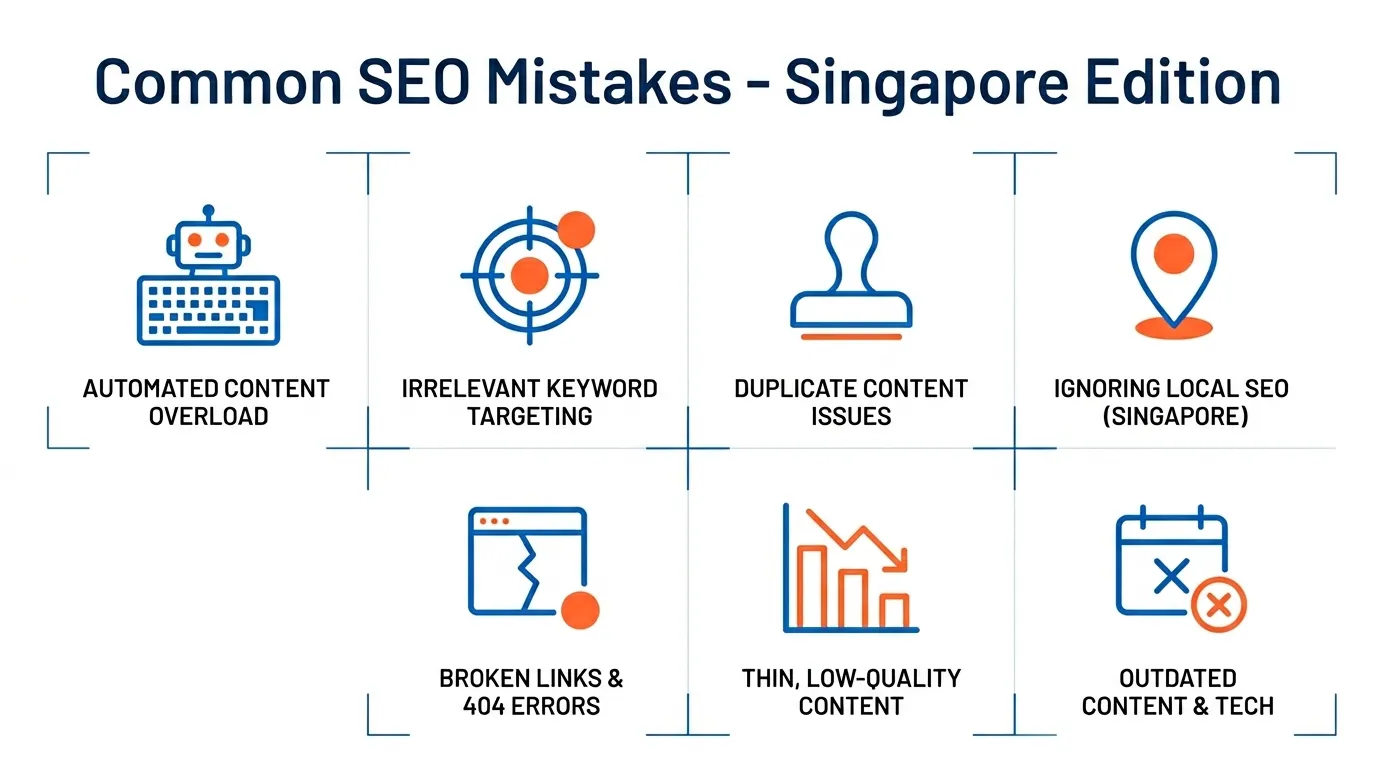
I see these repeatedly.
- Writing for keywords instead of people: The page sounds robotic and awkward.
- Fix: Write naturally first. Optimise second.
- Chasing traffic instead of relevance: High-volume keywords are useless if they attract the wrong audience.
- Fix: Prioritise commercial fit, not vanity traffic.
- Publishing generic content: If your article could be copied onto 20 other websites without changing much, it is probably too generic.
- Fix: Add real examples, local context, and actual experience.
- Ignoring local intent: A generic national page is often too weak for a Singapore service business.
- Fix: Build stronger service-location relevance where appropriate.
- Neglecting service pages: Many businesses publish blogs but leave their core money pages thin and vague.
- Fix: Improve the pages that actually convert visitors into leads.
- Measuring nothing: If you do not track impressions, clicks, rankings, and conversions, you are flying blind.
- Fix: Use Search Console and GA4 consistently.
- Expecting instant results: SEO is not a switch.
- Fix: Commit to steady improvement for 6 to 12 months before judging it properly.
What SEO Is Really About
If you have read this far, you now know what SEO is, how it works, and why it matters.
Here is my simple conclusion:
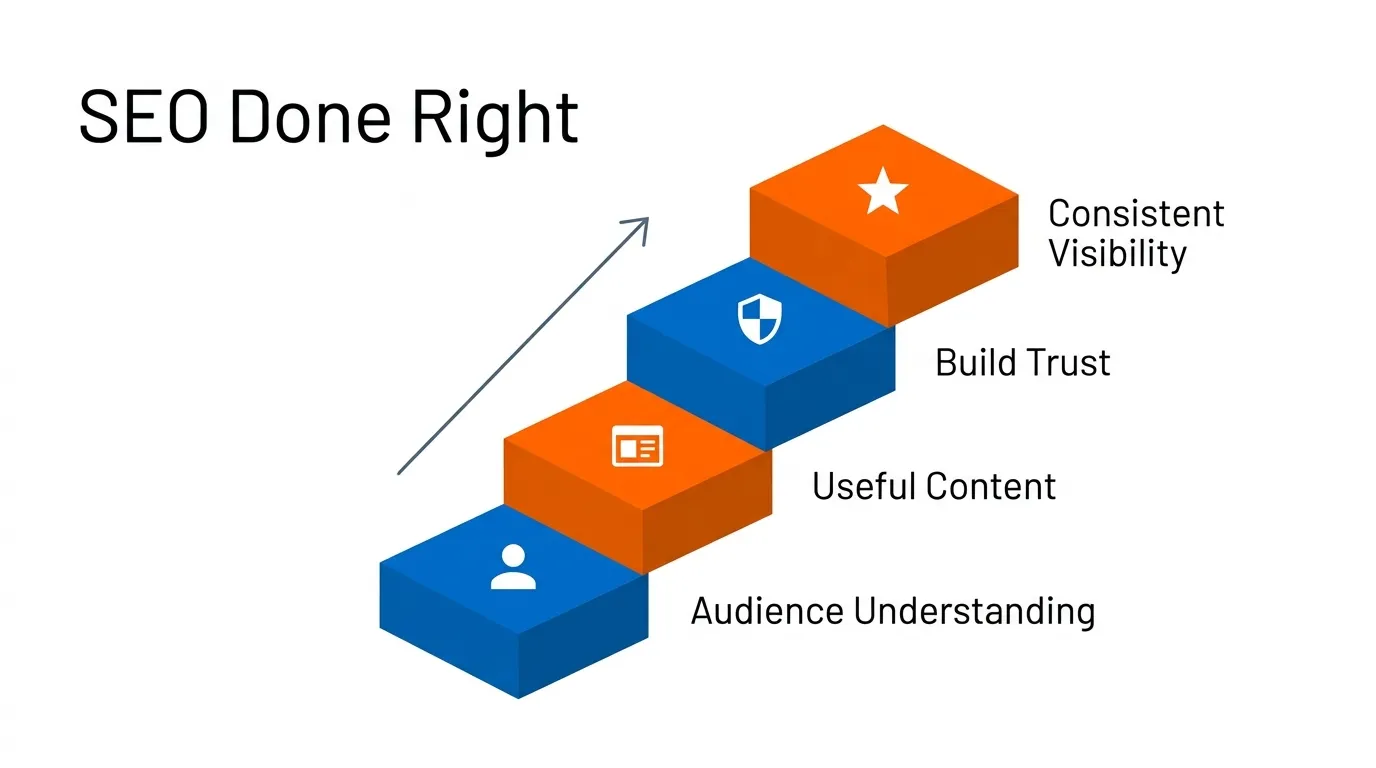
SEO is not about chasing algorithms. It is about earning visibility by being the best answer.
That means understanding your audience.
- Creating genuinely useful content.
- Building trust.
- Improving your site.
- And showing up consistently when people search.
That is how I approach SEO at MediaOne. Not as a trick. Not as a buzzword. But as a serious growth channel for Singapore businesses that want to be found, trusted, and chosen.
If your business is ready to stop guessing and start building organic visibility properly, SEO is worth doing well.
And if you want a team that understands both the technical and commercial sides, we should talk.
Need help with SEO in Singapore? Give us a call today.
Frequently Asked Questions
Does SEO work for small businesses in Singapore?
Yes, SEO can work well for small businesses in Singapore, especially those targeting local searches. It helps smaller brands compete by focusing on relevance, local intent, and content quality rather than large advertising budgets. A well-optimised site can attract consistent traffic without ongoing ad spend. The key is to target realistic keywords and build strong local signals.
Do I need technical knowledge to do SEO?
You do not need deep technical expertise to start with SEO, but understanding the basics is important. Many improvements, such as writing better content or structuring pages clearly, do not require coding skills. However, more advanced areas, such as site performance or indexing, may require technical support. Many businesses combine internal efforts with external expertise.
Is SEO better than paid advertising?
SEO and paid advertising serve different purposes and often work best together. SEO builds long-term visibility and reduces cost per acquisition over time, while paid ads deliver immediate traffic. Businesses in Singapore often use ads for quick results and SEO for sustainable growth. The balance depends on budget, goals, and timeline.
How often should I update my website for SEO?
Websites should be updated regularly, but only when meaningful improvements can be made. This could include refreshing outdated content, improving structure, or adding new insights. Frequent updates that add no real value do not improve rankings. Focus on quality updates that align with search intent and user needs.
Can SEO help with voice search and AI search results?
SEO can support visibility in voice and AI-driven search by focusing on clear, structured, and helpful content. Search systems favour content that answers questions directly and demonstrates credibility. Using natural language and covering topics comprehensively can improve your chances of being surfaced. This makes content clarity and trust more important than ever.
Tom Koh is the SEO Strategist and personal brand writer behind MediaOne, a Singapore-based digital marketing agency. With over 15 years of experience helping businesses grow through search, Tom specialises in translating complex SEO concepts into practical strategies that deliver measurable results. He has worked with clients across industries, including healthcare, legal, education, e-commerce, and B2B services.