
Local visibility is no longer driven solely by foot traffic. In 2026, discovery starts online, often within social platforms. A social media company plays a central role in helping businesses appear where local customers are already spending time, whether that is scrolling through short-form videos, browsing reviews, or searching for nearby services.

Consumers now expect fast, relevant, and location-aware content. They rely on social proof, recommendations, and consistent brand presence before making a decision. Without a clear strategy, even strong local businesses struggle to stand out in crowded feeds.
This is where working with the right partner makes a difference. For businesses seeking a social media marketing company, our agency helps build targeted, data-driven strategies to increase local visibility, engagement, and conversions.
Key Takeaways
- A social media company helps businesses reach local audiences through targeted content, engagement, and platform-specific strategies.
- Consistent, localised content improves visibility, trust, and customer decision-making.
- Data, AI, and geo-targeting allow more precise and effective local marketing.
- Working with a social media company provides structure, scalability, and measurable growth.
Why Local Brand Visibility Matters More Than Ever in 2026
Local visibility has moved well beyond traditional search. In 2026, the way people discover nearby businesses is shaped by a mix of social platforms, AI-driven recommendations, and real-time content. A social media company sits at the centre of this shift, helping brands adapt to how discovery actually happens today.
Local Discovery Now Starts Inside Social Platforms
Search behaviour has fragmented. While Google still plays a role, many users now begin their discovery journey on platforms like Instagram or TikTok, especially when they want quick, visual answers.
Someone looking for a café, for example, is less likely to type a generic query and more likely to:
- Scroll through short-form videos showing real customer experiences
- Check location tags to see what is nearby
- Browse recent posts to gauge how active a business is
This behaviour reflects a broader change. People want to see before they decide. Static listings are no longer enough. Content has become the first impression.
Algorithms Favour Relevance, Not Just Reach
Social platforms no longer rely on chronological feeds. Content is filtered and prioritised based on signals such as:
- User behaviour and past interactions
- Geographic proximity
- Content type and engagement patterns
This creates an important shift. Visibility is no longer reserved for large brands with big budgets. Smaller businesses can reach local audiences if their content aligns with what users are already engaging with.
That said, this opportunity requires consistency. Posting occasionally is not enough. Brands need to show up regularly with content that signals relevance to both users and algorithms.
Short-Form Video and Local Signals Drive Exposure
Short-form video continues to dominate attention. It is often the format most likely to be pushed to new audiences, particularly when paired with local signals such as:
- Location tags
- Local hashtags
- Mentions of nearby landmarks or communities
A well-optimised post can reach users who have never heard of the brand but are physically close enough to visit. This is where local visibility becomes practical, not just theoretical.
A social media company understands how to structure this content to make it perform. That includes not only what is posted, but how it is framed, timed, and distributed.
Trust Is Built Through Activity and Social Proof
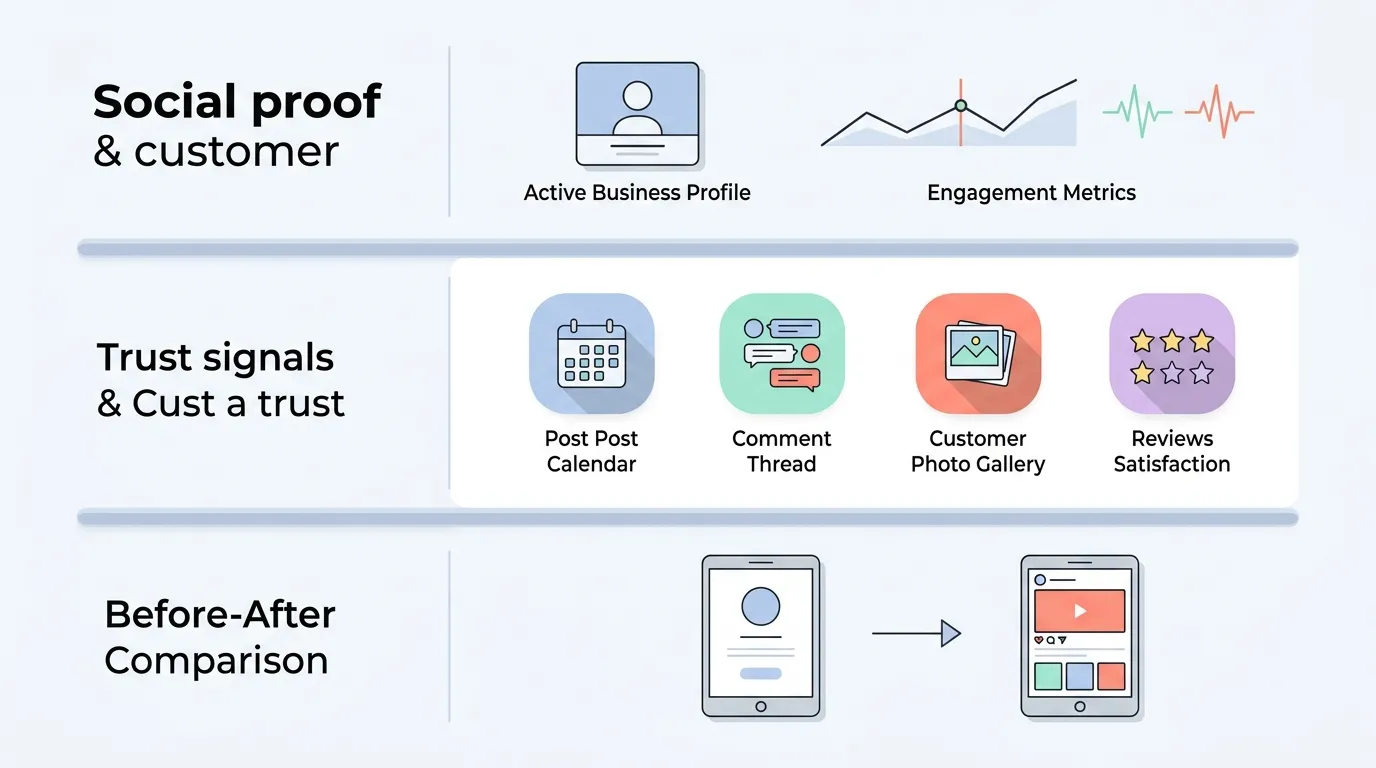
Visibility alone does not convert into action. People evaluate what they see before making a decision, and that evaluation often happens quickly.
They look for signals such as:
- Recent posts that show the business is active
- Comments and replies that indicate engagement
- Customer photos or videos that reflect real experiences
- Reviews that feel current and relevant
An outdated profile raises doubt. A quiet comment section suggests low engagement. On the other hand, a consistently active presence builds familiarity, even before a customer interacts directly.
This is where many local businesses fall behind. They may have strong offerings, but their online presence does not reflect it.
Consistency Now Shapes Perception
In a crowded digital environment, consistency does more than maintain visibility. It shapes how a brand is perceived over time. When a business shows up regularly with relevant content:
- It becomes easier to recognise
- It feels more established within the local community
- It stays top of mind during decision-making moments
This does not require constant posting, but it does require a structured approach. Content needs to align with audience behaviour, platform dynamics, and local context.
A social media company brings that structure. It ensures that content, timing, and targeting work together rather than in isolation.
Why This Shift Matters for Local Businesses
The implications are clear. Local visibility is no longer passive. It cannot rely on listings, occasional updates, or word of mouth alone.
Instead, it depends on a few key factors:
- Being present where discovery actually happens
- Creating content that reflects local relevance
- Maintaining consistent engagement with the audience
- Building trust through ongoing activity and social proof
Businesses that adapt to this model gain an advantage that compounds over time. Those who do not often struggle to remain visible, even within their own area.

The Role of a Social Media Company in 2026
A social media company helps translate these shifts into a practical strategy. It aligns content with how platforms distribute information, how users make decisions, and how local visibility is earned.
Rather than treating social media as a secondary channel, it becomes a primary driver of discovery. That shift in perspective is often what separates brands that are occasionally seen from those that are consistently chosen.
What Does a Social Media Company Do for Local Businesses?

A social media company is not just a content publisher. It operates as a strategic partner that builds a repeatable system for visibility, engagement, and conversion within a defined local market.
At its core, the work revolves around one goal. Make your business consistently discoverable and relevant to people nearby who are already in a decision-making mindset.
That requires more than creativity alone. It combines audience insight, platform behaviour, content strategy, and ongoing optimisation. When done well, it turns social media into a reliable source of local awareness and leads, not just a place to post updates.
Strategy Development by a Social Media Company
Everything starts with clarity. Without a defined strategy, even high-quality content tends to drift.
A social media company begins by mapping your local audience in detail. This goes beyond basic demographics. It looks at how people in your area actually behave online, what triggers engagement, and what influences their decisions.
Key areas typically include:
- Audience profiling at a local level: Not just age or gender, but intent. Are they browsing, comparing, or ready to buy?
- Platform alignment: Where your audience spends time often differs by location and industry. A neighbourhood café may benefit more from Instagram and TikTok, while a service-based business might see stronger results on Facebook.
- Content consumption patterns: Do local users engage more with short-form video, reviews, or behind-the-scenes content?
- Competitor positioning: Analysing nearby businesses reveals gaps. Sometimes the opportunity is not to do more, but to do something different or more relevant.
This strategic layer acts as a filter. It guides what to create, where to publish, and how to measure success.
Content Creation Tailored by a Social Media Company
Once the strategy is defined, execution shifts to content. This is where many businesses fall into the trap of producing generic posts that could apply to any location.
A social media company avoids that by grounding content in a local context. The difference is subtle but powerful. Content should feel familiar to the audience, almost as if it belongs in their daily environment.
That often includes a mix of formats:
- Short-form videos that show real use cases: A quick walkthrough of a service, a product in action, or a day in the life of the business. These formats perform well because they are easy to consume and share.
- Visual content rooted in the local setting: Landmarks, neighbourhood scenes, or recognisable backdrops help anchor the brand in a specific place.
- Timely, event-driven posts: Content tied to local holidays, events, or trends increases relevance and visibility.
- Educational or value-driven posts: Tips, FAQs, or quick insights that address common local needs can position the business as a helpful resource.
The intention is not to post more. It is to post with context. When content reflects the audience’s environment and interests, engagement tends to follow more naturally.
Community Management by a Social Media Company
Visibility gets attention. Engagement builds trust.
A social media company manages the ongoing interaction between your brand and its audience. This layer is often underestimated, yet it directly affects how people perceive your business.
Effective community management includes:
- Responding to comments and messages in a timely way: Delayed responses can create friction, especially when users are asking about pricing, availability, or location.
- Handling reviews with care: Positive reviews reinforce credibility. Negative ones, when handled well, can still build trust. The tone and speed of response matter more than perfection.
- Encouraging conversation, not just broadcasting content: Asking questions, acknowledging feedback, and engaging with user-generated content keep the relationship active.
- Maintaining consistency in brand voice: Whether casual or professional, the tone should feel aligned across all interactions.
Over time, this consistent engagement signals reliability. People begin to recognise the brand, not just as a business, but as an active part of the local community.
How These Functions Work Together
Each of these areas adds value on its own. Combined, they create momentum.
- Strategy ensures you are targeting the right audience
- Content makes your brand visible and relevant
- Community management turns attention into trust
A social media company connects these elements into a system that improves over time. Performance data feeds back into strategy. Strategy shapes future content. Engagement reveals what resonates locally.
That cycle drives sustained local visibility rather than short-term spikes.
How a Social Media Company Improves Local SEO Through Social Signals

Local SEO no longer sits in isolation. It is shaped by how often your brand appears, how people interact with it, and whether those interactions signal trust. This is where a social media company adds measurable value.
While social signals are not consistently confirmed as direct ranking factors, their indirect impact on local search visibility is difficult to ignore.
Think of social media as the layer that amplifies everything your local SEO is trying to achieve. It increases awareness, reinforces credibility, and creates multiple entry points for discovery. Over time, these signals influence how search engines interpret your brand’s relevance within a specific location.
Increasing Branded Searches Through Consistent Exposure
One of the clearest ways social media supports local SEO is by driving branded search demand.
When people repeatedly see your business on platforms like Instagram, Facebook, or TikTok, they become familiar with your name. That familiarity often leads to a second action. They search for your business directly on Google.
A social media company builds this exposure deliberately by:
- Publishing consistent, high-quality content that keeps your brand visible
- Using localised messaging that resonates with nearby audiences
- Reinforcing your brand name across captions, visuals, and campaigns
As branded searches increase, search engines begin to associate your business with higher relevance and trust. This can strengthen your local search positioning over time.
Strengthening Your Digital Footprint Across Platforms
Search engines evaluate more than just your website. They look at your broader online presence, including social profiles.
A social media company ensures your brand is active, complete, and consistent across multiple platforms. This includes:
- Maintaining updated business information such as name, address, and contact details
- Aligning branding elements like logos, descriptions, and messaging
- Linking social profiles back to your website and vice versa
This consistency matters. It helps search engines validate that your business is legitimate and established within a specific location.
It also increases the number of surfaces where your brand can appear. In some cases, social profiles themselves rank in search results, giving you additional visibility beyond your website.
Supporting Your Google Business Profile With Ongoing Activity
Your Google Business Profile remains a core component of local SEO. However, many businesses treat it as a static listing rather than an active channel.
A social media company bridges that gap by integrating social content with your profile. This can include:
- Posting regular updates, offers, and announcements
- Sharing images and videos that reflect current activity
- Encouraging satisfied customers to leave reviews
When your profile shows consistent updates and engagement, it signals that your business is active and relevant. This can improve your visibility in local map packs and search results.
There is also a behavioural element. Users who discover your business on social media are more likely to visit your profile, click for directions, or read reviews. These interactions reinforce your local presence.
Building Trust Through Engagement and Reviews
Trust is a critical factor in both social media performance and local SEO. A social media company actively manages engagement by responding to comments, answering messages, and acknowledging feedback.
These interactions do more than maintain relationships. They show that your business is responsive and reliable. This trust carries over into search behaviour:
- Users are more likely to click on businesses with visible engagement
- Positive sentiment increases the likelihood of conversions
- Active brands tend to attract more reviews over time

Reviews, in particular, play a significant role in local SEO. Social media often serves as the starting point for customers’ first interactions with your brand before leaving a review on Google or other platforms.
Generating Engagement Signals That Reinforce Relevance
Every like, share, comment, or save contributes to a broader picture of how people interact with your brand.
A social media company focuses on creating content that encourages these actions. Not through gimmicks, but by understanding what your local audience finds useful or interesting.
Examples include:
- Showcasing real customer experiences
- Highlighting local events or collaborations
- Sharing practical tips related to your service or industry
High engagement signals that your content is relevant. While search engines do not treat these signals as direct ranking factors, they do reflect real-world interest. That interest often translates into more searches, more visits, and more conversions.
The relationship between social media and local SEO is not linear. It works as a reinforcing loop.
- Social media increases visibility.
- Visibility drives searches.
- Searches improve recognition.
- Recognition builds trust.
A social media company manages this cycle with intention. Instead of treating social platforms as separate from search, it uses them to support and strengthen your overall local presence.
The result is not just more traffic, but more qualified local attention across both social and search channels.
Key Strategies a Social Media Company Uses to Boost Local Visibility


Local visibility is not built through a single tactic. It comes from layering multiple strategies that reinforce each other over time. A skilled social media company does not just publish content and run ads. It designs a system in which organic reach, paid campaigns, and community engagement work together to keep your brand visible in a specific location.
The most effective approaches tend to focus on relevance. Not broad awareness, but visibility among the people who are most likely to visit, enquire, or buy.
Hyperlocal Content Marketing by a Social Media Company

Hyperlocal content is where many businesses either gain traction or fade into the background. It shifts your messaging from “this is what we offer” to “this is how we fit into your daily life here.”
A social media company builds this by grounding content in real places, familiar experiences, and community touchpoints. When done well, your brand starts to feel like part of the neighbourhood rather than an external advertiser.
This can take different forms depending on your business:
- Featuring recognisable landmarks or streets near your location, so viewers immediately know the content is relevant to them
- Collaborating with nearby businesses to cross-promote services and tap into overlapping audiences
- Creating posts tied to local events, seasonal activities, or community happenings
- Showcasing behind-the-scenes moments that reflect your team’s connection to the area
There is also a subtle but important layer here. Language, tone, and references should match the local audience. Even small details, such as how people speak or what they value, can influence whether content feels authentic.
Over time, this approach does more than increase engagement. It builds familiarity. When someone in your area thinks about a product or service you offer, your brand is more likely to come to mind because it already feels present in their environment.
Geo-Targeted Advertising by a Social Media Company

Organic reach alone rarely delivers consistent local visibility. This is where paid campaigns become essential, not as a replacement, but as a way to amplify what is already working.
A social media company uses geo-targeting to narrow your audience down to a specific radius, city, or even neighbourhood. Instead of spending the budget on broad impressions, every campaign is focused on people who are actually within reach of your business.
Effective geo-targeted campaigns often include:
- Ads tailored to users within defined locations, such as specific postcodes or districts
- Retargeting campaigns that reconnect with users who have already engaged with your content or visited your website
- Time-sensitive promotions aimed at nearby audiences, encouraging immediate action
- Messaging that references proximity, such as convenience, accessibility, or local relevance
What makes this approach effective is not just the targeting itself, but how well the message aligns with the audience’s situation. Someone who lives five minutes away responds differently than someone who is simply browsing.
A well-managed campaign adjusts continuously. Performance data reveals which locations, creatives, and offers generate the strongest response, and the strategy evolves from there. This reduces wasted spend and improves conversion over time.
Influencer Partnerships Managed by a Social Media Company

Influencer marketing at a local level operates differently from large-scale campaigns. Reach matters, but trust matters more.
A social media company focuses on identifying creators who already have influence within a specific community. These are often micro-influencers, not because they are smaller, but because their audience is more concentrated and engaged.
Strong local partnerships typically involve:
- Creators who regularly feature local businesses, events, or lifestyle content
- Audiences that match your target demographic within your area
- Content formats that feel natural to the creator’s style, rather than forced promotions
The value here comes from familiarity. When a local influencer shares your business, it feels closer to a recommendation than an advertisement. That distinction affects how people respond.
A thoughtful collaboration also extends beyond a single post. A social media company may structure campaigns that include repeat visits, story features, or integrated content across platforms. This creates multiple touchpoints, which strengthen recall and trust.
User-Generated Content Campaigns by a Social Media Company

If influencer content builds external credibility, user-generated content builds internal validation. It shows that real customers are engaging with your brand and finding value in it.
A social media company encourages this by making it easy and worthwhile for customers to share their experiences. The goal is not to force participation, but to create conditions where sharing feels natural.
Common approaches include:
- Creating branded hashtags that customers can use when posting about your business
- Running simple campaigns or contests that invite users to share photos or videos
- Highlighting customer stories, reviews, or testimonials across your social channels
- Reposting tagged content to acknowledge and reward participation
This does two things at once: It increases the volume of content associated with your brand, and it adds a layer of authenticity that branded posts alone cannot achieve.
There is also a compounding effect. When people see others in their area interacting with your business, it reduces hesitation. It signals that your brand is active, trusted, and relevant within the community.
How These Strategies Work Together
Each of these strategies can deliver results on its own, but the real impact comes from how they connect.
- Hyperlocal content builds relevance.
- Geo-targeted ads expand reach within the right audience.
- Influencer partnerships introduce your brand through trusted voices.
- User-generated content reinforces credibility through real experiences.
A capable social media company aligns these elements so they support each other rather than operate in isolation. Content informs ads. Ads drive engagement. Engagement generates user content. That content feeds back into your overall presence.
This creates a cycle where visibility is not dependent on a single campaign. Instead, it grows steadily as your brand becomes more embedded in the local digital landscape.
Platforms a Social Media Company Uses for Local Brand Visibility

Not all platforms contribute to local visibility equally. Each one plays a different role in how people discover, evaluate, and choose nearby businesses.
A skilled social media company does not try to be everywhere at once. Instead, it identifies where your local audience is most active and builds a platform mix that supports both discovery and conversion.
In 2026, this selection process is shaped by how platforms function as search engines, recommendation systems, and community hubs. The goal is not just to reach. It is relevant within a specific location.
Below is a closer look at how each major platform contributes to local brand visibility and how a social media company strategically uses them.
How a Social Media Company Uses Facebook for Local Reach
Facebook remains one of the most effective tools for connecting with local communities, especially for service-based businesses and establishments that rely on repeat customers.
A social media company typically uses Facebook to build depth rather than just visibility. It focuses on creating ongoing interactions within a defined geographic area.
Key approaches include:
- Local Groups Participation: Businesses can join or collaborate with community groups where residents actively share recommendations and ask for advice. This creates organic exposure that feels more trustworthy than ads.
- Event Promotion: Facebook Events still play a role in local discovery. Whether it is a store opening, workshop, or seasonal promotion, events help attract nearby users who are already interested in attending.
- Business Page Optimisation: A well-maintained page with updated hours, location details, and consistent posting improves credibility and discoverability.
- Messenger Engagement: Many users treat Facebook Messenger as a direct contact channel. Quick, helpful responses can influence decision-making.
Facebook works best when the goal is to build familiarity and maintain relationships within a local audience over time.
How a Social Media Company Uses Instagram for Local Discovery
Instagram has evolved into a visual search engine, particularly for lifestyle-driven decisions such as dining, shopping, and wellness services.
A social media company approaches Instagram with a strong emphasis on discoverability. It uses features that help content surface beyond existing followers.
Key strategies include:
- Location Tags and Hashtags: Tagging specific locations increases the chances of appearing in local discovery feeds. This is especially useful for businesses targeting tourists or new residents.
- Reels for Reach: Short-form video remains one of the fastest ways to reach new audiences. Content that reflects local culture or highlights real customer experiences tends to perform well.
- Stories for Timely Engagement: Stories allow businesses to promote limited-time offers, updates, or behind-the-scenes content. This keeps the brand active in daily interactions.
- Visual Consistency: A cohesive visual identity helps users recognise and remember the brand as they browse.
Instagram is particularly effective for businesses where appearance, experience, and atmosphere influence customer decisions.
How a Social Media Company Uses TikTok for Local Virality
TikTok has changed how quickly local businesses can gain attention. Its algorithm prioritises content relevance over follower count, which creates opportunities for smaller brands to compete.
A social media company uses TikTok with a slightly different mindset. Instead of polished branding, the focus shifts to authenticity and relatability.
Common approaches include:
- Trend Participation with Local Context: Adapting trending formats while incorporating local references helps content feel both familiar and relevant.
- Behind-the-Scenes Content: Showing daily operations, staff interactions, or product preparation makes the business more approachable.
- Customer-Focused Videos: Featuring real customers or their experiences adds credibility and encourages sharing.
- Consistent Experimentation: Not every post will perform well, and that is expected. Regular testing helps identify what resonates with the local audience.
TikTok is most effective for generating rapid awareness, especially when content feels natural rather than overly produced.
How a Social Media Company Uses Google Business Integration
While not a traditional social platform, Google Business plays a critical role in local visibility. It connects social activity with search behaviour.
A social media company ensures that social efforts support and reinforce this channel.
This includes:
- Regular Posts and Updates: Sharing updates directly on the profile keeps it active and signals relevance to search engines.
- Review Management: Responding to reviews shows engagement and builds trust. It also influences how potential customers perceive the business.
- Accurate Business Information: Consistency across platforms, including address and contact details, reduces friction for users trying to visit or inquire.
- Photo and Content Alignment: Visuals used on social media are often repurposed to maintain a cohesive brand presence.
Google Business acts as the bridge between discovery and action. It is often where users confirm their decision before visiting or contacting a business.
Platform Roles in Local Brand Visibility
| Platform | Primary Role | Best For | Strength in Local Visibility | Content Focus | Ideal Business Types |
| Community engagement | Building relationships | Strong within established communities |
|
|
|
| Visual discovery | Attracting new local audiences | High through tags and reels |
|
|
|
| TikTok | Rapid awareness | Reaching wider local audiences | Very high via algorithm |
|
|
| Google Business | Search validation | Converting intent into action | Critical for local search |
|
|
How a Social Media Company Chooses the Right Platform Mix
Choosing the right combination of platforms is not a one-time decision. It evolves based on performance, audience behaviour, and business goals.
A social media company typically considers:
- Where your target audience spends time
- What type of content can your business sustain
- Whether the goal is awareness, engagement, or conversions
- How quickly results are needed versus long-term growth
For example, a café in a busy urban area might prioritise Instagram and TikTok for discovery, while also maintaining Facebook for community engagement and Google Business for search visibility.
In contrast, a service-based business may rely more on Facebook and Google Business, where trust and detailed information play a larger role in decision-making.
Case Examples of a Social Media Company Driving Local Visibility

Understanding strategy is useful. Seeing how it plays out in real situations makes it easier to apply. Below are three practical scenarios that show how a social media company can turn visibility into measurable local growth:
How a Social Media Company Helped a Restaurant Increase Foot Traffic
A local restaurant was struggling with a familiar problem. It had good food and steady reviews, yet weekday foot traffic remained inconsistent. The issue was not quality. It was visible at the right moments.
A social media company approached this by focusing on short-form video content designed for discovery. Instead of polished, high-production ads, the strategy leaned into casual, behind-the-scenes clips that felt native to platforms like Instagram Reels and TikTok.
The content included:
- Quick kitchen clips showing dishes being prepared in real time
- Staff recommendations framed as “what to order today.”
- Short videos tied to specific times, such as lunch specials or evening promos
- Location tags and captions referencing nearby landmarks
Over time, a pattern emerged. Videos posted late in the morning began driving same-day visits. People would see a dish, recognise the location, and decide to drop by.
What made the difference was consistency and timing, not just creativity. The social media company tracked which posts led to spikes in visits and adjusted the content calendar accordingly.
This created a feedback loop where content was not only engaging but also aligned with real customer behaviour.
How a Social Media Company Helped a Retail Store Build Community Through Influencers
A small retail store wanted to strengthen its presence within the local community. It had a loyal base of repeat customers, but growth had plateaued. Traditional promotions were not reaching new audiences.
Instead of working with large influencers, the social media company focused on micro-influencers within the same city. These were individuals with smaller followings but high engagement and strong local credibility.
The approach was deliberate:
- Identify creators whose audience matched the store’s target demographic
- Prioritise authenticity over reach
- Encourage content that felt personal rather than scripted
Influencers were invited to visit the store, explore products, and share their genuine experience. Some created styling videos, while others documented their visit as part of their daily routine.
This strategy worked because it mirrored how people naturally discover local businesses. A recommendation from a familiar face often carries more weight than a branded post.
As engagement grew, the store’s visibility expanded beyond its immediate customer base. People began tagging the location, sharing their own purchases, and contributing to a growing stream of user-generated content.
The social media company amplified this by reposting content and maintaining consistent interaction, turning individual posts into a broader community narrative.
How a Social Media Company Helped a Service-Based Business Generate Local Leads
Service-based businesses often face a different challenge. Visibility alone is not enough. The goal is to convert attention into enquiries.
In this case, a local service provider needed a steady flow of qualified leads within a specific area. The social media company focused on geo-targeted advertising and retargeting.
The campaign structure included:
- Ads targeting users within a defined radius of the business location
- Messaging tailored to common local pain points
- Clear calls to action encouraging direct enquiries
- Retargeting ads for users who had previously engaged with content or visited the website
What set this approach apart was the layering of intent signals. Instead of casting a wide net, the social media company prioritised users who were more likely to need the service.
For example, someone who watched a video, clicked through to the website, and spent time on a service page would later see a follow-up ad with a more direct offer.
This gradual progression, from awareness to consideration to action, helped improve conversion rates without increasing ad spend unnecessarily.
Over time, the business saw a more predictable flow of enquiries. Not just more leads, but better-qualified ones.
What These Examples Reveal About Working With a Social Media Company
Each scenario is different, yet the underlying principles remain consistent. A social media company does not rely on a single tactic. It builds a system where content, targeting, and engagement work together.
Key takeaways include:
- Visibility increases when content aligns with how people actually browse and decide
- Local relevance matters more than broad reach
- Consistency allows data to guide better decisions over time
- Engagement is not just a metric. It is part of building trust within a community
When these elements come together, social media stops being a passive channel. It becomes an active driver of local growth.
How to Choose the Right Social Media Company for Your Local Business

Choosing a social media company is not just about outsourcing content. It is a strategic decision that affects how your brand is discovered, perceived, and trusted within your local market. The right partner should feel like an extension of your team, not just a vendor executing tasks.
Many businesses make the mistake of focusing on surface-level metrics such as follower count or posting frequency. Those matters, but they do not tell you whether an agency can actually drive local visibility and conversions. A more careful evaluation looks at how the company thinks, plans, and adapts to your specific market.
Here is how to approach that decision with more clarity:
Evaluate Experience in Local Marketing
Not all social media experiences translate to local success. Running a national or global campaign is very different from targeting a specific city or neighbourhood.
A capable social media company should be able to show:
- Campaigns tailored to specific locations
- Experience working with businesses that rely on foot traffic or local leads
- Familiarity with local trends, events, and audience behaviour
Ask how they approach localisation. Do they adapt messaging to cultural nuances or community interests, or do they reuse the same content across markets?
If possible, request case studies that demonstrate measurable outcomes such as increased store visits, enquiries, or local engagement. General growth metrics are useful, but local impact is what you are really assessing.
Assess Content Quality and Strategic Thinking
Content is where most agencies try to impress, but it is easy to confuse volume with effectiveness. Instead of asking how often they post, look at how they think about content:
- Does each piece have a clear purpose, such as driving awareness, engagement, or conversions?
- Is the content tailored to a specific audience, or does it feel generic?
- Do they use formats that match current user behaviour, such as short-form video or interactive posts?
Take time to review their portfolio. Look beyond aesthetics. Strong visuals help, but what matters more is whether the content feels relevant and grounded in a real understanding of the audience.
You should also ask how they plan content over time. A reliable social media company will have a framework for balancing evergreen content with timely, localised posts.
Check Data, Analytics, and Reporting Capabilities
A social media company should not rely on guesswork. Data should guide both strategy and day-to-day decisions.
Clear reporting is a good starting point, but what you want to understand is how they use that data. Look for:
- Regular performance reports that go beyond vanity metrics
- Insights tied to business outcomes, such as leads, bookings, or visits
- A clear explanation of what is working, what is not, and what will change next
Ask how often they review and adjust campaigns. Social media moves quickly, and strategies that worked last month may not perform as well today.
It is also worth clarifying which tools they use. While tools alone do not guarantee results, they often indicate the level of sophistication in their approach.
Understand Pricing Structure and ROI Expectations
Pricing can vary widely, and lower cost does not always mean better value. What matters is whether you understand what you are paying for and what outcomes you can reasonably expect.
A transparent social media company should provide:
- A clear breakdown of services included
- Defined deliverables, such as the number of posts, campaigns, or ads
- An explanation of how success will be measured
Be cautious of vague promises. If an agency cannot explain how its work connects to business results, it becomes difficult to evaluate performance later.
It also helps to discuss timelines. Local visibility rarely improves overnight. A credible partner will set realistic expectations and outline how progress builds over time.
Look for Communication Style and Working Fit
This factor is often overlooked, yet it has a direct impact on long-term success. Ask yourself:
- Are they responsive and easy to communicate with?
- Do they take time to understand your business, or do they jump straight into selling services?
- Can they explain their strategy in a way that makes sense to you?
A strong working relationship allows for better collaboration, faster adjustments, and more consistent results.
Red Flags to Watch Out For
Some warning signs are easy to spot once you know what to look for:
- Overpromising rapid results without a clear strategy
- Focusing only on follower growth rather than meaningful engagement
- Lack of transparency in reporting or pricing
- Recycled content that does not reflect your local market
These issues often lead to a wasted budget and missed opportunities.
Hiring a Social Media Company for Local Growth

Local visibility now depends on more than being present online. It requires a clear system that connects content, timing, platform selection, and audience intent. Businesses that grow consistently tend to treat social media as an ongoing investment rather than a one-off effort.
Working with an experienced partner brings structure to that process. It allows you to move beyond guesswork and focus on strategies that are informed by data, shaped by local behaviour, and refined over time. This is especially important in competitive markets where attention is limited, and customer decisions are influenced by what they see daily.
If you are looking to strengthen your local presence, MediaOne offers professional support grounded in performance and long-term growth. A quick discussion can help clarify where your current approach stands and what opportunities may be missing.
For more information, you can contact MediaOne directly to explore how a social media company can support your next stage of growth.
Frequently Asked Questions
Costs vary depending on scope, platforms, and service level. Basic management packages may start at a few hundred pounds per month, while full-service strategies with ads and content can be significantly higher. Pricing often reflects the complexity of campaigns and reporting requirements. Businesses should assess value based on outcomes rather than cost alone.
Initial engagement improvements can appear within a few weeks, especially with consistent posting and paid campaigns. However, meaningful growth in visibility and conversions usually takes three to six months. This allows time for data collection, optimisation, and audience building. Long-term results depend on consistency and strategy refinement.
Yes, a social media company can manage multiple locations by creating tailored content and campaigns for each area. This includes local targeting, separate messaging, and location-specific promotions. Centralised reporting ensures performance is tracked across all locations. The approach helps maintain brand consistency while adapting to local audiences.
Industries that rely on local visibility tend to benefit the most. These include restaurants, retail, healthcare, fitness, and service-based businesses. Any business that depends on nearby customers can gain from improved visibility and engagement. The impact is stronger when social media supports existing marketing channels.
This depends on resources, expertise, and business goals. A social media company offers immediate access to specialised skills, tools, and proven strategies. An in-house team provides more control but often requires higher long-term investment. Many businesses choose agencies for efficiency and scalability, especially in the early stages.