
FMCG e-commerce is evolving rapidly. By 2025, online shopping is expected to account for around 21% of all retail sales, and consumers are increasingly relying on digital channels for everything from groceries to personal care and household essentials.

For fast-moving consumer goods, this shift means higher expectations for convenience, speed, and a seamless shopping experience. Shoppers want to browse, add to cart, and check out without friction. A smooth FMCG e-commerce journey not only drives sales but also builds trust, encourages repeat purchases, and strengthens brand loyalty in an increasingly competitive digital marketplace.
To achieve this, working with a professional e-commerce SEO agency can make a substantial difference. SEO agencies help optimise your store not just for search engines, but also for the user experience, ensuring that customers can easily find your products and complete purchases.

This guide offers practical strategies to optimise every stage of the FMCG e-commerce journey, from site design and mobile experience to delivery and customer feedback. Whether launching or improving your store, these steps help build an experience valued by customers and search engines.
Key Takeaways
- Consumers now expect convenience, speed, and seamless online experiences, making FMCG e-commerce essential.
- Optimise website design, mobile experience, and delivery options to ensure customer satisfaction and loyalty.
- Gathering customer feedback and acting on it enables businesses to continually improve their FMCG e-commerce experience, enhancing long-term growth.
- Integrate these elements to create a frictionless shopping journey that keeps customers returning.
What is FMCQ E-commerce?

Fast-Moving Consumer Goods (FMCG) e-commerce refers to the sale of fast-moving consumer goods (FMCG) like food, beverages, personal care, and household products through online platforms. Unlike durable goods, which have a longer shelf life, FMCG products are bought frequently, usually at a lower cost, and are often purchased regularly.
FMCG e-commerce has grown quickly as more people rely on digital for daily needs. Brands must deliver a seamless, efficient online experience to meet rising expectations for speed and convenience.
An intuitive, fast, and user-friendly platform drives success in FMCG e-commerce. Make it easy for customers to return, and you’ll increase conversions and loyalty.
Why a Seamless FMCG E-commerce Shopping Experience Matters

In the competitive FMCG market, a smooth shopping journey is vital. Today’s consumers expect exceptional service. If your site is hard to use, delivery is slow, or checkout is complex, you risk losing customers.
A seamless shopping experience is a direct contributor to:
- Customer satisfaction: When users can quickly find products, make purchases, and receive order updates, they are more likely to have a positive experience.
- Higher conversion rates: A well-designed website with an easy-to-use interface drives higher conversion rates, helping more visitors complete their purchases.
- Brand loyalty: Consumers are more likely to return to a site that makes shopping easy and enjoyable, creating opportunities for repeat purchases.
- A smooth checkout process reduces the likelihood that customers will abandon their carts.
Without a seamless FMCG e-commerce experience, you risk even the best products and offers falling flat. Provide a frictionless journey from start to finish to encourage repeat business.
How To Create A Seamless FMCG E-commerce Shopping Experience for Customers

A seamless FMCG e-commerce experience is more than offering products online. It’s about ensuring every interaction, from landing on your site to completing a purchase, is easy and pleasant. An intuitive website design is the backbone of a seamless FMCG e-commerce shopping experience. If customers can’t find what they’re looking for or struggle to navigate through your site, they’ll likely leave for a competitor’s site that’s easier to use.
Here’s how FMCG e-commerce can enhance your website’s user experience:
1. Craft a Clean and Simple Layout

When customers land on your site, they notice the layout first. Visual appeal matters, but simplicity is key. Structure your website so customers can find products quickly and easily, with minimal distractions.
- Use clear categories and filters: Organise your products into logical categories such as “Snacks,” “Beverages,” “Personal Care,” “Cleaning Supplies,” and more. This helps users quickly navigate through the site and find the product they’re looking for.
- Example: Group products into categories such as “Sale Items,” “Most Popular,” or “New Arrivals” to guide users through your site. You can even highlight seasonal items (e.g., “Summer Essentials” or “Winter Comforts”) to make browsing even more relevant.
- Whitespace and simplicity: Keep the site layout clean with enough whitespace to avoid overwhelming customers. Minimalist design allows customers to focus on the products and call-to-action buttons, enhancing overall usability.
Avoid cluttering your homepage with too many promotions or banners. Instead, focus on offering a clear value proposition and simple navigation that guides visitors through the shopping journey.
2. Leverage Effective and Advanced Search Functionality

Customers are often in a rush when shopping for FMCG products. Whether they’re purchasing last-minute groceries, household essentials, or toiletries, a fast, effective search function is crucial for improving their shopping experience.
- Prominent search bar: Ensure the search bar is clearly visible at the top of every page. It should be accessible from any part of the site, enabling users to quickly find what they need.
- Advanced filters and sorting options: Adding advanced filters (such as price range, brand, product type, customer rating, and availability) enables customers to quickly narrow their search results to the most relevant products.
- Auto-suggest functionality: When a user starts typing in the search bar, show them relevant product suggestions, categories, or even common searches. This speeds up the process and enhances the user experience.
- Example: A customer searching for “organic shampoo” can quickly narrow their search to “organic” and “shampoo” categories, see the price range, check ratings, and make a more informed purchase decision.
Implement an auto-correct feature that suggests product names if a user makes a typo in the search bar. This ensures that even small mistakes don’t prevent users from finding the right products.
3. Implement Mobile-First Design

A large share of FMCG e-commerce shopping is done on mobile devices, particularly for quick purchases. A mobile-first design ensures that your site is responsive and optimised for mobile screens. If your site isn’t mobile-friendly, you risk frustrating customers and losing sales.
- Responsive design: Your website must automatically adapt to different screen sizes, ensuring that product images, buttons, and text remain visible and functional. Mobile-first design should be your priority when creating or updating your website to cater to the growing number of mobile users.
- Quick load times: Mobile users expect fast load times, especially when they’re on the go. Ensure your mobile pages load quickly by compressing images and minimising code. Slow load times can lead to frustration and abandoned carts.
- Easy navigation: Implement sticky headers that keep essential navigation and CTAs visible as users scroll. Also, use dropdown menus or hamburger menus to organise product categories and make them easy to access on small screens.
Regularly test your site on various devices and browsers to ensure a consistent experience for all users. Tools like Google Mobile-Friendly Test can help you identify areas for improvement.
4. Create a Quick and Easy Checkout Process

An overly complex checkout process is a leading cause of cart abandonment in FMCG e-commerce. To avoid this, streamline your checkout process to make it as quick and simple as possible.
- Guest checkout option: Allow customers to check out without creating an account. Guest checkout reduces friction and allows shoppers to complete their purchases without an extra step.
- Multiple payment options: Offer a variety of payment methods, including credit/debit cards, e-wallets (Apple Pay, Google Pay, PayPal), and buy now, pay later options like Klarna or Afterpay, to cater to customer preferences.
- Progress indicators: Show customers how many steps are left in the checkout process with a clear progress bar. This lets them know how much longer the process will take, making it feel more manageable.
- Review order page: Allow customers to review their order summary, shipping information, and payment details before confirming the purchase. This gives them the chance to make corrections and ensures there are no surprises at the end of the process.
Reduce the number of checkout form fields and make it clear where users can enter discount codes or promo offers. The fewer barriers to completing a purchase, the better.
5. Use High-Quality Visuals

Product visuals play an important role in FMCG e-commerce, where customers want to see exactly what they’re purchasing before they buy. Offering high-quality, detailed product images builds trust and encourages shoppers to purchase.
- Multiple product images: Include multiple images of each product from different angles. This helps customers better understand what they’re buying, especially for items such as cosmetics, food packaging, and home goods.
- Zoom-in feature: Enables users to zoom in on product images for a closer look at details such as labels, ingredients, or textures. This is particularly important for FMCG products where customers are often concerned with product quality and features.
- Product videos: For certain FMCG products, videos can help demonstrate the product in use, especially for kitchen gadgets and beauty products. This can also include unboxing or tutorial videos that show customers how to use the product.
- Actionable Tip: Ensure that product videos and images are optimised for mobile. High-quality visuals should load quickly without affecting performance, especially on mobile networks.
By implementing these strategies, you’ll create a seamless FMCG e-commerce shopping experience that not only meets but exceeds customer expectations.
A clean layout, easy-to-use search functionality, mobile-first design, quick checkout, and high-quality visuals ensure customers enjoy a smooth, frustration-free journey from start to finish.
These optimisations will help keep your customers coming back, driving both conversions and long-term loyalty in the competitive FMCG e-commerce market.
How Fast and Reliable Delivery Improves the FMCG E-commerce Experience

In FMCG e-commerce, delivery is one of the most critical factors that influence customer satisfaction, repeat purchases, and overall brand loyalty. Unlike traditional retail, where customers can take products home immediately, online shoppers rely entirely on your logistics to ensure items arrive quickly, safely, and on time.
Fast, reliable delivery not only enhances the shopping experience but also sets your brand apart in a highly competitive digital marketplace.
Here are key strategies to optimise delivery in your FMCG e-commerce store:
- Offer Multiple Delivery Options: Customers increasingly value delivery flexibility. By offering same-day, next-day, express, and scheduled delivery options, you allow shoppers to choose the option that best suits their needs. This flexibility improves convenience and helps build trust in your store.
- Actionable Tip: Clearly display available delivery options during checkout. Use messaging such as “Choose same-day delivery for urgent orders” to set expectations early and reduce cart abandonment.
- Free Shipping and Transparent Costs: Shipping costs remain a top reason for cart abandonment. Offering free shipping on orders above a certain value not only encourages purchases but also increases average order value. When free shipping isn’t feasible, it’s important to be transparent about costs upfront to avoid unpleasant surprises at checkout.
- Example: Display shipping fees early in the cart or offer a shipping calculator so customers can see costs before completing their order.
- Real-Time Tracking: Providing real-time tracking reassures customers and reduces anxiety, especially for time-sensitive FMCG products such as groceries, baby items, and household essentials. When shoppers can see exactly where their order is and receive updates on estimated delivery times, it builds trust and confidence in your brand.
- Example: Send automated notifications when an order is dispatched, en route, or delayed. Include a tracking link in both email and SMS updates for convenience.
- Packaging and Delivery Timeliness: Delivery isn’t just about speed—it’s also about ensuring products arrive safely and on time. Proper packaging protects fragile or perishable goods and maintains product quality. Timely delivery is particularly critical in FMCG e-commerce, where customers expect prompt access to essential items.
- Actionable Tip: Use temperature-controlled packaging for perishable goods and clearly label fragile items. Partner with reliable logistics providers to meet your promised delivery windows.
- Customer Feedback and Continuous Improvement: After delivery, gather feedback to identify pain points and improve your logistics operations. Simple surveys or follow-up emails asking about delivery speed, product condition, and overall satisfaction can provide valuable insights. This data helps you optimise routes, packaging, and communication to ensure every order meets customer expectations.
For FMCG e-commerce, fast and reliable delivery is more than a convenience; it’s a competitive differentiator. By offering multiple delivery options, transparent costs, real-time tracking, secure packaging, and timely fulfilment, your store can enhance customer satisfaction, build trust, and drive repeat purchases.
Combining these strategies with strong SEO, engaging content, and effective marketing ensures your brand delivers a complete, high-quality e-commerce experience.
Why Mobile Optimisation is Crucial for FMCG E-commerce Success
The rise of mobile commerce has transformed the way people shop for FMCG products. A seamless mobile experience is no longer optional. A seamless mobile shopping experience lets customers browse, shop, and complete purchases from the palm of their hands, wherever they are.
Here’s how you can optimise your FMCG e-commerce site for mobile users:
1. Mobile-First Approach

Given the surge in mobile shopping, it’s vital to prioritise a mobile-first design. This means designing your site to function perfectly on mobile devices before considering desktop versions. A mobile-first approach ensures your site is responsive, meaning it automatically adjusts to the device’s screen size, whether it’s a smartphone or tablet.
Key Considerations:
- Simple, clean design: Mobile screens have limited real estate, so use a layout that is easy to navigate. Organise content so that customers can quickly find what they’re looking for, whether it’s through dropdown menus or clear category listings.
- Prioritise important elements: product images, product description, add-to-cart buttons, and the checkout process, ensuring they are easily accessible without excessive scrolling or zooming.
2. Mobile Payment Options

A seamless mobile payment experience is crucial for FMCG e-commerce success. Today’s consumers expect quick, easy payment options at their fingertips, so offering mobile-friendly payment methods is essential.
- Payment Solutions: Integrate popular mobile payment options like Apple Pay, Google Pay, and PayPal, as they allow users to complete their purchases with just a tap or a few simple clicks. This frictionless payment process is especially important for impulse buying, which is common in the FMCG sector.
- One-Click Purchases: Enable one-click purchasing for repeat customers. When a customer has already input their payment and shipping details, offering a one-click payment option makes the purchase process significantly faster and more convenient.
- Example: A shopper browsing personal care products on their mobile phone might prefer to use Apple Pay to complete the purchase quickly without manually entering their credit card information.
3. Fast Load Times on Mobile

One of the biggest factors contributing to high bounce rates on mobile e-commerce sites is slow load times. Mobile users expect speed, and if a page takes too long to load, they’re likely to abandon the site and move on to a competitor. Even a delay of just 2 seconds can lead to an increase in bounce rate
- Speed Optimisation Tips:
- Optimise images: Compress product images and other media files to ensure fast load times without compromising quality. Tools like TinyPNG can help reduce image size without noticeable loss in quality.
- Minimise scripts and plugins: Keep your website code clean and avoid unnecessary ones that can slow page load.
- Test mobile speed regularly: Use tools such as Google PageSpeed Insights or GTmetrix to evaluate your site’s performance and receive recommendations to improve load times.
- Actionable Tip: Focus on optimising your checkout pages. These are often where mobile users experience the most frustration when pages load slowly or navigation is poor.
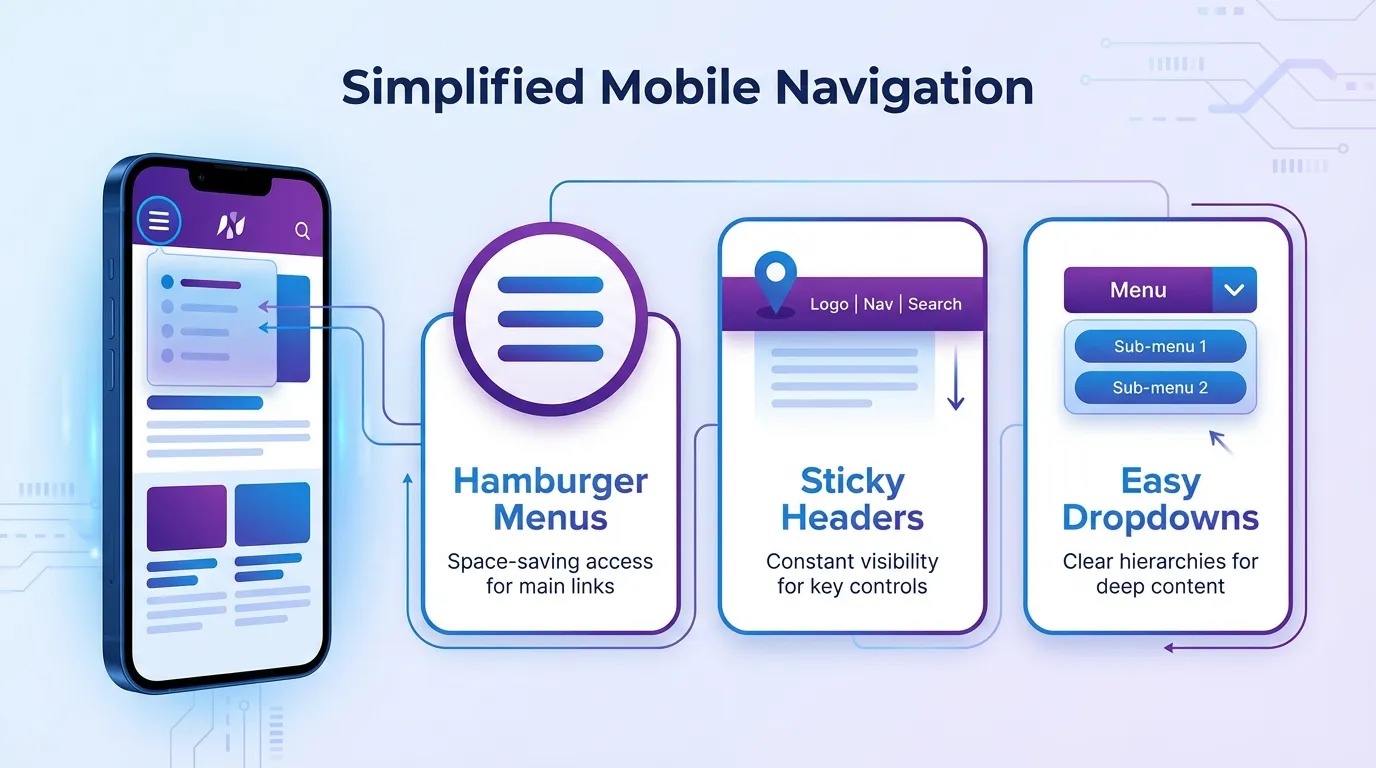
Given the limited space on mobile screens, your navigation must be simple and intuitive. Consider using hamburger menus, sticky headers, or easy-to-use dropdowns to provide quick access to key pages such as Product Categories, Your Cart, and Order History.
- Actionable Tip: Use sticky navigation bars that stay at the top of the screen as users scroll, allowing easy access to important sections without constantly scrolling back up.
5. Test Across Devices

Testing your mobile site across a variety of devices is key to ensuring consistency and functionality. Even though the mobile-first design approach is recommended, it’s still important to ensure your site is responsive across different smartphone brands and models.
- Actionable Tip: Use browser testing tools, such as BrowserStack, to test your mobile site across devices and screen sizes to ensure consistent performance and functionality.
How to Improve FMCG E-commerce Through Customer Feedback and Reviews

Customer feedback is a valuable tool for improving the FMCG e-commerce experience. Actively collecting and acting on feedback helps improve user satisfaction and loyalty.
1. Collect Reviews and Ratings
Encouraging customers to leave product reviews and ratings is one of the easiest ways to build trust and credibility. Positive reviews act as social proof, showing potential customers that others have had a positive experience with your products.
This can significantly influence purchasing decisions and improve conversion rates. Additionally, product ratings provide valuable insights into how well your products meet customer expectations.
- Tip: Offer incentives, such as discounts or loyalty points, for reviews, but ensure the feedback is authentic. This encourages more participation while maintaining credibility.
- Example: If customers consistently rate a product highly for quality and value, this can help highlight its key benefits in your marketing materials.
2. Use Surveys for Continuous Improvement
Customer feedback doesn’t just come from reviews; it’s also crucial to actively solicit it through surveys or on-site feedback forms. Post-purchase surveys are especially useful for gathering specific insights about a customer’s experience, such as ease of browsing, delivery speed, or checkout satisfaction.
These insights help you pinpoint areas where your FMCG e-commerce site may be falling short and in need of improvement.
- Tip: Keep surveys short and focused, and ask for actionable feedback. For example, ask customers about specific aspects of their shopping experience, such as “Was the checkout process quick and easy?” or “Were you satisfied with the delivery time?”
- Example: If a significant number of customers report dissatisfaction with the checkout process, it may indicate that your payment gateway or form fields need to be streamlined.
3. Address Negative Feedback
Negative feedback can often be viewed as an opportunity to improve rather than a setback. It’s essential to address complaints promptly and professionally to show that you value your customers’ opinions.
Ignoring negative reviews or feedback can damage your brand’s reputation, while responding positively can actually strengthen customer trust and loyalty.
- Tip: Always respond publicly to negative reviews, thank the customer for their feedback, and offer a resolution. If the feedback relates to a specific issue (like a delayed delivery), make it clear that you’re taking steps to prevent it from happening again.
- Example: If a customer leaves a review stating that their product arrived damaged, respond with an apology, offer a replacement or a refund, and let them know you’re reviewing your packaging processes to prevent this from happening again.
- Proactive Approach: If you notice recurring negative feedback about a particular product or service, use it as an opportunity to make improvements. This can not only address future customers’ needs but also demonstrate to your current customers that their voices are heard.
By integrating these feedback practices into your FMCG e-commerce strategy, you can continuously refine and enhance the customer shopping experience. Collecting and addressing customer reviews and feedback doesn’t just improve satisfaction; it also helps your business stay competitive, build trust, and drive long-term growth.
Create a Seamless FMCG E-commerce Experience for Long-Term Success
Building a seamless FMCG e-commerce experience is an ongoing journey. As consumer expectations continue to evolve, your e-commerce platform must adapt, innovate, and continuously improve to stay ahead of the curve.
By putting the strategies we’ve covered into action, you’re not just making the shopping experience smoother for your customers; you’re building trust, boosting loyalty, and paving the way for long-term success in the ever-competitive FMCG market.
The key is to keep the customer at the heart of everything you do and ensure that every touchpoint, from browsing to checkout, feels effortless. With the right approach, your FMCG e-commerce site will become a destination customers visit again and again.
Ready to optimise your FMCG e-commerce experience? At MediaOne, we specialise in creating customised solutions that enhance user experience, drive conversions, and build lasting customer relationships.
Contact us today! Get started on improving your FMCG e-commerce strategy for long-term growth.
Frequently Asked Questions
How can I improve the user experience on my FMCG e-commerce site without overhauling the entire design?
You can start by optimising site speed, improving mobile responsiveness, and simplifying the checkout process. Even small tweaks, such as clearer product descriptions and intuitive navigation, can significantly improve the user experience.
What are the best ways to handle customer complaints in FMCG e-commerce?
A fast, empathetic response is key. Use live chat or automated chatbots for immediate responses and offer easy returns and exchanges. Ensuring customers feel heard and valued is essential to maintaining trust and loyalty.
How can I keep my FMCG e-commerce site secure against cyber threats?
Ensure your site is protected with SSL certificates, use secure payment gateways, and regularly update your security protocols. It’s also important to educate your staff on data protection and keep customers informed of your security measures.
How can I use customer data to enhance my FMCG e-commerce strategy?
Customer data can be used to offer personalised recommendations, create targeted email campaigns, and adjust product offerings based on purchase patterns. Just ensure you comply with privacy laws, such as GDPR, when handling sensitive information.
How do I stay competitive in the FMCG e-commerce space, given that larger brands dominate the market?
Focus on creating a unique value proposition (e.g., offering exclusive products, faster delivery, or personalised customer service). Smaller brands can differentiate by delivering a more customised and humanised shopping experience that larger brands can’t replicate as easily.