Since September 2025, ChatGPT can complete a full purchase for a shopper, not just recommend a product. That shift has pushed paid advertising into a conversation many online sellers have never had to join. At MediaOne, we have been watching how this channel develops and helping Singapore businesses decide whether to test it. Our view is simple: for most e-commerce stores here, ChatGPT ads are a low-risk test, not a channel to scale yet. The programme is still expanding, the setup documentation is changing, and reach numbers tell you little about whether a sale is worth paying for. This guide explains what ChatGPT ads look like, who can buy them, and how to run a small pilot judged on post-click conversion quality and tracking accuracy. You can use the Pilot Readiness Scorecard below to decide whether your store is ready to spend at all.
Can Singapore businesses advertise on ChatGPT right now? Not on the evidence available. Advertising has rolled out in the US, and the advertiser programme is available in many countries outside the US, but that does not yet mean every market. OpenAI is the primary reference for current eligibility, so check it before you budget. If you cannot run ads yet, the work still pays off: build your catalogue, tracking and landing pages so you can move quickly when access opens.
Key Takeaways
- ChatGPT ads are a low-risk test for most Singapore ecommerce businesses. Judge them on evidence before you scale.
- Eligibility comes first. Confirm you can advertise before you plan budget.
- Judge a pilot on post-click conversion quality and tracking accuracy, not on reach.
- Run the Pilot Readiness Scorecard: five pass/fail gates decide whether you launch or fix gaps first.
- Reconcile platform-reported sales against your own order data before trusting any number.
- Cap the test budget with a stop-loss rule and set a minimum conversion volume before reaching a verdict.
ChatGPT can now complete a full purchase inside the conversation, which has moved AI from recommending products to selling them. Adsmurai‘s analysis of OpenAI’s commerce push reports that OpenAI plans to extend the service to other markets through 2026. Etsy shares rose 7.3%, while U.S.-listed shares of Shopify popped 4.5% after the announcement, which tells you investors read this as a real shift. It does not tell you the ads will perform for your store.
How ChatGPT Ads Rolled Out and Who Can Buy Them
Check eligibility before you plan anything. OpenAI announced on January 16, 2026 that it is starting to test advertisements in ChatGPT in the US. The advertiser programme is now available in many countries outside the US, and ChatGPT Ads became available to Singapore businesses on 23 September 2026, when OpenAI opened the channel across seven Asian markets. Confirm your own account’s access in the ad manager before budgeting, since rollout rules can change. If you cannot yet run campaigns, treat the channel as a “watch and prepare” item, and add it to your wider digital marketing plan so you are ready when access opens.
Current Format and Appearance of ChatGPT Ads
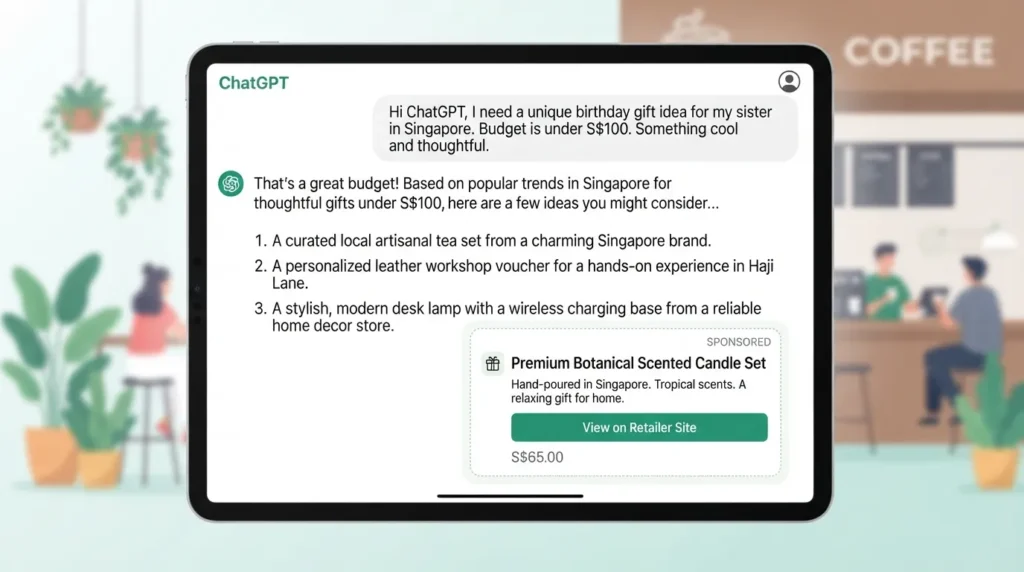
ChatGPT ads are conversational. The creative answers a question the shopper is already asking, rather than matching a keyword list. Targeting is organised around buyer scenario sets, meaning the situation a shopper describes (for example, “a gift under S$100 for a runner”), not a bag of search terms. Ads sit within the answer flow, so the reader sees them as part of the conversation. That is why the creative has to be genuinely useful rather than a slogan. Marketers should also expect the format to change as the product develops, so the creative and targeting settings need regular review.
Which Products and Stores Suit ChatGPT Ads
Products suit this channel when a conversational question signals a clear purchase: comparison-heavy items, gifts, replacements and products with a specific use case. Stores that gain are those with well-structured catalogues and clear product differentiation. Stores with thin product data, generic offers or no clear buyer scenario tend to lose out, because the assistant has little to match. Use this quick fit check:
- Does your product answer a question a shopper would type in full sentences?
- Can you describe a specific buyer scenario in one line?
- Is your product data complete (price, stock, attributes, images)?
- Does your landing page answer that same question?
If you answer no to two or more, fix those gaps before spending.
Product Feed Optimisation and Catalogue Readiness
ChatGPT ads match products to conversations, so an assistant has to understand your catalogue before it can recommend it. Clear, consistent product data does that work. Give every item a precise title, brand, category, size or variant, price in S$, stock status and at least one clean image. Vague titles such as “Premium Set” give an assistant nothing to match against a shopper asking for a specific item.
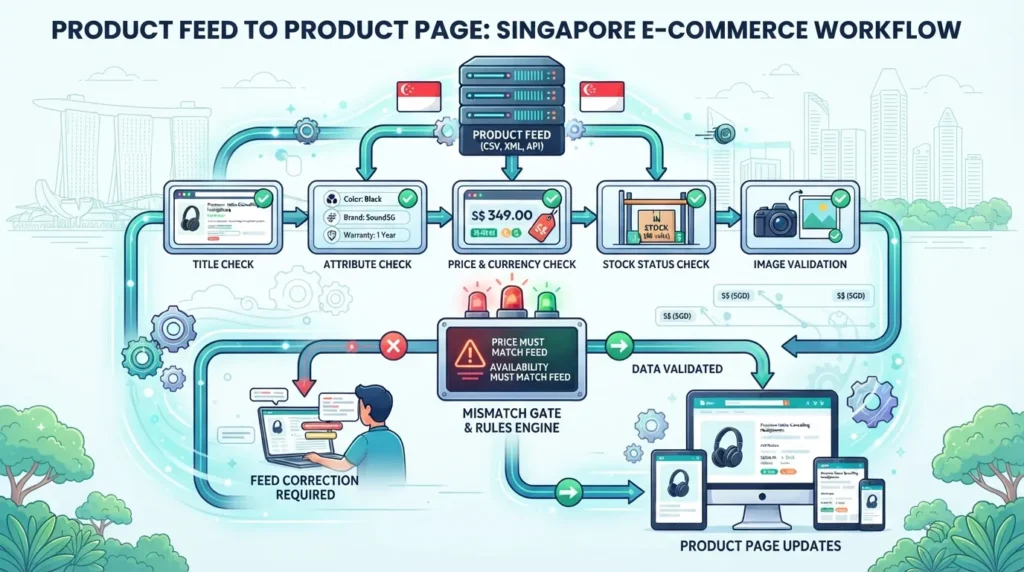 Check the destination too. A shopper who clicks through should land on a product page that shows the same price and availability as the feed. Mismatches waste the click and corrupt your data. This is the same discipline that makes Google Ads and Meta campaigns work, so a store already running them has a head start.
Our readiness checklist:
- Every product has a descriptive title, brand, category and key attributes.
- Prices in the feed match the live product page in S$, including taxes and shipping rules.
- Stock status is accurate and updated at least daily.
- Images are clear, on a plain background, and load quickly on mobile.
- The landing page loads, reflects the advertised product, and has a working checkout.
Conversational Versus Keyword-Based Targeting
Keyword campaigns target a list of phrases a shopper types. Buyer scenarios describe a situation, such as “a family needs a durable pram for a city apartment”, and ads appear when a conversation fits that situation. The intent signal is richer, but you give up some control over the exact wording that triggers your ad.
| Factor | Conversational (buyer scenarios) | Keyword-based |
|---|---|---|
| Intent signal | Full context of the conversation | Short typed phrase |
| Control | Set by scenario sets you define | Exact match, phrase and negative keywords |
| Measurement | Post-click conversions and tracking | Click, impression and keyword reports |
Use keyword campaigns where you already have proven search demand and tight cost control. Give conversational targeting a smaller share of a mixed budget until post-click data shows it converts for your products, whether that is a live product catalog feeding an online store or a wider e-commerce and marketing plan.
Creative Variations and Organic Visibility in ChatGPT
Good conversational creative answers one real question a buyer would ask, then names the product that solves it. Write two or three variations per scenario, each addressing a different objection such as price, fit or delivery. Keep claims specific and checkable.
Organic visibility inside ChatGPT is less clear. Your product data, reviews and site content may influence what an assistant recommends, but no one outside OpenAI can yet verify how that ranking works. Treat any claim of a guaranteed organic position as unproven, and judge the channel on the conversions your own tracking records.
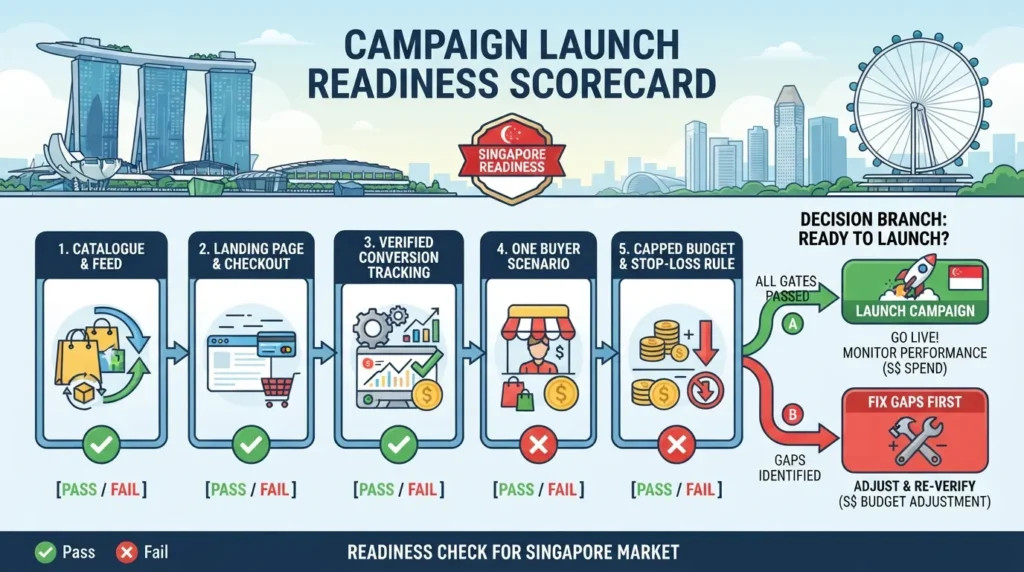
Before any money goes into ChatGPT ads, most Singapore ecommerce stores should answer one question: are we ready to run a pilot at all? We think the honest answer for most is no, not yet, and the test below makes that call on evidence rather than enthusiasm.
Launching a First Campaign and Controlling Budget
The setup documentation, as of 6 September 2026, lists three objectives that set the billing model: Reach (CPM), Clicks (CPC) and Conversions (oCPC, billed per click but optimised on conversion events). For a first test, we would avoid CPM, which pays for impressions and tells you little about sales. CPC is simpler to read. oCPC asks the platform to chase conversions, which only works once your tracking is verified.
Start small. Cap the daily spend, then raise it in stages only when the test clears a conversion threshold you set in advance. A common budget waster is switching objectives or audiences mid-test, which resets the learning and leaves you with data you cannot interpret.
Costs, Conversion Tracking and Post-Click Attribution
Measurement is the real gate. Set up the pixel and Conversions API before spending, and confirm that purchases in the platform match your own order records. Platform-reported numbers are a starting point, not the truth.
Judge the pilot on post-click conversion quality, not reach. Decide your stop-loss rule in advance: pause if cost per order stays above your margin after a fixed number of conversions, continue if it holds, and scale only once results repeat across two review periods.
Conclusion: Test Small, Measure Hard, Scale Only on Evidence
For most Singapore ecommerce businesses, ChatGPT ads are not yet a channel to scale. The advertiser programme is still expanding, OpenAI plans to extend it to other markets through 2026, and the campaign setup documentation, dated 6 September 2026, lists CPM, CPC and conversion-optimised CPC (oCPC) objectives that may still change. Treat the channel as a low-risk test instead.
Judge that test on post-click conversion quality and tracking accuracy, not on reach. Run it through the Pilot Readiness Scorecard: catalogue and feed, landing page and checkout, verified conversion tracking, one buyer scenario with a clear product match, and a capped budget with a stop-loss rule. Pass all five gates before spending, and scale only when your own order data confirms the results.
Frequently Asked Questions
Can Singapore businesses advertise on ChatGPT right now?
Singapore access is confirmed on the OpenAI advertiser page, which lists current markets. ChatGPT Ads became available to Singapore businesses on 23 September 2026, when OpenAI opened the channel across seven Asian markets, according to Media Plus. If your account cannot launch, check eligibility in your ad manager and confirm with OpenAI’s advertiser documentation before you budget.
What is the difference between CPM, CPC and oCPC for ChatGPT ads?
Three objectives set the billing model: Reach (CPM), Clicks (CPC) and Conversions (oCPC, billed per click but optimised on conversion events), according to Botrank. CPM suits awareness, CPC suits traffic, and oCPC needs reliable tracking to work well.
Do I need a product feed for ChatGPT ads?
Yes, and a clean one. Your catalogue must show accurate prices, stock status and images so the assistant can match a buyer’s question to the right item. A gap here wastes spend on the wrong products.
How much should a first ChatGPT ads test cost?
Keep it small and capped. Our Starter Plan starts at S$850 a month, which covers account setup, up to two buyer scenario sets and monthly reporting. Set a daily cap and a stop-loss rule before launch.
How do I track conversions from ChatGPT ads?
Install the pixel and the Conversions API, then check that purchase events match your own order data. Platform-reported numbers should always be reconciled against your store records.
Will ChatGPT ads replace Google Ads for ecommerce?
No. For most Singapore stores, ChatGPT ads are a test channel alongside Google, Meta and marketplace spend, not a replacement. Judge it on post-click conversion quality, not reach.