Great products aren’t enough to set your beauty brand apart. You need a trust-building strategy that connects with real people. Influencer marketing achieves this: 69% of consumers trust influencer recommendations over traditional ads.
Influencers create content that feels real and relatable. When they share your products, it comes across as a genuine recommendation rather than just another ad.
Ready to grow your beauty brand and connect authentically with customers? Start leveraging influencer marketing today to make your next move a success.
Contact a beauty influencer marketing agency in Singapore to build the right strategy and connect with influencers who can drive real results for your business.
Key Takeaways
- Beauty influencer marketing helps brands build trust with consumers, creates engagement through authentic relationships, and drives measurable sales growth in the beauty industry.
- For campaign success, select influencers who genuinely reflect your brand’s core values and appeal directly to your ideal customer profile.
- Working with both macro and micro influencers ensures broad brand exposure while fostering strong audience engagement and authentic connections.
- Track key success metrics like conversions and engagement rates to effectively measure the ROI of influencer marketing campaigns.
- Focus on cultivating ongoing relationships with influencers, as consistent collaborations build brand loyalty, trust, and deeper audience connections over time.
What is Beauty and Skincare Influencer Marketing?
Beauty and skincare influencer marketing means working with influencers to promote products, share honest reviews, and show how your products fit into real routines.
Influencers, especially those with a dedicated following, act as trusted voices who recommend or endorse products they genuinely love and use.
Unlike traditional ads, influencer marketing enables brands to share messages in a way that feels organic and relatable.
Influencers provide their audience with authentic content that feels more personal and trustworthy, a key reason this form of marketing has become so effective.
Why Beauty Influencer Marketing is a Game-Changer for Brands
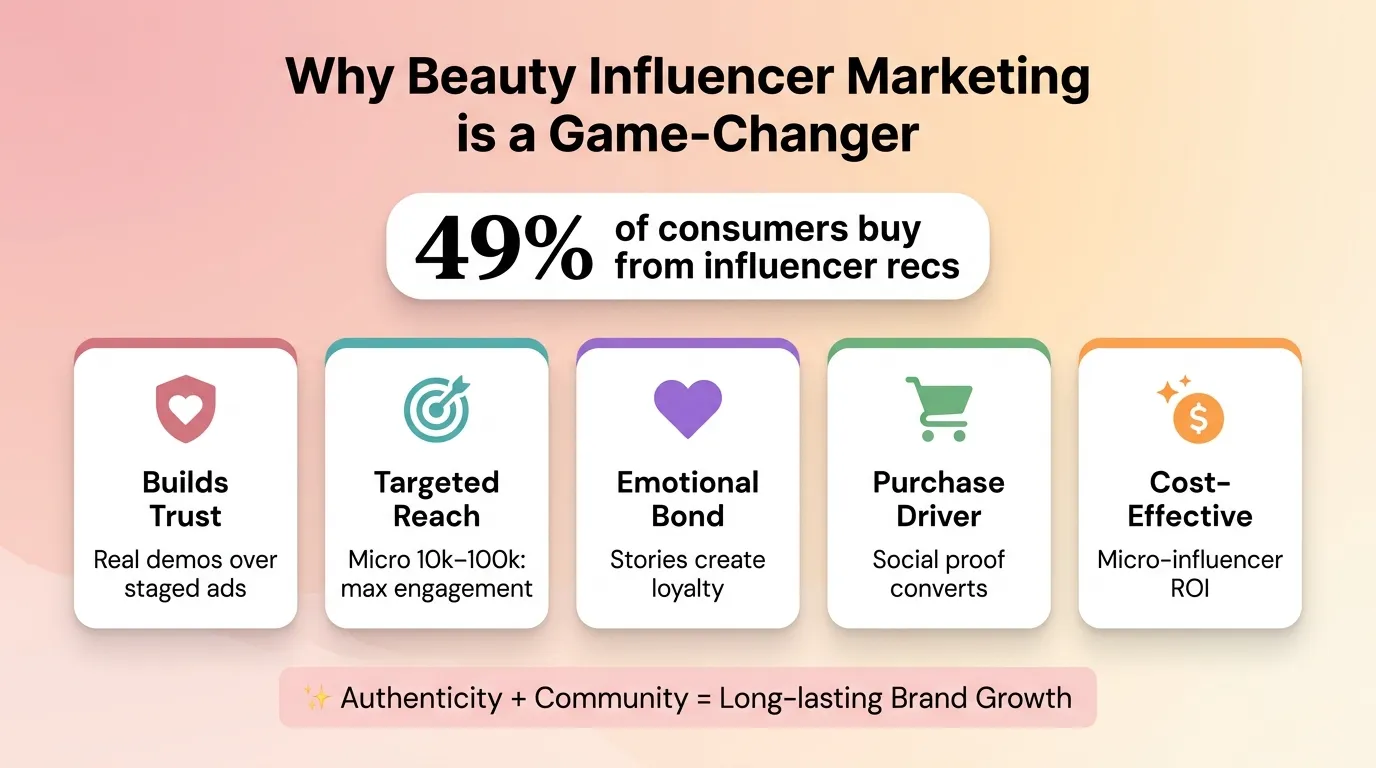
Beauty influencer marketing has revolutionised how beauty brands connect with consumers, offering unmatched opportunities to boost brand awareness, increase trust, and drive sales.
In a crowded marketplace, where consumers are bombarded with traditional advertisements, beauty influencer marketing stands out as a genuine, relatable, and trust-building strategy.
1. Builds Trust Through Authenticity
In contrast to traditional advertising, where brands control the message, influencers share real experiences with followers. This makes their recommendations feel more authentic and fosters a stronger connection based on trust.
Beauty influencers demonstrate how products work in real life, from makeup tutorials to skincare routines. This transparency builds trust because consumers see actual results, not just staged advertisements, helping them feel confident before purchasing.
2. Expands Brand Reach to Targeted Audiences
Beauty influencers build communities around specific interests, like skincare for sensitive skin or clean beauty. Brands can target these audiences and meet their needs directly.

Smaller beauty influencers often drive better engagement and loyalty than celebrities. Micro-influencers with 10k to 100k followers usually have highly engaged communities, making them valuable for targeted campaigns.
3. Creates Emotional Connections with Audiences
Influencers don’t just promote products; they share personal stories and experiences that resonate deeply with their audience. Whether it’s a transformation story or overcoming a beauty struggle, this kind of content forms an emotional bond that traditional ads often lack.
Influencers build communities around their content, creating a sense of belonging among followers. This fosters repeat engagement and deeper brand loyalty over time.
4. Influencers Drive Purchase Decisions
A 2024 study found that 49% of consumers made a purchase based on an influencer’s recommendation. That’s a huge percentage of consumers who rely on the voices they trust, not just advertisements.
Consumers often perceive influencers as more accessible and trustworthy than celebrities. When they see influencers recommending a product, it provides social proof, making the product seem more credible and boosting conversion rates.
5. Cost-Effective Marketing Strategy
While partnering with top-tier beauty influencers may come with a hefty price tag, micro-influencers provide affordable options without sacrificing engagement. These influencers tend to have a more dedicated, invested audience, resulting in strong ROI even with smaller budgets.

With the right long-term partnerships, influencer marketing doesn’t just create short-term spikes in engagement; it builds sustained brand awareness and continuous sales over time. Maintaining long-term relationships with influencers can yield consistent, long-term results for your beauty brand.
Beauty influencer marketing is a game-changer for brands because it taps into the power of authenticity and targeted engagement.
Influencers help brands connect with audiences in a more personal, genuine way, ultimately leading to higher sales and long-lasting brand growth.
Key Beauty Influencer Marketing Strategies That Deliver Results
Effective beauty influencer marketing goes beyond just picking a popular influencer and sending them a product.
For a brand to truly see results, it needs a well-thought-out strategy that aligns with its goals, connects with the right audience, and resonates through authentic, engaging content.
Here are some proven strategies that can help beauty brands leverage influencers effectively:
1. Partnering with Micro and Nano Influencers
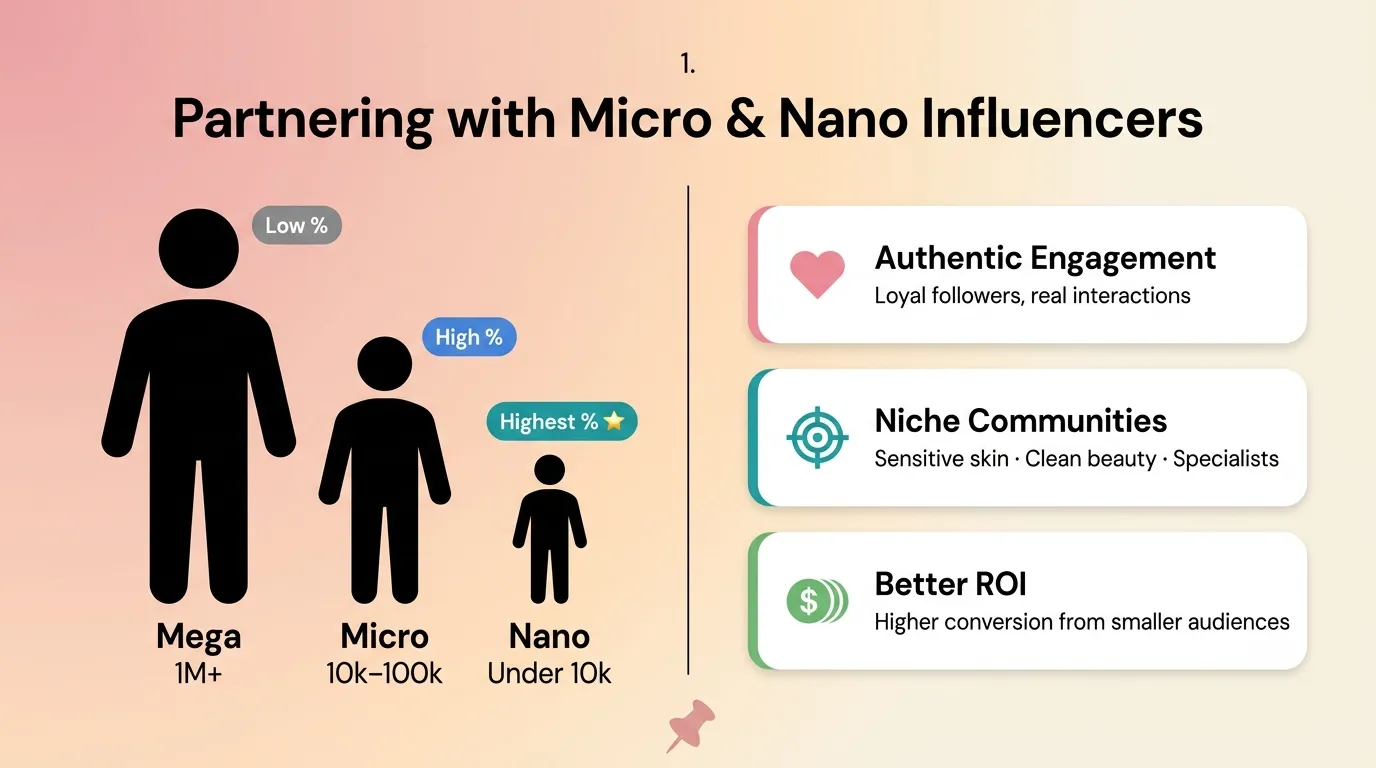
Micro (10k–100k followers) and nano (under 10k followers) influencers tend to have higher engagement rates and more loyal followers compared to their larger counterparts.
Their smaller, more dedicated audiences lead to more genuine interactions and stronger brand loyalty, making their recommendations feel more authentic and relatable.
Strategy tip: Instead of working with just a few mega-influencers, collaborate with multiple micro- or nano-influencers who cater to specific niches in the beauty space, such as sensitive-skin skincare or clean beauty enthusiasts.
For example, brands like Glossier have successfully worked with a wide range of smaller influencers to create buzz and build an organic, loyal following.
This can provide targeted outreach and better ROI, since these influencers often have more engaged audiences than their larger numbers suggest.
2. Influencer-Generated Content (IGC): Authentic Reviews and Tutorials
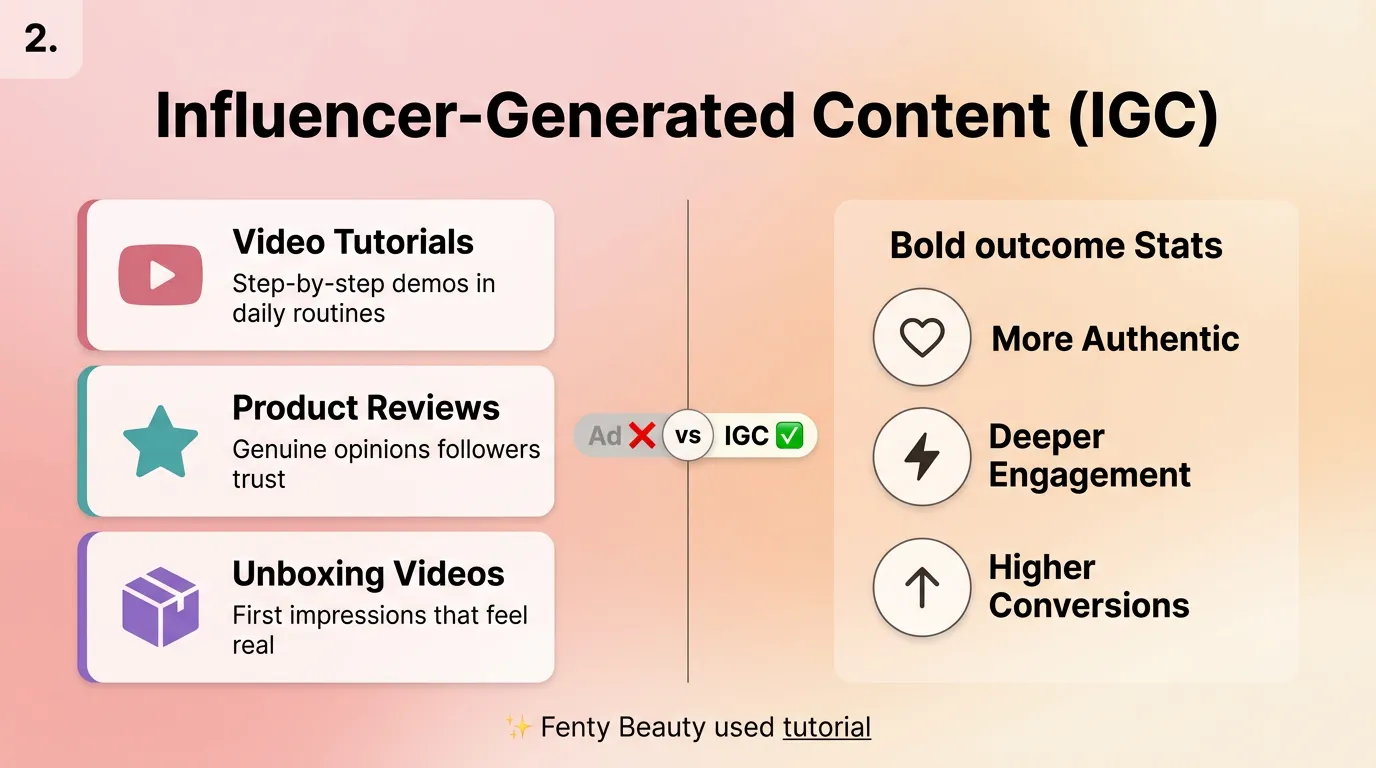
Influencer-generated content lets influencers create authentic, organic content about your products, such as product reviews, tutorials, or unboxing videos.
Followers trust influencers’ opinions and engage more deeply when they see the influencer genuinely using a product in their routine. Influencers can seamlessly weave your product into content that feels more like a friend’s recommendation than an ad.
Strategy tip: Encourage influencers to create video tutorials or step-by-step skincare routines showcasing your products in action. Fenty Beauty, for example, successfully leveraged influencer tutorials to showcase its foundation range, demonstrating how the products worked across all skin tones.
This hands-on content boosts engagement and helps the audience visualise how the product fits into their daily lives, increasing the likelihood of conversion.
3. Limited Edition and Co-Branding Campaigns
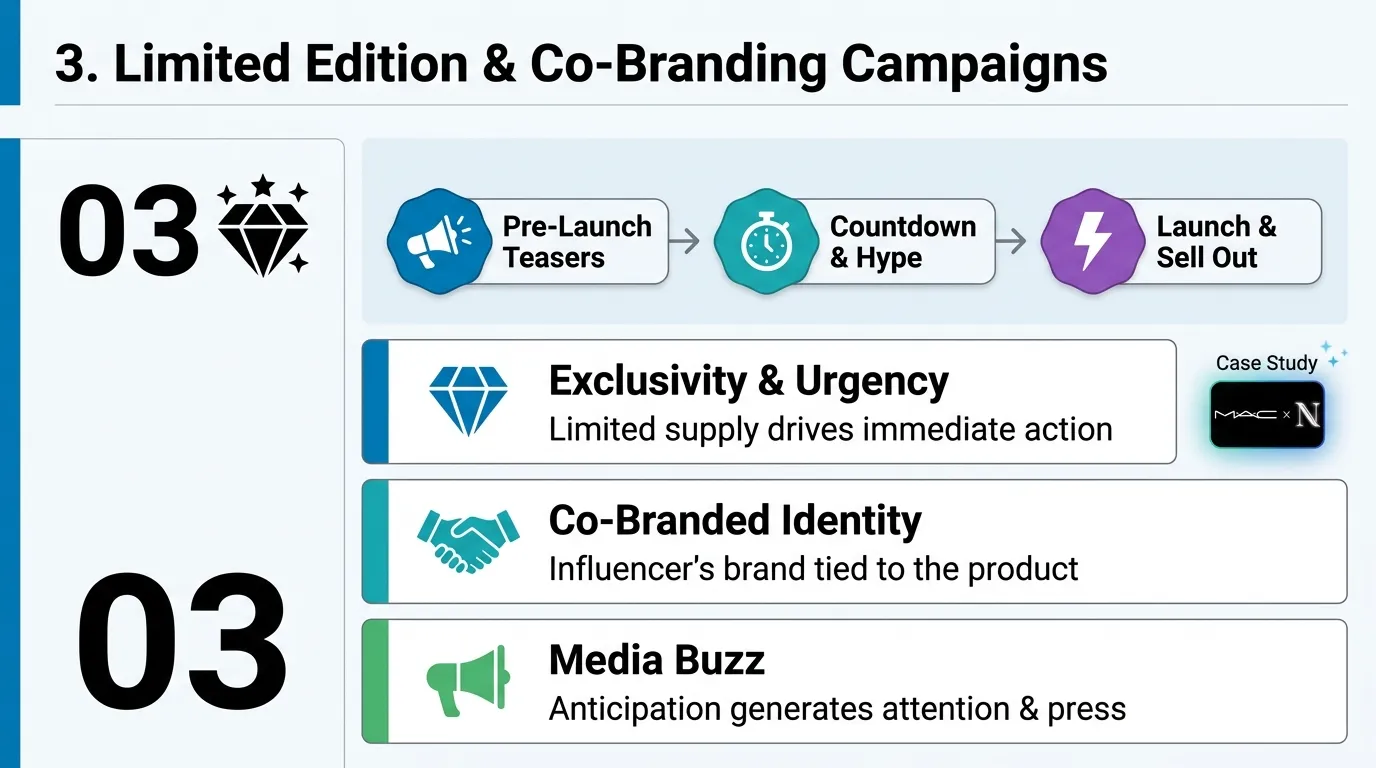
Collaborating with influencers on exclusive product lines or limited-edition releases creates a sense of urgency and exclusivity, driving both demand and attention.
When an influencer’s personal brand is tied to the product, their followers are more likely to feel they need to act quickly before the product sells out, making it a powerful sales driver.
Strategy tip: Launch co-branded beauty products with influencers and promote them through pre-launch teasers, countdowns, or special early access for followers. For example, MAC Cosmetics collaborated with Nikita Dragun to launch a limited-edition collection that sold out almost immediately.
The exclusivity of the collection generated massive anticipation, driving high sales and media buzz. This strategy builds anticipation and encourages immediate action, especially when paired with influencer promotion.
4. Leverage User-Generated Content (UGC) for Social Proof
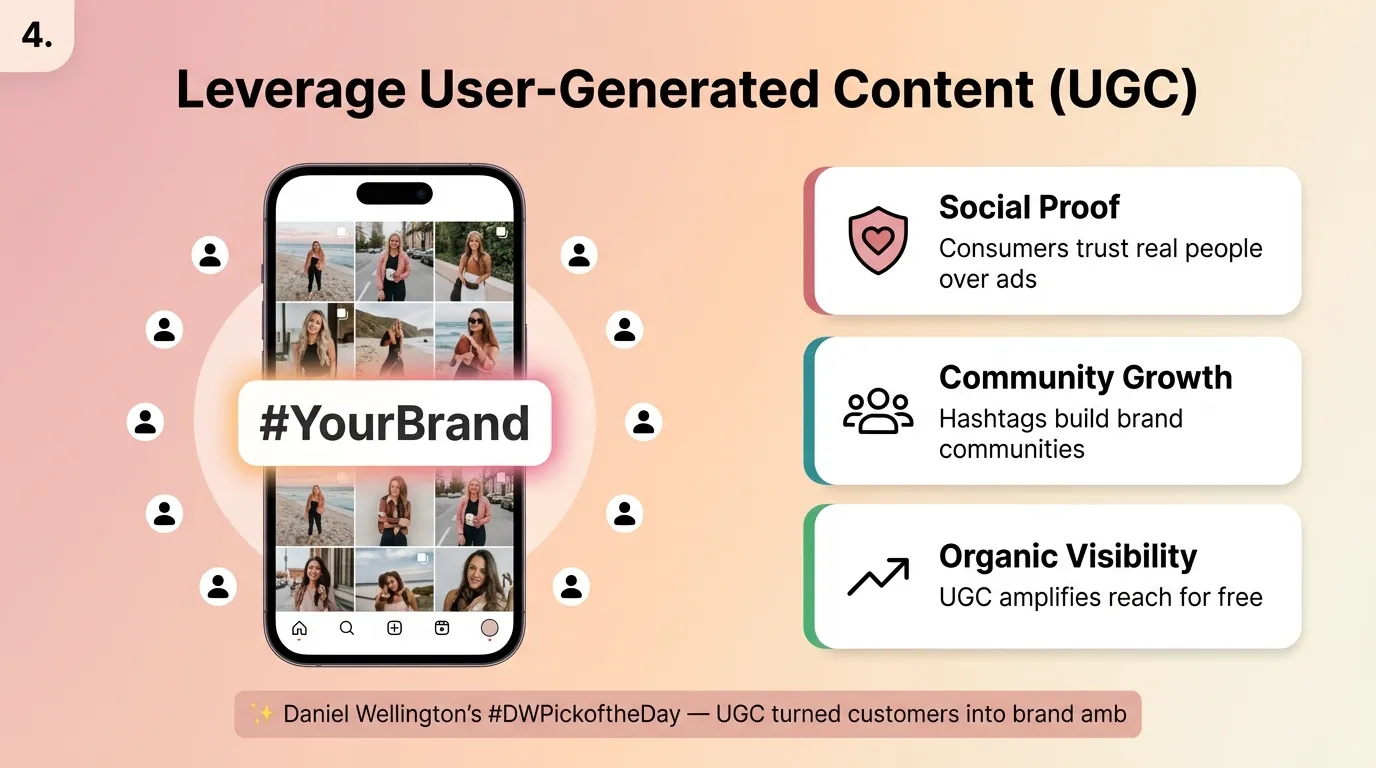
People trust other consumers more than branded content. User-generated content from influencers and their followers provides real-world results and offers authentic social proof that your product works. UGC is often more relatable and credible, which boosts a brand’s trustworthiness and perceived value.
Strategy tip: Encourage influencers to ask their followers to share their experiences using your product. Offer incentives, such as giveaways or discounts, for those who post content with a dedicated hashtag or tag your brand.
A great example of this is Daniel Wellington, which encouraged its influencers and customers to share photos using their hashtag #DWPickoftheDay. This approach helped build an entire social media community around the brand, generating both social proof and greater brand visibility.
5. Long-Term Brand Ambassadorships Over One-Off Campaigns
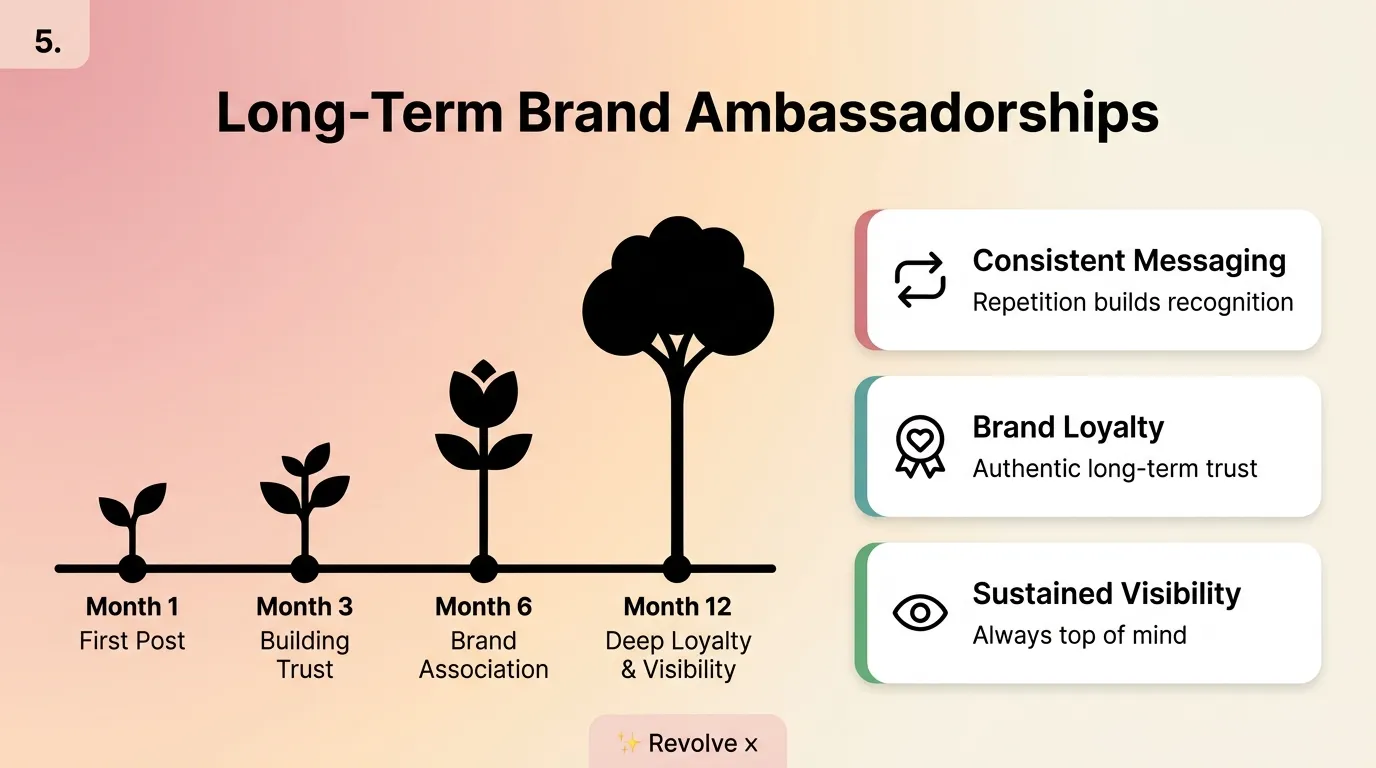
Instead of working with influencers for one-off promotions, long-term brand ambassadorships create consistent brand messaging and deeper relationships.
Over time, an influencer can build stronger associations with your brand, fostering brand loyalty and creating more consistent visibility among their followers. This is particularly beneficial in the beauty industry, where trust and authenticity matter greatly to consumers.
Strategy tip: Identify influencers whose values align with your brand and form long-term partnerships.
For example, Revolve has partnered with major influencers like Aimee Song for long-term collaborations, in which influencers repeatedly showcase products, creating a genuine connection between the brand and their audience.
Long-term partnerships help brands remain visible and top of mind, especially when influencers frequently post about the products they genuinely love and use.
6. Collaborating on Product Launches and Events
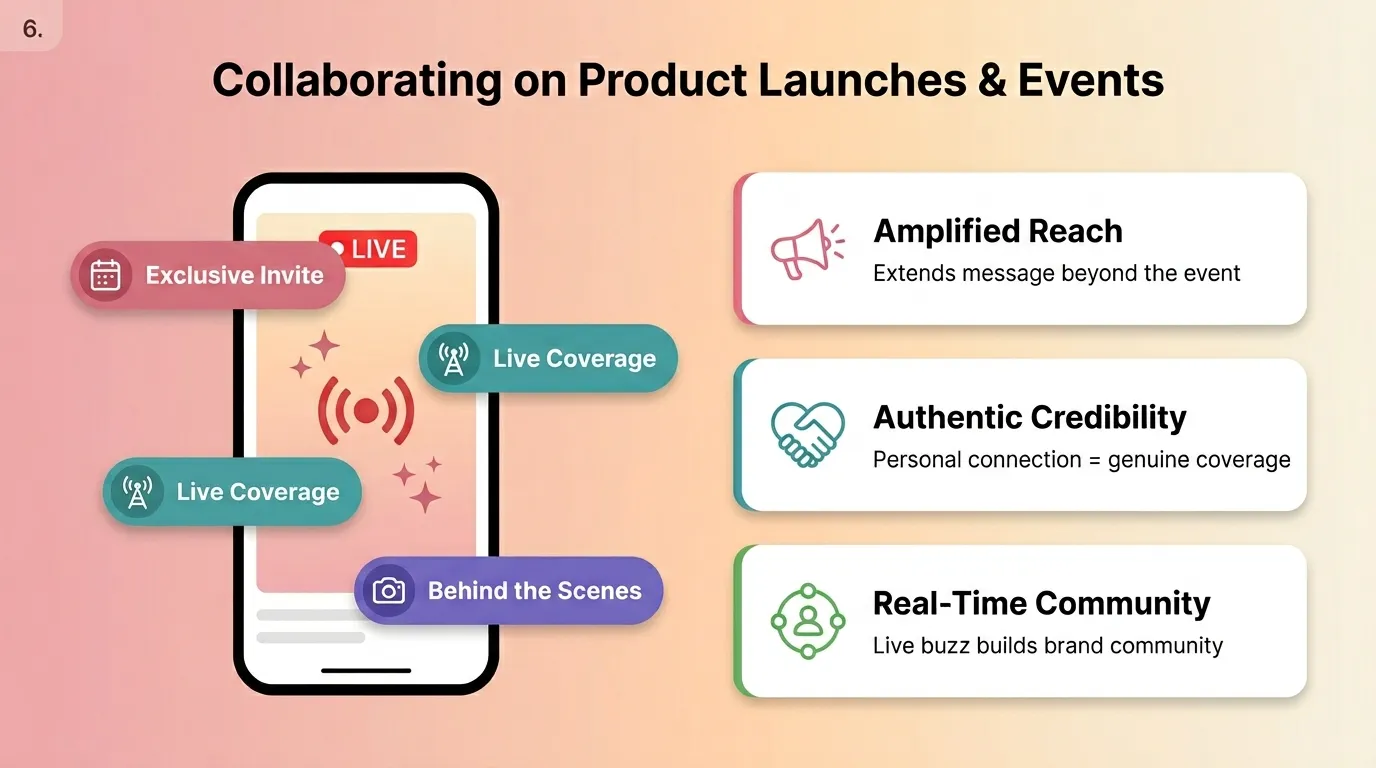
Product launches and events are high-impact moments for generating buzz and excitement. Influencers help amplify your message and extend your reach through live content, event coverage, and exclusive behind-the-scenes access.
The influencer’s personal connection to their audience makes their coverage feel authentic and credible.
Strategy tip: Invite influencers to participate in exclusive product launches or virtual beauty events, where they can engage directly with your audience. Sephora frequently works with influencers to promote its new product launches and beauty events.
By involving influencers in live events and sharing behind-the-scenes content, brands gain real-time visibility and help build a community around the launch.
7. Measuring Campaign Success: Track Engagement and Conversions
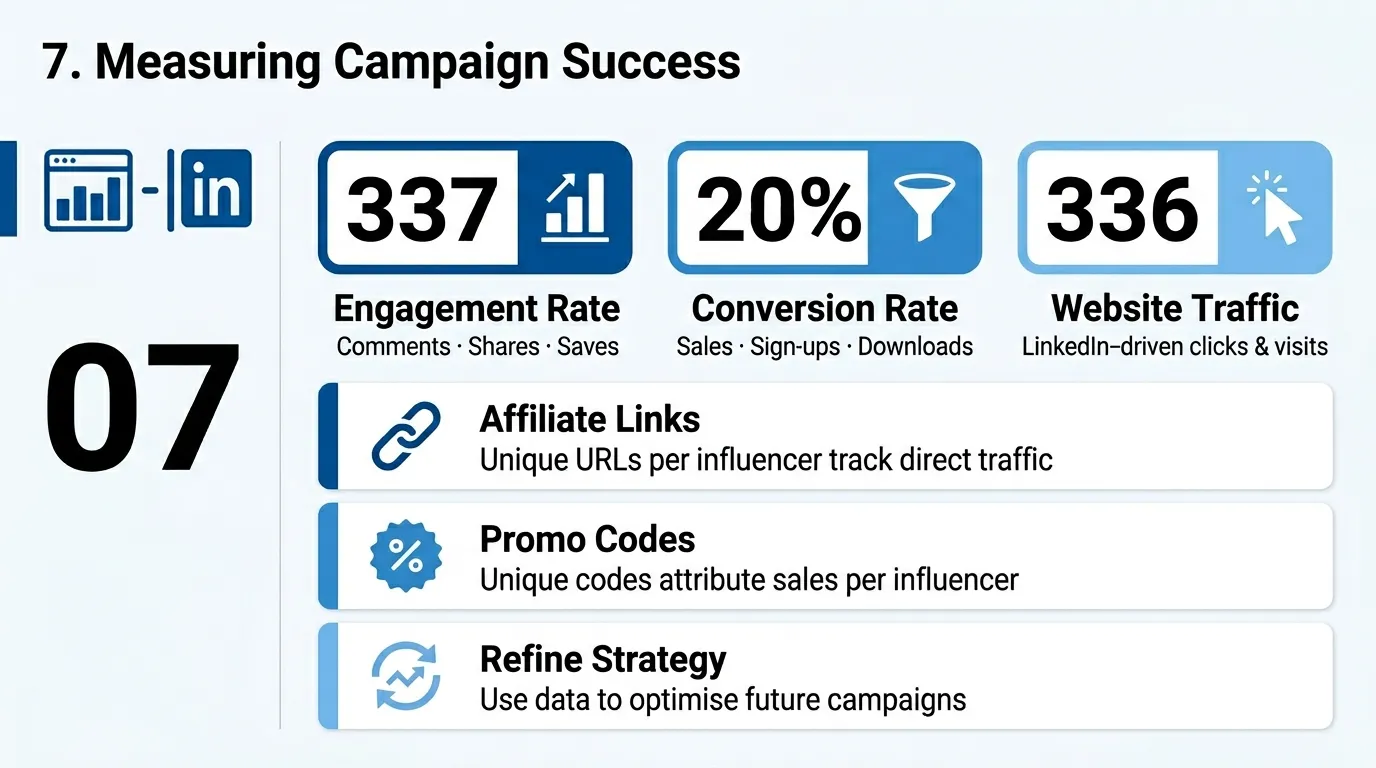
To fully understand the impact of your beauty influencer marketing campaigns, you need to track the right KPIs (Key Performance Indicators).
Engagement rates, conversion rates, and website traffic are crucial metrics for measuring the success of your campaign and ensuring you’re getting the best possible ROI.
Strategy tip: Use unique promo codes or affiliate links for each influencer to track the direct traffic or sales they drive.
For instance, Glossier uses influencer-specific links and codes to track purchases from influencer promotions. Tracking these conversions helps you understand exactly how each influencer contributes to your campaign’s success, which in turn helps refine future strategies.
When executed well, beauty influencer marketing can be a game-changer for your brand, driving both engagement and conversions.
The key is to align your influencer campaigns with your overall marketing strategy, ensuring authenticity, value, and trust are at the heart of every partnership.
Top 5 Beauty and Skincare Influencers
Choosing the right influencer is key to effective beauty influencer marketing, but not all creators carry the same weight.
Below are five influential beauty figures whose credibility, audience size, and impact make them powerful partners for brands looking to boost awareness, trust, and sales.
1. Huda Kattan (@hudabeauty)

Huda Kattan is one of the most powerful beauty influencers globally and the founder of Huda Beauty. With more than 54 million Instagram followers, she’s widely recognised for her makeup expertise and for driving trends across platforms.
Her Instagram alone boasts over 54 million followers, making her one of the most followed voices in beauty online.
Her influence has historically had a real market impact, with products she features selling out quickly after a mention, and her brand’s own cosmetic lines (such as foundations, eyeshadow palettes, and false lashes) are routinely among the top‑selling items worldwide.
2. Nikkie de Jager (@nikkietutorials)
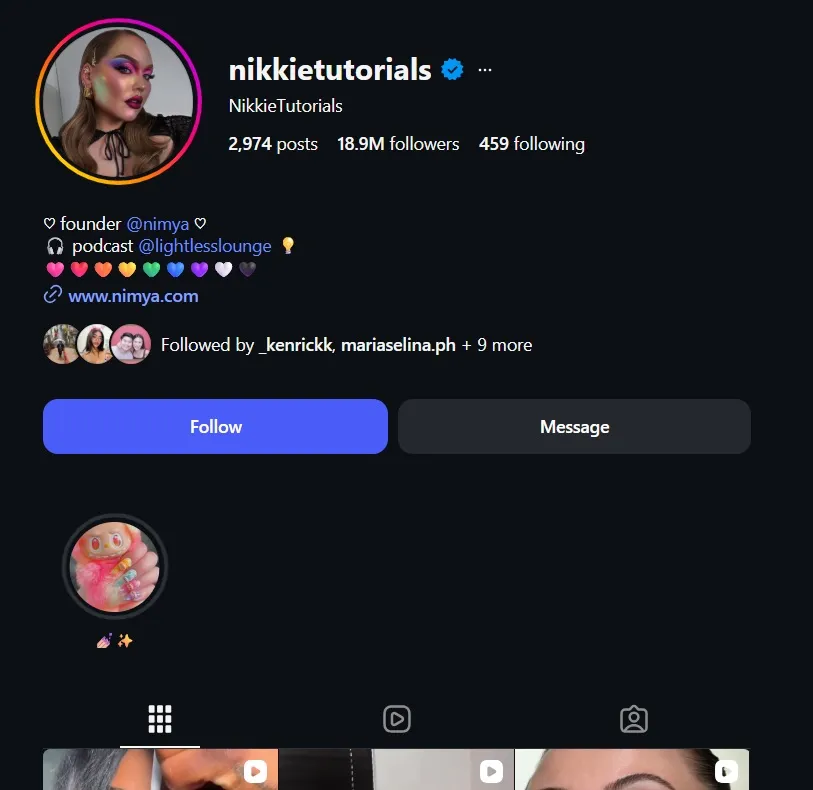
Better known as NikkieTutorials, Nikkie de Jager is a Dutch makeup artist and YouTube phenom with around 14.9 million subscribers and more than 2 billion total video views.
Her 2015 video “The Power of Makeup” became a landmark moment in beauty content, sparking a wave of confidence‑focused tutorials and influencing how beauty transparency is discussed online.
Nikkie’s influence extends beyond YouTube; she’s collaborated with luxury brands, advised major fashion houses, and developed product lines that resonate with beauty enthusiasts worldwide.
3. Bretman Rock (@bretmanrock)
Bretman Rock is an American‑Filipino beauty influencer and social media personality known for his dynamic personality and engaging makeup content.
With millions of followers across Instagram and YouTube (nearly 8.8 million YouTube subscribers), Bretman blends humour and relatable beauty advice to make skincare and makeup content feel fun, accessible, and empowering.
He has also crossed into mainstream media with his own MTV reality show, broadening his appeal far beyond social platforms.
4. Dr. Shereene Idriss (@shereeneidriss)
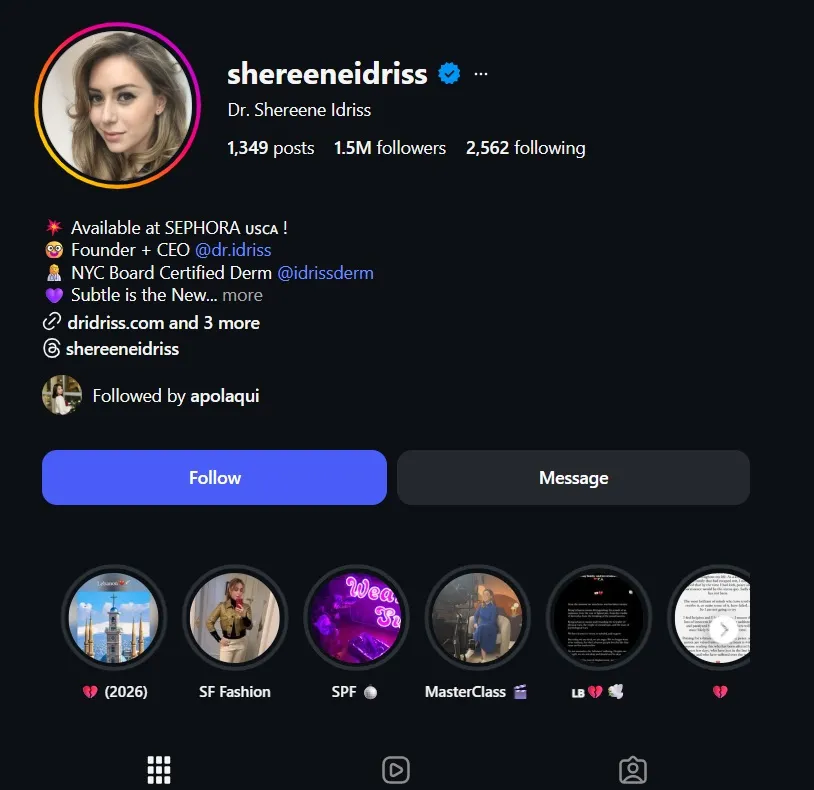
Dr. Shereene Idriss, widely known as the “Pillowtalk Derm,” is a board‑certified dermatologist based in New York City with a strong and growing social media presence.
As of 2025, she has over 3.6 million followers across platforms, thanks to her approachable breakdowns of skincare science and myth‑debunking content.
Dr. Idriss also founded her clinical practice and developed her own skincare line, demonstrating how medical expertise can successfully translate into influencer credibility.
5. Caroline Hirons (@carolinehirons)
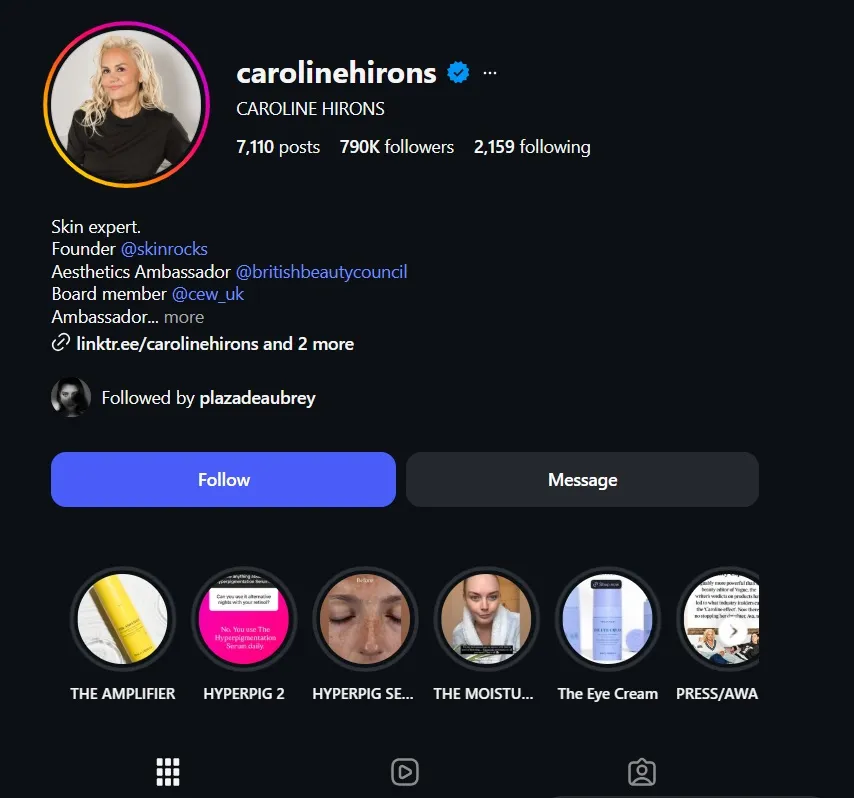
Caroline Hirons is one of the most respected voices in skincare education and one of the industry’s most influential experts.
With around 780k Instagram followers, she’s widely recognised for her no‑nonsense reviews, deep product knowledge, and commitment to evidence‑based skincare advice.
Caroline is a trained aesthetician and author of the bestselling Skincare guide, and she founded the Skin Rocks brand and app: both designed to help consumers understand and optimise their skincare routines.
How to Choose the Right Beauty Influencers for Your Marketing Strategy
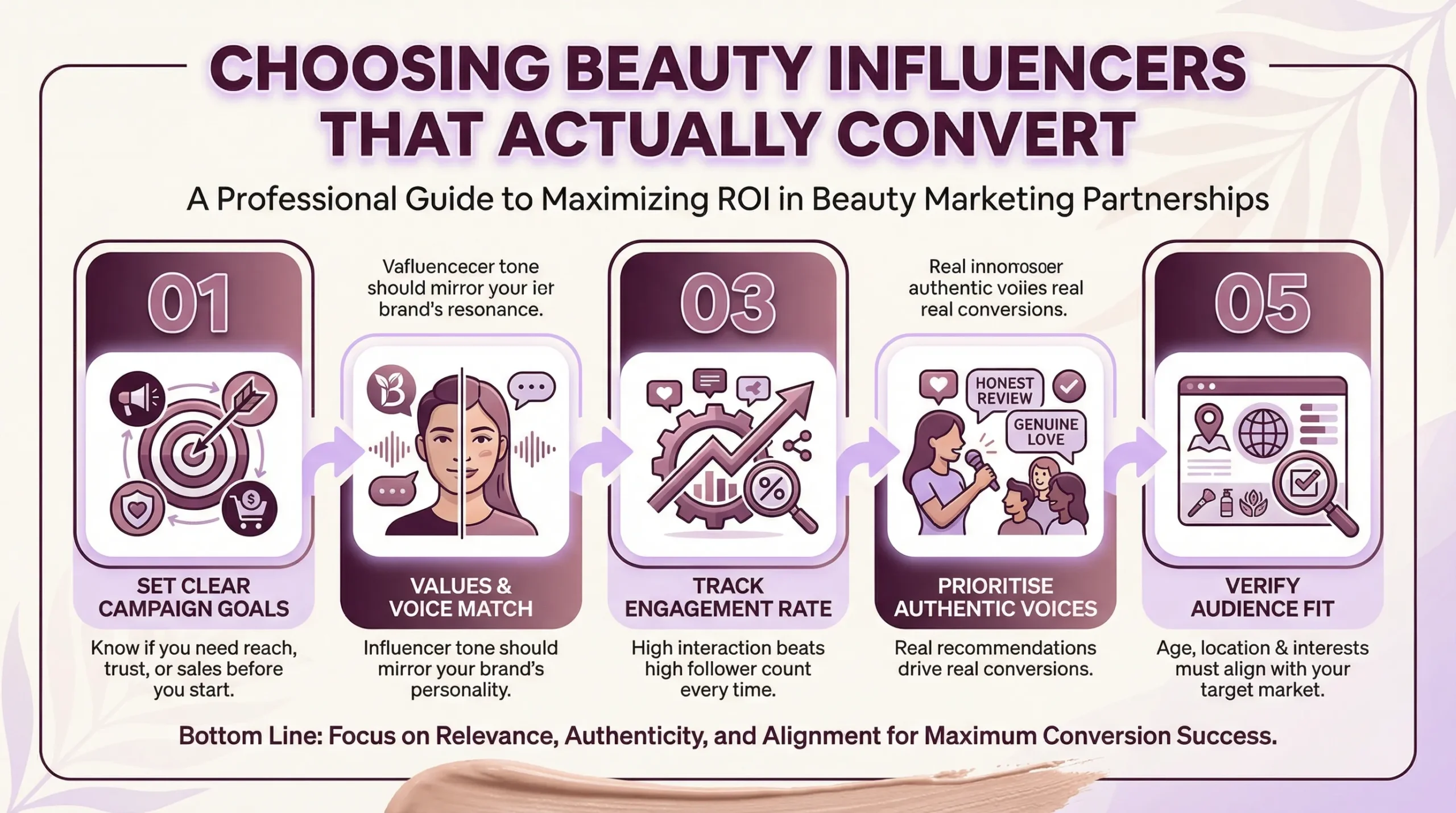
Selecting the right beauty influencers for your marketing strategy can make or break your campaign. It’s not just about choosing influencers with the most followers, but about finding influencers who resonate with your message.
Here are key factors to consider when selecting the best beauty influencers for your campaign:
1. Define Your Campaign Goals
Before you begin searching for influencers, define your campaign objectives. What do you hope to achieve with influencer marketing? Are you looking to:
- Raise awareness about a new beauty product?
- Drive conversions or sales on your e-commerce platform
- Build brand credibility and trust with your audience?
- Boost engagement with your followers on social media?
By clearly defining your goals, you can determine whether you need influencers who focus on awareness, engagement, or sales. For example, if your goal is to increase conversions, you may want to collaborate with influencers who have a proven track record of driving sales or those who have affiliated links for tracking purchases.
2. Align With Your Brand Values and Message
Your brand’s values, voice, and image should align with the influencers you choose. Working with influencers who share similar values and have an authentic connection with their followers creates stronger, more genuine content.
Here’s how to align an influencer with your brand:
- Research their past content: Are their values in line with yours? Do they promote causes, products, or lifestyles that match your brand?
- Check the tone and style of their content: Does it match your brand’s voice? If your brand is professional and educational, partnering with an influencer known for humour or entertainment may not be the best fit.
For example, Dr. Shereene Idriss promotes science-backed skincare and engages with her followers with factual, educational content. If your brand is focused on providing dermatologically sound skincare, partnering with her would be an ideal fit.
Conversely, if your brand has a more playful, trendy vibe, Bretman Rock might be the right choice for a fun and engaging campaign.
3. Analyse Engagement Over Follower Count
While it may be tempting to choose influencers based on their massive follower count, engagement rate is a far more important metric for assessing an influencer’s impact.
An influencer with high engagement rates (likes, comments, shares) is more likely to drive meaningful results than one with a large but inactive following.
Engagement rate shows how much interaction the influencer’s audience has with their content, and it reflects the trust and loyalty their followers have. You can calculate engagement rate by using this formula:
- Engagement Rate = (Total Engagements / Total Followers) x 100
For example, an influencer with 100,000 followers and 5,000 interactions per post would have an engagement rate of 5%, which is often considered strong.
Conversely, an influencer with 1 million followers but only a 1% engagement rate might not deliver the results you’re looking for.
4. Look for Authenticity and Trust
Authenticity is one of the most important qualities of a successful influencer. Their followers must trust their opinions and feel like the influencer is genuinely recommending the products they endorse.
Avoid influencers who overpromote products or appear to focus only on the highest-paying brand deals.

To assess authenticity:
- Review past collaborations: Are the products the influencer promotes consistent with their personal brand and beliefs? Do they genuinely seem to enjoy the products, or is their endorsement purely transactional?
- Check comments and interactions: Does the influencer engage with their followers in an authentic, personable way? Are they responding to comments and fostering community?
Caroline Hirons, for instance, is trusted in the skincare community because her reviews are transparent and based on scientific evidence. If she promotes a product, her followers trust her endorsement, leading to higher trust and conversion rates.
5. Match the Influencer’s Audience With Your Target Demographic
The influencer’s audience demographic is crucial. Even if an influencer has a large following, if their audience doesn’t align with your target market, the campaign won’t yield the desired results.
Key factors to consider about the influencer’s audience:
- Age group: Do they align with your target age demographic? A skincare brand targeting millennials should work with influencers who have a strong millennial following.
- Location: Is the influencer’s audience based in your geographical market? If your beauty products are sold primarily in Singapore, for example, partnering with influencers based in Singapore or with an audience there is a smart move.
- Interests: Does the influencer’s audience care about the same beauty topics? For example, if your product is focused on luxury skincare, partnering with an influencer whose audience is into luxury lifestyle and skincare is more likely to generate strong results.
You can find these insights by examining audience data available from platforms like Instagram Insights or YouTube Analytics, or by using influencer marketing platforms.
Transform Your Beauty Brand with Influencer Marketing
Influencer marketing a game-changer for beauty brands looking to stand out and build real connections with their audience.
By teaming up with the right beauty influencers, you can create authentic, engaging content that not only gets your brand noticed but also earns trust and drives sales. Whether you’re collaborating with micro-influencers for a more personal touch or working with macro-influencers for wider exposure, the goal is always to keep things genuine to your brand’s vibe.
If you’re ready to level up your beauty brand and start seeing real results, MediaOne is here to help. We’ll help you find the perfect influencers, create campaigns that resonate, and get the results you’re aiming for. Let’s make your brand’s influence unforgettable! Contact us today!
Frequently Asked Questions
How can I determine the right budget for a beauty influencer marketing campaign?
The budget for a beauty influencer campaign varies based on factors such as the influencer’s following size, the type of collaboration (e.g., one-time post or long-term partnership), and the platform. Micro-influencers are more affordable and often deliver higher engagement, whereas macro-influencers may require a larger investment. It’s important to align your budget with the campaign goals to maximise ROI.
How do I measure the ROI of my beauty influencer marketing campaign?
Measuring the return on investment (ROI) in beauty influencer marketing involves tracking key metrics such as engagement rate, conversion rate, website traffic, and sales generated from influencer promotions. Using affiliate links, promo codes, and tracking tools can help you monitor the direct impact of influencer content on your sales and audience growth.
Can influencer marketing work for niche beauty brands?
Yes, influencer marketing is particularly effective for niche beauty brands. Partnering with micro-influencers or niche beauty influencers allows you to target a more specific audience with tailored messaging, driving higher engagement and conversions. Niche influencers often have more loyal followers who are highly interested in your unique product offering.
How can I ensure authenticity in my influencer partnerships?
To ensure authenticity, work with influencers who genuinely align with your brand values and have a history of sharing personal and honest opinions. Instead of scripting their content, give influencers creative freedom to present your product in their own voice. This will make the content feel more natural and resonate better with their audience.
What is the best way to handle negative feedback from beauty influencers?
Negative feedback can be valuable because it helps you improve your product or service. If a beauty influencer shares a negative review, approach it constructively. Respond professionally, thank them for their honest opinion, and address any concerns they may have raised. This shows that your brand values transparency and customer feedback, which can enhance your reputation.