
Omnichannel selling is a retail strategy that integrates multiple sales channels to deliver a seamless shopping experience for customers. Whether they shop on social media platforms like TikTok, marketplaces like Shopee, or a brand’s official website, customers receive a consistent experience.

In today’s digital age, omnichannel selling isn’t just beneficial; it’s essential for modern retailers wanting to stay competitive. According to Colliers’ 2025 Global Retail Report, Asia Pacific leads with 5% real retail spending growth, driven by omnichannel innovation, with store-based sales projected to grow 20.4% and non-store sales 43.4% by 2028.
If you’re considering using Shopline as a merchant store, you need an effective strategy to succeed on this platform. This playbook will help you achieve just that.

Key Takeaways:
- Omnichannel retail is now a baseline expectation, not a differentiator.
- Asia-Pacific leads global retail transformation through mobile-first, social commerce adoption.
- Shopline’s unified commerce platform enables seamless integration across online and offline channels.
- Successful brands are treating their merchant stores as operational infrastructure, not just sales destinations.
- 75% of leading DTC brands are replacing channel-based KPIs with customer lifetime value metrics.
Omnichannel Selling vs. Multichannel Selling
These two terms are often used interchangeably, but they describe very different approaches to selling and customer experience. Understanding the distinction matters because it affects how customers move between touchpoints, how data is used, and how scalable your operations are over time.
What Omnichannel Selling Does Differently
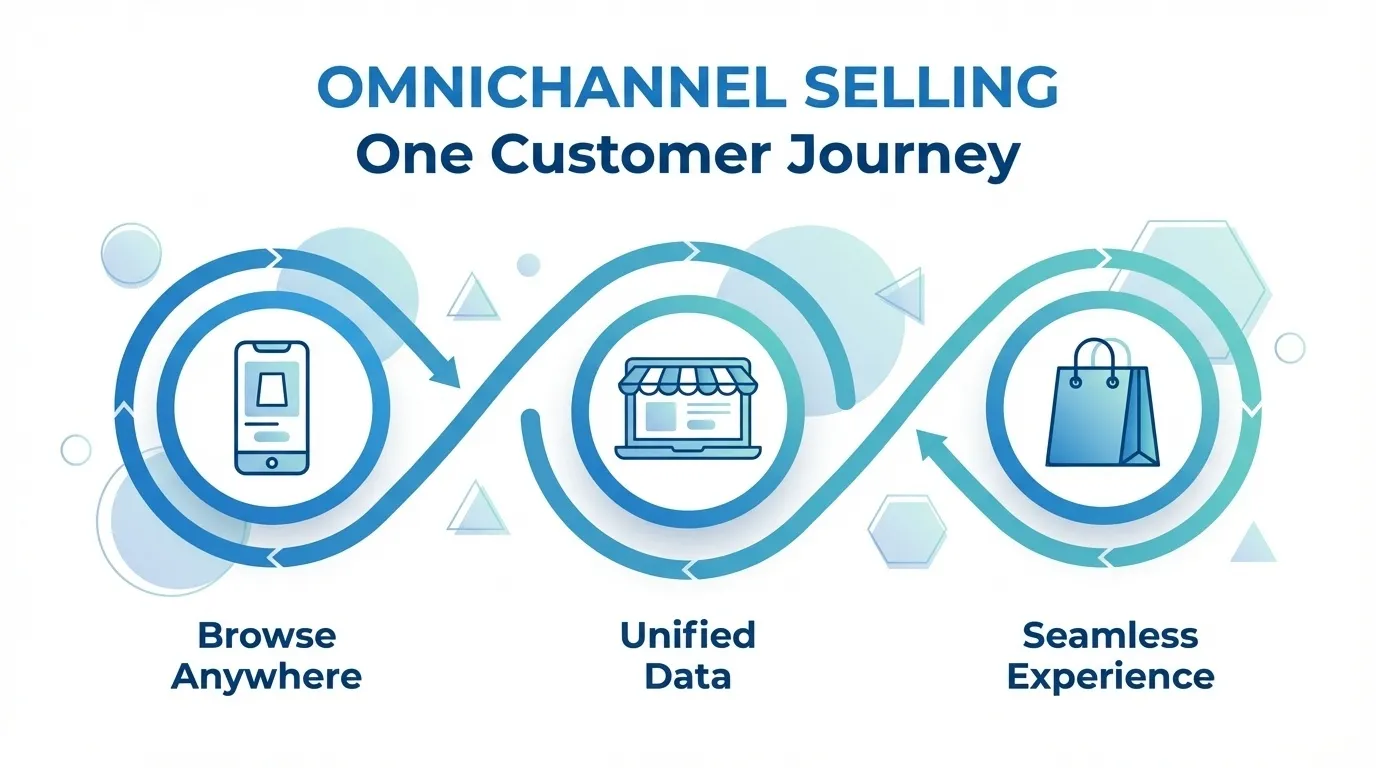
Omnichannel selling focuses on continuity rather than just coverage. All channels are connected through shared systems, data, and processes, ensuring a consistent experience across all engagement points.
As Justin Kulovsek, omnichannel marketing expert, notes: “Consumers don’t think in channels; they think in outcomes. The companies that succeed in 2026 will be those that treat their channels like instruments in an orchestra—not soloists competing for attention.”
In an omnichannel setup, a customer can browse products on Instagram, add items to a cart on mobile, complete the purchase on desktop, and contact support through chat without repeating information. Inventory updates in real time across platforms, customer profiles are unified, and promotions follow the customer rather than the channel.
The goal is not to push customers into one “best” channel, but to let them move freely while maintaining context at every step.
Key characteristics of omnichannel selling:
- Sales, inventory, and customer data are synced across channels
- Customers are recognised across platforms and devices
- Pricing, promotions, and availability are consistent
- Support teams have full visibility into the customer journey
What Multichannel Selling Really Means

Multichannel selling is about presence. A business sells across multiple platforms, but each channel operates largely independently.
For example, a brand might sell on Shopee, run a standalone eCommerce website, and accept orders through Instagram DMs. Each channel has its own inventory view, customer records, promotions, and fulfilment logic. A customer who buys on Shopee is effectively treated as a different customer from one who buys on the website, even if they are the same person.
This approach can work well in the early stages because it quickly increases reach. However, it creates operational silos. Customers may see different prices across platforms, support teams may lack a complete order history, and marketing decisions may be made with incomplete data.
Key characteristics of multichannel selling:
- Multiple sales channels are active at the same time
- Channels are managed separately with minimal data sharing
- Customer journeys stop and start at each platform
- Reporting is fragmented across tools
Why the Difference Matters in Practice
From a customer perspective, multichannel selling can feel disjointed, even if the brand is visible everywhere. Omnichannel selling removes friction by design, which improves trust, repeat purchases, and lifetime value.
From a business perspective, omnichannel systems enable better decision-making. When data flows into a single view, teams can analyse behaviour across touchpoints rather than guessing from partial signals. This becomes especially important as order volumes grow and marketing spend increases.
According to NielsenIQ’s 2026 Consumer Outlook, “The rise of omnichannel shopping means consumers move easily between online, offline, and social platforms. eCommerce is one part of a larger shopping system—consumers expect a consistent and personalised experience across channels, not a focus on one single platform.“
Multichannel selling is about being present across multiple channels. On the other hand, omnichannel selling is about being consistent and connected everywhere.
If multichannel answers the question “Where can customers buy from us?”, omnichannel answers “How do customers experience us, regardless of where they start or finish?”
How to Develop an Omnichannel Selling Strategy
An omnichannel selling strategy is about more than being present on multiple platforms. It is about making every interaction feel connected, intentional, and consistent, regardless of where the customer starts or finishes their journey. When implemented properly, customers do not notice the channels. They experience your brand as a single, continuous conversation.
This guide breaks down the essential components of an effective omnichannel strategy and explains how to put them into practice without overcomplicating the process.
Core Elements of an Effective Omnichannel Strategy
Before diving into specific tactics, it helps to step back and understand what makes an omnichannel strategy work. Omnichannel success does not come from adding more platforms or tools. It comes from deliberately designing the experience, with the customer at the centre and the business aligned behind that goal.
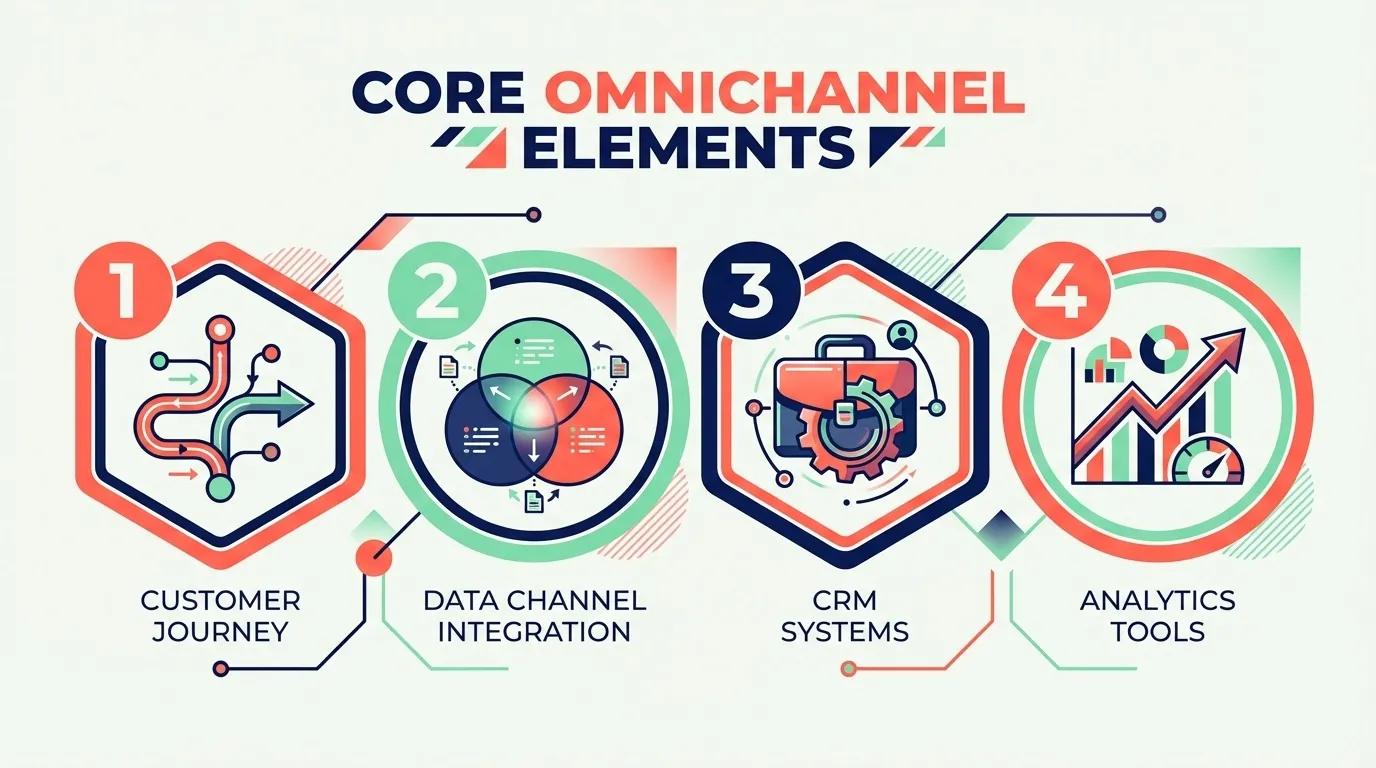
The elements below form the foundation of a strategy that feels connected, scalable, and genuinely useful to customers rather than fragmented or reactive:
#1: Mapping Out the Customer Journey
A strong omnichannel strategy starts with clarity. You need to understand how customers actually interact with your brand, not how you assume they do.
Begin by identifying key touchpoints, including ads, social platforms, email, websites, messaging apps, physical locations, and post-purchase support. Then, examine how customers move between these touchpoints over time.
Look for patterns, common drop-off points, and moments where customers typically need reassurance or additional information.
Expert Insight: According to McKinsey research cited in retail industry analyses, “By 2030, omnichannel is expected to become the dominant retail model, with seamless integration across touchpoints as the standard.”
This shift means businesses must map journeys episodically rather than linearly—customers might discover on a smart TV, research on a laptop, and convert via a voice assistant. Customer journey mapping should be grounded in real data and real behaviour. Interviews, surveys, analytics, and support logs all provide valuable insight.
The goal is to view your brand from the customer’s perspective, including where the experience flows smoothly and where it breaks down.
#2: Integrating Data Across All Channels
Omnichannel strategies fail most often when data lives in silos. If each channel operates independently, the customer ends up repeating themselves, receiving irrelevant messages, or being treated like a stranger every time they switch platforms.
Data integration allows you to build a single, unified view of the customer. This includes purchase history, browsing behaviour, communication preferences, and past interactions with support or sales teams.
When data flows across channels, teams can make informed real-time decisions. Marketing can personalise campaigns. Sales can respond with context. Support can resolve issues faster because they already know the customer’s history. The experience feels intentional rather than reactive.
2026 Trend: Craig Houliston, Executive Director at NielsenIQ, emphasises: “Consumers today are more intentional with every choice. They want brands that understand their needs and help make everyday decisions easier. This will guide competition across the region in 2026.”
Using Technology to Support Omnichannel Success
Technology does not replace strategy; it enables execution at scale. The right tools help ensure consistency, visibility, and responsiveness across every channel.
#3: CRM Systems
Customer relationship management systems act as the central source of truth for customer data. A well-configured CRM enables cross-department teams to access the same information, reducing duplication and miscommunication.
CRMs support omnichannel selling by tracking interactions across email, social, web forms, chat, and sales pipelines. This makes it easier to personalise outreach, follow up appropriately, and maintain continuity even when multiple team members are involved.
#4: Data Analytics Tools
Analytics tools help you understand what is working and what is not. They reveal how customers move between channels, which touchpoints influence decisions, and where friction is introduced.
Beyond performance tracking, analytics should be used to generate insights. For example, you might discover that customers who engage on two or more channels convert at a higher rate, or that certain combinations of channels drive repeat purchases.
These insights allow you to refine your omnichannel approach based on evidence rather than assumptions.
Bringing It All Together
An effective omnichannel selling strategy is built on clarity, integration, and intentional use of technology. It requires ongoing refinement as customer behaviour evolves and new platforms emerge.
When every channel shares data, speaks the same brand language, and supports the same customer journey, the result is a selling experience that feels seamless rather than scattered. Customers do not feel pushed from channel to channel. Instead, they feel supported wherever they choose to engage.
How to Use Shopline as a Merchant Store
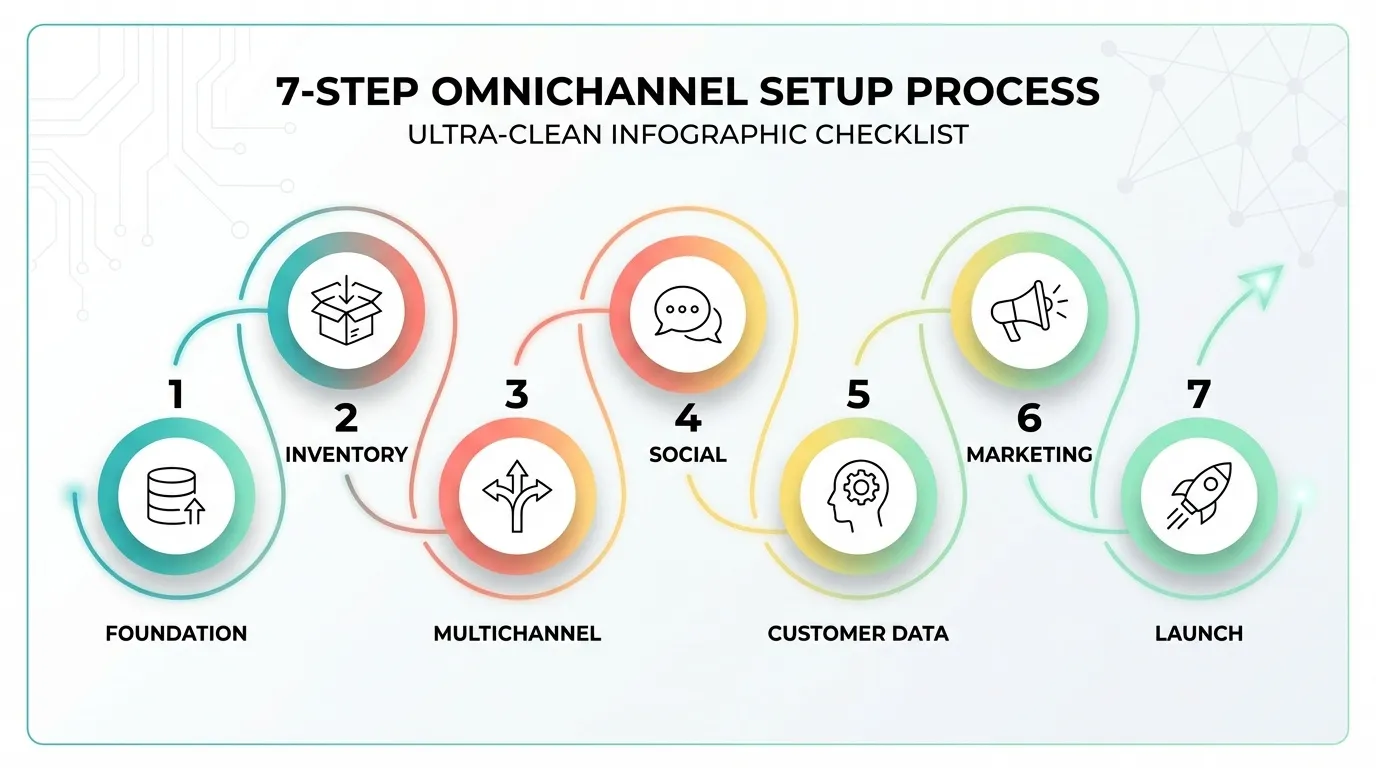
Setting up Shopline as a merchant store works best when it is approached in phases rather than as a one-time technical task.
The objective is to make Shopline the operational core of your omnichannel selling setup, where product data, inventory, orders, and customer information are managed centrally while customers move freely across channels.
Phase 1: Foundation Setup
The foundation starts with configuring your Shopline account correctly. This includes setting up your domain, currency, language, payment gateways, shipping rules, and primary markets.
Product data should be structured carefully from the start. Clear SKUs, consistent variants, aligned pricing, and complete descriptions ensure that the same product logic flows smoothly across all connected channels. When implemented correctly, this layer prevents inconsistencies that are costly to fix later.
Phase 2: Inventory and Order Control
Inventory and order management should be centralised early. Stock must be treated as a shared resource across all channels, with real-time updates preventing overselling and customer frustration.
Orders from social platforms, marketplaces, and the website should be consolidated in a single dashboard. This allows fulfilment teams to work from one queue, customer service to see the full purchase context, and refunds or exchanges to follow the same rules regardless of where the order originated.
Phase 3: Multichannel and Marketplace Integration
Once the operational core is stable, multichannel connections can be layered in. TikTok Shop, Shopee, Lazada, and other marketplaces should be connected through Shopline’s multichannel tools, with products mapped back to a single master catalogue.
Inventory synchronisation should be enabled to ensure stock levels update automatically across all locations. This inward flow of orders and inventory data enables omnichannel selling to scale without operational chaos.
Phase 4: Social Commerce and Live Selling
Social commerce works best when it is treated as an extension of the same system. Product catalogues should be synced to TikTok, Instagram, and Facebook so customers can move from discovery to checkout with minimal friction.
Live selling sessions should draw from the same inventory pool, with stock updating in real time as orders are placed. Mobile checkout and chat-based purchases should be tested thoroughly to ensure speed and reliability.
Phase 5: Customer Data and POS Integration
Customer data integration ties the entire setup together. Profiles from all channels should be unified so that purchase history, preferences, and interactions are visible in one place. Reviews and ratings can be aggregated where applicable, and segmentation rules can be applied to support more relevant marketing and better support experiences.
For businesses with physical locations, Shopline POS can be added to share inventory and customer data across online and offline touchpoints.

Phase 6: Marketing, Performance, and Analytics
Marketing and performance optimisation should operate across channels rather than in isolation. Loyalty programmes, affiliate systems, email, and SMS automation should align with the same customer data.
Site speed, mobile performance, and analytics configuration directly affect conversion and retention. Multichannel attribution helps teams understand how different touchpoints contribute to revenue, rather than crediting only the final interaction.
Phase 7: Testing, Launch, and Ongoing Optimisation
Before scaling, the entire system should be tested end-to-end. This includes purchase flows, inventory sync accuracy, payments, fulfilment, and notifications across all channels. Teams should be trained on unified workflows, followed by a controlled launch and close monitoring.
Omnichannel selling is not a one-off setup. Continuous review and optimisation are required as customer behaviour, platforms, and markets evolve.
Case Study: Sunnystep’s Win with Omnichannel Selling on Shopline

Sunnystep is a sustainable comfort footwear brand founded by Mao Ting, using eco-friendly materials like algae and repurposed coffee grounds to create anatomically precise shoes.
The Challenge
In just one year, Sunnystep’s store presence doubled from 8 to 14 outlets in Singapore and expanded into Malaysia. The challenge was integrating online and offline channels to deliver a seamless shopping experience while managing increased traffic and complex operations.
The Solution
Sunnystep implemented Shopline’s unified commerce platform to harmonise its operations:
- Performance Optimisation: During high-traffic year-end sales, Shopline’s Page Speed Booster and Conversion Booster tools achieved exponential sales growth.
- POS Integration: Shopline Retail POS connected all online and offline stores, maintaining accurate stock levels across locations.
- Loyalty Program: The integrated Member System drove steady month-on-month increases in returning members.
- Affiliate Marketing: Omnichannel discount redemption boosted affiliate conversion rates to 11%.
The Results
- Doubled store presence in 1 year (8 to 14 outlets)
- 11% affiliate conversion rate (exceeding industry average)
- Exponential growth during peak periods
- Steady increase in returning members across all channels
“As our business grows, our operations are getting more complex. We need a robust, centralised platform to deliver an omnichannel experience for our customers. SHOPLINE can provide additional functionality to deliver a customised online experience. It also allows us to open more stores without undermining operational efficiency.” – Mao Ting, Founder, Sunnystep
How Shopline Fits Into a Practical Omnichannel Selling Setup
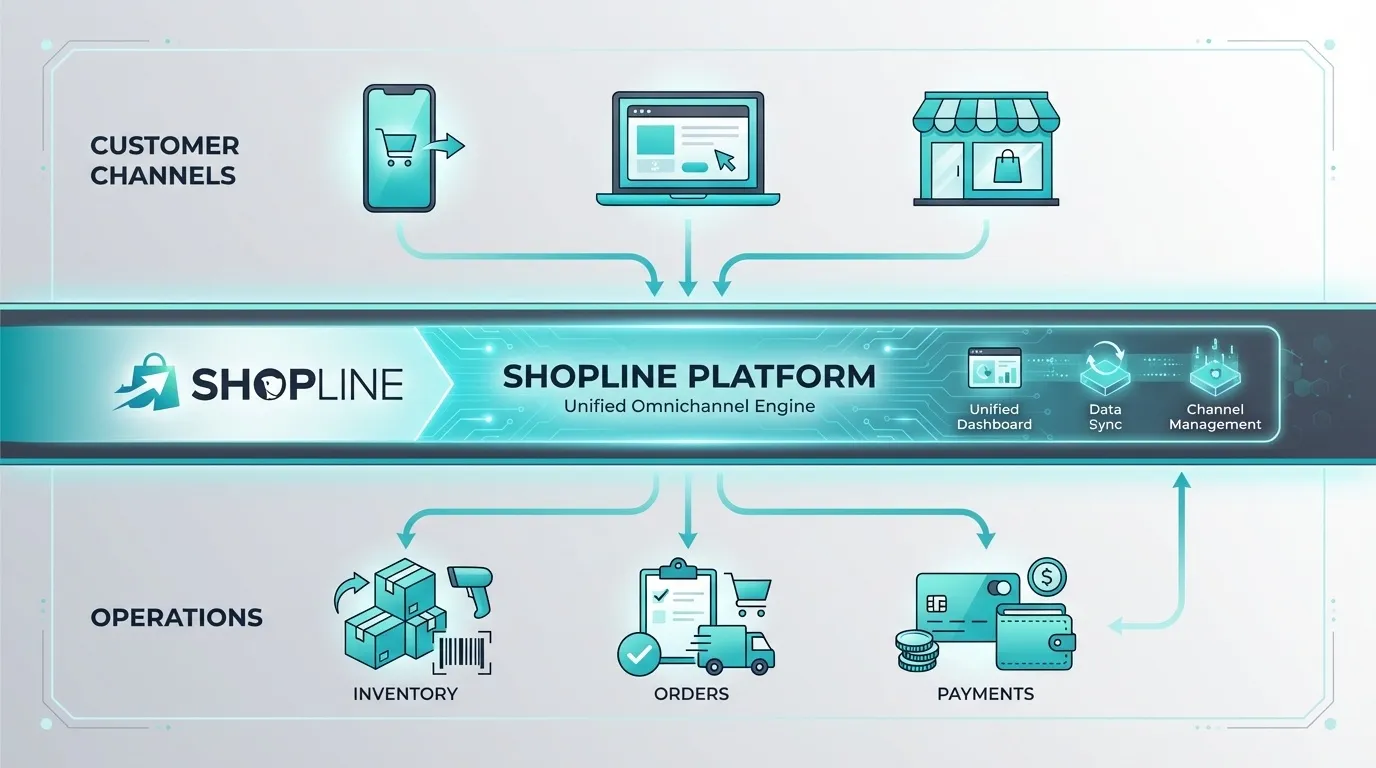
Shopline performs best when treated as infrastructure rather than a single sales destination. Its real strength shows when products, inventory, orders, and payments are managed centrally while customers move freely between social platforms, chat, marketplaces, and physical touchpoints.
This approach reduces operational friction and enables teams to focus on selling, fulfilment, and customer experience rather than constant manual reconciliation.
A practical setup starts with a clear intent. Shopline should sit at the centre of your commerce stack, with each channel assigned a specific role, whether that role is discovery, assisted selling, or conversion.
When configured this way, Shopline supports growth without forcing your business into rigid workflows or channel-specific silos. The result is a system that adapts to how customers actually buy, rather than how platforms assume they should.
For businesses exploring or refining omnichannel selling, execution matters more than features. The technical setup, data flow, and operational rules determine whether the strategy scales or stalls.
This is where experienced guidance makes a difference. MediaOne helps businesses set up Shopline as a merchant store that supports real-world omnichannel selling, from channel planning to technical configuration and long-term optimisation.
Call us today for expert assistance.
Frequently Asked Questions
What payment methods can I offer customers through my Shopline merchant store?
Shopline supports a range of payment options that you can enable from your admin panel, including major credit cards, digital wallets, and third-party gateways. Merchants in different regions see slightly different options, but common global methods include Visa, Mastercard, PayPal, Apple Pay, and local wallet services.
How does Shopline handle billing and subscription payments for merchants?
Shopline uses a subscription billing model where your account plan renews automatically if you enable auto-renewal and link a credit card. Transaction fee bills are generated when your Shopline merchant activity reaches certain thresholds and are charged to your chosen payment method.
Can I migrate an existing online store to Shopline?
Yes, Shopline offers migration support to help businesses transition from other platforms. The Help Centre provides step-by-step guidance on importing products, settings, and data into your new Shopline store. This makes it easier to switch platforms without losing important information or disrupting current sales.
What shipping and logistics options can I connect with Shopline?
Shopline integrates with third-party logistics providers so you can manage shipments, book couriers, and track deliveries from a single dashboard. Supported partners include SF Express, Kerry Logistics, and local providers, giving you flexibility in how you dispatch products. You can also offer delivery options such as cash-on-delivery,y where available.
Do I need coding skills to create a Shopline store?

No, you do not need coding knowledge to build a Shopline merchant store. The platform includes a drag-and-drop website builder and ready-made themes that let you quickly design and launch your storefront. This allows merchants to focus on products and sales rather than on technical development.