If you’re trying to figure out whether Local SEO or National SEO is right for your business, you’re not alone. For Singapore businesses, standing out in the city-state’s competitive market means knowing how to expand your reach both within and beyond Singapore. Choosing the right strategy can make a real difference.
In fact, 46% of all Google searches have local intent, meaning nearly half of people searching online are looking for something nearby, so it’s important to know which approach will help you reach the right customers.

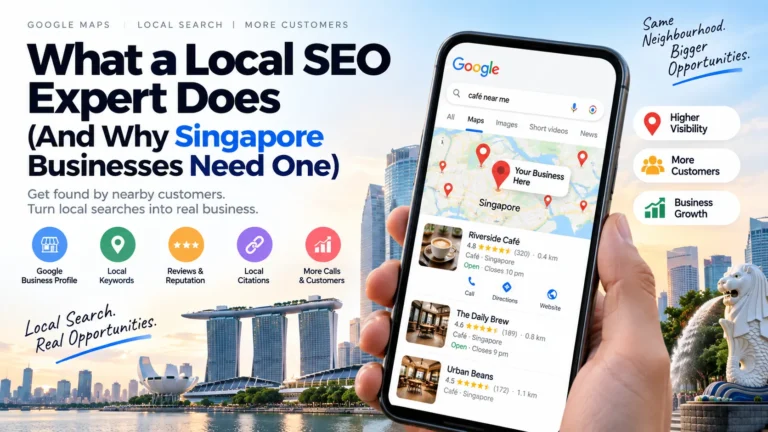
Local SEO helps your business show up when people in your area are searching online. That means showing up in Google Maps, local packs, and city-specific searches.
National SEO is about reaching customers across the country. It helps you build your brand and target bigger, high-traffic keywords that aren’t tied to a specific location.
Picking the right SEO strategy can save you time and money, ensuring you show up for the customers who are ready to buy and an experienced SEO agency can guide you every step of the way.
Key Takeaways
- When you optimise for location-specific keywords, set up your Google Business Profile, and keep your business info consistent across directories, you’ll attract more local customers who are ready to take action.
- If your business has more than one location or is expanding, combining Local and National SEO lets you reach both local leads and customers from all over.
- Think about your goals, your resources, and who you want to reach. That will help you decide if Local, National, or a mix of both SEO strategies is the best fit for your business.
What is National SEO?
National SEO is a search engine optimisation strategy focused on improving a website’s visibility nationwide (or across multiple countries), rather than targeting users in a specific city or local area.
Instead of focusing on keywords like “SEO agency in Singapore,” National SEO targets broader terms like “SEO agency” or “digital marketing strategy.” The goal is to reach people searching for your products or services, no matter where they are.
Key Characteristics of National SEO
- Content-driven strategy: A strong National SEO approach relies on creating in-depth, authoritative content. This includes pillar pages, comprehensive guides, blog posts, and scalable content that can cover a wide range of topics within your niche. The goal is to provide value, demonstrate expertise, and target keywords that potential customers nationwide are searching for.
- Authority building: Backlinks from reputable, high-authority websites are essential for National SEO. These links signal trust and credibility to search engines, helping your site rank higher for competitive keywords.
- Authority building often involves digital PR, guest posting, collaborations, and content marketing strategies designed to attract natural links.
- Technical SEO focus: Ensuring your website is technically optimised is critical for National SEO success. Technical issues can limit your site’s ability to rank, even with excellent content and backlinks.
- No reliance on Google Maps or local packs: Unlike Local SEO, National SEO doesn’t depend on location-based results.
Rankings are driven by content authority, backlinks, and technical SEO rather than proximity to the searcher or local business listings. This allows your website to reach a nationwide audience without being tied to a specific city or region.
What is Local SEO?
Local SEO helps your business show up when people nearby are searching for what you offer. Working with a local SEO agency ensures your business appears in Google’s Local Pack, Maps, and local search results whenever someone types “near me” or searches for your service along with their city.
Key Characteristics of Local SEO
- Location-based keyword targeting: Local SEO focuses on geo-specific keywords that combine your service with a city or area, such as “dentist in Singapore” or “plumber near me.” This ensures your business appears for searches made by nearby customers who are more likely to convert.
- Google Business Profile optimisation: Your Google Business Profile (formerly Google My Business) is crucial for local visibility. Optimising your profile helps your business appear in Google Maps and the Local Pack, which are highly visible placements in search results.
- Consistent NAP citations: Ensuring your business Name, Address, and Phone number (NAP) are consistent across directories, websites, and social platforms builds credibility with search engines and improves your local search rankings.
- Customer reviews & ratings: Positive reviews and high ratings increase trust with both search engines and potential customers. They are a key factor in local rankings and can influence click-through rates and conversions.
- Locally focused content: Creating content tailored to your area helps search engines understand your local relevance and improves your chances of appearing in searches specific to your location.
How Local SEO Works
Search engines use proximity and prominence to rank local results. This means your business is more likely to show up when:
- You’re physically close to the searcher.
- Your business information matches the search intent.
- Your online presence (reviews, links, citations) signals authority.
The Key Difference of Local SEO vs National SEO

Understanding the difference between Local SEO and National SEO is key to choosing the right strategy for your business.
While both aim to improve visibility in search engines, they target different audiences. Knowing which approach aligns with your goals helps you attract the right customers.
| Aspect | Local SEO | National SEO |
| Target Audience | Focuses on users in a specific area; ideal for brick-and-mortar or service-based businesses. | Targets a broader, nationwide audience; suitable for online-first or multi-region companies. |
| Keywords & Intent | Uses geo-specific, high-intent keywords (e.g., “near me,” city + service searches). | Uses high-volume, competitive keywords without geographic modifiers. |
| Visibility & Ranking | Relies on Google Maps, Local Pack, business profiles, reviews, and proximity to searchers. | Depends on content authority, backlinks, technical SEO, and overall site structure. |
| Content Strategy | Emphasises service pages, city landing pages, and local case studies. | Focuses on pillar pages, guides, thought leadership, and evergreen resources. |
| Cost & ROI | Lower cost with faster ROI and immediate local impact. | Higher investment with longer timelines, but scales brand authority and traffic nationwide. |
If your business depends on local customers, Local SEO is the way to go. National SEO is better if you want to reach people across the country. If you have multiple locations or are growing, a hybrid strategy can help you get the best of both worlds.
Types of Businesses For Local vs National SEO

Image Credit: Generated by Gemini
The right SEO strategy depends on what kind of business you have, who your customers are, and what you want to achieve. Start by getting clear on your business type.
Brick-and-Mortar Businesses
These are businesses that operate from a physical location where customers visit to make purchases or receive services.
- Examples: Restaurants, retail stores, salons, gyms, clinics.
- SEO Recommendation: Local SEO
Your customers are looking for services or products close to home. Local SEO makes sure your business shows up in Google Maps and local searches, so you can connect with people who are ready to buy.
Service-Area Businesses
Businesses that provide services at customer locations or within a defined geographic area, rather than a fixed store.
- Examples: Plumbers, electricians, cleaning services, repair services.
- SEO Recommendation: Local SEO
When you optimize for local keywords, update your Google Business Profile, and keep your info up to date in local directories, it’s much easier for customers in your area to find you.
E-commerce Businesses
Businesses that sell products primarily through online platforms and ship them to customers nationwide or globally.
- Examples: Online stores, subscription services, dropshipping brands.
- SEO Recommendation: National SEO
National SEO helps you target broad, high-traffic keywords so you can attract customers from anywhere and grow your online sales.
SaaS & Online-Only Businesses
Companies offering software, digital products, or online services that don’t rely on a physical location.
- Examples: SaaS platforms, online courses, digital marketing tools.
- SEO Recommendation: National SEO
Since these businesses aren’t tied to a specific place, ranking for industry or product keywords across the country helps you reach more people and get more leads.

Multi-Location or Franchise Businesses
Businesses with multiple branches or outlets across cities or regions.
- Examples: National chains, cafes, gyms, and clinics with multiple branches.
- SEO Recommendation: Hybrid SEO (Local + National)
Local SEO helps each of your locations get found by people nearby, while National SEO builds your brand’s authority and visibility across the country.
B2B Enterprises
Companies that sell products or services to other businesses rather than directly to consumers.
- Examples: Marketing agencies, consultancies, industrial suppliers.
- SEO Recommendation: National SEO
If your clients are located in different regions or all over the country, ranking for industry-specific keywords will help you bring in more leads.
When to Combine Local & National SEO?
Choosing the right SEO approach depends on your business type, your audience, and your goals. Here’s a quick guide to which strategy works best for different situations: local, national, or a mix of both.
| Business Scenario | Recommended SEO Strategy | Why | Example |
| Single-location brick-and-mortar | Local SEO | Target customers nearby and appear in local searches | Restaurant, salon, clinic |
| Service-area business | Local SEO | Capture high-intent leads within a defined service area | Plumber, electrician, cleaning service |
| Online-only or ecommerce business | National SEO | Reach customers nationwide and rank for broad keywords | Online store, subscription service |
| SaaS or digital products | National SEO | Attract users across the country, build authority | Software platform, online courses |
| Multi-location / franchise | Hybrid SEO | Combine local ranking for each location + national brand visibility | Gym chain, café chain, retail chain |
| Businesses expanding beyond local markets | Hybrid SEO | Maintain local presence while scaling nationally | Local bakery launching nationwide online sales |
| Campaigns or new product launches | Hybrid SEO | Boost visibility in multiple regions simultaneously | New product launch in multiple cities |
Local SEO can help you see results faster by bringing in customers who are close by. National SEO is about reaching more people and building your brand’s reputation.
If your business is expanding or you have more than one location, using both Local and National SEO lets you attract local customers and reach a wider audience at the same time. That way, your SEO strategy supports your business goals.
Common Mistakes to Avoid in Local and National SEO

Image Credit: Generated by Gemini
Getting your SEO strategy right isn’t always easy, and even small mistakes can have a big impact on your results.
- Ignoring Local Signals: Many businesses fail to optimise their Google Business Profile, local citations, customer reviews, or location-specific keywords. This oversight can cause you to miss high-intent local traffic and reduce visibility in local search results.
- Targeting Broad Keywords Too Early: Focusing on highly competitive national keywords before establishing authority often leads to slow progress and wasted resources. Small or new businesses can struggle to rank without first building a strong foundation.
- Neglecting Technical SEO: Slow site speed, broken links, missing schema markup, or poor mobile usability can prevent search engines from effectively crawling and indexing your site. This affects both local and national rankings, limiting overall SEO performance.
- Inconsistent Business Information: Inaccurate or inconsistent Name, Address, and Phone (NAP) details across directories confuse search engines and weaken local credibility, making it harder to rank in local searches.
- Weak or Irrelevant Backlinks: For national SEO, failing to secure authoritative backlinks can limit domain authority. For local SEO, ignoring community or niche links reduces relevance and regional search visibility, affecting your ability to compete effectively.
If you catch these common mistakes early and fix them, your SEO efforts will pay off and stay on track with your business goals. Regular check-ins help you keep your website visible.
A Checklist of Tips to Maximise Your Local vs National SEO Strategy in Singapore
To get the most out of your SEO efforts, it’s important to take a strategic approach that balances both local and national optimisation. These practical tips will help Singapore attract the right audience targeting nearby customers or a nationwide market.
Optimising Google Business Profile
- Ensure your profile is fully complete, with accurate NAP, operating hours, categories, and photos.
- Encourage satisfied customers to leave positive reviews and engage with posts.
- Optimisation improves visibility in Google Maps and the Local Pack.
Creating Location-Specific Content
- Develop service or landing pages for each city or neighbourhood.
- Use local keywords naturally and include FAQs for local concerns.
- Pair local content with national-level guides to capture broader search intent.
Building Local & National Backlinks
- Local SEO: Acquire links from local directories, business associations, and community sites.
- National SEO: Target authoritative industry publications, blogs, and government or educational sites.
- A diverse link profile strengthens domain authority and relevance across search scopes.
Using Schema Markup for Local SEO
- Add LocalBusiness schema for NAP, operating hours, services, and location.
- Implement Review schema to display ratings in search results.
- Use Product or Service schema to enhance visibility and click-through rates.
Local vs National SEO: A Guide to Growing Your Business
Local SEO is the best way to reach customers in your area. National SEO is a better fit if you want to connect with people across the country.
If your business is growing or has more than one location, a hybrid SEO strategy can help you get local leads and expand your reach at the same time.
The most important thing is to match your SEO approach to your business type and goals. Keep an eye on your results and adjust your strategy to keep your business visible and relevant.
If you’re ready to boost your online presence, MediaOne Marketing can help you build an SEO strategy that gets real results—whether you need local, national, or both. Get in touch to get started.
Frequently Asked Questions
How long does it take to see results from Local SEO?
Local SEO results can often be seen faster than national SEO because the competition is usually lower and the geographic focus is narrower.

Businesses may start seeing improvements in Google Maps rankings and local traffic within 2–3 months, while the full impact of complete optimisation can take 6–12 months.
Can I rank for both local and national keywords on the same website?
Yes. Many businesses use a hybrid strategy where location-specific pages target local keywords, while blog posts, pillar pages, or product pages target broader national keywords. Proper site structure and internal linking are key to avoiding keyword cannibalisation.
How does mobile search affect Local vs National SEO?
Mobile searches are often location-based, especially with “near me” queries, which makes Local SEO even more critical for physical businesses. National SEO also benefits from mobile optimisation, but its focus is broader—ensuring your content is accessible, fast, and user-friendly nationwide on mobile devices.
Do reviews and ratings impact national SEO as well as local SEO?
Reviews and ratings are major ranking factors in Local SEO, influencing local map packs and trust signals. For National SEO, while they are less directly tied to rankings, positive reviews across high-authority sites can still improve brand reputation, click-through rates, and indirect SEO benefits.
Can small businesses compete in national SEO?
Yes, but it requires a strategic, long-term approach. Small businesses may focus on niche or long-tail keywords, create high-quality content, and gradually build authority through backlinks. Often, starting with Local SEO to generate immediate revenue while growing into national visibility is the most practical approach.