Social media is proving its value as a marketing channel more than ever. According to Sprinklr’s 2025 social media marketing statistics, influencer marketing alone is delivering an average ROI of US$5.78 for every US$1 spent. This demonstrates the potential of a well-structured social media strategy. Start by defining your goals and understanding your audience.

Then, focus on creating engaging content and analysing performance. Doing this helps you reach more people, build stronger connections and drive measurable results.
In this guide, we’ll break down nine steps to develop social media strategies that deliver tangible results and help your brand thrive online.
Key Takeaways
- Define SMART objectives and match them with the right KPIs to guide every social media effort.
- Conduct research and build personas to create content that truly resonates and drives engagement.
- Focus on a few key platforms that align with your goals and where your audience is most active.
- Develop a content strategy, schedule posts and actively interact with your community to build loyalty.
What Are Social Media Strategies?
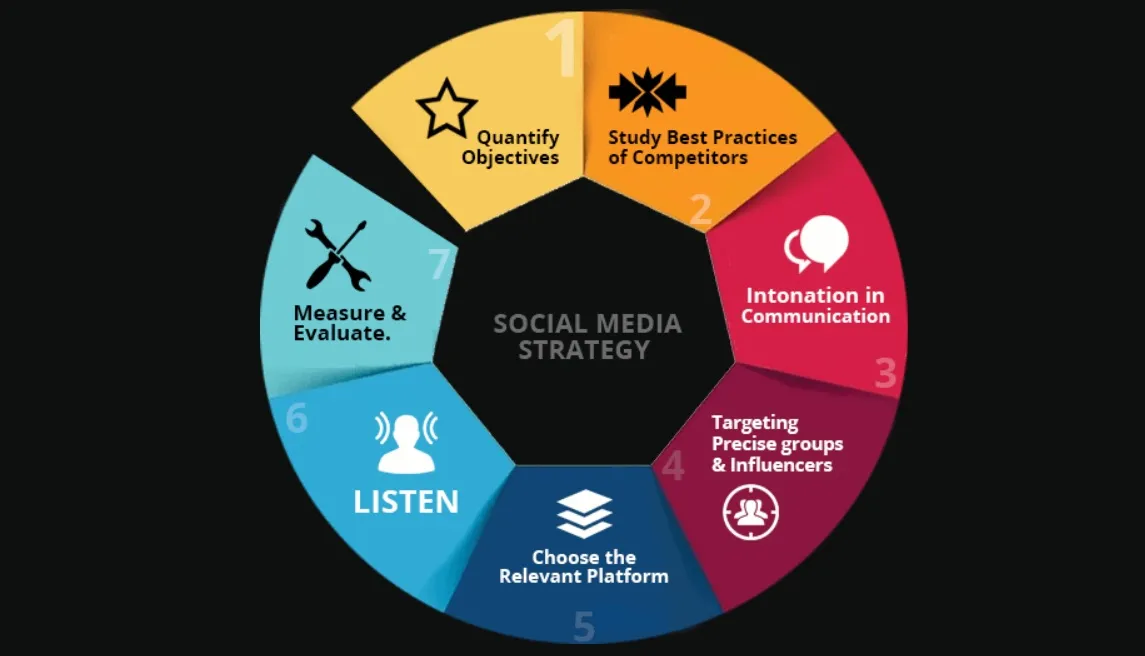
Image Credit: Amuratech
A social media strategy is a carefully designed plan that guides how a business or individual uses social media platforms to achieve defined goals. It goes far beyond simply posting updates or promotional content. A comprehensive strategy outlines your objectives, identifies your target audience, determines the types of content to produce, sets a posting schedule, and defines engagement tactics and performance metrics.
Think of it as a roadmap for your online presence. With a clear strategy, every post, comment, and campaign serves a purpose, whether it’s building brand awareness, nurturing customer relationships, or driving sales. Without this framework, social media efforts can become inconsistent, fragmented, or fail to deliver measurable results.
Benefits of Having a Strong Social Media Strategy
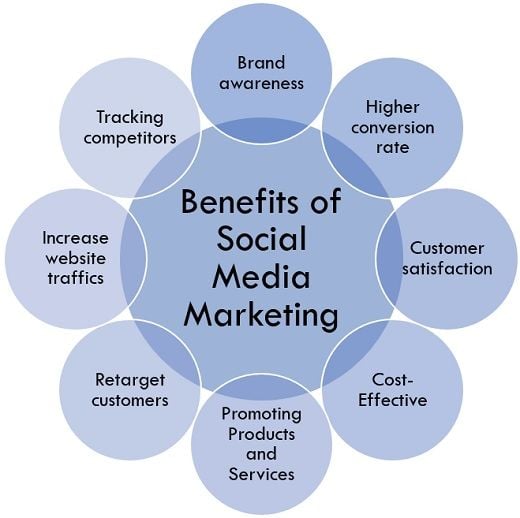
Image Credit: The Investor’s Book
Implementing a well-defined social media strategy provides several advantages for businesses and content creators alike:
- Enhanced Brand Awareness: A consistent and targeted approach ensures your brand reaches the right audience and becomes recognisable across platforms.
- Improved Engagement: By creating content that resonates with your audience, you encourage meaningful interactions such as likes, comments, shares, and sustained community engagement.
- Better Lead Generation and Conversions: Strategic campaigns guide users through the customer journey, increasing the likelihood of converting followers into leads and customers.
- Stronger Customer Relationships: Active engagement fosters trust and loyalty, helping your brand build a positive and reliable reputation.
- Data-Driven Insights: A defined strategy allows you to track performance, analyse audience behaviour, and continually refine your approach to achieve better results.
A strong social media strategy not only saves time and resources but also ensures that your online presence is purposeful and effective. By aligning your content and campaigns with clear goals, you can transform social media into a powerful tool for brand growth, audience connection, and business success.
How to Develop 9 Social Media Strategies That Deliver Results
Having a presence on social media is no longer optional, it’s essential. But simply posting content isn’t enough to drive real results. To cut through the noise, businesses need a clear, actionable strategy that engages audiences, builds brand awareness, and ultimately drives conversions.
This section will walk you through 9 proven social media strategies that deliver measurable results. From understanding your audience to leveraging paid advertising and analytics, you’ll discover practical approaches that help you optimise your social media efforts and achieve your marketing goals in 2026 and beyond.
1. Start by Setting Clear, Measurable Goals
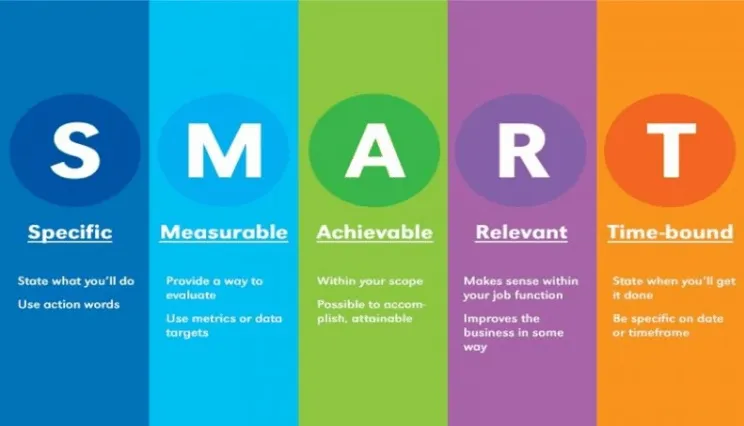
Image Credit: Peter Alkema
Your social media strategy begins with defining clear objectives. Without direction, your efforts can be scattered, making it difficult to measure success. Goals act as a roadmap, guiding every post, campaign and interaction. A useful way to set these objectives is by using the SMART (Specific, Measurable, Achievable, Relevant, Time-bound) framework, which ensures your social media efforts are focused, actionable and easier to evaluate.
Why goals shape your strategy:
- They determine which platforms, content types and campaigns to prioritise.
- They help you measure success through tangible results.
- They align your social media efforts with overall business objectives.
Questions to ask yourself:
- What do I want to achieve with my social media presence? (e.g., brand awareness, sales, community building)
- How will I know if my efforts are successful?
- Which platforms and content types best suit my goals?
- How do these goals support my overall business or personal objectives?
Examples of SMART goals:
- Increase Instagram followers by 20% within three months.
- Generate 50 qualified leads per month through LinkedIn.
- Achieve a 5% engagement rate on Facebook posts in six weeks.
Matching goals with KPIs:
- Awareness: Impressions, reach and follower growth.
- Engagement: Likes, comments, shares, saves, click-through rate (CTR).
- Conversions: Website clicks, form submissions, leads, or sales.
Write your goals down, make them time-bound and review them monthly to track progress.
2. Identify and Understand Your Target Audience
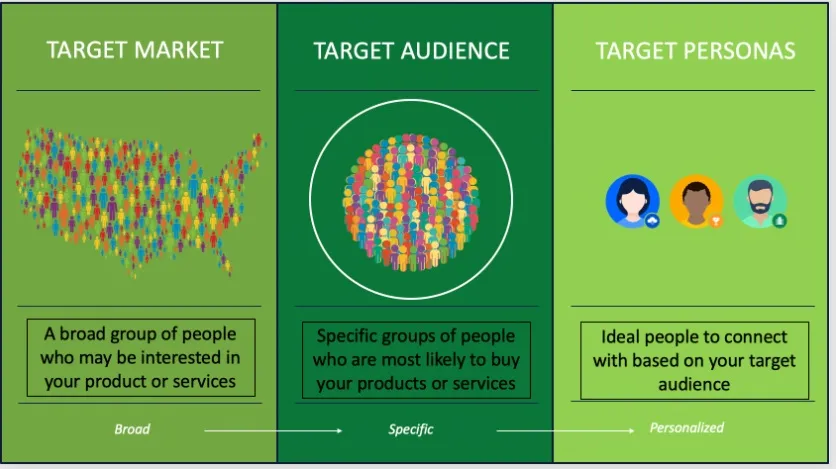
Image Credit: Branwell
Knowing your audience is essential. A well-defined audience ensures your content resonates, drives engagement and achieves results.
How to conduct audience research:
- Collect demographic data: age, gender, location, job role.
- Analyse interests and behaviours: which accounts they follow, content they engage with, online habits.
- Identify challenges and pain points your brand can address.
Building audience personas:
- Create 2–3 detailed personas representing your ideal followers.
- Include background, goals, challenges, online habits and preferred content formats.
- Use personas to guide content creation, tone of voice and platform choice.
Tools for insights:
- Google Analytics: Audience demographics and behaviour.
- Meta Business Suite Insights: Followers, engagement and content performance.
- TikTok Analytics: Video performance and audience trends.
- Surveys and polls: Direct feedback from your audience.
The more you understand your audience, the easier it is to create content that truly resonates.
3. Select the Social Platforms That Fit Your Objectives
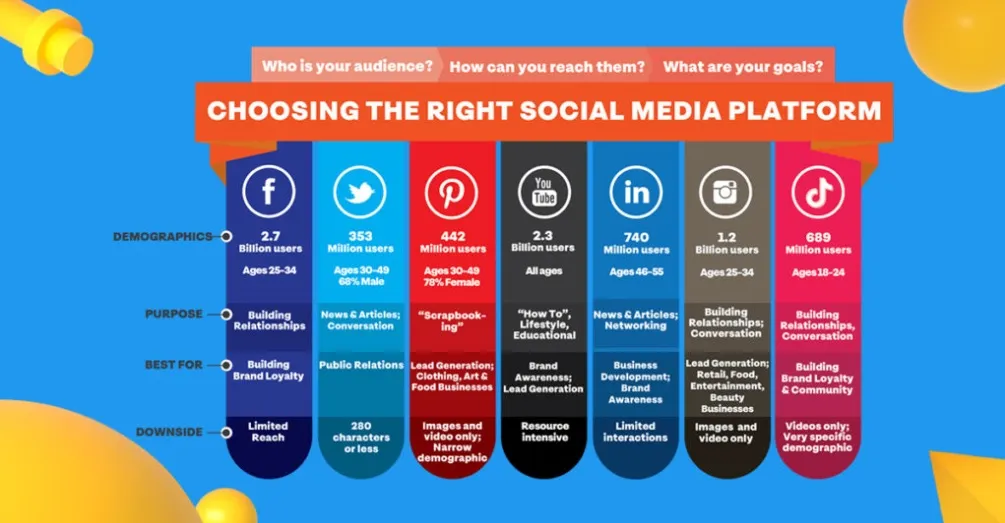
Image Credit: Store Fries
Choosing the right platforms ensures your content reaches the right people in the most effective format. Not all platforms suit every goal or audience.
Overview of major platforms:
- Facebook: Community building, long-form content, paid campaigns.
- Instagram: Visual storytelling, influencer collaborations, Reels.
- TikTok: Short-form videos, trends, younger audiences.
- LinkedIn: B2B marketing, thought leadership, lead generation.
- YouTube: Tutorials, long-form videos, product demonstrations.
How to match platforms with goals:
- Awareness → Instagram, TikTok, YouTube.
- Engagement → Instagram, TikTok.
- Lead generation → LinkedIn, Facebook.
Why fewer, well-managed platforms perform better:
- Avoid spreading your team too thin.
- Focus on platforms where your audience is most active and where you can consistently deliver quality content.
Start with 2–3 core platforms and expand once your strategy is effective.
4. Build a Content Strategy Around What Your Audience Wants
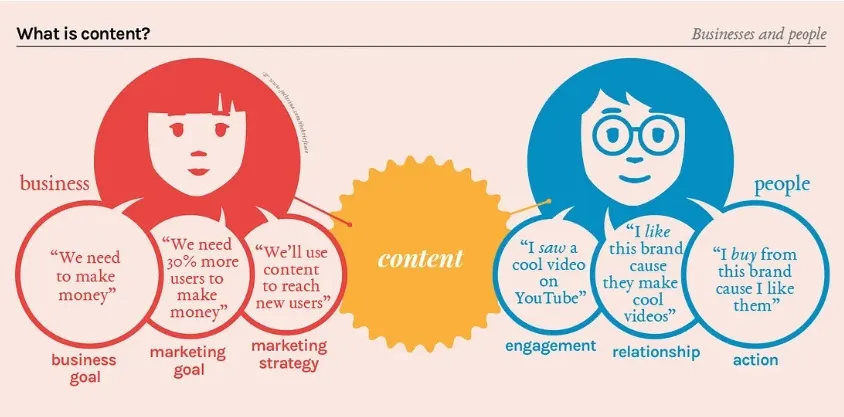
Image Credit: Medium
A content strategy gives structure to your posts and ensures your content consistently aligns with your audience’s needs.
Define content pillars:
- Core topics your brand will consistently focus on.
- Examples:
- Educational tips and industry advice
- Behind-the-scenes content
- Product showcases or launches
- Customer stories or testimonials
Types of content to consider:
- Videos, Reels, TikToks for quick engagement
- Carousel posts for step-by-step guides or multiple ideas
- Text posts or blogs for thought leadership
- Stories for ephemeral, interactive content
- User-generated content (UGC) to foster community
Balancing content:
- Value: Educate or entertain your audience
- Promotional: Showcase products, services, or offers
- Engagement: Ask questions, run polls, quizzes, or challenges
Track which content types resonate most using analytics, then create more of what works.
5. Create a Strong and Consistent Brand Identity
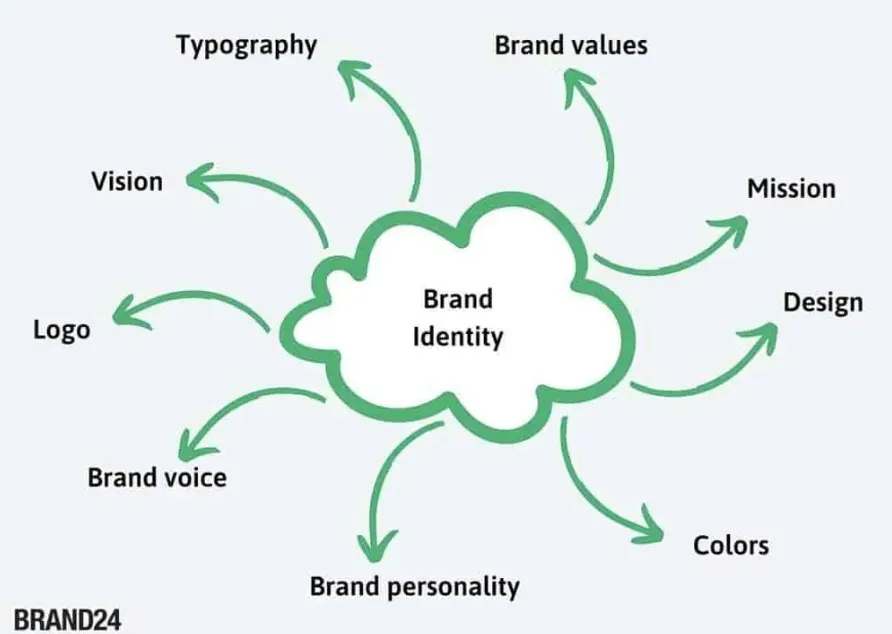
Image Credit: LogoCoast
Consistency in branding builds trust and recognition. Your audience should immediately recognise your content across platforms.
Visual branding tips:
- Stick to consistent colour palettes, fonts and layouts.
- Use templates for posts and Stories.
- Include logos or watermarks where appropriate.
Tone of voice & messaging:
- Decide on a brand personality: professional, casual, witty, or empathetic.
- Keep messaging consistent across all platforms.
- Align messaging with your brand values and audience expectations.
Audit your content regularly to ensure visuals and messaging remain consistent as your brand evolves.
6. Plan a Realistic Posting Schedule
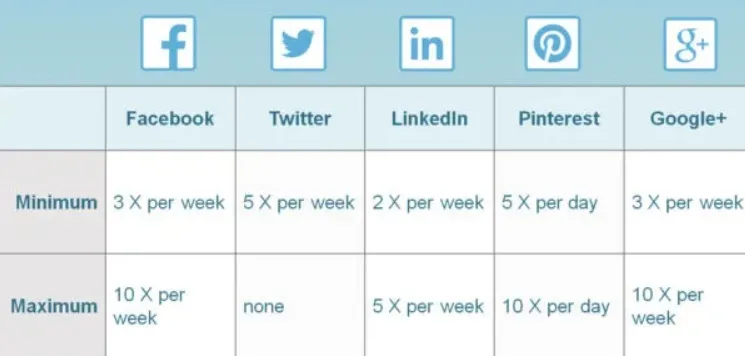
Image Credit: Smart Simple Marketing
Consistency is more important than posting volume. A clear schedule keeps your audience engaged while avoiding burnout.
How to determine posting frequency:
- Instagram: 3–5 posts per week; daily Stories recommended
- TikTok: 3–7 videos per week
- LinkedIn: 2–4 posts per week
- Facebook: 1–2 posts per day
Tools for planning and scheduling:
- Buffer
- Hootsuite
- Later
- Notion or Google Sheets
Post when your audience is most active. Test posting times to find what drives the most engagement.
7. Engage Proactively With Your Community
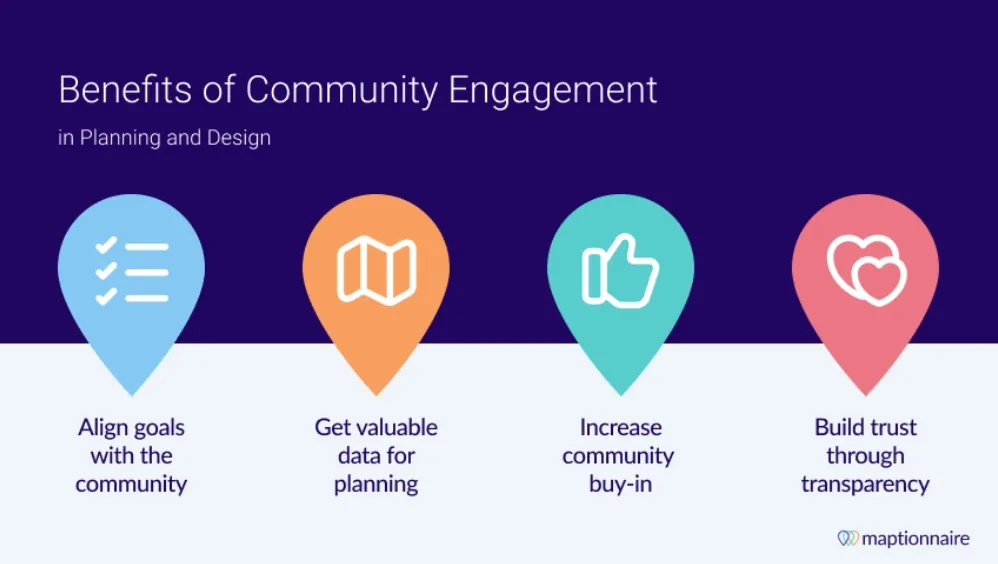
Image Credit: Maptionnaire
Social media is a conversation platform. Engagement builds loyalty, trust and a sense of community.
Why engagement matters:
- Increases visibility through platform algorithms
- Builds trust with followers
- Encourages sharing, UGC and word-of-mouth marketing
Practical ways to engage:
- Respond promptly to comments, DMs, tags and mentions
- Use social listening to track conversations and trends
- Encourage UGC with branded hashtags
- Run polls, quizzes and ask questions
- Highlight community members through shout-outs or testimonials
- Join trending conversations carefully and authentically
Dedicate 15–30 minutes daily to meaningful interaction—it significantly strengthens your community.
8. Track Your Performance and Analyse Your Results
Monitoring results ensures your strategy is effective and allows you to make data-driven improvements.
Key metrics:
- Awareness: Reach, impressions, follower growth
- Engagement: Likes, comments, shares, saves
- Conversions: CTR, leads, form submissions, sales
How to analyse performance:
- Identify patterns in high-performing content
- Conduct A/B testing for captions, visuals and hashtags
- Compare performance against competitors or industry benchmarks
Use analytics to refine content types, posting times and messaging for better results over time.
9. Continuously Optimise and Evolve Your Strategy
Social media is constantly evolving. Your strategy must be flexible to stay relevant and effective.
Ways to optimise:
- Keep what works and remove underperforming tactics
- Experiment with new content formats, trends, or posting schedules
- Monitor algorithm changes and adjust strategy accordingly
- Benchmark against competitors to discover new opportunities
Treat your social media strategy as a living document. Regular audits ensure continuous growth and engagement.
Bonus Tips for 2026 Social Media Marketing
Creating a strong social media strategy is about being smart, creative and strategic with your content. Here are some actionable tips you can implement right away:
- Use Platform-Specific Features: Explore features unique to each platform, like LinkedIn polls, Instagram Guides, or TikTok Duets, to boost engagement.
- Test Posting Frequency: Experiment with how often you post on each platform to find the sweet spot for reach without overwhelming your audience.
- Mix Evergreen and Trending Content: Combine long-lasting content with timely trends to stay relevant while building long-term value.
- Create Interactive Content: Quizzes, challenges and interactive stories encourage participation and strengthen audience connection.
- Repurpose Across Channels Strategically: Adapt high-performing content for other platforms rather than reposting it identically.
These tips provide fresh, actionable ways to improve your social media strategy, making your campaigns more creative, resilient and engaging.
Staying ahead of social media trends is crucial for maintaining engagement and driving results. As 2026 unfolds, marketers should consider leveraging emerging technologies, evolving platform features, and innovative content formats. Here are some actionable bonus tips to strengthen your social media strategy:
1. Leverage AI Tools for Content Creation and Analytics
Artificial Intelligence is transforming social media marketing by automating repetitive tasks, generating content ideas, and providing actionable insights. AI can help you:
- Generate captions, posts, and visual content.
- Optimise posting times based on audience behaviour.
- Analyse engagement metrics to refine strategies.
- Example Tools: ChatGPT, Canva AI, Lately AI, Sprout Social, Hootsuite Insights.
2. Embrace Short-Form Video Content
Short-form video continues to dominate platforms like TikTok, Instagram Reels, and YouTube Shorts. In 2026:
- Videos under 60 seconds often receive higher engagement.
- Authentic, behind-the-scenes content performs better than overly polished videos.
- Use subtitles and captions for better accessibility and reach.
3. Integrate Social Commerce
Social commerce allows users to purchase products directly within social media platforms. In 2026:
- Platforms like Instagram, TikTok, and Facebook are enhancing in-app shopping features.
- Shoppable posts and live-stream shopping drive both engagement and conversions.
- Integrate with your e-commerce store for seamless purchase experiences.
4. Focus on Interactive and Community-Driven Content
Engaging users through interactive content strengthens your brand presence:
- Polls, quizzes, and live Q&As encourage participation.
- User-generated content campaigns enhance trust and social proof.
- Niche communities (e.g., Facebook Groups, LinkedIn Communities) foster loyalty and repeat engagement.
Social Media Trends for 2026
| Trend/Tip | Why It Matters | How to Implement | Tools/Examples |
|---|---|---|---|
| AI-Powered Content & Analytics | Saves time, improves targeting, predicts trends | Use AI for captions, visuals, post optimisation | ChatGPT, Canva AI, Sprout Social |
| Short-Form Video | Higher engagement, algorithm preference | Create Reels, Shorts, TikToks under 60 sec | CapCut, InShot, Adobe Premiere Rush |
| Social Commerce | Boosts conversions directly in-platform | Tag products, enable in-app checkout | Shopify, Instagram Shops, TikTok Shop |
| Interactive & Community Content | Builds loyalty, trust, and engagement | Run polls, quizzes, live Q&A, UGC campaigns | Typeform, Polls on IG/FB, Slack/Discord for community |
| Personalisation & Targeted Ads | Higher CTR and ROI | Segment audience, customise content and offers | Facebook Ads Manager, Google Ads, HubSpot |
| Emerging Platforms & Features | Early adoption = competitive advantage | Test new features/platforms early | Threads, BeReal, LinkedIn Live |
By incorporating these 2026-focused tips into your social media strategy, you can stay ahead of competitors, drive measurable results, and build a loyal, engaged audience. Remember, the key is testing, iterating, and adapting to trends that resonate with your target audience.
From Posts to Profits: Supercharge Your Social Media Strategy
Developing a social media strategy isn’t just about posting regularly, but more about creating a structured, purposeful plan that engages your audience and builds your brand. When you follow these nine steps, you can ensure every post has a purpose and every campaign contributes to your objectives.
Remember, social media is constantly evolving. What works today may need tweaking tomorrow, so treat your strategy as a living document, stay adaptable and always keep your audience at the heart of every decision.
Ready to take your social media strategy to the next level? Partner with MediaOne and let our team of experts help you craft a data-driven, results-oriented approach that grows your brand, increases engagement and delivers real ROI. Contact us today!
Frequently Asked Questions
Social media trends and algorithms change frequently, so it’s recommended to review and adjust your strategy at least quarterly. Regular updates help you stay relevant and maximise engagement.
The budget depends on your goals, platforms and desired outcomes. Consider costs for content creation, paid advertising, scheduling tools, analytics and possible outsourcing. Start small and scale as you see measurable results.
How can I repurpose content across different platforms effectively?

Repurposing saves time and increases reach. Adapt content formats to suit each platform—for example, turn a blog post into a carousel for Instagram, a short video for TikTok and a LinkedIn article.
Yes. Paid advertising amplifies reach, helps target specific audiences and accelerates results. Combining organic and paid strategies often delivers the best ROI.
Respond promptly, professionally and empathetically. Address the issue without deleting criticism unless it violates policies. Have a crisis management plan in place to protect your brand reputation.