

As businesses expand into new cities and regions, managing online visibility across multiple locations becomes more complex and more critical. A scalable multi-location SEO strategy helps you stay visible, consistent and competitive no matter how many branches you operate.

In 2026, success in local search isn’t just about ranking for one area. It’s about creating a structured, repeatable system that ensures every location performs well in its market.
The following steps outline how to build a scalable strategy that strengthens your brand presence, improves local rankings and drives customers to every branch you own.
Key Takeaways
- Build a system that works for every branch so your SEO can grow with your business.
- Create unique pages and content for each location to connect with local audiences.
- Keep your business name, address and phone number consistent everywhere online.
- Use tools like BrightLocal, Semrush, or MediaOne to manage and track all locations easily.
- Regularly update and review your strategy to stay ahead of changes in local search.
Understanding Multi-Location SEO

Image Credit: ChatGPT Generated
As businesses expand across regions or cities, their online presence must evolve too. A single SEO strategy no longer suffices when your brand operates from multiple branches, franchises, or service areas. This is where multi-location SEO comes in. Multi-location SEO is the process of optimising your digital presence to attract customers from multiple geographical areas.
It involves managing and fine-tuning several key elements from local landing pages and Google Business Profiles (GBPs) to online directories, reviews and local backlinks for each of your business locations.
In essence, it’s a way to tell Google: “We don’t just serve one area. We’re a trusted business in every city where we operate.”
A strong multi-location SEO strategy helps your business show up in local search results, map listings and “near me” searches to boost your online visibility and bring more people to your stores.
How It Differs from Traditional Local SEO
Traditional local SEO is about helping one location get found online, like a single dental clinic in Singapore trying to reach patients in its neighbourhood. But if your clinic has several branches, say in Orchard, Tampines and Jurong, you’ll need more than a one-size-fits-all approach.
That’s where multi-location SEO helps each branch build its own online presence, connect with nearby patients and show up in local searches—all while keeping your brand consistent across every location.
The key differences include:
| Aspect | Traditional Local SEO | Multi-Location SEO |
| Scope | Focuses on optimising a single business location. | Covers multiple branches or outlets across different areas or cities. |
| Goal | Improve visibility in one local market (e.g. one clinic in Orchard). | Boost visibility for each location while maintaining brand consistency across all. |
| Complexity | Easier to manage. Fewer listings, reviews and citations. | More complex. Requires consistency in NAP data across many listings and platforms. |
| Content Approach | One set of localised content and keywords. | Separate, localised content for each branch to target unique audiences and search terms. |
| Tracking & Reporting | Measure traffic and conversions for a single location. | Monitor performance metrics (e.g., GBP insights, calls, reviews) for each location individually. |
| Management Tools | Often handled manually or with simple tools. | Scaled using automation tools like Yext, or MediaOne’s Local SEO Dashboard. |
Core Elements of a Successful Multi-Location SEO Strategy
When your business operates across multiple locations, SEO is about replicating discipline and consistency at scale. These are the core elements that underpin an effective multi-location SEO strategy:
1. Dedicated Location Pages
Each business branch should have its own landing page. This means a unique page per physical location, rather than simply linking all branches to one generic “locations” page. On each page you should include the full address, local phone number, opening hours, embedded map and ideally localised content (for example: staff names, nearby landmarks, community involvement).
A logical URL structure helps, such as yourbrand.com/locations/city‐name or yourbrand.com/city‐name/branch. This setup signals to search engines that you truly operate in each area and helps users feel confident they’re seeing the correct branch.
2. Consistent NAP & Business Listing Data
Name, Address, Phone number (NAP) consistency is pivotal: every mention of your business across your website, local directories, social media and listings must match exactly. Even small inconsistencies (for example “St.” versus “Street”) can undermine your local SEO efforts.
For brands with many locations, maintaining a centralised data repository (a “single source of truth”) and using automated tools for bulk updates is a smart move.
3. Structured Data (Schema Mark-up)
Structured data helps search engines map your information correctly. For each location page you should implement the LocalBusiness schema (or a more specific subtype), including business name, address, geographic coordinates, opening hours, telephone, etc.
This is how a proper schema mark-up looks like:
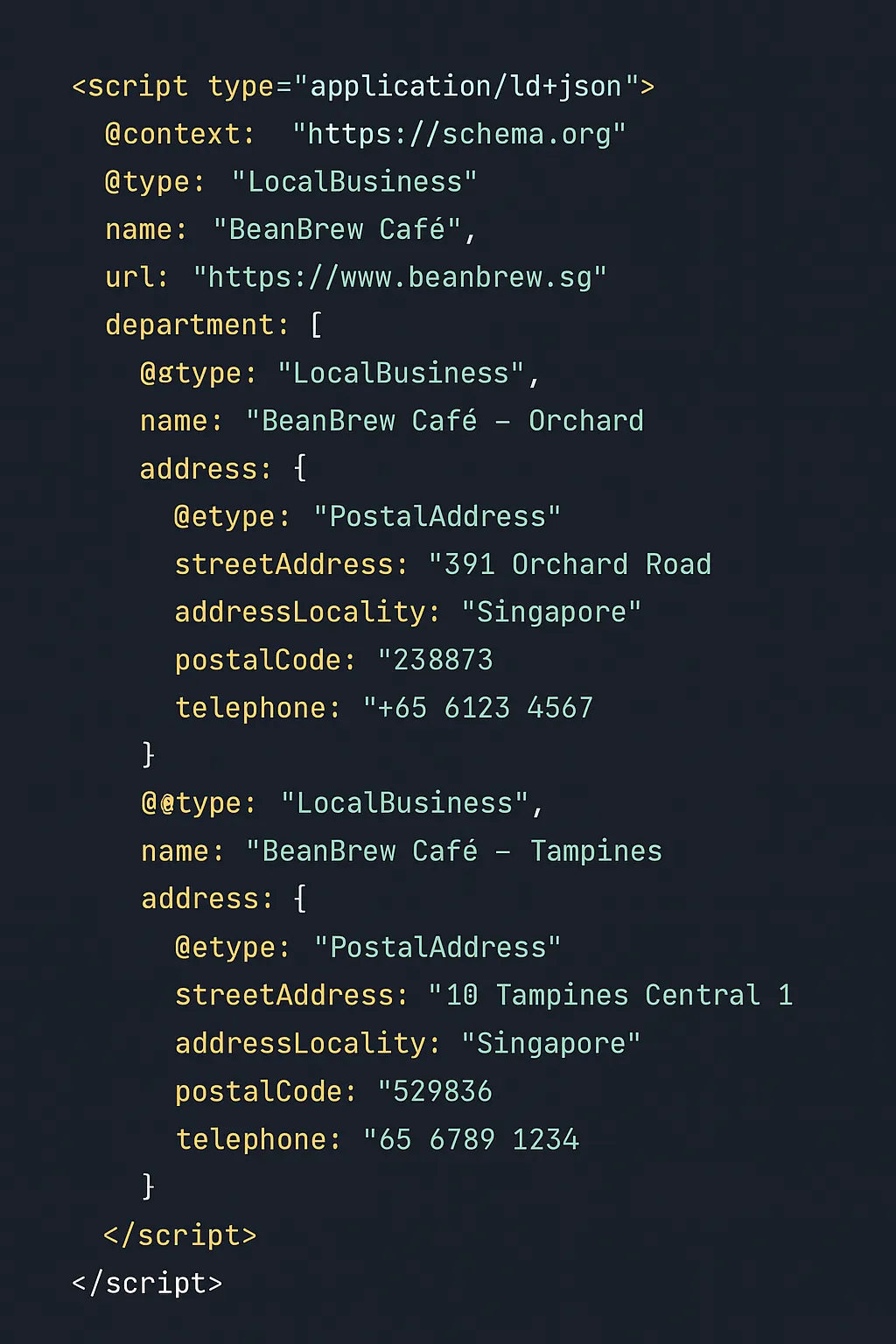
Image Credit: ChatGPT Generated
This helps you surface in local features such as map packs and rich snippets. Each branch must have an accurate schema, not generic data reused across all locations.
4. Localised On-Page SEO Content
Each location page must contain unique, locally-relevant content. That means avoiding “doorway pages”—where the same content is simply duplicated with the city name swapped.


Useful tactics include:
- Using neighbourhood names, landmarks or typical search phrases (“near me”, “in [city]”).
- Tailoring meta descriptions and title tags for each location.
- Embedding a Google Map or image of the actual location to build user confidence.
- Including testimonials or reviews specific to that branch.
The aim is to present each location as a legitimate, active business serving a specific community, not just one generic brand with multiple pins.
5. Google Business Profile & Review Strategy
Having a verified, fully-completed profile for each location is non-negotiable. These profiles should show the name, address, phone, hours, categories, photos and regularly updated posts. Reviews are a key signal: encourage customers to leave reviews for the correct branch and respond in a timely, localised way. This not only aids rankings but builds trust with local users.
6. Local Citations & Backlinks
Beyond your own site and listings, you must secure mentions and links from locally-relevant sources. That might include local directories, newspapers, community sites, chambers of commerce and local partner organisations. These local backlinks serve as indicators to search engines that your business is active and credible in each location’s community. They complement your structured data and on-page localisation.
How to Build a Scalable Multi-Location SEO Strategy for 2026

Image Credit: Wiremo
Building a scalable multi-location SEO strategy means creating a framework that works whether you’re managing three locations or thirty. It’s about keeping things consistent, efficient and adaptable as your business grows, without losing the local touch that customers care about.

Below are the key steps to building a scalable multi-location SEO framework that can grow with your business in 2026 and beyond.
Step 1: Audit Your Current Local Presence
Before expanding or scaling your efforts, start by assessing your existing online visibility. An SEO audit helps you spot inconsistencies, errors, or outdated information that could confuse customers or harm your rankings.
- Check NAP (Name, Address, Phone) consistency across all online listings, from Google Business Profiles (GBPs) to directories and social media pages.
- Identify duplicate or outdated location pages that may dilute your SEO authority.
- Audit your GBPs and directory listings to confirm each branch’s details are correct and verified.
Doing this ensures Google understands every location is legitimate, unique and active.
Helpful tools: BrightLocal, Semrush and MediaOne’s FREE SEO Audit tools.
Step 2: Build a Scalable Site Structure
Your website is the foundation of your multi-location SEO. Without a clear structure, Google and users can struggle to find the right information.
- Create a logical URL hierarchy such as /locations/city/branch. This helps Google recognise relationships between locations and main pages.
- Ensure each location page has unique metadata, on-page content and schema markup.
- Add location-specific information such as reviews, opening hours, embedded maps and directions.
- Use centralised templates to keep design and layout consistent, but customise copy and visuals for authenticity.
A strong site structure not only improves crawlability but also delivers a smoother experience for users looking for their nearest branch.
Step 3: Standardise and Automate Citations
Citations are mentions of your NAP across online directories, websites and platforms. It is responsible for strengthening your local SEO. They help search engines verify that your business information is accurate and consistent, which in turn boosts your credibility and ranking in local search results.
- Use automated citation tools or APIs to update and manage listings at scale.
- Keep a master database or single source of truth for your NAP information.
- Regularly audit your citations to fix inconsistencies that may confuse Google or customers.
Even a minor inconsistency, such as a wrong phone number or outdated address, can weaken your local ranking and credibility. Schedule quarterly audits to maintain citation accuracy, especially when you open, move, or rebrand a branch.
Step 4: Optimise and Manage Google Business Profiles at Scale
Your Google Business Profile (GBP) is one of your most powerful local SEO tools. For multi-location companies, it’s essential to treat each profile as a unique marketing asset.
- Create and verify each location’s GBP under a central business account for easier management.
- Use categories, attributes and posts to differentiate each branch’s offerings or services.
- Keep photos, business hours and promotions updated regularly.
- Actively respond to reviews, both positive and negative, to build trust and engagement.
When managed well, GBP listings can significantly boost your local visibility, drive calls and generate walk-in visits especially for businesses with strong community ties.
Step 5: Localise Content and Link Building
Content localisation is what gives your SEO strategy authenticity. Instead of using the same copy for every branch, focus on what makes each area unique.
- Create geo-targeted content such as “Best Dental Clinic in Tampines” or “Trusted Dentist in Jurong.”
- Highlight local events, community outreach, or partnerships to show genuine involvement.
Build local backlinks from neighbourhood directories, community blogs and regional media sites. - Avoid duplicate content. Even small changes in language or examples can make a page more relevant.
You can use AI-powered tools to help generate drafts and outlines, but always refine content manually to maintain a human touch and brand tone.
Step 6: Track, Measure and Refine Performance
Scalable SEO isn’t “set and forget.” You need to continually monitor and adapt your approach based on data.
- Track key metrics per location, such as map pack rankings, organic traffic, click-to-call actions and direction requests.
- Compare branch performance to identify which areas or strategies deliver the best ROI.
- Experiment with different CTAs, headlines, or visuals to see what drives conversions locally.
- Use insights to guide content updates, GBP optimisation and citation fixes.
Use centralised analytics dashboards to keep all your data in one place and simplify reporting.
Pitfalls That Can Derail Your Multi-Location SEO Efforts

Image Credit: ChatGPT Generated
Even the most well-intentioned SEO strategy can lose traction if it’s not implemented carefully across multiple branches. Managing SEO at scale introduces complexity. Overlooking certain details can weaken your entire online presence.
Here are some of the most common pitfalls that can derail your multi-location SEO efforts, along with how to avoid them.

1. Using Identical Content Across All Location Pages
Duplicate content remains one of the most frequent mistakes multi-location businesses make. Copying the same text and simply changing the city name signals to search engines that the pages lack unique value. Create original, locally-relevant content for each branch. Include area-specific details such as nearby landmarks, local staff introductions, or city-based promotions. This makes your pages authentic and improves engagement.
2. Ignoring NAP Consistency
Inconsistent business names, addresses or phone numbers (NAP) confuse both users and search engines. A single mismatch, such as using “Rd” instead of “Road”, can undermine your local authority. Keep a central record of your business information and use citation management tools like BrightLocal or Yext to synchronise updates across all directories.
3. Neglecting Google Business Profile Maintenance
Many businesses set up their Google Business Profiles (GBPs) and never revisit them. Outdated hours, incorrect categories, or missing photos can negatively affect local rankings. Schedule regular GBP audits. Update operating hours, add fresh photos and use posts to share updates or offers. Encourage reviews and respond promptly to customer feedback, both positive and negative.
4. Over-Automating Without Local Oversight
Automation helps scale multi-location SEO, but over-reliance can lead to generic, impersonal content and missed local nuances. Automatically generated content may sound repetitive, lack cultural or regional relevance, or even misrepresent local details like hours, landmarks, or promotions.
Use AI and automation for efficiency, but always review generated content. Pair automation with human editors who understand the local context, language nuances and customer preferences.
5. Overlooking Mobile and Voice Search Optimisation

Image Credit: Digitskillz
With mobile and voice queries making up a growing share of local searches, unoptimised pages lose visibility. According to Think with Google, 76% of people who conduct a local search on their smartphone visit a business within 24 hours. Ensure each location page loads quickly, uses mobile-friendly layouts and includes conversational keywords that match how people speak when using voice search.
6. Failing to Track Performance by Location
Without tracking, you can’t know which branches are performing well or need improvement. Many brands view SEO performance in aggregate, masking underperforming areas. Use analytics dashboards (e.g., Google Looker Studio or Semrush) to monitor visibility, leads and conversions for each branch. This data helps you refine your strategy per location.
Scale Your Local Growth with a Smarter Strategy
Scaling your business across multiple locations demands precision, consistency and local relevance. Study shows that 81% of consumers use Google to evaluate local businesses, showing just how important accurate and optimised listings are for visibility.
For multi-location brands, this means every branch must maintain consistent business information, reviews and location data across Google and other platforms. Regular audits and performance tracking help you keep improving your strategy as search behaviour and Google’s local algorithms change.
If you’re ready to scale smarter, MediaOne can help. We combine automation, analytics and local expertise to help your brand grow efficiently, wherever you choose to operate. Contact us now!
Frequently Asked Questions
How many location pages should I create for my business?
You should create one optimised page for each physical location your business operates in. Avoid grouping multiple branches on a single page.Google rewards clarity and precision when matching local intent to local pages.
What’s the best way to manage online reviews across multiple branches?
Use a centralised review management tool. These platforms let you monitor, respond to and analyse reviews for every branch in one place—ensuring no feedback goes unnoticed.
How often should I update my Google Business Profiles?
Review and update your profiles at least once a month. Refresh images, update business hours (especially during holidays) and post local promotions. Frequent updates signal to Google that your listings are active and relevant.
Can I run paid ads alongside my multi-location SEO efforts?
Absolutely. Combining Local SEO with Google Ads (Local Services Ads or Search Ads) helps capture customers at different stages of the buying journey. SEO builds long-term visibility, while paid ads drive immediate traffic to specific branches.
What are the biggest challenges of scaling SEO across multiple regions?
Common challenges include keeping data consistent across hundreds of listings, avoiding duplicate content and managing performance tracking for each branch. A scalable SEO framework and automation tools can simplify these tasks and maintain accuracy as you grow.