In 2026, generative AI marketing in Singapore is no longer a novelty. It is becoming part of the default operating model for modern marketing teams.

That shift is not theoretical anymore. It is showing how businesses create content faster, personalise journeys more intelligently, analyse feedback at scale, and reduce the amount of repetitive work sitting on already-stretched teams.
The commercial direction is clear. In DBS’ 2025 Business Pulse Check Survey, 73% of respondents said they planned to invest in generative AI-powered solutions, while 32% said they had already started experimenting with generative AI tools for functions such as marketing and communications.
If that is where the market already is, then AI is no longer a “nice-to-have” for Singapore businesses. It is part of the new competitive baseline.
But in Singapore, speed cannot come at the expense of trust.
If you want to use generative AI well, you need to balance efficiency with governance. That means understanding how personal data is handled under the PDPA, how internal accountability should work, and why Singapore’s AI governance direction matters even for routine marketing workflows.
The good news is that this is manageable — if you adopt AI with a clear use case, a clean data process, and sensible internal guardrails.

This guide is my practical playbook for how my GEO agency in Singapore would prioritise generative AI marketing if I were running a Singapore business in 2026: what I would do first, what I would avoid, what I would automate, what I would never fully hand over to AI, and how I would roll it out without creating unnecessary compliance or brand risk.
Key Takeaways
- Generative AI marketing is now a competitive baseline in Singapore, not an experiment, with SMEs rapidly adopting it to improve speed, efficiency, and output quality.
- Success depends on combining AI with human strategy, especially for personalisation, search visibility, and scalable content creation.
- Compliance with PDPA and alignment with IMDA guidelines are essential when using customer data in AI-driven marketing workflows.
- Real impact comes from practical use cases such as faster creative testing, behavioural targeting, and the generation of insights from unstructured data.
- Effective adoption requires a clear use case, clean data, the right tools, internal governance, and continuous optimisation through measurable pilots.
What Is Generative AI Marketing?
Generative AI marketing is the use of AI systems to help produce, transform, or interpret marketing assets and to inform marketing decisions based on prompts, rules, and data.
That includes obvious use cases like blog drafting, email copy, ad variations, image generation, summaries, and chatbot responses. But the bigger opportunity is operational. Used properly, AI helps a marketing team move faster without scaling headcount linearly.
Traditional automation follows fixed rules. Generative AI creates and adapts. It can draft multiple versions of the same message, rewrite copy for different segments, turn feedback into themes, generate briefs from raw notes, or structure content to perform better in both conventional search and AI-generated answers.
That is why I do not think of generative AI as a replacement for marketing strategy. I think of it as a force multiplier for teams that already understand positioning, audience intent, and commercial priorities.
Why It Matters More in Singapore in 2026
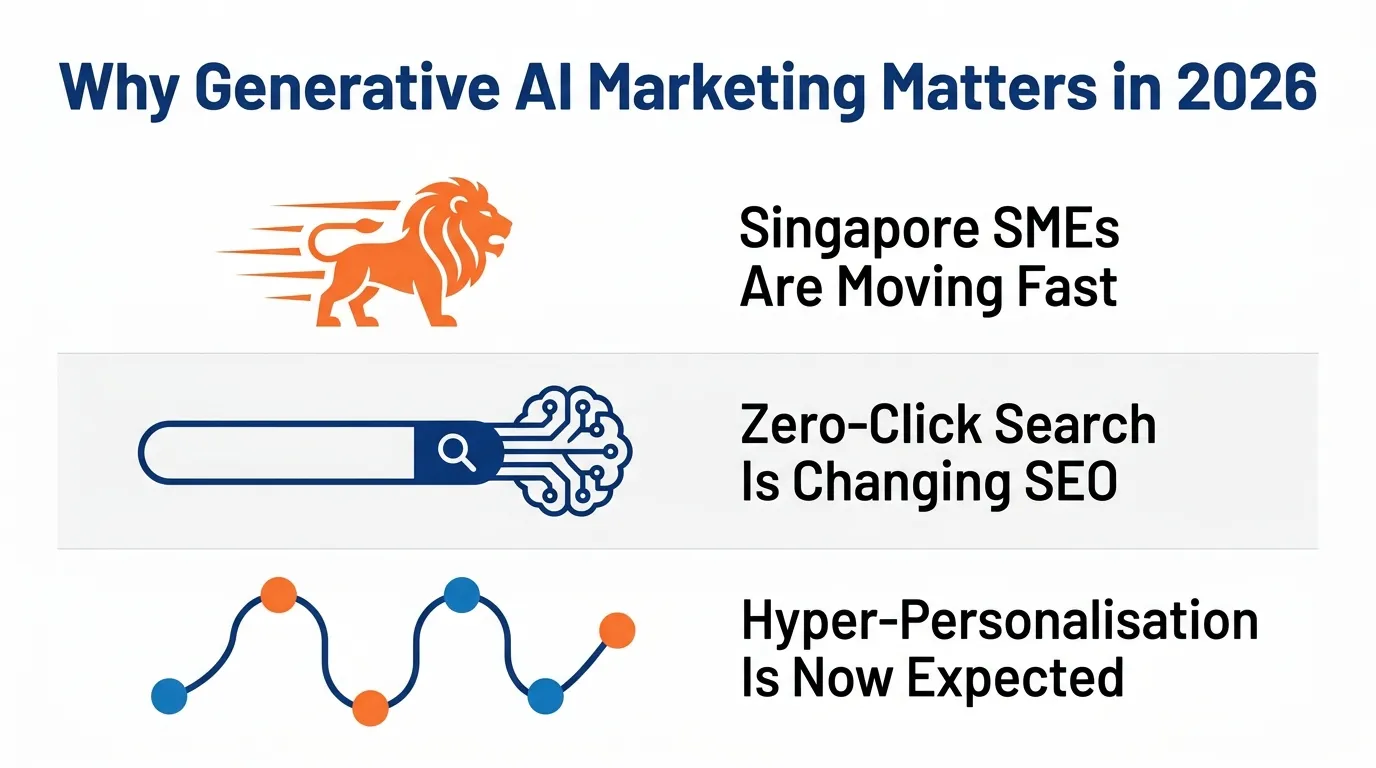
Singapore businesses face a very specific mix of pressure: higher labour costs, leaner teams, strong customer expectations, and a market that rewards both efficiency and trust.
That makes generative AI useful for three reasons:
First, it compresses production time. A team that used to take a week to brief, draft, revise, and localise a campaign can now get to the first draft much faster, leaving more time for strategic refinement.
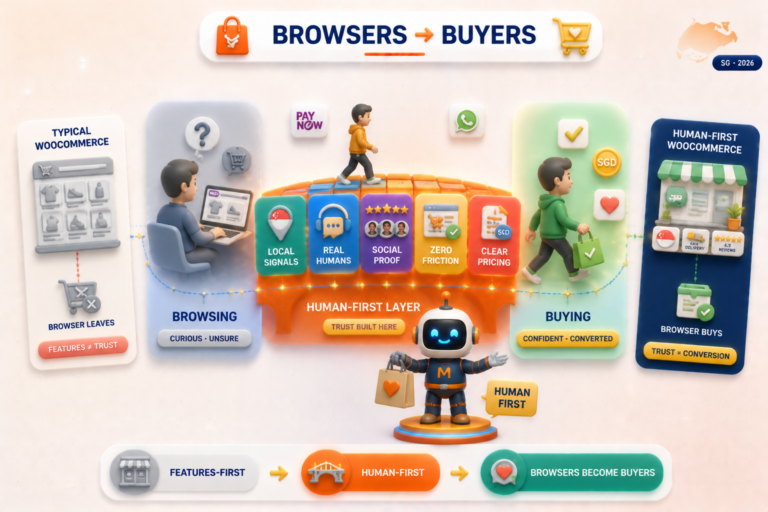
Second, it improves relevance. Singapore consumers are used to convenience and increasingly expect messages, offers, and experiences that feel context-aware rather than generic.
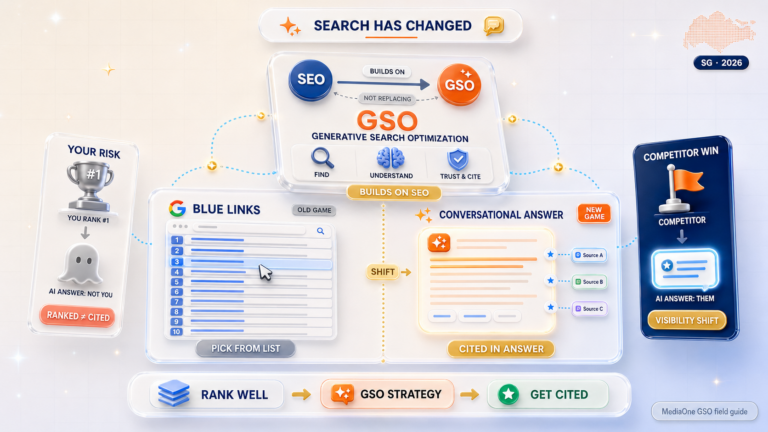
Third, it changes how visibility works. Search is moving toward answer surfaces, summaries, and zero-click behaviour. That means content has to be structured not just for ranking, but for retrieval, summarisation, and citation inside AI-assisted search experiences.
How I’d Prioritise Generative AI if I Were Running a Singapore SME
If I were advising a Singapore SME with a limited budget and a busy team, I would not start by buying a dozen tools. I would start with priority.
1. I would fix the slowest repetitive workflow first
The first win should be obvious and measurable.
If the team spends too much time writing product descriptions, repurposing content, preparing weekly email drafts, summarising customer feedback, or producing social variations, that is where I would begin. Those are usually low-risk, high-frequency workflows where AI can save time quickly.
I would not begin with the most glamorous use case. I would begin with the bottleneck that wastes the most team hours.
2. I would use AI to strengthen search visibility, not just speed up content
Many teams make the mistake of using AI only to produce more content. That is incomplete.
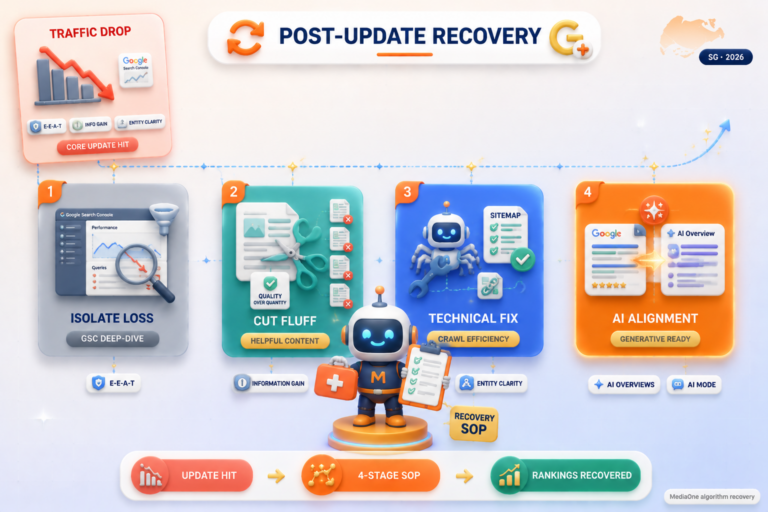
In 2026, I would use AI to improve how content is structured for discoverability: clustering topics, identifying question patterns, tightening headings, improving entity clarity, building FAQ sections, spotting citation gaps, and creating pages that are easier for both people and AI systems to interpret.
This is where Generative Engine Optimisation, or GEO, becomes practical rather than trendy.
What GEO means in practice
GEO is not “SEO with a new name.” It is the discipline of making your content easier for AI systems to retrieve, interpret, trust, and surface.
In practice, that means I would structure pages around a few principles:
- Clear question-and-answer formatting, because retrieval systems favour content that resolves intent directly.
- Strong entity clarity, so the page makes it obvious who the company is, what service or product is being discussed, where it applies, and how it relates to the topic.
- Source-backed claims, because unsupported assertions are less likely to be trusted by users and less useful to cite.
- Tight information architecture, so one page has one clear job instead of trying to cover everything at once.
- Human-edited specificity, especially local context, examples, terminology, and decision criteria.
I would also avoid publishing raw AI output. AI can draft, cluster, and accelerate. But the final content still needs human judgment, stronger evidence, and a distinct point of view.
3. I would personalise only where intent is strongest
Not everything needs hyper-personalisation.
If the budget were limited, I would focus personalisation on high-intent touchpoints: pricing pages, lead forms, abandoned enquiries, repeat visits, onboarding emails, and customer support journeys. That is where relevance is most likely to affect conversion.
Someone who has read three service pages and visited pricing twice should not get the same follow-up as someone who bounced after 20 seconds. AI makes that distinction easier to operationalise.
4. I would keep brand judgment and final approval human
There are parts of marketing I would automate aggressively, and parts I would not.
I would happily use AI for first drafts, ideation, summaries, pattern detection, variant generation, and repurposing.
I would not fully automate claims, positioning, regulated content, campaign sign-off, crisis-sensitive messaging, or anything that could create legal, reputational, or customer-trust issues if it were wrong.
Fast output is not the goal. Reliable output is.
5. I would measure before I scale
If a workflow saves time but hurts quality, it is not a win.
Before expanding AI use, I would compare assisted versus non-assisted work in a small pilot, measuring hours saved, output quality, conversion impact, engagement metrics, and revision rates. Only then would I scale.
What Singapore Businesses Need to Get Right on Compliance
This is where local execution matters.
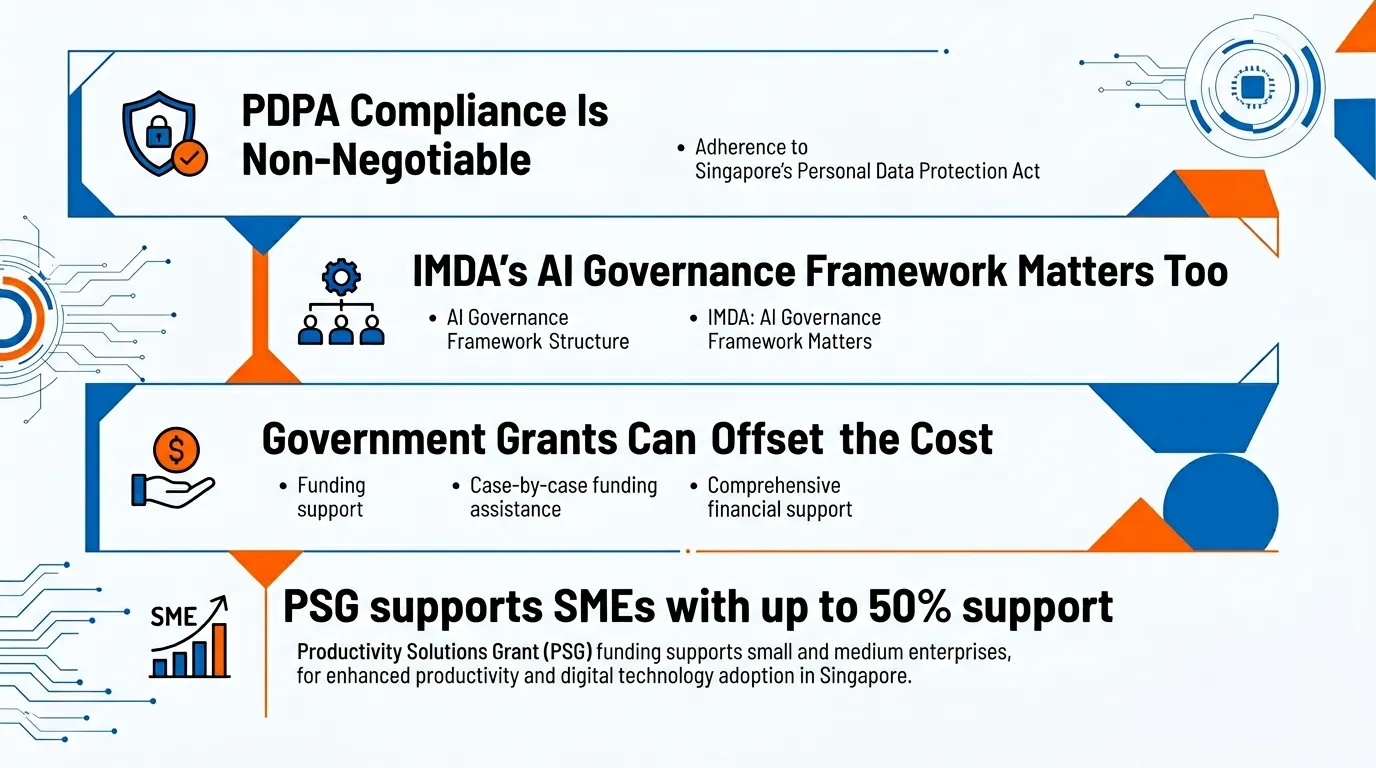
PDPA Compliance Is Non-Negotiable
Singapore’s PDPA applies to the collection, use, and disclosure of personal data, including when organisations use it to develop, test, monitor, or deploy AI systems.
The PDPC’s 2024 advisory guidelines also make clear that organisations should consider consent, applicable exceptions, accountability, transparency, data minimisation, and protection controls when using personal data in AI-related systems.
At the same time, Singapore’s Model AI Governance Framework for Generative AI emphasises a trusted ecosystem built around accountability, data quality, transparency, testing, security, incident reporting, and content provenance.
In other words, responsibility does not disappear because AI is involved. It becomes more important to define.
IMDA’s AI Governance Framework Matters Too
Singapore is not anti-AI. Far from it. But it wants AI deployed responsibly.
The IMDA Model AI Governance Framework, including its expansion into generative AI, makes one principle very clear: accountability still sits with the business.
That means if your AI tool generates a false claim, misstates a promotion, or produces misleading information, your brand is still on the hook.
I always tell clients this: AI does not remove responsibility. It increases the need for governance.
Government Grants Can Offset the Cost
For SMEs, this is worth paying attention to.
The Productivity Solutions Grant (PSG) supports selected digital tools, including some AI-powered solutions used in marketing and customer service. Depending on the approved vendor and package, eligible Singapore SMEs may receive up to 50% support.
Before you subscribe to anything, check GoBusiness or SMEs Go Digital. I have seen businesses overspend simply because they did not realise a subsidised option was available.
Real-World Use Cases: How Singapore Brands Are Using Generative AI
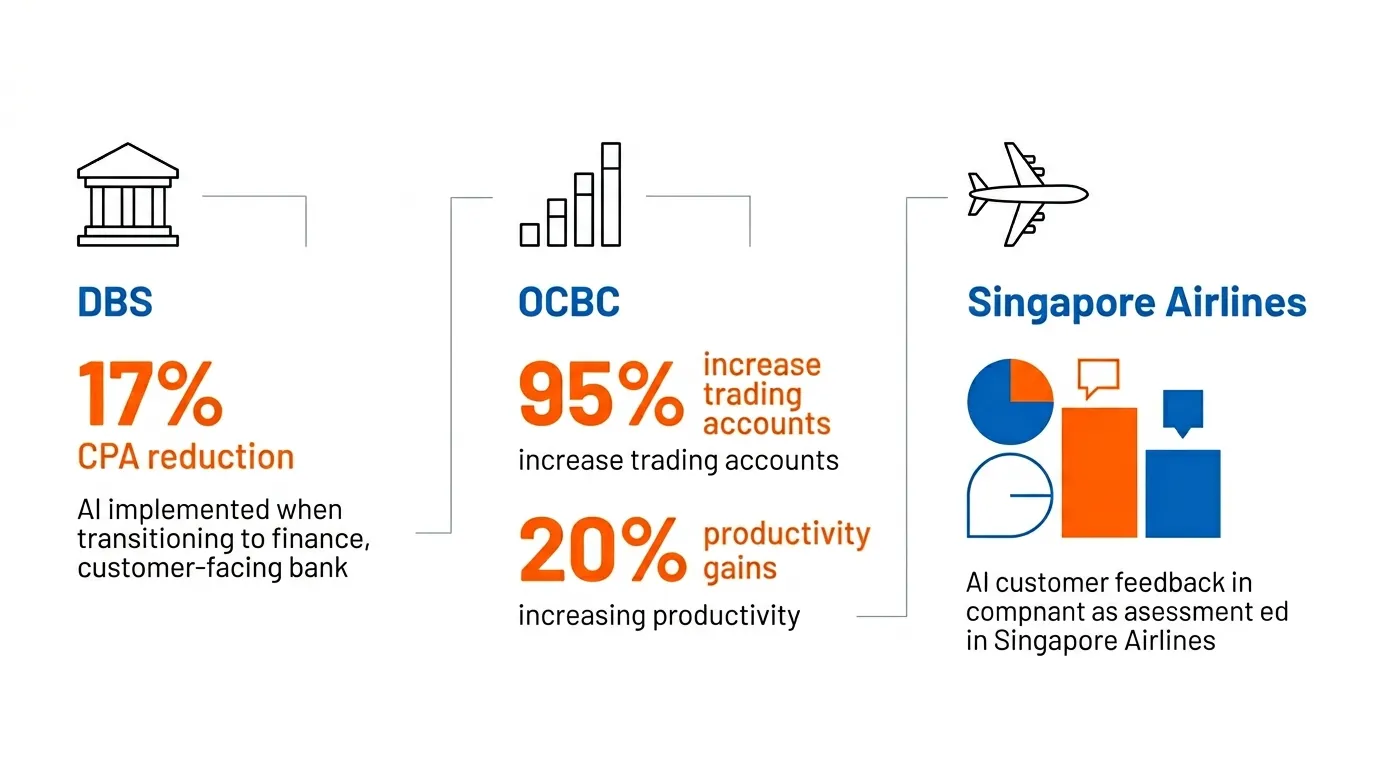
The most useful way to understand AI is not through hype, but through real-world use cases and their results. Here are a few examples that show what strong implementation looks like:
DBS: Lower CPA Through AI-Generated Ad Variants
DBS developed an in-house tool called AdGen, which uses past campaign data and customer segmentation to generate creative variations for performance marketing.
Instead of relying solely on manual creative testing, the bank used AI to generate multiple banner variants and optimise campaigns across channels such as Google and Meta.
The reported outcome was a 17% reduction in cost per acquisition.
The lesson here is not that every SME needs to build its own AI platform. It is that faster creative iteration can directly improve campaign economics.
OCBC: Personalised Nudges That Actually Feel Useful
OCBC has used AI to drive significant commercial outcomes. Its A.I. Oscar stock-picking tool drove a 95% increase in the number of trading accounts opened within three months of launch, while its HOLMES AI tool delivered up to 20% productivity gains for wealth relationship managers.
Rather than sending generic messages, the bank served targeted nudges based on customers’ actual behaviour. That kind of relevance made the communication feel less like advertising and more like assistance.
For SMEs, the takeaway is simple: AI works best when it helps customers make decisions, not when it just pushes more offers.
Singapore Airlines: Turning Social Data Into Revenue Recovery
Singapore Airlines uses AI-powered text analytics (via Qualtrics) to process and analyse customer feedback across multiple channels, enabling it to identify evolving preferences and address pain points across the full travel journey.
By identifying a specific pain point around missed connections, the team could respond with a targeted campaign tied to that concern.
That is the real power of generative AI in marketing. It helps you turn unstructured noise into actionable insight.
Top Generative AI Marketing Tools in 2026 for Singapore Businesses
Below is a practical shortlist of generative AI tools I would look at, along with estimated pricing in SGD.
| Tool | Best For | Est. Price (SGD) | Grant Eligible? |
| ChatGPT Enterprise | Content drafting, ideation, and research support | ~S$40/user/month | No |
| Jasper AI | Brand voice copywriting | ~S$65/month | No |
| HubSpot Marketing Hub | CRM, automation, AI content tools | From S$30/month | Yes (PSG, depending on package) |
| AiChat | Singapore-based chatbot and conversational commerce | Custom quote | Yes (PSG) |
| Hypotenuse AI | E-commerce content and product descriptions | ~S$40/month | No |
| Canva Magic Studio | Fast visual asset creation | ~S$18/month | No |
| Midjourney | High-quality creative images | ~S$15/month | No |
| Semrush | SEO research and content planning | ~S$170/month | No |
| Wiz.ai | Voice AI and customer service automation | Custom quote | Possibly, depending on the scope |
| Adobe Firefly | Commercial-safe image generation | Included in Adobe CC plans | No |
Grant Tip: Before paying out of pocket, always check whether the vendor or package is supported under SMEs Go Digital or GoBusiness. For Singapore SMEs, this can make a meaningful difference to rollout costs.
My 5-Step Implementation Guide for Singapore Businesses
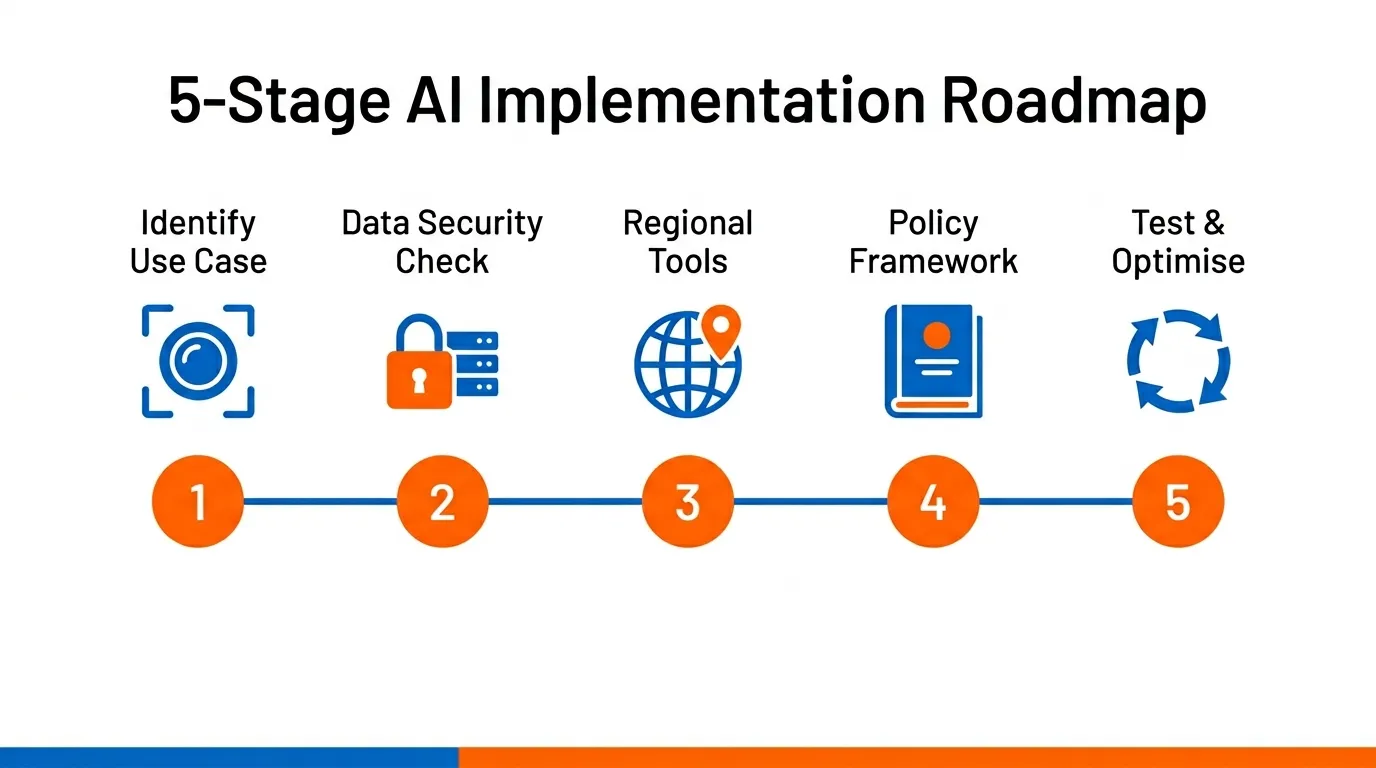
If you want to use generative AI properly, do not start with tools. Start with problems.
Step 1: Define One Clear Use Case
Do not say, “Let’s do AI.”
That is how budgets get wasted.
Instead, say something like: “We spend 10 hours a week writing product descriptions, and we want to bring that down to two.”
That gives you a measurable target.
Step 2: Audit Your Data Before You Touch Any Tool
This is especially important in Singapore.
Before you upload lists, prompts or datasets into any AI system, check what is inside them. Strip out anything sensitive. Make sure you understand where the data goes, whether it is retained, and whether it is used for model training.
If you are handling customer data, enterprise-grade tools are usually the safer option.
Step 3: Choose Tools That Fit the Local Market
Not every shiny tool from the US is the right choice for a Singapore business.
If you are marketing across Southeast Asia, I would prioritise tools that handle regional languages and local context well. Bahasa, Mandarin and Singlish-adjacent phrasing can trip up generic systems if you are not careful.
Step 4: Put an Internal AI Policy in Writing
You do not need a 40-page policy document.
You do need a clear internal rule set.
For example:
- Staff may use AI for drafting and ideation
- All outputs must be reviewed by a human before publishing
- No confidential client data may be entered into public AI tools
- Compliance and legal review is required for regulated content
That alone eliminates a lot of unnecessary risk.
Step 5: Pilot, Measure, Refine
Run a 30-day pilot.
Track baseline performance. Compare time saved, content output, engagement and conversion impact. Then refine your prompts, processes and governance from there.
AI implementation is not a one-shot exercise. It is an optimisation loop.
Compliance and Best Practices for Generative AI Marketing in Singapore
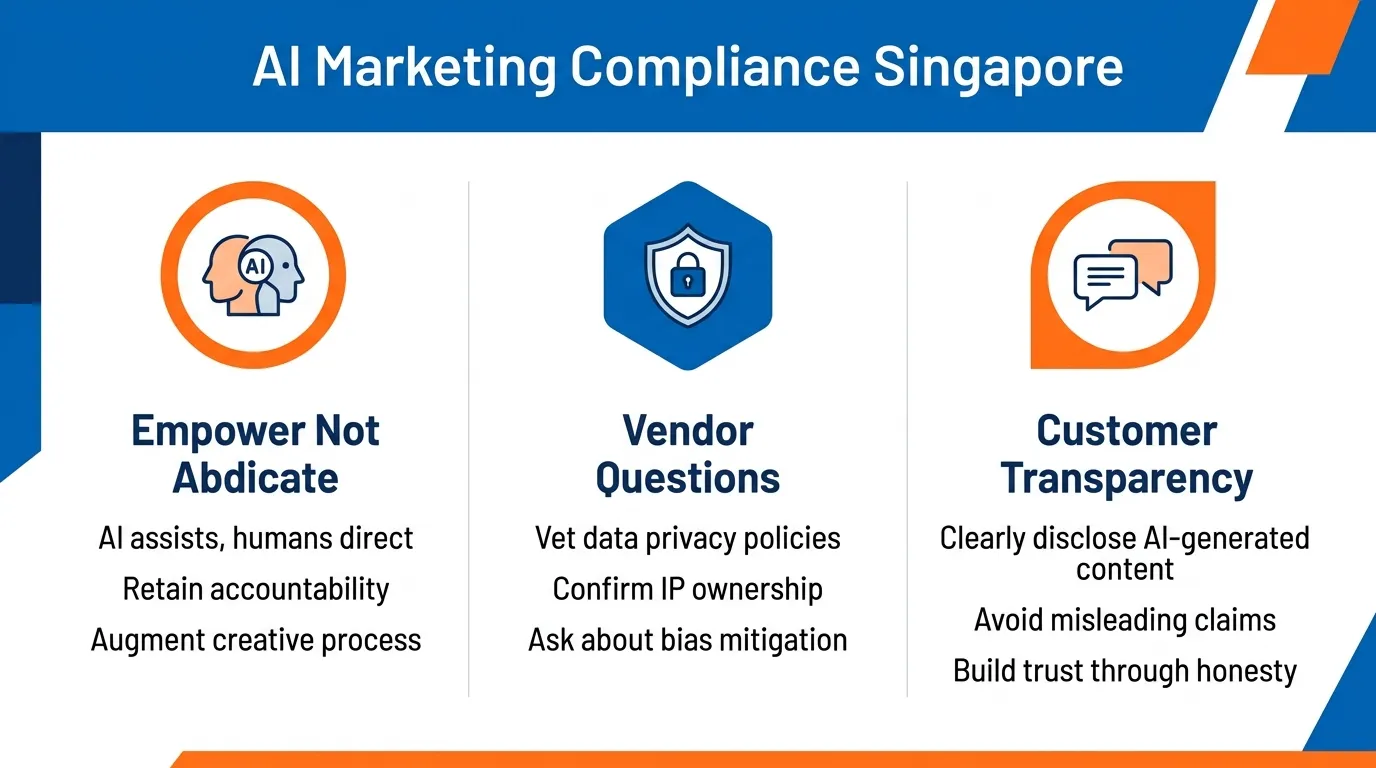
Singapore wants to be known for trusted AI. That is a good thing for businesses, because trust is ultimately what makes marketing work.
Use AI to Empower, Not to Abdicate Thinking
I believe AI should remove drudgery, not judgment.
If your team spends less time resizing banners, rewriting product copy or sorting data manually, that is a win. But strategic thinking, positioning and final decision-making still need human leadership.
Ask Vendors the Hard Questions
If you are in a sensitive sector like finance, healthcare or education, ask vendors directly:
- Where is my data stored?
- Is my data used to train your public model?
- What access controls are in place?
- Can I opt out of retention?
If they cannot answer clearly, I would be cautious.
Be Transparent With Customers
If you are using AI-generated visuals, AI chat agents or synthetic content, disclose it where appropriate.
Most customers do not mind AI. What they dislike is feeling misled.
Trust compounds. So does suspicion.
Risks and Pitfalls You Need to Watch
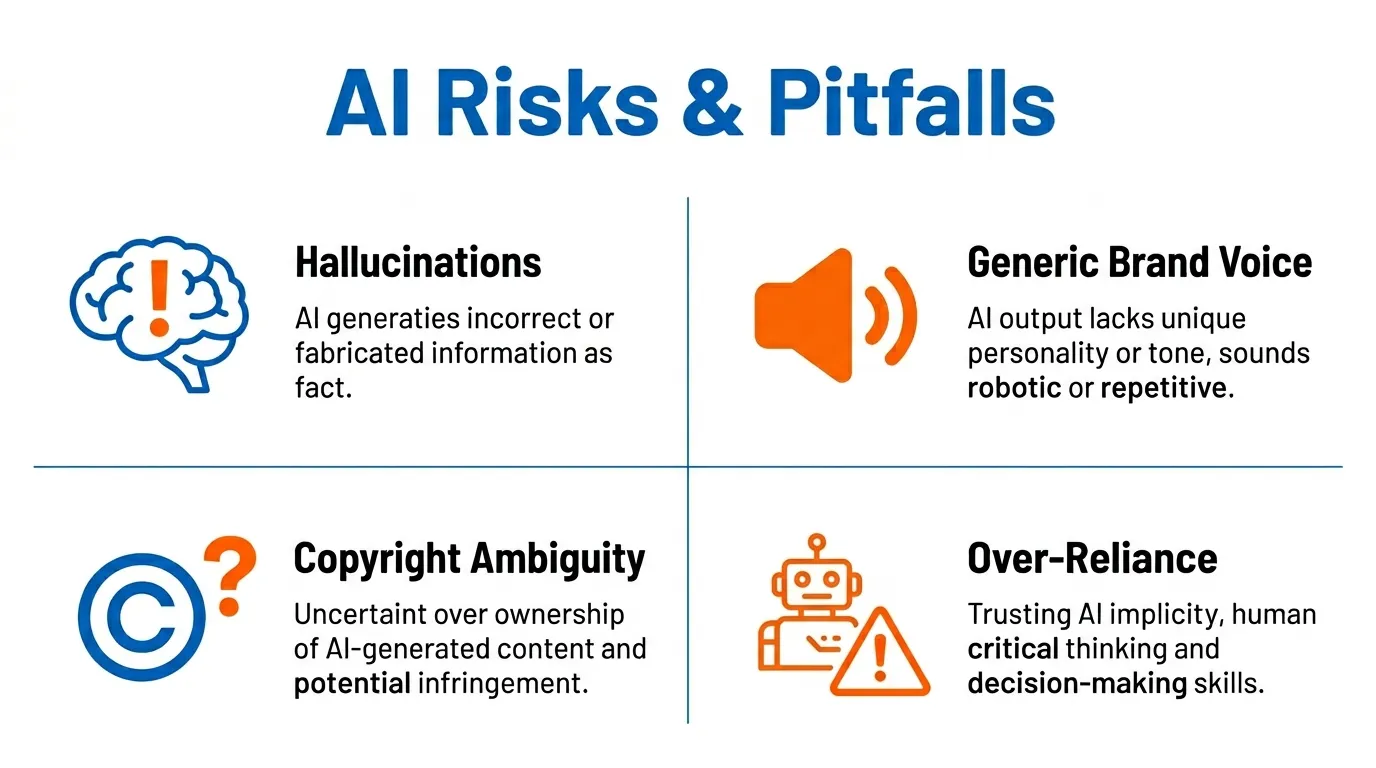
Generative AI is powerful, but it is not magic. Used badly, it creates more problems than it solves.
1. Hallucinations
AI can sound confident even when it’s completely wrong.
That is dangerous in any business, but especially in sectors where details matter. One wrong claim about a product, policy, pricing structure or travel itinerary can create a customer service mess.
My rule is simple: no AI-generated content goes live without human review.
2. Generic Brand Voice
If you use default prompts and publish raw output, your brand starts to sound like everyone else.
That is one of the fastest ways to become forgettable.
To avoid that, I recommend feeding the system your brand guidelines, top-performing copy, tone principles and approved terminology.
3. Copyright Ambiguity
This is especially relevant for generated visuals.
If you are running a major commercial campaign, use tools with clearer commercial safeguards, such as Adobe Firefly, and always understand the licensing position before deployment.
4. Over-Reliance
AI is a junior assistant, not your marketing director.
If your team stops thinking critically because the machine gives fast answers, quality will eventually drop. Good AI adoption sharpens thinking. It should not replace it.
When Should a Singapore Business Invest in Generative AI Marketing?
If any of these sound familiar, I would say the time to invest is now:
- Your content pipeline is too slow
- Your customer support team is overloaded
- Your ad costs keep rising
- You need more creative testing without hiring a bigger team
- You are expanding into regional markets and need faster localisation
- Your sales and marketing teams are buried in repetitive work
How I Measure ROI From Generative AI Marketing
Many businesses adopt AI and then struggle to prove whether it is actually working.
That is avoidable.
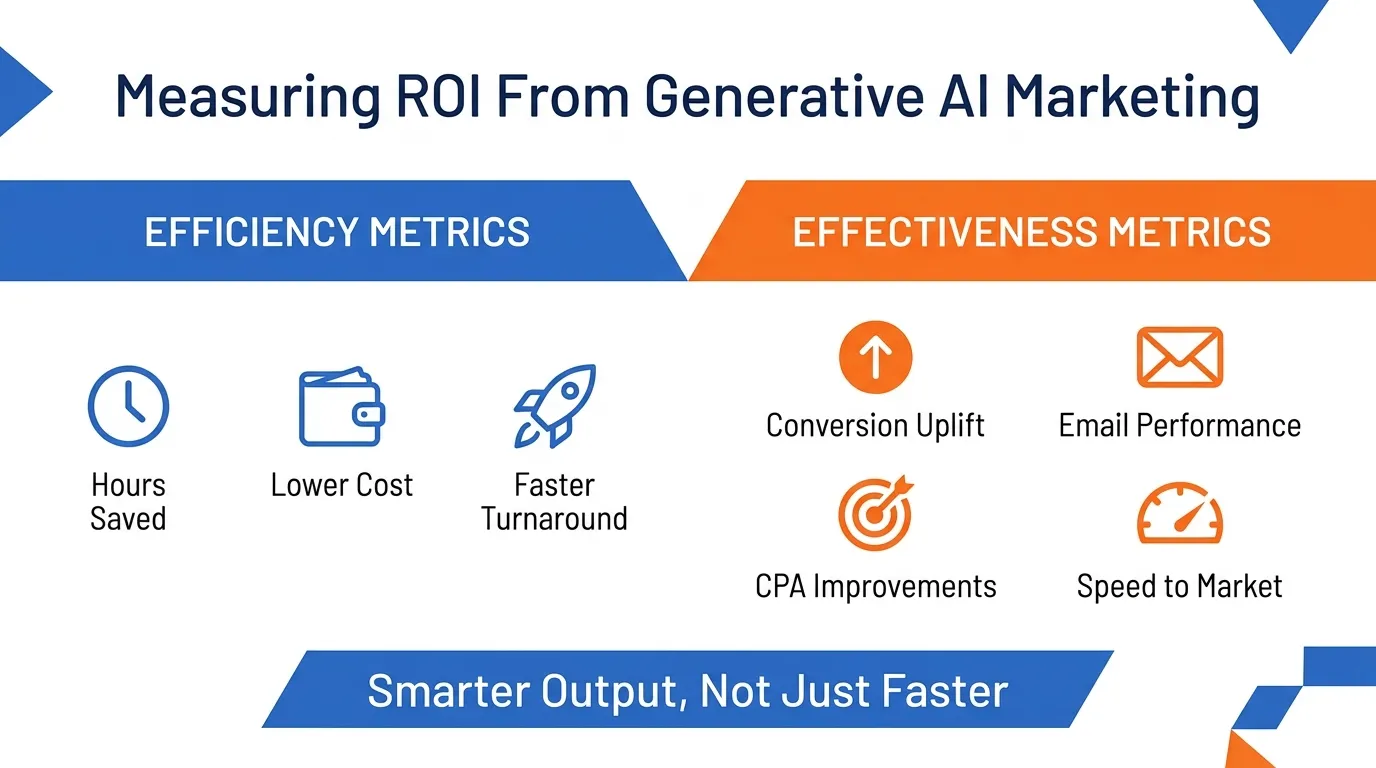
I measure ROI across two buckets: efficiency and effectiveness.
Efficiency Metrics
These tell me whether AI is saving time or cost.
- Hours saved: Manual task time minus AI-assisted task time
- Lower production cost: Reduced outsourcing or internal labour hours
- Faster campaign turnaround: Less delay between idea and execution
Effectiveness Metrics
These show whether the output is actually improving business performance.
- Conversion uplift from personalised content or recommendations
- Open and click-through rates on AI-assisted email campaigns
- Cost per acquisition improvements from faster creative testing
- Speed to market for new campaigns and promotions
If the tool saves time but hurts quality, I do not count that as a win. The goal is smarter output, not just faster output.
Ready to Future-Proof Your Company With Generative AI Marketing?
I have been in digital marketing long enough to know that not every trend lasts.
This one will.
Generative AI is already reshaping how brands attract attention, create content, personalise campaigns and compete more efficiently. But tools alone are not enough. What matters is how you implement them — strategically, responsibly, and in a way that actually drives growth.
That is exactly where my team and I come in.
At MediaOne, we help Singapore businesses build AI-enabled marketing systems that improve performance without compromising compliance, clarity or brand integrity.
If you want to sharpen your SEO, strengthen your GEO strategy, or integrate generative AI into your marketing stack in a way that makes commercial sense, let’s talk.
Contact us today for a consultation on your AI marketing roadmap.
Frequently Asked Questions
Is it legal to use AI-generated content for marketing in Singapore?
Yes, generally speaking, provided you respect copyright, comply with PDPA requirements, and do not use AI in a misleading or deceptive way.
How much does it cost for an SME to get started?
You can start with basic tools for under S$100 per month. More advanced setups involving CRM integration, custom chatbots or workflow automation can range from S$500 to S$5,000+, depending on complexity.
Will AI replace my marketing team?
No, but it will change how your team works. The repetitive execution of work will shrink. Strategy, editing, judgement and creative direction will matter even more.
Does PSG cover ChatGPT?
Not directly in most cases. PSG typically supports approved solutions that include AI capabilities rather than generic AI subscriptions.
How do I keep customer data safe?
Use enterprise accounts, review vendor privacy terms carefully, anonymise sensitive data, and limit access internally.
Can AI help with SEO for Google.com.sg?
Absolutely. I use AI to accelerate keyword clustering, content briefs, metadata ideation and topical mapping. But I would never recommend publishing raw AI output without human editing and local context.