Influencer marketing is no longer just about one-off sponsored posts. Today, it’s a structured channel for building awareness, trust, and conversions through smart creator partnerships.
The numbers back this up. Influencer Marketing Hub projects the industry will hit $32.55 billion by 2025. Influencer marketing is now mainstream and commercially critical.
As campaigns become more complex, brands can no longer rely on ad hoc outreach and informal coordination. Successful campaigns often involve influencer vetting, content approvals, timeline management, performance tracking, and post-campaign analysis.
That’s why influencer campaign management matters. In this guide, you’ll see what campaign management involves, which tools agencies use, the challenges brands face, and why structure is key if you want real business results from a full-service influencer marketing agency in Singapore
Key Takeaways
- Influencer campaign management involves planning, executing, and analysing influencer collaborations to achieve specific marketing outcomes, such as brand awareness, engagement, or conversions.
- Structured campaign management helps brands coordinate multiple influencers, maintain consistent messaging and measure campaign performance using clear metrics.
- Many organisations work with specialised agencies because managing influencer campaigns requires expertise in influencer discovery, campaign logistics and performance analytics.
What Is Influencer Campaign Management?
Influencer campaign management involves planning, running, and optimising influencer collaborations across social platforms to achieve clear goals such as awareness, engagement, or conversions.
Unlike one-off influencer deals, campaign management is about structure. You might have several influencers creating coordinated content across platforms, all working toward the same goal.
Typical responsibilities within influencer campaign management include:
- campaign strategy development
- influencer discovery and selection
- influencer outreach and negotiations
- campaign briefing and content approvals
- campaign execution and scheduling
- performance monitoring and reporting
These stages ensure that influencer marketing efforts remain aligned with brand messaging while delivering measurable results.
Why Brands Need Structured Influencer Campaign Management
Influencer marketing can be highly effective, but many brands start by contacting creators directly for simple product promotions. While this approach works on a small scale, campaigns quickly become complex as you expand to multiple influencers, platforms, or content types.
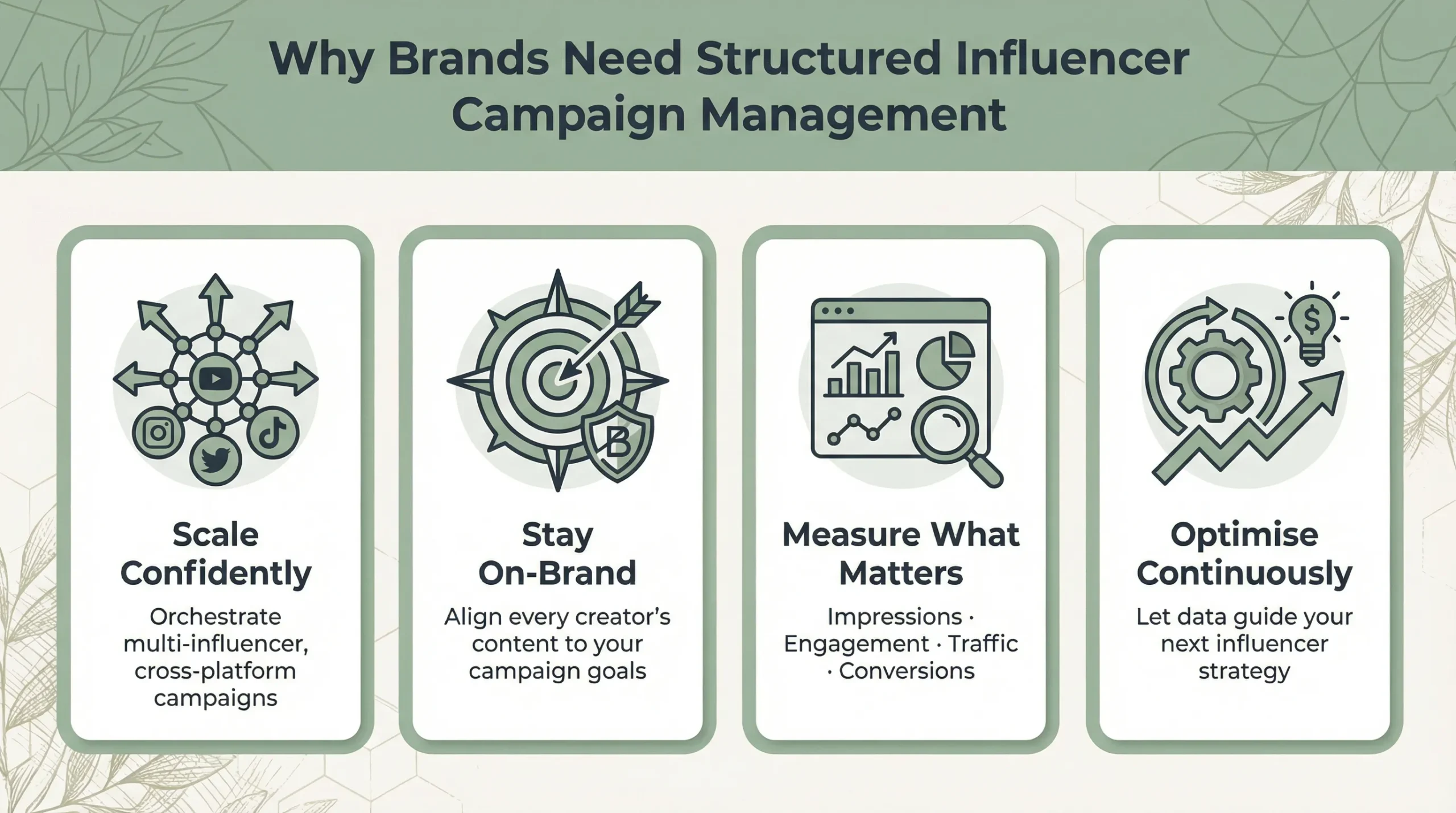
Structured influencer campaign management provides the framework to organise collaborations, maintain consistent messaging, and achieve measurable results.
- Scalability: Many brands start by contacting influencers directly for one-off product promotions. While this approach can work on a small scale, it becomes difficult to manage as campaigns grow across multiple influencers or platforms. Structured campaign management helps coordinate posts, timelines, and content types efficiently.
- Consistent Brand Alignment: Influencers bring their own creative styles, but structured management ensures messaging remains aligned with your brand and campaign goals. This alignment helps maintain a cohesive brand image across all influencer content.
- Clear Communication: Organising campaigns with defined briefs, approval processes, and timelines ensures that influencers understand expectations, deliverables, and deadlines. This reduces miscommunication and prevents delays.
- Measurable Outcomes: Structured campaigns track performance metrics, including impressions, engagement rates, website traffic, and conversions. These insights allow marketers to identify high-performing influencers and optimise future campaigns for better results.
- Improved Long-Term ROI: Treating influencer campaigns as a structured marketing channel rather than isolated posts enables brands to scale efforts, maintain quality, and deliver measurable business outcomes over time.
- Cross-Platform Efficiency: Structured management supports multi-platform strategies, ensuring that campaigns are coordinated across Instagram, TikTok, YouTube, or other channels without content or timing conflicts.
Step-by-Step Influencer Campaign Management Process
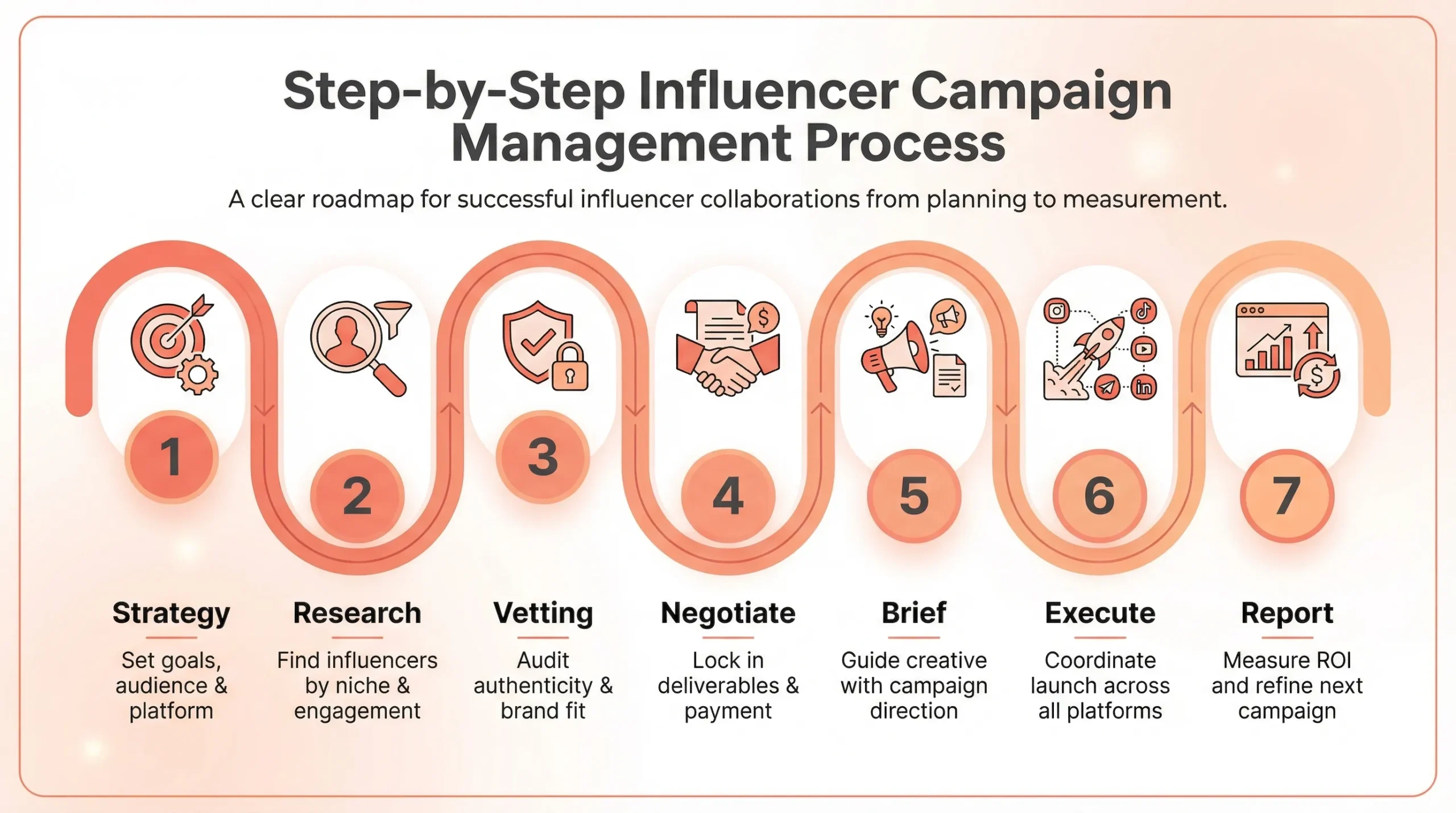
Successful influencer campaigns follow a structured workflow that ensures campaigns run smoothly and deliver measurable marketing impact. By implementing a clear step-by-step process, brands can maximise reach, engagement, and conversions while maintaining consistent messaging across all creators and platforms.
1. Campaign Strategy Development
Every influencer campaign begins with a well-defined strategy. Marketers start by establishing clear objectives, such as increasing brand awareness, promoting new product launches, driving website traffic, or boosting conversions.
This stage also involves identifying target audiences, choosing the most effective social media platforms, and defining campaign messaging. A strong strategy ensures that influencer content aligns with broader marketing goals and sets the foundation for all subsequent campaign steps.
2. Influencer Research and Selection

Choosing the right influencers is critical to a campaign’s success. Agencies and brands evaluate potential creators based on audience demographics, engagement rates, content style, credibility, and relevance to the brand.
Follower count alone is rarely the best indicator of impact. Micro-influencers or niche creators often outperform larger influencers when their audiences are highly engaged and closely aligned with the brand’s target market.
3. Influencer Vetting Framework
Professional campaign managers follow a structured vetting process to ensure the quality of influencers. Common evaluation criteria include:
- Engagement rate and audience interaction
- Audience demographics and geographic relevance
- Authenticity of followers (avoiding fake or inactive accounts)
- Past collaborations and brand experience
- Content quality and alignment with brand tone
- These checks reduce the risk of partnering with influencers who may not deliver meaningful results.
4. Outreach and Negotiation
Once the ideal influencers are identified, agencies initiate outreach to discuss potential collaborations. Negotiations typically cover campaign deliverables, posting timelines, content usage rights, and compensation. Clear agreements ensure both the brand and influencers understand expectations, responsibilities, and success metrics before the campaign begins.
5. Content Briefing and Creative Direction
Influencers receive detailed campaign briefs that outline objectives, key messages, product details, and content guidelines. While creative freedom is encouraged, these briefs help maintain consistency across multiple creators and ensure brand alignment.
Agencies may review drafts or pre-scheduled posts to verify accuracy, compliance, and adherence to brand standards.
6. Campaign Launch and Execution
During execution, agencies coordinate posting schedules and ensure content goes live in accordance with the campaign timeline. Large campaigns may involve dozens of influencers across multiple platforms, requiring careful coordination. Real-time monitoring allows teams to identify high-performing content and adjust strategies on the fly, maximising overall campaign effectiveness.
7. Performance Monitoring and Reporting
After the content is published, campaign performance is tracked using key metrics such as impressions, engagement rates, website traffic, leads, and conversions.
Agencies compile detailed reports analysing influencer performance and overall campaign impact. These insights provide actionable takeaways for future campaigns and help brands understand their return on investment.
Influencer Campaign Management vs Influencer Outreach
Influencer outreach and influencer campaign management are often confused, but they represent very different approaches to influencer marketing. Understanding the distinction helps brands decide which approach best fits their goals.
| Aspect | Influencer Outreach | Influencer Campaign Management |
|---|---|---|
| Goal | Focuses on individual collaborations or one-off promotions. | Focuses on structured, multi-influencer campaigns aligned with broader marketing objectives. |
| Scale | Usually involves a single influencer. | Involves multiple influencers across platforms for a coordinated effort. |
| Strategy | Typically, short-term promotions have limited strategic planning. | Part of a long-term marketing strategy with clear objectives and campaign planning. |
| Tracking | Limited tracking of engagement or performance. | Detailed analytics and reporting on performance, conversions, and ROI. |
| Coordination | Minimal coordination between the brand and influencers. | High-level campaign coordination, including timelines, content review, and cross-platform management. |
While influencer outreach may work for small, simple collaborations, structured influencer campaign management is essential for brands seeking scalable, measurable, and long-term marketing results.
Tools Used for Influencer Campaign Management
Running influencer campaigns takes the right tools. Agencies use them to find influencers, coordinate campaigns, track performance, and analyse results. The right stack keeps everything organised and measurable, even at scale.

The table below highlights the main types of tools commonly used in influencer campaign management and their purpose.
| Tool Category | Purpose | How It Helps Influencer Campaign Management |
| Influencer Discovery Tools | Identify influencers whose audience aligns with the brand’s target market | Helps marketers evaluate engagement rates, audience demographics, location and authenticity before selecting influencers |
| Campaign Management Platforms | Organise campaign logistics and influencer collaborations | Tracks outreach, negotiations, deliverables, posting schedules and campaign timelines across multiple influencers |
| Analytics and Reporting Tools | Measure campaign performance and marketing outcomes | Tracks metrics such as impressions, engagement rate, click-through rate, conversions, and return on investment |
| Social Listening Tools | Monitor brand mentions and audience sentiment | Helps marketers understand how audiences react to influencer content and detect emerging conversations around the campaign |
| Affiliate and Link Tracking Tools | Track conversions driven by influencer campaigns | Measures performance using affiliate links, tracking URLs and promo codes linked to specific influencers |
| Project Management and Collaboration Tools | Coordinate communication between agencies, influencers, and internal teams | Ensures campaign briefs, approvals, revisions and deadlines are managed efficiently across stakeholders |
In most campaigns, agencies rely on a combination of these tools rather than a single platform. Together, they provide the infrastructure needed to run influencer campaigns at scale while maintaining visibility over content quality, timelines, and performance metrics.
Common Challenges in Influencer Campaign Management
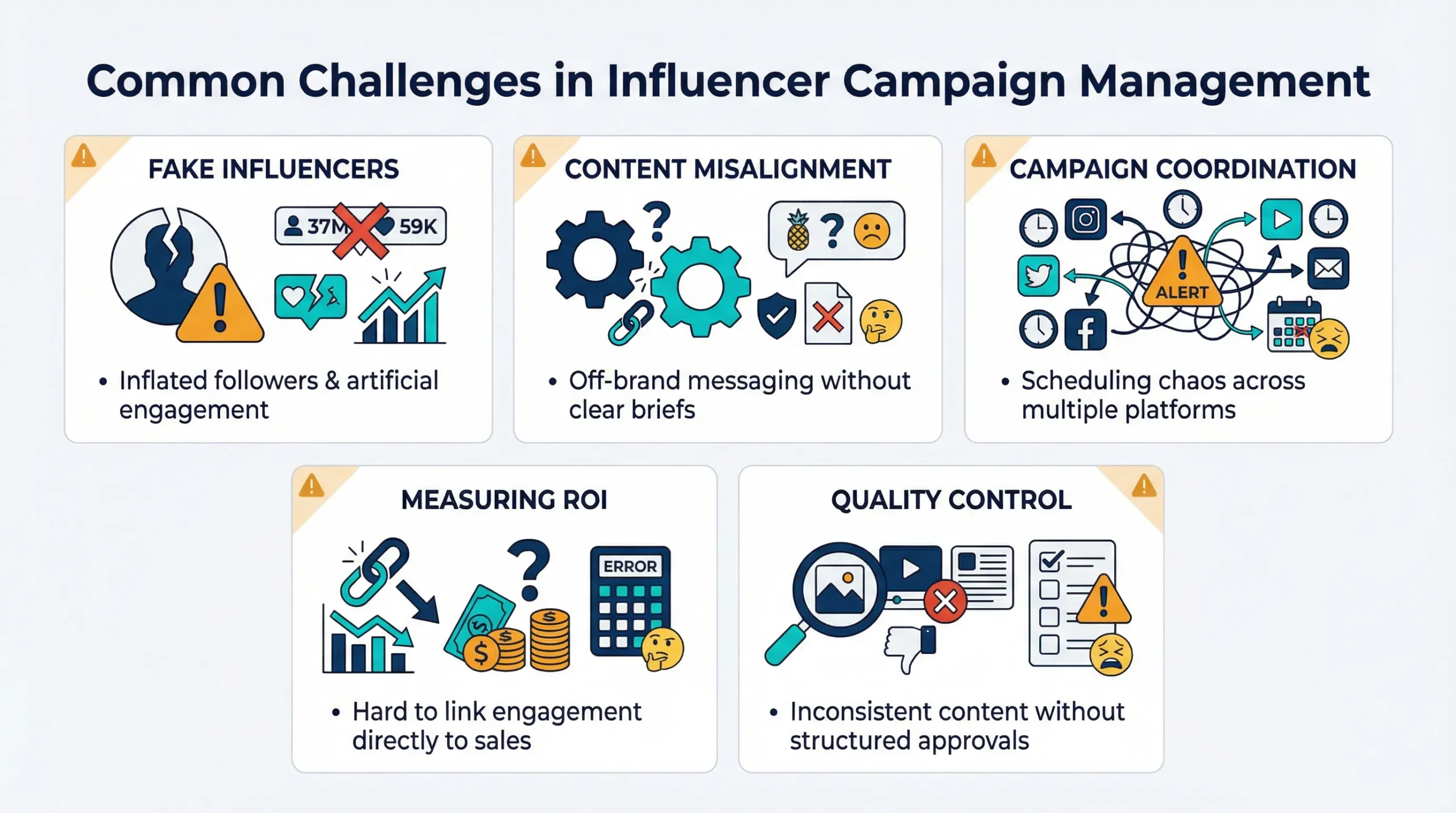
While influencer marketing can be a highly effective channel for brand growth, managing influencer campaigns comes with several operational and strategic challenges. Without a structured approach, brands may struggle to maintain quality control, track campaign performance, or ensure influencer partnerships align with marketing objectives.
- One of the most common challenges is identifying authentic influencers. Some creators may have inflated follower counts or artificially boosted engagement, making it difficult for brands to determine whether their audience is genuine. If brands collaborate with influencers who lack real audience engagement, campaigns may generate little impact despite appearing successful on the surface.
- Brand and content alignment is another hurdle. Influencers need to keep their own voice, but brands need to ensure messaging stays accurate and on-brand. Without clear briefs and approvals, influencer content can miss the mark or misrepresent your brand.
- Campaign coordination can also become complex when multiple influencers are involved. Large campaigns often require careful scheduling of posts, coordination of content themes, and monitoring of deadlines across different platforms. Without effective campaign management systems, brands may miss posting schedules, duplicate messaging, or experience inconsistent campaign timing.
- Measuring performance is another challenge. Influencer marketing often drives engagement and awareness, but it’s harder to tie those directly to sales. Without tracking tools like affiliate links or promo codes, it’s tough to know your true ROI.
Spot these challenges early and put structured processes in place. That’s how you run influencer campaigns efficiently and keep control over messaging, timing, and results.
Benefits of Working With an Influencer Marketing Agency
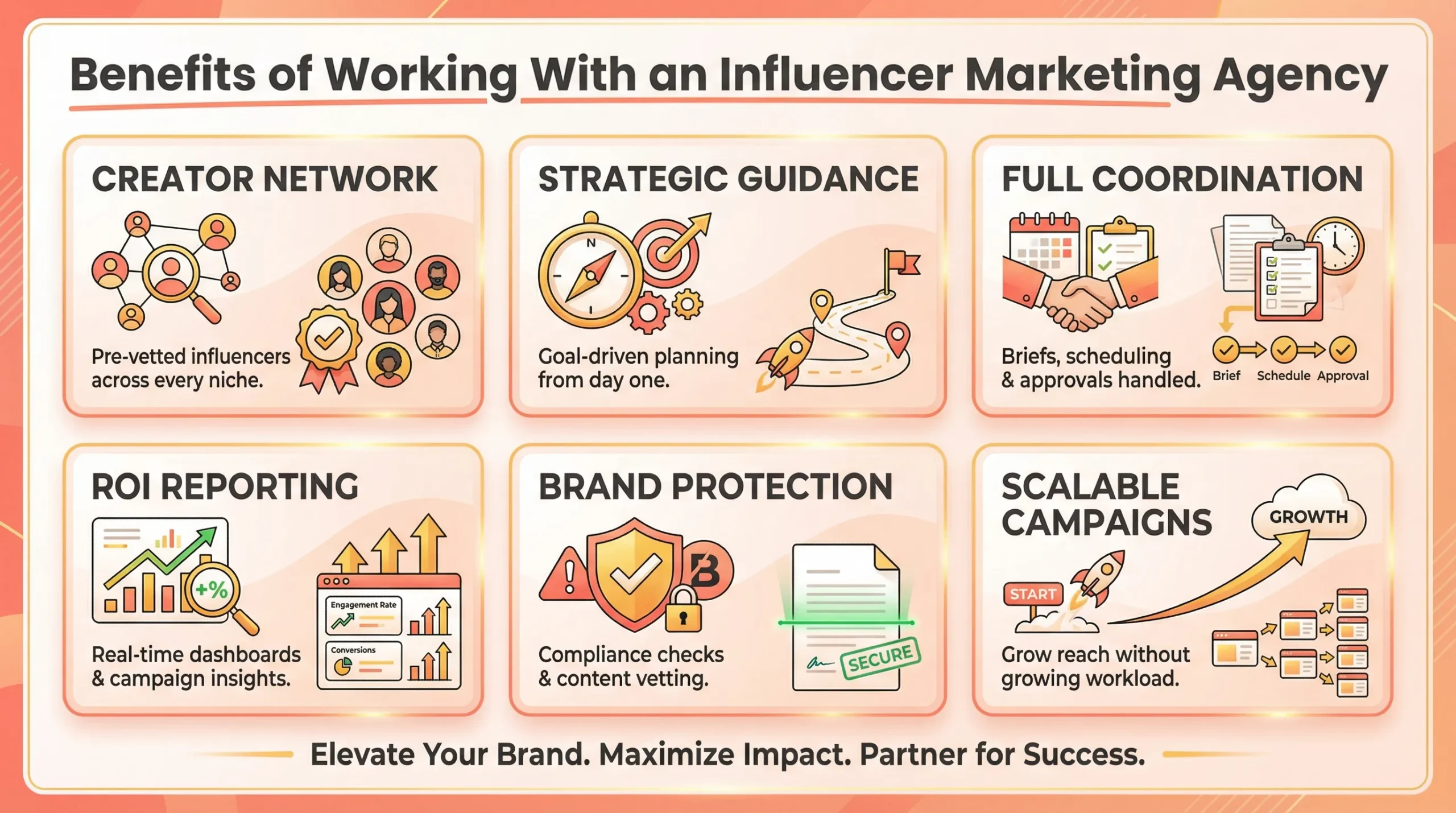
Running influencer campaigns internally can be challenging, especially when campaigns involve multiple creators, platforms, and performance metrics. While some brands manage small collaborations in-house, larger or more strategic campaigns often require specialised expertise. This is where working with an influencer marketing agency can provide significant advantages.
- One of the main benefits is access to established influencer networks. Agencies typically maintain long-term relationships with creators across industries, making it easier to identify influencers who align with a brand’s target audience and campaign goals. Instead of spending weeks researching and contacting influencers individually, brands can tap into an existing network of vetted creators.
- Agencies also bring strategy and planning. They treat influencer marketing as a structured channel, not just a one-off. Agencies help you set objectives, pick platforms, choose the right influencers, and build messaging frameworks. This way, influencer content supports your bigger marketing goals—not just isolated promos.
- Campaign coordination is also much easier with agency support. Managing multiple influencers involves coordinating outreach, negotiating collaboration terms, providing campaign briefs, reviewing content, and monitoring posting schedules. Agencies have systems and processes in place to manage these tasks efficiently while ensuring that campaigns stay organised and on schedule.
- Performance tracking and reporting are other important benefits. Agencies use analytics tools and campaign dashboards to monitor engagement, reach, website traffic, and conversions generated by influencer content. These insights help brands understand which influencers deliver the strongest results and how influencer marketing contributes to overall marketing performance.
- Agencies also help brands reduce risks associated with influencer marketing. They conduct influencer vetting to detect fake followers or low-quality engagement, ensure influencer content complies with advertising disclosure guidelines, and maintain quality control through content approval processes. This reduces the chances of working with unsuitable influencers or publishing content that could harm the brand’s reputation.
If you want influencer marketing that’s structured and scalable, a full-service agency in Singapore can simplify everything. Agencies handle discovery, coordination, content, and performance, so you can focus on your bigger marketing goals.
Working with an agency means faster execution, better audience targeting, and real measurement of your influencer marketing impact.

Influencer Campaign Management as a Long-Term Marketing Strategy
Influencer marketing works, but you won’t get results by just sending products and hoping for reach. Real impact comes from strategy, structure, and consistent execution, from picking influencers to reporting and optimisation.
That is why influencer campaign management matters. It helps brands stay in control of messaging, improve campaign efficiency, and measure what each collaboration is actually delivering.
If your business is looking to run influencer campaigns with a clearer strategy and stronger accountability, consider working with MediaOne as your full-service influencer marketing agency in Singapore. Contact us today!
Frequently Asked Questions
How much does influencer campaign management typically cost?
The cost of influencer campaign management varies based on factors such as the number of influencers, the campaign duration, the deliverables, and the platform. Agencies may charge a management fee or a percentage of the total influencer campaign budget.
How long does it take to plan and launch an influencer campaign?
Planning an influencer campaign usually takes two to four weeks, depending on campaign complexity. This period typically includes influencer research, outreach, negotiation, content briefing and campaign scheduling before the content is published.
What types of influencers work best for marketing campaigns?
Different campaigns may require different types of influencers. Micro influencers are often effective for niche audiences and higher engagement rates, while larger influencers may be used for wider brand awareness. The choice depends on the campaign objective and target audience.
Can influencer campaigns support lead generation or sales?
Yes, influencer campaigns can support lead generation and sales when backed by proper tracking mechanisms, such as affiliate links, promotional codes, or dedicated landing pages. These tools help brands measure how influencer content contributes to conversions.
What industries benefit most from influencer campaign management?
Many industries benefit from influencer marketing, including beauty, fashion, food and beverage, travel, technology and fitness. However, influencer campaigns are increasingly used in B2B industries, particularly on platforms like LinkedIn and YouTube.