

Search results today are far more dynamic than the traditional list of blue links. Product listings can now display prices, stock availability, ratings, and navigation breadcrumbs directly on the search results page. These enhanced results allow shoppers to evaluate products before they even click through to a website.

Structured data plays a major role in enabling these features. According to Google documentation and industry studies, pages that appear as rich results can achieve significantly higher engagement.
For e-commerce businesses competing in crowded search landscapes, these enhancements can make the difference between a listing that gets ignored and one that attracts qualified clicks.
E-commerce schema markup provides the structured data framework that allows search engines to interpret product information such as price, reviews, availability, and product hierarchy.
When implemented correctly, schema markup improves how e-commerce products appear in search results and strengthens search engines’ understanding of the relationships between product pages, categories, and supporting content.
For many growing online stores, implementing schema across thousands of products can be technically complex. This is why businesses often work with an experienced e-commerce SEO agency to ensure structured data is implemented correctly and consistently across large catalogues.
Before diving in, it helps to understand what e-commerce schema markup is and how it fits into a larger SEO strategy. This guide explores how e-commerce schema markup works, the core schema types used by online stores, and best practices for implementing structured data at scale across large product catalogues.
Key Takeaways
- E-commerce schema markup helps search engines understand product details such as price, stock, ratings, and hierarchy. This data enhances product display in Google search results.
- Key schema types for e-commerce sites are product, offer, review, and breadcrumb. These structured data elements define product details and commercial attributes.
- Automate schema markup through templates and product databases. Regularly validate and monitor structured data to ensure accuracy.
What Is E-commerce Schema Markup?
E-commerce schema markup uses Schema.org vocabulary to help search engines interpret product attributes and relationships between online store pages.
Structured data is typically implemented using JSON-LD, a format for organising data in JavaScript Object Notation for Linked Data. It is embedded in the page’s code and provides machine-readable information about its content.
For e-commerce websites, structured data often describes:
- product names and descriptions
- brand information
- pricing details
- stock availability
- product ratings and reviews
- category hierarchy
When search engines clearly understand this information, they may display enhanced search results, such as product price snippets or review stars. These enhanced search results are commonly known as rich results.
Beyond improving search appearance, e-commerce schema markup helps search engines understand the structure of product catalogues. This can improve indexing and relevance for product-related searches.
Core Types of E-commerce Schema
Several schema types form the foundation of e-commerce structured data. Each type communicates a different aspect of product information.
| Schema Type | Page Type | Purpose |
| Product | Product pages | Defines the product entity |
| Offer | Product pages | Provides pricing and availability |
| Review | Product pages | Displays customer ratings |
| Breadcrumb | Site wide | Shows navigation hierarchy |
Product Schema
Product schema defines the core information about a product sold on an e-commerce website. It includes attributes such as product name, description, brand, and images. This structured data helps search engines recognise that a page represents a product listing rather than general informational content.
Product schema typically includes properties such as:
- product name
- description
- image
- brand
- SKU or product identifier
Product schema forms the foundation of e-commerce rich results and allows additional properties such as offers and reviews to be associated with the product entity.
Offer Schema
Offer schema describes the commercial details associated with a product. This includes pricing information, currency, and stock availability.
Search engines use offer schema to display price snippets and stock status in search results.
Key properties often include:
- price
- currency
- availability
- seller
For e-commerce stores with frequently updated prices, the offer schema should be dynamically generated to ensure accuracy.
Review and Rating Schema
The review schema stores customer feedback for a product. This structured data may include individual reviews or aggregated ratings that represent overall customer satisfaction. When implemented correctly, search engines can display review stars alongside product listings in search results.
Review schema properties typically include:
- review rating
- aggregate rating
- review count
- reviewer details
Reviews included in structured data must represent genuine customer feedback and must be visible on the page.
Breadcrumb Schema
The breadcrumb schema describes the navigational hierarchy of a webpage within the e-commerce site’s structure.
Instead of displaying long URLs in search results, search engines may display breadcrumb paths that indicate the product’s location within the category structure.
For example:
Home → Running Shoes → Men’s Running Shoes → Product
This improves user clarity and helps search engines understand the relationships between categories and product pages.
Where E-commerce Schema Markup Should Be Implemented
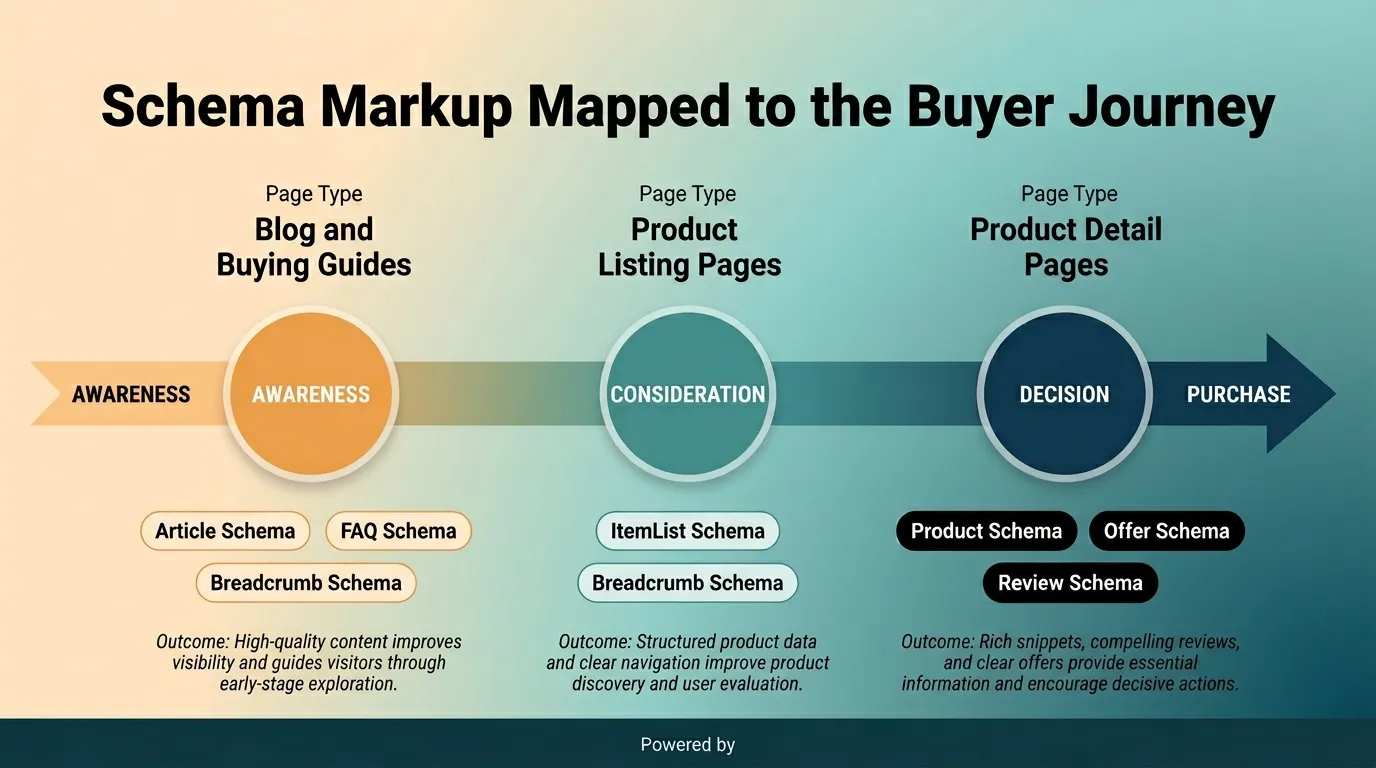
Structured data should be implemented across different page types to fully describe the e-commerce site architecture.
Product Detail Pages
Product detail pages are the most important location for e-commerce schema markup. These pages typically contain:
- product schema
- offer schema
- review schema
Structured data on product pages helps search engines display price information, stock availability, and ratings in search results.
Product Listing Pages
Product listing pages display groups of products within categories or subcategories.
These pages often implement:
- ItemList schema
- breadcrumb schema
This structured data helps search engines interpret the relationship between products and category pages.
Blog and Buying Guide Content
Many e-commerce websites publish supporting content such as product comparisons and buying guides.
These pages commonly use:
- article schema
- breadcrumb schema
- FAQ schema when applicable
Supporting content captures informational queries earlier in the customer journey, while structured data helps search engines interpret the content correctly.
How to Implement E-commerce Schema Markup at Scale
On large e-commerce websites, structured data cannot be implemented manually, page by page. Stores often manage hundreds or thousands of product pages, with frequent changes to prices, availability, and product details.
To ensure consistency and accuracy, e-commerce schema markup must be implemented through scalable systems that automate the generation of structured data.
A scalable approach ensures that every product page contains the correct schema properties while automatically updating structured data when product information changes.

Use Template-Based Schema Generation
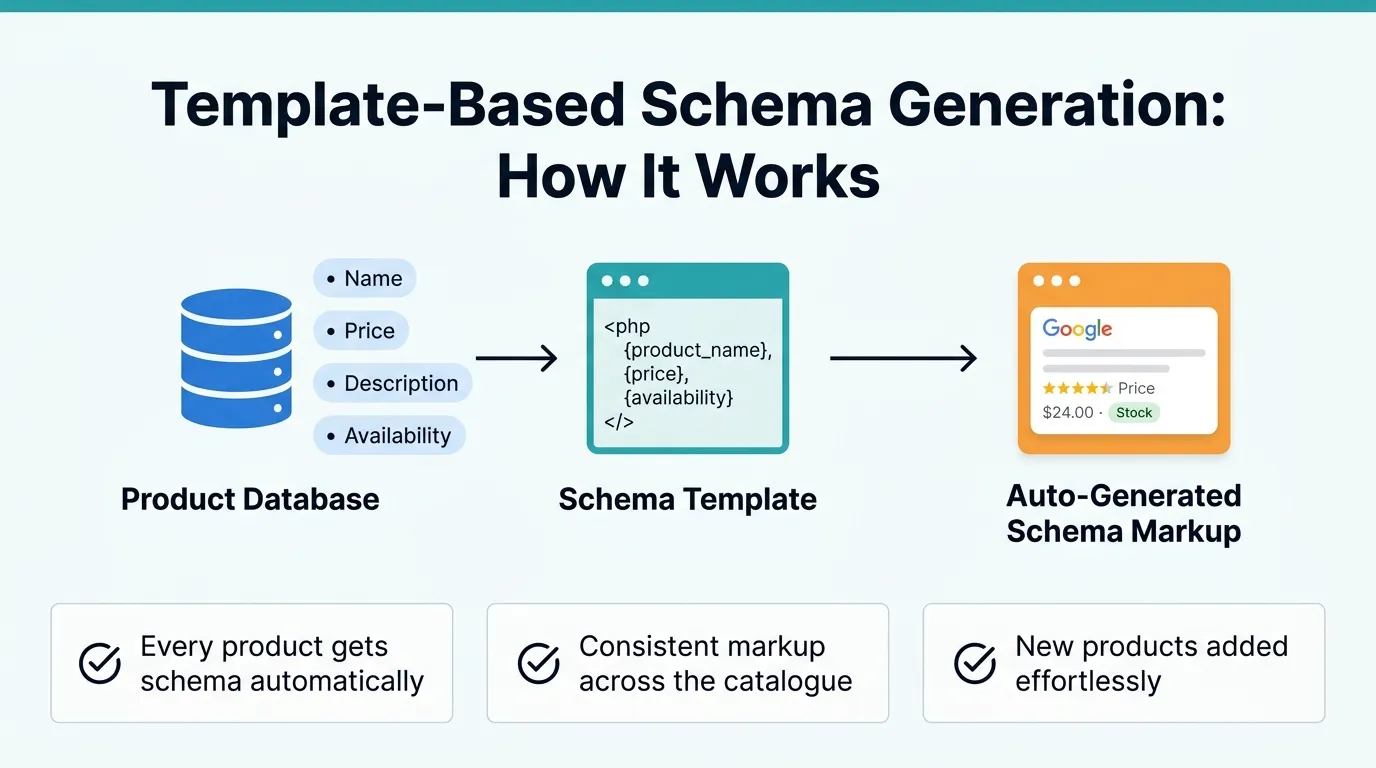
Most e-commerce platforms generate pages using templates. These templates can be configured to automatically insert schema markup into every product page.
Instead of manually writing structured data for each product, the template pulls information directly from the product database. Attributes such as product name, description, price, and availability are dynamically inserted into the schema markup.
This approach ensures that:
- Every product page includes structured data.
- schema markup remains consistent across the catalogue
- New products automatically receive schema markup.
Template-based implementation is commonly used on e-commerce platforms such as Shopify, WooCommerce, and Magento.
Automate Structured Data from Product Databases
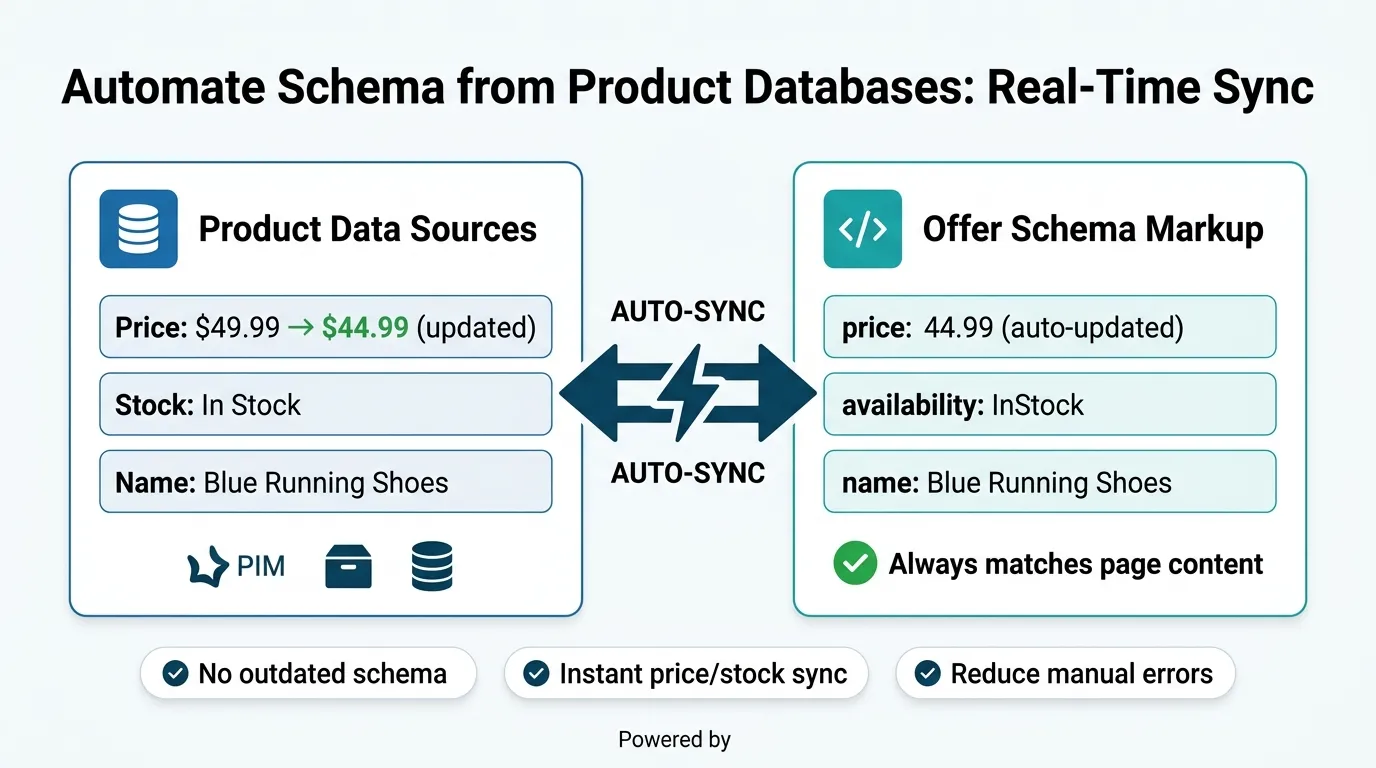
Structured data should be connected to the same product data sources used to populate the website. These may include product information management systems, inventory management tools, or e-commerce product databases.
When schema markup pulls information directly from these systems, updates to product data automatically update the structured data as well. For example, if a product price changes or stock status updates, the offer schema should reflect the new information immediately.
Automating this process reduces the risk of outdated schema data and ensures structured data always matches visible page content.
Standardise Schema Across Page Types
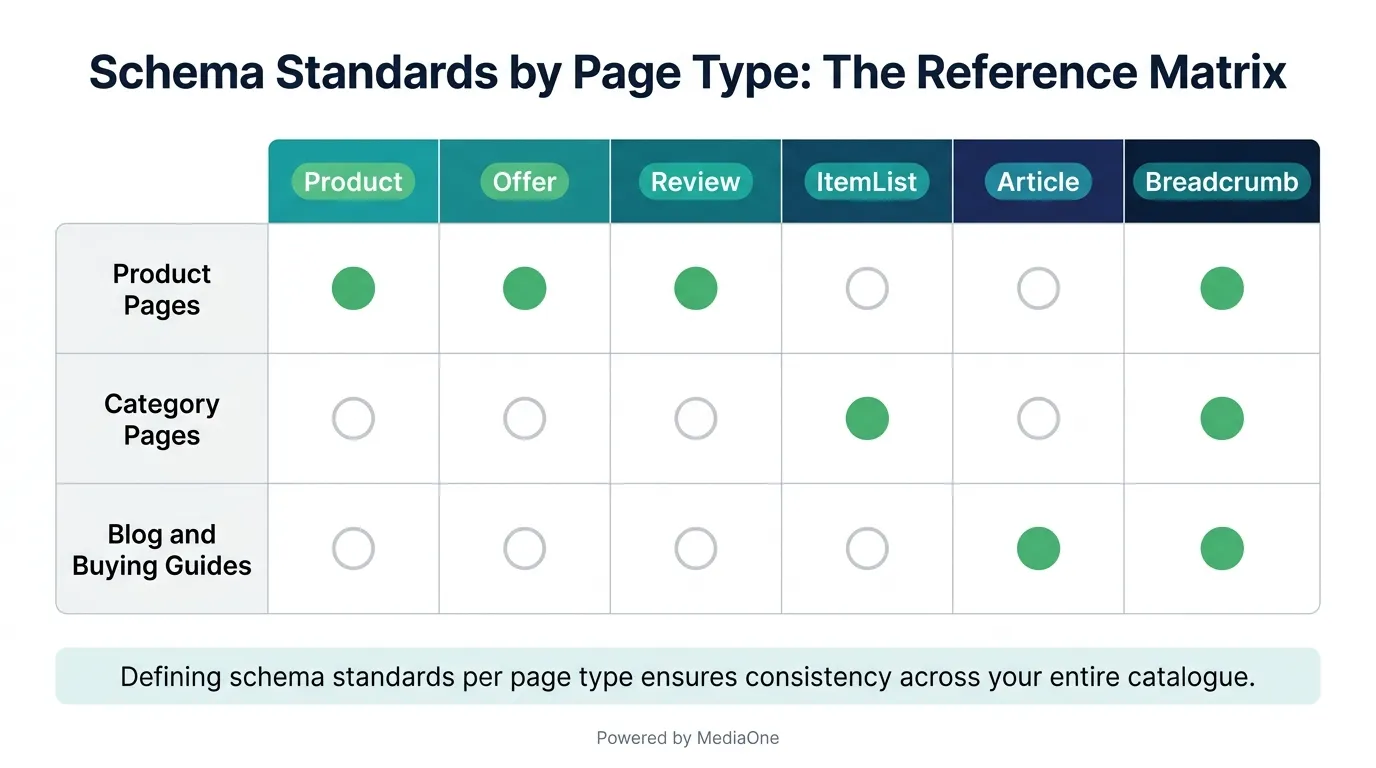
Different page types within an e-commerce site require different schema implementations. Establishing standard schema templates for each page type ensures consistency across the website.
Typical schema implementations include:
Product pages
- Product schema
- Offer schema
- Review schema
- Breadcrumb schema
Category pages
- ItemList schema
- Breadcrumb schema
Blog or buying guide pages
- Article schema
- Breadcrumb schema
By defining structured data standards for each page type, e-commerce teams can maintain consistent schema implementation across the entire site.
Manage Schema for Product Variants
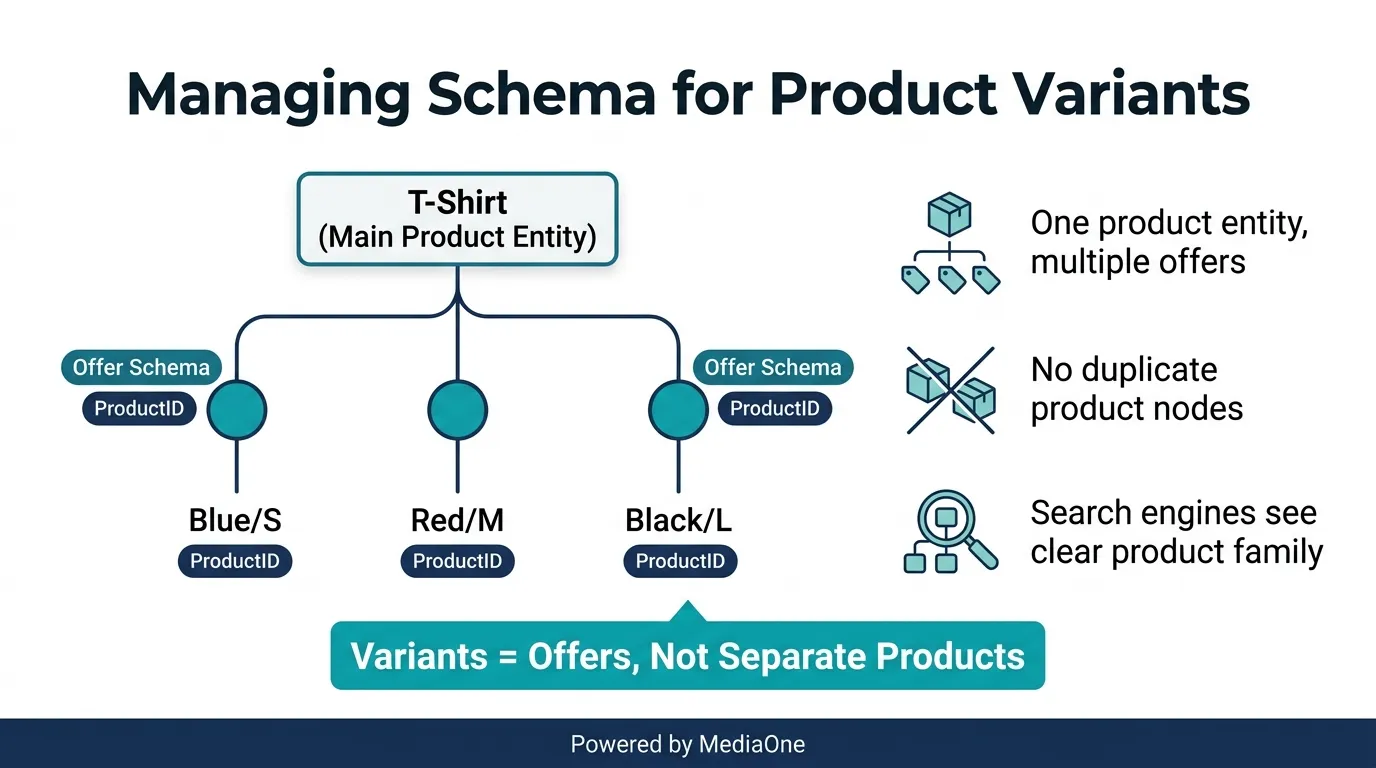
Many e-commerce stores sell products with multiple variations such as colour, size, or configuration. Schema markup should reflect these variations without creating duplicate product entities.

In most cases, the main product entity should represent the core product, while variants are represented using separate offers or product identifiers. This approach allows search engines to understand that multiple options belong to the same product.
A properly structured variant schema helps prevent confusion in search results and ensures product data remains accurate.
Monitor Structured Data at Scale

Once schema markup has been deployed across an e-commerce site, continuous monitoring is required to maintain accuracy.
Structured data should be tested regularly using tools such as the Google Rich Results Test. This helps verify whether product pages remain eligible for rich results.
Google Search Console also provides structured data reports that highlight errors or warnings related to schema markup. Monitoring these reports helps identify issues such as missing properties or invalid markup.
Regular audits are particularly important for large e-commerce sites because product catalogues change frequently. New products, discontinued items, and pricing updates can all affect the accuracy of structured data.
By combining automated schema generation with ongoing validation and monitoring, e-commerce websites can maintain reliable structured data across large product catalogues while maximising eligibility for rich results in search engines.
QA Workflow for E-commerce Schema Markup
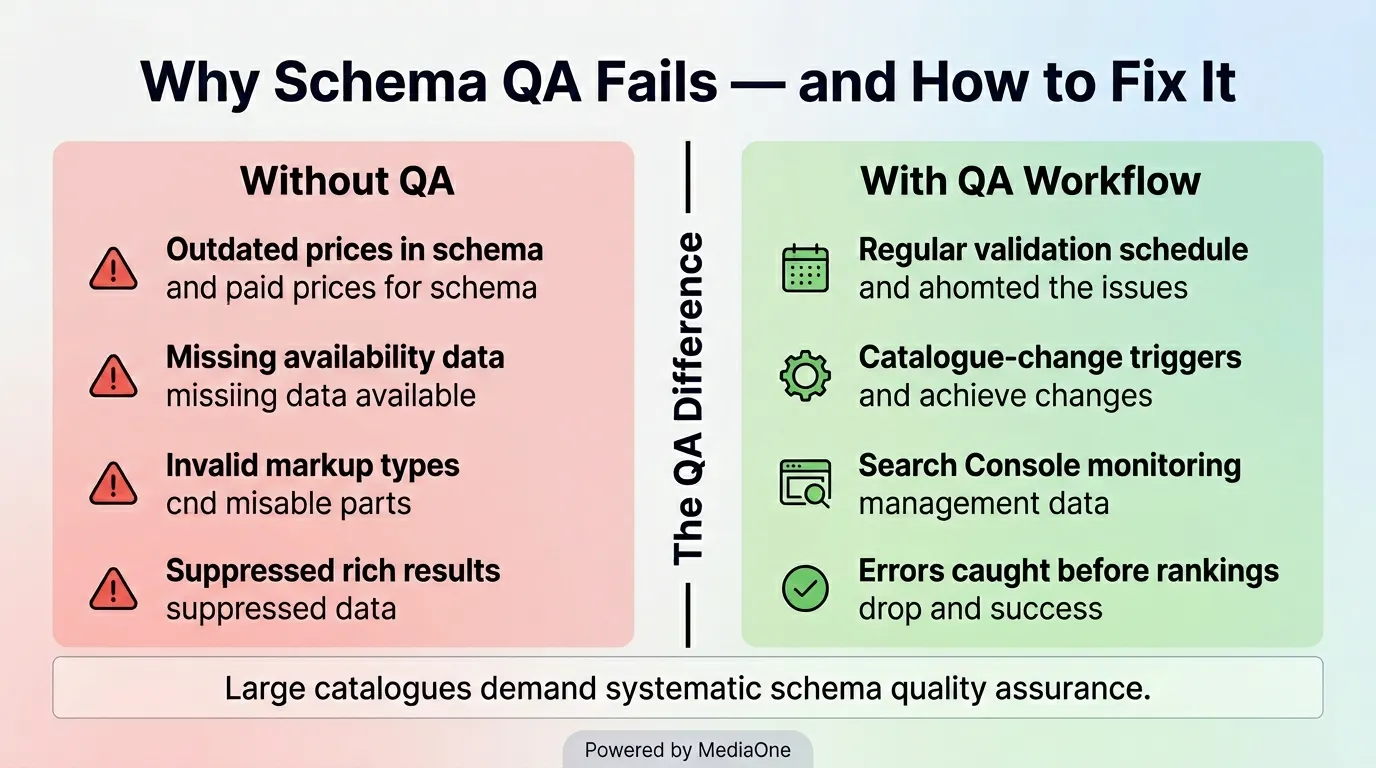
Implementing e-commerce schema markup is only the first step. Structured data must be continuously validated to ensure it remains accurate, technically valid, and eligible for rich results.
Product catalogues change frequently, and without proper quality assurance processes, schema markup can quickly become outdated or contain errors.
A structured QA workflow helps e-commerce teams detect schema issues early and maintain consistent structured data across large product catalogues.
Validate Structured Data with Rich Results Testing Tools
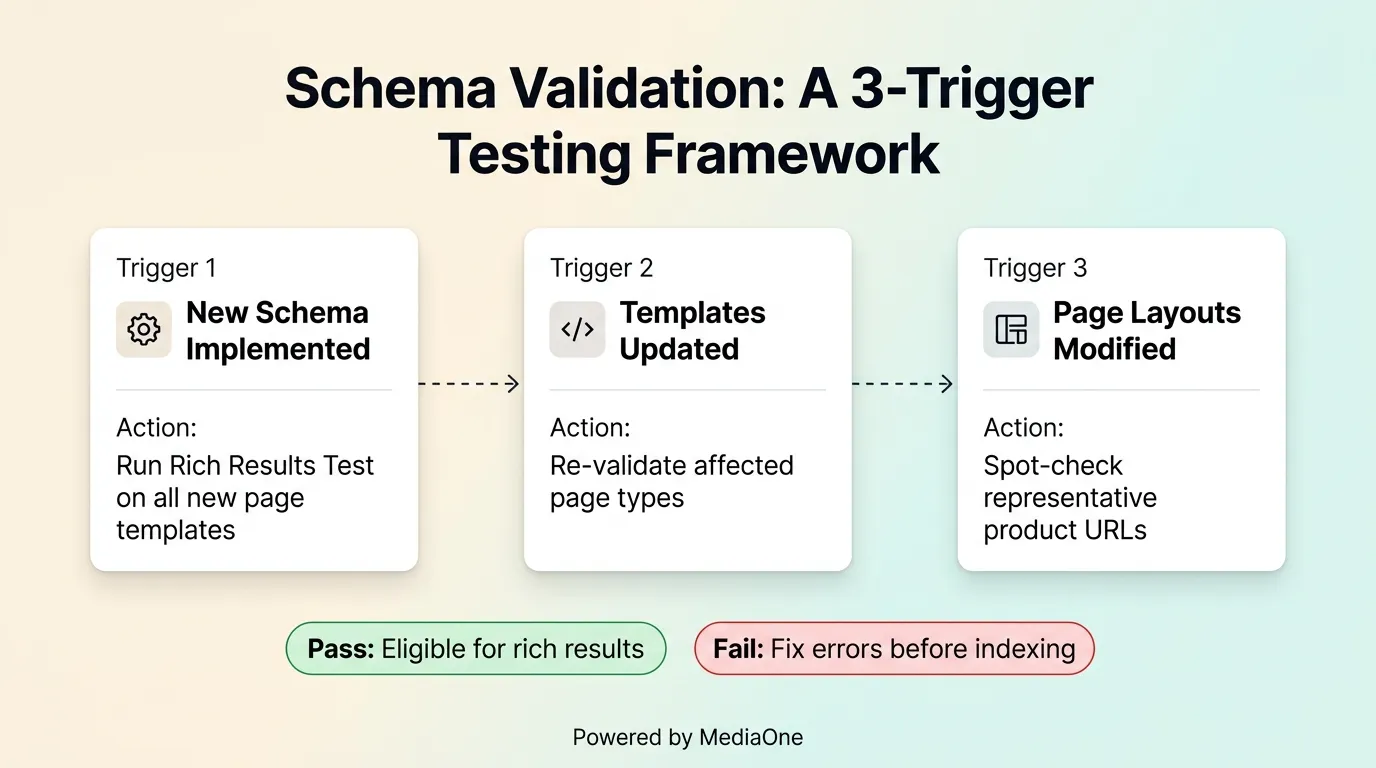
The first step in the QA process is validating schema markup using testing tools. The Google Rich Results Test allows developers and SEO teams to check whether structured data is correctly implemented and eligible for rich results.
This tool analyses the page code and highlights any missing properties, invalid schema types, or formatting errors that could prevent search engines from interpreting the structured data.
Testing should be conducted whenever:
- New schema markup is implemented.
- Website templates are updated.
- Product page layouts are modified.
Regular testing ensures schema markup remains technically valid.
Monitor Structured Data Reports in Google Search Console
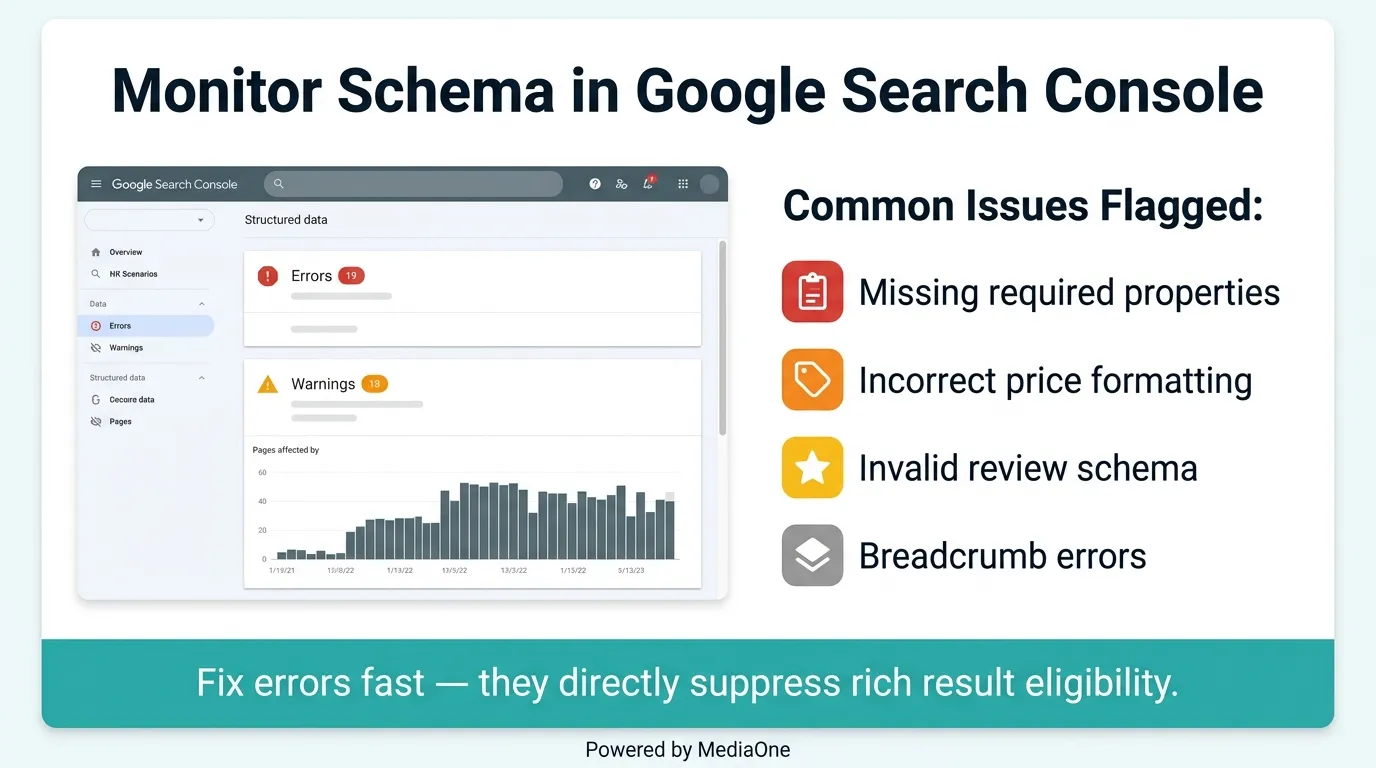
Google Search Console provides structured data reports that help identify schema errors across the website. These reports highlight pages where structured data contains warnings or invalid properties.
Common issues flagged in Search Console may include:
- missing required properties
- incorrect price formatting
- invalid review schema
- breadcrumb errors
Regularly monitoring these reports allows e-commerce teams to identify issues affecting rich result eligibility and prioritise fixes quickly.
Conduct Periodic Structured Data Audits
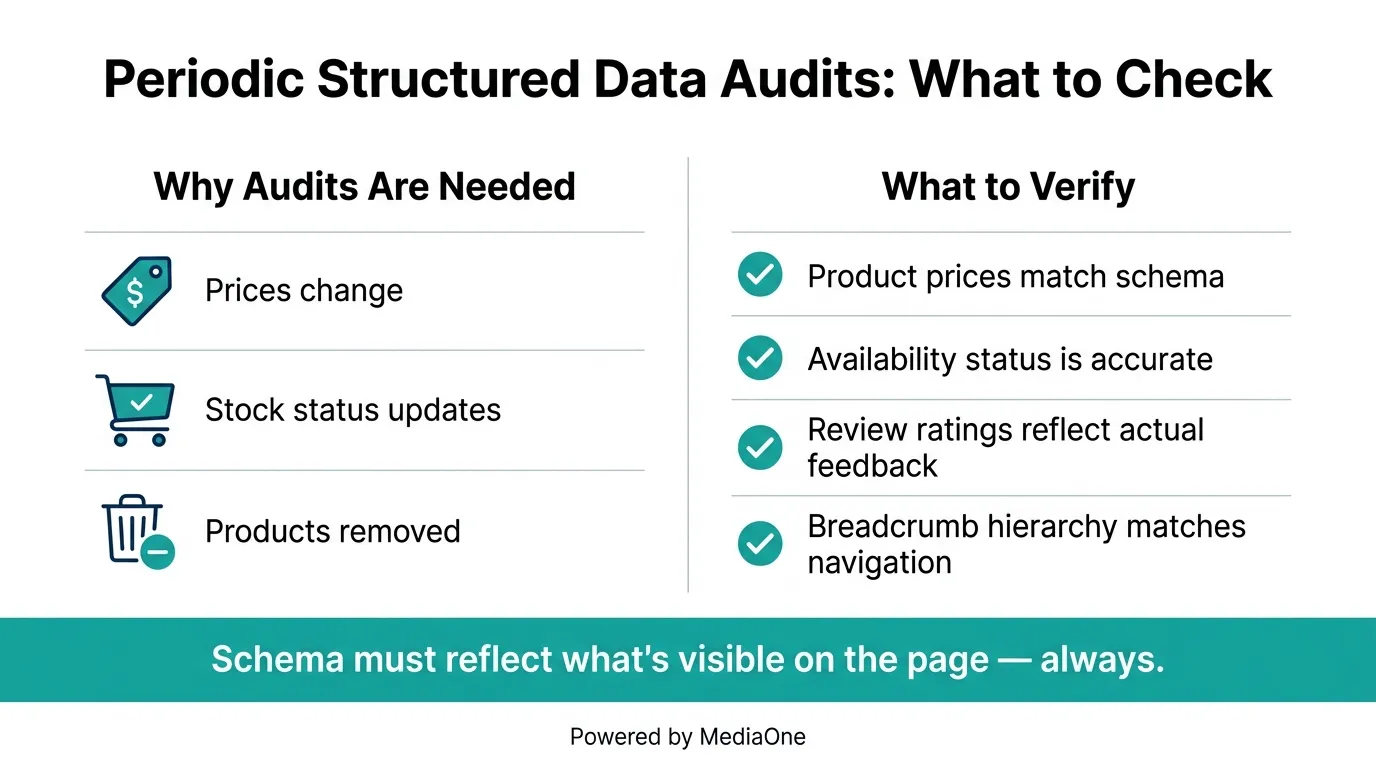
In addition to automated monitoring, e-commerce sites should perform periodic structured data audits. These audits review whether schema markup still reflects the content visible on the page. Product catalogues frequently change due to price updates, stock changes, and product removals. Structured data must remain aligned with these changes.
During audits, teams should verify that:
- product prices match schema markup
- availability status is accurate
- review ratings reflect actual customer feedback
- breadcrumb hierarchy matches site navigation
Audits help maintain data integrity and ensure schema markup remains reliable.
Implement Automated Schema Validation
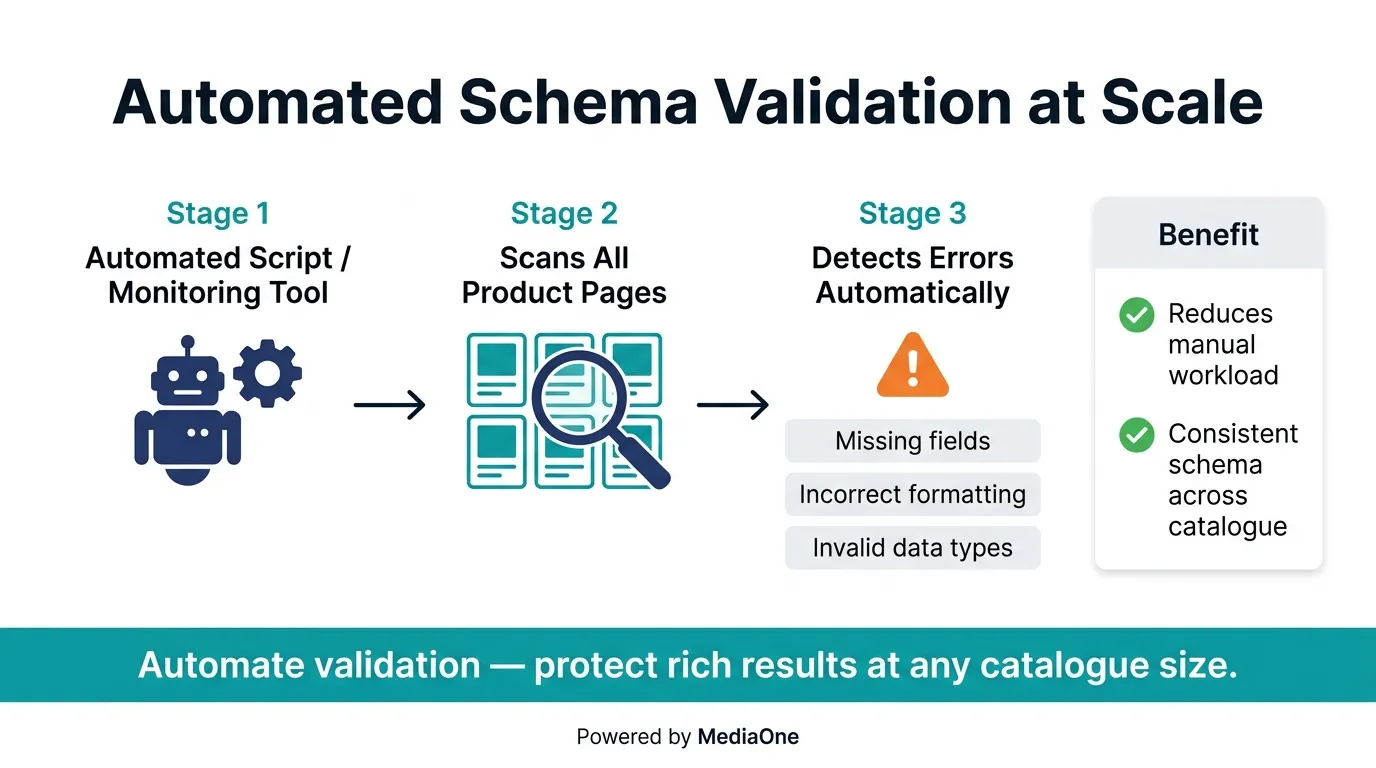
Large e-commerce stores can benefit from automated validation systems that check structured data across thousands of product pages.
Automated scripts or monitoring tools can scan product pages and detect schema errors such as missing fields, incorrect formatting, or invalid data types.
Automated validation helps reduce manual workload while ensuring that schema markup remains consistent across the product catalogue.
Maintain a Structured Data QA Checklist
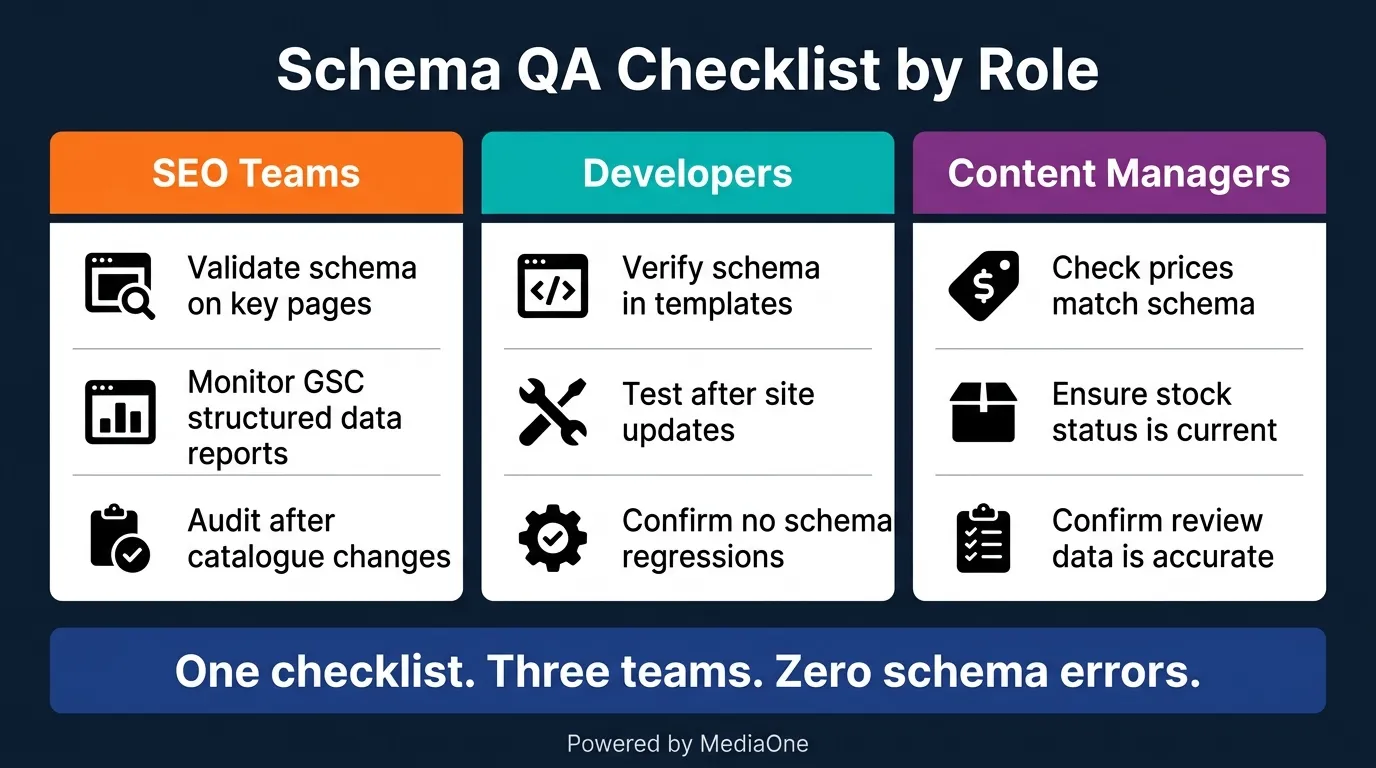
Establishing a checklist helps standardise schema validation processes. This checklist can be used by SEO teams, developers, and content managers to verify schema implementation during updates or deployments.
A typical QA checklist may include:
- The product schema contains the required properties.
- Offer schema includes a valid price and currency
- Review schema reflects visible reviews
- Breadcrumb schema matches navigation hierarchy
- Structured data validates successfully in testing tools
Maintaining a structured QA workflow ensures e-commerce schema markup remains accurate and eligible for rich results, helping product pages perform consistently in search results.
Examples of E-commerce Schema Markup
Structured data for e-commerce websites is typically implemented using the JSON-LD format, which Google recommends for adding structured data to webpages. JSON-LD enables search engines to read product information directly from the page code without affecting the page’s visible layout.
Below are examples of common schema types used on e-commerce websites.
Product Schema Example
Product schema is used on product detail pages to define the main product entity. It communicates key product attributes, including the product name, image, brand, and description.
Product schema often works alongside offer and review schema to provide complete product information to search engines.
Example:
{
“@context”: “https://schema.org/”,
“@type”: “Product”,
“name”: “Running Shoes”,
“image”: “https://example.com/shoes.jpg”,
“description”: “Lightweight running shoes designed for daily training.”,
“brand”: {
“@type”: “Brand”,

“name”: “ExampleBrand”
},
“offers”: {
“@type”: “Offer”,
“priceCurrency”: “USD”,
“price”: “89.99”,
“availability”: “https://schema.org/InStock”
}
}
Offer Schema Example
The offer schema provides commercial details associated with a product, including price, currency, and stock availability. This information allows search engines to display pricing details and availability directly in search results.
Example:
{
“@context”: “https://schema.org/”,
“@type”: “Offer”,
“priceCurrency”: “USD”,
“price”: “89.99”,
“availability”: “https://schema.org/InStock”,
“url”: “https://example.com/product”
}
Breadcrumb Schema Example
Breadcrumb schema describes the navigation hierarchy of a page within a website. It helps search engines understand how pages are organised and may allow breadcrumb navigation paths to appear in search results instead of full URLs.
Example:
{
“@context”: “https://schema.org”,
“@type”: “BreadcrumbList”,
“itemListElement”: [{
“@type”: “ListItem”,
“position”: 1,
“name”: “Home”,
“item”: “https://example.com”
},{
“@type”: “ListItem”,
“position”: 2,
“name”: “Running Shoes”,
“item”: “https://example.com/running-shoes”
},{
“@type”: “ListItem”,
“position”: 3,
“name”: “Men’s Running Shoes”,
“item”: “https://example.com/running-shoes/mens”
}]
}
Implementing these schema types correctly helps e-commerce websites maintain eligibility for rich results and improves how products appear in search results.
Advanced E-commerce Schema Strategies

Once the core schema implementation is in place, e-commerce websites can expand their structured data strategy.
- Managing Product Variants: Products with multiple variations, such as colour or size, require careful schema implementation. Each variant may need to reference the main product entity while maintaining unique SKU identifiers.
- Handling Out-of-Stock Products: When products are temporarily unavailable, schema markup should update the availability property rather than removing the product page. This allows search engines to maintain product indexing.
- Aligning Schema with Product Feeds: Many e-commerce stores use product feeds for shopping platforms such as Google Merchant Center. Aligning schema markup with product feed data helps maintain consistency between organic search results and shopping listings.
If you want a deeper understanding of how these elements work together, explore this e-commerce SEO guide.
E-commerce Schema Implementation Checklist
Before deploying schema markup, verify the following:
- Product schema includes required properties.
- Offer schema includes a valid price and currency.
- Review schema reflects visible customer feedback.
- Breadcrumb schema matches site navigation.
- Structured data passes the Rich Results Test.
- Product images referenced in the schema are accessible and match the images shown on the page.
- Availability status in the offer schema accurately reflects the current inventory.
- Schema markup matches visible page content to comply with search engine guidelines.
- Variant products use consistent identifiers such as SKU or productID.
- Structured data updates automatically when price, availability, or product details change
Following this checklist helps ensure e-commerce schema markup is implemented correctly and remains eligible for rich results in search engines.
Because product catalogues frequently change, structured data should be reviewed regularly to ensure it continues to reflect accurate pricing, availability, and product information.
Strengthening Your SEO Strategy with E-commerce Schema Markup
E-commerce schema markup has become an essential component of modern technical SEO. As search results continue to evolve with rich results, AI summaries, and product search features, structured data helps search engines interpret product information more accurately and present it in more engaging ways.
By implementing schema markup across product pages, category pages, and supporting content, e-commerce websites can improve their eligibility for rich results such as price snippets, review ratings, and breadcrumb navigation. These enhancements help listings stand out in competitive search results and make it easier for shoppers to evaluate products before clicking.
However, deploying schema markup effectively requires more than simply adding structured data. It involves building scalable implementations, validating structured data regularly, and ensuring that product information remains accurate as catalogues evolve.
If you want to maximise the SEO potential of structured data and improve how your e-commerce products appear in search results, working with experienced technical SEO specialists can make a significant difference.
At MediaOne, our team helps businesses implement advanced SEO strategies, including structured data optimisation, technical SEO architecture, and e-commerce search performance improvements.
If you are looking to strengthen your e-commerce visibility and drive more organic traffic, explore how MediaOne’s SEO services can help grow your online presence. Contact us today!
Frequently Asked Questions
Does e-commerce schema markup need to be added to every product page?
Yes. For e-commerce websites, schema markup should ideally be implemented on every product detail page so that search engines can consistently understand product information such as pricing, availability, and product attributes across the catalogue.
Can e-commerce schema markup affect how products appear in Google Shopping results?
E-commerce schema markup does not directly control Google Shopping listings, which are typically generated from product feeds. However, consistent product information between schema markup and product feeds helps search engines better understand product data across different search surfaces.
What happens if structured data contains outdated product information?
If schema markup displays outdated pricing or availability that does not match the visible page content, search engines may ignore the structured data or remove eligibility for rich results. Keeping schema data synchronised with product databases helps prevent this issue.
Should discontinued products keep their schema markup?
If a discontinued product page remains live for informational or SEO purposes, the schema markup should update the availability status to reflect that the product is no longer available. This allows search engines to understand the product status while maintaining the page’s indexing.
How often should e-commerce schema markup be reviewed or updated?
Structured data should be reviewed whenever significant changes occur to the product catalogue, such as pricing updates, new product launches, or inventory changes. Regular technical audits also help ensure schema markup remains valid and aligned with current product information.