Most businesses think their brand equals their logo. They invest in a mark, upload it to Instagram, add it to their website, and assume the job is done.
Then the cracks show. The website feels disconnected from social media. Sales decks look different every time. Packaging does not match the ads. Customers cannot quite describe the brand, only the logo.
That confusion between brand design vs logo design costs more than most founders realise. It leads to inconsistent marketing, weaker positioning, and expensive redesigns later.
In this guide, you will learn the real difference between brand design vs logo design, when each makes sense, and what you actually need to look premium and consistent. If you are searching for a branding agency in Singapore, this will also help you decide what to ask for and what to expect from a professional team.
Key Takeaways
- Brand design and logo design are not interchangeable; a logo is a visual identifier, while brand design is a complete system that shapes perception and consistency.
- A logo supports recognition, but brand design builds trust, differentiation and premium positioning across all touchpoints.
- Businesses that invest only in a logo often experience inconsistency, undermining credibility and leading to costly rebranding later.
- Brand design enables scalability, making marketing execution faster, clearer and more cohesive as the business grows.
Brand Design vs Logo Design: What’s the Real Difference?
You do not need branding jargon. You need clarity to make a commercial decision. When business owners search for answers, they often assume logo design and brand design sit on the same level. They don’t. One is a component, the other is a system.
What Is Logo Design?
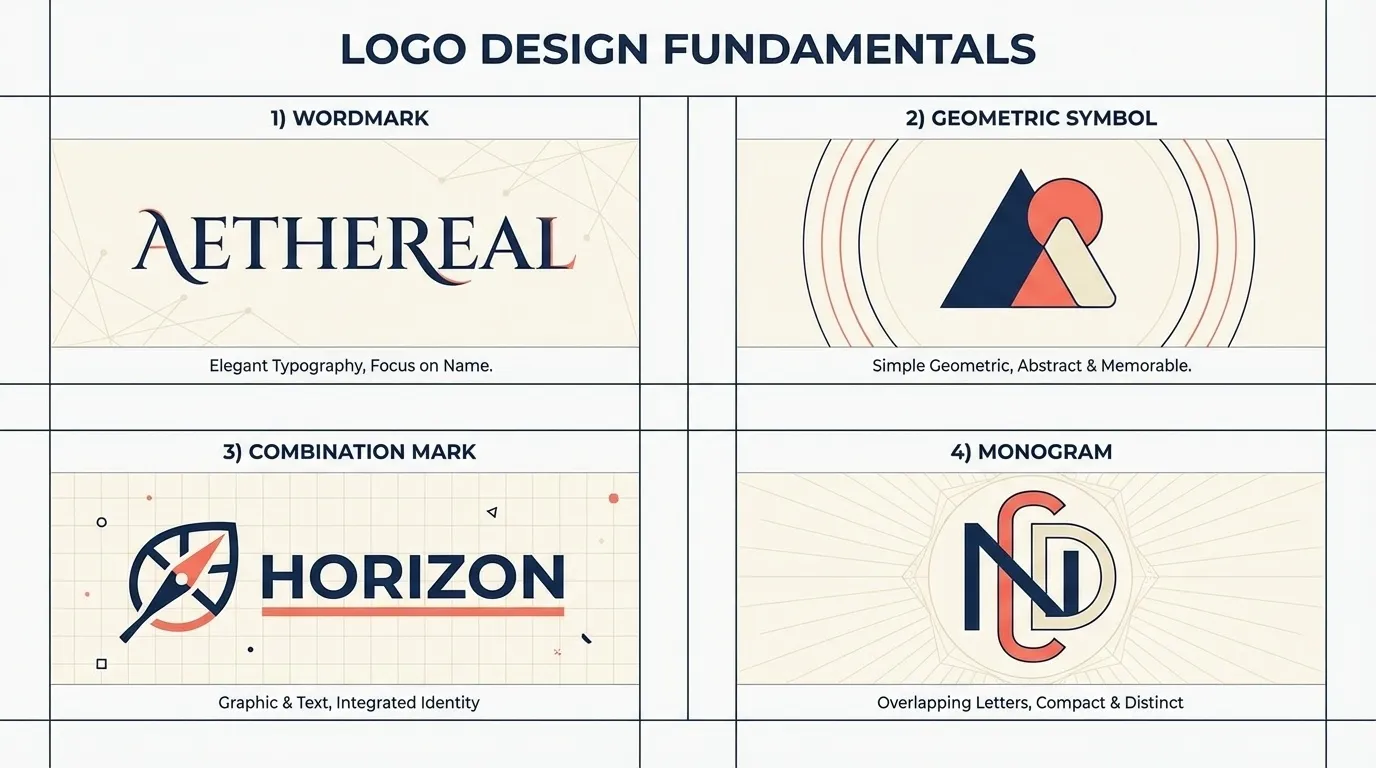
Logo design is the process of creating a visual identifier for your business. It is the mark people see on your website header, your packaging, your LinkedIn banner, your shopfront in Tanjong Pagar or Orchard.
A logo can take several forms:
- Wordmark: A stylised version of your company name
- Symbol or icon: A standalone graphic element
- Combination mark: Text paired with a visual symbol
- Monogram: Initials used as a recognisable mark
At its core, a logo does one thing well. It helps people recognise you. Recognition matters. It is the beginning of memory. But recognition alone does not create preference, loyalty, or premium positioning. A beautifully crafted logo without a wider system is like a signature without a personality behind it. It identifies. It does not differentiate.
What Is Brand Design?
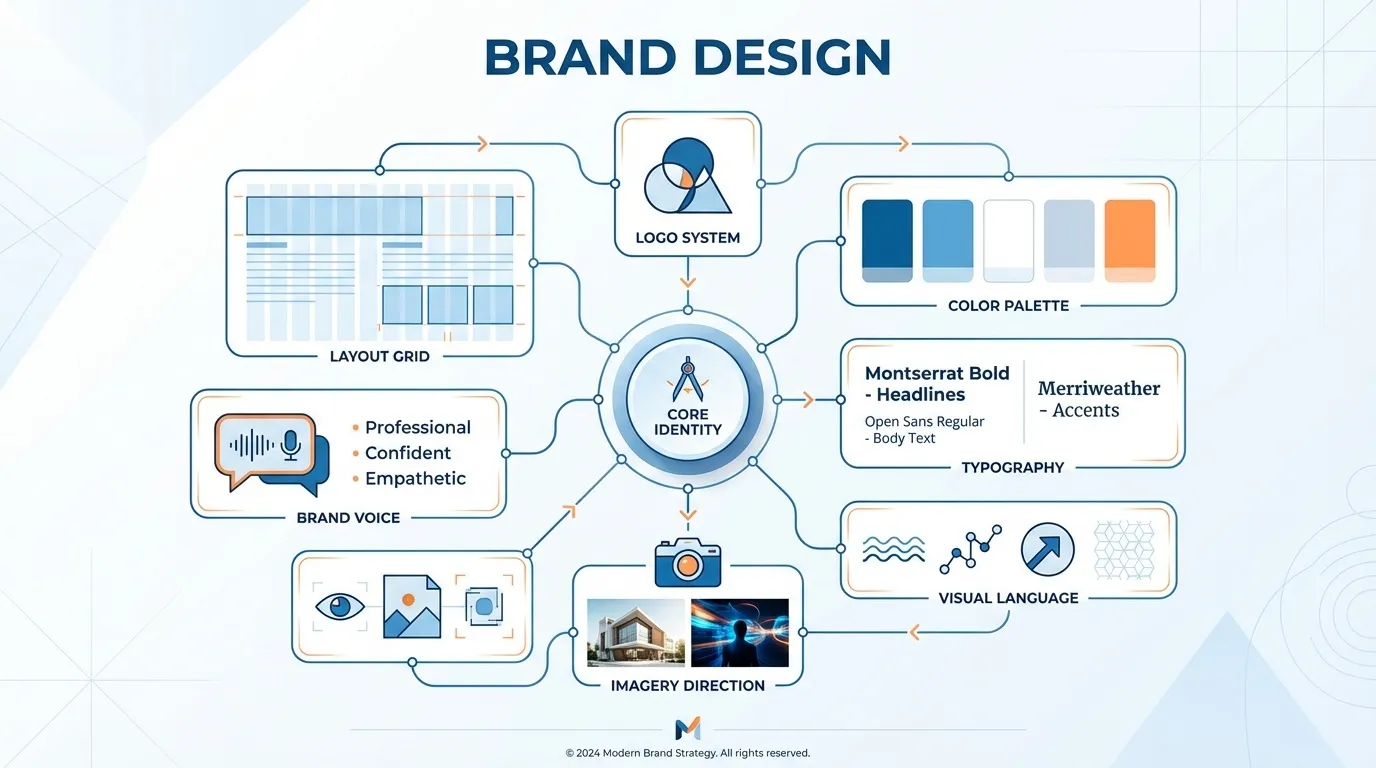
Brand design operates at a different level entirely. It is the structured system that shapes how your audience perceives, understands, and experiences your business across every touchpoint.
It includes visual assets, yes. But it also governs tone, hierarchy, layout, consistency, and how your brand behaves in the real world.
Brand design typically includes:
- A full logo system with variations
- Defined colour palette with usage rules
- A typography system that supports hierarchy
- Visual language, including shapes, icons, and spacing
- Imagery direction for photography and graphics
- Brand voice and tone guidelines
- Layout and grid systems for digital and print
This is what creates cohesion across your website, social media ads, EDMs, sales decks, and even customer service scripts.
A logo is a symbol, while your brand design is a framework. That distinction changes how your business is perceived.
Why People Confuse the Two
It is easy to understand why the terms get mixed up. Logos are visible and tangible. You can see them instantly. Brand systems are less obvious because they operate quietly in the background, creating consistency without drawing attention.
Most DIY platforms reinforce this confusion. They sell “branding” packages that deliver nothing more than a logo file and a few colour variations. It feels complete because you receive something concrete.
But visibility is not the same as positioning.
- Recognition answers the question, “Have I seen this before?”
- Brand perception answers, “Do I trust this enough to buy?”
Those are not interchangeable outcomes.
Brand Design vs Logo Design: The Distinct Differences
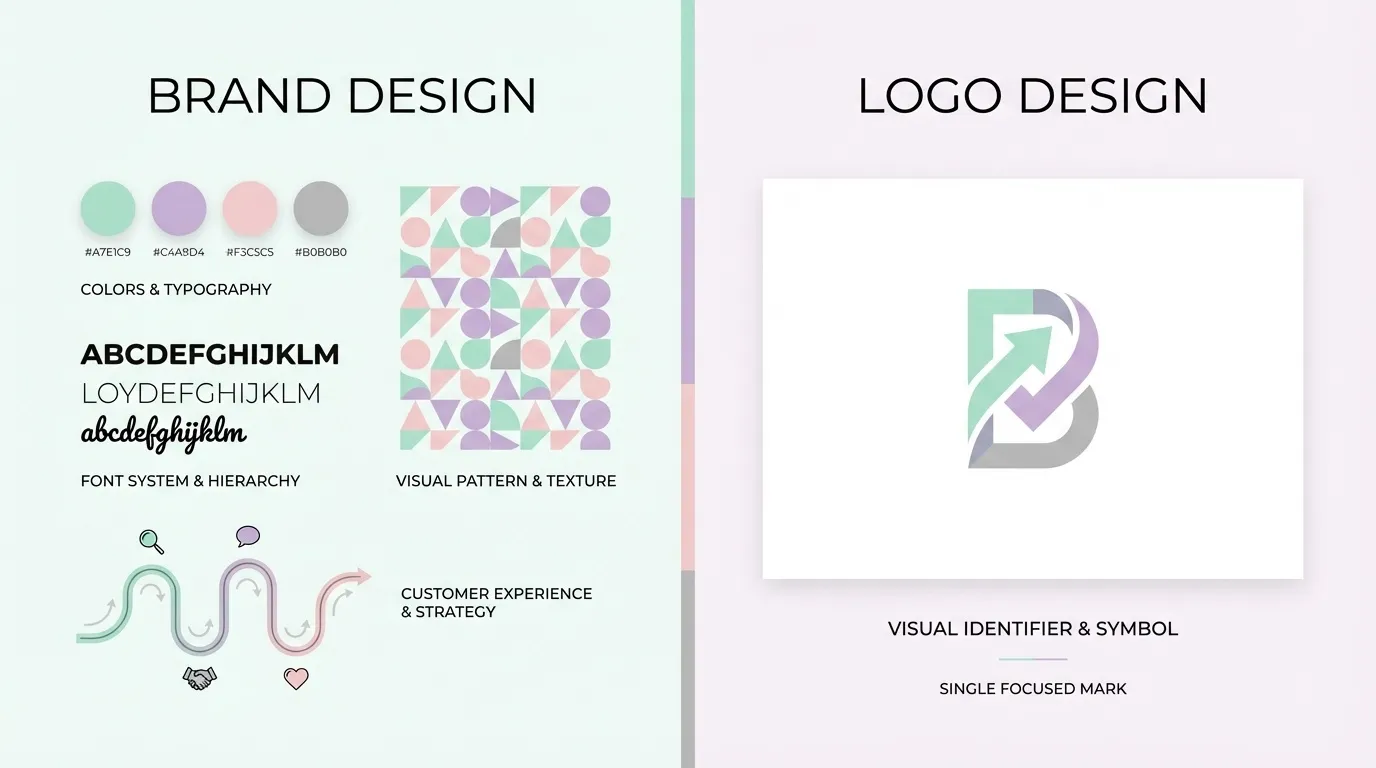
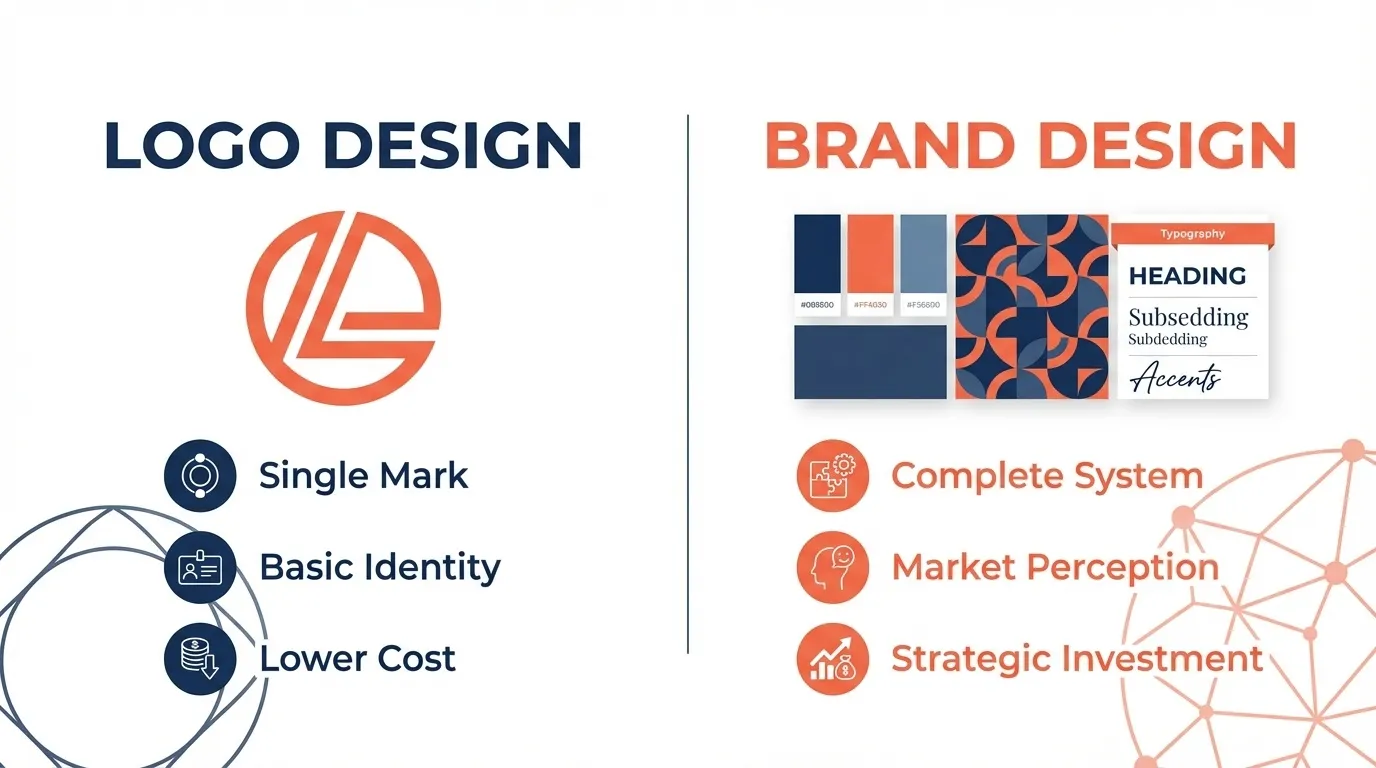
Let’s move this out of theory and into commercial reality. If you invest only in logo design, you get:
- A visual mark
- Basic brand recognition
- Something to place on assets
But if you invest in brand design, you get:
- Consistency across all marketing channels
- Clear differentiation from competitors
- Structured messaging alignment
- Stronger perceived value
- Easier scalability
From a business perspective, logo design supports identification. Brand design supports growth.
Here is the difference laid out clearly:
| Aspect | Logo Design | Brand Design |
| Core focus |
|
|
| Business function |
|
|
| Touchpoints |
|
|
| Longevity |
|
|
| Strategic depth |
|
|
Notice the difference in scope. One is tactical. The other is strategic. If you want to look premium and consistent, your audience must experience your brand as intentional.
Intentional brands feel cohesive. The colours make sense together. The typography supports the tone. The imagery reinforces the positioning. The copy appears to be from the same company. That cohesion rarely happens by accident.
When businesses treat logo design and brand design as identical, they often experience the same pattern:
- Inconsistent visuals across platforms
- Marketing materials that feel disconnected
- Gradual dilution of brand authority
- Eventual rebranding costs
The short-term saving becomes a long-term expense. Premium brands are rarely built on single assets; they are built on systems.
The Hidden Cost of Choosing Logo Design Over Brand Design
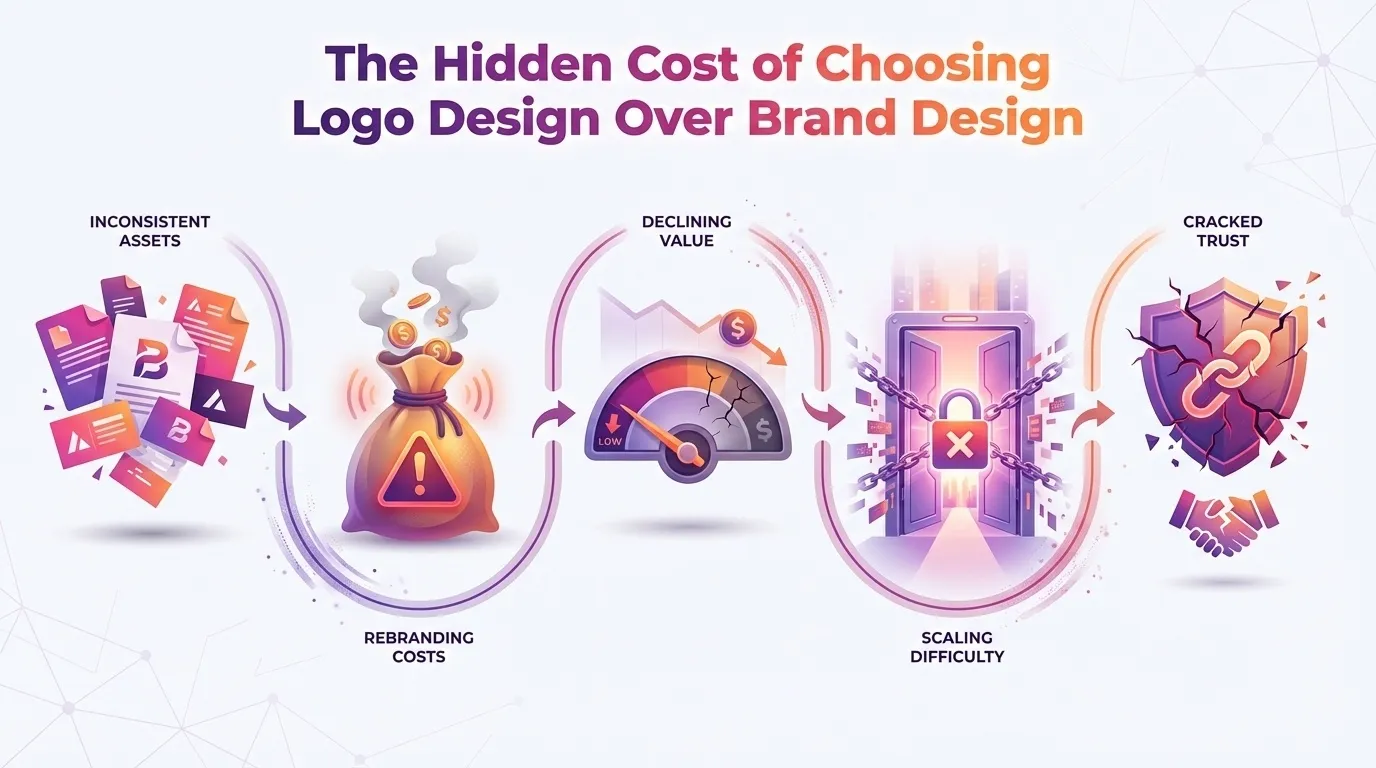
At first glance, choosing a logo design instead of a full brand design seems more efficient. You spend less up front. You get a visual asset to use on your website and business cards. You move on. But what appears to be savings is often deferred cost.
When you invest only in a logo, you are buying a symbol without the system that makes it powerful. Over time, that gap becomes apparent, and it shows up in areas that directly affect revenue.
Let’s unpack what actually happens:
1. Inconsistent Marketing Materials
Without a defined brand system, every asset becomes a separate decision. One designer chooses a shade of blue that feels right. Another picks a different one because there are no guidelines. Your Instagram posts feel bold and modern, while your website leans corporate. Your pitch deck looks nothing like your social media ads.
It is not chaos. It is simply the absence of rules. That inconsistency creates friction. Customers may not consciously analyse your typography or layout choices, but they feel when something is disjointed. Familiarity builds trust. Randomness erodes it.
Brand design solves this by establishing:
- Defined colour systems with usage rules
- Typography hierarchies for headings and body copy
- Visual patterns that repeat across touchpoints
- Clear spacing and layout principles
When those rules are in place, your marketing stops looking improvised and starts looking intentional.
2. Rebranding Expenses Later
Many founders say, “We’ll fix it later.” Later usually arrives when growth exposes the cracks. You expand into paid ads. Suddenly, your visuals do not translate. You launch a new service line. The logo does not stretch to accommodate it. You hire a marketing team. They struggle to create cohesive campaigns because they lack a strategic foundation.
At that point, you are not refreshing a brand. You are rebuilding it. Rebranding after traction is more expensive because:
- You must update existing assets
- You risk confusing current customers
- You lose time in transition
- You pay again for a strategy that could have been done once
Starting with brand design is not about perfectionism. It is about avoiding structural mistakes that require correction under pressure.
3. Lower Perceived Value
Premium perception does not come from a logo alone. It comes from cohesion. When everything aligns, from your website copy to your packaging to your social media visuals, customers interpret that alignment as competence. And competence justifies price.
Without brand design, the perception gap widens. You may deliver premium service, but your presentation communicates average. In competitive markets such as Singapore’s financial services, tech startups, or professional consulting sectors, that mismatch costs you positioning power.
Perceived value influences:
- Pricing flexibility
- Client confidence during sales conversations
- Conversion rates
- Long-term loyalty
A logo gives you recognition. A brand system gives you authority.
4. Difficulty Scaling
Growth introduces complexity: more campaigns, platforms, and collaborators. If your only asset is a logo file, each new campaign becomes a creative reset. Designers reinvent colour combinations. Copywriters experiment with tone. Social media managers improvise visual styles. Although it may seem creative, it is inefficient.
Brand design provides a framework that scales with you. Instead of reinventing the wheel every quarter, your team works within a defined system. Campaigns become extensions of your identity, not disconnected experiments.
This is particularly critical for:
- eCommerce brands launching seasonal promotions
- Service firms expanding into new verticals
- Startups preparing investor decks and press coverage
Consistency speeds execution. Systems reduce decision fatigue.
5. Weak Customer Trust
Trust is built through repetition and clarity. When your messaging shifts tone between platforms, or when your visual language feels unstable, customers sense a lack of cohesion. They may not articulate it. They simply hesitate.
Mixed messages dilute credibility. A strong brand design eliminates that friction by aligning visuals, voice, and positioning into a unified narrative. Over time, that coherence compounds into trust. The hidden cost of choosing logo design over brand design is not aesthetic. It is strategic.
When Logo Design Is Enough, And When It Is Not
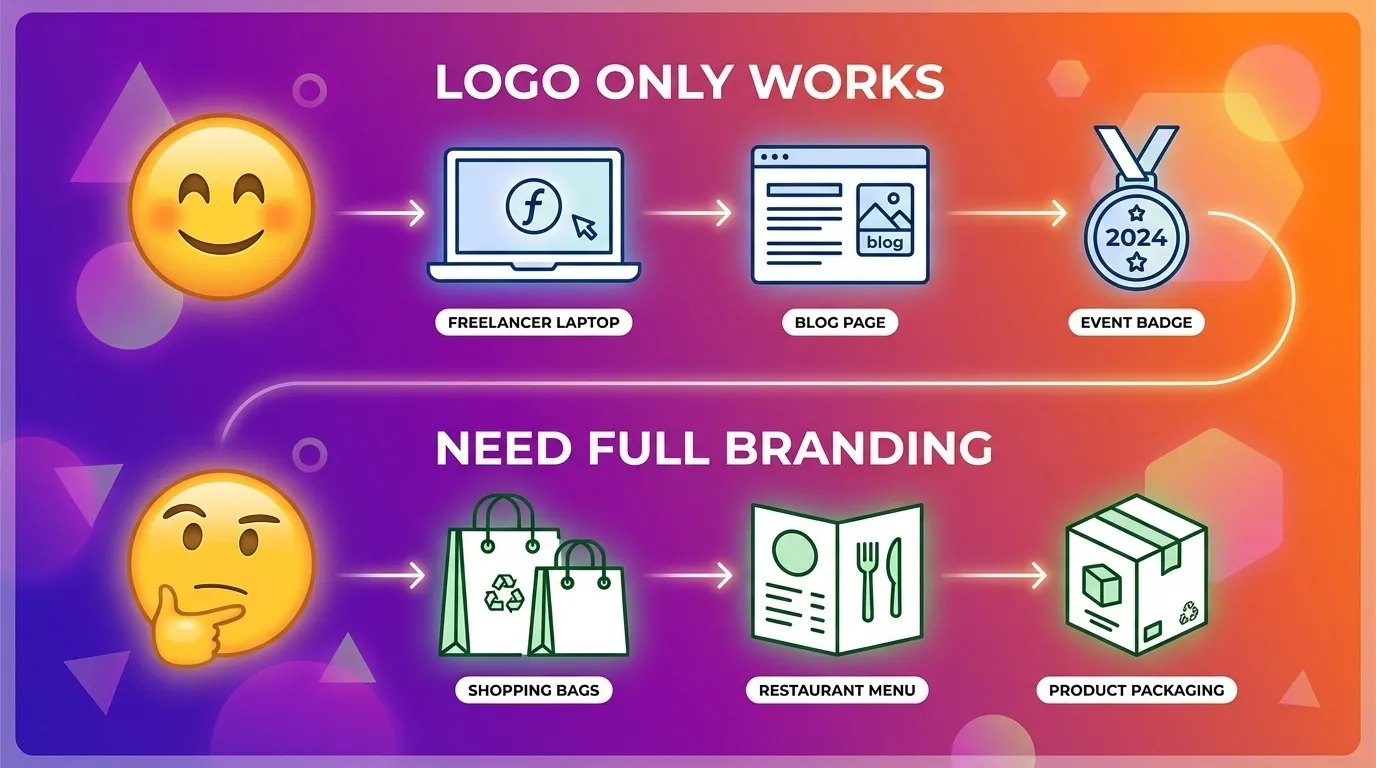
Now let’s be practical. There are situations where logo design alone can be appropriate. The key is understanding that it is a temporary or limited solution, not a substitute for brand design.
Logo Design Can Work If:
- You are a solopreneur testing a concept, and you are not yet sure whether the business will scale. At this stage, your priority is validation, not polish.
- You are running a short-term project such as an event, pop-up activation, or limited campaign where long-term consistency is not critical.
- You operate in a hyper-niche, low-friction market where personal relationships drive most of the business, and branding plays a supporting rather than leading role.
- You are validating a product before seeking funding or expanding into larger distribution channels.
In these cases, a simple, well-crafted logo can provide enough visual identity to move forward without overcommitting resources.
However, even here, you should treat logo design as phase one, not the finish line.
When You Need the Full Brand System
The equation changes as soon as ambition increases:
- If you are a funded startup preparing to scale, your brand must communicate clarity and confidence to investors, partners, and customers. A logo is not enough to carry that weight.
- If you are a premium service business in Singapore, perhaps in finance, legal advisory, or high-end wellness, perception is inseparable from profitability. Clients judge credibility before they judge competence. Your brand design shapes that judgement.
- If you run an eCommerce brand, your entire customer journey lives online. Every visual decision affects trust, from product photography to checkout screens. In this environment, inconsistency directly impacts conversion.
- If you are planning long-term growth, whether regionally across Southeast Asia or globally, you need a system that scales with you. Brand design ensures that expansion strengthens your identity rather than fragmenting it.
The Strategic Lens
The decision is not about aesthetics. It is about the trajectory.
Ask yourself:
- Am I building something temporary or something enduring?
- Will my business require multiple marketing channels?
- Do I want to compete on price, or on perceived value?
- Will consistency influence trust in my industry?
If your vision extends beyond the experimental stage, brand design is not a luxury. It is infrastructure. A logo marks your presence. A brand system defines your position.
When you choose between them, you are not selecting design deliverables. You are deciding how seriously you want the market to take you.
How Brand Design Makes You Look Premium and Consistent
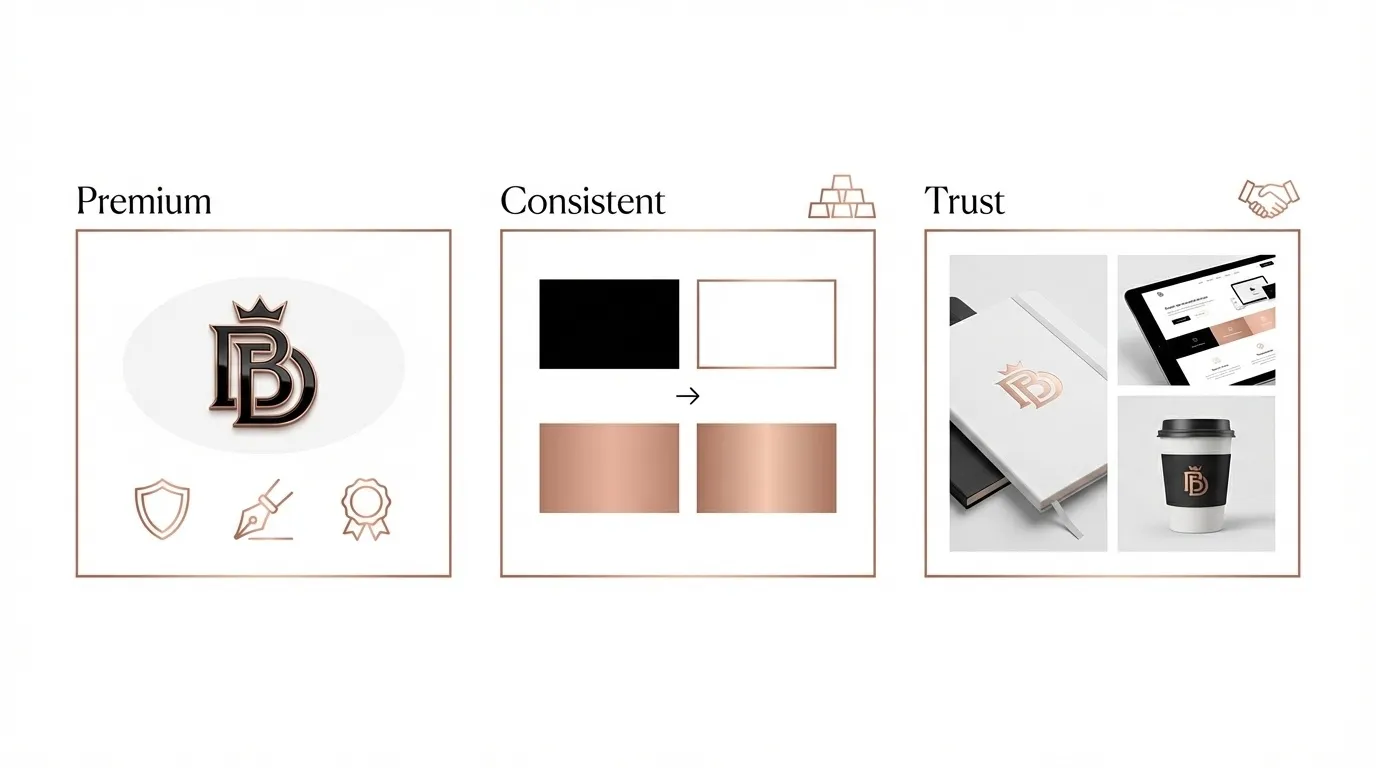
If you want to look premium, you cannot rely on aesthetics alone. Premium perception is built through consistency. When your visuals, tone, layouts, and messaging align across every touchpoint, people subconsciously read that alignment as professionalism and reliability.
There is strong evidence behind this. Consistency strengthens brand recognition, and higher recognition increases trust and purchase intent. Lucidpress reported that consistent brand presentation across platforms can increase revenue by up to 23%.
This is not about being visually repetitive for its own sake. It is about cognitive fluency. When your audience does not have to reprocess who you are every time they see you, they feel a sense of familiarity. Familiarity reduces friction. Reduced friction increases preference.
Look at Airbnb’s global rebrand around the concept “Belong Anywhere”. It was not just a logo change. It introduced a cohesive visual system, typographic direction, photography style, and messaging architecture aligned with a single emotional idea. That unified system strengthened brand perception and global recognition.
That is what premium branding feels like. Intentional. Integrated. Human.
A logo can signal identity. Brand design builds perception. When you invest in a full brand system, you create:
- Visual alignment across digital and offline channels
- Messaging consistency in ads, websites, decks, and proposals
- A recognisable aesthetic that builds recall over time
- A cohesive experience that feels deliberate rather than improvised
The difference is subtle at first glance, but it becomes more obvious at scale.
Brand Design vs Logo Design for Different Business Types
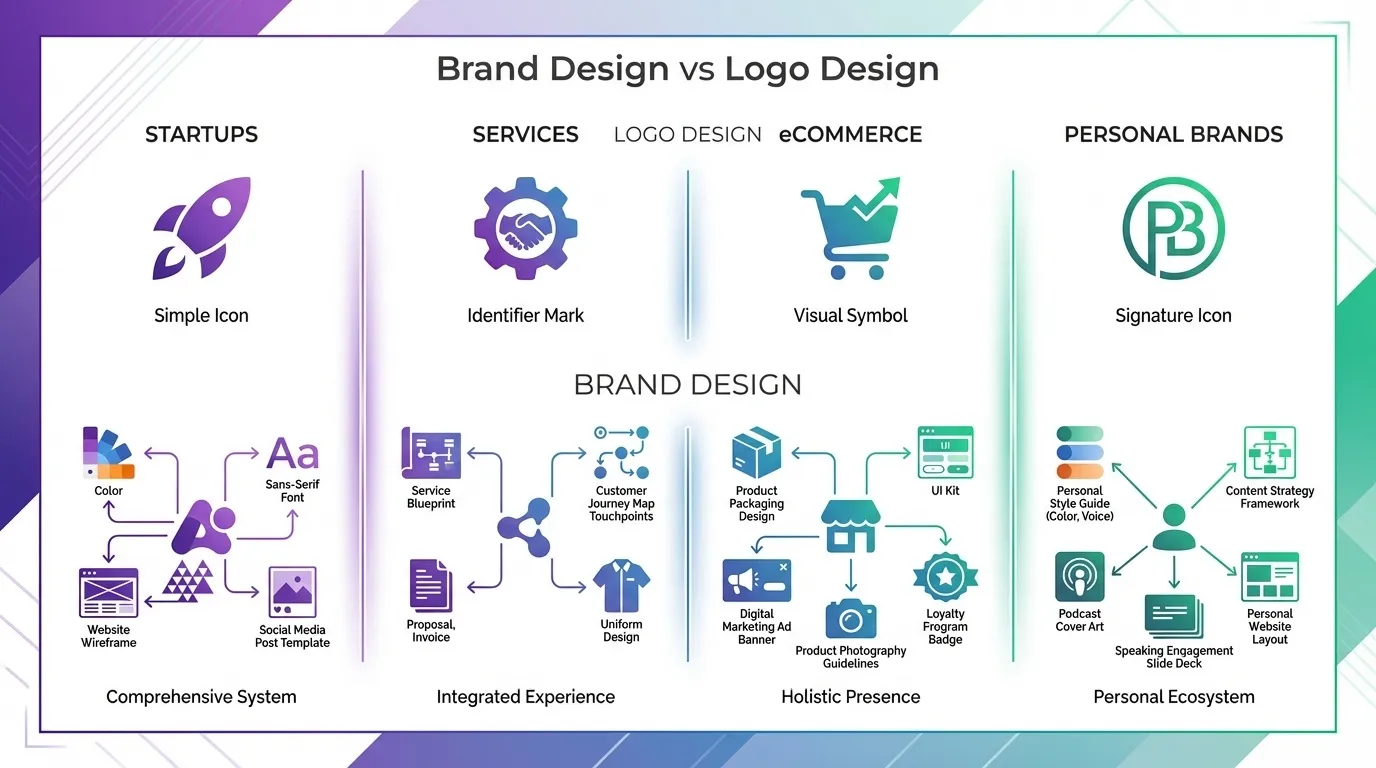
Different business models require different levels of branding maturity. The mistake is assuming everyone needs the same thing at the same stage.
| Business Type | What They Think They Need | What They Actually Need | Why It Matters | Recommended Approach |
|---|---|---|---|---|
| Startups | A logo to look legitimate | A clear brand strategy and identity system that supports growth, investor conversations, and marketing expansion | Branding is positioning, not decoration. Without a system, businesses end up retrofitting strategy into visuals later, which costs more time and money, especially during funding rounds or expansion. | Invest in brand foundations early so you are not redesigning at Series A or after your first major growth push. |
| Service-Based Businesses | Polished visuals that make them look credible | Consistency across proposals, websites, social media, onboarding materials, and email communications | In service industries, trust drives conversion. If branding feels inconsistent, it creates doubt, lowers perceived value, and reduces pricing power. | Develop a unified brand voice and design system across every client touchpoint, from Instagram captions to high-value proposal decks. |
| eCommerce Brands | Great product imagery and a stylish logo | A cohesive store experience and recognisable identity that supports repeat purchases | Brand perception influences buying decisions. Familiarity builds trust and encourages retention. Disconnected visuals weaken recognition. | Build templates, layout systems, and brand rules so catalogues, campaigns, packaging, and email flows feel coherent and recognisable. |
| Personal Brands | A personal logo or monogram | A consistent personality expressed through visuals, tone, and content style | Personal brands grow through content. Frequent visual shifts dilute recognition and weaken authority. | Create an integrated system, including typography, colour accents, visual motifs, and tone guidelines, that supports authentic, repeatable content production. |
How to Decide Between Brand Design vs Logo Design
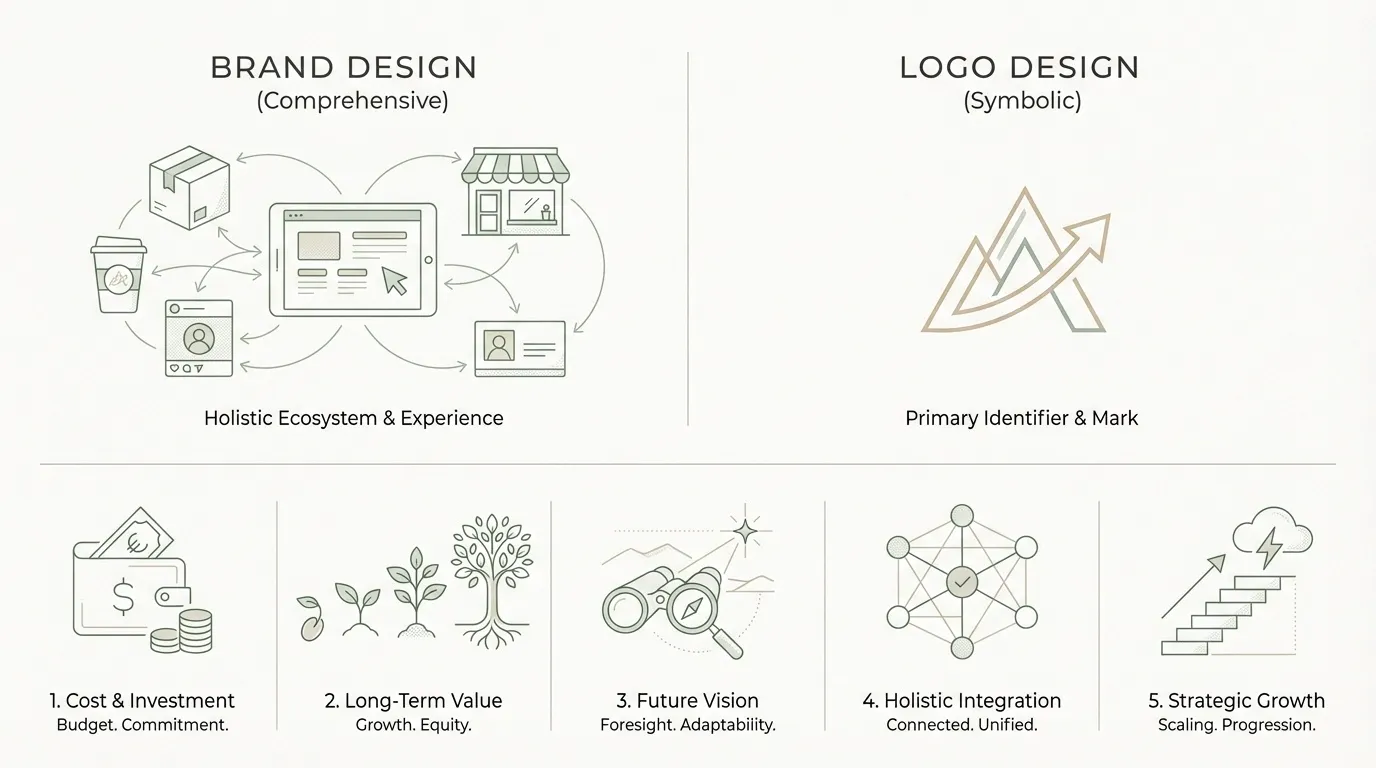
This is where most founders hesitate. You know design matters. You know perception drives sales. But you are trying to balance cash flow, growth plans, and immediate needs.
The decision between brand design and logo design is not about aesthetics. It is about timing, ambition, and how serious you are about building a premium presence. Start by asking yourself the right questions. Not surface-level ones–strategic ones.
1. What’s your budget versus your long-term need?
If your available budget is tight but your ambition is high, you need to think carefully. A logo may cost less upfront. However, if your long-term plan involves scaling across paid ads, social media, partnerships, or regional expansion, you will eventually need a full brand system.
Paying for a logo now and a full rebrand later often costs more than doing it properly in one go. Ask yourself honestly: Are you building something temporary, or an asset?
2. What stage is your business at?
Early-stage businesses sometimes only need a simple, clean logo to establish a presence while testing product-market fit. But if you already have traction, recurring customers, or investor conversations happening, your brand is no longer just an experiment. It is an operating system for growth. At that point, relying on a standalone logo becomes risky.
Growth without structure creates visual chaos. Chaos weakens trust.
3. What is your growth vision?
Do you plan to remain a small boutique business serving a single niche audience, or are you planning to expand into new markets, launch new offerings, or raise prices? Premium positioning requires cohesion. Cohesion does not happen by accident. It is engineered through brand design. If your vision includes authority, pricing power, or geographic expansion, a logo alone will not carry that weight.
4. Where will you market most?
If your marketing plan includes:
- Website content
- Paid ads
- Social media campaigns
- Email marketing
- Sales decks
- Offline materials
Then you are operating across multiple touchpoints. Each of those needs consistency in colour, typography, layout, tone, and visual style. A logo does not solve that.
A brand system does.
5. What are your scaling goals?
Scaling exposes weaknesses. When you start running multiple campaigns at once, hiring marketers, or outsourcing creative work, inconsistency multiplies fast. Without brand guidelines and defined systems, every new asset becomes a guessing game. Designers improvise. Copywriters’ guess tone. Your message fragments. With brand design, scaling becomes controlled replication instead of creative chaos.
A Simple Decision Checklist
If you are unsure, review this list slowly and honestly. You likely needa full brand design if:
- You require consistency across channels
- You have a clearly defined target audience
- You plan to run multiple marketing campaigns
- You want long-term brand value rather than short-term visibility
- You intend to increase prices or reposition as a premium
- You are hiring external marketers or designers
If most of these apply, the strategic move is brand design. If only one or two apply and you are still testing, a logo may be sufficient for now. The key is being intentional, not reactive.
Brand Design vs Logo Design: Which One Delivers Better ROI?
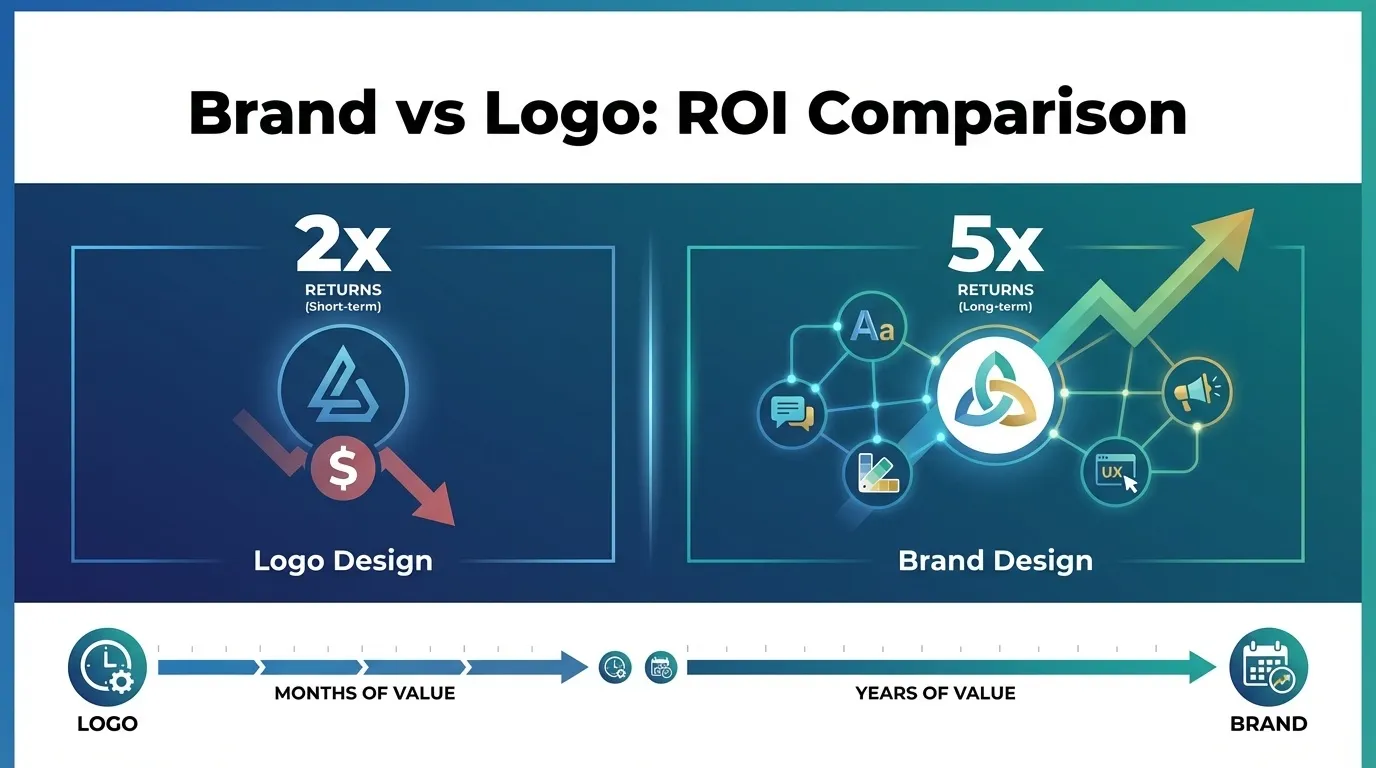
A logo buys you recognition. Recognition is useful. It helps people identify you in a crowded feed or search result.
Brand design builds equity, which refers to the value your brand holds in the minds of customers. It influences how much they trust you, how much they are willing to pay, and whether they return. When you invest in full brand design, you unlock several long-term advantages, such as:
- Higher Long-term Return: A structured brand system reduces rework, speeds up campaign execution, and prevents costly rebrands. Over time, those efficiencies compound. You are not just paying for design assets. You are investing in operational clarity.
- Better Customer Retention: Consistent brands are perceived as reliable. Reliable brands feel safe. Safety increases loyalty. When your visual identity and messaging remain cohesive across time and platforms, customers form stronger mental associations with your business.
- Stronger Pricing Power: Premium brands justify premium pricing because their presentation aligns with perceived quality. If your brand looks cohesive, confident, and deliberate, customers assume competence before you even make your pitch.
- Growth Through Trust: Trust accelerates growth. It reduces friction in buying decisions and increases referral likelihood. A logo can help people remember you. A brand system helps people believe in you.
If you are deciding between brand design vs logo design, think beyond the next three months. Think about where you want your business to stand in three years. Logos identify. Brand design positions. One is a symbol. The other is a strategy made visible. So make sure to choose accordingly.
5 Signs You’ve Outgrown Your Logo and Need Full Brand Design
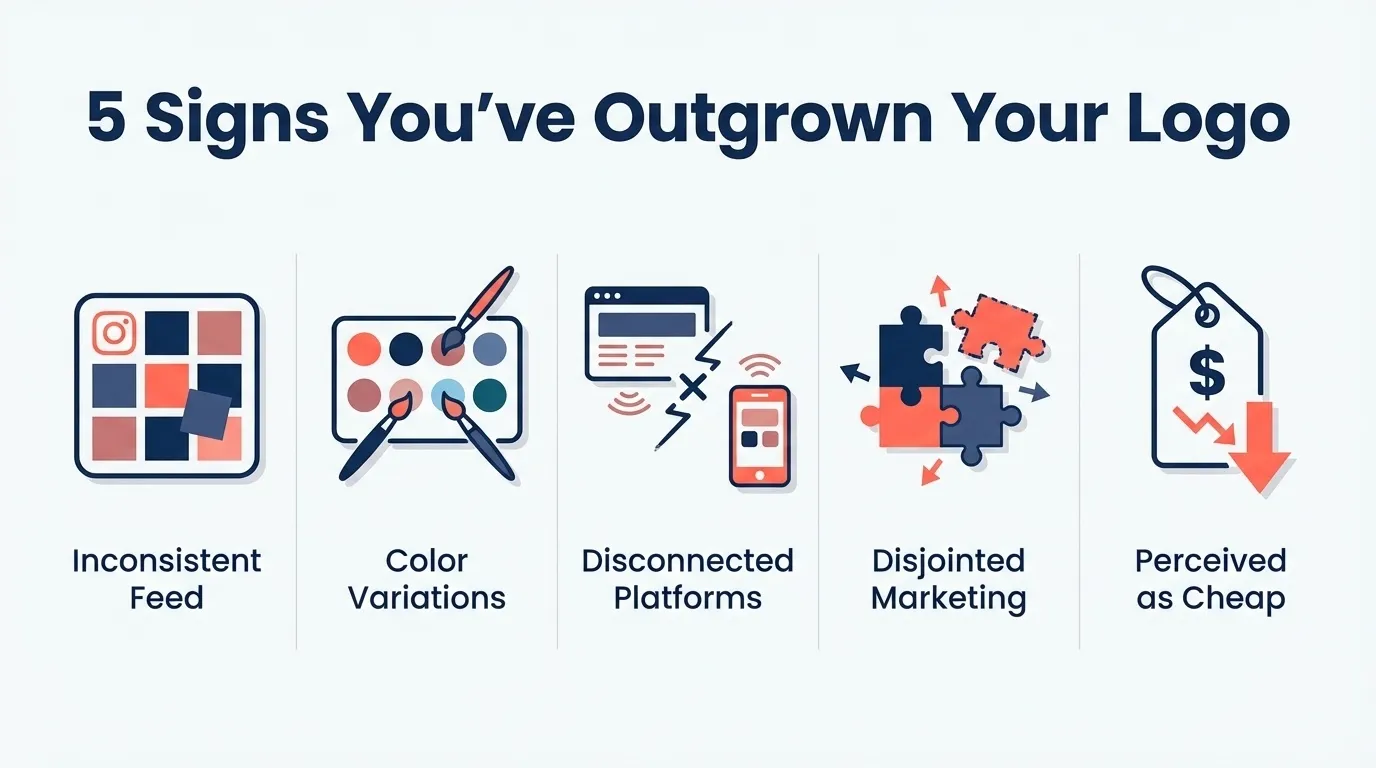
Many businesses realise too late that their logo is no longer enough. The warning signs are usually subtle at first. Then they become expensive. Here are the most common indicators that you have outgrown logo-only branding:
1. Your Instagram Feed Feels Inconsistent
Scroll through your last twenty posts. Do they feel like they belong to one brand, or do they look like they were created by different companies? If colours shift, fonts change, and layouts vary wildly, your audience experiences visual friction. That friction reduces perceived professionalism. Consistency builds recognition. Inconsistency creates doubt.
2. Colours Vary Across Platforms
If your website uses one shade of blue, your ads use another, and your printed materials use something else entirely, you do not have a brand system. You have improvisation. Without defined colour codes and usage rules, even well-meaning designers create fragmentation.
3. Your Website Looks Disconnected from Your Socials
This is common. The logo appears in the header, but everything else feels unrelated. The tone shifts. The photography style changes. The typography feels inconsistent. When digital touchpoints are misaligned, trust weakens. People may not consciously notice why, but they feel the disconnect.
4. Marketing Feels Disjointed
If every campaign feels like starting from scratch, you lack a foundational brand structure. A strong brand design provides templates, rules, and visual language that speed up execution. Without it, your team spends time reinventing rather than refining.
5. Customers Perceive Your Brand as “Cheap”
This one hurts, but it matters. Perceived value is strongly influenced by consistency. When branding feels unstructured or mismatched, it signals amateurism. That perception directly affects pricing power. If you struggle to justify higher prices despite strong product quality, the issue may not be your offer. It may be your brand presentation.
Brand Design vs Logo Design: The Investment That Shapes Your Market Perception
At some point, every serious business owner realises this is not a design debate. It is a positioning decision.
You are not choosing between graphics. You are choosing how your market perceives you. Are you seen as polished, credible, and worth a premium price? Or are you viewed as another interchangeable option competing on cost?
A logo can help people recognise your name. A complete brand design system helps them remember how you made them feel. It aligns your visuals, messaging, and customer experience so that every touchpoint reinforces the same promise. That alignment builds trust. Trust builds preference. Preference builds revenue.
If you are operating in a competitive market like Singapore, perception moves fast. Customers compare websites in seconds. They scroll through Instagram feeds in minutes. They judge professionalism instantly. When your branding feels cohesive and intentional, you signal stability and competence without saying a word.
This is where strategic clarity matters. The conversation around brand design vs logo design is not about which deliverable looks nicer. It is about which investment strengthens your market position long-term. Businesses that understand the difference early avoid expensive rebrands and inconsistent messaging later.
If you are ready to elevate how your business shows up, speak with MediaOne about professional branding services tailored to your growth stage. Our team can help you build a cohesive brand system that supports marketing, scaling, and premium positioning.
If you are unsure which level of branding your business requires, speak with our professional team to assess your stage, growth goals, and positioning strategy
Frequently Asked Questions
How do brand guidelines differ from logo design guidelines?
Brand guidelines cover a wide set of rules on how your business presents itself visually and verbally. They include colour palettes, typography, imagery, tone of voice and how logo variations are used. Logo design guidelines focus primarily on how the mark should appear, where to place it, and the size and spacing required to maintain clarity.
Good brand guidelines ensure consistency across all materials, not just the logo elements.
Can a business rebrand without changing its logo?
Yes, businesses often update their overall brand design (such as messaging, imagery style or brand voice) without altering the logo. The logo may remain unchanged while other elements evolve to align with new positioning or audience expectations. This lets the brand feel fresh without losing existing recognition.
Is brand identity the same as brand image?
No, brand identity refers to how a business chooses to express itself through design, tone, values and messaging. Brand image is how the audience perceives it. Identity is what you create deliberately through strategy and design; image is the result of customers’ interactions, experiences, and interpretations. They influence each other but are not identical.
Does logo design involve messaging or tone?
Logo design is primarily about creating a visual symbol that quickly and memorably identifies a brand. Messaging and tone are usually defined in broader brand design work, not in the logo creation phase. The logo may indirectly reflect a brand’s personality, but strategic voice and language choices come from identity development rather than the logo itself.
What is visual identity in branding?
Visual identity is the collection of visual elements that communicate a brand’s personality and values. It includes the logo, colour palette, typography, imagery style and graphic patterns that appear across all materials. These elements work together to create a coherent look that audiences recognise and associate with the brand. Logo design is just one part of this broader framework.