Most marketers in Singapore track what’s easy, not what moves the needle. Likes, views, and shares feel good, but they don’t explain why your last campaign tanked or why your competitor’s mediocre reel drove conversions and lead generation whilst yours flopped.
If you’re serious about growth, you need to understand why things work, not just that they happened.
That’s where social media metrics come in—not the fluff your dashboard throws at you by default, but the data that tells you what’s working, what’s costing you, and what you should double down on.
Key Takeaways
- Track audience growth, customer satisfaction, and retention metrics to understand who your customers are and how loyal they remain.
- Use awareness and engagement metrics to measure true attention and interaction, not just surface-level visibility.
- Focus on social media ROI by linking clicks and conversions directly to revenue and optimising spend accordingly.
- Monitor brand health through sentiment, mentions, and share of voice to protect and grow your reputation in Singapore’s competitive market.
- Measure paid social success with click-through rates, cost per click, conversions, and return on ad spend to ensure your budget drives profit.
What are Social Media Metrics?
Social media metrics are the data points that tell you what your content is actually doing, not what you hope it’s doing.
They show how people interact with your brand, how far your reach extends, and whether your efforts lead to real business outcomes like leads, sign-ups, or sales.
These metrics aren’t about stroking your ego—they’re about tracking performance so you can act with precision. Here’s where most marketers slip: they look at numbers in isolation.
The solution? Focus on metrics tied to specific goals. If your objective is brand awareness, you’re looking at reach, impressions, and share of voice.
Understanding white-hat link-building techniques can significantly improve how your social media content performs in search engine results.
According to Hootsuite’s 2024 Social Media Trends report, 68% of marketers worry about proving ROI from their social efforts.
Audience Growth Metrics
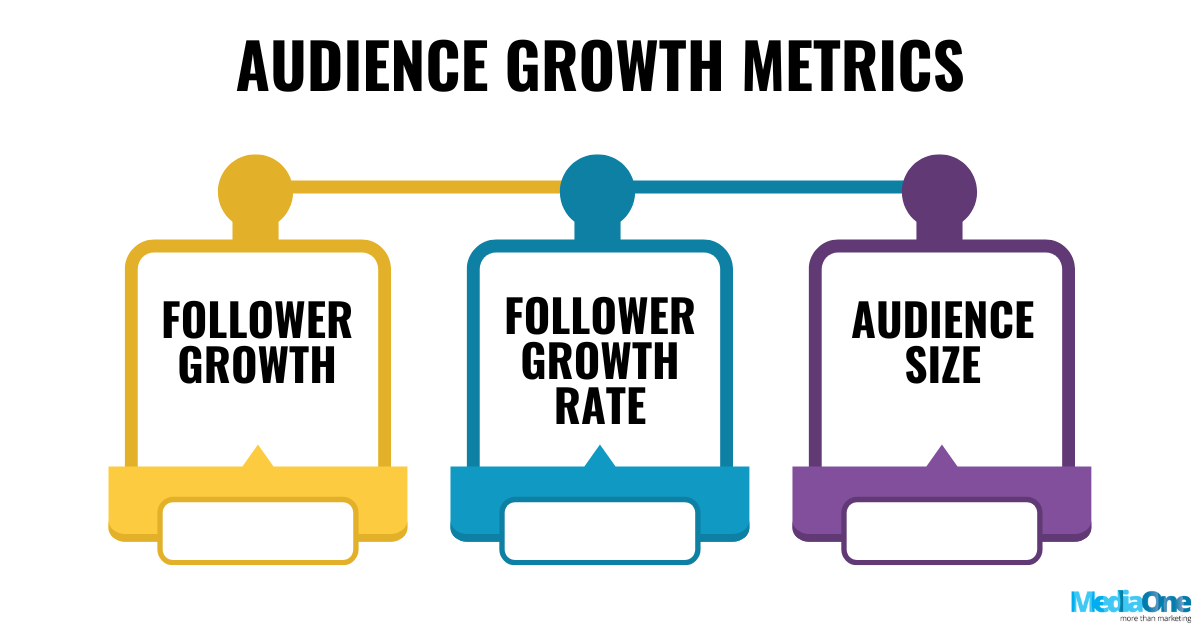
You don’t need more followers—you need the right followers and the data to know if they’re worth keeping.
That’s where audience growth metrics come in, but vanity counts are a dead end if they don’t translate into reach, engagement, or revenue.
1. Follower Growth
Follower growth tells you how many new people are choosing to see your content. But raw numbers mean little without context—the key question is: are they qualified?
If your growth is from giveaways, bots, or unrelated viral posts, you’re not building an audience. You’re inflating a list.
Use it smartly: Don’t just track follower spikes. Pair them with clicks, saves, and purchases to see what kind of follower growth drives ROI.
2. Follower Growth Rate
This is where strategy beats size. Follower growth rate shows how fast you’re growing—a far better indicator of momentum than total count.
Formula: Follower Growth Rate (%) = (New Followers ÷ Total Followers at Start of Period) × 100
A 10K brand gaining 1,000 followers is not the same as a 500-follower brand gaining 300. The latter is moving faster, which often signals better-targeted content or smarter campaign execution.
3. Audience Size
This is your total count of followers, subscribers, or fans. But don’t let the number fool you—large audiences without engagement drain resources and hurt reach algorithms.
- Use tools like Meta’s Audience Insights or SparkToro to audit demographics, affinities, and activity levels.
- Remove ghost followers quarterly as a smaller, active audience beats a bloated one every time.
Metrics to Monitor Customer Satisfaction
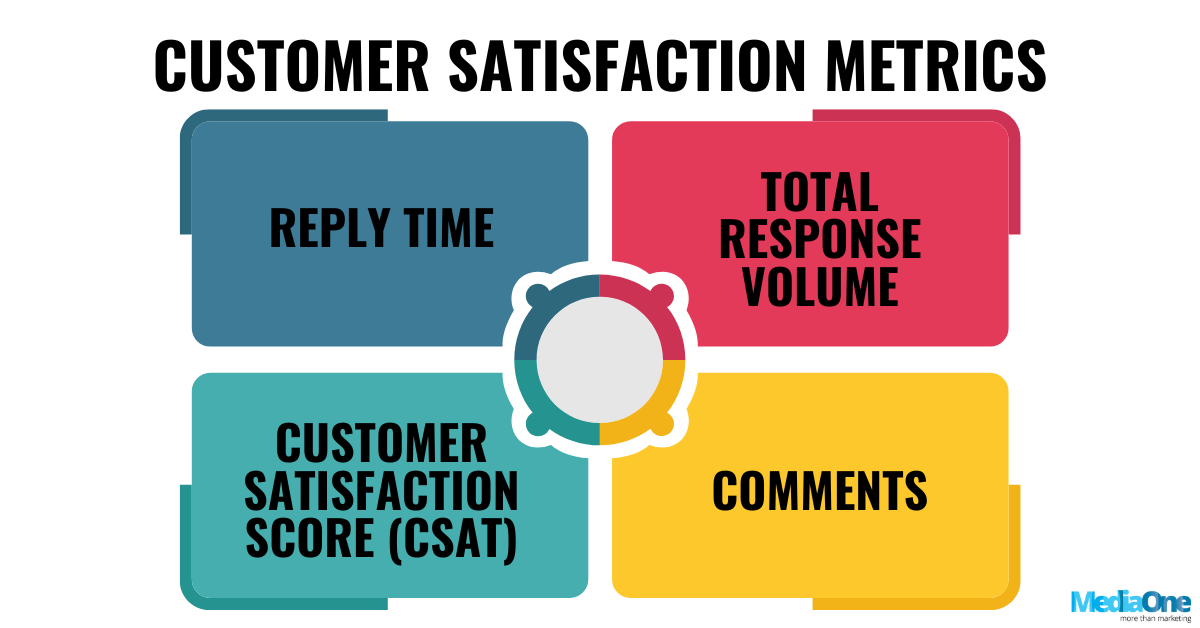
You don’t need to guess whether your audience is happy—they’re already telling you in comments, messages, and the time they spend engaging (or not). But unless you’re tracking the right customer satisfaction metrics, you’ll miss the signals that matter.
4. Reply Time
Speed signals care. On social, it’s often the first impression your customer gets and it sets the tone for everything else.
According to Sprout Social, 40% of consumers expect brands to reply within the first hour. Singaporean consumers are even less patient, especially on platforms like Instagram and WhatsApp.
Set internal SLAs (service-level agreements) for reply time across each platform. If your team can’t reply within an hour during business hours, automate the first touch but always follow up with a human.
5. Total Response Volume
This shows how many customer interactions your team handles: DMs, comments, replies, reviews. It helps you measure workload and scale without slipping on quality.
A spike in volume doesn’t always mean trouble—it could mean a viral campaign is working. But if you’re not tracking this, you’ll miss staffing needs or customer service bottlenecks.
6. Customer Satisfaction Score (CSAT)
This is your direct feedback metric. After a social interaction, say a support ticket or DM conversation, you send a 1-question survey: “How satisfied were you with our service?”

Keep it short and frictionless using a 5-point scale or emoji rating inside chat tools like Facebook Messenger or WhatsApp Business.
7. Comments
Comments are more than engagement—they’re qualitative data, a goldmine of unfiltered customer sentiment. In Singapore, consumers are particularly vocal about both praise and pain points.
Track volume, categorise by type (feedback, complaint, question, praise), and use sentiment analysis tools like Brandwatch or Talkwalker. Log recurring issues for quick escalation when needed.
Awareness Metrics That Actually Measure Attention
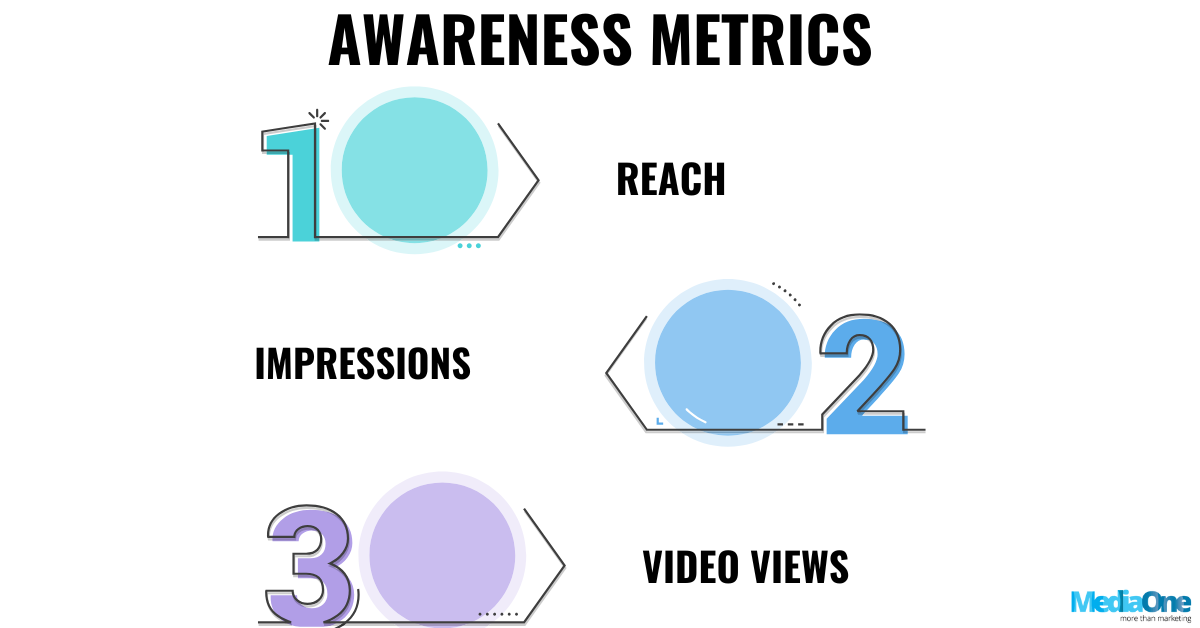
Let’s get one thing straight: awareness is not about being seen—it’s about being noticed and remembered. In Singapore’s crowded digital landscape, reach without recall is wasted budget.
8. Reach
Reach tells you how many unique users have seen your content. It’s your raw footprint, the number of people you’ve entered into the awareness funnel.
But reach without context is dangerous. If your brand gets seen by 100,000 people and none of them match your target buyer, you’ve just paid to be ignored.
Break reach down by segment to understand who exactly you’re reaching. That’s the data that tells you whether your content is hitting the mark.
9. Impressions
Impressions count how many times your content was shown, including repeat views by the same user. On its own, it’s not a KPI, but when you compare it against reach, it becomes powerful.
Track this: Impressions ÷ Reach = Frequency. If your frequency is under 2, your content probably isn’t sinking in; if it’s above 5, you may be annoying your audience.
10. Video Views
Video views show you how many people stuck around to consume your story, not just scroll past your logo. But platforms define “views” differently—Facebook counts a view at 3 seconds, YouTube after 30 seconds.
The smarter metric is View-through rate (VTR) = Completed views ÷ Impressions. High VTR means your story lands, your hook works, and your brand is sticky.
Customer Retention Metrics That Show Who’s Staying

You’ve paid for the click, earned the follow, and closed the sale. But if your customer doesn’t come back, your marketing budget is bleeding.
11. Net Promoter Score (NPS)
NPS measures how likely your customers are to recommend your brand to others. It’s not a feel-good vanity score—it’s a predictor of repeat behaviour and future revenue.
How it works: “On a scale of 0 to 10, how likely are you to recommend us to a friend?” Promoters (9–10) love you, Passives (7–8) are indifferent, Detractors (0–6) are unhappy.
Formula: NPS = % Promoters – % Detractors. According to Bain & Company, brands with NPS scores above 50 retain customers 2.5X longer than those below 20.
12. Social Commerce Metrics
Social commerce isn’t just about selling on Instagram—it’s about making buying and re-buying frictionless and measurable. Monitor repeat purchases from social links, time between purchases, and conversion rates from saved items.
When someone buys from you directly through a social platform, you’ve collapsed the funnel. That user behaviour becomes trackable in your CRM.
13. Reviews
Reviews aren’t just about reputation—they’re windows into loyalty and warning signs for churn. Customers who review your brand positively are more likely to return.
Track volume of reviews over time, repeat reviews by the same customer, and sentiment analysis across multiple platforms.
According to BrightLocal, 79% of consumers trust online reviews as much as personal recommendations.
Social Media ROI Metrics

If your social media efforts aren’t leading to traffic, conversions, or cash, what’s the point? Shares, likes, and comments are nice, but they don’t pay your team or justify your ad spend.
14. Conversion Rate
This is the percentage of social visitors who take meaningful action: buy, sign up, fill a form, book a call. It’s your proof of impact.
Formula: Conversion Rate = (Conversions ÷ Visitors) × 100. According to WordStream, the average social media conversion rate across industries is 2.2%, but top performers hit 2-3%.
A high conversion rate means your content, call-to-action, and landing page work in sync. A low one means you’re attracting the wrong audience or offering the wrong message.
15. Conversions
This is the raw number of people who took your desired action. Volume matters when calculating ROI—if your cost per conversion is lower than your customer lifetime value, you’re profitable.
Use UTM parameters, Google Analytics 4, or Meta Pixel to track conversions accurately. Assign conversions to specific campaigns to find your winners.
16. Social Media Referral Traffic
This shows how many users land on your website from social media platforms and which platforms drive the most qualified traffic. Not all traffic is equal—TikTok might bring volume, but LinkedIn might bring higher-value leads.
Use UTM-tagged URLs and Google Analytics’ “Acquisition > Traffic > Social” dashboard. Monitor sessions per platform, average session duration, bounce rate, and pages per session.
Incorporating SEO marketing basics into your social media strategy can significantly improve your referral traffic quality.
17. Website Traffic (From All Sources)
A social campaign often lifts all channels. Someone sees your ad on Facebook, Googles your brand, then converts via direct traffic—without cross-channel tracking, you’ll underestimate your impact.
Compare baseline website traffic before a campaign to the spike during and after. Segment by source/medium to isolate social impact.
Brand Health Metrics: Measuring Real Brand Equity

Brand equity isn’t just built with campaigns—it’s built in conversations you don’t always see. If you’re not measuring brand health, you’re flying blind in a market that rewards perception just as much as performance.
18. Audience Sentiment
This tells you how people feel when they talk about your brand: excited, annoyed, impressed, bored? It’s the emotional score behind your mentions.
Use social listening tools like Brandwatch, Sprinklr, or Talkwalker to scan your brand name and hashtags. These platforms use AI to categorise mentions as positive, neutral, or negative.
19. Brand Mentions
Brand mentions are the raw volume of times your brand is referenced online, tagged or untagged, positive or negative. They measure buzz and help you see if people are talking about you for the right reasons.
Track total mentions over time, mentions by platform, mentions by influencer, and mentions vs competitors for benchmarking. This data helps inform your content strategy and identify potential PR opportunities.
This is your brand’s slice of the total conversation in your industry. It compares how often you’re mentioned versus your competitors across news, blogs, reviews, and social platforms.
Formula: SOV = (Your Brand Mentions ÷ Total Industry Mentions) × 100. According to Nielsen, brands with higher SOV than their market share tend to grow faster in the following 12 months.
Social Media Engagement Metrics That Show Real Attention
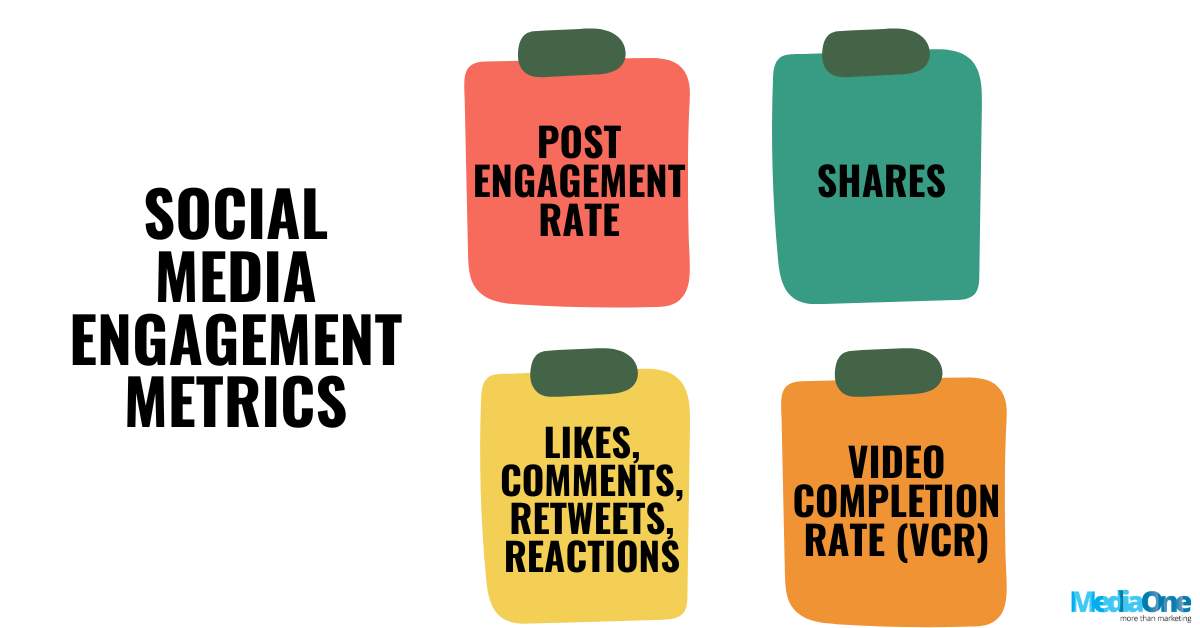
Engagement isn’t just about interaction—it’s about intent. When someone taps, comments, shares, or sticks around to finish your video, they’re mentally opting in.
21. Post Engagement Rate
Engagement rate shows the percentage of people who interacted with your post relative to how many saw it. It strips away inflated impressions and tells you how compelling your content really is.
Formula: Engagement Rate = (Total Engagements ÷ Reach) × 100. According to Rival IQ’s 2024 benchmark report, the median engagement rate on Instagram is 0.47%, whilst top performers hit 1.5% or more.
High impressions with low engagement means you’re either boring your audience or targeting the wrong one. Low impressions with high engagement means you’ve nailed content—now scale it.
22. Likes, Comments, Retweets, Reactions
These are your frontline signals—low-effort interactions that reveal what content resonates on a surface level. But don’t lump them all together as each shows different intent.
Likes show quick approval, comments indicate interest and feedback, whilst shares represent personal endorsement. Always track comments-to-like ratio as deeper engagement signals stronger relevance.
Shares are the strongest organic amplifier on social media. They turn your followers into your sales force—when someone shares your content, they’re saying “This represents me.”
Shares expand your reach and improve platform ranking signals. Facebook, LinkedIn, and TikTok all reward shared content with extended distribution.
24. Video Completion Rate (VCR)
This tells you how many people watched your video all the way through, not just scrolled past it. It’s your content’s stickiness score.
Formula: VCR = (Completed Views ÷ Total Views) × 100. According to Wistia’s 2023 report, videos under 60 seconds have a completion rate of 68%, compared to just 27% for videos over 3 minutes.
A high view count with low VCR means people are curious but not hooked. Fix your intros and tighten your edit—your opening seconds make or break retention.
Paid Social Media Metrics That Prove Your Ads Deliver
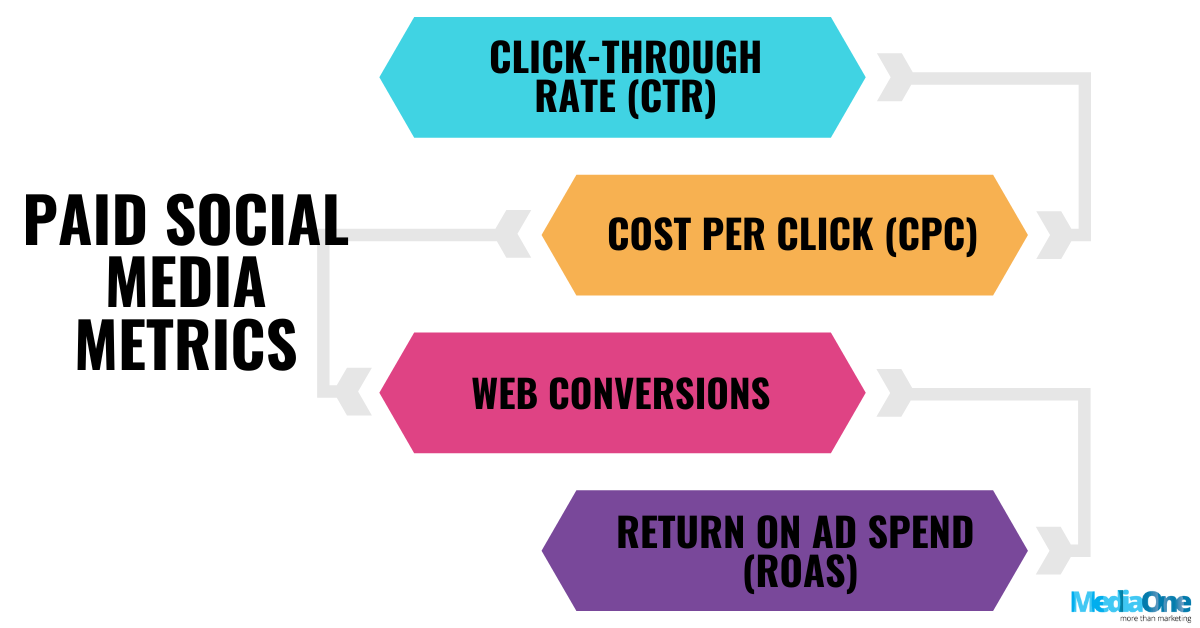
You’re investing serious budget in paid social. Without the right metrics, you’re throwing money into the void, hoping for sales instead of tracking them.
25. Click-Through Rate (CTR)
CTR measures the percentage of people who saw your ad and clicked on it. It’s your first signal that the ad creative and targeting are aligned.
Formula: CTR = (Clicks ÷ Impressions) × 100. For Facebook Ads, average CTR sits around 0.90%, while Instagram Ads perform slightly better at 1.11%.
A high CTR means your message resonated enough to drive action. Low CTR means you’re either targeting the wrong audience or your creative isn’t cutting through the noise.
26. Cost Per Click (CPC)
CPC tells you how much you pay, on average, for each click your ad receives. It’s the efficiency gauge of your spend.
Lower CPC means you’re getting traffic cheaply, but don’t chase the lowest CPC blindly. In Singapore, average CPC across Facebook and Instagram ranges between S$0.30 to S$1.20, depending on industry and targeting.
27. Web Conversions
Clicks are good, but conversions are better. This metric tracks how many users completed a valuable action on your website after clicking your social ad.
This metric closes the loop on ad effectiveness—it tells you if your landing page, offer, and funnel work, not just your ad creative. Use Facebook Pixel or Google Tag Manager to track conversions accurately.
28. Return on Ad Spend (ROAS)
ROAS measures how much revenue you earn for every dollar spent on ads. It’s the ultimate metric because high ROAS means your ads bring profits, not just clicks.
Formula: ROAS = Revenue from Ads ÷ Ad Spend. According to Shopify, average ROAS across e-commerce sits around 4:1, but top brands often push 6:1 or higher.
Understanding how social media agencies in Singapore structure their ROAS targets can help benchmark your performance against industry standards.
Measuring Success with Social Media Metrics

Image Credit: Marketo
Measuring social media metrics requires precision, expertise, and the right tools to turn raw data into actionable insights that fuel real business growth.
You want more than just numbers—you want clarity on what moves your audience, drives sales, and builds lasting loyalty. That’s where partnering with specialists makes all the difference.
MediaOne offers professional digital marketing services tailored to your unique goals, combining deep expertise with hands-on experience to maximise your social media marketing performance.
If you want to turn your social media metrics into measurable results that grow your brand and bottom line, working with experienced professionals is your next smart step.
Frequently Asked Questions
Reach counts the unique number of people who have seen your content, whilst impressions include every time your content is displayed, even if the same person sees it multiple times.
Understanding both helps you balance between broad exposure and repeated visibility.
It depends on your campaign goals, but generally, weekly monitoring allows you to spot trends and optimise quickly without reacting to short-term fluctuations. Monthly reports provide a broader view of performance and strategic adjustments.
Whilst social media metrics alone cannot guarantee sales, indicators like engagement rate and conversion metrics often correlate with purchase intent. Combining these metrics with other data sources improves forecasting accuracy.
Sentiment analysis reveals how your audience feels about your brand or campaigns, helping you identify positive momentum or potential issues before they escalate. It adds a qualitative layer to your quantitative data.
Algorithms prioritise content based on relevance and engagement, meaning metrics like reach and impressions can fluctuate due to platform changes. Staying aware of algorithm updates helps you adjust your content strategy effectively.