
If you’re running a website in 2026, you’ve probably heard that backlinks are crucial for SEO. But here’s the reality: the old tricks don’t work anymore. Google has become much smarter, and what worked five years ago could actually hurt your rankings today, something many businesses only realise after speaking with an experienced SEO agency.

That’s why we’ve put together this practical guide on link building strategies that actually work right now. Whether you’re an SEO professional refining your approach or a business owner just starting out, you’ll find actionable techniques you can begin using today.
We’re not talking theory. These are battle-tested strategies that deliver real results, from data-driven PR campaigns to local SEO tactics that perform well in competitive markets like Singapore. Ready to boost your search rankings? Let’s dive in.
Key Takeaways
- Emphasises that one high-authority, relevant link beats hundreds of low-quality links. High-quality links carry more SEO weight and can positively impact rankings across multiple pages.
- Advises using a mix of content-led and relationship-based approaches for sustainable growth. Combining both strategies ensures you’re not overly reliant on one tactic and builds long-term authority.
- Sets realistic expectations (2-4 months initial, 6-12 months significant). Patience is key, as search engines take time to recognise and reward new links.
- Stresses that topical relevance matters more than domain authority alone. Links from sites closely related to your niche signal to search engines that your content is trustworthy and contextually valuable.
- Reinforces the 70/30 resource allocation principle (content creation vs. link building). Prioritising content ensures you always have valuable assets worth linking to, making outreach more effective.
What is Link Building and Why Does It Matter in 2026?

Think of link building as getting recommendations from other websites. When another site links to yours, it’s essentially saying, “Hey, this content is worth checking out.”
These hyperlinks aren’t just helpful for visitors clicking through, they’re how Google discovers and evaluates content across the web. The search engine follows these links like breadcrumbs, hopping from page to page and site to site, building a massive map of the internet.
Here’s what you need to understand about 2026: Google treats links like votes of confidence. But not all votes are equal. Getting a link from a respected industry publication is like getting an endorsement from a celebrity, it carries serious weight.
Meanwhile, dozens of links from dodgy directory sites? That’s like getting 100 thumbs-up from random bots. Google knows the difference, and so should you. Quality absolutely trumps quantity these days.
If you want to actually compete in your niche, mastering link building strategies isn’t optional anymore, it’s essential. Google’s AI has become incredibly sophisticated at spotting dodgy link schemes.
It can tell the difference between genuine recommendations and paid spam from a mile away. So what works? Earning links the right way: by creating genuinely useful content, building real relationships, and providing actual value. That’s the philosophy we live by at MediaOne, and it’s why sustainable growth always beats quick fixes.
17 Proven Link Building Strategies That Work
Right, let’s get into the good stuff. Below, you’ll find 17 proven strategies that work in today’s SEO landscape.
We’re not giving you vague advice, each strategy comes with step-by-step instructions, realistic benefits you can expect, a difficulty rating so you know what you’re getting into, and the specific tools you’ll need. Pick the ones that match your skill level and resources, and start building those high-quality backlinks.
1. Guest Blogging
Difficulty: Intermediate
Tools Needed: Ahrefs/Semrush, Email outreach tool (e.g., Hunter.io), Google Sheets.
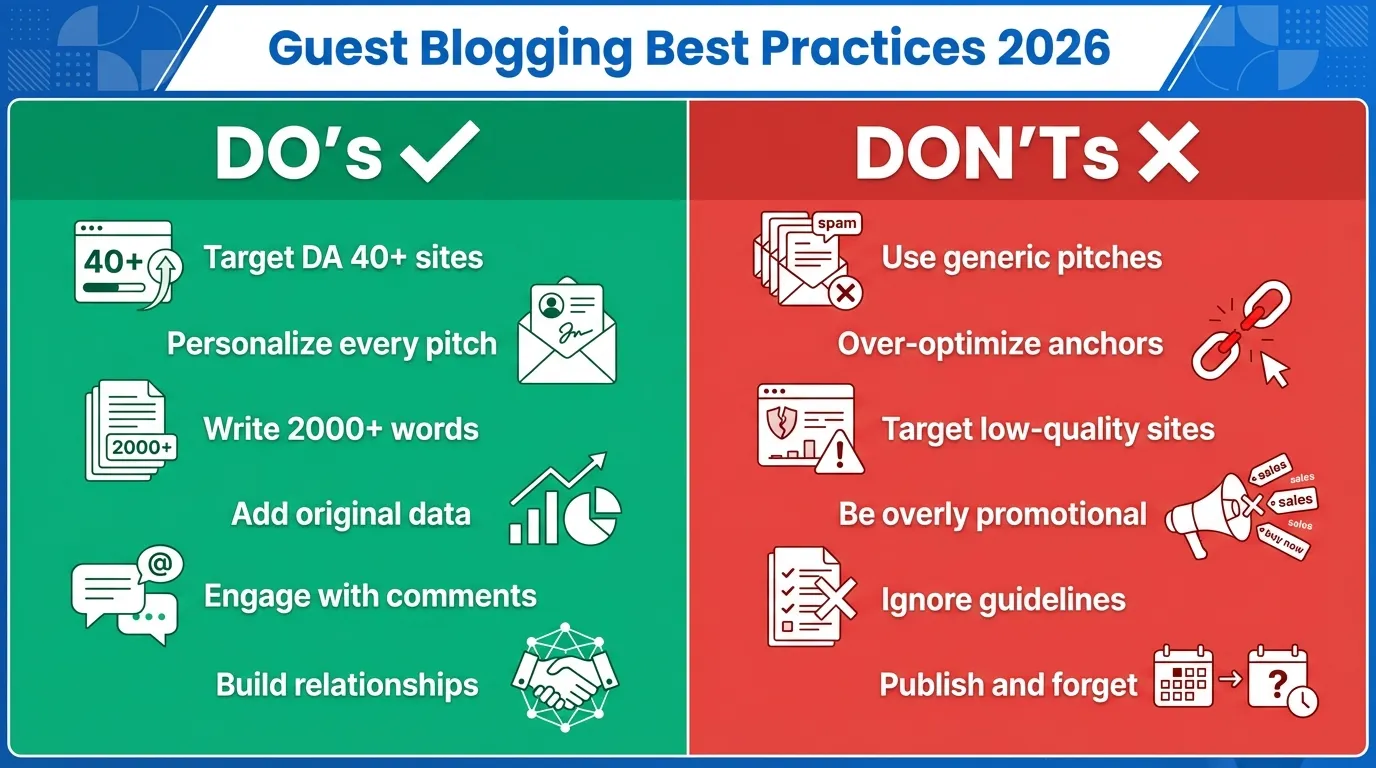
Guest blogging remains a cornerstone of link building, provided it is executed with a focus on quality rather than volume. The premise is simple: you write high-quality content for another website in your industry, and in return, you receive a backlink to your site.
Step-by-Step Implementation:
- Prospecting: Use Google search operators to find sites accepting guest posts. Try queries like “keyword” + “write for us” or “keyword” + “guest post”.
- Vetting: Ensure the site has good domain authority (DA) and organic traffic. Avoid sites that exist solely to sell links.
- The Pitch: Send a personalised email pitching 2-3 unique topic ideas that align with their content gap. Do not send a generic template.
- Writing: Create exceptional content. Include a natural link to a relevant resource on your site within the body text, rather than just in the author bio.
Benefits: Builds relationships with industry peers, drives referral traffic, and establishes thought leadership.
2. Broken Link Building

Difficulty: Beginner to Intermediate
Tools Needed: Ahrefs/Semrush, Check My Links (Chrome Extension).
This tactic involves finding broken links (404 errors) on relevant websites and suggesting your own working content as a replacement. It is a value-exchange proposition: you help the webmaster fix a user experience error, and they give you a link.
Step-by-Step Implementation:
- Identify Targets: Look for resource pages in your niche.
- Scan for Errors: Use a tool like “Check My Links” to find broken external links on these pages.
- Create Content: If you don’t already have a relevant page, create a resource that matches the topic of the broken link.
- Outreach: Email the webmaster notifying them of the broken link. Politely suggest your resource as a replacement.
Benefits: High conversion rate because you are helping the webmaster fix their site.
3. Resource Page Link Building

Difficulty: Beginner
Tools Needed: Google Search, Spreadsheet.
Resource pages are curated lists of helpful links on specific topics. Webmasters create these specifically to link out to useful content, making them prime targets for outreach.
Step-by-Step Implementation:
- Search Operators: Use queries like “keyword” + “inurl:resources” or “keyword” + “useful links”.
- Evaluate: Check if your content would genuinely add value to their list.
- Outreach: Send a friendly email suggesting your content as an addition. Frame it as “I created a comprehensive guide on X that might be useful for your readers.”
Benefits: Obtaining links from pages with high topical relevance.
4. Digital PR and Data Studies

Difficulty: Advanced
Tools Needed: Survey tools (Pollfish, Google Forms), Press release distribution service, Media database.
Journalists are constantly looking for data to support their stories. By conducting original research or surveys, you can become the primary source for news outlets.
Step-by-Step Implementation:
- Identify a Trend: Look for trending topics in your industry where data is lacking.
- Gather Data: Run a survey or analyse public datasets to find a unique angle.
- Create the Asset: Publish a report with charts and key findings on your site.
- Pitching: Reach out to journalists and industry publications with your findings.
Benefits: Can earn links from extremely high-authority news sites (DR 80+) that are otherwise impossible to get.
5. Unlinked Brand Mentions

Difficulty: Beginner
Tools Needed: Google Alerts, Ahrefs Content Explorer, BuzzSumo.
Sometimes, websites mention your brand or products without linking to you. These are the “low-hanging fruit” of link building.

Step-by-Step Implementation:
- Monitor Mentions: Set up alerts for your brand name.
- Check for Links: When you get an alert, check if the mention includes a hyperlink.
- Request the Link: If unlinked, email the author, thanking them for the mention and kindly asking if they could make it clickable for their readers’ convenience.
Benefits: Extremely high success rate, as the author already knows and references your brand.
6. Competitor Backlink Analysis
Difficulty: Intermediate
Tools Needed: Ahrefs, Semrush, Moz.
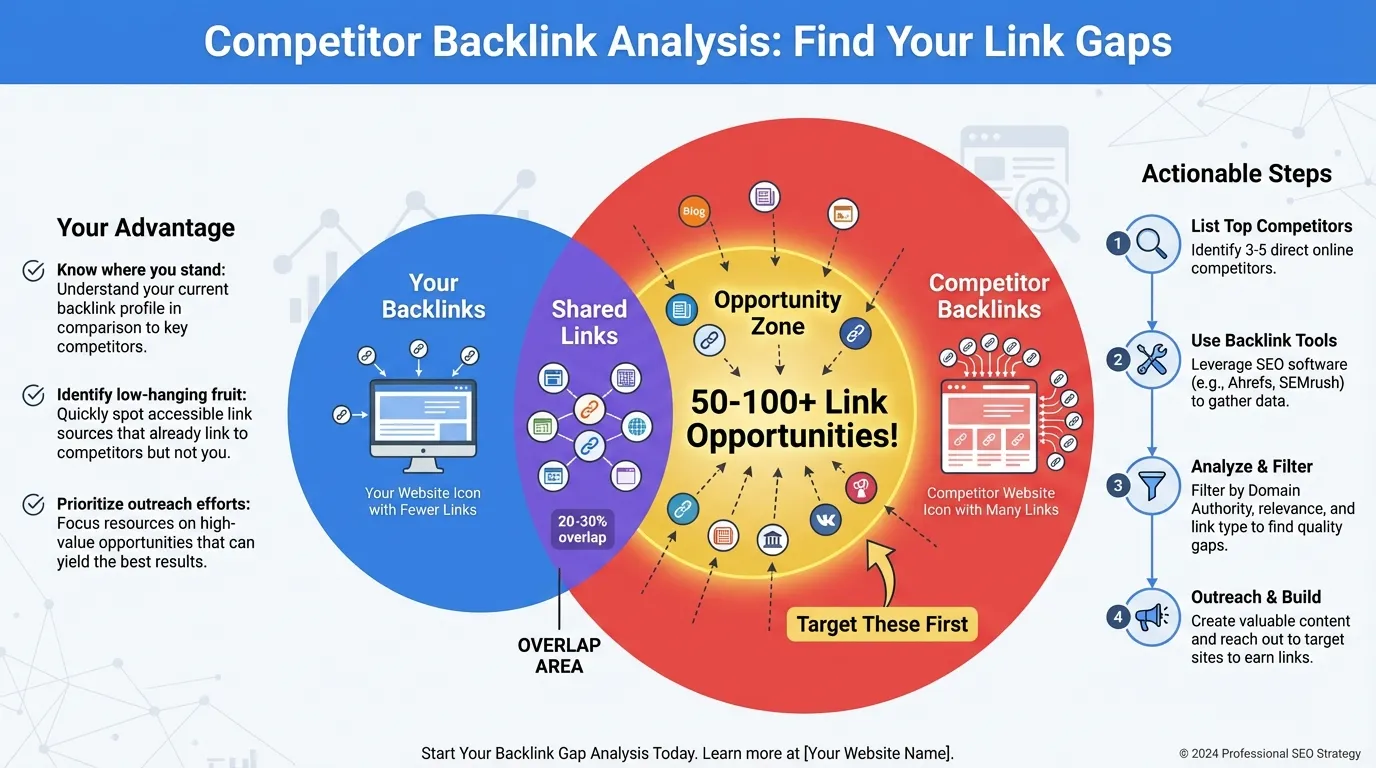
If a site links to your competitor, they might link to you, too. This strategy involves reverse-engineering the backlink profiles of your top competitors.
Step-by-Step Implementation:
- Identify Competitors: List the top 3-5 sites ranking for your target keywords.
- Analyse Links: Use an SEO tool to export their backlink profile.
- Filter: Look for patterns like guest posts, directories, and resource pages.
- Replicate: Reach out to the same sites, offering your (superior) content.
Benefits: Helps you understand exactly what it takes to rank for specific keywords.
7. Creating Linkable Assets (Infographics, Tools, Calculators)

Difficulty: Intermediate to Advanced
Tools Needed: Graphic design software (Canva, Adobe), Developer resource for tools.
Visual content and interactive tools are highly shareable. People love linking to assets that help their audience visualise data or solve a specific problem.
Step-by-Step Implementation:
- Concept: Identify a complex process that can be simplified visually or a calculation users often need to make (e.g., “ROI Calculator”).
- Production: Design a high-quality infographic or code a simple tool.
- Publish & Promote: Host it on your site and encourage sharing by providing an embed code.
Benefits: These assets often earn links passively over time as people discover them.
8. HARO (Connectively) and Quote Platforms

Difficulty: Intermediate
Tools Needed: Connectively (formerly HARO), Qwoted, Twitter (X).
Platforms like Help A Reporter Out (HARO) connect journalists with experts. By providing quotes, you can get mentioned in major publications.
Step-by-Step Implementation:
- Register: Sign up as a source on platforms like Connectively or Qwoted.
- Monitor Queries: Look for requests relevant to your expertise three times a day.
- Pitch Quickly: Respond fast with a publish-ready quote and a brief bio including your website link.
Benefits: Access to high-authority media links without needing a PR agency.
9. The Skyscraper Technique

Difficulty: Advanced
Tools Needed: SEO analysis tools, Content creation team.
Popularised by Brian Dean, this technique involves finding high-performing content and creating something significantly better.
Step-by-Step Implementation:
- Find Content: Identify a piece of content in your niche with many backlinks.
- Improve It: Create a new version that is longer, more up-to-date, better designed, or more comprehensive.
- Steal Links: Reach out to everyone who linked to the original piece, show them your superior version, and suggest they link to it instead.
Benefits: Positions your content as the definitive resource on the topic.
10. Link Reclamation

Difficulty: Beginner
Tools Needed: Ahrefs/Semrush, Google Search Console.
This involves finding links that you have lost. Perhaps a linking page was updated, and your link was removed, or the page linking to you now returns a 404.
Step-by-Step Implementation:
- Identify Lost Links: Use the “Lost Links” report in your SEO tool.
- Diagnose: Determine why the link was lost. Was it intentional removal or a site error?
- Recover: Reach out to the site owner politely, asking whether the link can be reinstated and, if so, pointing to a newer, more relevant page on your site.
Benefits: It is easier to reclaim a link you once had than to earn a new one from scratch.
11. Podcast Guest Appearances
Difficulty: Intermediate
Tools Needed: Podcast directories, Microphone/Audio equipment.
Podcasts are booming. Being a guest allows you to share expertise and usually results in a link from the podcast’s show notes page.
Step-by-Step Implementation:
- Research: Find podcasts in your niche that interview guests.
- Pitch: Send a pitch highlighting your expertise and specific topics you can discuss that will educate their audience.
- Record: Deliver value during the interview.
- Verify: Ensure the show notes include a link to your website.
Benefits: Builds personal brand authority and provides high-quality contextual links.
12. Expert Roundups
Difficulty: Intermediate
Tools Needed: Email outreach tools.
You can participate in roundups (providing a quote) or host one yourself. Participating gets you a link; hosting one encourages all participants to link back to you or share the post.
Step-by-Step Implementation:
- To Participate: Look for requests on social media using hashtags like #journorequest or #prrequest.
- To Host: Ask 10-20 experts a specific question (e.g., “What is your top SEO tip for 2026?”). Compile their answers into a blog post.
- Promotion: Notify the experts when it is live; they will often link to it from their press pages or share it on social media.
Benefits: Leverages the audience and authority of other experts.
13. Testimonials and Reviews

Difficulty: Beginner
Tools Needed: List of tools/services you use.
Companies love displaying customer testimonials. If you use a software tool or service for your business, offer to write a testimonial for them.
Step-by-Step Implementation:
- Audit: Make a list of all vendors, suppliers, and software your business uses.
- Check: See if their website has a testimonials section or case studies page.
- Offer: Email their marketing team offering a glowing review in exchange for a link back to your company profile.
Benefits: Extremely high success rate as it provides social proof for the other business.
14. Local Business Directories
Difficulty: Beginner
Tools Needed: Whitespark, Moz Local.
For local businesses (like an seo firm in Singapore), local citations are crucial. These are mentions of your business name, address, and phone number (NAP) on other websites.
Step-by-Step Implementation:
- Core Directories: Ensure you are listed on Google Business Profile, Bing Places, Yelp, and Yellow Pages.
- Niche Directories: Find industry-specific or region-specific directories (e.g., Singapore Business Directory).
- Consistency: Ensure your NAP data is identical across all listings.
Benefits: Essential for Local SEO rankings and establishes local trust.
15. Internal Link Optimisation
Difficulty: Beginner
Tools Needed: Site audit tool, WordPress (or CMS).

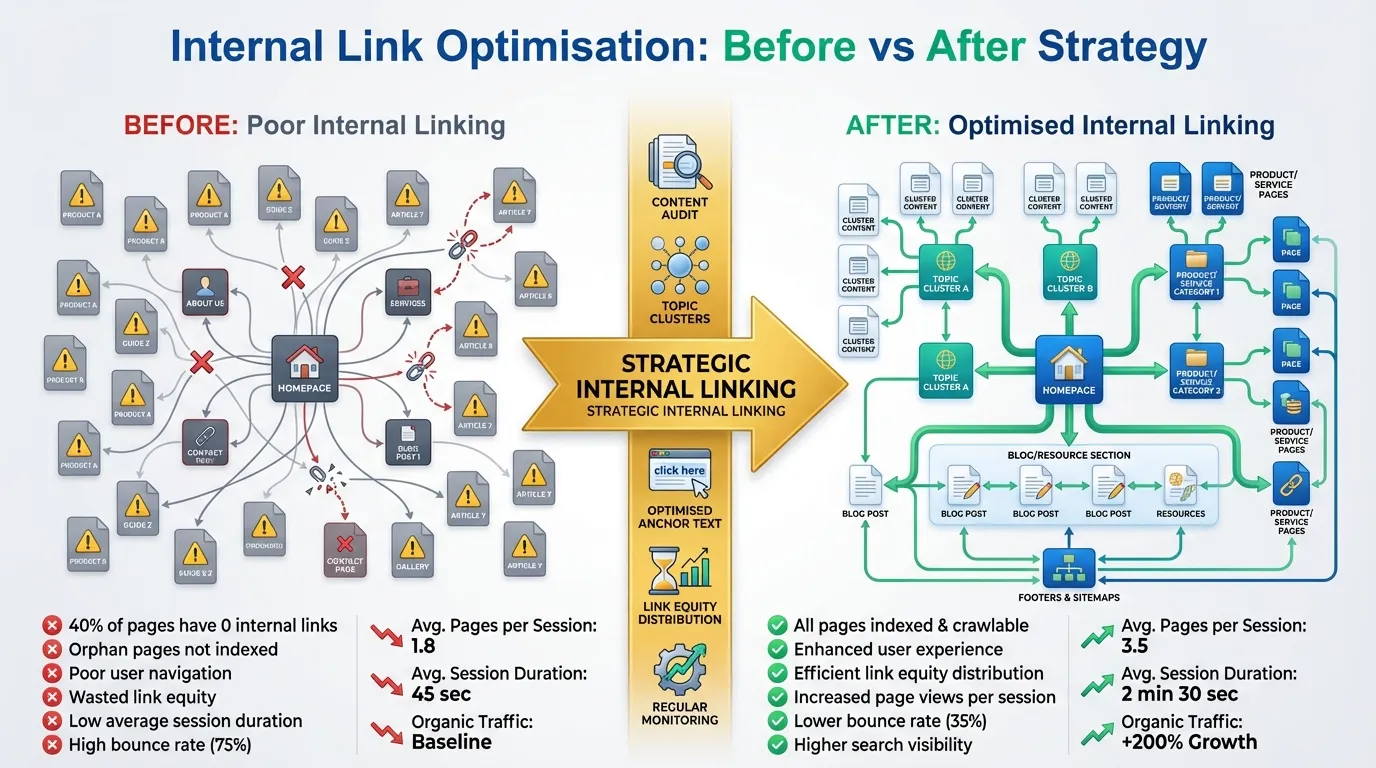
While not a “backlink” from another site, internal linking is a critical link building strategy. It distributes link equity (PageRank) from your strong pages to your weaker ones.
Step-by-Step Implementation:
- Identify Power Pages: Find the pages on your site with the most external backlinks.
- Link Down: Add links from these high-authority pages to your newer or lower-ranking content.
- Anchor Text: Use descriptive, keyword-rich anchor text.
Benefits: Improves crawl efficiency and boosts the rankings of specific pages without requiring new external links.
16. Content Partnerships
Difficulty: Intermediate
Tools Needed: Networking.
Collaborate with non-competing businesses in your industry to co-create content. This could be a webinar, an ebook, or a joint research paper.
Step-by-Step Implementation:
- Identify Partners: Find companies with a similar audience but different products (e.g., an SEO agency partnering with a Web Design agency).
- Co-Create: Produce a valuable resource together.
- Cross-Promote: Both parties promote the content to their audiences and link to the landing page.
Benefits: Doubles the promotion reach and shares link equity.
17. Original Research and Statistics
Difficulty: Advanced
Tools Needed: Data analysis skills.
Becoming the source of truth is the ultimate link building hack. When bloggers write articles, they need statistics to back up their claims. If you provide those stats, you get the citation.
Step-by-Step Implementation:
- Aggregate Data: You don’t always need to run a survey. You can analyse public data (e.g., analysing 1,000 SERP results).
- Publish Findings: Create a page titled “Industry Statistics 2026”.
- Update: Keep this page updated annually to retain its rankings and continue earning links.
Benefits: Generates “passive links” where people link to you without you even asking.
Common Link Building Mistakes to Avoid

Look, we’ve all been tempted by shortcuts. But in link building, these shortcuts can seriously damage your site. Here are the mistakes we see again and again (and trust us, you don’t want to learn these lessons the hard way):
- Buying Links: Google strictly penalises paying for PageRank-passing links. If caught, your site could be de-indexed. Focus on earning links naturally through high-quality content, outreach, guest posting on relevant sites, and building relationships in your industry.
- Ignoring Relevance: A link from a high-authority cooking blog won’t help your digital marketing agency ranking. Topical relevance is key. Target websites that are related to your niche. Look for blogs, news sites, and communities that attract your target audience to ensure links are meaningful and effective.
- Over-optimising Anchor Text: Having 100 links all saying “best SEO agency” looks unnatural. Aim for a natural mix of branded, generic, and keyword-rich anchors (like “click here”). Keep it varied and reader-friendly.
- Neglecting Content Quality: No amount of link building can save a website with poor content. Content is the foundation upon which links are built. Invest in creating high-quality, engaging content that delivers real value. Great content naturally attracts links from authoritative sources.
- Focusing Only on Homepage Links: Ensure you build links to internal pages (deep linking) to boost the authority of your entire site structure. This distributes link equity and boosts rankings for multiple pages.
How to Measure Link Building Success
You can’t improve what you don’t measure, right? Link building takes time and effort, so you need to know if it’s actually working. Here’s what you should be tracking:
1. Domain Authority/Rating Growth
Tools like Moz (Domain Authority – DA) and Ahrefs (Domain Rating – DR) provide scores that predict how well a website could rank.
While these are third-party metrics and not directly used by Google, the trend matters more than the absolute number. A steady upward trajectory usually indicates a strengthening backlink profile.
Tips for tracking:
- Monitor DA/DR monthly to spot growth patterns.
- Correlate changes with your link building campaigns to identify which types of links are most effective.
- Note dips as well. They can reveal lost or broken links, spammy links removed, or Google algorithm adjustments.
2. Referral Traffic
High-quality links should send real visitors, not just improve metrics on paper. Referral traffic in Google Analytics shows how many people are arriving at your site from external sources.
Tips for tracking:
- Use UTM parameters on backlinks whenever possible to track performance precisely.
- Prioritise quality over quantity: traffic from highly relevant, niche-specific sites is far more valuable than sheer numbers from unrelated sources.
- Analyse behaviour: check bounce rate, session duration, and conversion from referral traffic to gauge engagement.
3. Keyword Rankings
Link building is ultimately aimed at improving search visibility. Monitoring keyword rankings helps you understand if the links are helping your pages rank higher in SERPs.
Tips for tracking:
- Track both primary and long-tail keywords associated with pages that receive backlinks.
- Use tools like Ahrefs, Semrush, or SERPWatcher to monitor trends over time.
- Look for correlations: see if ranking improvements follow link placements and assess which link types or sources had the biggest impact.
4. Organic Traffic
As your backlink profile and authority grow, organic traffic should gradually increase across your site. This reflects broader SERP competitiveness, not just individual pages.
Tips for tracking:
- Monitor organic traffic trends in Google Analytics to spot gradual growth patterns.
- Cross-check with Google Search Console to see which pages gained impressions and clicks after new backlinks were added.
- Be patient, especially for newer sites; improvements may take weeks or months as search engines process the new links.
The Future of Link Building in 2026 and Beyond
So what’s next for link building? As we look ahead, things are getting more sophisticated, not simpler. With Google’s AI features (like Search Generative Experience) changing how people search, being recognised as a genuine authority matters more than ever.
E-E-A-T (Experience, Expertise, Authoritativeness, and Trustworthiness) remains Google’s north star. Links from real experts who actually know their stuff will continue to carry the most weight.
Even brand mentions without links, where someone references your brand in articles, reviews, or social content, are becoming important ranking signals. Google is smart enough to recognise your authority even when there’s no clickable link.
Practical Tips for Future-Proof Link Building
- Focus on guest contributions
- Write guest posts for authoritative sites in your niche.
- Ensure the content is high-quality, adds value, and naturally references your expertise.
- Write guest posts for authoritative sites in your niche.
- Build relationships in your industry
- Collaborate through partnerships, webinars, or podcasts.
- Networking with real humans can lead to organic link opportunities over time.
- Collaborate through partnerships, webinars, or podcasts.
- Encourage organic brand mentions
- Engage with customers, journalists, or bloggers who might mention your brand in articles or social posts.
- Monitor these mentions and nurture relationships. They often turn into backlinks naturally.
- Engage with customers, journalists, or bloggers who might mention your brand in articles or social posts.
- Prioritise quality over quantity
- One high-authority, relevant link is more valuable than dozens of low-quality links.
- Focus on links that signal expertise and trustworthiness rather than on manipulating metrics.
- One high-authority, relevant link is more valuable than dozens of low-quality links.
The marketers who will thrive in the late 2020s aren’t the ones spending the most on buying links. They are the ones building genuine relationships, creating meaningful partnerships, and networking with real humans in their industry. It’s back to basics: treat people like people, not link opportunities.
Ready to Build Links That Actually Work?
Here’s the bottom line: link building in 2026 is about doing proper marketing, creating content people genuinely want to share, building real relationships in your industry, and consistently showing up with value.
The 17 strategies we’ve covered above aren’t magic bullets, but they’re proven tactics that build a solid, Google-friendly backlink profile that grows your organic traffic over time.
Don’t try to do everything at once. That’s a recipe for burnout. Start with a quick audit of where you stand right now. What content do you already have that’s worth linking to? What could you create that would be genuinely useful?
Then pick two or three strategies from this guide that match your resources and skill level, and focus on those for the next quarter. Remember: link building is a marathon, not a sprint. Consistency beats intensity every time.
Need a hand putting these strategies into action? Sometimes it helps to have experts who’ve done this hundreds of times before. We have the experience, tools, and industry relationships to scale your link building efforts without cutting corners.
We know what works (and more importantly, what doesn’t), and MediaOne can help you stay ahead of your competition in this constantly evolving digital landscape. Contact us today!
Frequently Asked Questions
How long does it take to see results from link building?
Here’s the truth: you’ll typically start seeing initial movement within 2-4 months, but significant results usually take 6-12 months of consistent effort.
Think of it like going to the gym, you won’t see results after one workout, but stick with it for six months and the transformation becomes obvious.
High-authority links from major publications move the needle faster, whilst the timeline also depends on your starting point and industry competitiveness.
How many backlinks do I need to rank on the first page of Google?
There’s no magic number. Quality and relevance matter far more than quantity. We’ve seen pages rank with just 10-15 high-quality backlinks, whilst competitors with hundreds of low-quality links languish on page three.
In competitive niches like finance or legal services in Singapore, you might need 50-100+ quality backlinks, but use Ahrefs or Semrush to analyse your specific keyword’s top 10 results for a realistic benchmark.
Are nofollow links worthless for SEO?
Absolutely not! Whilst nofollow links don’t pass PageRank in the traditional sense (Google treats them as a “hint” since 2020), they drive referral traffic, diversify your link profile, build brand awareness, and often lead to dofollow links down the line. Think of them as part of a balanced diet. You need a natural mix of both dofollow and nofollow links to look legitimate to Google.
Can I remove bad backlinks pointing to my site?
Yes, using Google’s Disavow Tool, but only if you’ve received a manual penalty, been hit by an algorithm update, or inherited an obviously toxic link profile.
Google’s gotten much better at ignoring spam automatically, so in most case,s they’ll simply discount bad links without penalising you. Be cautious though, disavowing good links by mistake can hurt your rankings, so when in doubt, don’t disavow.
Should I focus on building links or creating content first?
Content first, always. You can’t build quality links without quality content to link to. Think of it this way: content is the house, links are the roads leading to it, and you wouldn’t build roads to an empty plot of land.
As a rule of thumb, spend 70% of your resources on content creation and 30% on link building in the early stages, then shift to 50/50 once you’ve built up a solid content library.