
Influencer marketing has become a key channel for brands that want to reach audiences in a more authentic and engaging way. However, the industry’s rapid growth has also led to a rise in fake followers, inflated engagement metrics, and influencers who rely on automated or purchased interactions.

This is why influencer vetting has become a critical step for agencies and brands before launching any campaign. Without proper influencer vetting, brands risk investing in creators whose audiences are not real, relevant, or engaged.

A campaign may appear successful on paper because of large follower counts, yet fail to deliver meaningful results such as clicks, conversions, or genuine brand awareness. Careful influencer vetting helps agencies identify creators with authentic audiences, credible engagement, and content that aligns with a brand’s values.
Effective influencer vetting goes beyond simply checking follower numbers. Agencies analyse an influencer’s authenticity, engagement quality, content consistency, and past collaborations to ensure they are a good fit for a campaign. This process protects both brand reputation and marketing budgets while improving the chances of campaign success.
For companies seeking expert guidance, professional agencies can also provide influencer vetting in Singapore, helping brands identify trustworthy creators and build partnerships that drive real marketing impact.
Key Takeaways
- Influencer vetting helps brands verify audience authenticity, engagement quality, and brand alignment before partnering with creators.
- Fake followers and automated engagement can distort influencer metrics and reduce campaign effectiveness.
- Agencies analyse follower growth patterns, audience demographics, and comment quality to detect suspicious activity.
- Combining analytics tools with manual review improves the accuracy of influencer vetting and campaign performance.
- Professional influencer vetting protects marketing budgets and improves long-term outcomes of influencer partnerships.
What Is Influencer Vetting?
Influencer vetting refers to the process agencies use to evaluate whether a social media creator is suitable for a brand collaboration. The goal is to verify an influencer’s authenticity, credibility, and relevance before investing in a partnership.
In influencer marketing, follower counts alone do not guarantee value. Some influencers artificially inflate their metrics by purchasing followers or using automated engagement. Influencer vetting helps agencies separate genuine creators from those whose audiences may be fake or inactive.
A comprehensive influencer vetting process usually examines several factors:
- Follower authenticity and growth patterns
- Engagement quality and interaction behaviour
- Audience demographics and relevance
- Content quality and brand alignment
- Past brand collaborations and credibility
By reviewing these elements, agencies can make informed decisions about which creators can deliver real results.
Why Influencer Vetting Matters More Than Ever
The influencer marketing ecosystem has grown rapidly in recent years. As more brands invest in creator partnerships, the incentive for fraudulent behaviour has also increased. Some influencers buy followers or participate in engagement pods to make their accounts appear more popular than they actually are.
This makes influencer vetting more important than ever. Without a robust vetting process, brands may unknowingly partner with influencers whose audiences are largely bots or inactive accounts.
There are several risks associated with skipping influencer vetting:
- First, brands may waste marketing budgets on campaigns that generate little or no real engagement. Fake followers cannot click links, purchase products, or build brand awareness.
- Second, campaigns may deliver misleading performance metrics. Inflated numbers can make a campaign appear successful even when it has little real-world impact.
- Third, partnering with the wrong influencer can damage brand credibility. Audiences are increasingly aware of inauthentic influencer behaviour and may question the integrity of brands that support such creators.
A thorough influencer vetting process protects brands from these risks and ensures marketing investments deliver genuine value.
The Core Goals of Influencer Vetting
Agencies conduct influencer vetting with several objectives in mind. While each campaign may have unique requirements, the overall goal is to identify creators who can genuinely influence their audiences.
One of the main goals of influencer vetting is to confirm that an influencer has a real and engaged audience. Authentic followers are more likely to interact with content and respond to brand messages.
Another important objective is ensuring audience relevance. An influencer with a large audience may still be unsuitable if their followers do not match the brand’s target demographic.
Influencer vetting also helps agencies evaluate whether a creator’s content style and values align with the brand. Partnerships work best when influencers promote products naturally within their existing content.
Finally, influencer vetting ensures that engagement metrics reflect genuine interest rather than automated or artificial interactions.
Influencer Vetting Step 1: Analysing Follower Authenticity
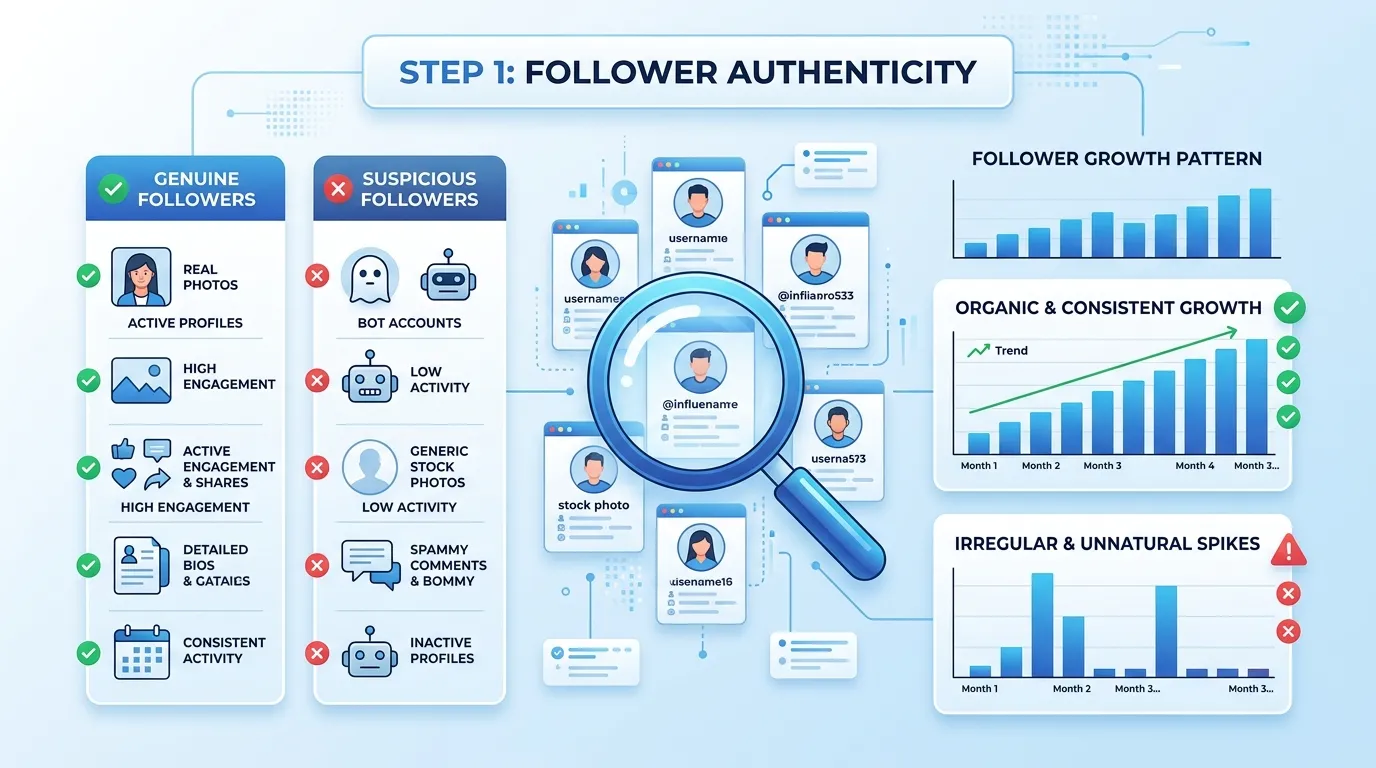
The first step in influencer vetting is examining whether an influencer’s followers are genuine.
- Spotting Suspicious Follower Growth: One common indicator of purchased followers is sudden spikes in follower counts. While viral content can lead to rapid growth, unexplained increases in followers may indicate artificial inflation. Agencies performing influencer vetting often review historical follower data to identify irregular growth patterns. Gradual, consistent growth is typically a sign of organic audience development.
- Evaluating Follower Quality: Follower authenticity also involves examining the profiles of the followers an influencer has. Accounts with no profile pictures, minimal posts, or extremely low activity may indicate bot followers. During influencer vetting, agencies analyse the proportion of suspicious or inactive accounts among an influencer’s followers. A high percentage of such accounts may reduce the value of a collaboration.
- Tools Agencies Use for Influencer Vetting: Several analytics platforms help agencies evaluate follower authenticity. These tools analyse follower behaviour, identify potential bot accounts, and generate authenticity scores for audiences. However, automated tools alone are not always sufficient. Many agencies combine software analysis with manual review to ensure accurate influencer vetting.
Influencer Vetting Step 2: Reviewing Engagement Quality

Engagement is often considered a stronger indicator of influence than follower counts. For this reason, reviewing engagement quality is a central part of influencer vetting.
- Calculating Real Engagement Rates: Engagement rates measure the percentage of an influencer’s followers who interact with their content through likes, comments, shares, or saves. During influencer vetting, agencies compare engagement rates against industry benchmarks. Extremely low engagement may indicate inactive followers, while unusually high engagement can sometimes signal artificial interaction.
- Identifying Fake Engagement: Some influencers use engagement pods or automated services to boost interactions on their posts. These methods can create the illusion of strong audience engagement. Agencies conducting influencer vetting look for patterns such as repetitive comments, generic messages, or identical phrases posted by multiple accounts.
- Analysing Comment Authenticity: Genuine comments often reflect real conversations with followers. They may include questions, feedback, or responses related to the content. By contrast, fake engagement frequently appears as short or irrelevant comments that do not relate to the post. Identifying these patterns helps agencies determine whether an influencer’s audience is truly engaged.
Influencer Vetting Step 3: Assessing Audience Demographics

Even if an influencer has authentic followers, their audience may not match a brand’s target market. This is why demographic analysis is a key stage of influencer vetting.
- Matching Audience to Brand Target Market: Agencies review audience insights, including age groups, gender distribution, geographic location, and interests. These metrics help determine whether an influencer’s audience aligns with the goals of an influencer marketing campaign. For example, a Singapore-based brand may prefer influencers whose audiences are primarily located in Singapore or nearby markets.
- Identifying Mismatched Audiences: An influencer with a large audience may still be unsuitable if most of their followers come from unrelated regions or demographics.
- Influencer vetting helps identify these mismatches so brands can avoid partnerships that deliver limited relevance.
- Audience Credibility Checks in Influencer Vetting: Agencies also evaluate whether audience demographics appear realistic. For instance, a sudden influx of followers from multiple unrelated countries may indicate purchased followers. Audience credibility analysis strengthens influencer vetting by verifying that the influencer’s reach is genuine and relevant.
Influencer Vetting Step 4: Evaluating Content Authenticity

Content quality and authenticity are also essential considerations in influencer vetting.
- Reviewing Past Brand Collaborations: Agencies examine an influencer’s history of sponsored content to understand how they promote brands. Excessive sponsored posts may reduce credibility and audience trust. Influencer vetting also involves verifying that influencers properly disclose sponsored partnerships in accordance with advertising guidelines.
- Assessing Content Quality and Consistency: Consistency is another indicator of authenticity. Influencers who post regularly and maintain a clear content style often build stronger relationships with their audiences. During influencer vetting, agencies review the quality of visuals, storytelling style, and overall professionalism of the content.
- Ensuring Brand Safety During Influencer Vetting: Brand safety is a crucial element of influencer vetting. Agencies review an influencer’s past posts and public behaviour to identify potential risks. Content that includes controversial statements, offensive material, or behaviour inconsistent with brand values may make an influencer unsuitable for partnerships.
Influencer Vetting Step 5: Checking Cross-Platform Presence

Many influencers maintain audiences across multiple social platforms. As part of influencer vetting, agencies often examine activity across these channels. Consistent engagement across platforms can indicate a loyal and authentic audience. If an influencer has millions of followers on one platform but minimal presence elsewhere, agencies may investigate further.
Cross-platform analysis also helps agencies verify audience authenticity and identify potential inconsistencies.
Common Red Flags Agencies Look for During Influencer Vetting
Agencies performing influencer vetting often watch for several warning signs that may indicate fraudulent or low-quality influencers.
These include:
- Sudden spikes in follower counts without a clear explanation
- Extremely low engagement relative to audience size
- Comment sections filled with spam or repetitive messages
- Audience demographics that do not match the influencer’s content
- Feeds dominated by promotional posts without authentic storytelling
Identifying these red flags early allows agencies to avoid risky partnerships.
Tools and Platforms Agencies Use for Influencer Vetting

Influencer vetting is rarely a purely manual process. While experienced marketers can often identify red flags through qualitative review, most agencies rely on a combination of human judgment and specialised tools to evaluate influencers at scale. This hybrid approach allows teams to balance efficiency with accuracy, especially when managing large campaigns involving multiple creators.
Influencer Analytics Platforms
Influencer analytics platforms such as HypeAuditor, Upfluence, and Aspire are commonly used during influencer vetting to assess follower authenticity, engagement quality, and audience demographics.
These platforms go beyond surface-level metrics like follower count. Agencies can analyse engagement consistency over time, audience location distribution, and historical follower growth. For example, a sudden spike in followers without a corresponding increase in engagement may indicate artificial growth.
By leveraging these insights, agencies can determine whether an influencer’s audience is genuine and whether it aligns with the intended target market of a campaign.
Social Listening Tools
Social listening tools such as Brandwatch and Sprout Social add another layer of analysis during influencer vetting. These tools track mentions, hashtags, and conversations across social platforms in real time.
They help agencies understand how audiences actually respond to an influencer’s content, rather than relying solely on engagement metrics. This makes it easier to evaluate audience sentiment, identify recurring feedback themes, and assess whether interactions are meaningful or superficial.
For instance, a high number of generic comments or repetitive phrases may suggest low-quality engagement, even if overall engagement rates appear strong.
Fraud Detection and Verification Tools
Fraud detection tools, often built into analytics platforms, focus specifically on identifying suspicious activity. These systems analyse signals such as unusual engagement patterns, bot-like follower behaviour, and inconsistent interaction timing.
By examining follower-to-engagement ratios, comment authenticity, and growth irregularities, agencies can detect potential manipulation, including purchased followers or automated engagement services. This is a critical step in influencer vetting, as inflated metrics can significantly impact campaign performance and ROI.
Combining Tools with Human Evaluation
Despite the value of these technologies, tools alone cannot provide a complete picture. Data can highlight anomalies, but it cannot fully capture context, tone, or brand alignment.
Experienced marketers typically complement these tools with manual reviews of content quality, audience interactions, and the influencer’s overall online presence. This includes checking for past controversies, evaluating storytelling ability, and ensuring consistency with brand values.
This blended approach enables agencies to perform influencer vetting more accurately, reduce risk, and select creators who are genuinely capable of delivering meaningful results for brand partnerships.
Influencer Vetting for Different Influencer Tiers
Different influencer categories may require different vetting approaches.
Micro-influencers typically have smaller audiences but often achieve higher engagement rates. Influencer vetting for micro-creators focuses on authenticity and niche-relevance.
Mid-tier influencers usually balance reach and credibility. Agencies evaluate both audience quality and content consistency during influencer vetting.
Macro-influencers and celebrities have large audiences, but their scale can also attract fraudulent activity. Influencer vetting for these creators often involves more extensive analysis.
Best Practices for Agencies Performing Influencer Vetting

Effective influencer vetting typically follows a structured and repeatable process rather than a one-time evaluation. Agencies that systemise their approach are better equipped to maintain consistency, reduce risk, and scale campaigns efficiently.
Use Standardised Vetting Checklists
Many agencies develop internal vetting checklists to ensure every influencer is assessed against the same criteria. These checklists usually include audience analysis, engagement quality review, brand safety checks, and content alignment. Having a standard framework minimises oversight and ensures no critical factors are missed, especially when managing multiple creators across different campaigns.
Combine Automated Tools with Manual Review
While analytics platforms provide valuable data, combining automated insights with manual evaluation significantly improves accuracy. Tools can identify patterns and anomalies, but human review is necessary to interpret context.
Agencies often examine an influencer’s content style, tone, and audience interactions to validate whether the data reflects genuine influence. This dual-layer approach helps avoid over-reliance on metrics that may be misleading.

Analyse Historical Content and Behaviour
A thorough influencer vetting process goes beyond recent posts. Reviewing an influencer’s historical content allows agencies to understand long-term behaviour, consistency, and potential risks.
This includes checking for past controversies, shifts in messaging, or changes in audience engagement. A creator who has maintained consistent quality and brand-safe content over time is generally a more reliable partner.
Implement Ongoing Monitoring
Influencer vetting does not end once a partnership begins. Ongoing monitoring is essential to track changes in audience quality, engagement trends, and overall performance.
Agencies may periodically reassess influencers using the same vetting criteria to ensure continued alignment. This proactive approach helps identify issues early and allows brands to adjust strategies when needed.
Influencer Vetting in Long-Term Brand Partnerships
Influencer vetting remains just as important in long-term collaborations as it is in one-off campaigns. In fact, its role becomes more strategic over time.
Reassess Influencers Periodically
Audiences evolve as influencers grow, shift niches, or experiment with new content formats. Periodic influencer vetting helps agencies confirm that the creator’s audience continues to align with the brand’s target market. Regular reassessment ensures that earlier decisions remain valid and that campaigns continue to reach the intended audience effectively.
Maintain Brand Alignment Over Time
Long-term partnerships require consistent alignment between the influencer’s content and the brand’s identity. Even subtle changes in tone, messaging, or audience perception can impact campaign effectiveness. Ongoing influencer vetting helps agencies ensure that creators continue to represent the brand appropriately and maintain credibility with their audience.
Leverage Deeper Relationships for Better Results
One of the key advantages of long-term partnerships is the opportunity to build stronger relationships and deeper audience trust. Influencers who consistently collaborate with a brand often deliver more authentic and effective content.
When supported by continuous influencer vetting, these partnerships can deliver more stable performance, higher-quality engagement, and better overall marketing outcomes.
The Future of Influencer Vetting
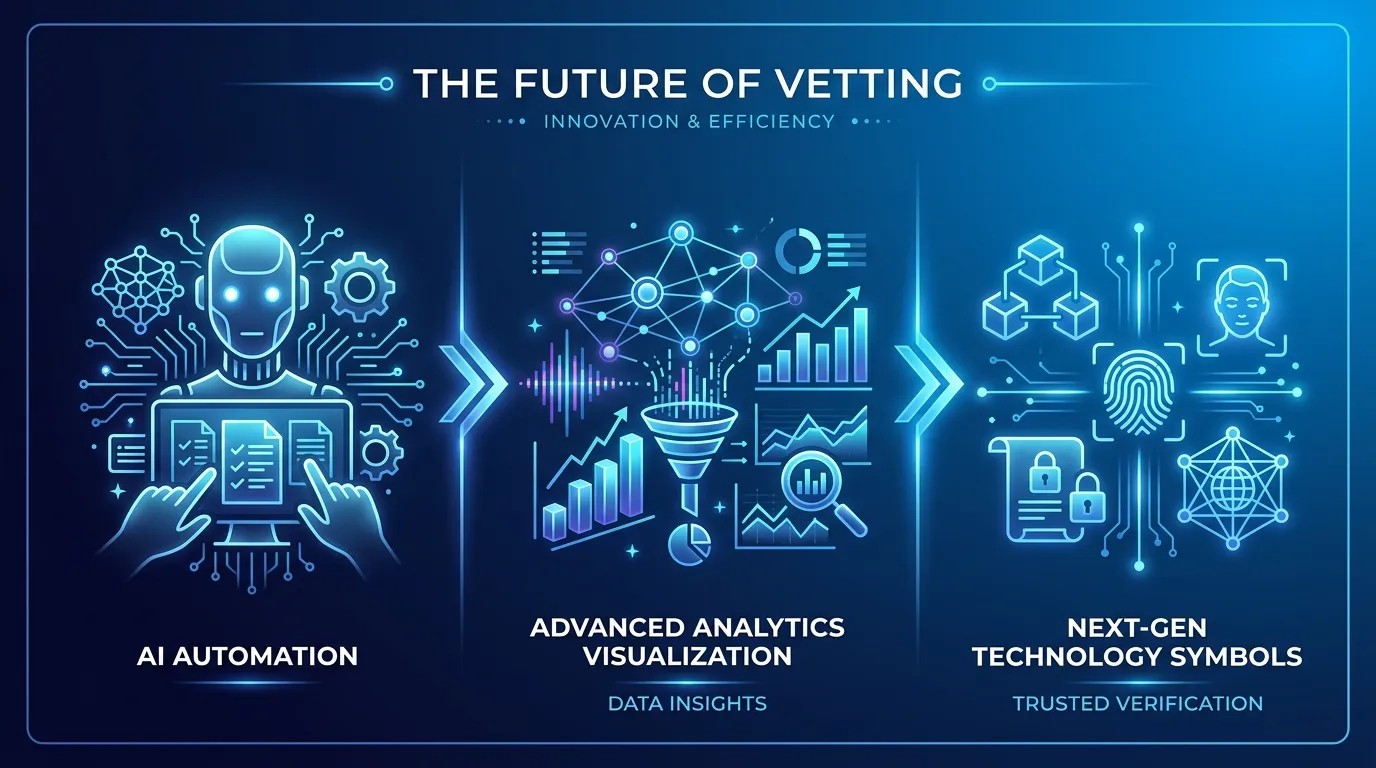

Influencer vetting is expected to become more advanced as influencer marketing continues to evolve and mature. As campaigns grow in scale and investment, the need for more precise, data-driven evaluation will only increase.
Greater Use of Artificial Intelligence and Advanced Analytics
Advancements in artificial intelligence and analytics will likely play a bigger role in influencer vetting. Modern platforms such as HypeAuditor and Upfluence are already integrating machine learning to detect suspicious patterns more efficiently.
These technologies can analyse large datasets in real time, identifying anomalies such as bot-driven engagement, irregular follower growth, or coordinated interaction patterns. As these systems improve, agencies will be able to detect fraudulent activity faster and more accurately.
Increased Platform-Level Transparency
Social media platforms themselves are also expected to introduce more built-in tools to support transparency in influencer marketing. For example, platforms like Instagram and TikTok have already introduced branded content labels and partnership disclosures.
Future developments may include more detailed audience insights, stricter verification systems, and improved reporting features. These changes could make influencer vetting more reliable by providing agencies with direct access to first-party data.
Rising Importance of Authenticity
Audience expectations are shifting, with users becoming more aware of influencer authenticity and sponsored content. As a result, brands are placing greater emphasis on working with creators who demonstrate genuine engagement and credibility.
This means influencer vetting will increasingly focus not just on quantitative metrics but also on qualitative factors such as content relevance, audience trust, and messaging consistency.
A Continued Blend of Technology and Human Judgment
Despite technological advancements, influencer vetting will not become fully automated. Human judgment will remain essential for interpreting context, assessing brand fit, and making strategic decisions.
Agencies that successfully combine advanced tools with experienced evaluation will be better positioned to identify high-quality influencers and build campaigns that deliver long-term value.
A Core Practice for Sustainable Influencer Marketing
As the industry grows more competitive, influencer vetting will remain a foundational practice for agencies aiming to deliver effective and trustworthy campaigns.
By continuously refining their vetting processes and adapting to new technologies, agencies can reduce risk, improve campaign performance, and build stronger, more credible partnerships between brands and creators.
Why Influencer Vetting Is Essential for Successful Campaigns

Influencer marketing can deliver strong results when brands partner with creators who have genuine audiences and credible influence. However, the presence of fake followers, automated engagement, and misleading metrics means brands cannot rely solely on surface-level numbers.
A structured influencer vetting process helps agencies evaluate audience authenticity, engagement quality, and brand alignment before committing marketing budgets.
When influencer vetting is done properly, campaigns are more likely to reach the right audience and generate meaningful engagement. Brands can also protect their reputation by avoiding partnerships with creators who rely on artificial growth tactics. This careful approach allows influencer campaigns to focus on long-term trust, audience relevance, and measurable performance.
Companies that want to run effective campaigns often benefit from working with agencies that specialise in creator analysis and campaign strategy. If your organisation is planning influencer partnerships and needs reliable influencer vetting in Singapore, consider speaking with the MediaOne team.
Contact MediaOne to discuss how a structured influencer vetting process can support more credible and results-focused influencer campaigns.
Frequently Asked Questions
How long does influencer vetting usually take?
The time required for influencer vetting depends on the size and complexity of the campaign. Smaller campaigns with a few creators may take a few hours, while large campaigns involving dozens of influencers may require several days of analysis. Agencies often review audience data, engagement metrics, and content history before approving collaborations. This process ensures that brands partner with credible creators who align with campaign objectives.
Can micro influencers still require influencer vetting?
Yes. Micro influencers often have smaller but highly engaged audiences, making them attractive partners for brands. However, influencer vetting is still necessary because smaller accounts can also purchase followers or participate in engagement pods. Reviewing engagement quality, audience demographics, and follower authenticity helps ensure the audience is genuine. Even niche creators benefit from the same vetting process used for larger influencers.
What data should brands request during influencer vetting?
Brands often request an influencer’s media kit, which usually includes audience demographics, engagement metrics, and past campaign examples. This information helps agencies evaluate whether the influencer’s audience aligns with campaign goals. Historical performance data from previous collaborations can also provide insight into expected campaign results. Reviewing this information strengthens influencer vetting decisions and improves campaign planning.
Can influencer vetting improve campaign ROI?
Yes. Influencer vetting helps brands avoid investing in creators whose audiences are inactive, irrelevant, or artificial. When campaigns involve authentic creators with engaged audiences, content is more likely to generate meaningful interactions and conversions.
This increases the likelihood that marketing spend leads to measurable results. Strong influencer vetting, therefore, contributes to more efficient influencer marketing strategies.
How often should brands repeat influencer vetting?
Influencer vetting should not be treated as a one-time process. Audience composition, engagement patterns, and influencer behaviour can change over time. Brands that run long-term partnerships often review influencer data periodically to ensure audience authenticity remains consistent.
Regular vetting helps agencies detect sudden changes such as unusual follower growth or declining engagement.