For F&B brands in Singapore, the battle is no longer just about taste, price, or location. It is also about discoverability. Consumers increasingly use social platforms to decide what to try next, and Singapore had 5.33 million social media user identities in October 2025, equivalent to 90.6% of the population.

That means a large share of your potential diners are already forming impressions, comparing options, and acting on recommendations before they ever walk past your storefront. This is where a food influencer marketing agency in Singapore can make a meaningful difference.
This is why F&B influencer marketing matters. It sits at the intersection of visibility, trust, and conversion. A well-matched creator can do more than generate buzz.
They can validate your brand in a crowded market, make your food more culturally relevant, and shorten the gap between awareness and action. In other words, influencer marketing helps F&B brands turn social attention into real commercial momentum.
Key Takeaways
- Influencer marketing is crucial for F&B brands and restaurants looking to expand their reach, engage with their target audience, and drive both online and offline sales in Singapore.
- By collaborating with the right influencers, F&B businesses can build brand awareness, enhance credibility, and increase customer engagement.
- Choosing the right influencer, measuring ROI, and overcoming challenges are essential for maximising the effectiveness of influencer campaigns.
What Is F&B Influencer Marketing?
F&B influencer marketing involves partnering with influencers who have established a strong following on social media platforms to promote food products, restaurants, and dining experiences.

These influencers use their platforms, primarily Instagram, TikTok, YouTube, and blogs, to engage their audience with authentic content that resonates with their followers.
In Singapore, a food-centric country where dining is an integral part of daily life, influencer marketing has emerged as a vital tool for both new and established F&B brands.
The power of visual storytelling on platforms like Instagram and TikTok helps make food more appetising and experiences more desirable.
Why F&B Brands and Restaurants Need Influencer Marketing
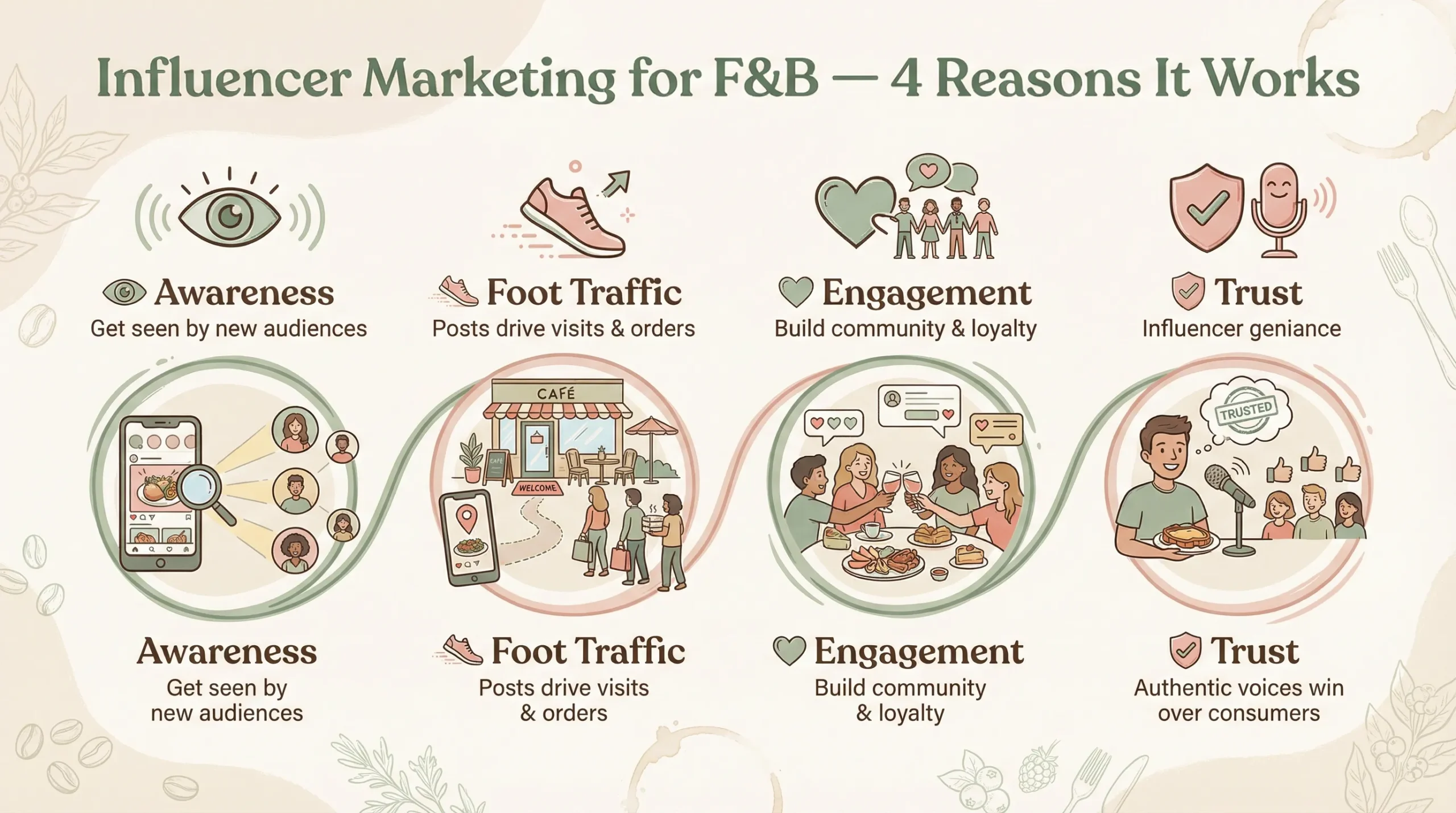
Influencer marketing offers immense potential for F&B brands and restaurants, especially in a competitive and crowded market like Singapore. Here are a few key reasons why it’s indispensable for your marketing strategy:
- Building Brand Awareness: Influencers can amplify your brand’s visibility by reaching new and larger audiences. When an influencer shares a post about your restaurant or product, it helps introduce your brand to followers who might not have encountered it otherwise.
- Driving Foot Traffic to Restaurants: Influencers encourage their followers to visit restaurants, whether for in-store dining or to take advantage of promotions. Authentic, engaging content from influencers often drives immediate action—whether that’s making a reservation or grabbing a takeaway order.
- Increasing Engagement: Influencers excel in creating interactive content that sparks engagement. Whether through contests, live events, or simply sharing their experiences, influencers can generate valuable user interactions, boosting brand visibility and customer loyalty.
- Boosting Credibility and Trust: Unlike traditional ads, influencer content feels more personal and authentic. Consumers are more likely to trust influencers they follow, making influencer marketing a powerful tool to build credibility and trust in your brand.
In a crowded F&B market, influencer marketing helps your brand get seen, stay memorable, and earn trust faster. From building awareness to driving real visits and engagement, it can turn attention into action for your restaurant or F&B business.
Types of Influencers and Choosing the Right Fit for Your F&B Brand
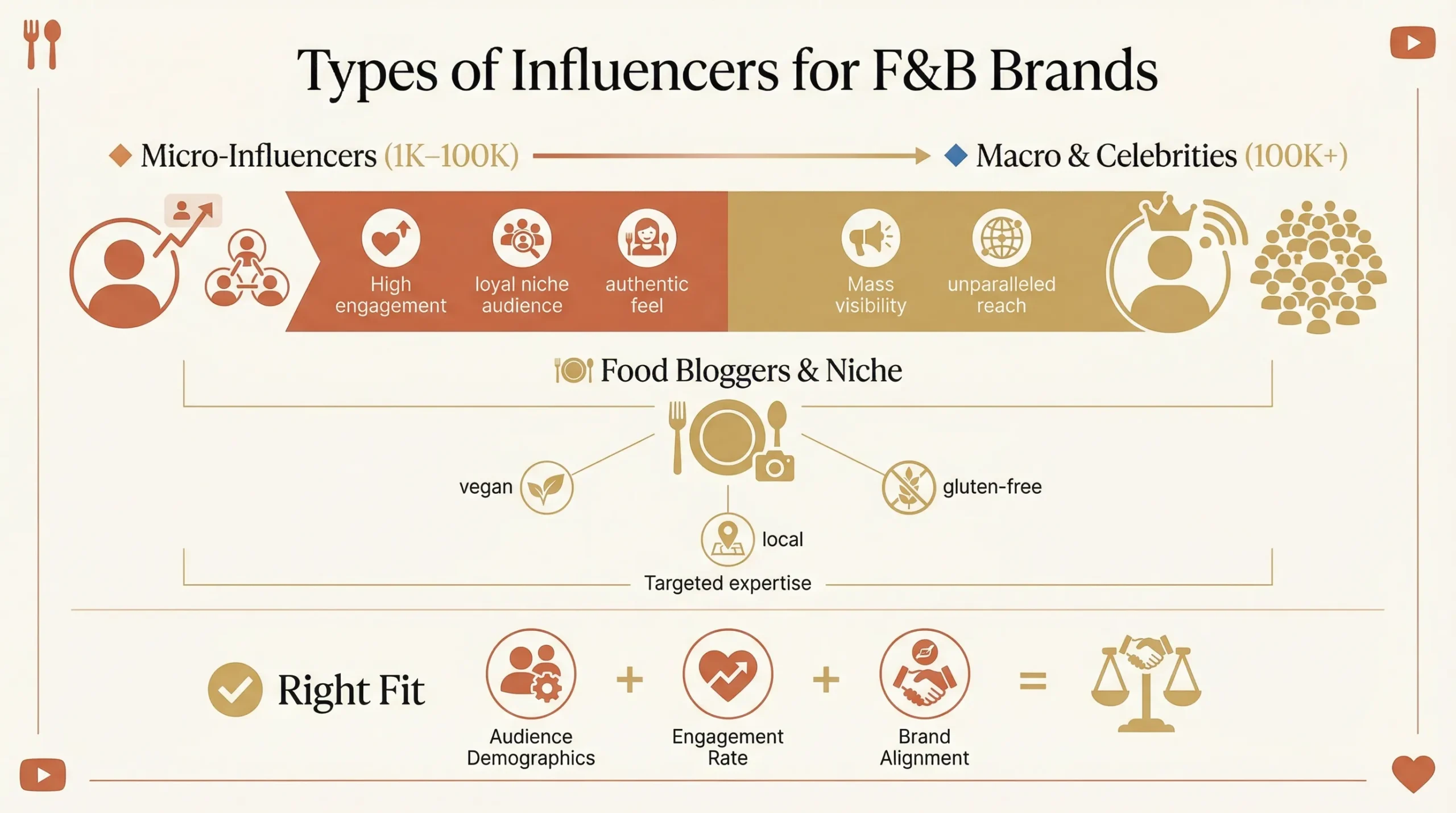
Selecting the right type of influencer is crucial to ensuring your marketing campaign aligns with your brand’s goals. Here’s a breakdown of the most common types of influencers in the F&B space:
1. Micro-Influencers (1,000–100,000 followers)
Micro-influencers are individuals with a relatively smaller but highly engaged following. They usually have between 1,000 and 100,000 followers and typically boast higher engagement rates (likes, comments, shares) than macro-influencers or celebrities.
Their audiences often see them as more relatable and trustworthy due to the close, personal connections they maintain with their followers. This makes them ideal for smaller or newer F&B brands looking to build a loyal customer base, or for those seeking more authentic, organic promotion.
Benefits for F&B Brands:
- Higher engagement rates: Micro-influencers often have more interaction with their followers, leading to better trust and conversion rates. Industry data shows that micro‑influencers (1,000‑100,000 followers) typically generate significantly higher engagement rates compared with larger influencers, averaging about 7.2% vs 2.4% on social media platforms.
- Affordable partnerships: Micro-influencers are generally more cost-effective than macro-influencers or celebrities, making them accessible for brands with smaller marketing budgets.
- Stronger niche connections: They can target specific communities with great precision, making them an ideal choice for specialised or niche F&B offerings (e.g., vegan restaurants, ethnic cuisines, organic food).
2. Macro-Influencers and Celebrities (100,000+ followers)
Macro-influencers and celebrities have large followings (over 100,000) and can provide your brand with massive visibility. These influencers are ideal for campaigns that aim for broad, mainstream exposure, such as restaurant launches, product launches, or major campaigns that require reaching a wide audience quickly.
Benefits for F&B Brands:
- Massive reach: The key advantage of macro-influencers and celebrities is their reach. A single post can expose your brand to hundreds of thousands, if not millions, of potential customers.
- Brand authority: Partnering with well-known figures can lend credibility to your brand, particularly for new restaurants or products entering a competitive market.
- Widely recognised personalities: Celebrities have established authority, and their endorsements can often serve as social proof, making followers more likely to trust the brand.
Challenges:
- Lower engagement rates: While they reach a wider audience, macro-influencers and celebrities tend to have lower engagement rates than micro-influencers. Their followers may be less likely to engage with content on a personal level.
- Higher costs: These influencers can be significantly more expensive, especially celebrities. However, the higher cost often corresponds to a much larger audience.
3. Food Bloggers and Niche Influencers
Food bloggers and niche influencers specialise in particular types of food, cuisines, or dining experiences. These influencers have built strong credibility and trust within their specific niches, whether it’s fine dining, plant-based eating, gluten-free diets, or local delicacies.
By partnering with niche influencers, F&B brands can reach highly engaged, specialised audiences with a genuine interest in specific food offerings.
Benefits for F&B Brands:
- Highly targeted content: Niche influencers can help you reach audiences who are specifically interested in your product offerings, such as vegan food lovers, gluten-free diners, or foodies interested in specific cultural cuisines (e.g., Japanese, Italian).
- Established trust: Niche influencers often have a more dedicated and loyal following. Their audience trusts them as experts in the field, which can drive higher brand loyalty and conversions.
- Positioning as an authority: By partnering with food bloggers or niche influencers, your brand can position itself as a thought leader or trusted source in a particular food space.
Choosing the right influencer is key to ensuring your F&B campaign aligns with your brand goals. Whether you opt for micro, macro, or niche influencers, ensure they resonate with your target audience and align with your brand values for maximum impact.
How to Use F&B Influencer Marketing for Your Brand
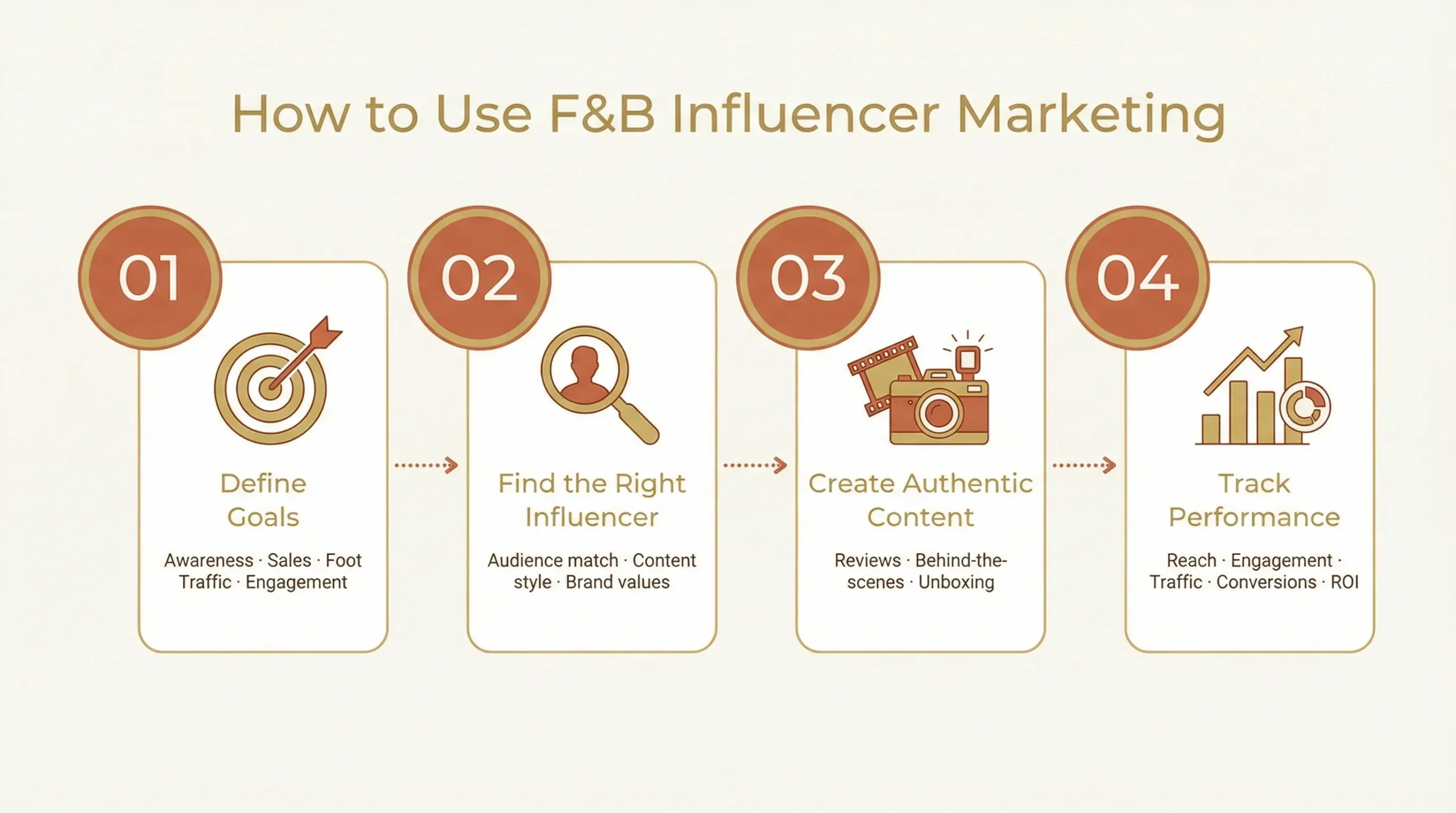
Define Your Campaign Goals
Before you jump into influencer collaborations, it’s crucial to establish clear and measurable goals. The success of your campaign will depend on your ability to define your objectives from the start. Here are common campaign goals for F&B brands:
- Increase Brand Awareness: Are you launching a new restaurant or menu item? Influencers can help introduce your brand to new audiences.
- Drive Sales: If you’re promoting a new product or seasonal menu, your goal might be to increase orders or foot traffic.
- Boost Social Media Engagement: If you want more likes, comments, or shares on your social media posts, influencers can help elevate your brand’s social media presence.
- Increase Foot Traffic to Your Restaurant: Are you focusing on local customers? Use influencers to encourage followers to visit your restaurant in person.
Pro Tip: Align your goals with KPIs (Key Performance Indicators) such as sales conversion, engagement rate, or traffic growth. For example, if increasing foot traffic is the goal, track how many people mention or tag your location through influencer content, and measure the visits using trackable promo codes or hashtags.
Identify the Right Influencers
Choosing the right influencers is critical. Here’s a more in-depth approach to selecting influencers who can drive real results:
- Audience Fit: Understand the demographics (age, location, interests) of the influencer’s followers. Ensure your audience matches your target customers, whether you’re targeting foodies, health-conscious eaters, or luxury diners.
- Influencer’s Niche: F&B brands often succeed by working with niche influencers. For example, if you run a health-conscious café, a nutrition-focused influencer will resonate better than a celebrity influencer who promotes a wide variety of topics.
- Content Quality: Look at the type of content they produce. Is it visually appealing, authentic, and consistent with your brand’s image? Consider the aesthetics of their Instagram feed or YouTube channel. If their content aligns with your restaurant’s vibe (e.g., cosy and rustic or modern and sleek), it will feel more natural for their audience.
- Engagement vs. Follower Count: While large followings can offer broad exposure, engagement is more important. Look at the likes, comments, and shares on their posts. A smaller influencer with a highly engaged audience can deliver better ROI than a larger influencer with fewer active followers.
Pro Tip: Tools like BuzzSumo and HypeAuditor can help you track and analyse influencer performance, audience demographics, and engagement metrics to ensure a good fit.
Create Engaging and Authentic Content
Once you’ve chosen your influencers, it’s time to collaborate on content. The key to a successful influencer campaign lies in creating engaging, authentic content that resonates with their audience. Here’s how to do it:
- Highlight Unique Offerings: Work with influencers to focus on your restaurant’s unique selling points, whether it’s a secret ingredient, a signature dish, or the ambience of your restaurant. Influencers are most effective when showcasing experiences that feel exclusive or personal.
- Behind-the-Scenes Content: Audiences love exclusive, “behind-the-scenes” content. This could include a tour of your kitchen, a look at a chef’s cooking process, or how your restaurant sources ingredients. It humanises your brand and builds a connection with your audience.
- Food Reviews and Challenges: Encourage influencers to engage their audience by reviewing your menu or participating in a fun challenge (e.g., “5 minutes to finish this bowl of noodles” or “Try the hottest dish on our menu”). Gamifying the experience can make the content more entertaining.
- Use Visual Storytelling: The power of food marketing lies in its ability to make food look irresistible. Influencers should take high-quality, well-lit images or videos that show their food at its best. TikTok and Instagram Reels are ideal platforms for quick, engaging video content.
Pro Tip: Give influencers creative freedom to integrate your product into their lifestyle. Authentic, relatable content performs better than overly scripted ads.
Track Campaign Performance
The final step in maximising your F&B influencer campaign is to track and measure performance. Use the right tools to analyse your campaign’s effectiveness and assess whether it’s achieving your goals. Key metrics to monitor include:
- Reach and Impressions: These metrics show how many people saw your influencer’s content. It’s a good indicator of brand awareness.
- Engagement Rate: This includes likes, comments, shares, and interactions with the influencer’s post. A higher engagement rate shows that your content resonates with your followers.
- Website Traffic: Use UTM parameters to track how much traffic is coming to your website from the influencer’s posts. This can help you understand if the campaign is generating interest in your restaurant or product.
- Sales Conversions: Use promo codes or affiliate links to track whether influencer content drives actual sales. Tools like Google Analytics or Salesforce can help you track conversions from specific influencer campaigns.
- Customer Sentiment: Monitor social media and online reviews to gauge how the campaign impacts your brand’s reputation. Tools like Brandwatch or Digimetrics.ai can help track sentiment over time.
Pro Tip: Don’t just rely on engagement rates. Look at the quality of engagement. Are followers leaving meaningful comments, or are they simply liking the post? Quality engagement (comments, shares) is a stronger signal of consumer intent.
Additional Checklist for Success
To make sure your F&B influencer marketing campaign succeeds, here are some additional best practices:
- Be clear about deliverables, deadlines, and compensation, but also give influencers creative freedom to ensure the content feels authentic.
- Don’t just sit back and let the influencers do all the work. Engage with the comments, share user-generated content, and build a community around your brand.
- Share influencer-generated photos or videos on your website, social media, or email marketing campaigns to extend the campaign’s reach.
By defining clear campaign goals, selecting the right influencers, creating engaging content, and measuring ROI, you can create campaigns that generate lasting results.
How To Find the Right Food Influencer Marketing Agency in Singapore
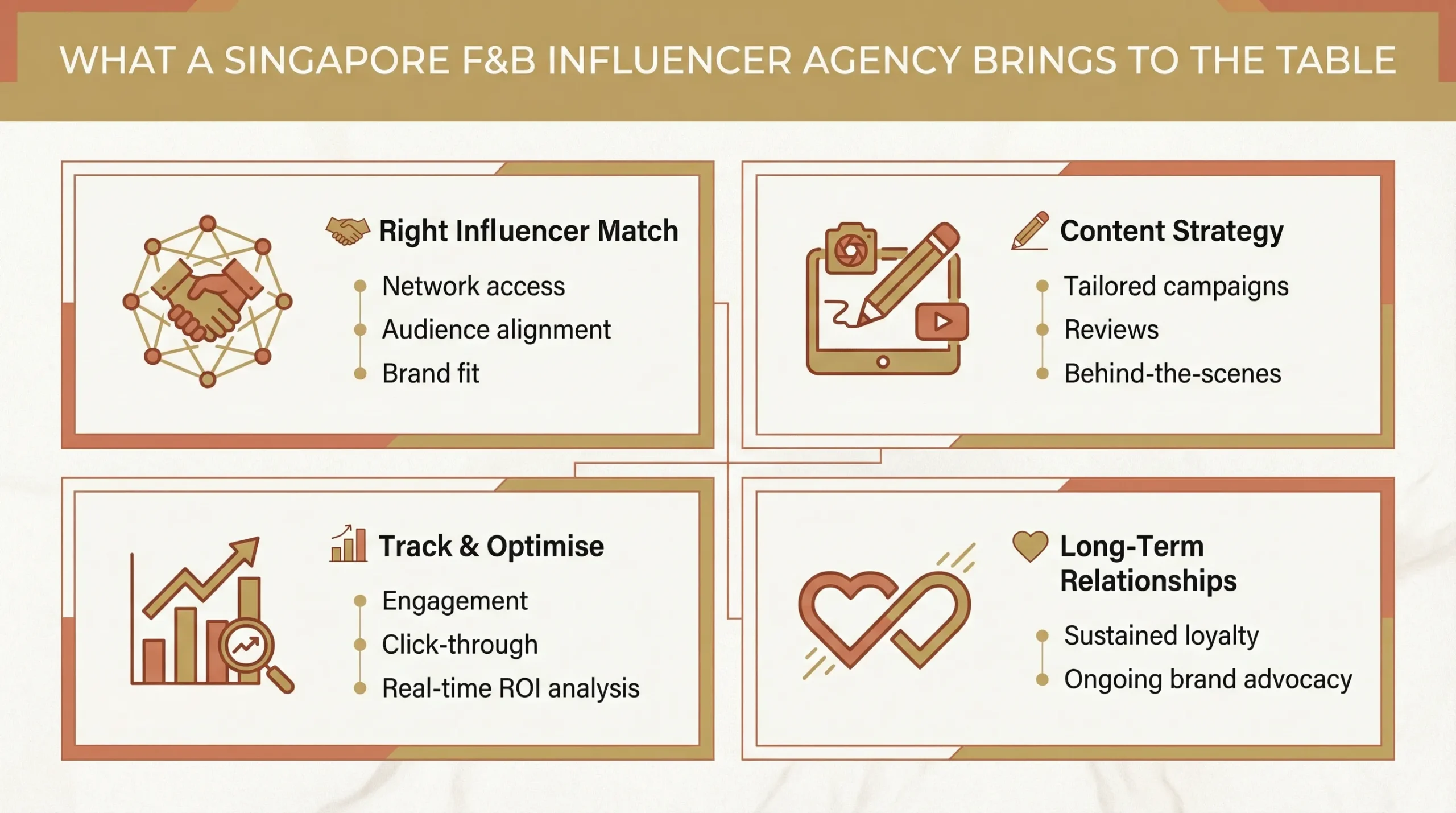
Partnering with an influencer marketing agency in Singapore can simplify your influencer marketing efforts. Agencies bring expertise, relationships, and tools to the table, ensuring your campaigns are well-executed and deliver measurable results.
A reliable agency can provide a range of services that can help elevate your F&B brand, including:
- Identifying and Partnering with the Right Influencers: The agency will have access to a network of influencers across various niches, ensuring you are paired with individuals whose audiences align with your brand’s values and target demographics. This helps you find the perfect influencers who resonate with your ideal customer.
- Creating Content Strategies that Align with Your Brand’s Goals: An experienced agency will craft tailored content strategies to engage your target audience. From product reviews to behind-the-scenes content, they can ensure it fits seamlessly with both the influencer’s style and your brand’s messaging.
- Tracking and Analysing Campaign Results to Optimise Performance: Agencies not only track the immediate performance of your campaign (e.g., engagement rates and click-through rates) but also provide in-depth analytics to measure ROI. They use this data to optimise campaigns in real time, ensuring your investment delivers maximum impact.
- Building Long-Term Relationships with Influencers: A good agency will focus on building long-lasting partnerships between your brand and influencers, fostering sustained brand loyalty. Instead of one-off campaigns, they help nurture ongoing relationships that create more authentic, long-term advocacy for your F&B brand.
By working with a food influencer marketing agency in Singapore, you ensure a more professional and strategic approach to influencer collaborations, setting your F&B brand up for success in a competitive market.
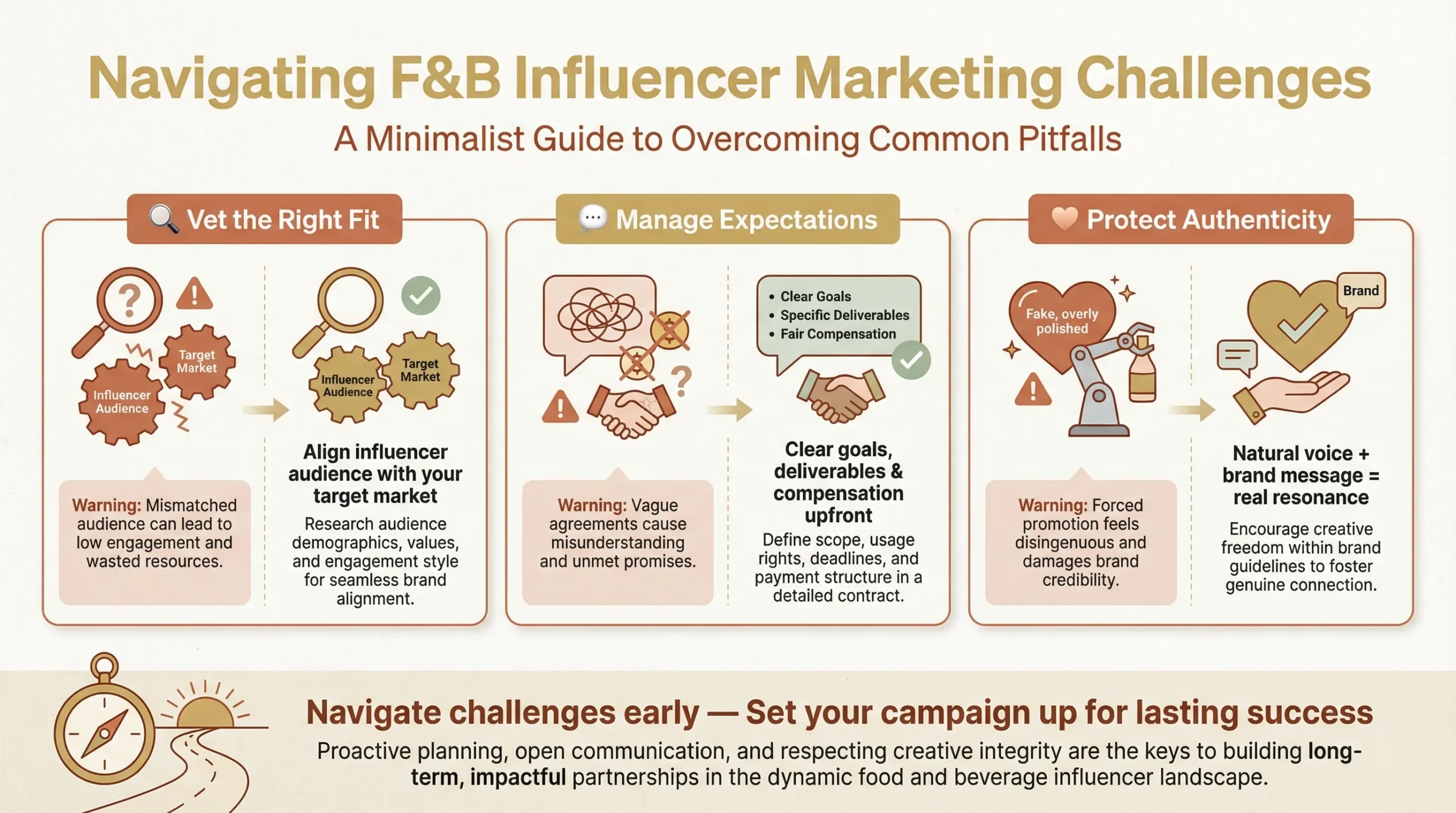
Influencer marketing is not without its challenges. Here are some common obstacles and how to address them:
1. Audience Compatibility
Ensure that the influencer’s followers align with your target market in terms of demographics, interests, and behaviours. For example, if your restaurant focuses on sustainable dining, partner with influencers who advocate for sustainability.
Look beyond the number of followers and focus on engagement rates (comments, shares, interaction with followers). A smaller influencer with a highly engaged audience can provide more meaningful results than a larger influencer with low engagement.
Evaluate the influencer’s content to ensure their style and tone match your brand’s voice. For example, if your restaurant offers upscale fine dining, you’ll want to partner with influencers who produce high-quality, elegant content that resonates with an upscale audience.
2. Manage Your Expectations
Misaligned expectations between the brand and influencers can cause confusion and affect the campaign’s performance. Ensure both you and the influencer are on the same page about campaign goals. Whether it’s raising brand awareness, driving traffic, or increasing reservations, defining these objectives clearly will guide the campaign’s execution.
Establish specific deliverables for the number of posts, content type (video, story, review), and platforms (Instagram, TikTok, YouTube). For example, if you expect a detailed food review, be explicit about what the influencer should highlight.
Discuss compensation, whether financial, in-kind, or performance-based, before the campaign starts. Be transparent about how the influencer will be compensated, whether through payment, free meals, or exclusive experiences.
Pro Tip: Draft a formal contract outlining the scope of work, including deadlines, content expectations, and compensation terms. This reduces the likelihood of misunderstandings and ensures that both parties are clear on their roles.
3. Allow Creative Freedom
Rather than scripting the content in detail, give influencers creative control to present your brand in their own style. Authentic content feels more natural and is often more engaging. For example, influencers can casually share their experiences with your restaurant without feeling like they’re reading from a script.
Encourage influencers to focus on their personal experiences with your food or restaurant. If they genuinely enjoy the food, their enthusiasm will be evident, and the content will feel more genuine.
Encourage influencers to ask their followers to share their experiences with your brand, creating a cycle of authentic content. When users post about their visits or meals, it amplifies your brand’s authenticity and trustworthiness.
Pro Tip: Track how your audience reacts to influencer content—pay attention to the comments and engagement. If the content feels overly promotional, influencers may lose their followers’ trust. Address this by collaborating with influencers who share your brand’s values.
As powerful as influencer marketing can be, it does come with its challenges. To ensure your campaign’s success, it’s important to navigate potential obstacles effectively. In this section, we’ll explore common hurdles F&B brands face and offer practical solutions to overcome them.
Case Studies: Successful F&B Influencer Marketing Campaigns
Here are detailed real-world examples of F&B brands using influencer marketing effectively. These case studies highlight different strategies and how they led to measurable business success.
Shake Shack’s Multi-Platform Influencer Strategy
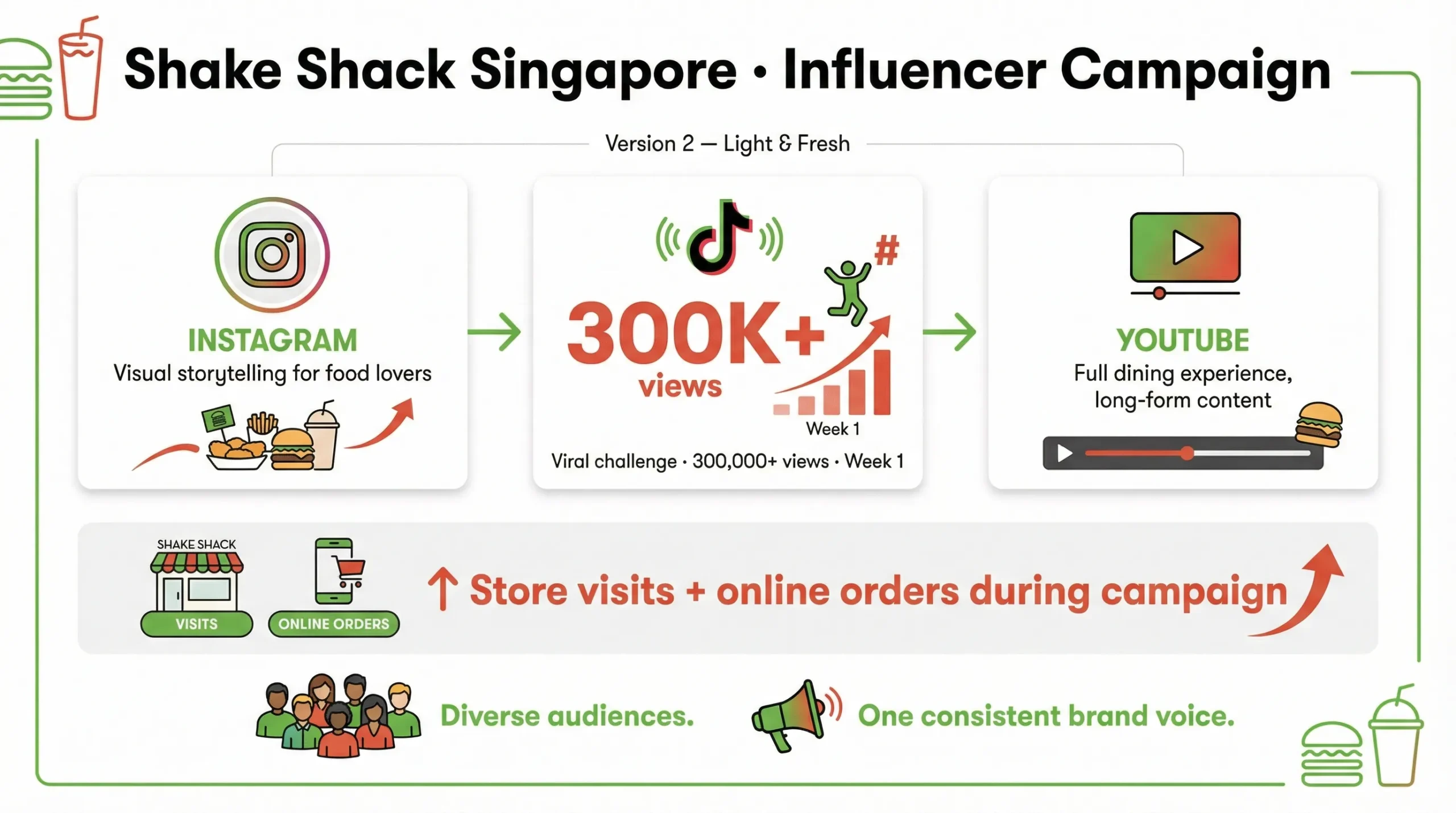
Shake Shack, the globally loved American burger chain, launched their Singapore store with a multi-platform influencer campaign. The brand collaborated with influencers across Instagram, TikTok, and YouTube to create a cohesive campaign that showcased Shake Shack’s menu in various formats.
Strategy:
- Instagram: Influencers posted stunning visuals of their meals, leveraging Instagram’s visual-centric nature to appeal to food lovers.
- TikTok: For a younger, trendier audience, Shake Shack created viral TikTok challenges where influencers and their followers participated in a “Shake Shack Challenge,” featuring fun food-related dares.
- YouTube: Long-form content featured influencers experiencing the entire Shake Shack dining experience, from ordering to tasting the food.
Results:
- Increase in foot traffic: A noticeable increase in both online orders and store visits during the campaign.
- Brand visibility: Shake Shack gained exposure across multiple platforms, reaching diverse audience segments.
- Engagement: High levels of interaction with the TikTok challenge, which saw over 300,000 views in the first week of the campaign.
Takeaway: Shake Shack’s multi-channel strategy enabled it to cater to different segments of its audience while maintaining brand consistency. This campaign highlights the importance of using various platforms to create a well-rounded influencer marketing strategy.
Tiong Bahru Bakery’s TikTok Success
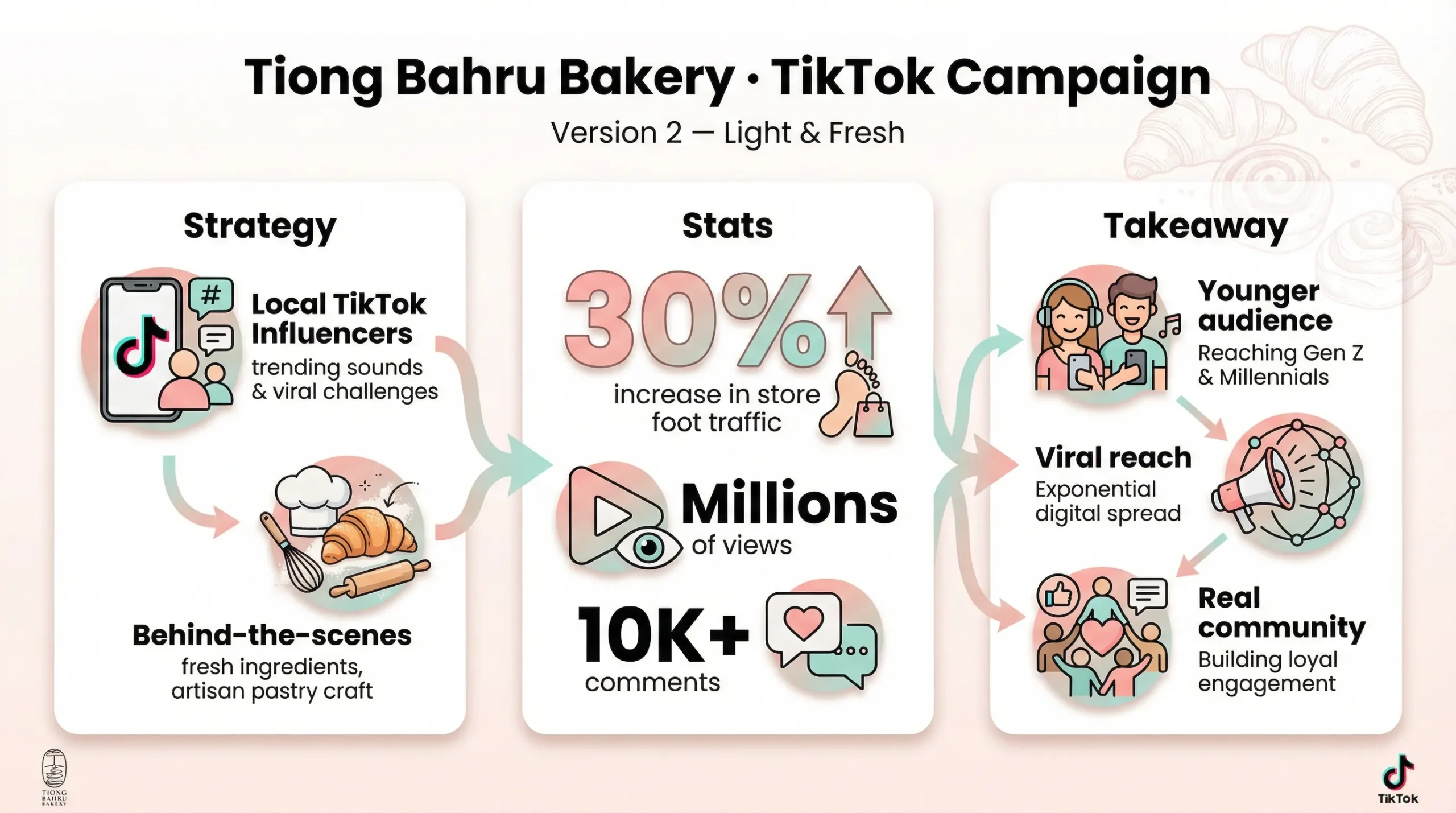
Tiong Bahru Bakery, a popular bakery chain in Singapore, utilised TikTok to create viral food content that would appeal to the younger, tech-savvy demographic. By partnering with food influencers, they leveraged TikTok’s short-video format to boost brand awareness and create viral content.
Strategy:
- The bakery collaborated with local TikTok influencers who filmed themselves creating content around Tiong Bahru Bakery’s pastries, often using trending TikTok sounds or challenges.
- Influencers were encouraged to share behind-the-scenes content about the bakery’s daily operations, highlighting fresh ingredients and the care put into their pastries.
Results:
- Increase in store visits: 30% increase in foot traffic during the campaign, driven primarily by TikTok users who wanted to try the bakery’s viral pastries.
- Viral content: The TikTok campaign went viral, amassing millions of views.
- Brand engagement: The bakery’s TikTok videos garnered over 10,000 comments and sparked conversations among users, driving strong community engagement.
Takeaway: TikTok is a powerful platform for F&B brands looking to capture the attention of younger audiences. TikTok’s viral nature makes it a powerful tool for quickly spreading brand awareness.
The Soup Spoon’s Micro-Influencer Campaign
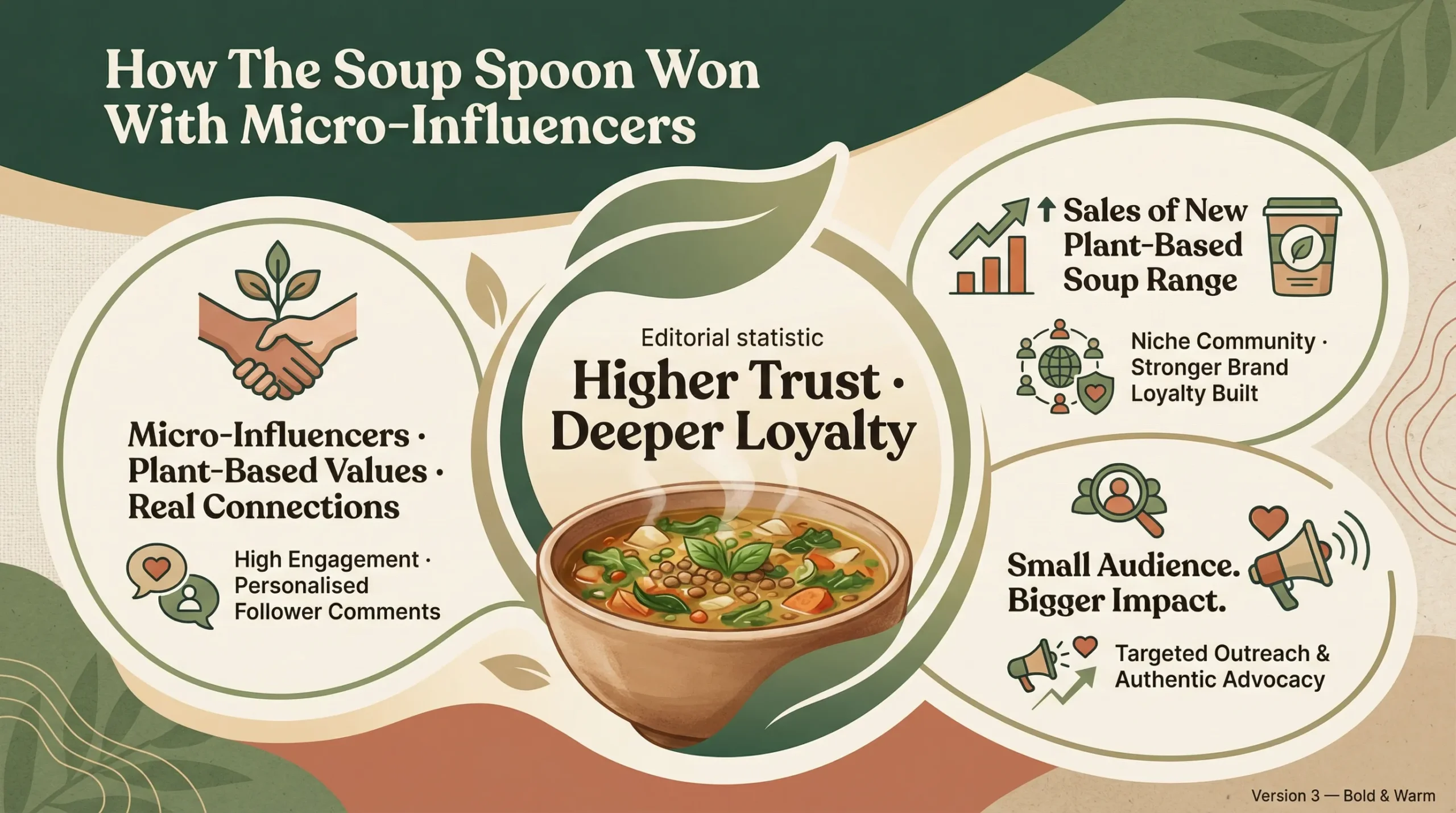
The Soup Spoon, a Singapore-based restaurant chain, used micro-influencers to promote their new range of plant-based soups. By partnering with influencers with smaller, yet highly engaged, audiences, they were able to create a more personal connection with potential customers.
Strategy:
- The brand targeted micro-influencers passionate about plant-based eating, aligning with influencers who had a genuine interest in the products.
- Influencers were asked to share their experience of trying the soups and how the plant-based options fit into a healthy lifestyle. The content was personal and resonated well with their followers.
Results:
- Increase in plant-based product sales: A noticeable increase in sales of their new plant-based soups.
- Audience engagement: High engagement rates with micro-influencers, who received personalised comments from followers interested in plant-based diets.
- Brand loyalty: By connecting with a niche audience, The Soup Spoon fostered deeper loyalty and sustained conversations about plant-based eating.
Takeaway: Micro-influencers are ideal for niche products. Their smaller, more engaged audiences can result in higher levels of trust and stronger brand connections.
Master Influencer Marketing for Your F&B Brand
For F&B brands and restaurants in Singapore, influencer marketing works best when it is treated as a business growth channel rather than a one-off promotional tactic.
The real value is not just exposure, but the ability to influence consideration and purchase behaviour through credible voices that audiences already pay attention to.
That makes the next step clear. If you want to build campaigns that do more than collect likes, focus on strategy, creator fit, and measurable outcomes.
And if you want expert support in planning and executing those campaigns, speak to MediaOne and explore how our team can help your F&B brand turn influencer marketing into consistent, scalable growth. Contact us today!
Frequently Asked Questions
How much should F&B brands budget for influencer marketing in Singapore?
Budgets vary depending on the influencer’s reach, platform, and campaign scope. Micro-influencers may charge a few hundred dollars or accept product exchanges, while larger influencers can command higher fees. It’s best to align your budget with your campaign goals and expected ROI.
How long should an F&B influencer marketing campaign run?
Campaign duration depends on your objectives. Short-term campaigns can generate quick buzz for launches, while long-term collaborations help build sustained brand awareness and loyalty.
Which platforms work best for F&B influencer marketing in Singapore?
Instagram and TikTok are the most effective due to their visual nature, making them ideal for showcasing food. Google reviews, YouTube, and even Lemon8 are also gaining traction for food discovery and recommendations.
Do F&B brands need contracts when working with influencers?
Yes, a clear agreement helps outline deliverables, timelines, content-use rights, and payment terms. This protects both parties and ensures expectations are aligned.
Can small restaurants benefit from F&B influencer marketing?
Absolutely. Smaller F&B businesses can leverage micro-influencers to reach local audiences cost-effectively, often achieving higher engagement and more authentic connections with potential customers.