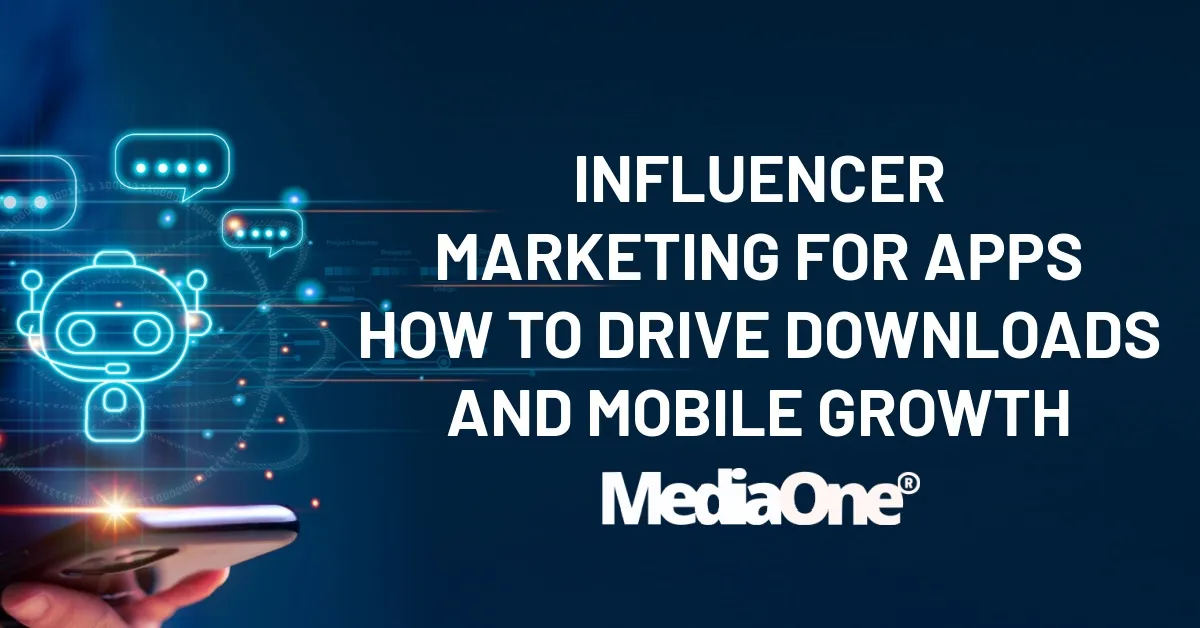
Getting an app noticed is difficult. Getting the right users to download it, use it, and keep coming back is even harder. App brands are competing in crowded categories, facing rising acquisition costs, and fighting for attention across multiple platforms simultaneously.
That is why many mobile marketers are no longer relying solely on paid user acquisition. This is where influencer marketing for apps becomes especially valuable.
Instead of pushing an app through standard ad creatives, brands can work with creators who know how to make the product feel useful, relatable, and worth downloading. When done properly, influencer campaigns can support awareness and long-term mobile growth.
For brands looking to turn creator collaborations into a measurable growth channel, working with an influencer marketing agency in Singapore app campaigns can help connect creator selection, campaign strategy, and performance tracking in a much more structured way.
Key Takeaways
- Influencer marketing for apps works best when creator fit, app value, and conversion tracking are aligned.
- The goal is not just more installs, but better-quality users who activate and return.
- Creator content helps explain the app clearly, reducing friction and improving install intent.
- App store readiness and onboarding matter just as much as the influencer content itself.
- Micro influencers can outperform larger creators when audience relevance and trust are stronger.
- The best campaigns combine creator content, trackable links, and performance optimisation over time.
What Is Influencer Marketing for Apps?
Influencer marketing for apps is the use of creators, influencers, or digital personalities to promote a mobile app in ways that encourage users to download it and take meaningful action afterwards.
Depending on the app, that action may be an install, sign-up, first purchase, subscription, feature usage, or repeat engagement.
This makes app influencer marketing different from many other creator campaigns. A fashion or lifestyle campaign may focus mainly on brand exposure, but app campaigns typically require clearer performance metrics. It is not enough for the content to look good or get engagement. The app still needs to be downloaded, understood, and used.
That is why creator content works best when it demonstrates a clear use case. People are more likely to install an app when they can immediately see what it does, why it is useful, and how it fits into real life.
Why Influencer Marketing Works for App Downloads
Influencer marketing drives app downloads because it combines trust, demonstration, and relevance into a single format. Instead of relying solely on direct advertising, app brands can use creators to show how the app works, why it is useful, and how it fits into real life. This makes the app easier to understand and reduces hesitation before download.
It also creates stronger social proof. When people see a trusted creator using an app naturally, the recommendation feels more credible and less like a sales message. For apps targeting niche audiences, this is even more effective because creators often speak directly to communities that are already likely to be interested.
Most importantly, influencer marketing does not just generate visibility. It can also drive stronger intent. A well-matched creator, a clear use case, and a direct call to action can turn awareness into installs more effectively, attracting users who are more likely to engage after downloading.
How to Launch an Influencer Marketing Campaign for an App
A successful app campaign needs more than sending a brief to a few creators and hoping installs follow. The strongest campaigns are planned around a clear objective, a relevant creator mix, a strong message, and a launch process that supports real user action.
To make the rollout easier to follow, use this framework:
Goal
→ Core conversion event
→ Audience
→ Creators
→ Message angle
→ Deliverables and timeline
→ Briefing
→ Content review
→ Launch rollout
→ Performance review
→ Optimisation
Step 1: Define the campaign objective
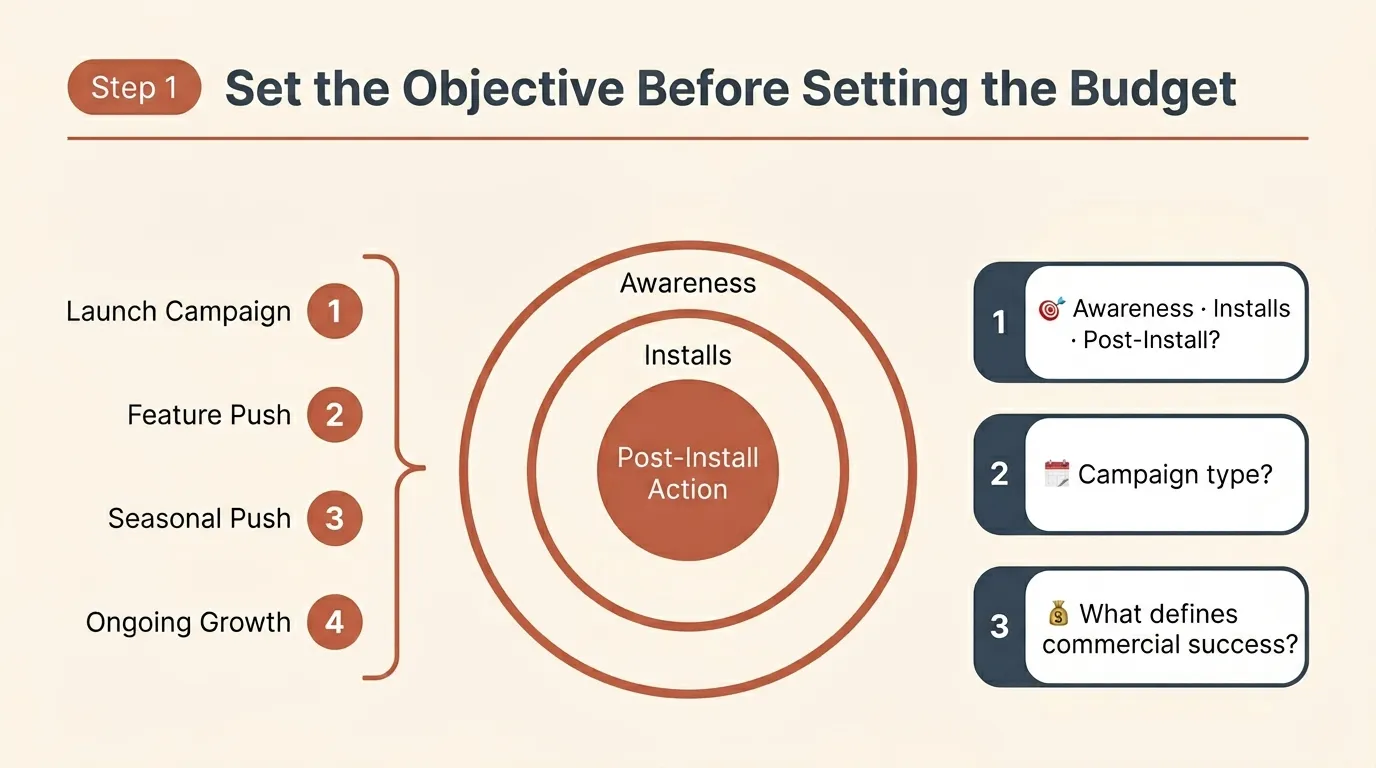
Start by deciding what the campaign is actually meant to achieve. Some app brands want installs at scale, while others care more about registrations, subscriptions, bookings, purchases, or usage of a specific feature. A vague objective makes the campaign harder to plan and even harder to evaluate properly.
What to confirm before anything else:
- Is the campaign focused on awareness, installs, or post-install action?
- Is this a launch campaign, a feature push, a seasonal push, or an ongoing growth campaign?
- What would make this campaign commercially successful?
Step 2: Choose one core conversion event
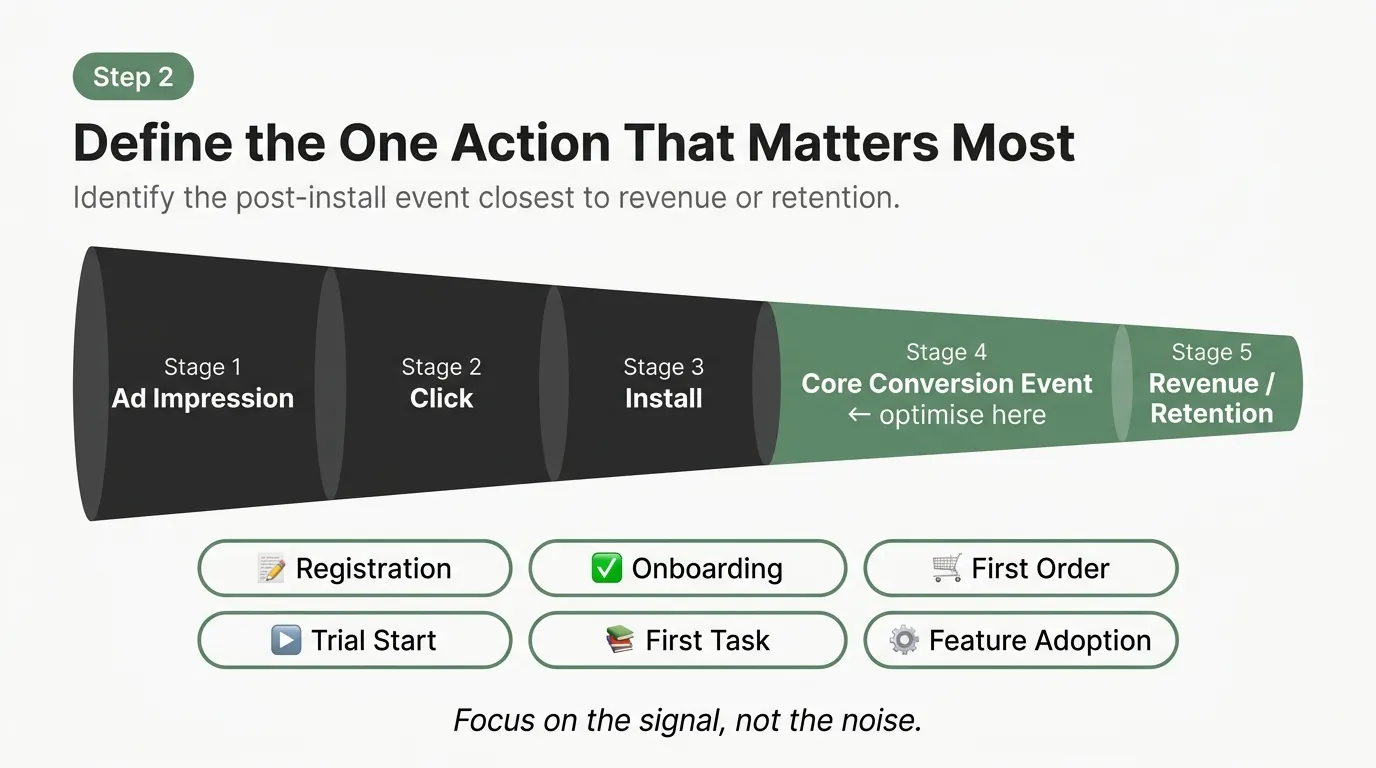
Not every install has the same value. To keep the campaign commercially useful, identify the main action you want users to take after download. This prevents the campaign from being judged only by install volume.
Examples of core conversion events:
- account registration
- onboarding completion
- first order or booking
- subscription trial start
- first lesson or task created
- feature adoption
Step 3: Define the audience in practical terms
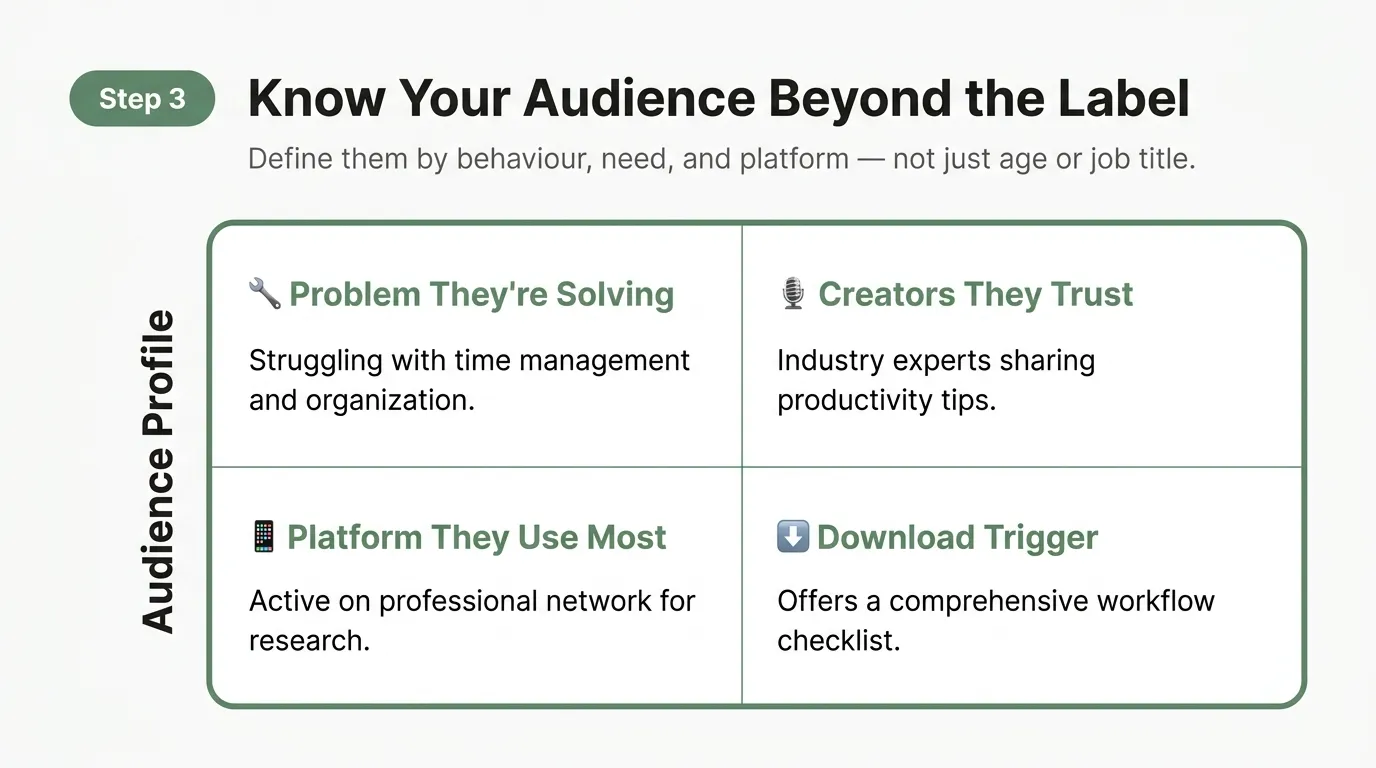
Do not stop at broad labels like ‘young adults’ or ‘professionals’. Define the audience to help you choose the right creators and content angle. Think about what they care about, what kind of content they watch, and what problem your app solves for them.
Questions to clarify:
- What problem is the user trying to solve?
- What kind of creators do they already trust?
- Which platform do they spend the most time on?
- What would make them download this app now?
Step 4: Shortlist creators based on fit
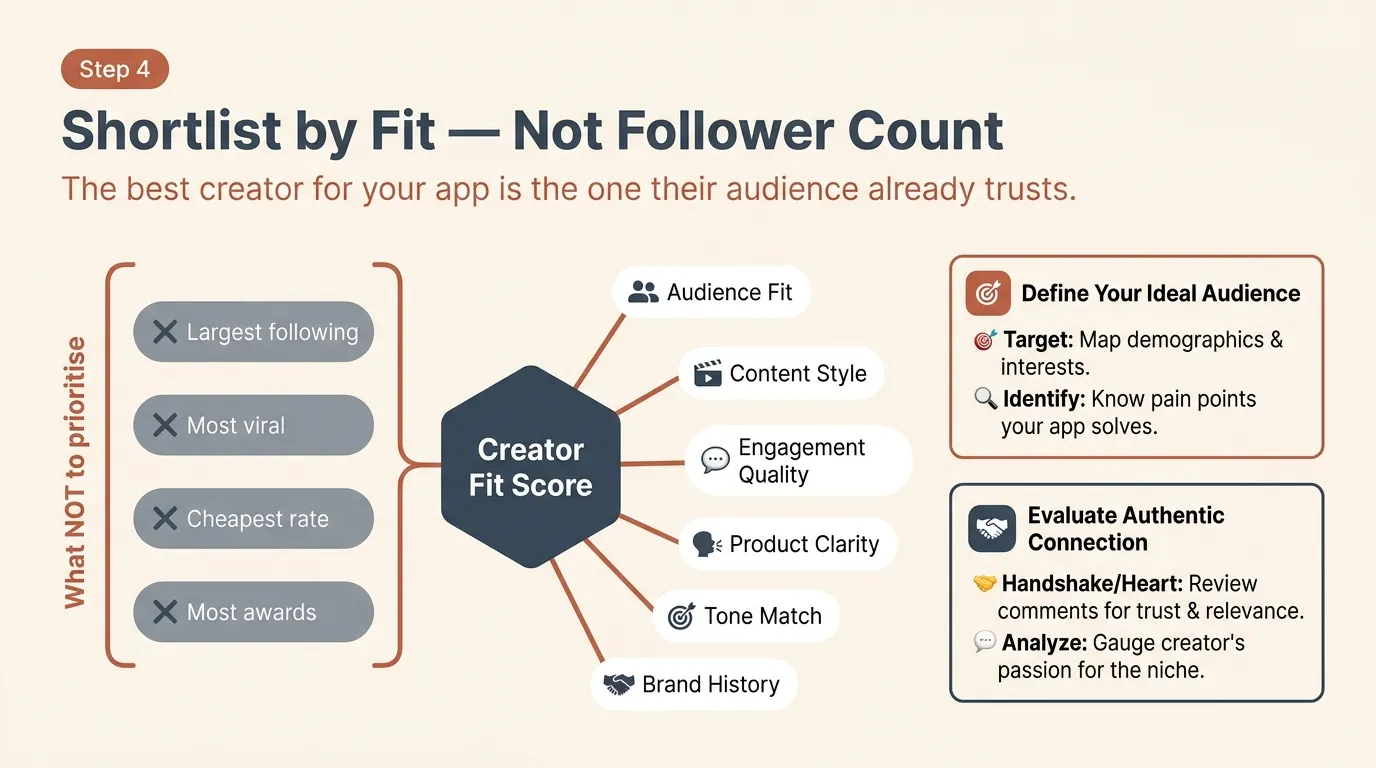
Choose creators based on audience relevance and content suitability, not just size. App campaigns often perform better when the creator can explain the product naturally and make the call to action feel credible.
What to review when shortlisting creators:
- audience fit
- content style
- engagement quality
- ability to explain products clearly
- tone of voice
- past brand collaboration quality
Step 5: Build one clear campaign angle
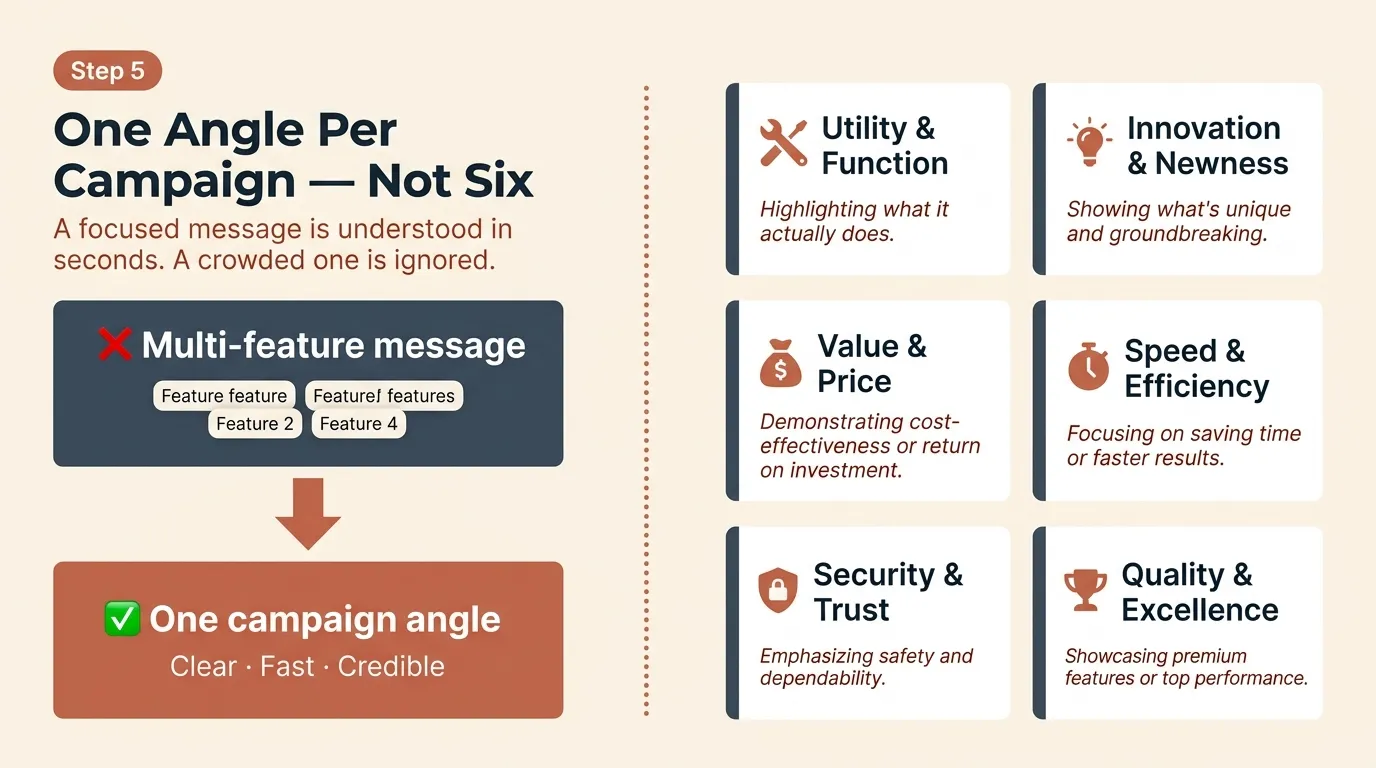
A common mistake is trying to communicate too many features at once. The campaign should focus on one strong reason to download the app. That reason should be easy to understand within seconds.
Possible campaign angles:
- problem-solution
- first-time demo
- habit or routine integration
- feature-specific walkthrough
- challenge-based content
- comparison with old behaviour
Step 6: Set deliverables and campaign timeline
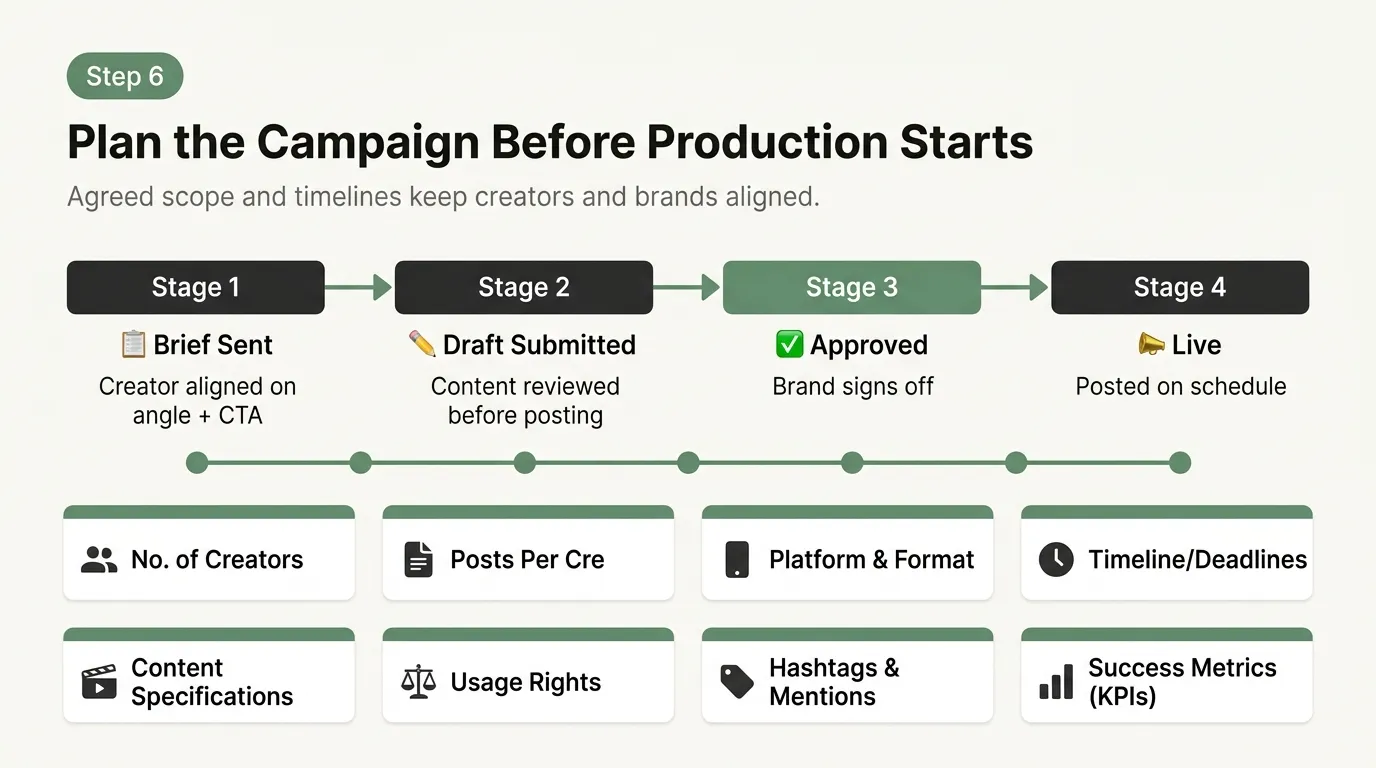
Before production begins, define what the campaign includes and how it will run. This gives both the brand and the creators a clear structure to follow.
Campaign planning should cover:
- number of creators
- number of posts per creator
- content formats
- draft deadlines
- approval timelines
- posting schedule
- usage rights if applicable
- whether paid amplification is included
Step 7: Prepare a clear creator brief
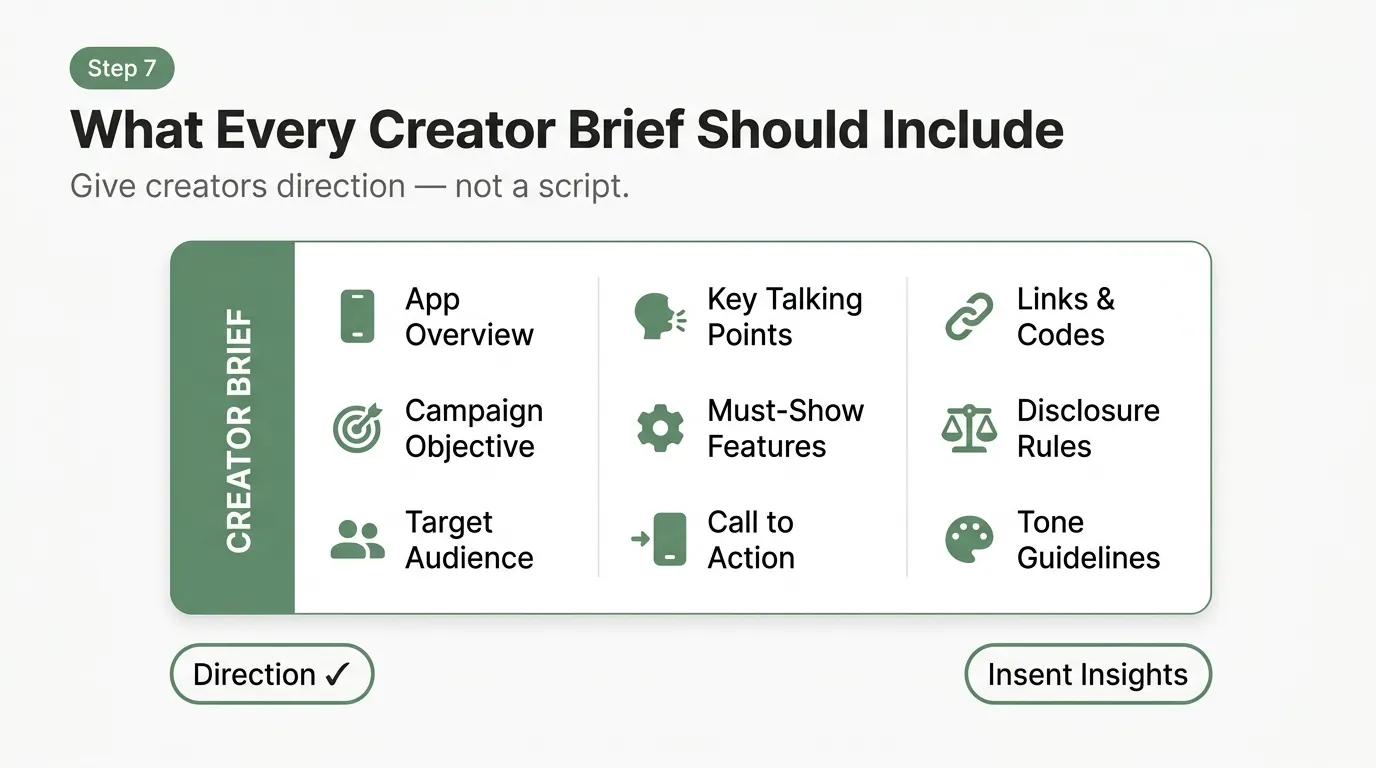
A strong brief protects the message without making the content feel scripted. It should help creators understand the campaign’s purpose, the app’s value, and the action the audience should take.
Your creator brief should include:
- app overview
- campaign objective
- target audience
- key talking points
- must-show features
- call to action
- required links or codes
- compliance or disclosure requirements
- visual or tone guidelines if needed
Step 8: Review content before launch
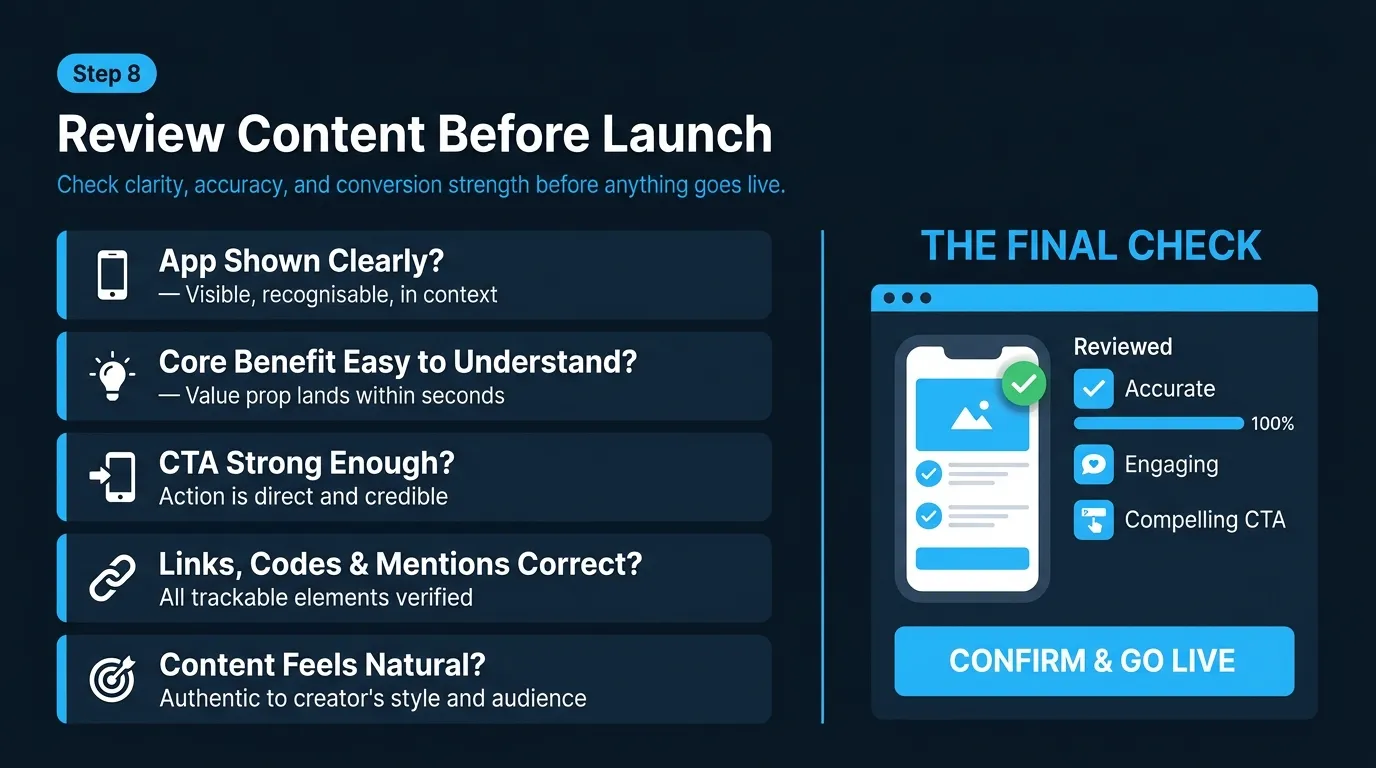
Before any content goes live, review it for clarity, accuracy, and conversion strength. App campaigns can lose momentum quickly if the content is confusing or if the value proposition is not obvious enough.
Check for the following:
- Is the app shown clearly?
- Is the core benefit easy to understand?
- Is the call to action strong enough?
- Are links, codes, and app mentions correct?
- Does the content feel natural for the creator’s audience?
What to Prepare Before Sending Influencer Traffic to Your App
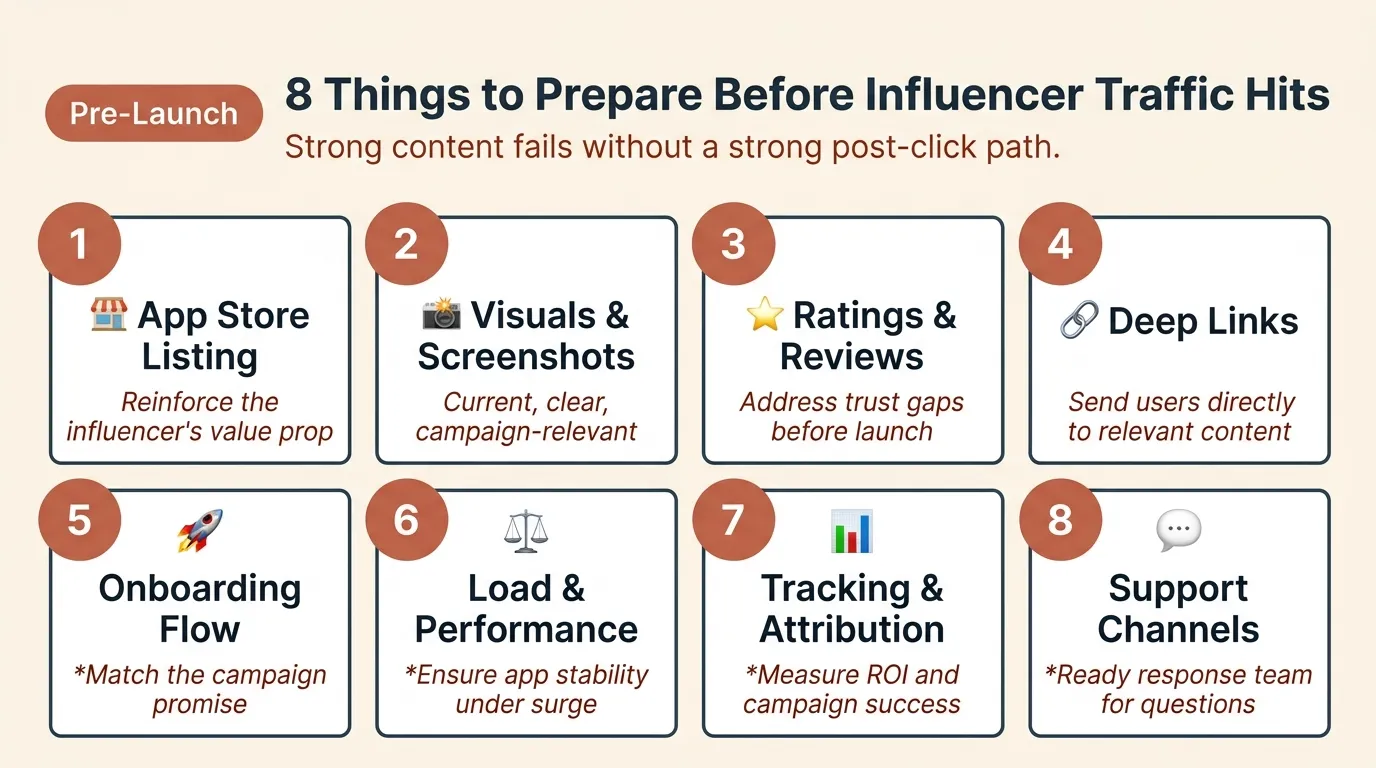
Driving creator traffic to your app is only half the job. If the post-click experience is weak, even strong influencer content may struggle to convert. Before a campaign goes live, app brands should make sure the path from interest to install is as clear and frictionless as possible.
- A Strong App Store Listing: Your App Store or Google Play page should reflect the same value proposition used in the influencer content. If a creator highlights convenience, savings, or a specific feature, the app listing should reinforce that message immediately. The app title, screenshots, preview visuals, and description all need to work together to reassure users that they are in the right place.
- Clear Visuals and Screenshots: Users often decide within seconds whether an app looks worth downloading. Make sure your screenshots are current, easy to understand, and focused on the features or outcomes the campaign is promoting. If the creator content highlights one key use case, the visuals on the store page should support that same story.
- Ratings and Reviews That Build Trust: Influencer content can create interest, but reviews often influence the final decision. If your app has low ratings, unresolved complaints, or too few recent reviews, users may hesitate to install it. It helps to monitor app feedback before launch and address any obvious trust issues that could affect conversion.
- A Smooth Landing or Deep-Link Journey: The user journey should feel direct and intentional. If the campaign promotes a specific feature, offer, or onboarding flow, use deep links or dedicated landing pages where possible. Sending users to a generic destination can weaken momentum, especially if they have to search for the value they were just shown.
- Onboarding That Matches the Campaign Message: The first in-app experience should continue the same story introduced by the creator. If the influencer promotes simplicity, speed, or a specific benefit, the onboarding should make that benefit easy to reach. Long sign-up flows, unclear next steps, or unnecessary friction can quickly waste good traffic.
- Working Promo Codes or Campaign Incentives: If the campaign includes creator-specific codes, rewards, or referral mechanics, test them before launch. A broken code or unclear incentive can damage trust and hurt performance. Users should understand exactly what they get and how to claim it without confusion.
- Accurate Attribution Setup: Before traffic starts, make sure tracking is in place. This includes creator links, deep links, promo codes, app events, and any analytics setup needed to measure installs and post-download actions. Without proper attribution, it becomes much harder to understand which creators or content formats are actually driving growth.
- Support for Increased Traffic or Enquiries: If the campaign performs well, your team should be ready for increased installs, questions, reviews, or customer support needs. This is especially important for apps that require account setup, payment issues, verification, or onboarding assistance. A strong campaign can lose momentum if the user experience breaks down right after interest is generated.
Quick Preparation Checklist
Before sending influencer traffic to your app, make sure you have:
- a clear and persuasive app store listing
- updated visuals and screenshots
- credible ratings and reviews
- deep links or relevant landing paths
- onboarding aligned with the campaign message
- tested promo codes or incentives
- attribution and event tracking ready
- support processes are in place for new users
When these elements are prepared in advance, influencer traffic has a much better chance of turning into installs, activation, and meaningful app growth.
Best Content Formats for App Influencer Campaigns
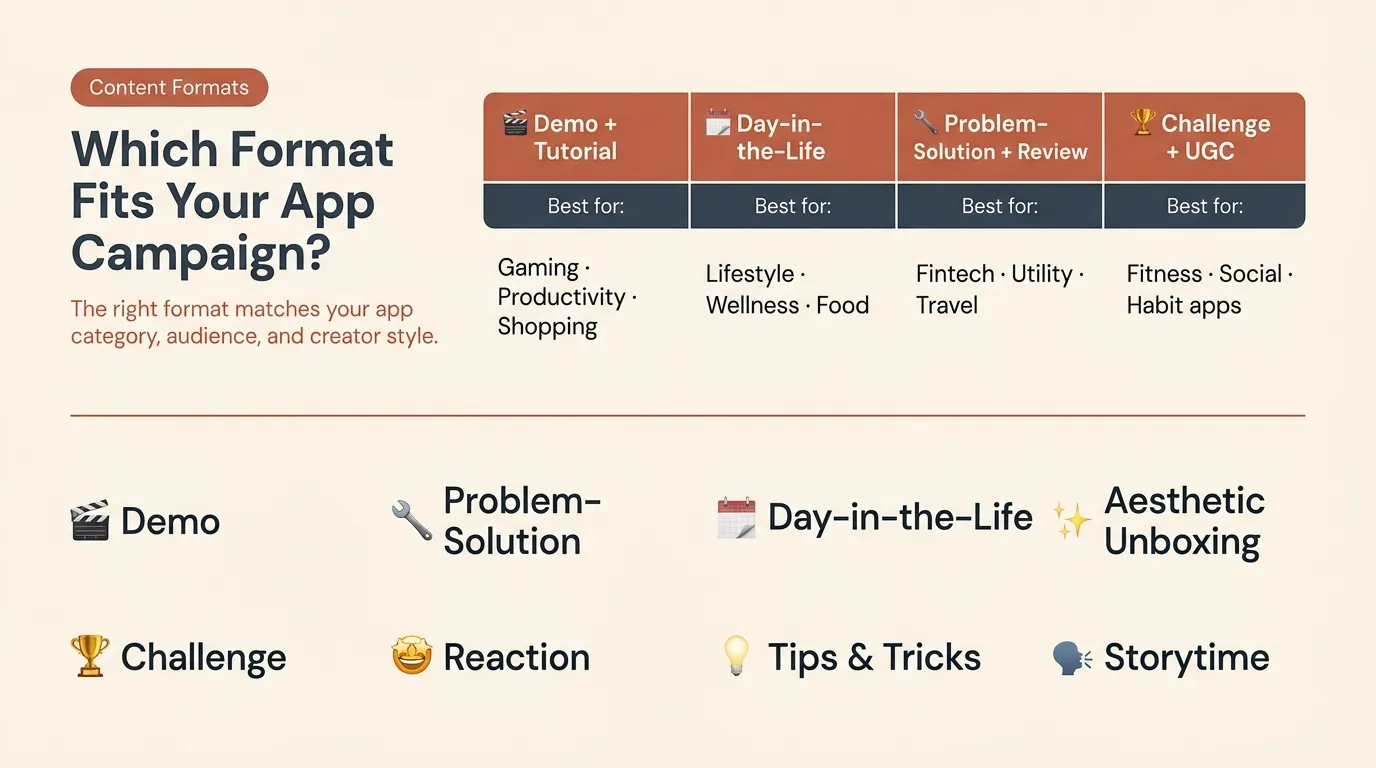
The best content formats for app influencer campaigns are the ones that make the app easy to understand, easy to trust, and easy to act on. Since apps are digital products, audiences often need to see how the experience works before they feel motivated to download.
That is why content should focus less on broad promotion and more on clearly, usefully, and relatably showing the app.
Short-Form Demo Videos
These are among the most effective formats because they quickly show the app in action. A creator can highlight the interface, the main benefit, and the outcome in a short span, helping reduce hesitation and improve install intent.
This format works especially well for apps with a clear visual or functional payoff, such as shopping, gaming, lifestyle, or productivity apps. The content feels fast-paced, digestible, and well-suited to platforms with short attention spans.
Tutorials and Walkthroughs
Tutorial-style content is useful when the app has slightly more depth or requires a bit more explanation. Instead of just showing what the app looks like, the creator can guide the audience through how to use it and what to do first.
This is especially helpful for fintech, education, wellness, booking, or productivity apps where users may need to understand a few steps before seeing the value. A good walkthrough builds confidence and makes the download feel more worthwhile.
Day-in-the-Life or Routine Integration Content
This format works well when the app fits naturally into daily habits or routines. Instead of making the app the entire focus of the content, the creator shows how it supports something they already do, such as planning their day, tracking spending, ordering food, studying, working out, or booking services.
That makes the recommendation feel more authentic and less like a direct promotion. It also helps viewers imagine how the app might fit into their own lifestyle, thereby strengthening intent.
Problem-Solution Content
Problem-solution content is effective because it starts with a frustration or challenge the audience already understands, then introduces the app as a practical fix. This structure is strong for apps that save time, reduce effort, simplify decisions, or improve convenience.
For example, a creator might talk about the hassle of manually tracking expenses, then show how a budgeting app solves that problem in a much simpler way. This format works because it leads with relevance before moving into the product.
Challenge-Based Content
Challenge-based content can create momentum and urgency, especially for gaming, fitness, habit-tracking, or social apps. The creator invites the audience to try something through the app, join a challenge, or test a feature for themselves.
This format can be effective because it turns passive viewing into participation. Instead of simply watching someone use the app, the audience is encouraged to join in, thereby improving both downloads and engagement.
Reviews and First-Impression Content
Review and first-use content works well when users need reassurance before downloading. The creator shares their honest reaction to the app, what stood out, what was easy to use, and who might benefit most from it. This is useful for newer apps, apps in crowded categories, or apps where trust is important. A credible creator reaction can help the app feel more legitimate and reduce uncertainty for potential users.
Comparison Content
Comparison content helps when the target audience is already considering different options. The creator may compare the app with older habits, alternative apps, or a less efficient way of doing the same task.
This format is useful because it gives users context. Instead of asking them to trust the app in isolation, it shows why the app may be a better choice. For productivity, finance, travel, and utility apps, this can be especially persuasive.
UGC-Style Content for Paid Amplification
User-generated content style videos can be highly effective because they feel more natural and less polished than traditional ads. These assets can work well both organically and as paid amplification content after the influencer campaign goes live.
For app brands, this is valuable because strong creator content need not stop at a single post. If a format is already performing well, it can often be repurposed to support wider acquisition campaigns and improve the return on content investment.
What Makes These Formats Work
No matter which format is used, the strongest app influencer content usually does three things well:
- it shows the app clearly
- it focuses on one main use case or benefit
- it gives the audience a natural reason to download
The goal is not to explain every feature at once. It is to make the app feel useful, relevant, and easy to act on. When the format aligns with the app category, audience behaviour, and creator style, the campaign is much more likely to drive meaningful growth.
Which Apps Benefit Most From Influencer Marketing and Why
Not every app category performs the same way with creator campaigns. Influencer marketing tends to work best for apps that can be demonstrated clearly, linked to a specific user problem, or integrated naturally into everyday habits.
When a creator can show how the app works, who it helps, and why it is worth downloading, the recommendation becomes much more persuasive.
The table below breaks down which app types usually benefit most from influencer marketing, why they are a strong fit, which creators are most suitable, and which content formats tend to work best.
| App Type | Why It Works | Best Creator Type | Best Content Format |
| E-commerce and shopping apps | These apps are easy to demonstrate through product browsing, wishlist creation, promo code usage, and checkout flow.
The user journey feels visual and familiar, which helps reduce friction before download. |
Fashion creators, beauty influencers, home and lifestyle creators, deal and cashback creators | Product discovery videos, shopping hauls, app walkthroughs, promo-led content |
| Gaming apps | Gameplay is highly visual, interactive, and easy to understand in short-form content.
Creators can generate excitement through live reactions, progress showcases, and challenge-based storytelling. |
Gaming streamers, mobile gaming creators, and entertainment creators | Gameplay demos, challenge videos, reward-based hooks, first-impression content |
| Food delivery, booking, and convenience apps | These apps solve immediate everyday problems such as ordering food, booking services, or arranging transport.
Their value is easy to show in real-life scenarios. |
Food creators, local lifestyle creators, city guides, convenience-focused creators | Order journey demos, booking walkthroughs, routine content, and convenience-focused videos |
| Finance and budgeting apps | These apps can convert well when the creator clearly explains a practical use case, such as tracking spending or setting savings goals.
Trust and clarity matter more than hype. |
Finance creators, productivity creators, young professional lifestyle creators | Problem-solution videos, budgeting demos, use-case tutorials, trust-led explainers |
| Fitness and wellness apps | These apps fit naturally into routines, goals, and self-improvement content.
Creators can show how the app supports workouts, habits, meditation, or nutrition tracking. |
Fitness creators, wellness influencers, and routine-based lifestyle creators | Morning routine videos, transformation content, habit-based walkthroughs, progress content |
| Education and productivity apps | These apps work well when creators show how they help them study, organise their work, manage time, or stay focused more efficiently. | Study creators, career creators, student influencers, productivity creators | Tutorial content, study-with-me videos, workday routines, before-and-after productivity content |
| Travel, navigation, and discovery apps | These apps are useful in real-world situations, making them highly relatable.
Creators can show how the app helps with planning, booking, navigation, or finding places. |
Travel creators, food explorers, city guides, lifestyle influencers | Travel planning videos, local recommendation content, booking walkthroughs, trip-based storytelling |
| Lifestyle and personal utility apps | These apps solve small but frequent problems, which makes them strong candidates for creator-led demos.
The value becomes clearer when the creator shows a visible result. |
Lifestyle creators, content creators, organisation-focused influencers | Before-and-after demos, utility explainers, editing tutorials, and routine integration content |
| Niche community apps | Apps serving specific interests or communities often perform well because creators already have direct trust with the exact audience they want to reach. | Niche creators such as parenting, pet care, sneaker, reading, cycling, or hobby influencers | Community-led recommendations, use-case demos, routine content, audience-specific problem-solution videos |
What these app categories have in common is that their value can be clearly demonstrated through their content. They either solve a visible problem, fit naturally into existing routines, or speak to an audience with a clear shared interest.
That makes influencer marketing especially effective because the creator does not have to force the recommendation. They can show the app in a context that already makes sense to their audience.
For app brands, this means the real question is not just whether influencer marketing can work. It is whether the app’s value can be demonstrated quickly, credibly, and in a way that feels relevant to the right users.
When that fit is strong, influencer marketing becomes much more than an awareness channel. It becomes a practical driver of installs and mobile growth.
Examples of Influencer Marketing for Apps
To illustrate how influencer marketing for apps can work in practice, consider a few hypothetical scenarios. These are not real campaign case studies, but example setups that reflect how app brands could structure creator partnerships around clear user problems, relevant audiences, and practical download triggers.
The main purpose of these examples is to show what a stronger app campaign might look like when the creator content, campaign angle, and user journey are aligned.
1. Gaming App Example: Creator Challenge With Reward Code
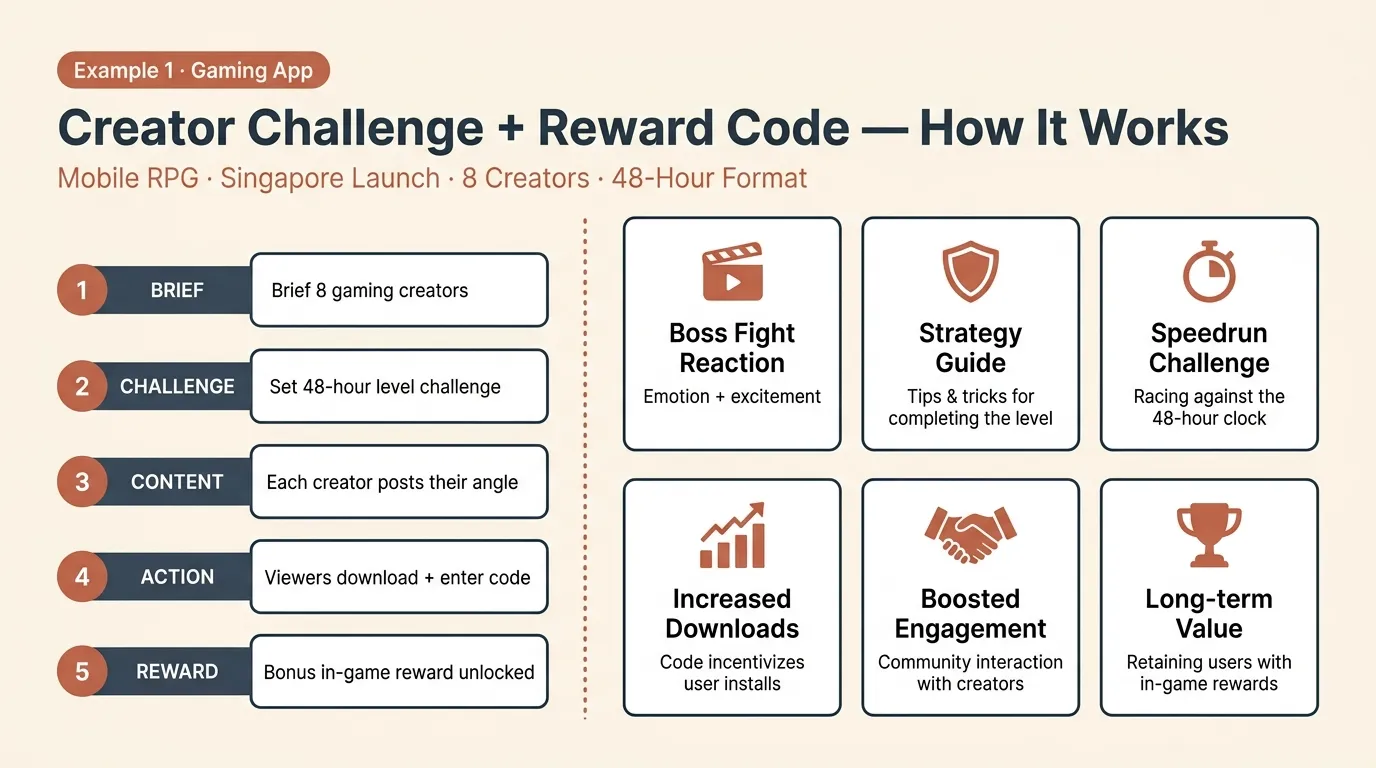
Imagine a mobile RPG game launching in Singapore and partnering with eight mid-tier gaming creators across TikTok, YouTube Shorts, and livestream platforms.
Instead of asking them to post a general sponsored mention, the campaign could be built around a challenge: each creator has 48 hours to reach a certain level and unlock a rare in-game item.
Viewers would then be encouraged to download the game using the creator’s link and enter a creator-specific code to claim bonus rewards.
In this example, the content would be designed to show three things quickly: what the gameplay looks like, how progression works, and why it feels fun to join right away. One creator might post a reaction video to a boss fight, another might show how quickly they levelled up, and another might compare beginner character options.
This type of hypothetical setup works because it creates urgency, competition, and visible proof of the game experience rather than simply saying the app is entertaining.
2. Budgeting App Example: Weekly Spending Reset for Young Professionals
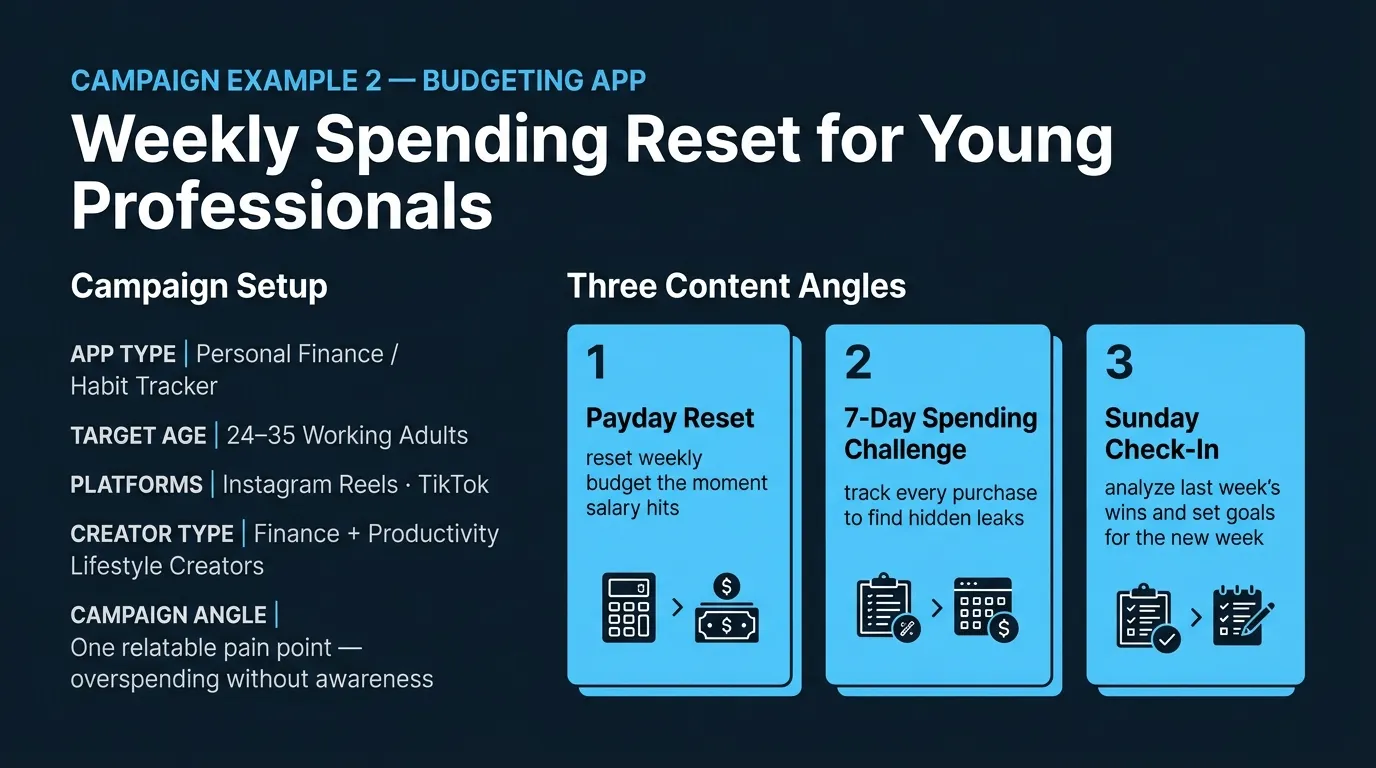
Imagine a personal finance app targeting working adults aged 24 to 35 through finance creators and productivity-focused lifestyle influencers on Instagram Reels and TikTok.
Rather than talking broadly about money management, the campaign could focus on one relatable pain point: overspending without knowing where the money went.
Each creator could show how they use the app to set a weekly spending cap, categorise food delivery and transport expenses, and track whether they stayed within budget by the end of the week.
One creator might frame it as a payday reset, another as a seven-day spending challenge, and another as a way to save more consistently for an upcoming trip.
This hypothetical campaign works because the message is specific, practical, and trust-led. The app would not be positioned as a complicated finance platform. Instead, it would be shown as a simple habit-building tool that supports everyday money awareness.
3. Food Delivery App Example: Late-Night Cravings and First-Order Code

Imagine a food delivery app trying to increase first orders among young urban users in Kuala Lumpur and Singapore.
The brand could partner with city-based food creators and late-night lifestyle influencers on TikTok and Instagram Stories. The campaign angle could focus on one clear use case: finding supper quickly after work, studying, or a night out.
Creators might film themselves searching nearby restaurants, comparing delivery times, applying a first-order code, and placing the order through the app. The strongest version of this content would not just show the food; it would also show the food’s preparation. It would also show the app journey, from discovery to checkout.
One creator might frame it around finding food after 10 pm, while another could focus on placing a group order for friends.
This kind of hypothetical setup works because the app solves an immediate problem in a way that is easy to visualise. The audience can quickly see when they might use it and why downloading it could be useful.
Common Mistakes in Influencer Marketing for Apps
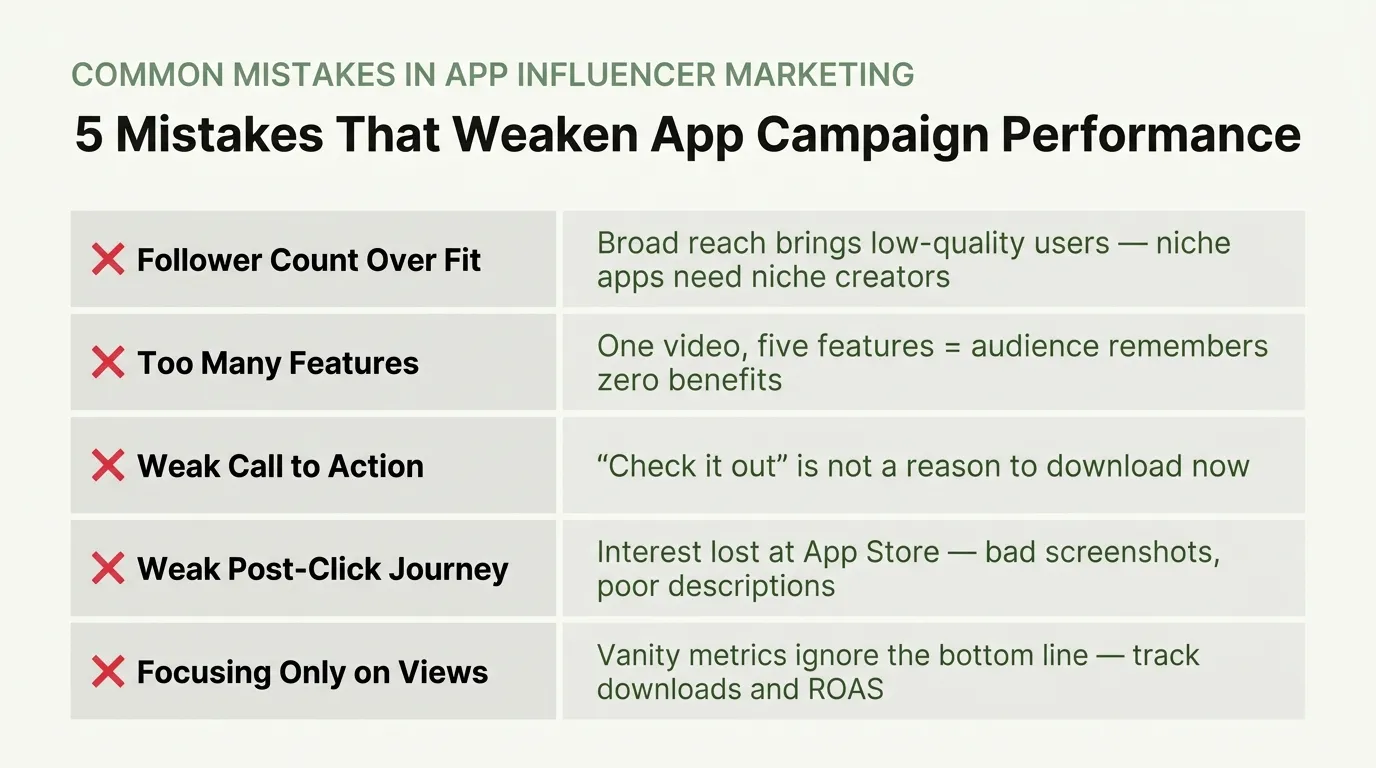
Even with a strong product and a decent creator budget, influencer campaigns can still underperform if the execution is weak.

In many cases, the issue is not that influencer marketing does not work. It is that the campaign is built around the wrong creators, the wrong message, or the wrong success criteria.

Below are some of the most common mistakes brands make in influencer marketing for apps, along with why they weaken campaign performance.
Choosing creators based only on follower count
One of the biggest mistakes is assuming that a larger creator will automatically drive better results. Reach can be useful, but for app campaigns, audience fit usually matters much more than raw size.
A creator with a broad but loosely relevant audience may generate views without bringing in users who are actually likely to download, activate, or stay.
This is especially risky for apps serving a niche need, such as budgeting, revision, booking, or fitness habit tracking. In those cases, a smaller creator with stronger credibility in the right space can often deliver better user quality than a larger influencer with weaker audience alignment.
Trying to explain too many features at once
App brands often want creators to cover every feature of their products. That usually leads to cluttered content, weaker messaging, and lower conversion. When a video tries to explain every feature, the audience ends up remembering very little.
The stronger approach is usually to focus on a single clear use case or a single visible benefit. A finance app, for example, may perform better when the content shows how to track weekly spending than when it tries to explain budgeting, savings goals, bill reminders, and reporting tools in a single video.
Using vague or weak calls to action
A creator may produce strong content, but if the call to action is too soft, the campaign can still lose momentum. Generic prompts such as check it out or give it a try do not always give the audience a strong enough reason to act now.
For app campaigns, the call to action usually performs better when tied to a specific benefit, challenge, or incentive. The user should understand why they should download the app now, not just that the app exists.
Sending traffic to a weak post-click experience
A good creator can spark interest, but that interest can disappear quickly if the user journey breaks after the click.
Many app campaigns underperform because the app store page is unclear, the screenshots are weak, the onboarding feels confusing, or the campaign offer isn’t reflected properly after the user lands.
This is one of the biggest hidden problems in influencer marketing for apps. Brands often focus heavily on content creation while underestimating the impact of the app store and onboarding experience on conversion.
Measuring success only by installs
Install volume is easy to report, but it does not always tell the full story. A campaign may generate a large number of downloads while bringing in users who never register, never complete onboarding, or never return after the first use.
For app campaigns, install numbers should be treated as only one layer of performance. Activation, retention, and downstream user quality often matter much more than the initial partnership when deciding whether a creator partnership was effective.
What makes these mistakes costly is that they often do not look serious at first. A campaign may still generate views, likes, and even installs. But if the creator fit is wrong, the message is unclear, or the user journey is weak, the campaign may not deliver the kind of growth the app actually needs.
That is why influencer marketing for apps should be treated as more than a creator outreach exercise. The strongest results usually come from campaigns where creator selection, content angle, user journey, and performance measurement are all aligned.
Turn Influencer Marketing for Apps Into a Smarter Growth Channel
Influencer marketing for apps can do far more than create awareness. When the strategy is built around the right creators, a clear use case, and a strong user journey, it can help app brands drive installs, improve user quality, and support more meaningful mobile growth.
The strongest campaigns do not rely solely on broad exposure. They connect creator trust with audience relevance, conversion intent, and post-download action.
That is why successful app campaigns are rarely just about finding influencers and sending out a brief. They work best when creator selection, campaign messaging, app-store readiness, onboarding, and measurement are all aligned.
When these pieces come together, influencer marketing becomes more than a one-off promotional tactic. It becomes a repeatable acquisition channel that can support both short-term performance and longer-term app growth.
If your brand wants to build a more strategic, creator-led campaign, MediaOne can help you plan, execute, and optimise influencer campaigns that deliver real business outcomes. Explore how our influencer marketing agency’s app campaign services in Singapore can support your next app growth push. Contact us today!
Frequently Asked Questions
How long should an influencer marketing campaign for an app run?
The right campaign length depends on the app category, campaign objective, and creator mix. A short campaign may be enough for a launch push or limited-time offer, while a longer campaign is often better for habit-based apps that need repeated exposure. In many cases, app brands benefit from testing an initial campaign wave first, then extending partnerships with the best-performing creators.
In many cases, yes. If creators only see a limited version of the app, their content may not reflect the strongest user experience. Giving them access to premium features, trial functionality, or a fuller version of the app can help them create more convincing and informed content, as long as the setup is controlled properly.
Is it better to work with one influencer repeatedly or many influencers once?
That depends on the campaign goal. Working with many influencers once can help generate broader awareness quickly, while repeated partnerships with the same creator can build stronger trust and familiarity over time. For apps, repeated exposure can be especially useful when the product needs explanation or when user adoption depends on seeing the app used consistently.
Should influencers be asked to show the app screen directly in their content?
In most cases, yes, especially if the app’s interface or ease of use is a selling point. Showing the screen helps the audience understand what the app looks like and how it works. That said, the screen recording should support the story naturally rather than feel like a product tutorial dropped awkwardly into the content.
Can influencer marketing work for newly launched apps with little brand awareness?
Yes, but the campaign needs to be structured carefully. For newer apps, influencer marketing can help explain the product quickly and build early trust, especially when the app is entering a crowded market. The content, creator fit, and first user experience all matter more because the audience does not yet have existing familiarity with the brand.