A marketing manager at a mid-sized Singapore F&B brand recently told me about her three-month influencer campaign. She had spent over SGD 25,000 and had a spreadsheet full of impressions—but almost nothing else to show for it. “The posts looked great,” she said. “So why didn’t it work?”
The answer was simple: she had a collection of posts, not a funnel. Different influencers, different messages, no sequencing, no strategy for moving people from discovery to purchase. Each post tried to do everything at once, and as a result, none did anything particularly well.
This article provides a complete framework for building an influencer marketing funnel that converts, with actionable guidance on creator selection, content strategy, attribution setup, and campaign mechanics.
Influencer Marketing Funnel at a Glance
| Stage | Goal | Best Creator Type | Content Formats | Key Metrics | CTA Type |
| Awareness | Reach new audiences | Macro influencers (100K–1M followers) | Short-form video, trend participation, lifestyle integrations | Reach, impressions, engagement rate | Soft brand discovery |
| Consideration | Build trust and interest | Micro influencers (10K–100K followers) | Reviews, tutorials, comparison content, day-in-the-life | CTR, saves, watch time, and comment quality | Learn more, explore |
| Conversion | Drive measurable action | Nano influencers (<10K followers), affiliates | Testimonials, discount codes, before-and-after, limited offers | Sales, CPA, promo code redemptions | Buy now, sign up, enquire |
| Retention | Deepen loyalty, drive advocacy | Brand ambassadors, loyal customers | Exclusive access, UGC campaigns, referral programmes | Repeat purchase rate, LTV, referral rate | Join community, refer a friend |
Key Takeaways
- The influencer marketing funnel requires structured stages, where awareness, consideration, conversion, and retention each demand different creators, content, and metrics.
- Most campaigns fail because brands treat influencer marketing as isolated posts instead of a connected journey that builds trust over time.
- Micro and nano influencers often outperform larger creators in driving consideration and conversions due to stronger audience trust and engagement.
- Tracking tools such as UTM parameters, promo codes, and analytics platforms are essential to measure performance and optimise each funnel stage.
- Long-term influencer relationships and multi-touch campaigns deliver stronger returns than one-off collaborations in Singapore’s market.
What Is an Influencer Marketing Funnel?
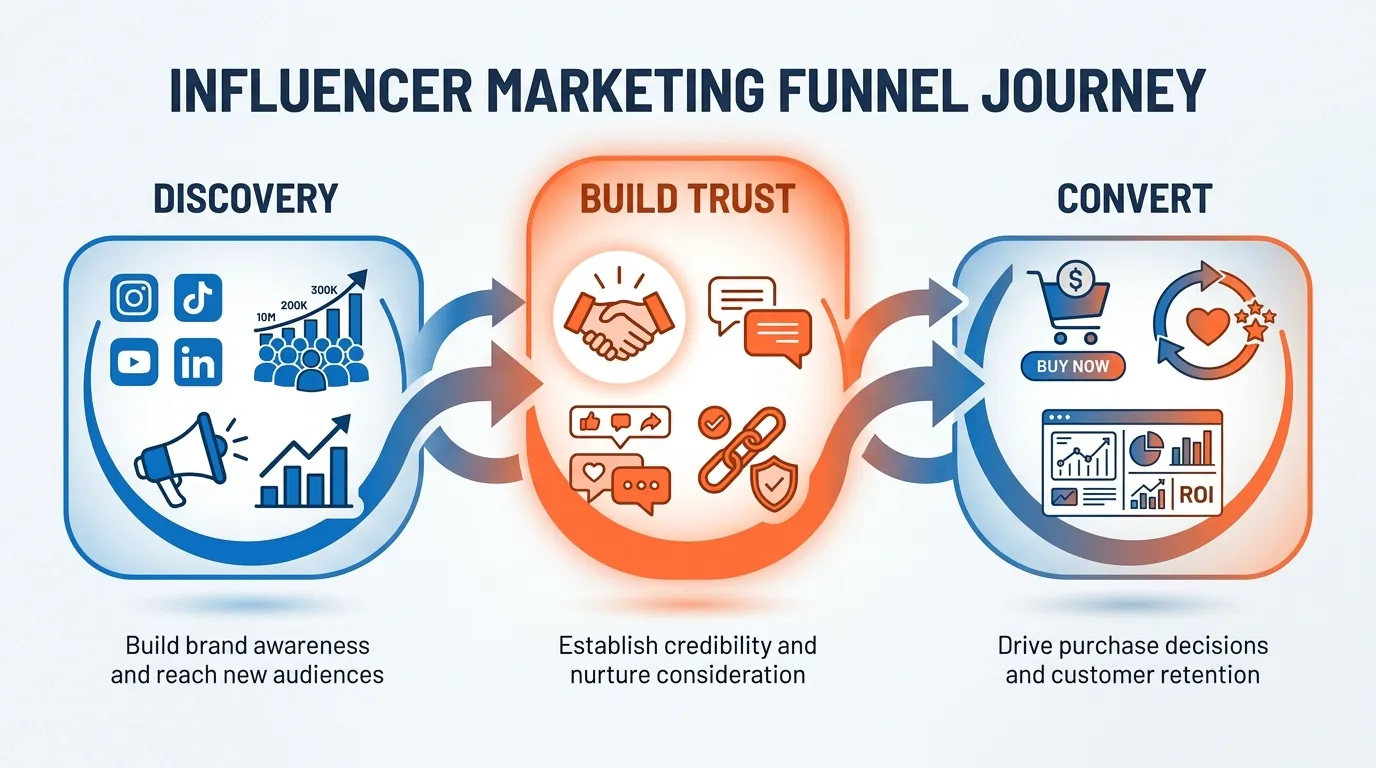
An influencer marketing funnel is a structured approach to using creators at each stage of the customer journey to move your audience progressively from not knowing you exist through to becoming a paying customer—and eventually, a loyal advocate.
It borrows the logic of the traditional marketing funnel: awareness at the top, consideration in the middle, conversion at the bottom. The difference is that instead of relying on paid ads or content alone, you use real human voices at each stage to carry your message in a way that feels earned rather than bought.
The core stages are:
- Awareness: Reaching new audiences who have never heard of your brand. The goal is exposure, not conversion.
- Consideration: Building interest and credibility amongst people who now know you exist. The goal is trust, not just attention.
- Conversion: Prompting action from people who are ready to buy, sign up, or enquire. The goal is a measurable response.
- Retention and Advocacy: Re-engaging customers, reducing churn, and turning buyers into brand champions.
In a well-run campaign by a top influencer marketing agency in Singapore, these stages connect. A consumer might first see your brand via a macro influencer’s Instagram Reel, then encounter a detailed review from a micro influencer they follow more closely, and finally be nudged to purchase by a nano influencer offering a discount code. That sequencing is the funnel.
Without it, you are broadcasting into the void and hoping someone converts.
The 4 Stages of an Influencer Marketing Funnel
Stage 1: Awareness
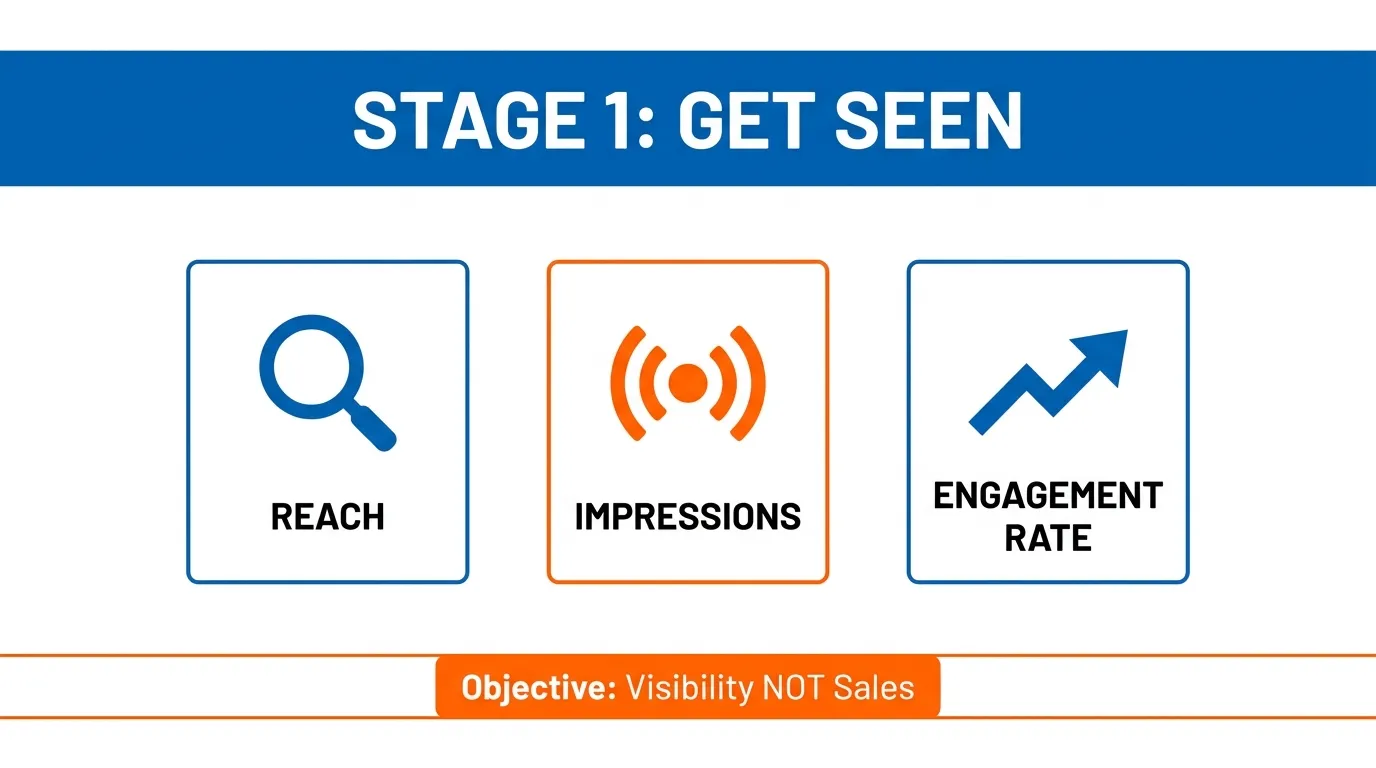
At the top of the funnel, your only job is to get seen. Not liked, not trusted, not purchased from. Seen.
Metrics that matter: Reach, impressions, engagement rate. Conversion is not a top-of-funnel metric. If you measure awareness activity by revenue, you will always be disappointed.
Best content formats:
- Short-form video (TikTok Reels, Instagram Reels)
- Product seedings and unboxing reactions
- Trend participation
- Story mentions and casual integrations
- Aspirational lifestyle content
The common thread: the brand appears as part of the story, not the point of it.
Platform considerations: According to Sprout Social’s 2024 Influencer Marketing Benchmarks Report, Instagram was the dominant platform for influencer impressions across key categories.
In Singapore, Instagram is the primary influencer platform for 52% of brands. For Chinese-speaking audiences in Singapore, XiaoHongShu is increasingly relevant for lifestyle categories.
Stage 2: Consideration
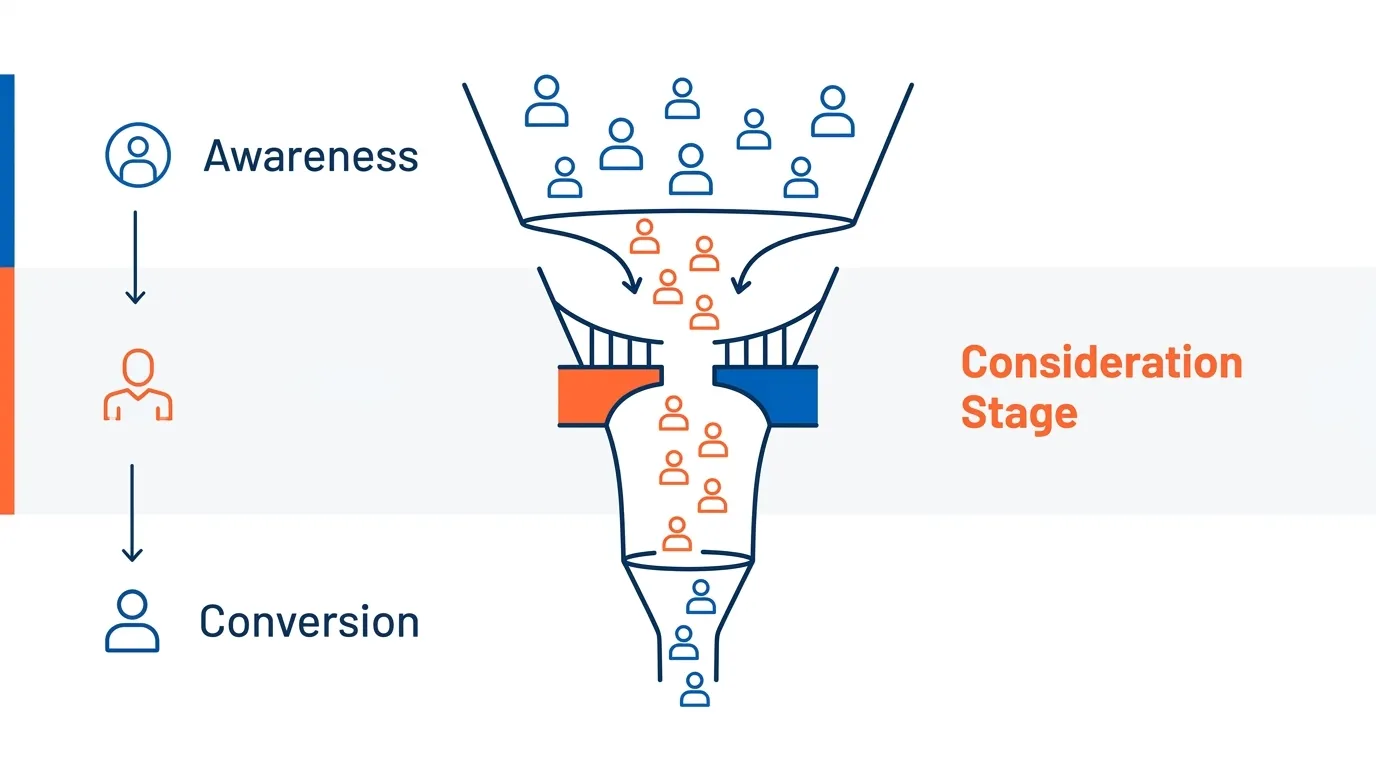
Once someone knows your brand exists, they need reasons to trust you. This is the most underserved part of the influencer marketing funnel.
Metrics that matter: Click-through rates, saves and collections, comment quality (questions about pricing or availability signal high intent), watch time on video content.
Best content formats:
- Product reviews and tutorials
- “Day in the life” integrations
- Comparison content
- Educational posts
The question your content should answer at this point: “Should I trust this brand and take the next step?”
Stage 3: Conversion
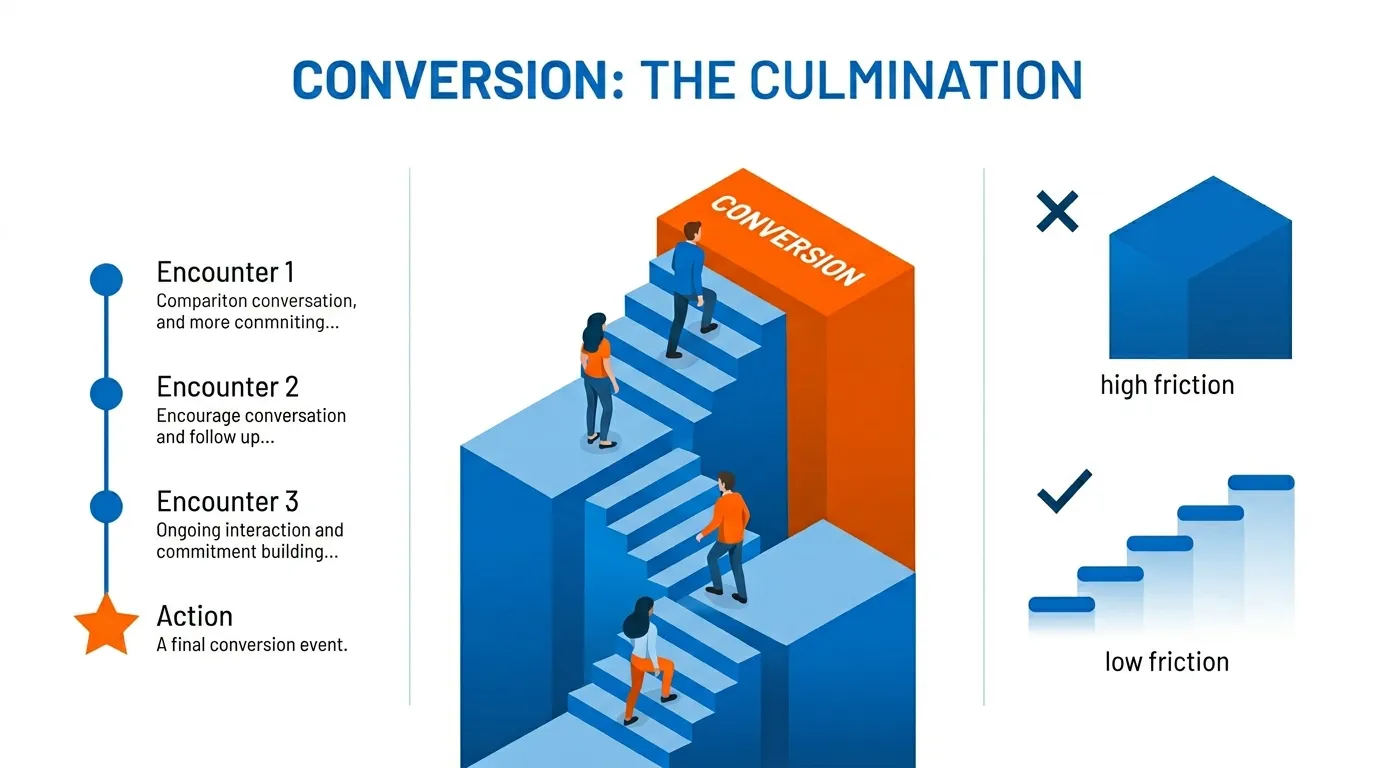
This is where you ask for the action. A purchase, a sign-up, an enquiry, a booking. The conversion stage only works properly when the stages before it have done their job.
Metrics that matter: Sales, cost per acquisition, tracked leads, promo code redemptions.
Best content formats:
- Discount codes and limited-time offers
- Before-and-after content
- Testimonials and short case studies
- Strong, specific calls to action
Stage 4: Retention and Advocacy
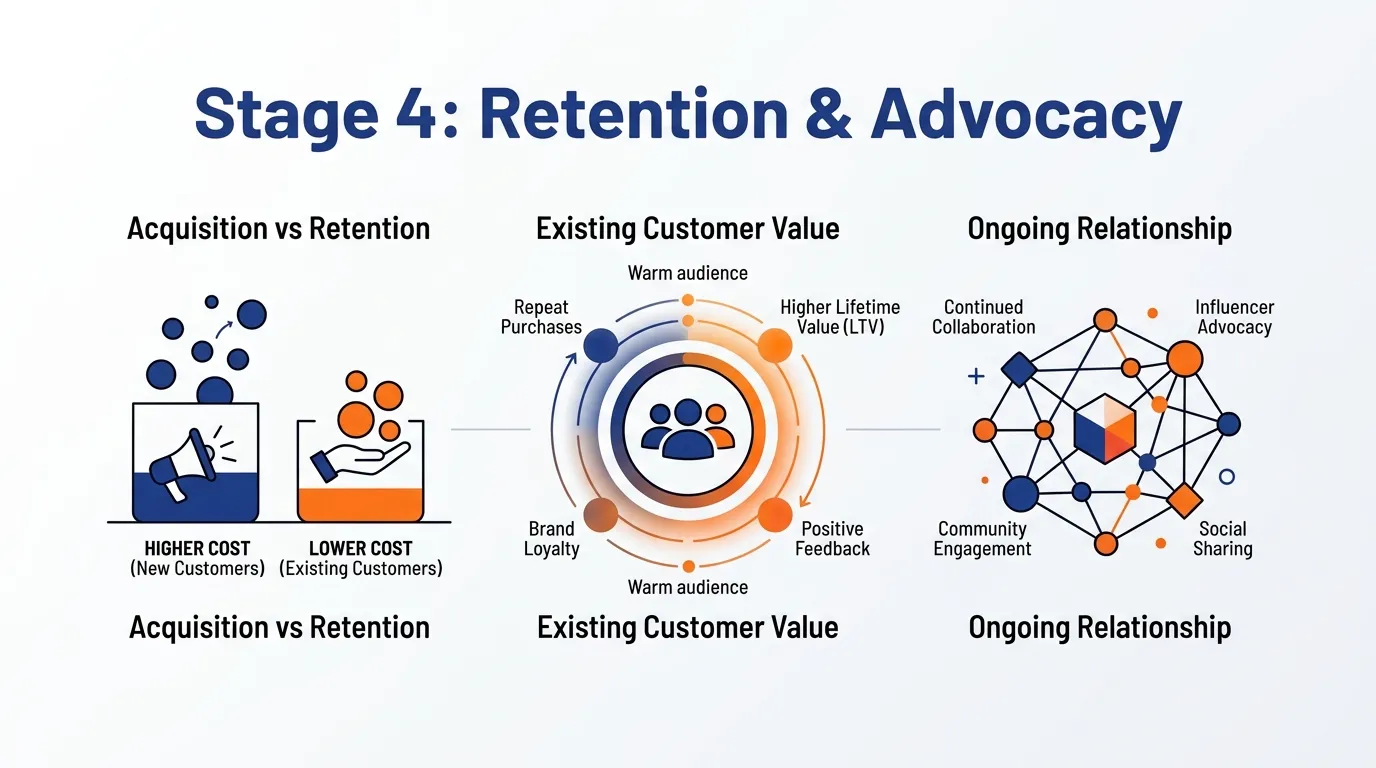
This stage is where most brands leave significant money on the table. Acquiring a new customer is consistently more expensive than retaining an existing one (Harvard Business Review).
Retention mechanisms to implement:
- Ambassador programme structure: Formalise relationships with creators who have demonstrated genuine affinity. Define tiers (e.g., Bronze, Silver, Gold) with escalating benefits and commitments.
- Referral loop design: Give existing customers and ambassadors unique referral codes with incentives for both referrer and referee.
- Post-purchase creator touchpoints: Brief influencers to create content specifically for existing customers—exclusive tips, advanced tutorials, loyalty rewards announcements.
- Community-building: Create private groups (Telegram, Discord) where ambassadors and loyal customers interact with your brand.
- Reactivation flows: Use influencer content in email sequences targeting lapsed customers.
How to Choose Influencers for Each Funnel Stage
Creator Tier Recommendations by Stage
| Funnel Stage | Recommended Creator Tier | Why |
| Awareness | Macro (100K–1M) | Broad reach, strong discovery potential |
| Consideration | Micro (10K–100K) | Higher engagement, niche authority, trusted voice |
| Conversion | Nano (<10K), Affiliates | Tight-knit communities, high trust, direct action |
| Retention | Brand ambassadors, loyal customers | Established relationship, authentic advocacy |
How to Vet Influencers for Each Funnel Stage
Choosing the right influencer goes beyond follower count. Use this framework to evaluate creators:
1. Audience Geography
- Verify that the influencer’s audience is predominantly in your target market. Many Singapore-based influencers have significant overseas followings.
- Use platform analytics or third-party tools (e.g., HypeAuditor, Modash) to check audience location breakdown.
2. Audience Demographics
- Age, gender, and interests should align with your target customer profile.
- A beauty influencer whose audience is 70% male may not be suitable for a women’s skincare brand.
3. Engagement Quality
- Look beyond engagement rate. Examine the nature of comments—are they genuine conversations or generic emoji responses?
- When vetting influencers, it is useful to compare how branded content performs relative to a creator’s organic posts. However, a drop in engagement on sponsored content is not automatically a red flag — industry data shows sponsored content can perform equally well or even better than organic posts when there is a genuine brand-creator fit and strong content quality.
4. Previous Brand Collaborations
- Review past partnerships. Do they align with your brand values? Have they worked with competitors?
- Check how authentically they integrated previous brands into their content.
5. Fake Follower Detection
- Look for sudden follower spikes, unusually high follower-to-engagement ratios, or generic/bot-like comments.
- Tools like HypeAuditor, Social Blade, and Modash can identify suspicious patterns.
6. Content Quality and Style
- Does their visual style match your brand aesthetic?
- Can they produce the type of content you need for your funnel stage?
7. Organic vs Branded Performance
- Request media kits with performance data on previous sponsored content.
- A creator whose sponsored posts significantly underperform their organic content may struggle to deliver results.
Vetting Checklist
- Audience location matches target market (>60% in Singapore for local campaigns)
- Age and interest demographics align with buyer persona
- Engagement rate appropriate for their tier
- Comments show genuine engagement, not bots
- Branded content performs within 20% of organic content
- No history with direct competitors in past 6 months
- Visual style compatible with brand guidelines
- Clear disclosure practices on past sponsored content
What Content Works Best at Each Funnel Stage?
Awareness Stage Content
Objective: Make the audience feel they discovered something, not that they were sold to.
| Content Type | Description | Platform Fit |
| Short-form video | Native, entertaining, under 60 seconds | TikTok, Instagram Reels |
| Unboxing/First impressions | Authentic reactions to receiving products | YouTube, TikTok |
| Trend participation | Brand integrated into trending audio/formats | TikTok, Instagram |
| Lifestyle integration | Brand appears naturally in creator’s routine | Instagram Stories, YouTube vlogs |
Consideration Stage Content
Objective: Answer the question “Should I trust this brand?”
| Content Type | Description | Platform Fit |
| In-depth reviews | Honest, detailed product assessment | YouTube, Blog posts |
| Tutorials/How-tos | Demonstrating product use and value | YouTube, Instagram Reels |
| Comparison content | Evaluating against alternatives | YouTube, Blog posts |
| Day-in-the-life | Showing genuine product integration | Instagram Stories, TikTok |
Conversion Stage Content
Objective: Make it easy to take the final step.
| Content Type | Description | Platform Fit |
| Discount codes | Time-sensitive offers with tracking | All platforms |
| Before-and-after | Visual proof of results | Instagram, TikTok |
| Testimonials | Post-purchase experience sharing | All platforms |
| Limited-time offers | Urgency-driven CTAs | Instagram Stories, TikTok |
Retention Stage Content
Objective: Deepen relationships and encourage advocacy.
| Content Type | Description | Platform Fit |
| Exclusive access | Early product launches, behind-the-scenes | Instagram Stories, Telegram |
| Loyalty rewards | Ambassador-exclusive discounts | Email, Direct messaging |
| User challenges | Encouraging customers to create content | TikTok, Instagram |
| Community content | Group interactions, Q&As | Telegram, Discord |
How to Brief Influencers for Funnel Campaigns
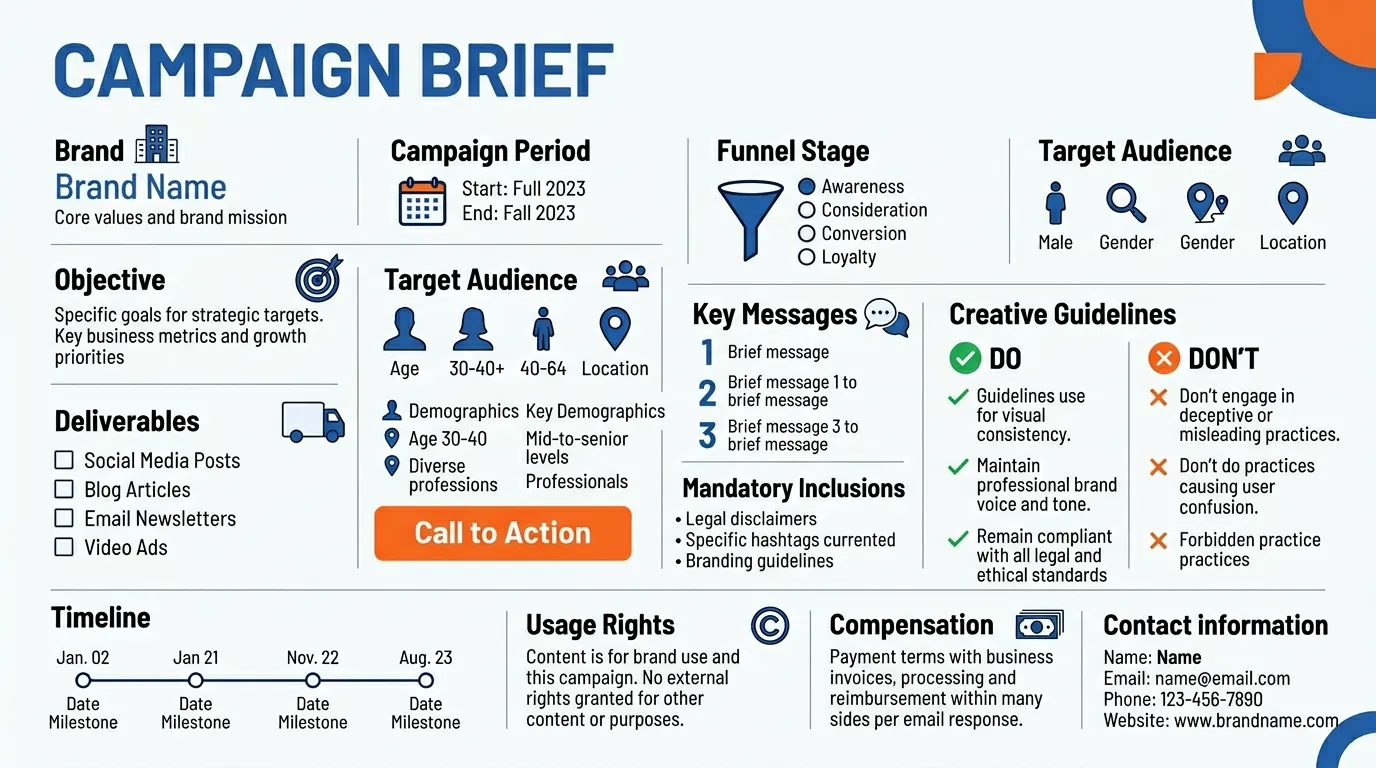
A strong brief is the difference between content that converts and content that falls flat.
According to Shopify’s influencer marketing guide, campaigns are more successful when brands give influencers creative freedom to produce content their audience will love, while also supplying brand guidelines such as an outline of expectations or a mood board.
What to Include in Your Influencer Brief
- Campaign Objective by Funnel Stage
- Be explicit: “This is an awareness campaign focused on reach” or “This is a conversion campaign with tracked sales as the primary KPI.”
- The influencer should understand what success looks like.
- Target Persona
- Describe who you want to reach: demographics, interests, pain points.
- Help the creator speak to your audience, not just their general followers.
- Deliverables
- Number and type of content pieces (e.g., “1 Instagram Reel + 3 Stories”)
- Specific requirements (length, orientation, features to highlight)
- Platform Specifications
- Where content will be posted
- Platform-specific requirements (aspect ratios, caption limits, hashtag requirements)
- Messaging Priorities
- Key messages to convey (maximum 2-3)
- What makes your product/service different
- Common objections to address (for consideration/conversion content)
- Call to Action
- Exactly what you want the audience to do
- The specific link, code, or action they should reference
- Timeline
- Content submission deadline
- Revision window
- Go-live date
- Disclosure Requirements
- Singapore’s ASAS guidelines require clear disclosure of sponsored content
- Specify exact disclosure language (e.g., “#Ad”, “#Sponsored”, “Paid partnership”)
- Landing Page Destination
- The exact URL where traffic should be directed
- Ensure the landing page matches the campaign message
- Creative Guardrails
- Brand dos and don’ts
- Competitor mentions (usually prohibited)
- Tone and language guidance
- Creative Freedom Boundaries
- What elements are non-negotiable vs. flexible
- How much creative licence the influencer has
- Usage Rights and Repurposing
- Where you plan to use the content beyond organic posting
- Duration of usage rights
- Paid amplification permissions
- Compensation for extended usage (if applicable)
How to Track an Influencer Marketing Funnel
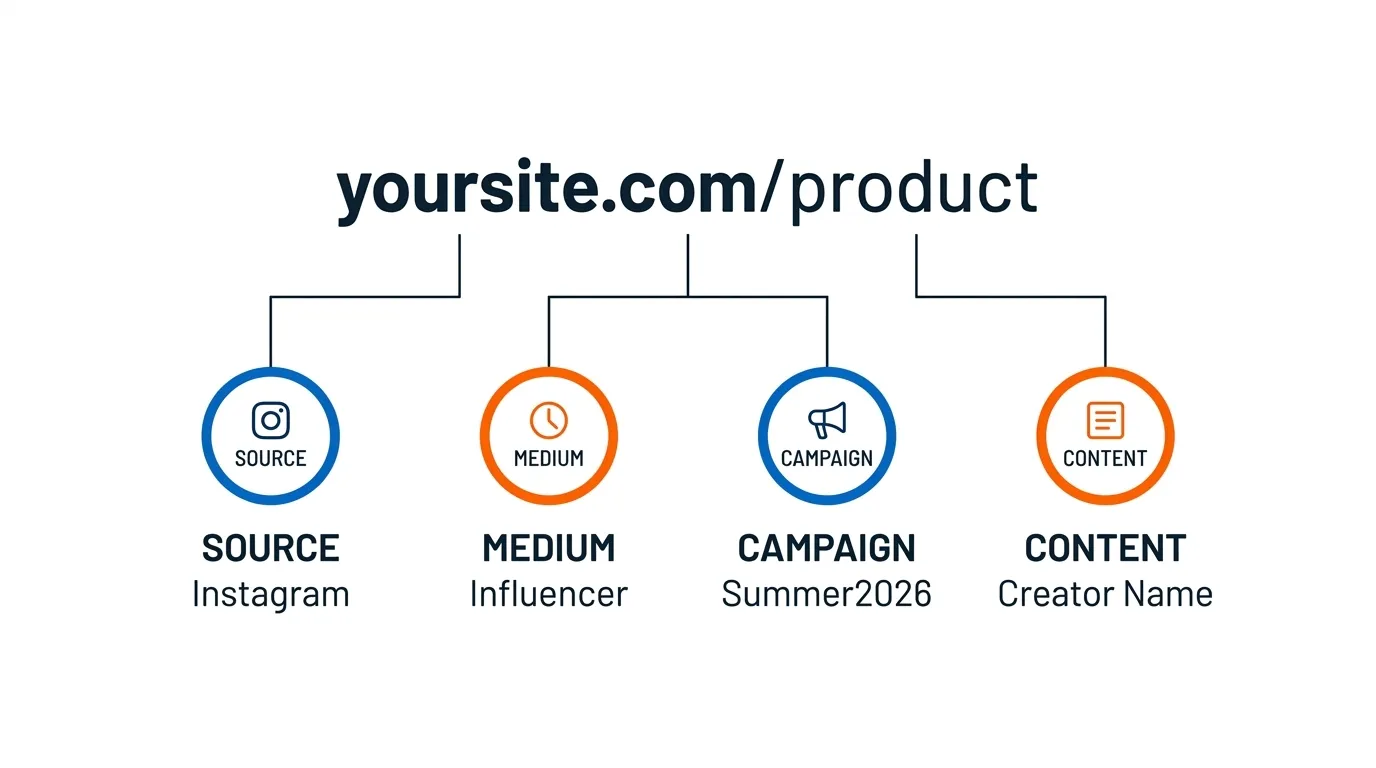
Essential Tracking Setup
UTM Parameters
Append UTM parameters to every influencer link. This allows you to trace traffic and conversions back to specific creators and campaigns in Google Analytics.
Naming convention example:
https://yoursite.com/product?utm_source=instagram&utm_medium=influencer&utm_campaign=summer2026&utm_content=creatorname
Unique Promo Codes
Assign each influencer their own discount code. When a customer redeems it, the sale is directly attributed to that creator.
Affiliate Links
For ongoing or commission-based programmes, platforms like Impact, ShareASale, or Refersion generate unique trackable links that connect each conversion to the influencer who drove it.
How to Set Up Influencer Tracking in GA4
Step 1: Create Custom Campaign Parameters
Use Google’s Campaign URL Builder to generate UTM-tagged links for each influencer.
Step 2: Set Up Conversion Events
In GA4, navigate to Admin > Events > Create Event. Set up events for:
- Purchase completion
- Lead form submission
- Email sign-up
- Add to cart
Step 3: Configure Source/Medium Reports
Use Acquisition > Traffic Acquisition to see which influencers are driving traffic and conversions. Filter by source/medium to isolate influencer traffic.
Step 4: Track Assisted Conversions
Influencer content often assists conversions without being the last click. In GA4, use Advertising > Attribution > Conversion Paths to see how influencer touchpoints contribute to conversions earlier in the journey.
Step 5: Create Custom Reports
Build a custom report that shows:
- Sessions by influencer (utm_content)
- Conversion rate by influencer
- Revenue by influencer
- Assisted conversions by influencer
Common Tracking Mistakes to Avoid
| Mistake | Problem | Fix |
| No UTM parameters | Cannot attribute traffic to specific creators | Use consistent UTM naming convention for all links |
| Generic promo codes | Cannot distinguish between influencer and other channel sales | Create unique codes per influencer |
| Last-click only attribution | Undervalues awareness and consideration content | Use GA4’s data-driven attribution model |
| No baseline measurement | Cannot determine incremental lift | Track brand search volume and direct traffic before and during campaigns |
| Ignoring assisted conversions | Underestimates upper-funnel influencer contribution | Review conversion paths, not just last-touch attribution |
| Promo codes as only metric | Undercounts impact (many buyers don’t use codes) | Combine promo codes with UTM tracking and correlation analysis |
Metrics by Funnel Stage
| Funnel Stage | Primary Metrics | Secondary Metrics |
| Awareness | Reach, Impressions | Engagement rate, Video views, Follower growth |
| Consideration | CTR, Saves, Watch time | Time on site, Pages per session, Comment quality |
| Conversion | Sales, CPA, Promo redemptions | Add to cart rate, Checkout completion, Lead quality |
| Retention | Repeat purchase rate, LTV | Referral rate, NPS, UGC submissions |
How to Repurpose Influencer Content for Better ROI
One of the most underutilised strategies in influencer marketing is content repurposing. According to Shopify, brands should maximise influencer content value through reuse across ads, product pages, and owned channels.
Content Repurposing Matrix
| Original Content | Repurpose For | Funnel Stage |
| Top-performing awareness Reel | Paid social ad (whitelisted) | Awareness (paid amplification) |
| Review video | Product page embed | Consideration |
| Tutorial clip | Retargeting creative | Conversion |
| Creator testimonial | Landing page social proof | Conversion |
| FAQ clip | Email nurture sequence | Consideration/Conversion |
| Before-and-after | Facebook/Instagram ad | Conversion |
| Unboxing content | Website homepage hero | Awareness |
| User testimonial | Google Shopping ad | Conversion |
Repurposing Best Practices
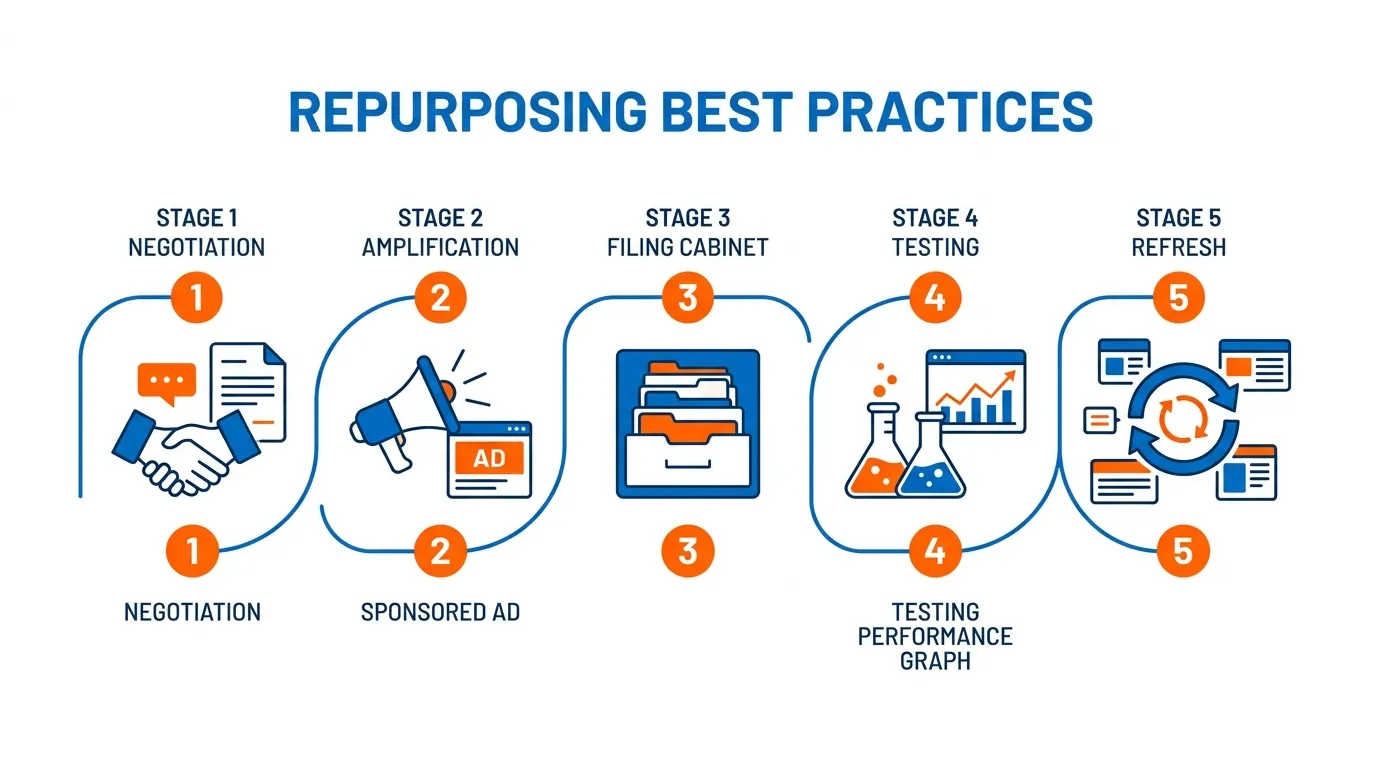
Negotiate Usage Rights Upfront
Include repurposing rights in your initial contract. Specify:
- Which platforms you can use the content on
- Duration of usage rights (typically 6-12 months)
- Whether you can use content in paid ads (whitelisting)
- Compensation for extended usage
Whitelisting for Paid Amplification
Whitelisting allows you to run paid ads through the influencer’s account, maintaining authenticity while reaching broader audiences. This typically requires additional compensation and explicit agreement.
Create Asset Libraries
Organise influencer content by:
- Funnel stage
- Content type
- Platform
- Performance metrics
- Usage rights expiration
Test Before Scaling
Before investing heavily in boosting influencer content, A/B test different pieces. Top organic performers often (but not always) translate to strong paid performance.
Refresh Regularly
Even high-performing content fatigues. Plan for quarterly content refreshes and ongoing creator relationships to maintain a pipeline of fresh assets.
Landing Pages That Improve Influencer Funnel Conversions
The gap between a click and a conversion often comes down to landing page quality. Here’s how to optimise landing pages for influencer traffic:
Landing Page Best Practices
Message Match
The landing page headline and imagery should directly reflect the influencer’s content. If the influencer highlighted a specific benefit, that benefit should be prominent on the landing page.
Creator-Specific Landing Pages
Where possible, create dedicated landing pages for major influencer partnerships. Include:
- The influencer’s name or image (with permission)
- Reference to their content
- The specific offer they promoted
Mobile-First Design
Most influencer traffic comes from mobile. Ensure:
- Fast load times (under 3 seconds)
- Touch-friendly buttons
- Minimal form fields
- Easy-to-read text
Social Proof
Include testimonials, reviews, and trust signals prominently. Influencer content itself can serve as social proof when embedded on landing pages.
Clear, Single CTA
Don’t overwhelm visitors with multiple options. The landing page should have one clear action aligned with the campaign objective.
Promo Code Visibility
If the influencer shared a discount code, make sure it’s:
- Visible without scrolling
- Auto-applied if possible
- Referenced in the headline
Landing Page Checklist
- Headline matches influencer’s key message
- Page loads in under 3 seconds on mobile
- Single, clear call-to-action
- Promo code visible and/or auto-applied
- Social proof included (reviews, testimonials, trust badges)
- Mobile-responsive design
- Form has minimal required fields
- Exit intent capture for non-converters
Common Influencer Marketing Funnel Mistakes
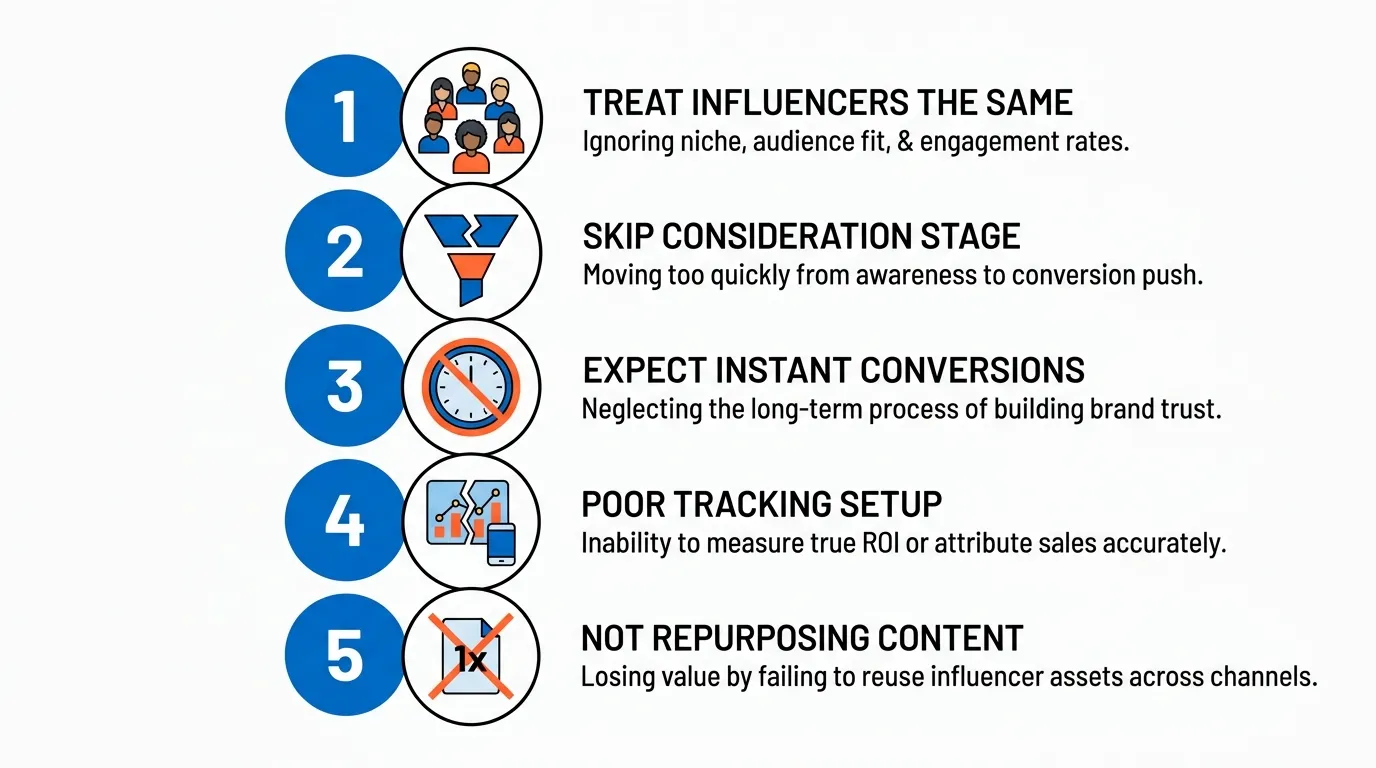
Strategic Mistakes
| Mistake | Why It’s a Problem | How to Fix It |
| Treating all influencers the same | Different creator tiers serve different functions | Match influencer type to funnel stage |
| Skipping consideration stage | Trust is built in the middle of the funnel | Invest in micro influencer content that educates and builds credibility |
| Expecting instant conversions | Influencer marketing takes time to compound | Set appropriate timelines (6-12 weeks minimum for full-funnel campaigns) |
| Measuring everything by conversion | Loses ability to diagnose funnel leaks | Use stage-appropriate metrics |
Execution Mistakes
| Mistake | Why It’s a Problem | How to Fix It |
| Poor tracking setup | Cannot attribute results or improve | Set up UTM parameters and unique codes before launch |
| Vague briefs | Content misaligned with objectives | Use comprehensive brief template |
| No content repurposing | Leaves value on the table | Negotiate usage rights, create asset library |
| One-off campaigns | Misses compounding benefits of relationships | Build long-term ambassador relationships |
Measurement Mistakes
| Mistake | Why It’s a Problem | How to Fix It |
| Vanity metrics only | Impressions don’t equal impact | Track progression through funnel stages |
| No baseline | Cannot measure incremental lift | Track key metrics before, during, and after campaigns |
| Ignoring qualitative data | Misses important context | Review comment sentiment and content quality |
Real Examples of Influencer Funnels in Singapore
Example 1: eCommerce Skincare Brand
MediaOne Campaign Case Study
A Singapore-based skincare brand launching a new moisturiser line ran a twelve-week funnel campaign across three phases.
Phase 1: Awareness (Weeks 1-4)
- Partners: 3 mid-tier beauty influencers on Instagram and TikTok
- Content: 2-3 short-form videos each, products featured in daily routines
- Results: ~180,000 unique accounts reached
Phase 2: Consideration (Weeks 5-8)
- Partners: 8 micro influencers in beauty and wellness niches
- Content: In-depth reviews, tutorials, comparison with competitor products
- Results: 3,400 website visits, average session duration over 3 minutes
Phase 3: Conversion (Weeks 9-12)
- Partners: 10 nano influencers across Telegram and Instagram community channels
- Content: Unique discount codes, direct purchase links
- Results: 210 tracked orders, CPA of SGD 38
Overall: Campaign ROI exceeded expectations, with the sequenced approach significantly outperforming previous one-off campaigns.
Example 2: B2B HR Technology Platform
A Singapore-based HR technology company wanted to build market visibility among SME founders and HR managers.
Phase 1: Awareness
- LinkedIn content creators and podcast guests
- Content: Category-level discussions on HR automation challenges
Phase 2: Consideration
- HR consultants and community managers with SME sector followings
- Content: Educational content addressing common objections
Phase 3: Conversion
- Client testimonials and direct invitation campaigns
- Content: Free trial sign-up offers
Key insight: Influencer marketing worked for B2B because the consideration stage was genuinely informative. Creators who understood the HR space deeply produced content that spoke to real buyer concerns.
How to Build Your Influencer Marketing Funnel: Step-by-Step Checklist
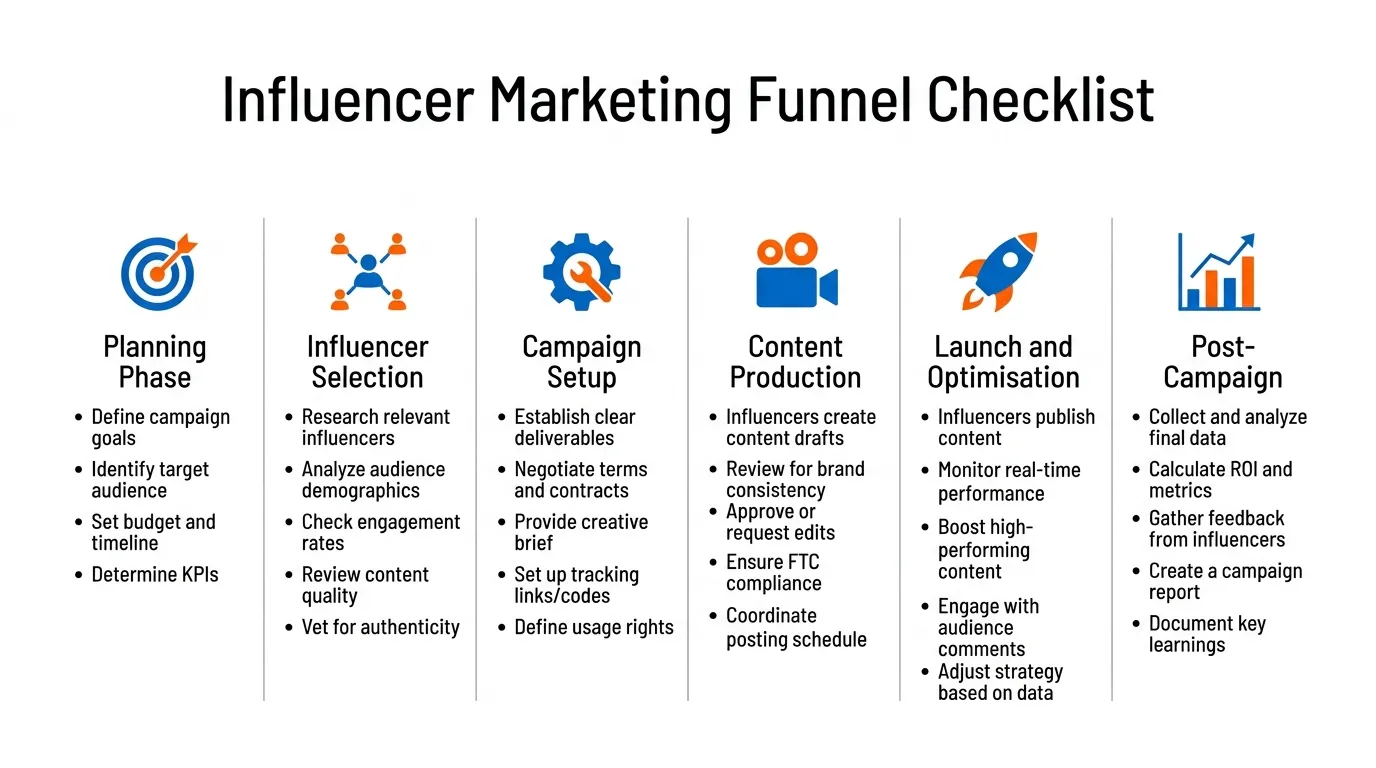
Planning Phase
- Define clear objectives for each funnel stage
- Set stage-specific KPIs
- Establish campaign timeline (minimum 6-12 weeks for full-funnel)
- Determine budget allocation by stage
- Identify target platforms based on audience behaviour
Influencer Selection
- Create target influencer list by tier for each stage
- Vet candidates using vetting framework
- Check audience demographics match target persona
- Review past branded content performance
- Confirm no recent competitor collaborations
Campaign Setup
- Create comprehensive briefs for each funnel stage
- Establish UTM naming convention
- Generate unique promo codes per influencer
- Set up GA4 conversion tracking
- Create or optimise landing pages
Content Production
- Review and approve influencer content
- Ensure disclosure compliance
- Verify tracking links are working
- Coordinate posting schedule across creators
Launch and Optimisation
- Monitor performance daily in first week
- Review stage progression metrics weekly
- Identify drop-off points and adjust
- Scale budget to top performers
- Document learnings for future campaigns
Post-Campaign
- Compile performance report by stage
- Calculate overall ROI
- Identify top-performing content for repurposing
- Negotiate ongoing relationships with top creators
- Archive content with usage rights information
Building a Sustainable Influencer Marketing Funnel
The influencer marketing funnel is not a complicated framework. But applying it consistently and honestly requires a level of strategic discipline that most brands simply do not bring to their influencer programmes.
The businesses I have seen get the most from this channel are not necessarily the ones with the largest budgets. They are the ones that treat the funnel seriously, match creators to stages deliberately, measure what matters, and iterate with the same rigour they would apply to any other commercial channel.
If I were advising a Singapore SME starting their influencer programme today, the first thing I would tell them is this: stop thinking in posts and start thinking in journeys. Your customer’s path from discovery to purchase does not happen in a single encounter. Build your influencer strategy around that reality, and the results will follow.
The second thing I would tell them is to not underestimate the middle of the funnel. The consideration stage is where trust is built, and trust is what converts. Awareness without consideration produces brand recognition but not brand preference. Conversion without consideration produces low-quality customers who are unlikely to return.
The third thing is to track everything from day one. The data you collect in the first campaign is the foundation for making every subsequent campaign smarter, more efficient, and more commercially productive.
Singapore’s influencer marketing industry is growing fast. But the opportunity is only available to brands that approach the influencer marketing funnel with genuine strategic intent.
If you are looking to build a more disciplined and results-oriented influencer marketing programme, MediaOne is one of the teams in Singapore that can help you structure the strategy, select the right creators, and build the tracking infrastructure to make the investment accountable.
Frequently Asked Questions
How long does it take for an influencer marketing funnel to show results?
An influencer marketing funnel typically takes between four to twelve weeks to show measurable results, depending on the campaign structure and industry. Awareness metrics appear quickly, but consideration and conversion require repeated exposure over time.
In Singapore, longer campaign durations tend to produce better outcomes. Businesses should evaluate performance based on sustained trends rather than short-term spikes.
How much budget is needed to build an effective influencer marketing funnel?
The required budget varies by industry and scale, but most structured influencer marketing funnels in Singapore start from SGD 5,000 to SGD 20,000 per month. This allows for multi-stage campaigns involving different influencer tiers.
A smaller budget can still work if it is focused on micro and nano influencers with strong audience alignment. The key is allocation across funnel stages rather than spending everything on awareness.
Can small businesses build an influencer marketing funnel without an agency?
Yes, small businesses can build an influencer marketing funnel in-house if they understand audience targeting, content strategy, and tracking. However, execution becomes complex when managing multiple creators and campaign stages. Many SMEs struggle with sequencing and measurement rather than content itself. Working with an experienced partner can help avoid costly trial-and-error.
Which platforms are best for an influencer marketing funnel in Singapore?
The best platforms depend on your audience and product category. Instagram and TikTok are effective for awareness, while YouTube and blogs support deeper consideration. Platforms like Xiaohongshu are increasingly important for lifestyle and beauty searches among Singapore audiences. A strong funnel often uses multiple platforms to match how consumers discover, research, and decide.
How do you optimise an influencer marketing funnel over time?
Optimisation starts with identifying drop-off points between funnel stages. If awareness is high but conversions are low, the issue often lies in consideration content or trust signals. Businesses should refine influencer selection, improve content depth, and adjust calls to action based on performance data. Over time, patterns emerge that allow campaigns to become more efficient and predictable.