A few years ago, I sat across from a founder who ran a well-established renovation business in Singapore. His work was genuinely good. He had referrals, a handful of loyal clients, and years of completed projects under his belt.
But his social media presence was a mess: inconsistent posting, stock photos that bore no resemblance to his actual work, and a Facebook page that hadn’t been updated in 6 months.
He told me he wasn’t getting enquiries from younger homeowners. The ones spending on BTO renovations in Tampines and Bishan were going to competitors who, frankly, did less work. When I looked at those competitors, I immediately understood why.
They were showing up. They were posting consistently, responding to comments, sharing real project photos, and building a credible presence that said: we are trustworthy, we are active, and we know what we’re doing.

Social media marketing services had not delivered better craftsmanship to his competitors. It had delivered them something more immediately valuable: authority and trust.
This is the point most articles miss. They treat social media as a distribution channel for content. It is that, but the more important function is what it communicates about your business to someone who has never met you. For Singaporean business owners, especially those competing in crowded local markets, that first impression is often decisive.
This article explains how social media marketing actually builds brand authority and customer trust, how to do it properly, and what separates the businesses that grow from those that keep posting without progress. If you are looking for a team that thinks strategically about this, MediaOne is one of the agencies in Singapore worth speaking with.
Key Takeaways
- Social media marketing builds brand authority and trust through consistent, credible, and audience-focused content rather than vanity metrics.
- Platform selection and strategy alignment are critical, as each platform serves a different role in the customer journey.
- Organic and paid strategies work best together, combining long-term authority building with short-term visibility.
- Trust is shaped by transparency, responsiveness, and authentic content, especially in sceptical digital environments.
- Sustainable results come from integrating social media marketing with broader digital strategy and measuring outcomes tied to business growth.
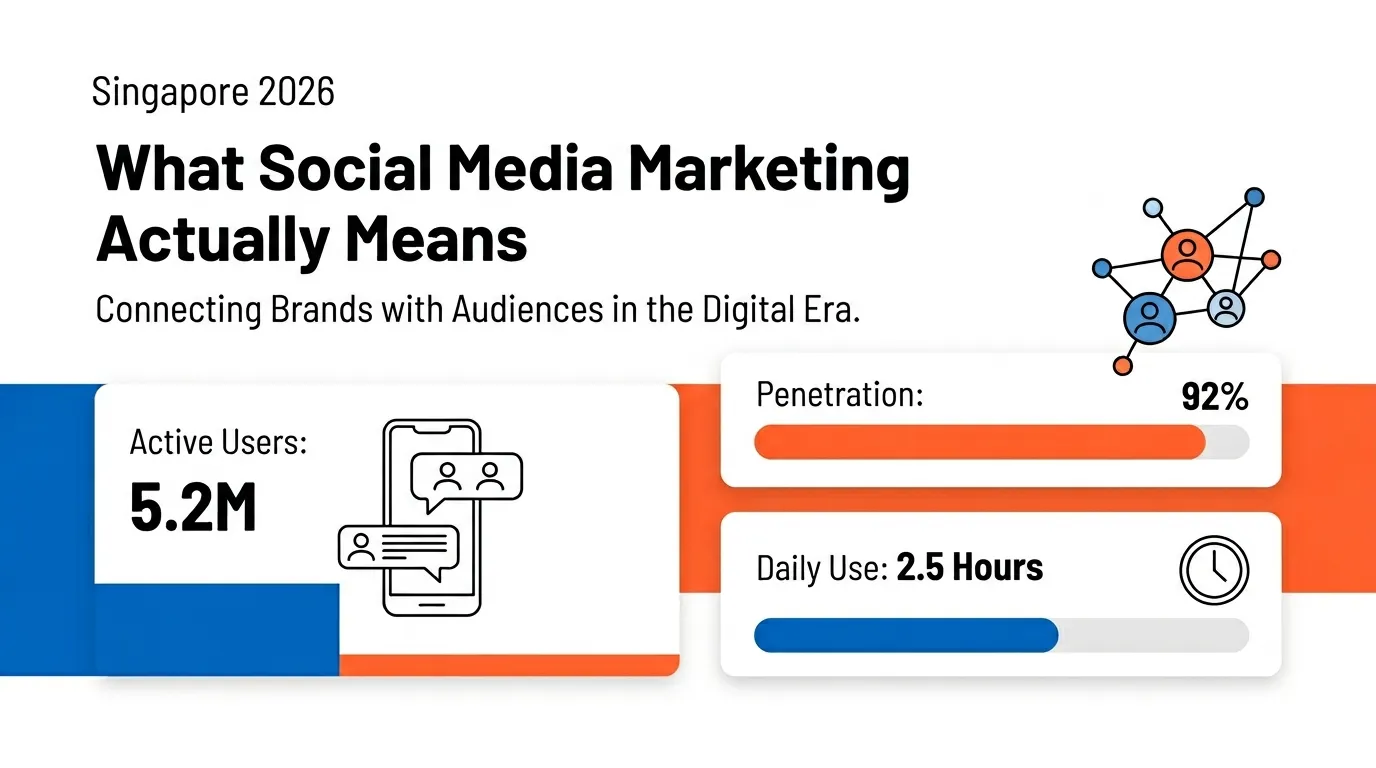
Social media marketing is the use of social platforms to build a brand, engage an audience, generate demand, and ultimately drive commercial outcomes for a business.
That definition sounds straightforward. In practice, it covers a wide range of activities: organic content creation and publishing, paid advertising, community management, influencer collaborations, audience research, analytics, and platform-specific strategy.
The mistake I see most often is treating social media marketing as a creative exercise rather than a strategic one. They focus on the posts themselves, not on the positioning of the posts they are meant to reinforce.
Why Brand Authority and Customer Trust Are the Core Outcomes
When someone encounters your business on social media, they are making a rapid assessment. Before they read your pricing, visit your website, or make an enquiry, they are forming a view of whether your brand is credible.
Authority is the perception that you know what you’re doing in your field. Trust is the belief that you will follow through, behave honestly, and deliver on what you promise.
Both of these outcomes take time to build and can be damaged very quickly. Social media is one of the most powerful environments for forming and testing ideas.
Who Benefits from Social Media Marketing?
Almost any business with a defined audience benefits from a considered social media presence. That said, certain categories see disproportionate returns:
- Professional services (legal, accounting, financial advisory), where credentials and reputation are central to the buying decision
- Home services (renovation, interior design, cleaning), where visual proof and peer recommendation carry significant weight
- Education and training providers are competing for attention from parents and working professionals
- Healthcare and wellness businesses where trust is a precondition for any commercial relationship
- B2B companies where LinkedIn reach directly influences pipeline and partnership conversations
What Social Media Marketing Is Not
It is not a substitute for a clear value proposition. It is not a solution to a weak product or service. It is not a short-term lead generation machine in isolation. And it is emphatically not something that works on autopilot.
I see businesses invest in social media marketing and then wonder why results are slow. More often than not, the issue is not the tactic but the absence of strategy behind it.
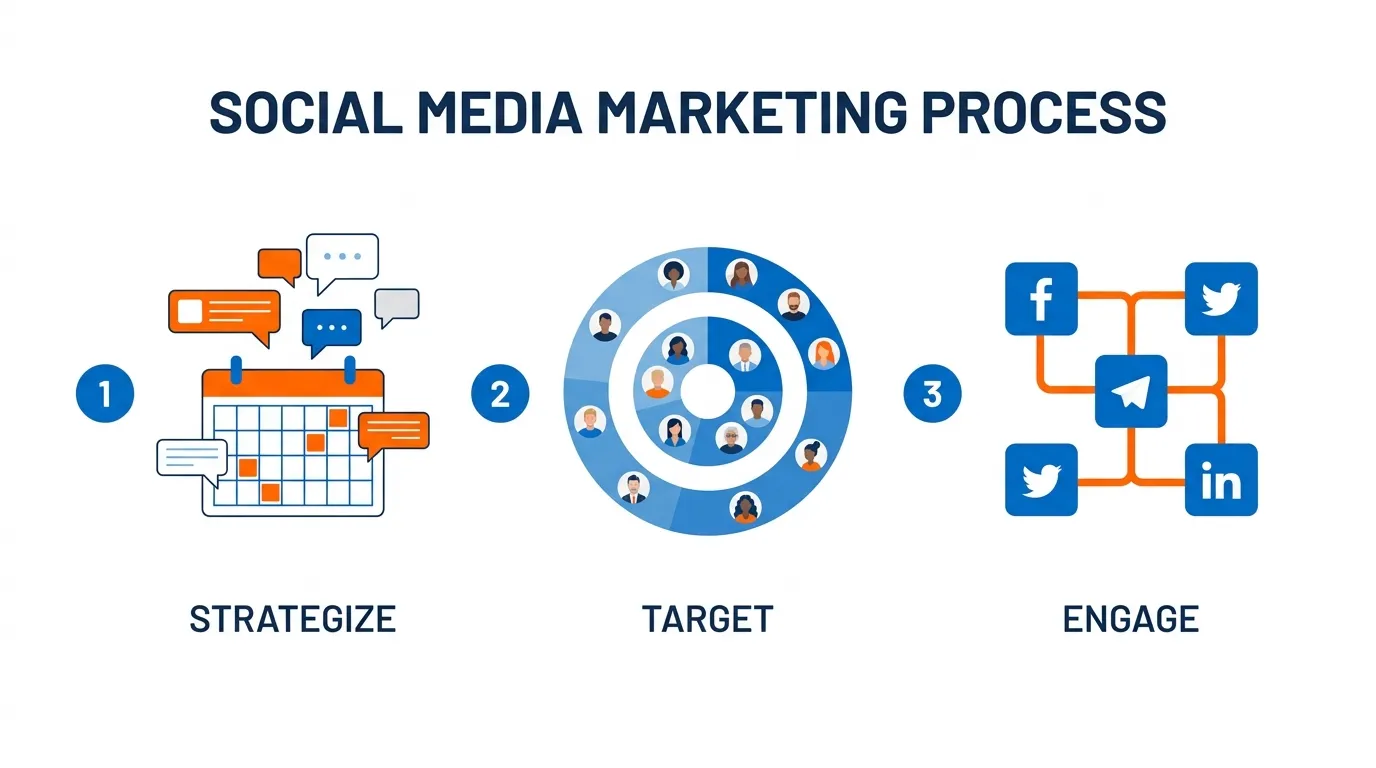
Effective social media marketing does not start with content creation. It starts with understanding what your audience is trying to accomplish, what questions they are asking, and what would make them choose you over someone else.
From there, the process typically involves:
- Content planning and strategy development. This means identifying themes, formats, publishing frequency, and how each piece of content connects to a broader brand narrative.
- Audience identification and segmentation. Knowing who you are talking to, specifically, makes every decision easier. A renovation firm targeting HDB upgraders in their 30s needs a different approach than one targeting landed property owners in their 50s.
- Platform selection and optimisation. Not all platforms deserve equal investment. The right platform is determined by where your audience spends time and how they behave there.
What Good Outcomes Look Like
In the first three to six months, a business with a consistent, strategic social media presence should see increased brand recall among its target audience, more direct profile visits and website traffic, improved engagement with content that speaks to real audience needs, and inbound enquiries referencing something the audience saw on social.
What most businesses miss is that these outcomes do not happen linearly. There is a compounding effect. The more consistently you show up with relevant, credible content, the more your social presence begins to function as a trust asset rather than just a publishing channel.
Organic vs Paid Strategies
Organic social media is about building a presence over time through consistent, unpaid content. It is slower, but the authority it builds is more durable.
Paid social media, meaning boosted posts and advertising campaigns, amplifies reach and can generate faster visibility. But paid without organic is a leaky bucket. If someone clicks an ad and lands on a profile with three posts from last year, the trust signal is immediately undermined.
The businesses that perform best use both organic content to build authority and paid to accelerate reach and capture demand at the right moment.
Influencer Marketing as a Trust Mechanism
Influencer marketing in Singapore is mature and increasingly nuanced. The data is instructive here.
Micro-influencers with between 10,000 and 100,000 followers achieve an average engagement rate of 36%, compared to 12% for larger accounts.
The implication is clear. Reaching for its own sake is not the goal. Relevance and credibility within a specific audience are what generate trust and, ultimately, conversions.
Types, Variants, and Tiers: Choosing the Right Platform
One of the most common and costly mistakes I see Singapore businesses make is treating every social media platform as interchangeable. They set up accounts on five platforms at once, push the same content across all of them, and then conclude that social media marketing does not work when the results are underwhelming.
The issue is not effort. It is a judgment.
Each platform has a distinct audience profile, a different content grammar, and a different role in the customer journey. Facebook is not Instagram. LinkedIn is not TikTok. Showing up on the wrong platform, or showing up on the right platform in the wrong way, wastes budget and, more importantly, time.
The decision about where to invest should be driven by one question above all others: where does your specific audience actually spend their attention, and what are they doing there? Everything else follows from that.
Facebook: Community and Consideration
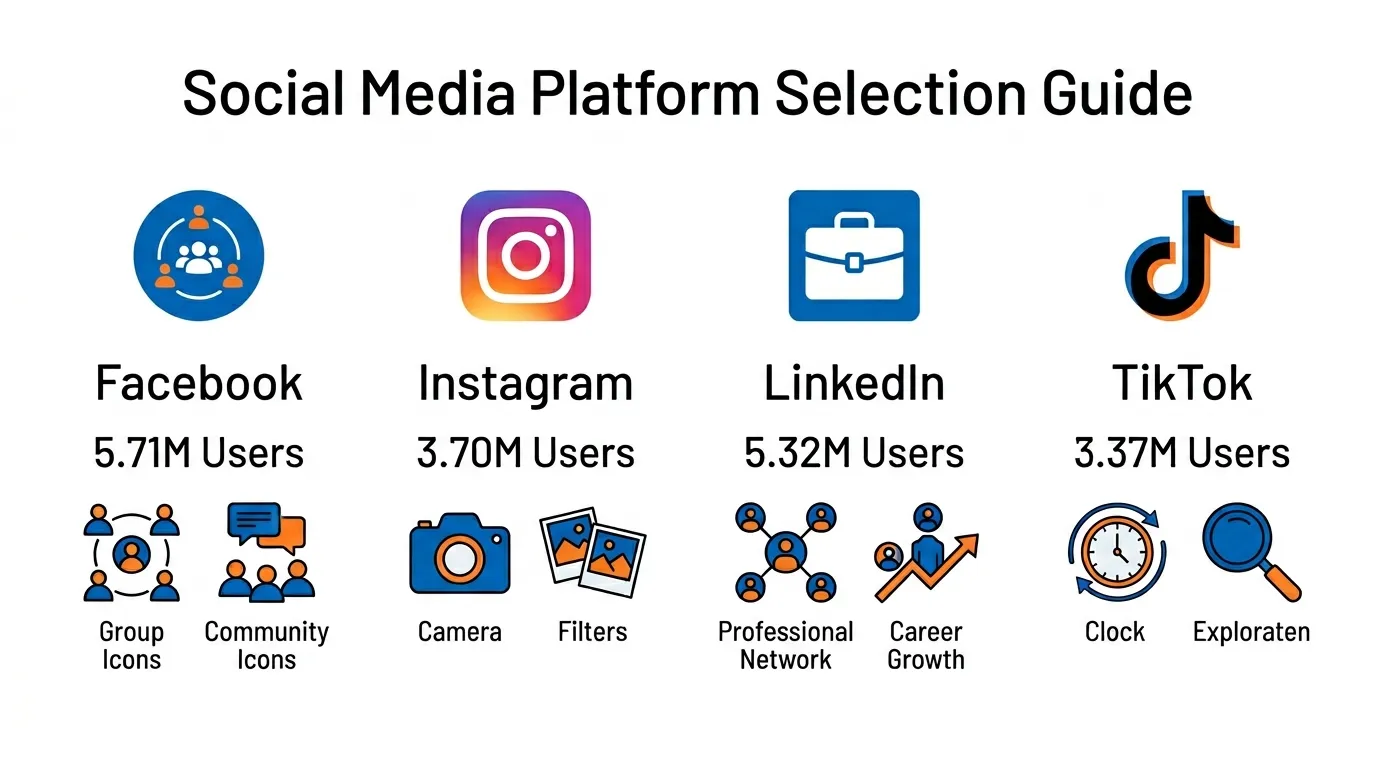
With 5.71 million users in Singapore representing 86.2% of the population, Facebook remains the most broadly penetrated platform in the country.
It is particularly effective for building communities around local interests, running targeted paid campaigns, and reaching audiences aged 35 to 65. For businesses in home services, food and beverage, education, and retail, Facebook Groups and advertising remain high-value channels.
The limitation is organic reach, which has declined significantly over the years. Facebook today rewards paid amplification more than organic posting, which means businesses need to budget accordingly.
Instagram: Visual Authority and Younger Demographics
Instagram‘s 3.70 million Singapore users skew younger, with the 25 to 34 age bracket representing the largest group. The platform is built for visual storytelling and is particularly powerful for businesses where aesthetics matter, such as interior design, hospitality, fashion, food, and lifestyle brands.
The authority signal on Instagram comes from the quality and consistency of your visual output. A poorly curated feed communicates disorder. A considered, consistent feed communicates professionalism and taste, both of which influence purchase decisions before a single conversation has taken place.
LinkedIn: B2B Authority and Professional Credibility
LinkedIn is the most underused platform among Singaporean SMEs, presenting a genuine strategic opportunity. With 5.32 million members in Singapore, LinkedIn has an extraordinarily high penetration among working professionals.
For founders, consultants, professional service firms, and B2B companies, LinkedIn is where authority is built simultaneously at the personal and organisational levels. I have seen clients generate more qualified leads from a thoughtful LinkedIn content strategy than from paid search campaigns costing three times as much.
The key is specificity. Generic thought leadership does not build authority. Specific, experience-led insight does.
TikTok: Attention and Discovery
TikTok users in Singapore spend an average of 1 hour and 39 minutes per day on the platform. Younger Singaporeans aged 18 to 30 increasingly use TikTok as a search engine for product reviews and recommendations.
For businesses targeting this demographic, TikTok is not optional. It is where brand discovery happens. The format demands authenticity and creativity, meaning the businesses that succeed here are those willing to show the human side of their operations rather than present a polished corporate front.
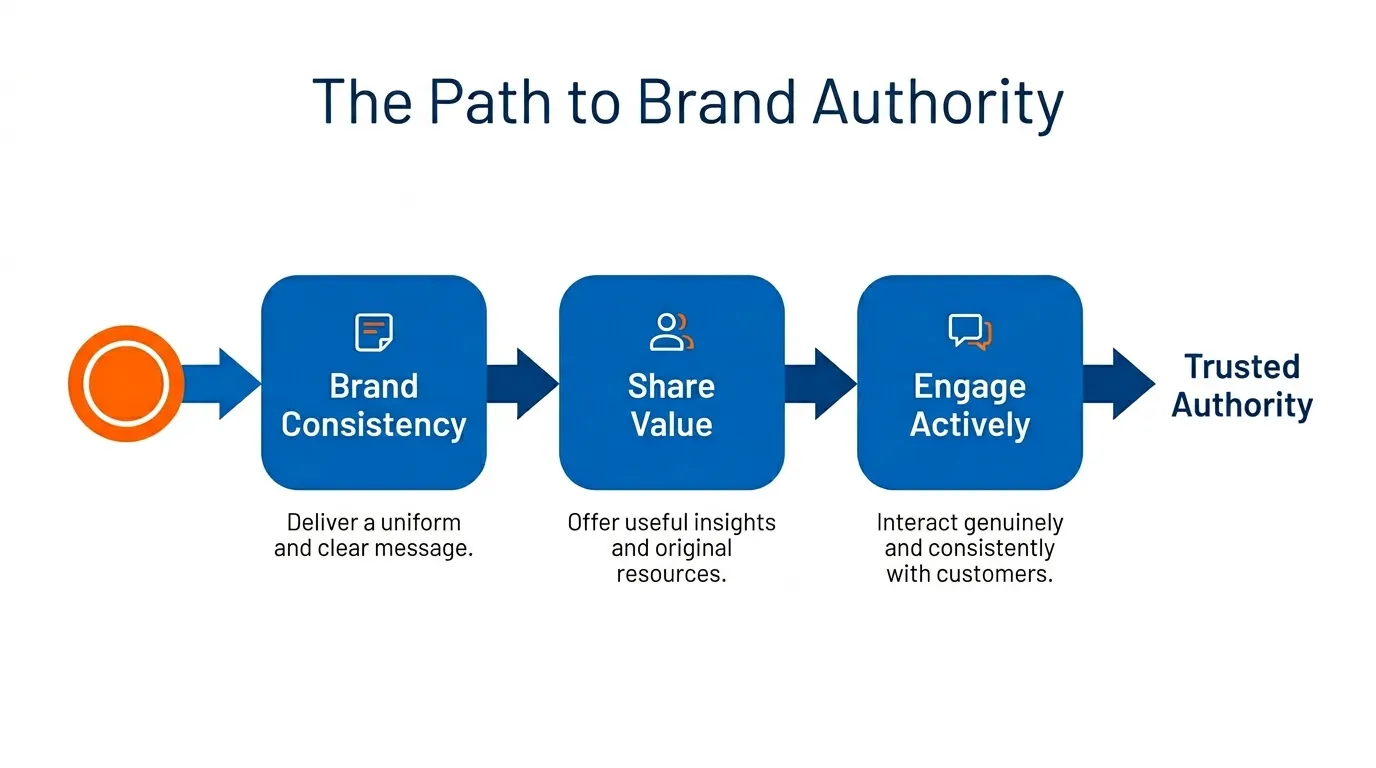
Brand authority is not about being famous. It is about being credible and trusted within your specific market. A specialist law firm in Singapore does not need to be known by everyone. It needs to be known, trusted, and respected by the right people.
Social media builds authority through the accumulation of consistent, relevant signals. Every post, response, and piece of content either adds to or detracts from your brand’s credibility.
Strategies for Establishing Authority
- Consistent branding and messaging. This means maintaining a recognisable visual identity, a consistent tone of voice, and a clear point of view that runs through everything you publish. Inconsistency communicates disorganisation.
- Sharing valuable, informative content. The businesses that build the most durable authority are those that genuinely help their audience. Not promotional content dressed up as helpful content, but actual insight that a prospective customer would find useful, whether or not they ever buy from you.
- Engaging with feedback and discussions. Authority is not a broadcast exercise. It is established through interaction. Responding thoughtfully to comments, answering questions publicly, and participating in conversations in your space signal that there are real, knowledgeable people behind your brand.
A Practical Pattern I See Repeatedly
The businesses that build strong social media authority in Singapore tend to share one characteristic: they treat their social presence as a reflection of their professional standards, not as a marketing function separate from the rest of the business.
The renovation firm that posts a careful, detailed before-and-after with a clear explanation of the design decisions made is communicating authority in a way that no advertising copy can replicate.
Authority says you know what you’re doing. Trust says you will behave honestly and in the customer’s interest. Both matter, but trust is more fragile.
The concern is real. 65.2 percent of online adults in Singapore say they are concerned about distinguishing what is real from what is fake online. That scepticism shapes how audiences evaluate brands on social media.
Strategies to Build Trust
- Transparency in communication. This means being honest about what you do, what you charge, and what customers should expect. Businesses that hide pricing, make vague claims, or over-promise create suspicion, not confidence.
- Authenticity in content and interactions. Audiences can identify performative authenticity immediately. Real testimonials, genuine project updates, candid responses to difficult questions, these build more trust than polished brand storytelling ever will.
- Responding to customer enquiries and concerns publicly. How a business handles a complaint on social media tells a prospective customer far more about that business than any marketing copy. Businesses that respond quickly, honestly, and constructively build trust even from negative interactions.
- User-generated content. When real customers share their own experiences with your brand, that social proof carries far more weight than anything you produce yourself. Actively encouraging and resharing genuine customer content is one of the most effective trust-building strategies available.
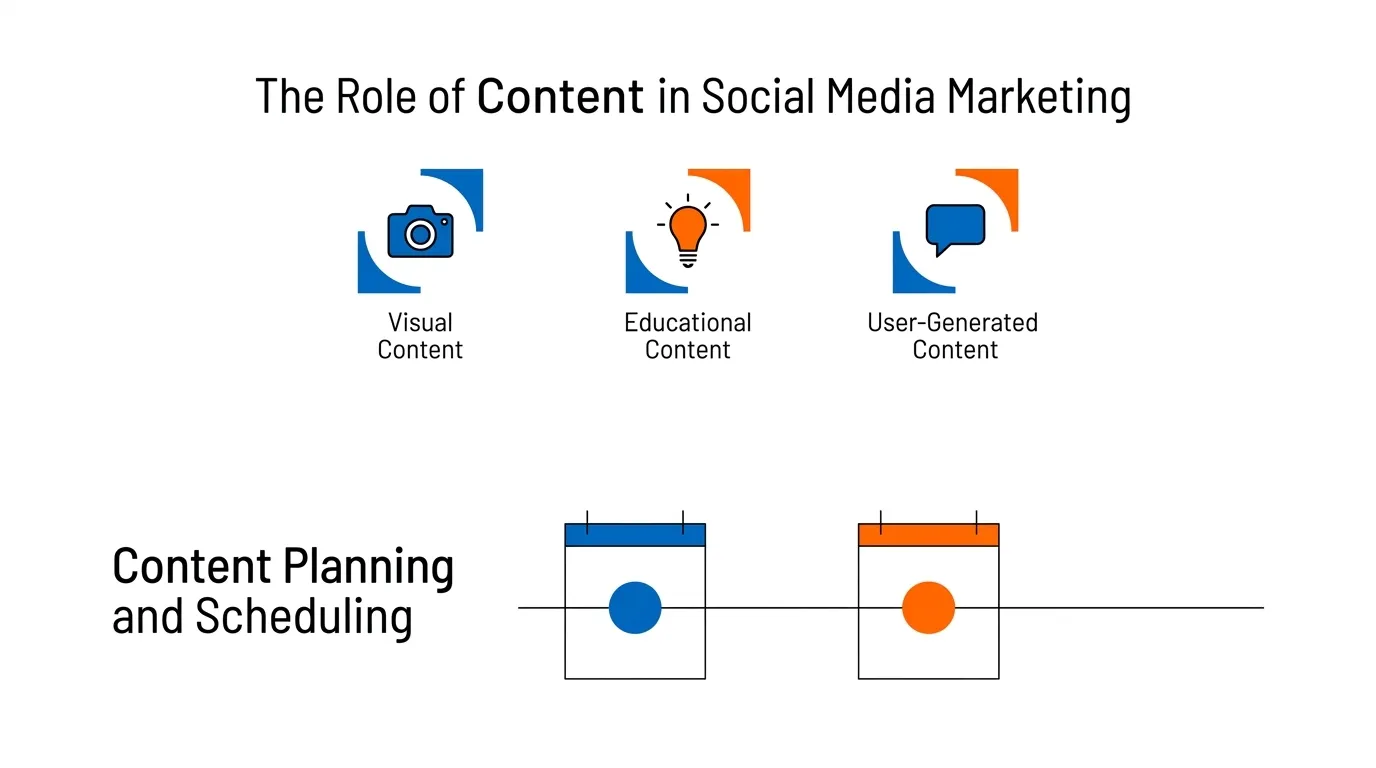
Not all content is created equal. In my experience, the content that builds the most authority and generates the most meaningful engagement across Singapore’s social platforms falls into three categories.
- Visual content with clear context. Images and videos that show real work, real people, and real outcomes. Not stock photography. Not abstract graphics. Real evidence.
- Educational content that answers genuine questions. If your audience is asking a particular question before they buy, answer it thoroughly and publicly. This positions you as the most helpful expert in your space and generates the kind of trust that accelerates the buying decision.
- User-generated content and testimonials. As mentioned, this carries outsized credibility. Actively building systems to capture and reshare this content is worth the effort.
Content Planning and Scheduling
Consistency matters more than frequency. I have seen businesses publish daily for a month, burn out, and then go silent for three months. That stop-start pattern undermines authority more than posting twice a week consistently would. A realistic, sustainable content calendar, tied to genuine business themes and milestones, will outperform an ambitious but unsustainable publishing schedule every time.
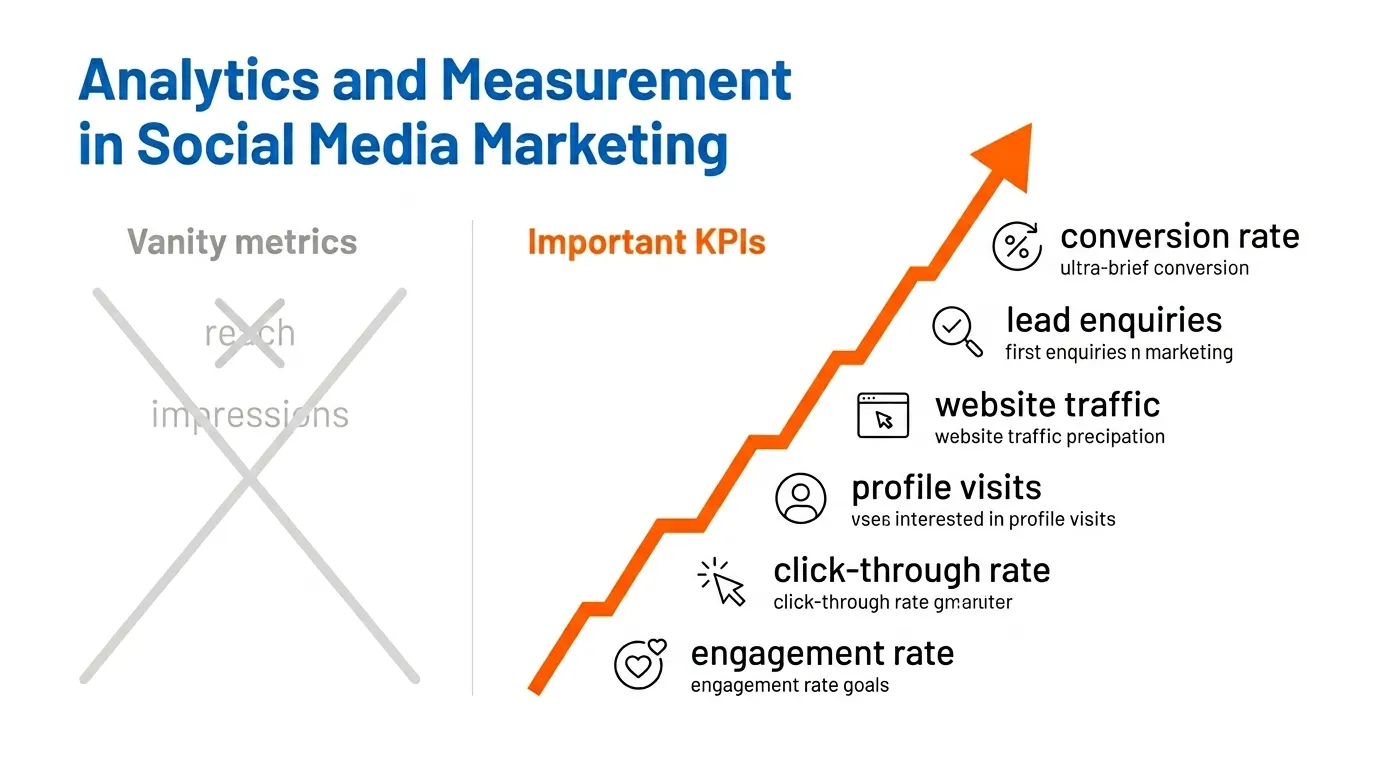
The businesses that improve are the ones that measure honestly. Social media generates a significant volume of data, but not all of it is relevant to business outcomes.
I see too many social media reports that lead with reach and impressions. These social media metrics describe how many people could have seen your content. They say nothing about whether anyone cared, clicked, enquired, or bought.
The KPIs That Actually Matter
| Metric | Why It Matters |
| Engagement rate | Indicates whether content resonates with your actual audience |
| Click-through rate | Measures intent, the movement from passive viewing to active interest |
| Profile visits | Signals growing brand interest |
| Website traffic from social | Connects social activity to the commercial pipeline |
| Lead enquiries attributed to social | The clearest business outcome measure |
| Conversion rate | Reveals whether social traffic is qualified |
Tools Worth Using
Meta Business Suite, LinkedIn Campaign Manager, and Google Analytics 4 together cover most of what a Singapore SME needs to accurately measure their social media marketing performance.
For more advanced social listening, social media management tools like Sprout Social or Brandwatch provide competitor and sentiment insight.
The tool matters less than the discipline of reviewing the data regularly and making decisions based on what it shows.
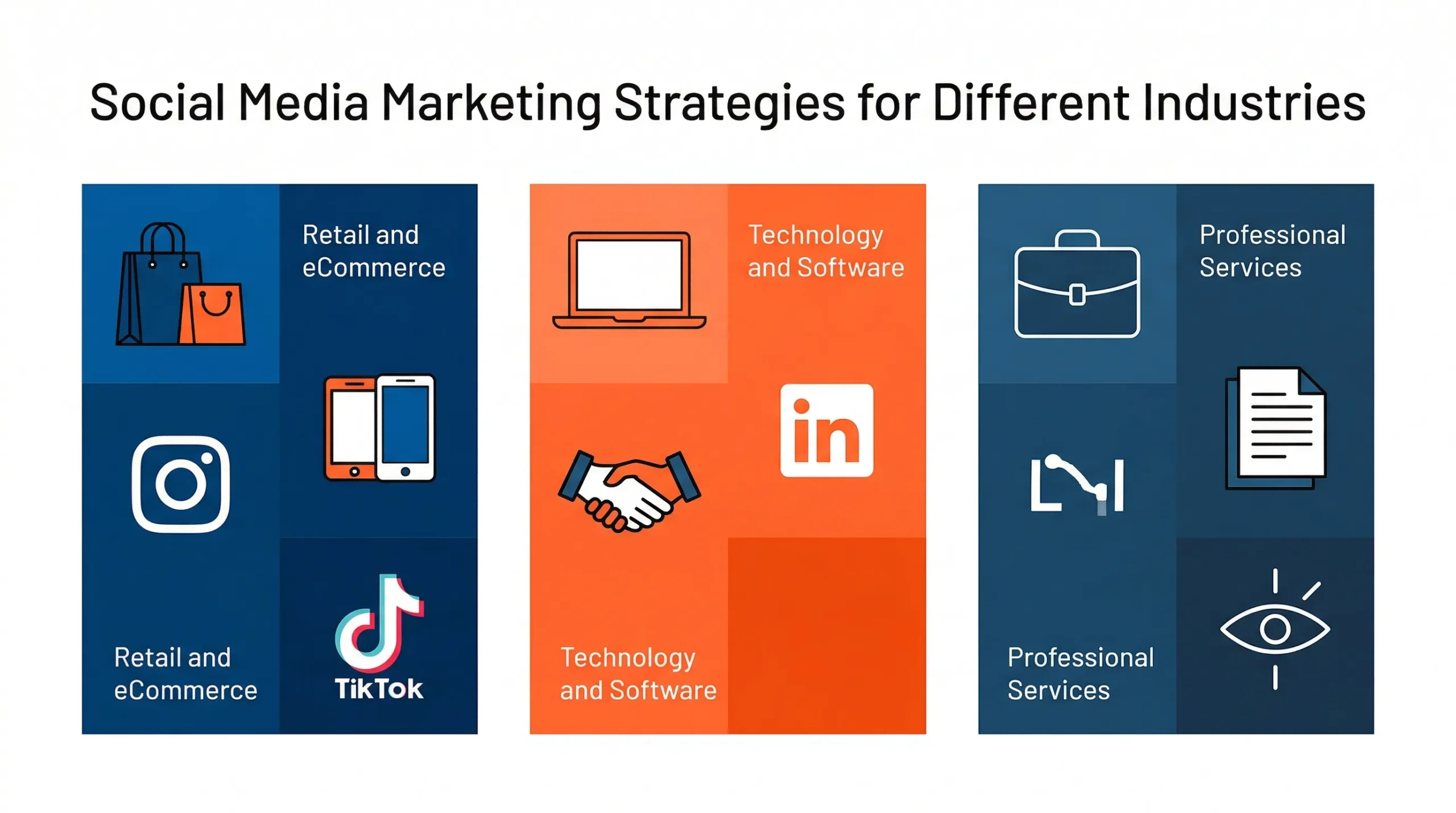
No two industries face the same buying decisions, trust thresholds, or content expectations. A prospective client evaluating a law firm approaches social media very differently from someone scrolling for a renovation contractor or comparing software vendors.
The platform, tone, content format, and conversion path all need to reflect how your specific audience researches, considers, and decides. What follows are the strategic priorities I would focus on for three of the most commercially active categories in Singapore:
Retail and eCommerce
For retail and eCommerce businesses in Singapore, the priority is visual credibility and purchase intent. Instagram and TikTok are the primary discovery channels, with Facebook advertising providing the broadest reach for retargeting and conversion campaigns.
The key is closing the loop between social discovery and a website experience that converts. A beautifully curated Instagram feed that leads to a slow, confusing website is a missed opportunity.
Technology and Software
B2B technology companies in Singapore should invest disproportionately in LinkedIn. Thought leadership content from founders and senior team members, case studies framed around business outcomes rather than technical features, and precise audience targeting by job title and company size are the ingredients that work here.
The trust bar is high in this category. Decision-makers evaluating software purchases are looking for evidence of competence and reliability above all else.
Professional Services and Consulting
For legal, financial, accounting, and management consulting firms, the challenge is to present genuine expertise in a format accessible to a non-specialist audience.
This is actually an opportunity. Most professional services firms in Singapore communicate in ways that are either too technical or too vague, making it hard for them to differentiate themselves. The firm that explains a complex compliance issue in clear, practical language without sacrificing accuracy stands out immediately.
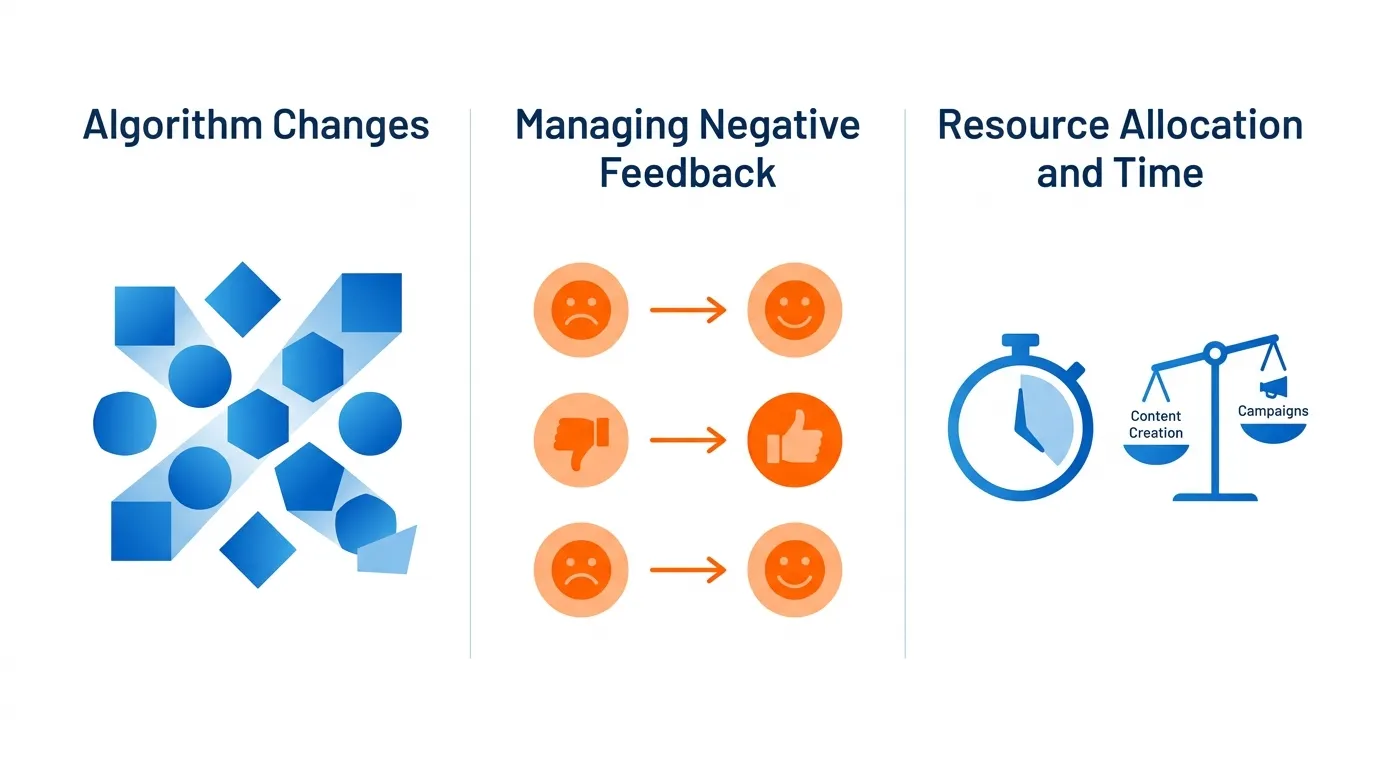
Every business that has been doing this for more than a few months will tell you the same thing: social media is harder to sustain than it looks from the outside. The platforms shift, the audience expectations rise, and the resources required to do it properly rarely stay static. Understanding where the pressure points are before you encounter them is half the battle.
- Algorithm Changes: Platform algorithms change constantly and without notice. Businesses that build their entire strategy around organic reach on a single platform are permanently exposed to the risk that their reach will be reduced overnight. The solution is diversification, both across platforms and between organic and paid strategies, combined with a focus on content quality that tends to perform well regardless of algorithmic shifts.
- Managing Negative Feedback: Negative feedback is not a crisis unless it is handled badly. I see businesses delete critical comments or respond defensively, both of which amplify the original concern and signal poor judgment to everyone watching. A calm, transparent, solution-focused response to criticism almost always converts a potential reputational problem into a trust-building moment.
- Resource Allocation and Time: Social media marketing requires sustained effort over time. For SMEs without a dedicated marketing function, this is a genuine constraint.
The practical answer is not to try to do everything. It is to identify one or two platforms where your audience is most active, invest in those properly, and measure outcomes before expanding. Spreading thin across six platforms and executing none of them well is a common and expensive mistake.
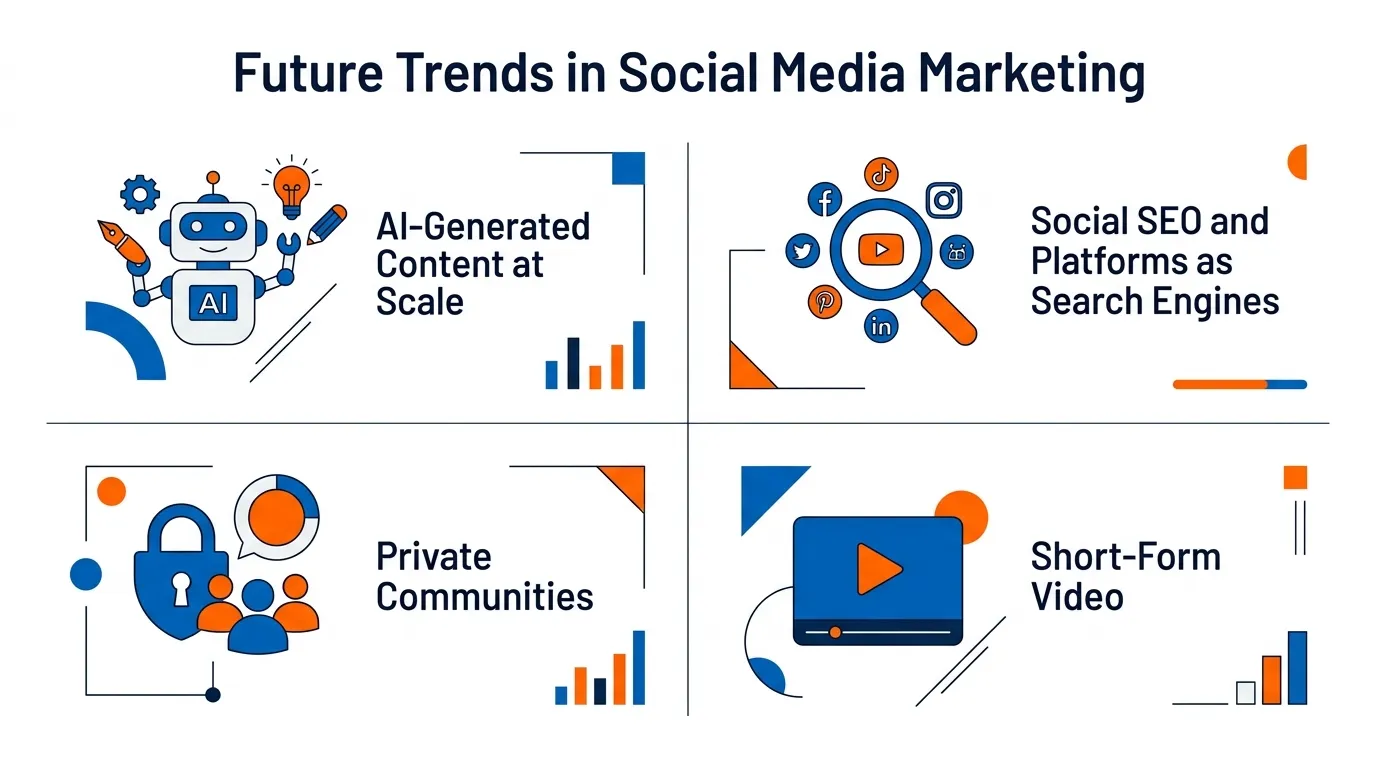
The social media landscape in Singapore is not standing still. Platforms are evolving, audience behaviour is shifting, and the tools available to marketers are becoming more powerful and more complex at the same time.
I have seen businesses get caught out by treating their current strategy as permanent. What works well today may become table stakes tomorrow, and what seems peripheral now may become central to how brands build authority and trust within the next two to three years.
Understanding where things are heading does not mean chasing every new trend. It means knowing which shifts are structurally significant enough to plan for now.
AI-Generated Content at Scale
Generative AI is already reshaping content production. Singapore businesses are using it for creative variation, social media management, language localisation, and campaign acceleration. The risk is content that feels generic and unattributed to a specific human perspective.
The businesses that win with AI-assisted content are those that combine production efficiency with genuine human judgment. The voice still needs to be real. The insight still needs to be earned.
Social SEO and Platforms as Search Engines
This is one of the more significant shifts I am watching. Younger Singaporeans aged 18 to 30 are using TikTok, Instagram, and YouTube as their primary search tools for product research and recommendations.
This changes the content strategy for any brand targeting that demographic. It is not enough to optimise for Google alone. Your social content needs to be structured, searchable, and useful as a discovery mechanism in its own right.
Private Communities and High-Trust Environments
There is a growing shift toward WhatsApp Channels, Telegram groups, and Discord communities for brand engagement. These environments require a different approach: less broadcasting, more genuine participation.
For businesses willing to invest in this, the trust dividend is significant. The audiences in private communities are self-selecting, more engaged, and far more likely to convert than passive followers on a public feed.
Short-Form Video as the Default Format
Singaporeans spend an average of 2 hours and 6 minutes per day watching online videos. Short-form video is not a trend. It is the dominant format for attention and discovery across most demographics. Businesses that have not yet incorporated video into their social strategy are operating with a meaningful disadvantage.
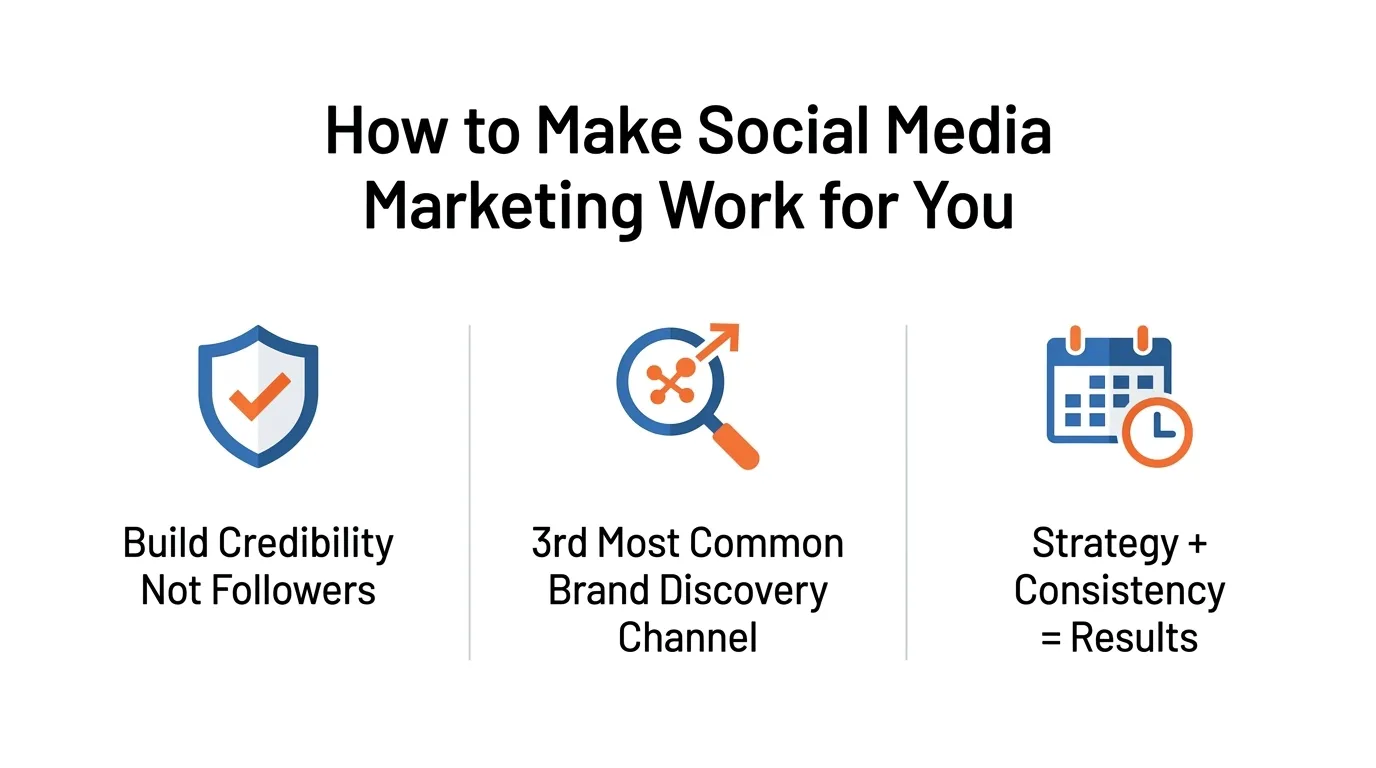
Social media marketing is one of the most consequential things a Singapore business can get right or wrong. Not because of the follower counts or the engagement numbers, but because of what it communicates to every prospective customer who encounters your brand before they decide whether to trust you.
The businesses I have seen grow through social media marketing share a common trait. They treat it as a long-term investment in credibility, not a short-term tool for visibility. They focus on the quality and consistency of what they say, not on gaming any individual platform’s algorithm. And they measure outcomes that actually connect to business growth, not metrics that feel good but tell them little.
With social media user penetration at 90.6% of Singapore’s population and social ads now ranking as the third most common source of brand discovery after search and word of mouth, the question for most businesses is no longer whether social media marketing matters. It is whether you are doing it with the strategy and consistency it deserves.
If you are weighing up how to approach this properly, or want a clearer view of what a considered social media strategy could look like for your business, a conversation with MediaOne may help frame the decision.
Frequently Asked Questions
How often should a business post on social media marketing platforms?
Consistency matters more than frequency in social media marketing. Posting two to three times per week consistently is often more effective than posting daily for a short period and then stopping. The goal is to maintain a reliable presence that reinforces credibility over time. A sustainable schedule aligned with your resources will outperform an aggressive but inconsistent approach.
What type of content performs best in social media marketing?
Content that reflects real experiences, answers genuine questions, and shows tangible outcomes tends to perform best. Visual proof, such as before-and-after projects, educational insights, and user-generated content, builds both engagement and trust. Audiences respond more to authenticity than polished promotional material. Relevance to audience needs is the key driver of performance.
How long does it take to see results from social media marketing?
Most businesses begin to see early signals, such as increased engagement and profile visits, within the first three months. More meaningful outcomes like enquiries and conversions typically take three to six months of consistent effort. Results compound over time rather than appearing immediately. The timeline depends on strategy quality, competition, and execution consistency.
Can social media marketing replace a website?
No, social media marketing should support, not replace, your website. Social platforms are discovery and engagement channels, while your website is where conversions usually happen. A strong social presence can drive traffic, but without a clear and functional website, that interest may not convert. Both need to work together as part of a broader strategy.
Is social media marketing effective for small businesses in Singapore?
Yes, especially for small businesses competing in local markets where visibility and trust are critical. Social media allows smaller brands to demonstrate expertise, showcase real work, and engage directly with potential customers. When executed strategically, it can level the playing field against larger competitors. The key is focusing on the right platforms and consistent execution.