Social commerce has changed how people move from product discovery to purchase. Instead of treating social media as a separate awareness channel and ecommerce as the place where buying happens, many brands now use social platforms as part of the purchase journey itself.

Shopify defines social commerce as shopping experiences that take place directly on social platforms. Most marketers agree that more shopping will occur on social media than on brand websites or third-party marketplaces.
This shift makes influencers even more valuable. In social commerce, creators do more than boost reach. They build credibility, explain products clearly, and make them feel relevant when it matters most.
Live shopping takes this further. Creators can show products in action, answer questions on the spot, and drive instant decisions, which traditional ads rarely achieve.
Sprout Social describes live social shopping as a format where brands and influencers showcase products through livestreams while viewers shop, ask questions, and engage in real time.
If you want influencer campaigns to drive real sales, you need the right strategy, not just execution. That’s where a social commerce influencer marketing agency in Singapore can help you move beyond visibility to real business results.
Key Takeaways
- Social commerce makes buying faster. Instead of sending users on a long journey from social to checkout, brands can use content, creators, and platform tools to help people decide and buy quickly.
- Influencers do more in social commerce than just build awareness. They explain products, build trust, and help convert users right at the point of purchase.
- Live shopping makes social commerce interactive and persuasive. Product demos, live Q&A, and real-time offers help brands remove hesitation and drive action.
- The best social commerce influencers are not always the biggest. Audience fit, trust, and the ability to drive buying intent matter more than follower count.
- Strong results come from strategy, not just picking creators. Brands win when product, influencer, content, and purchase flow all work together toward a clear goal.
What Is Social Commerce and Why Is It Different From Traditional E-commerce?
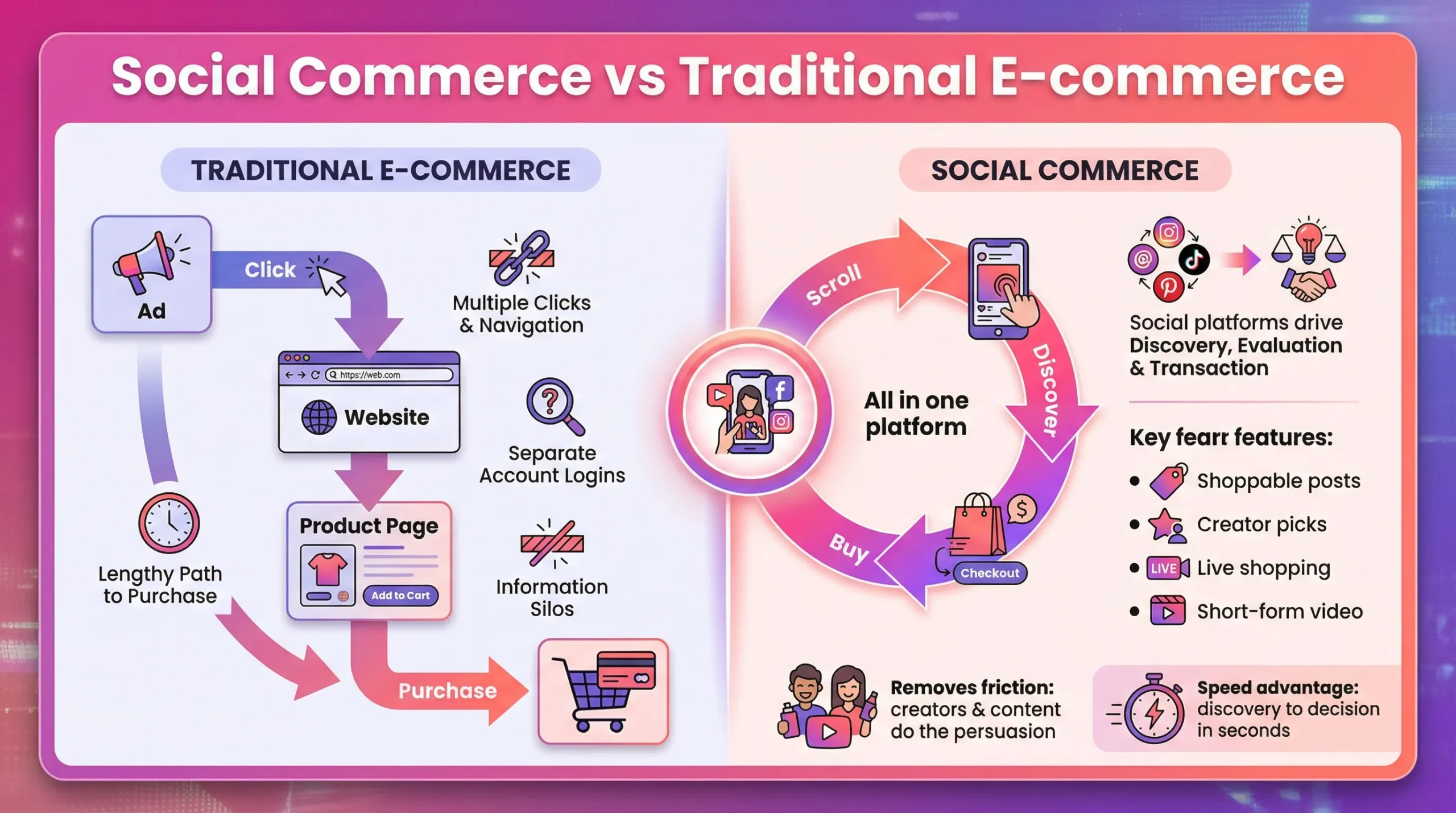
Social commerce means social platforms do more than just introduce your brand; they drive the whole shopping experience.
They help drive discovery, evaluation, and in many cases the transaction itself. Shopify describes social commerce as part of a broader shift where brands use social media to create smoother paths to purchase and stronger customer experiences.
Traditional e-commerce sends users from an ad or post to a separate website, where the product page does most of the selling.
Social commerce removes that friction. The platform, content, and creator do most of the persuasion before the shopper even reaches the product page.
Social commerce typically includes
- shoppable posts and tagged products
- creator-led product recommendations
- in-platform discovery and browsing
- short-form video content that drives purchase intent
- live shopping sessions with direct links or in-app checkout
Speed is what makes social commerce powerful. Users can go from discovery to decision in a fraction of the time.
Speed is what makes social commerce powerful. Users can go from discovery to decision in a fraction of the time. The global social commerce market reached $2 trillion in 2025, projected to hit $2.6 trillion by 2026.
What Is Live Shopping and Why Does It Matter in Social Commerce?
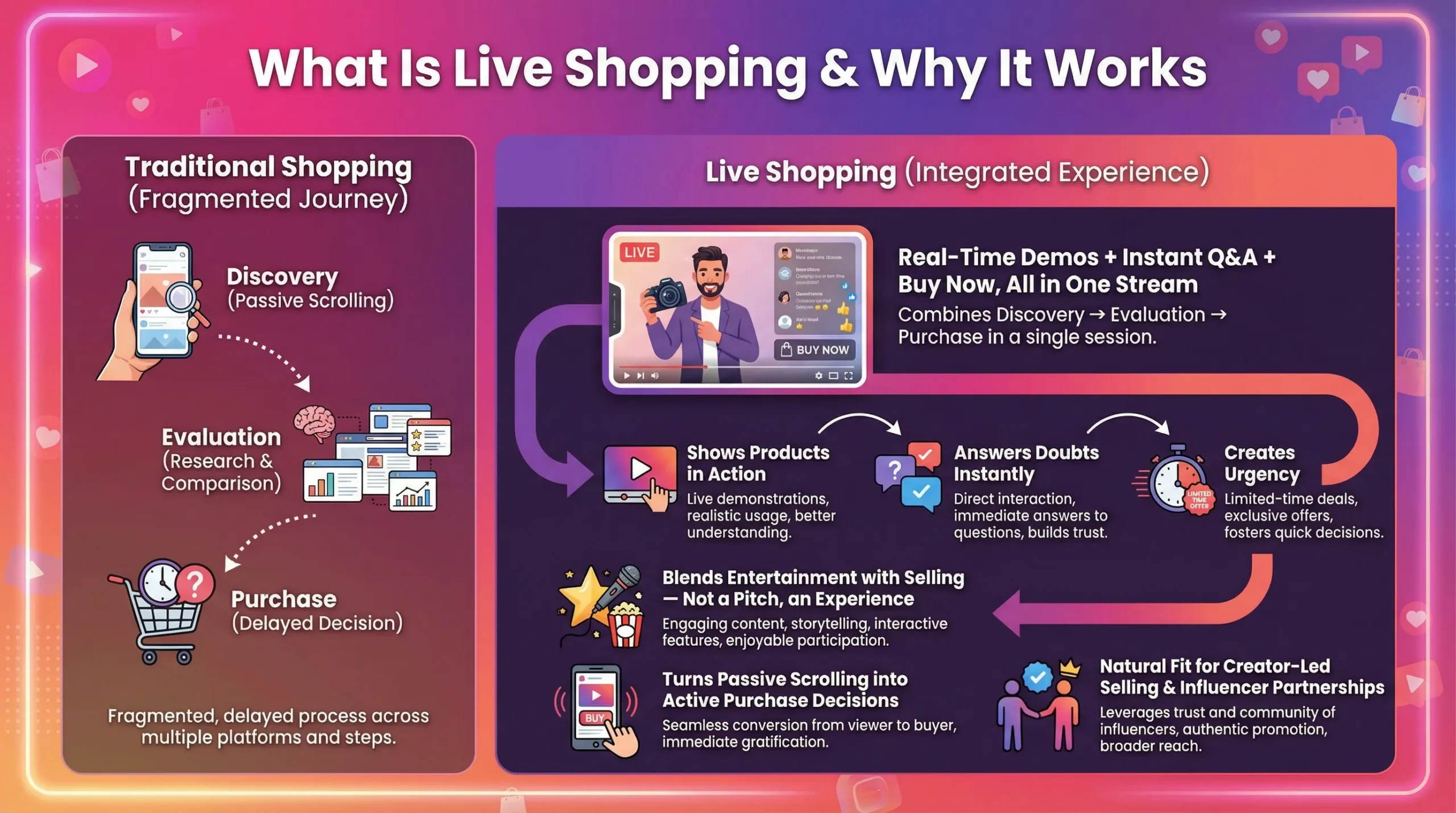
Live shopping is a livestream-based selling format where a brand, creator, or host presents products in real time while viewers watch, ask questions, and buy during or shortly after the session.
Shopify defines it as a strategy in which a host presents products, and viewers can purchase in real time, while Sprout Social describes live social shopping as a virtual event that combines live product demonstrations with social interaction and clickable shopping links.
Live shopping matters because it combines discovery, evaluation, and purchase into one seamless experience.
Instead of discovering a product in one place, researching it somewhere else, and buying later on a different site, shoppers can watch a demo, hear questions answered, build confidence, and move closer to purchase without that same level of friction.
Social commerce is all about shortening the path from discovery to purchase inside social platforms.
- It shows the product in action: a livestream makes it easier to understand because the audience can see how it looks, works, and fits into real use.
- It gives shoppers instant answers: Viewers do not have to leave with unanswered doubts. Hosts can respond to questions on the spot, reducing hesitation.
- It creates a stronger urgency: Live formats are well-suited to limited-time offers, product drops, and event-style promotions that encourage faster decisions.
- It blends entertainment with shopping: Live shopping is not just a sales pitch. It works because it feels more interactive and engaging than a static product listing or standard ad.
Why it matters for brands
Live shopping matters because it combines discovery, evaluation, and purchase into one seamless experience.
A strong live session can handle product demonstration, trust-building, objection handling, and conversion support all at once, which is why it has become such a natural fit for creator-led selling and influencer partnerships.
Live shopping turns passive scrolling into active product consideration. In fact, live shopping achieves conversion rates of up to 60% in top-performing sessions.
Instead of sending people away from social media, live shopping lets brands meet audiences where they already are and convert attention into action.
The Role of Influencers in Social Commerce and Live Shopping
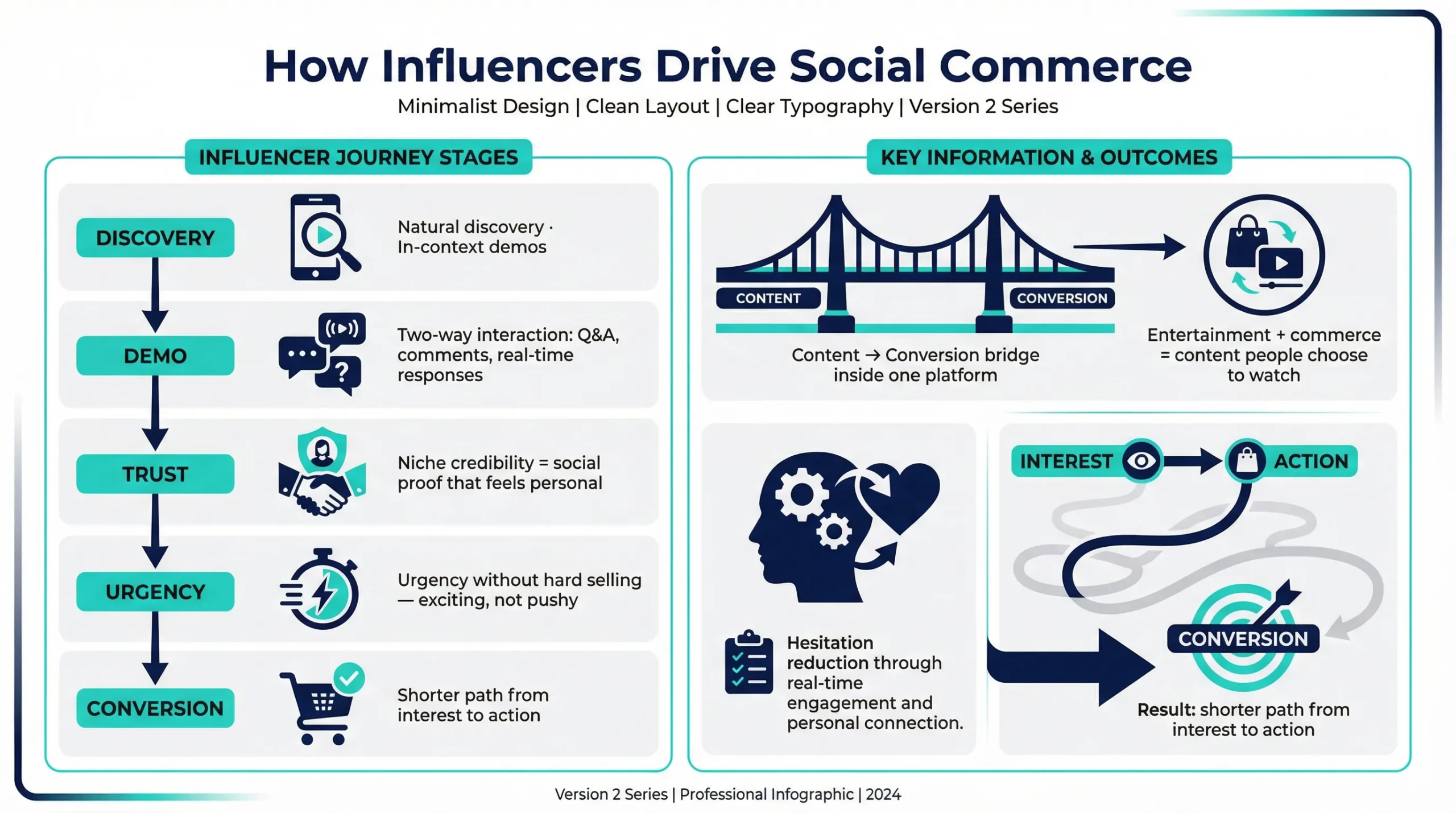
In social commerce and live shopping, influencers do far more than promote a product. They act as the bridge between content and conversion, helping brands turn product discovery into immediate action within the same platform.
Their role is especially important because social commerce is not just about being seen. It is about helping audiences understand, trust, and buy in a fast-moving digital environment.
They make product discovery feel natural
Influencers introduce products in a way that feels embedded within everyday content rather than separate from it. Instead of relying solely on a polished brand message, they show how a product fits into real routines, preferences, or problems. This makes discovery feel less like an ad and more like a recommendation people are open to exploring.
They demonstrate products in context
One of the most important roles influencers play in live shopping is showing how a product actually works. They can wear it, test it, use it, compare it, or explain how it fits into a lifestyle or use case. In social commerce, this matters because customers are often making decisions quickly, and a clear demonstration can answer questions faster than a product page can.
They reduce hesitation at the point of purchase
Live shopping creates a short window in which users are deciding whether to act now or keep scrolling. Influencers help reduce that hesitation by addressing common concerns in real time, such as size, texture, ease of use, quality, or value. Their ability to respond in a relatable way helps audiences feel more confident about buying on the spot.
They create a more interactive buying experience
Unlike static brand content, influencers bring energy, personality, and two-way interaction into the shopping journey.
In live shopping sessions, they can react to comments, answer audience questions, highlight key features, and keep viewers engaged throughout the stream. This makes the experience feel more immediate and participatory, which can increase interest and time spent with the product.
In social commerce, trust often develops through familiarity and perceived authenticity. Influencers bring built-in credibility because their audiences already follow them for opinions, recommendations, or expertise in a specific niche. When they feature a product in a convincing and relevant way, they provide a form of social proof that feels more personal than standard brand advertising.
They help drive urgency without relying only on hard selling
Live shopping often depends on momentum. Limited-time offers, exclusive bundles, and product drops tend to perform better when introduced by a creator who knows how to keep attention high. Influencers can make urgency feel exciting rather than overly aggressive by presenting offers in a tone that matches the platform’s and their audience’s expectations.
They turn shopping into content people actually want to watch
A major reason influencers matter in social commerce is that they make the commercial experience entertaining enough to hold attention. Instead of separating content from commerce, they combine both. This is particularly valuable in live shopping, where viewers are not just looking to buy. They are also looking to be informed, engaged, and persuaded in an enjoyable way.
They help brands convert within the platform
In social commerce and live shopping, influencers do far more than promote a product. They act as the bridge between content and conversion, helping brands turn product discovery into immediate action within the same platform. Their role is especially important because social commerce is not just about being seen. It is about helping audiences understand, trust, and buy in a fast-moving digital environment.
Why Influencers Play a Bigger Role in Social Commerce Than in Traditional Social Media Marketing
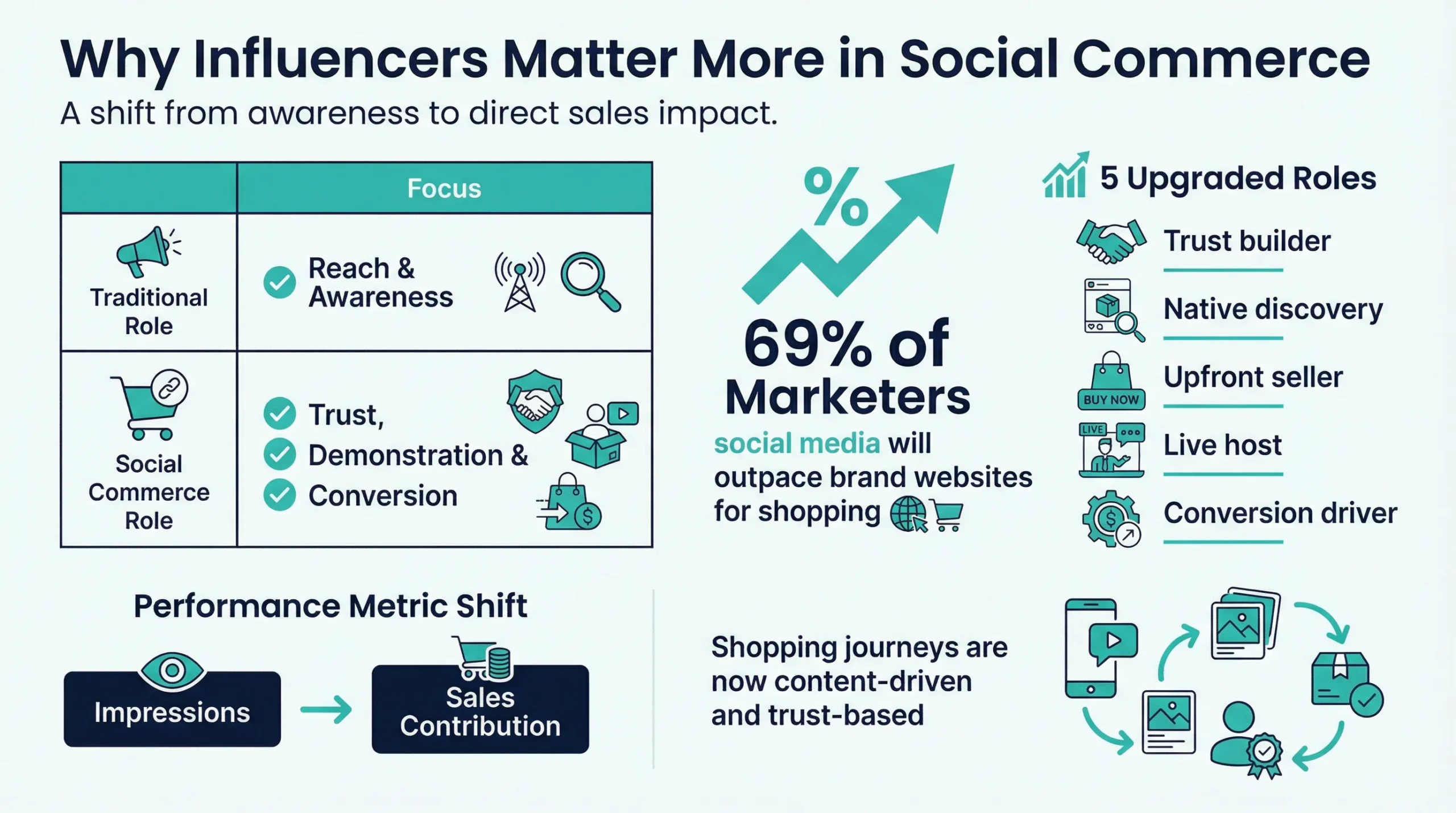
In traditional social media, influencers mainly boost reach and brand visibility.
In social commerce, influencers play a bigger commercial role. The path from discovery to purchase is shorter, and creator content does much of the selling before users even reach the product page.
Shopify describes social commerce as a more seamless shopping experience within social platforms, while HubSpot reports that 69% of marketers expect more shopping to take place directly on social media than on brand websites or marketplaces.
That shift makes influencers more valuable because they help reduce friction at the exact moment buying decisions are forming.
Influencers do more than attract attention. They build trust, explain products in context, and drive action in a way that feels natural.
HubSpot has also noted that legitimacy and product quality concerns are major reasons consumers hesitate to shop on social media, making trusted creator endorsements even more important.
- They reduce trust barriers faster: A familiar creator can make a product feel more credible than a direct brand ad, especially for newer or lesser-known brands.
- They make discovery feel native: Influencer content fits naturally into how people already use social platforms, making product discovery feel less disruptive.
- They do more of the selling work upfront: Creators can demonstrate the product, explain its value, compare options, and answer likely objections before the audience ever reaches checkout. Shopify’s ecommerce influencer marketing guidance explicitly ties creators to driving ecommerce sales, not just awareness.
- They are especially effective in live shopping: influencers often serve as hosts, product demonstrators, and conversion drivers simultaneously. Sprout Social defines live social shopping as a format in which brands and influencers showcase products through livestreams, with viewers able to ask questions and shop via clickable links.
- They support conversion, not just engagement: Social commerce shifts performance expectations from impressions and likes towards clicks, product interest, and sales contribution. That naturally increases the value of creators who can drive action, not just attention.
Influencers matter more in social commerce because shopping journeys are content-driven, trust-based, and closer to purchase.
As entertainment and buying blend together, creators are now a direct part of how brands sell.
How Influencers Shape the Social Commerce Funnel
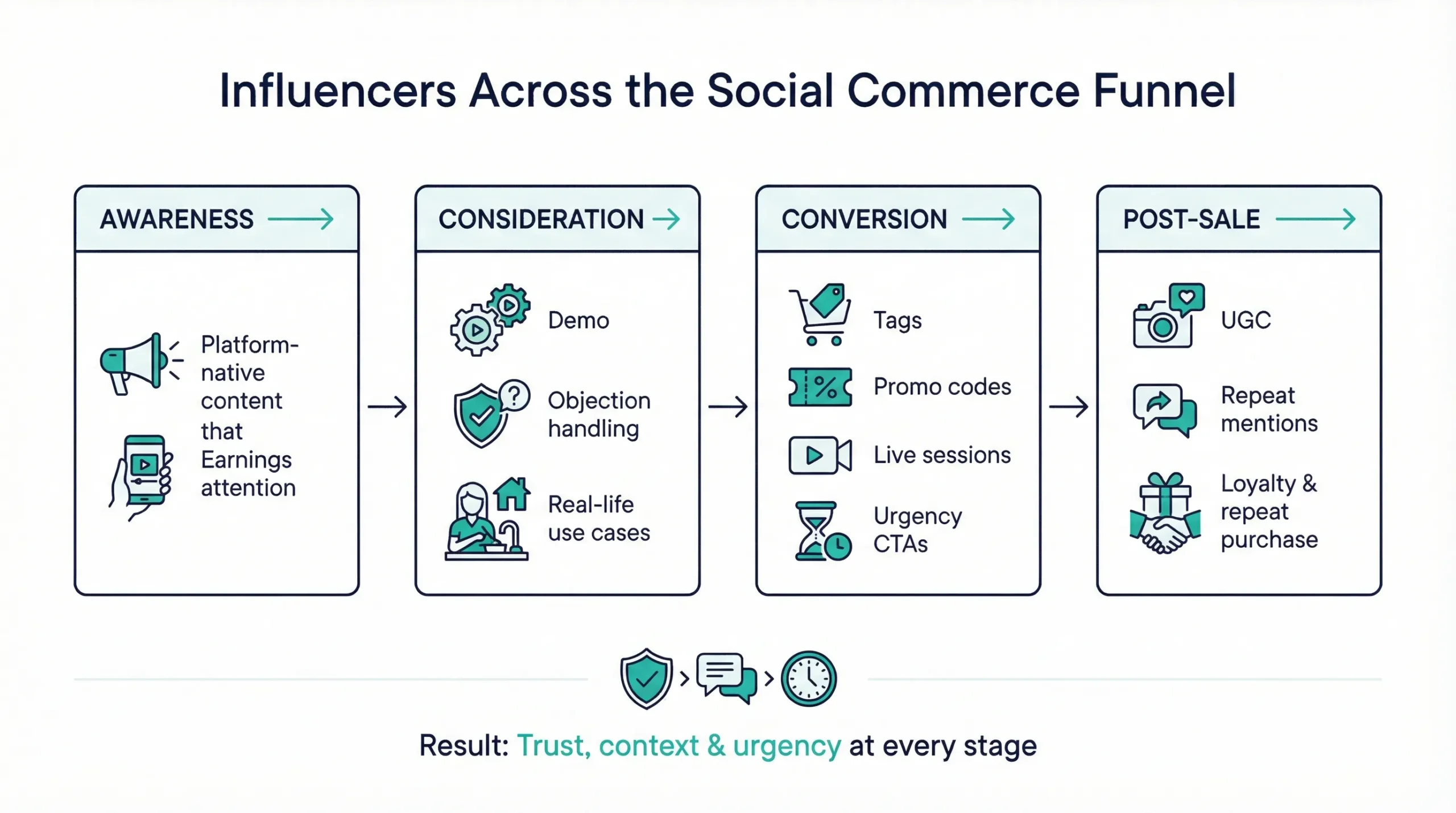
Influencers do more than get brands seen. In social commerce, they shape every stage of the buying journey, from discovery to purchase and even after the sale.
At the awareness stage, influencers introduce products in ways that fit the platform. People are more likely to stop for content that feels relevant and familiar than for a brand ad.
At the consideration stage, creators help audiences evaluate the product more seriously. They can:
- demonstrate how it works
- explain who it is for
- answer common objections
- compare it with alternatives
- show results or real-life use cases
At the conversion stage, influencers help turn interest into action. This can happen through:
- product tags
- exclusive promo codes
- limited-time offers
- live shopping sessions
- clearer calls to action
Some creators keep working after the sale. Follow-up content, repeat mentions, and user-generated posts build trust, drive repeat purchases, and keep your brand visible.
That’s why influencers work so well in social commerce. They move people through the funnel with trust, context, and urgency—not just awareness.
What Makes an Influencer Effective in Social Commerce?
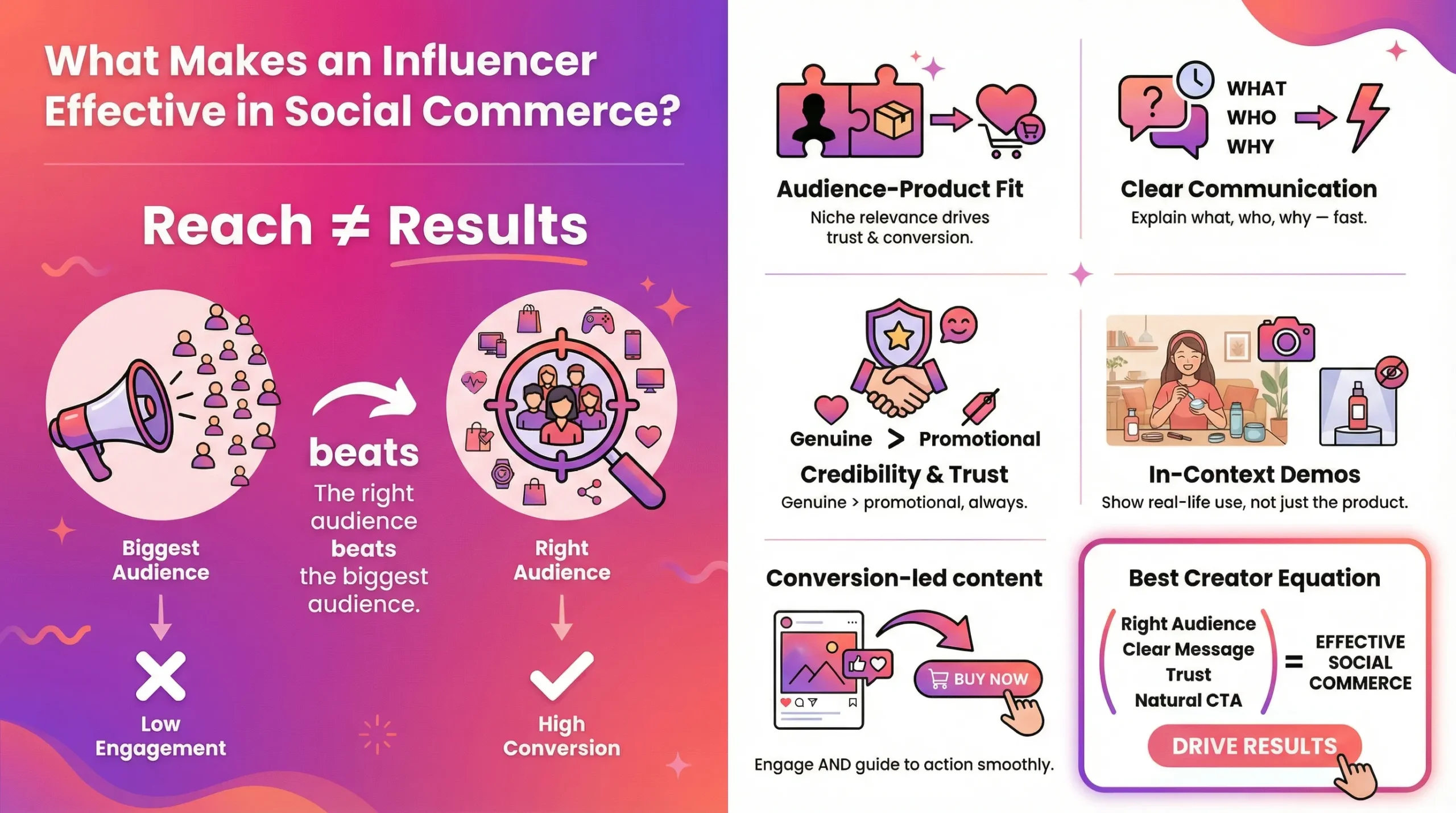
Not every influencer is built for social commerce. A large following may help a brand gain reach, but reach alone does not guarantee clicks, add-to-carts, or purchases. In social commerce, the most effective influencers are usually the ones who can make a product feel relevant, credible, and easy to buy within a short window of attention.
The strongest creators tend to stand out in a few important ways.
Strong audience-product fit
An influencer is far more likely to drive results when their audience already has a natural interest in the product being promoted.
A beauty creator reviewing skincare, a fitness creator featuring supplements, or a parenting creator sharing household products will usually feel more convincing than someone promoting outside their niche.
This matters because social commerce depends on quick trust and relevance. When the product aligns closely with what the audience already watches, buys, or engages with, the recommendation feels more natural. That often leads to stronger interaction and better conversion potential than a much larger creator with a less relevant audience.
Clear communication
Social commerce often happens fast. Users are scrolling quickly, comparing options, and deciding within seconds whether something is worth their attention. That means the influencer needs to explain the product clearly and efficiently.
Effective creators know how to highlight what the product is, who it is for, why it matters, and what makes it useful without overcomplicating the message. They simplify the value proposition in a way that feels easy to understand, which is especially important for products that need a bit more explanation before someone feels ready to buy.
Credibility and trust
Trust is one of the biggest factors behind social commerce performance. People are much more likely to act on a recommendation when it feels genuine rather than overly promotional.
An influencer who has built credibility over time will usually have more persuasive power than one who simply posts branded content without much connection to their audience.
This trust often comes from consistent content, honest opinions, and a natural tone. Followers notice when a creator only promotes products that fit their usual style and standards. That kind of credibility makes the recommendation feel more believable, lowering resistance and increasing the likelihood of action.
Ability to demonstrate products in context
The best social commerce influencers do more than mention a product or hold it up for the camera.
They show how it fits into real life. This could mean demonstrating how a kitchen tool works, showing how a fashion item is styled, comparing a beauty product before and after use, or explaining how a service solves a specific problem.
That context helps people move from passive interest to practical understanding. It answers the unspoken question many buyers have: whether the product will actually work for them.
When influencers make that use case more visible, they help reduce uncertainty and strengthen purchase intent.
Comfort with conversion-led content
Some influencers are excellent at building awareness but less effective at driving action. In social commerce, the most valuable creators can do both.
They know how to keep content engaging while still guiding viewers toward a next step, whether that is clicking a product tag, using a code, joining a live stream, or checking out before an offer ends.
This does not mean the content has to feel aggressive or sales-heavy. In fact, the strongest conversion-led creators usually make the buying journey feel smooth rather than forced.
They understand how to balance entertainment, trust, and persuasion in a way that fits the platform and audience expectations.
The best social commerce influencer is not always the biggest creator in the room. It is usually the one who speaks to the right audience, explains the product clearly, creates trust, and makes taking action feel natural.

In a space where attention is short and buying journeys are compressed, those qualities often matter far more than follower count alone.
Social Commerce in Singapore and Southeast Asia
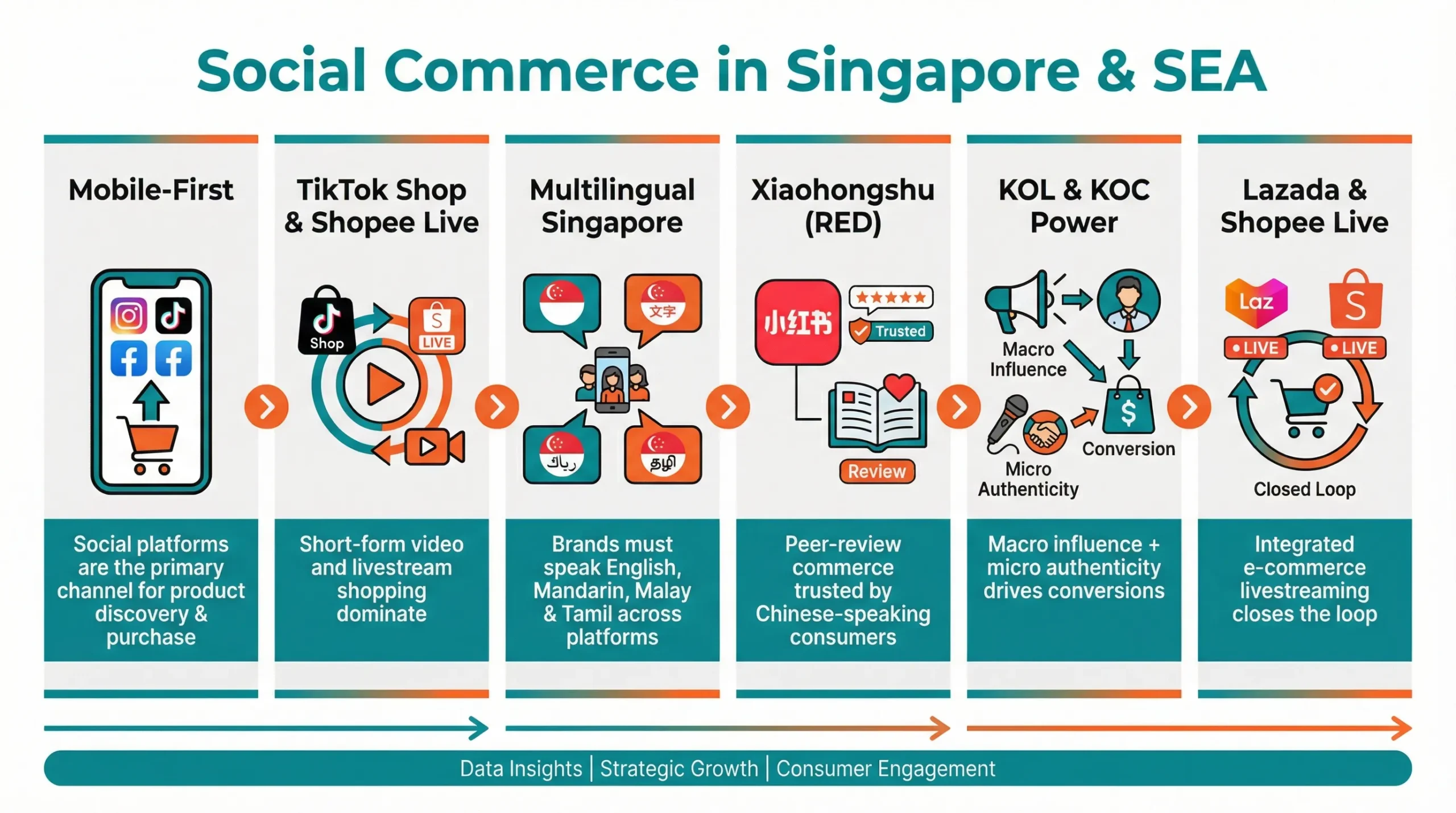
Southeast Asia’s digital landscape is unique, shaped by mobile-first, social-first consumer behaviour. Consumers in the region are increasingly relying on social platforms not just for entertainment, but for discovery, decision-making, and purchasing.
This shift is especially prominent in Singapore, where a multilingual, multi-platform audience is rapidly embracing social commerce. Here’s how brands in the region can leverage this shift:
- Mobile-First, Social-First Behaviour: Southeast Asia has one of the highest mobile internet penetration rates globally, with consumers turning to social platforms for a range of activities, from product discovery to purchase. This has made social commerce a natural fit for the region.
- Growth of TikTok Shop and Shopee Live: TikTok Shop has taken the region by storm, especially among younger audiences, driving viral product discovery through short-form video content. Similarly, Shopee Live has seen rapid growth, capitalising on the region’s love for interactive, livestream-based shopping experiences. These platforms are reshaping the way consumers shop in Southeast Asia.
- The Multi-Platform, Multilingual Nature of Singapore’s Audience: Singapore’s audience is diverse, speaking English, Mandarin, Malay, and Tamil. This multilingual and multi-platform audience requires brands to think strategically about which social platforms they use to connect with consumers. Tailoring campaigns to fit the cultural and language nuances of these groups will be key to success in Singapore’s social commerce scene.
- Xiaohongshu (RED) and Reaching Chinese-Speaking Consumers: For brands targeting Singapore’s Chinese-speaking population, Xiaohongshu (RED) is a must. Known for its highly trusted peer reviews and content-driven commerce, RED has proven an invaluable tool for engaging beauty, lifestyle, and wellness brands with local consumers. Its format encourages users to share real-life experiences, thereby building authenticity and driving purchasing decisions.
- KOL and KOC Strategies for Singapore Brands: In Singapore’s highly competitive market, brands can leverage both KOL (Key Opinion Leaders) and KOC (Key Opinion Consumers) strategies. KOLs offer top-tier visibility, while KOCs engage with smaller, niche audiences in a more authentic, community-driven manner. Together, these strategies can help brands build trust and reach a wide range of consumers.
- The Role of Lazada and Shopee in SEA: Lazada and Shopee, two of Southeast Asia’s dominant e-commerce platforms, have integrated live shopping features that directly connect with social commerce trends. Both platforms offer live-streaming options where influencers and brands can demonstrate products, engage with viewers, and convert interest into sales, all without leaving the platform.
KOL vs. KOC: Understanding the Influencer Tiers
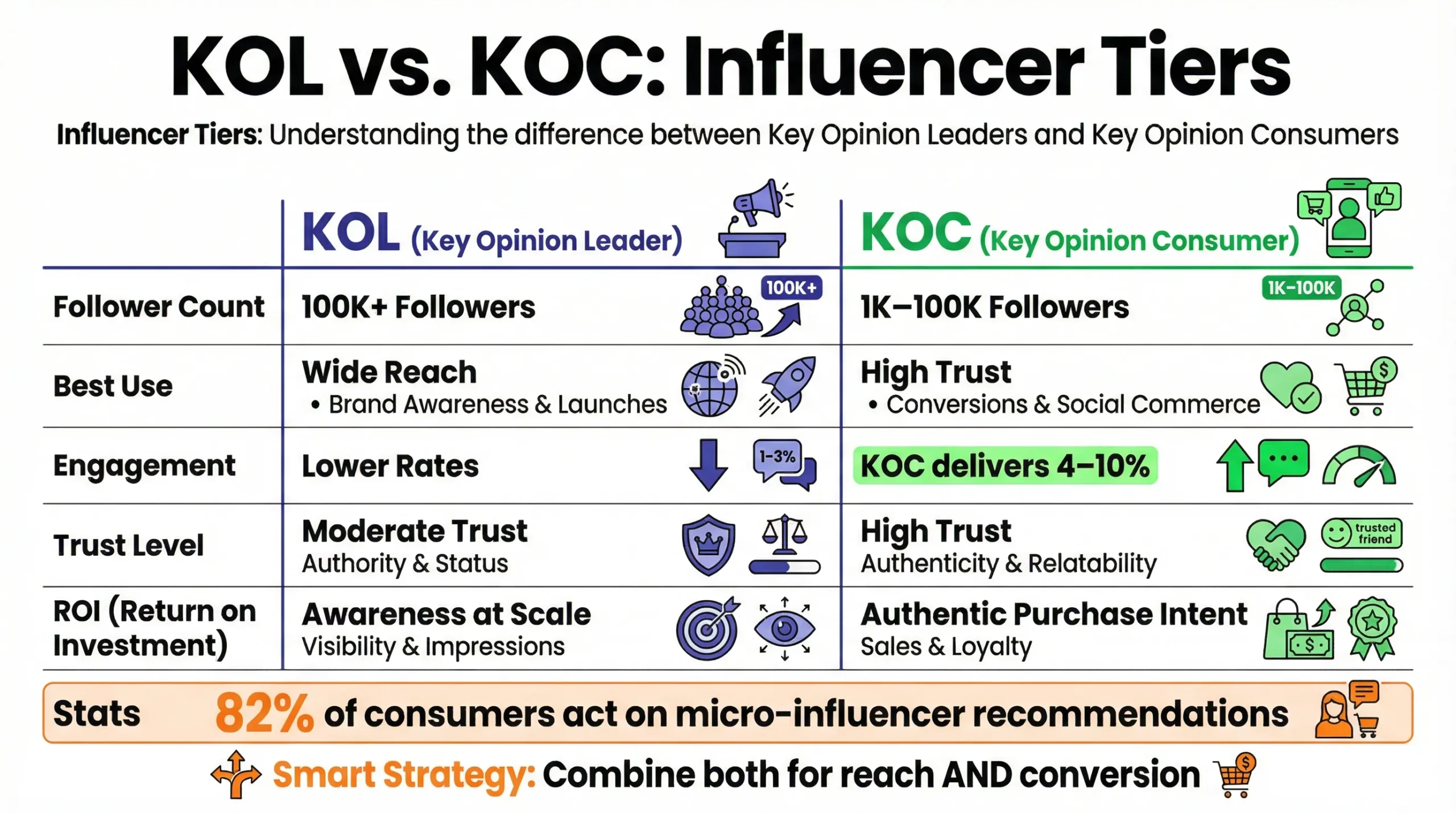
In influencer marketing, especially in social commerce, it’s crucial to understand the differences between KOLs (Key Opinion Leaders) and KOCs (Key Opinion Consumers). These terms are widely used in Singapore and across Southeast Asia to define the roles and impacts of influencers in marketing strategies. Here’s a breakdown of each:
- KOL (Key Opinion Leader):
- KOLs are typically celebrities, industry experts, or influencers with large followings (100K+).
- Best For: Reach and brand awareness campaigns. KOLs are ideal for launching new products, building brand recognition, or reaching a wide audience quickly.
- Why They Work: With their large, established fan bases, KOLs can drive massive awareness and spark initial interest in new products or brands.
- KOC (Key Opinion Consumer):
- KOCs are micro or nano influencers (1K–100K followers) who often have a higher engagement rate.
- Best For: Trust-building, conversions, and social commerce. KOCs are particularly effective in driving purchase intent because their recommendations feel more authentic and peer-like.
- Why They Work: Consumers are more likely to trust a KOC’s recommendation because of the closer, more personal relationship they have with their audience. KOCs tend to deliver better conversion rates than KOLs, particularly in social commerce environments where trust and authenticity are key.
- The Power of KOCs in Social Commerce:
- In the context of social commerce, KOCs are especially effective. 82% of consumers are highly likely to follow a recommendation from a micro-influencer (Hostinger), making them ideal for driving sales conversions and encouraging purchase decisions.
Their smaller but highly engaged audience delivers better ROI and more direct action than the broader reach of KOLs.
With Southeast Asia’s diverse digital behaviour and rapidly growing social commerce scene, brands must adapt their strategies to succeed in this dynamic market.
Using the right platform and influencer strategy can help brands stand out and engage consumers effectively in Singapore and across the region.
Which Platforms Work Best for Social Commerce and Live Shopping?
Social commerce is not a one-size-fits-all strategy. Each platform offers distinct features and caters to different demographics, making it important for brands to select the right platform based on their goals, target audience, and product type.
Below is a breakdown of the most popular platforms for social commerce and live shopping, highlighting their strengths and ideal use cases:
| Platform | Best For | Key Features | Performance Stats |
| TikTok Shop | Gen Z and Millennial impulse purchases, fast-paced buying journeys. | Short-form video-to-checkout flow, strong viral potential, and interactive live shopping experiences. | 66.17% of social commerce platform selections among adopters. TikTok Shop drove $100M in Black Friday 2024 sales, 3× the prior year. |
| Instagram Shopping | Lifestyle, fashion, beauty brands, and visual-driven purchases. | Shoppable posts, Reels-to-product-tag conversion path, curated visual discovery. | High visual engagement and seamless integration with Instagram Stories and posts. |
| YouTube Shopping | Considered higher-ticket purchases that require product demonstrations. | Long-form video content, in-depth product demos, tutorial-style videos, and YouTube Live Shopping events. | Ideal for brands looking to provide detailed product information and build trust over time. |
| Facebook Live Shopping | 35–65 age group, community-driven or local brands. | Real-time interactions, live product demos, offers, and community-building through live streaming. | Strong engagement among users who follow local businesses or community-driven brands. |
| Xiaohongshu (RED) | Singapore’s Chinese-speaking market, beauty, and lifestyle. | High-trust peer reviews, UGC-based recommendations, and strong influence in beauty and lifestyle sectors. | Key platform for Chinese-speaking consumers, with an emphasis on trust and detailed reviews. |
Platform-Specific Breakdown
- TikTok Shop: TikTok leads the charge in social commerce adoption, particularly among younger audiences (Gen Z and Millennials). Its video-to-checkout flow makes it perfect for impulse purchases, especially in fashion, beauty, and lifestyle segments. TikTok Shop had an extraordinary impact on Black Friday 2024, driving $100M in sales, three times the previous year’s results. If your product is trendy, visually appealing, and capable of going viral, TikTok should be a top consideration.
- Instagram Shopping: Instagram remains a powerhouse for lifestyle, fashion, and beauty brands. With its highly visual platform and seamless integration of shopping features through Reels and Stories, Instagram is perfect for showcasing products that rely on strong visual appeal. The Reels-to-product-tag conversion path is especially powerful, making it ideal for brands that thrive on aesthetic-driven purchases.
- YouTube Shopping: If your product requires more explanation, demonstration, or is a higher-ticket item, YouTube Shopping is an excellent choice. Its longer video formats allow influencers and brands to provide detailed product demos, tutorials, and in-depth reviews that help build trust and persuade viewers to make a purchase. YouTube is especially strong in industries such as electronics, fitness, home goods, and luxury products, where customers want to learn more before they buy.
- Facebook Live Shopping: Facebook Live is best for reaching an audience aged 35–65. It is ideal for local or community-driven brands that want to create a personal connection with their audience. The ability to interact in real time through live Q&A and live demonstrations makes it a great tool for building trust and encouraging purchases among a more mature audience.
- Xiaohongshu (RED): For businesses targeting Singapore’s Chinese-speaking market, Xiaohongshu is a critical platform. Known for its trust-driven, peer review format, RED is particularly effective for beauty and lifestyle brands.
It operates similarly to a community-driven platform, where product recommendations from trusted influencers can drive purchase decisions. For businesses targeting consumers in the beauty and fashion segments, Xiaohongshu offers a highly engaged audience.
Each social commerce platform offers unique advantages depending on your audience and product type. When you select the right platform, you can enhance engagement, build trust, and drive conversions.
Case Studies: Social Commerce Strategy in Real Life
To understand how to measure social commerce influencer campaigns, let’s explore three real-world case studies from prominent Southeast Asian platforms: Lazada Super Show, Shopee 11.11 live sessions, and TikTok LIVE Flash Sales. These examples illustrate how brands can track KPIs like reach, engagement, conversion, and revenue to assess campaign success.
Case Study 1: Lazada Super Show
The Lazada Super Show is one of Southeast Asia’s largest live-streamed shopping events, featuring influencers and brands showcasing products in real time.
It combines entertainment with product demonstrations and is tailored to generate mass awareness and drive conversions quickly.
Key Metrics:
- Impressions: A major electronics brand that participated in the Lazada Super Show saw 5 million impressions and 2 million reach across multiple live sessions, indicating broad visibility and audience engagement.
- During Lazada’s Super Shows, livestreamed segments have drawn more than 7 million views across the Southeast Asia region, highlighting strong visibility and audience engagement during key shopping events.
These high view counts often translate into significantly higher gross merchandise value (GMV) than in previous editions of the event, demonstrating the commercial effectiveness of livestream‑driven campaigns.
Case Study 2: Shopee 11.11 Live Sessions
Shopee’s 11.11 Big Sale is one of the largest e‑commerce events in Southeast Asia, combining traditional discounts with influencer‑led livestream shopping and content‑driven commerce to drive discovery and conversions across audiences.
Key Metrics (Verified Sources):
- Live Engagement Growth: During Shopee 11.11, sellers who used Shopee Live and Shopee Video experienced massive increases in engagement and orders, with some local sellers achieving up to 14× more orders compared with typical days, highlighting how interactive livestream and short‑form content formats boost shopper participation.
- Views Across Shopee Live & Video: During the 11.11 campaign, over 1.3 billion views were generated across Shopee Live and Shopee Video, a major signal of visibility and audience interest during the event.
- Sales Multipliers: Many local sellers reported significant growth during Shopee Live sessions at 11.11; for example, some reported up to 6× sales growth compared with average days, demonstrating how livestream commerce can drive conversion velocity for both local brands and influencers.
Case Study 3: TikTok LIVE Flash Sale
Retailers in Southeast Asia use TikTok LIVE to host a flash sale in collaboration with popular micro‑influencers. The goal was to drive urgency, increase product visibility, and generate immediate sales through interactive livestream content.
Key Metrics (Public/Verifiable):
- Live Commerce Scale & Value: TikTok Shop has rapidly grown into a major e‑commerce channel, projected to generate over US$30 billion in GMV worldwide by 2024, highlighting the platform’s ability to drive substantial commerce activity around live and short‑form shopping content.
- Higher Conversion Potential: Live commerce formats on TikTok and similar platforms often deliver 9%–30% conversion rates, far exceeding traditional e‑commerce, which suggests livestream flash sales can produce meaningful conversions when executed well.
- Regional Growth Boost: In Southeast Asia, TikTok Shop’s GMV jumped from US$4.4 billion in 2022 to US$16.3 billion in 2023, demonstrating how rapidly the platform’s commerce ecosystem, including live commerce, has scaled.
- Sales Surge for Local Sellers: In 2025, TikTok Shop drove 200%+ sales increases for local sellers leveraging commerce features like live selling and creator collaborations.
Lazada Super Show, Shopee 11.11, and TikTok LIVE Flash Sale demonstrate how measurable KPIs like reach, engagement, conversion, and revenue can be used to assess the success of social commerce influencer campaigns.
When brands focus on metrics such as UTM-tracked clicks, add-to-cart rates, and GMV per live session, they can effectively track their campaigns and optimise for better performance in future initiatives.
How Brands Can Build a Stronger Social Commerce Strategy With Influencers
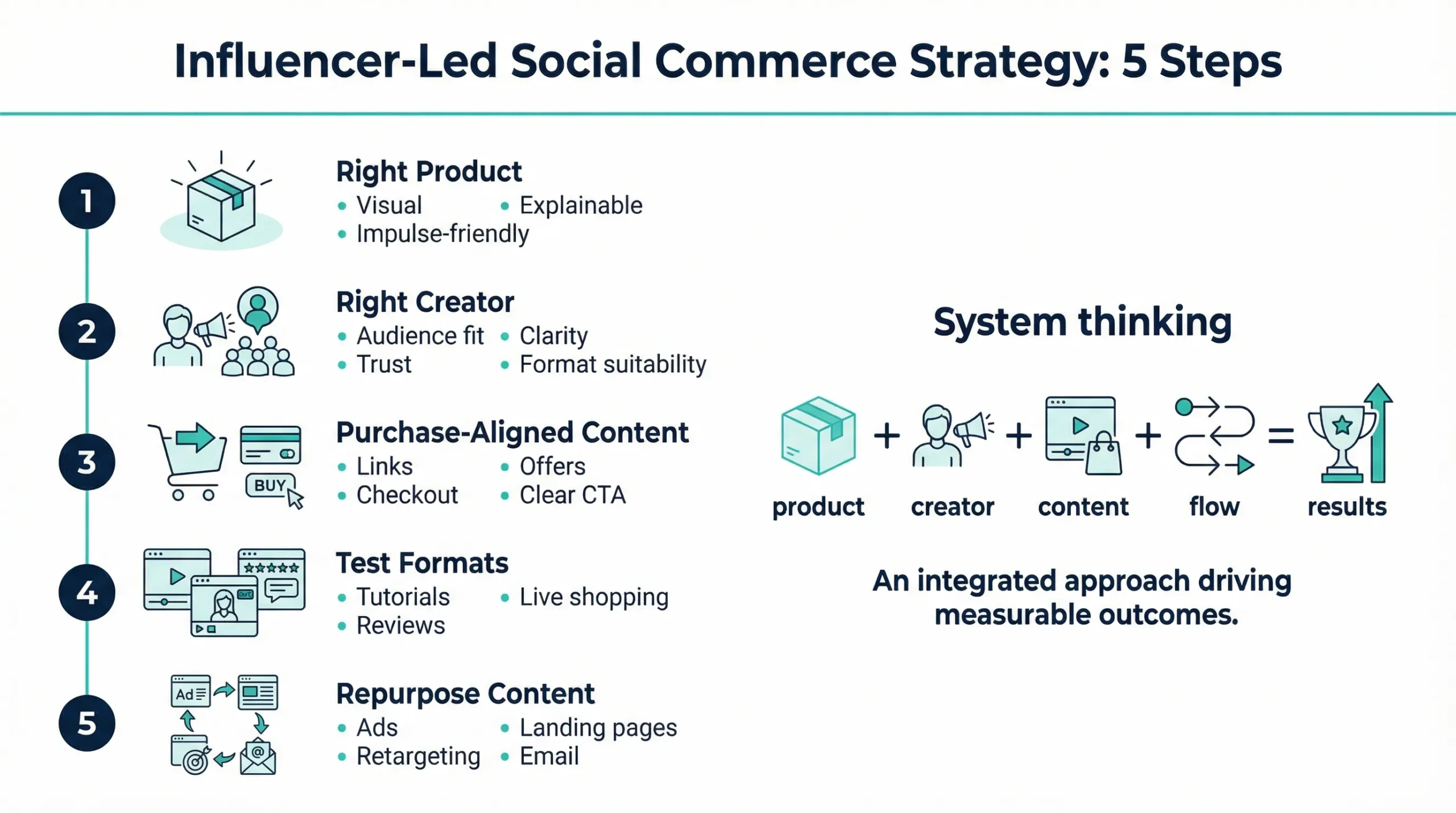
Building a successful social commerce strategy involves more than just partnering with influencers and creating great content. It’s about aligning your influencer partnerships with clear goals, leveraging social proof, and maximising the impact of the content over time.
Here’s how brands can craft a more effective social commerce strategy that not only drives immediate results but also lays the groundwork for long-term success.
1. Pick the Right Product
Some products are naturally better suited for social commerce. Visual, easy-to-explain, or impulse-friendly products tend to perform best in live shopping or influencer-driven campaigns. Others may require more education and explanation before they can convert effectively.
2. Match the Creator to the Product and Audience
It’s essential to match the creator with the product and the audience they engage with. Ensure that the influencer’s audience aligns with your target demographic. Does this creator speak to the right buyer? Are they trusted by their audience?
Choose between Key Opinion Leaders (KOLs) for broad reach or Key Opinion Consumers (KOCs) for authentic, peer-like recommendations that drive conversions. Each influencer type has its place depending on whether your goal is visibility or direct sales.
3. Create UGC-Style Content that Can Be Repurposed
User-Generated Content (UGC) is a critical element of social commerce campaigns and should not be overlooked. UGC creates trust, and it’s often more relatable and persuasive than polished brand content.
- Brief Influencers to Create UGC: When working with influencers, it’s important to brief them to create authentic, relatable content that feels less like an ad and more like a peer recommendation. Encourage them to show how they use the product in real life, highlighting its benefits in a way that feels natural and genuine.
- Example: A fitness brand could brief influencers to create workout videos showcasing their products in action, demonstrating value while still providing a personal touch that resonates with followers.
- Example: A fitness brand could brief influencers to create workout videos showcasing their products in action, demonstrating value while still providing a personal touch that resonates with followers.
- Repurpose Influencer-Generated Content: The content created by influencers can be used far beyond the initial post. Reuse influencer-created UGC in paid social ads, email campaigns, and retargeting ads.
- This extends the life of the content and maximises ROI. Don’t let that great influencer content sit unused; turn it into a valuable asset for future campaigns.
- Add Creator Content to Product Pages: Integrating influencer-generated content into your product pages can significantly increase conversion rates.
- Consumers are more likely to trust a product when they see real people (influencers) using it, rather than just brand descriptions. A simple testimonial or a quick video can boost confidence and push hesitant customers to purchase.
4. Licensing Rights for Content Reuse
Many brands make the mistake of not negotiating content rights with influencers, limiting their ability to reuse the content for paid social ads or future campaigns. Be clear about licensing terms before the collaboration begins. This ensures that you can repurpose high-performing content without running into legal or logistical issues later.
Example: When negotiating with influencers, discuss and clarify the duration of content rights, whether it’s for a one-time use or extended periods. Ensure that the content can be reused across your website, social channels, and paid advertising without additional fees.
Integrating UGC into your social commerce strategy will enhance authenticity, improve conversions, and ensure your content continues to work for you across various touchpoints.
If you want a more structured approach, a social commerce influencer agency in Singapore can help you connect influencer partnerships to real business goals.
5. Leverage AI for Influencer Discovery and Campaign Optimisation
AI is revolutionising how brands discover and collaborate with influencers. Leveraging AI-powered tools can help brands make more data-driven decisions and enhance their social commerce strategy.
- AI-Assisted Influencer Discovery: AI can analyse audiences and detect fake followers, ensuring that brands work with authentic influencers who genuinely resonate with their target audience. By analysing engagement rates and audience demographics, AI tools can help find the right creators who will generate the highest engagement and conversions.
- AI Content Performance Prediction: Before launching a campaign, AI can predict how well influencer-created content will perform based on historical data and audience behaviour. By using AI to simulate different campaign scenarios, brands can optimise content before it’s published to ensure the best possible results.
- AI to Identify Product-Creator Pairings: AI can help brands analyse which product-creator pairings are most likely to drive the highest social commerce conversions.
Use machine learning algorithms to assess past campaign data, and AI identifies which influencer content styles, formats, and product types deliver the best ROI.
Incorporating AI-driven tools into your social commerce strategy removes the guesswork from influencer selection, content creation, and performance prediction. This approach leads to smarter decisions, which ensures campaigns are optimised for maximum effectiveness.
How to Measure Social Commerce Influencer Campaign Performance
To ensure your social commerce influencer campaigns are successful, it’s essential to track key metrics beyond just sales. These metrics help brands understand how their campaigns are performing and guide decision-making for future efforts.
Here’s a breakdown of the KPIs (Key Performance Indicators) you should focus on:
| KPI Category | Specific Metrics | What It Measures |
| Reach & Discovery |
|
|
| Engagement Quality |
|
|
| Traffic & Intent |
|
|
| Conversion |
|
|
| Revenue |
|
|
| Post-Campaign |
|
|
When you regularly track these KPIs, your brand can gauge the success of its campaigns and refine its strategies to maximise future performance.
Common Mistakes Brands Make With Influencers in Social Commerce
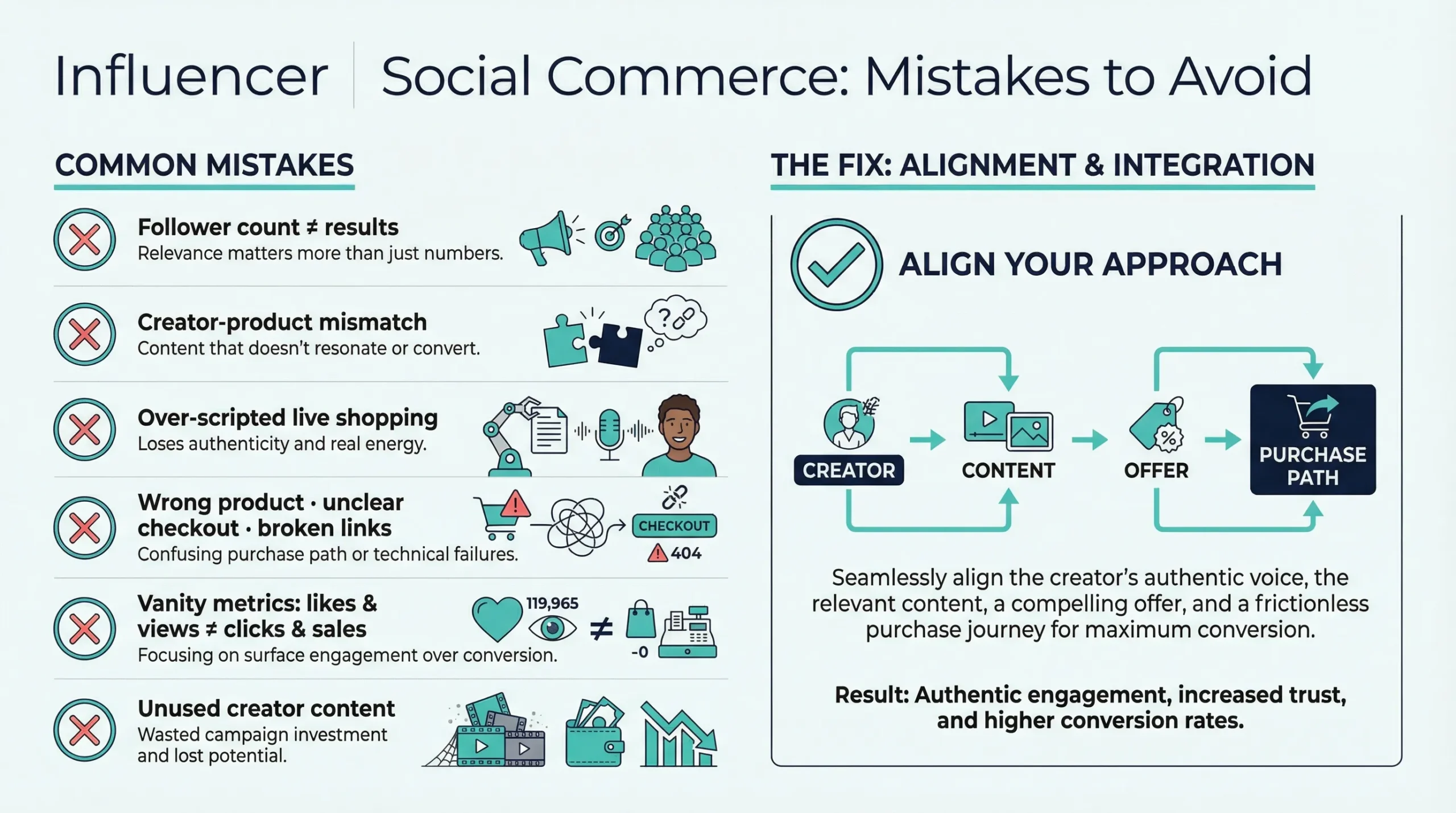
As social commerce grows, many brands limit results by using influencer marketing the wrong way. The problem is usually strategy, not the platform.
One common mistake is choosing influencers solely based on their follower count. Large audiences can increase visibility, but they do not guarantee relevance, trust, or conversion.
Another mistake: using creators who don’t fit the product. If their audience doesn’t care about your category, even great content won’t convert.
Treating live shopping like a scripted ad also hurts results. Live shopping works when it’s interactive and natural. Over-scripted sessions lose the energy that makes it effective.
Other common mistakes include:
- weak product selection for social selling
- unclear checkout flow
- poor use of promo codes or product links
- measuring success only through likes and views
- failing to reuse strong creator content after the campaign
The best influencer-led social commerce campaigns work because every part of the campaign supports the goal. When the creator, content, offer, and purchase path are aligned, it’s easy for audiences to act.
Social Commerce Matters More When Influencers Lead the Journey
Social commerce is effective because it fits naturally with how people browse, discover, and buy. A user sees a product in content they enjoy, watches someone they trust recommend it, and feels ready to act right away.
TikTok Shop accounts for 66.17% of social commerce platform selections among adopters, which is what makes influencers so valuable. They do not just generate attention. They help move people closer to purchasing organically.
That is why brands should not treat social commerce as just another content trend. The real value comes from having the right strategy, creators, message, and conversion path.
Ready to make social commerce drive more awareness, trust, and sales? MediaOne can help you build an influencer strategy that gets results. Contact us today.
Frequently Asked Questions
KOLs (Key Opinion Leaders) are typically celebrities or industry experts with large followings (100K+).
They’re best suited for brand awareness and reach. On the other hand, KOCs (Key Opinion Consumers) are micro- or nano-influencers (1K–100K followers) who generate higher engagement rates and are more effective at driving trust and conversion through relatable, peer-like content.
In Singapore, TikTok Shop is rapidly growing and ideal for reaching younger audiences with viral content.
Shopee Live and Lazada Live are also highly effective, especially during major events like 11.11, offering seamless shopping experiences directly in the app. Instagram Shopping remains strong for lifestyle and beauty brands targeting a broad, visually-driven audience.
How do I ensure my influencer campaign complies with ASAS disclosure rules in Singapore?
To comply with ASAS (Advertising Standards Authority of Singapore) rules, influencers must clearly disclose paid partnerships using labels such as #ad, #sponsored, or #inpartnershipwith. Non-disclosure can lead to regulatory consequences for both brands and influencers. Brands should ensure that influencers understand these requirements before starting a campaign.
What types of content work best for TikTok Shop influencer campaigns?
Short-form video content works best on TikTok Shop. Influencers should showcase products in a fun, authentic, and creative way that aligns with TikTok’s entertainment-driven format. Tutorials, unboxings, product demos, and quick styling tips tend to resonate well with TikTok’s audience and drive high engagement.
When negotiating content rights, brands should clarify how long they can reuse influencer content and where it can be repurposed (e.g., paid ads, social media). It’s important to discuss whether the content can be used beyond the campaign period and if the influencer requires additional compensation for extended usage. Clear agreements prevent misunderstandings and legal issues down the line.
How can I measure the success of my influencer marketing campaign in Singapore?
Success can be measured through KPIs such as engagement (comments, shares, saves), traffic (UTM clicks, product page sessions), and conversions (add-to-cart rates, promo code redemptions). It’s also essential to track revenue metrics such as ROAS (return on ad spend) and GMV (gross merchandise value) to assess overall campaign performance.
The key to success on platforms like Shopee Live and Lazada Live is engaging content that features real-time interactions, product demos, and exclusive offers. It’s also crucial to choose influencers who align with the product and target audience, and to ensure clear calls to action that prompt viewers to make immediate purchases.
How do I integrate live shopping into my existing marketing strategy?
Integrating live shopping requires aligning it with your overall marketing funnel. For example, you can promote live sessions through email marketing, social media ads, and organic influencer posts to drive traffic. Use teasers and pre-event promotions to build excitement, then use live shopping as the conversion point, offering limited-time offers or exclusive products during the session to prompt immediate purchases.