URL shorteners have become an essential tool in modern digital campaigns. At first glance, they seem simple. They take a long, cluttered web address and turn it into something compact and easy to share.
In reality, URL shorteners do much more than tidy up links. They help marketers track performance, measure engagement, strengthen brand recognition, and optimise conversion funnels across multiple channels.

As marketing becomes increasingly data-driven, every click matters. Whether you are running paid ads, sending email newsletters, publishing social posts, or printing QR codes on packaging, shortened links give you visibility into what is working and what needs improvement.
For businesses that want to go beyond basic link tracking and build fully measurable campaigns, working with professionals offering digital marketing services can make a difference. A strategic agency approach ensures URL shorteners are integrated into your broader SEO, content, and performance marketing framework rather than used in isolation.
Key Takeaways:
- URL shorteners improve attribution by turning every link into a measurable campaign asset across online and offline channels.
- Branded URL shorteners strengthen trust, increase click-through rates, and support stronger brand recall.
- URL shorteners enhance conversion optimisation by enabling A/B testing, funnel tracking, and audience segmentation.
- Strategic use of URL shorteners supports first-party data collection and scalable, omnichannel marketing systems.
What Are URL Shorteners and How Do URL Shorteners Work?
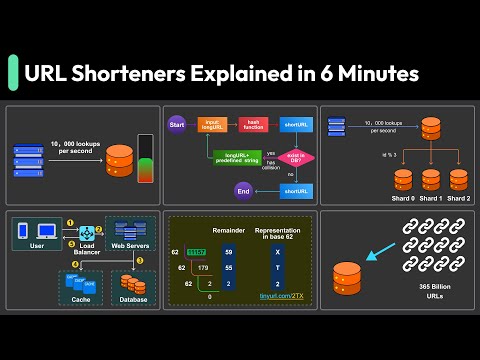
URL shorteners convert a long web address into a compact, redirect-based link. When someone clicks the short link, they are automatically redirected to the original destination via a server-side redirect.
Technically, most reputable platforms use 301 or 302 HTTP redirects. According to Google’s official documentation, a 301 redirect signals a permanent move and is a strong signal that the redirect target should be canonical, while a 302 is temporary and is a weak signal for canonicalization — meaning Google is less likely to transfer ranking authority to the destination URL.
Here is the difference in practical terms:
| Standard Link | Shortened Link |
| Long, parameter-heavy | Clean and compact |
| Hard to share offline | Easy to print and say aloud |
| Difficult to track individually | Individually trackable |
For digital campaigns, this matters. When you run ads across Facebook, LinkedIn, and Google Ads, you need to know which channel drives revenue, not just traffic. URL shorteners create that separation cleanly.
Why URL Shorteners Matter in Modern Digital Marketing
You are no longer marketing through a single channel. DataReportal’s 2024 Singapore report shows that social media penetration in Singapore stands at 85 percent of the total population.
That means your links travel across:
- Instagram captions
- TikTok bios
- WhatsApp broadcasts
- Email newsletters
- Offline QR codes
Each touchpoint needs tracking. And each link needs to feel trustworthy. Shortened links also help you manage UTM parameters. According to Google Analytics documentation, UTM parameters allow you to track campaign source, medium, and content.
Without shortening, those URLs become unreadable strings that erode trust and reduce click-through rates. This is not cosmetic. It is operational.
Key Benefits of URL Shorteners for Marketing Campaigns

If you are investing real money into traffic, whether that is SGD 5,000 a month on paid social or a sustained SEO campaign targeting competitive Singapore keywords, you cannot afford weak infrastructure. Every link you publish is a data point. Every click is a signal. The question is whether you are properly capturing and using those signals.
This is where URL shorteners shift from being a convenience tool to a performance lever. They do more than tidy up messy links. They influence trust, shape perception, improve tracking accuracy, and give you granular visibility into what is actually driving revenue.
In the sections below, you will see how URL shorteners strengthen brand credibility, improve click-through rates, and simplify multi-channel distribution. More importantly, you will see how they turn scattered traffic into measurable, optimisable growth.
URL Shorteners Improve Link Aesthetics and Trust
You might assume users do not notice links. They do. A study found that the perceived trustworthiness of a URL influences user click behaviour.
When your link looks controlled and branded, users are more likely to click. When it looks chaotic, especially in an SMS or social caption, hesitation increases.
Short, structured links:
- Reduce visual clutter
- Improve brand consistency
- Signal professionalism
- Lower suspicion of spam
In Singapore’s competitive SME environment, especially in finance, healthcare, or property, trust is not optional.
URL Shorteners Increase Click-Through Rates
Short links are easier to share and easier to remember. On mobile, which dominates traffic in Singapore, screen space is limited. DataReportal confirms that most social usage in Singapore occurs on mobile devices.
A shorter link improves readability and reduces friction.
Here’s an example: The New York Times uses branded short links, such as nyti.ms, powered by Bitly. Bitly publicly states that The New York Times uses its platform to track and optimise distribution.
This demonstrates that even global publishers rely on shortened, trackable links to measure campaign performance. If it matters at that scale, it matters for your SGD 10,000-per-month paid media budget.
URL Shorteners Make Links Easy to Share Across Channels
You are not just posting online. You are:
- Printing QR codes on event banners in Marina Bay Sands
- Running SMS campaigns for F&B outlets in Tampines
- Adding links to product packaging
QR codes have surged in adoption globally. A Juniper Research report estimated that QR code payments would reach 2.2 billion users worldwide by 2025.
Short links make QR codes cleaner and easier to manage. You can assign different short links to each offline location and track which one drives traffic. That is offline-to-online attribution in action.
How URL Shorteners Improve Marketing Analytics and Tracking

If you are investing in paid ads, content marketing, email automation, or influencer campaigns, you are not buying traffic. You are buying data. The problem is that most businesses track performance at surface level. They see impressions and clicks inside platform dashboards, but they cannot clearly connect those actions to revenue.
This is where link-level intelligence changes the game. URL shorteners transform every link into a measurable asset. Instead of relying solely on aggregated reports from Meta, Google, or LinkedIn, you gain an independent tracking layer that follows the user from click to destination.
That added visibility allows you to isolate high-performing channels, compare creative variations, and identify underperforming segments before budget is wasted. When analytics shift from platform-based reporting to controlled link tracking, your marketing becomes less reactive. It becomes strategic.
URL Shorteners Enable Real-Time Click Tracking
Most professional tools provide:
- Click counts
- Timestamp data
- Geographic breakdown
- Device segmentation
When you run a campaign targeting CBD office workers versus heartland consumers, geography matters. Device data helps you optimise landing pages for mobile-first experiences.
URL Shorteners Support UTM Parameters and Campaign Attribution
UTM parameters allow granular tracking, but they can make URLs excessively long. URL shorteners mask those parameters without removing the tracking value.
This simplifies:
- Multi-channel attribution
- Influencer campaign measurement
- A/B testing
Instead of guessing which creative works you see performed at the link level.
URL Shorteners Help Measure Offline-to-Online Performance
If you host a roadshow at Suntec Convention Centre and another in Jurong Point, create two distinct short links. You immediately know which venue generates more traffic.
No assumptions. Just data.

If you are investing in brand building, you cannot afford to overlook the links carrying your traffic. Every campaign you launch, whether it is a paid ad, an influencer collaboration, or an email sequence, sends users to a URL. That link is not just a pathway. It is a brand touchpoint.
When you rely on generic short domains, you borrow someone else’s credibility. When you use branded URL shorteners tied to your own domain, you reinforce recognition, control perception, and strengthen trust at the exact moment someone decides whether to click.
In competitive markets like Singapore, where consumers are digitally savvy and cautious about phishing, that split-second decision matters. Branded short links give you more than cleaner URLs. They signal legitimacy, protect brand equity, and support long-term authority building.
If you want your marketing to feel cohesive and credible, this is where infrastructure meets positioning.
What Are Branded URL Shorteners?
Branded shorteners use your own domain, for example, go.yourbrand.sg, instead of a generic provider domain.
Difference:
| Generic | Branded |
| bit.ly/xyz | go.yourbrand.sg/offer |
| Shared domain | Controlled domain |
| Lower brand recall | Strong brand recall |
How Branded URL Shorteners Build Trust
Edelman research shows that trust strongly influences purchase decisions globally. When your link carries your domain, recognition increases. Recognition increases trust. Trust increases clicks.
SEO Considerations of Branded URL Shorteners
If implemented using 301 redirects, link equity can pass through to the destination page. Google confirms that redirects (including 301s) consolidate signals to the canonical URL, and notes that all server-side redirect types have the same effect on Google Search.
Best practice:
- Use 301 for permanent campaigns
- Avoid redirect chains
- Monitor crawl errors

Social media is where attention is won or lost in seconds. Brands compete in crowded feeds on Instagram, LinkedIn, TikTok, and Facebook, where every visual, caption, and line of text either draws users in or pushes them away. In this environment, links cannot afford to look messy, suspicious, or untrackable.
This is where URL shorteners become more than a technical utility—they become a performance tool. Shortened links help maintain clean captions, protect brand perception, and track engagement at the campaign level, rather than relying solely on platform dashboards.
For businesses working with a social media marketing agency, shortened links also enable more precise measurement across paid campaigns, influencer collaborations, and organic content distribution. By using trackable, branded short links, agencies can monitor user interactions, optimise content delivery, and ensure every marketing effort is tied to actionable data—without sacrificing trust or user experience.
Why URL Shorteners Are Essential for Social Platforms
X, formerly Twitter, historically imposed character limits. Even today, clean captions convert better than cluttered ones.
Instagram bios allow only one clickable link. Shortened links help you rotate campaigns without rewriting your bio every week.
Using URL Shorteners in Influencer Marketing
Assign each influencer a unique short link. You instantly track:
- Click volume
- Conversion rate
- Revenue per creator
No need to rely purely on screenshots.
URL Shorteners for Paid Social and Retargeting Campaigns
You can create separate short links for each audience segment. For example:
- Retargeting warm leads
- Prospecting new audiences
- Lookalike campaigns
This isolates performance and improves budget allocation.
URL Shorteners in Email Marketing Campaigns

Email remains one of the highest-ROI digital channels available to you. According to Litmus, email marketing delivers an average return of USD 36 for every USD 1 spent. If that is the level of return you are working with, every link inside your email becomes a revenue lever.
URL shorteners help you maintain clean, professional layouts. Long URLs filled with tracking parameters can break formatting, look suspicious, or overwhelm mobile users. A shortened, branded link keeps your HTML tidy and reinforces credibility, especially when your audience is reading on mobile devices, which dominate global email consumption.
More importantly, shortened links strengthen segmentation and attribution. You can assign unique links to:
- Different subscriber segments
- Specific CTAs within the same email
- Automated sequences such as welcome flows or abandoned cart reminders
That level of granularity shows you exactly which email marketing campaign, message, audience, and timing drive conversions. Instead of relying on open rates alone, you can measure real engagement and revenue impact.
When your email list includes prospects from different Singapore districts, industries, or lifecycle stages, link-level tracking allows you to refine your messaging with precision. This level of control turns email from a simple broadcast channel into a scalable, measurable profit engine that drives ROI for your campaigns.
How URL Shorteners Support Content Marketing and SEO

Content without tracking is guesswork. You might notice traffic rising in Google Analytics, but without tying specific distribution efforts to measurable outcomes, your decisions are based on incomplete data. This is where URL shorteners strengthen both your content marketing and SEO strategy.
- Track Performance by Channel: When promoting a blog post across LinkedIn, email campaigns, WhatsApp broadcasts, or guest contributions, assign a unique short link to each channel. This allows you to isolate performance at the source level. Instead of asking, “Where did this traffic come from?” you know exactly which channel drives engagement, conversions, and qualified leads.
- Simplify Long URLs for Sharing: SEO-friendly links with UTM parameters can become long and unwieldy. URL shorteners create clean, easy-to-share links that are more user-friendly and more likely to be clicked. This is especially useful when pitching guest posts to local Singapore publications or collaborating with partners in areas like Raffles Place or Tampines. Branded short links also convey professionalism and trust.
- Support, Not Replace, SEO Fundamentals: While URL shorteners help track and share content, they do not replace core SEO practices such as technical optimisation, high-quality content, and proper internal linking. Instead, they complement these efforts by providing data on referral traffic, lead magnet downloads, and content that attracts qualified visitors.
- Enable Measurable Content Distribution: By strategically using short links, you turn content promotion from a guessing game into a measurable process. You can evaluate which partnerships, channels, and formats deliver real results, allowing your team to optimise campaigns and improve ROI.
In summary, URL shorteners help marketers track, measure, and optimise content distribution while improving professionalism and user experience. For Singapore-based businesses, using branded, trackable links can make campaigns more credible, actionable, and results-driven.
Working with an experienced SEO agency in Singapore can further enhance these efforts by integrating link tracking into broader SEO and content strategies, ensuring that every piece of content contributes to measurable growth.
URL Shorteners for Conversion Optimisation

Traffic without conversion is vanity. If you are paying SGD 5,000 or SGD 50,000 a month for ads, what matters is not the number of clicks. It is what those clicks turn into.
This is where URL shorteners move from tracking tools to optimisation levers. When structured properly, they allow you to test landing pages, isolate audience segments, and refine your funnel with precision. Instead of guessing which variation converts better, you can route traffic intelligently, compare performance cleanly, and adjust in real time.
There is evidence that shortened links influence engagement behaviour. According to Rebrandly’s internal campaign data, branded short links can increase click-through rates by up to 39% compared to generic short URLs.
Higher click-through rates at the top of the funnel expand the pool of users who can convert downstream. While increased clicks do not automatically guarantee conversions, they create more opportunities for qualified traffic to enter your landing pages and sales sequences.
Conversion optimisation is about removing friction and amplifying what works. Shortened links give you controlled entry points into your funnel. Each link becomes a measurable experiment. Each click becomes usable data.
When you approach them strategically, they stop being simple redirects and become instruments for growth.
- A/B Testing With URL Shorteners: You can redirect the same short link to different landing pages during testing phases. Measure performance. Lock in the winner.
- Retargeting and Pixel Integration: Some platforms allow pixel integration directly within shortened links. This enables behavioural targeting before users even land on your site.
- Funnel Analysis Using URL Shorteners: Track entry links at the top of the funnel. Compare them to conversions at the bottom. Identify drop-off points. This is not guesswork. It is engineering.
Security Considerations When Using URL Shorteners

Short links are powerful, but they come with responsibility. Because the destination URL is hidden behind a redirect, shortened links have historically been used in phishing and spam campaigns. You cannot ignore that risk, especially if you are building a brand in a trust-sensitive market like Singapore.
The Cyber Security Agency of Singapore regularly advises businesses to remain vigilant against phishing attacks, which often rely on disguised or shortened links. That does not mean you should avoid URL shorteners. It means you should use them properly.
Here is how you protect your brand and your users:
- Choose reputable providers. Established platforms such as Bitly and Rebrandly publish security policies and offer link monitoring tools. Avoid unknown or unverified services.
- Use branded domains. A custom short domain makes your link recognisable. Users are far more likely to trust go.yourbrand.sg than a random string on a public shortening domain.
- Enable link management controls. The ability to edit, disable, or expire links gives you operational control if a campaign ends or a landing page changes.
- Monitor unusual traffic spikes. Sudden increases in clicks from unexpected regions may indicate bot activity or abuse.
- Stay compliant with PDPA. If you are tracking user behaviour through shortened links, ensure you comply with Singapore’s Personal Data Protection Act requirements.
Security is not a reason to avoid shortened links. It is a reason to implement them strategically. When managed correctly, they strengthen your infrastructure rather than weaken it.
Choosing the Right URL Shorteners for Your Business

Not all URL shorteners are built for growth. Some are designed for casual sharing. Others are built for teams running structured campaigns across paid media, SEO, email, and offline channels. If you are serious about attribution and scalability, you need to make the right choice.
Free vs Paid URL Shorteners
Free tools are useful when you are testing or running low-volume campaigns. They typically offer:
- Basic click tracking
- Limited analytics history
- Shared short domains
- Minimal integrations
That may be sufficient if you are sharing a one-off blog post. It is not sufficient if you are managing multiple paid campaigns across platforms.
Paid tools, on the other hand, usually include:
- Custom domains
- Advanced analytics and segmentation
- API integrations
- Team access controls and permissions
- Link management at scale
If you are running campaigns worth thousands of SGD per month, investing in proper infrastructure is not an expense. It is risk management. When your reporting depends on clean data, basic tools become a liability.
Features to Look For in URL Shorteners
Before committing to any platform, assess whether it supports your marketing ecosystem. Prioritise:
- Real-time analytics so you can optimise campaigns quickly
- Full UTM compatibility to preserve attribution clarity
- Custom domain support to strengthen brand trust
- Integration with CRM and marketing automation systems
If your links cannot integrate into your broader stack, you are creating silos. That slows down decision-making and weakens performance analysis.
Popular URL Shorteners Used by Marketers
Several platforms are widely adopted in professional marketing environments:
Bitly is known for enterprise-level analytics and integrations. Rebrandly focuses heavily on branded domain management. TinyURL offers simplicity and affordability for smaller teams.
Each offers branded link capabilities and varying levels of analytics depth across pricing tiers. Review feature documentation carefully and align it with your campaign complexity before committing. The right choice is not about popularity. It is about fit.
The Future of URL Shorteners in Digital Marketing

Marketing today is increasingly complex. Attribution is harder, privacy regulations are stricter, and customer journeys span multiple devices and touchpoints. In this environment, URL shorteners are evolving from simple redirect tools into strategic data infrastructure.
- Omnichannel Tracking Becomes Essential: Consumers now use multiple devices before completing a purchase. Short links provide consistent tracking across paid ads, organic content, WhatsApp campaigns, QR codes, and offline activations. They act as controlled gateways into your marketing funnel, helping standardise measurement across channels.
- Privacy-First Attribution: With third-party cookies blocked by default in browsers like Firefox and Safari, marketers increasingly rely on first-party data. Strategically deployed short links can route traffic through controlled domains, enabling cleaner data capture and supporting server-side tracking before users even reach your main website.
- Deeper Platform Integration: Advanced link management platforms now connect directly with CRMs, marketing automation tools, and analytics dashboards. This allows a single shortened link to feed data into your sales pipeline, marketing reports, and attribution models simultaneously, creating a unified view of performance.
- Smart Links and Conditional Routing: The next generation of short links, often called “smart links,” can dynamically adjust based on device, location, or user behaviour. For example, Singapore mobile users could be sent to a fast-loading AMP page, while desktop users land on a long-form sales page. Conditional routing is already being implemented by sophisticated platforms, enabling personalised experiences at scale.
Marketers who treat URL shorteners as strategic infrastructure rather than cosmetic tools will gain cleaner data systems, sharper attribution models, and more profitable funnels. Brands that ignore this evolution risk guessing where their conversions originate and missing opportunities to optimise their campaigns.
Are URL Shorteners Worth It for Your Marketing Strategy?

If you are serious about measurable growth, the real question is not whether you should use shortened links. It is whether you are using them strategically.
URL shorteners are not just formatting tools. They are infrastructure. They influence how you track attribution, optimise conversions, manage omnichannel campaigns, and strengthen brand trust.
When deployed intentionally, they give you cleaner data, sharper insights, and tighter control over performance. When treated casually, they become another missed opportunity hiding inside your marketing stack.
If you are investing in paid media, SEO, content, or automation, your link strategy should align with your revenue goals. That requires planning, implementation, and ongoing optimisation.
If you want to build a data-driven framework that supports URL shortener tracking, conversion optimisation, and scalable digital growth, speak with MediaOne. A strategic conversation now can clarify whether your current systems are helping you scale or quietly limiting performance.
Call MediaOne to explore how professional digital marketing services can align your infrastructure, campaigns, and URL shorteners with measurable business outcomes.
Frequently Asked Questions
Are URL shorteners free to use?
Many URL shorteners offer free plans with basic tracking and limited features. However, free versions often restrict analytics depth, branded domain usage, and team access. Businesses running paid campaigns in Singapore typically benefit from paid plans that provide advanced reporting and custom domain control.
Can URL shorteners expire?
Some URL shorteners allow links to expire after a set period, while others keep them active indefinitely. Expiration is usually configurable in paid plans. For long-term campaigns or printed materials, permanent redirects are recommended to avoid broken links.
Do URL shorteners slow down websites?
A properly configured short link adds a brief redirect step, but reputable providers use optimised servers that minimise delay. The time difference is typically negligible for users. Poorly configured or overloaded services, however, can create latency issues.
Can I customise the ending of a shortened URL?
Yes, most professional URL shorteners allow you to create custom slugs, often called vanity URLs. Custom endings improve clarity, brand recall, and trust. For example, using yourbrand.sg/offer is more memorable than a random string of characters.
Are URL shorteners suitable for large enterprises?
Yes, large organisations use URL shorteners to manage campaign tracking at scale. Enterprise-grade platforms offer API integrations, team permissions, and advanced analytics. This allows marketing, sales, and analytics teams to align around consistent link governance and performance data.