Programmatic advertising has reshaped how brands buy and optimise digital ads. Instead of relying on manual placements, programmatic uses automation, algorithms and real-time bidding (RTB) to deliver highly targeted ads at scale.

As digital competition intensifies in 2026, programmatic advertising offers marketers a more innovative, more efficient way to reach the right audience at the right moment. In fact, over 90% of all global digital display ad spend is expected to be bought programmatically by 2026.
In this comprehensive guide, you’ll learn how programmatic advertising works, why it’s a must for modern marketing, the key platforms involved and how to maximise your ad performance.
Key Takeaways
- Programmatic advertising automates ad buying, leveraging AI and real-time bidding to deliver highly targeted campaigns.
- Precision targeting and personalisation help brands reach the right audience based on behaviour, interests, demographics and intent.
- Efficiency and ROI improve through automation, real-time optimisation, frequency capping and data-driven decision-making.
- Understanding core components such as DSPs, SSPs, ad exchanges and DMPs is essential for successful programmatic campaigns.
What Is Programmatic Advertising?
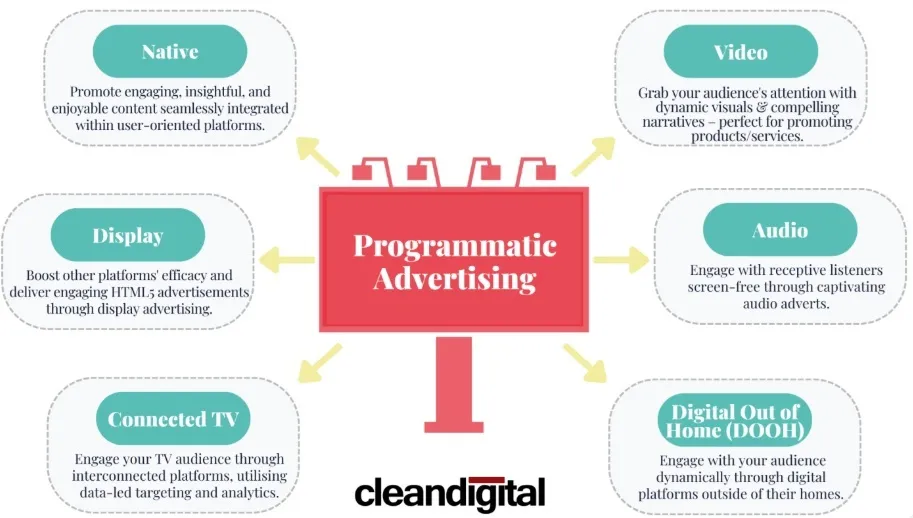
Image Credit: Clean Digital
Programmatic advertising is the automated process of buying and selling digital ad inventory using AI, data signals and machine learning. Instead of negotiating manually with publishers, advertisers use programmatic platforms to bid for impressions in real time.
In simple terms: Programmatic helps you deliver personalised ads to specific audiences at scale. Faster, smarter and more cost-efficiently.
Benefits of Programmatic Advertising
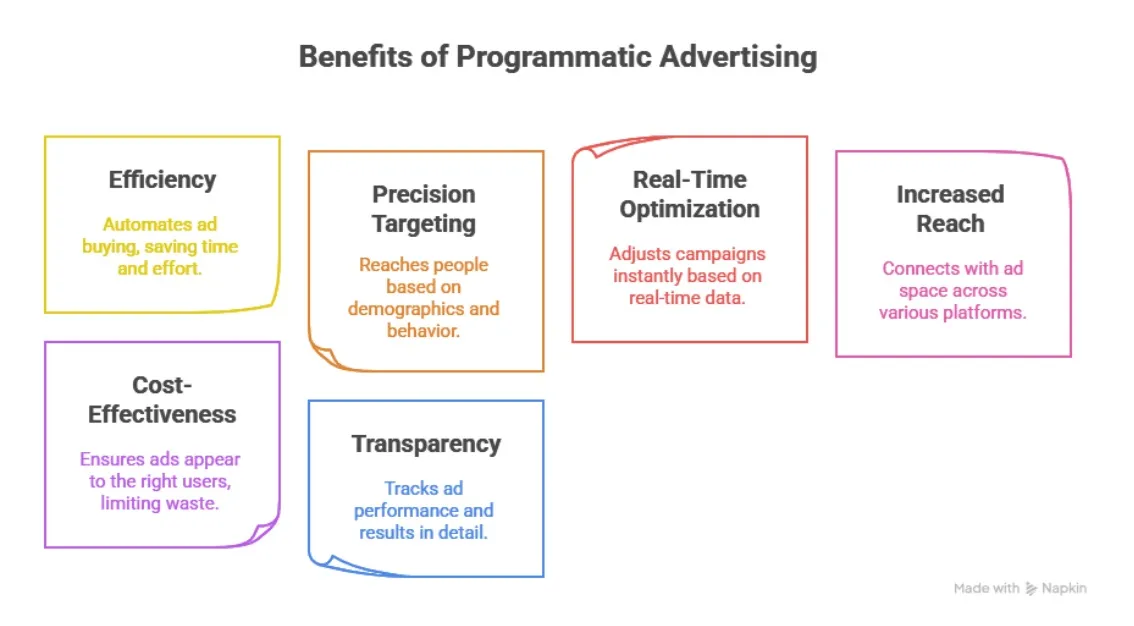
Image Credit: Strategus
Programmatic advertising offers a wide range of advantages, making it a crucial component of modern marketing strategies. Using automation, data and AI, brands can get their ads in front of the right people at the right time, making campaigns more efficient and boosting ROI. Some of the main benefits include:
- Better Targeting and Personalisation: Programmatic advertising helps you target people based on their behaviour, interests, location, demographics and even what they’re looking to do. By getting so specific, your ads feel more relevant to each user, which boosts engagement and encourages more meaningful interactions.
- Improved Efficiency via Automation: By automating ad buying, placement and optimisation, programmatic reduces manual work and accelerates campaign execution. Marketers can focus on strategy and creative, while AI handles bidding, targeting and delivery across multiple channels.
- Higher ROI and Reduced Ad Waste: Real-time bidding ensures you only pay for impressions most likely to convert. This reduces wasted ad spend, maximises budget utilisation and helps deliver higher returns on investment.
- Real-Time Optimisation: Programmatic platforms continuously analyse performance data, adjusting bids, placements and creatives on the fly. This means campaigns can be refined in real time to improve efficiency, relevance and overall effectiveness.
- Scalability Across Multiple Channels: Programmatic campaigns can run seamlessly across display, video, audio, CTV, digital out-of-home and more. This omnichannel approach ensures a consistent brand presence wherever your target audience engages, allowing campaigns to scale without losing precision or control.
In summary, programmatic advertising not only simplifies the ad buying process but also empowers marketers to deliver personalised, measurable and highly effective campaigns across a variety of digital channels.
Pros and Cons of Programmatic Advertising
Programmatic advertising is great for saving time and targeting the right audience, but it’s worth knowing the benefits and potential drawbacks before diving in. The table below breaks down the main pros and cons to help you decide.
| Aspect | Pros | Cons / Considerations |
| Efficiency | Automates ad buying, saving time compared with manual processes | Requires knowledge of platforms and bidding strategies |
| Targeting | Precise audience targeting using demographics, behaviour, location and interests | Over-reliance on data may neglect creative strategy |
| Optimisation | Real-time adjustments based on performance improve ROI | Can be complex to monitor and optimise effectively |
| Scalability | Manage campaigns across multiple channels simultaneously | Initial setup and tools can be costly, especially for small businesses |
| Cost | Real-time bidding ensures optimal price per impression | Risk of ad fraud or bot traffic if not monitored |
| Transparency | Provides insights into audience reach and performance metrics | Some platforms may not fully disclose where ads appear |
| Creativity | Consistent formats simplify production | Standardised ad formats may limit creative flexibility |
Programmatic advertising comes with some challenges, like potential fraud, transparency issues, setup costs and creative limits. Knowing the pros and cons helps marketers use programmatic campaigns wisely, getting the most benefit while avoiding pitfalls.
How Programmatic Advertising Works
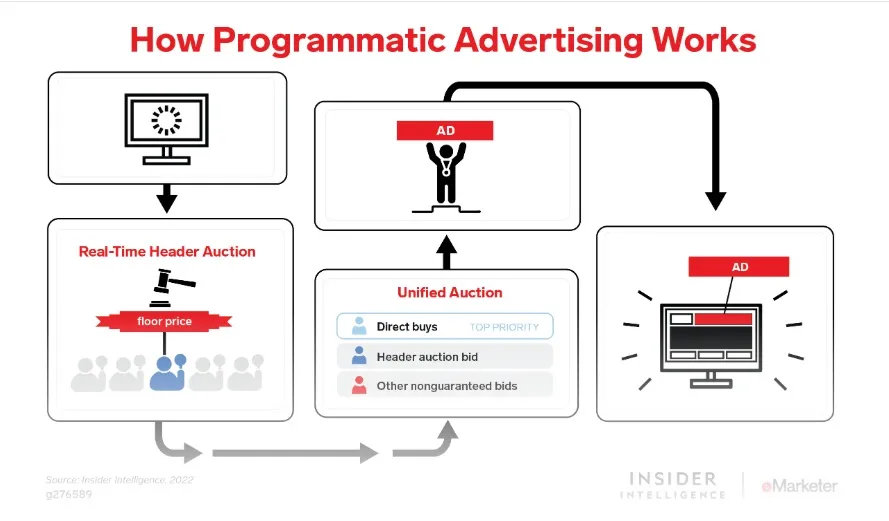
Image Credit: eMarketer
Programmatic advertising uses automation and artificial intelligence (AI) to streamline the entire process of buying and placing digital ads. Instead of negotiating directly with publishers, marketers rely on advanced software to handle tasks that would otherwise be time-consuming and manual. This technology helps advertisers:
- Identify high-value audiences based on behaviour, interests, demographics and intent.
- Optimise bids automatically to secure the best placements at the best prices
- Deliver ads across multiple channels, including display, video, mobile and CTV.
- Continuously learn from performance data to refine future targeting and messaging.
At the centre of this system is Real-Time Bidding (RTB), the most widely used programmatic method. RTB works like a live digital auction that happens in milliseconds:
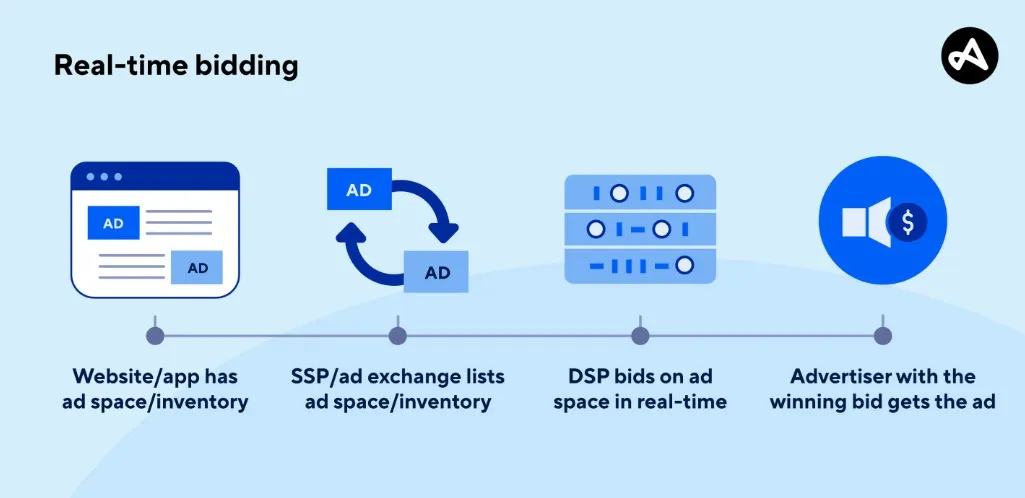
Image Credit: Adjust
- A user visits a website or app
- An auction is triggered for the available ad slot
- Advertisers bid based on how valuable that user is to them
- The highest bidder wins and the ad is presented instantly
This automated process allows brands to reach the right people at the right moment without overspending. Programmatic buying isn’t limited to open auctions. It also includes more controlled environments:
- Programmatic Direct: Pre-negotiated deals with fixed pricing and guaranteed impressions, ideal for brand campaigns needing predictable placements
- Private Marketplaces (PMPs): Invite-only auctions where premium publishers offer high-quality inventory to selected advertisers, providing more transparency and brand safety
These transactions rely on two key technologies within the programmatic ecosystem:
- Demand-Side Platforms (DSPs): Tools advertisers use to buy ad inventory efficiently across multiple exchanges, manage targeting, set budgets and track performance
- Supply-Side Platforms (SSPs): Platforms that help publishers manage their available ad space, increase competition for impressions and maximise revenue
Together, DSPs, SSPs, RTB and data-driven automation create a seamless ecosystem where digital advertising is bought, sold and optimised with speed, precision and minimal manual effort.
Key Technologies Behind Programmatic Advertising

Image Credit: Power Ad Spy
Before diving deeper into strategy, it’s essential to understand the core technologies that power programmatic advertising. These components work together behind the scenes to automate ad buying, enhance targeting and ensure campaigns run efficiently at scale:
- Demand-Side Platforms (DSPs): DSPs enable advertisers to purchase ad space automatically, leveraging audience data and bidding strategies to reach specific segments across multiple networks. Examples include Google DV360 and The Trade Desk.
- Supply-Side Platforms (SSPs): SSPs help publishers sell ad space efficiently while maximising yield. They connect inventory to multiple ad exchanges for competitive bidding.
- Ad Exchanges: Digital marketplaces where advertisers and publishers transact. Ad exchanges facilitate real-time auctions for ad impressions, placing ads in front of the most suitable audience.
- Data Management Platforms (DMPs): DMPs aggregate and analyse audience data from various sources. They enable advanced targeting by organising first-party, second-party and third-party data into actionable segments.
- Ad Networks: These consolidate inventory from multiple publishers and offer it to advertisers as bundled packages. Ad networks simplify buying but offer less granular control than DSPs.
- Audience Data (1st/2nd/3rd Party): First-party data comes directly from your audience (e.g., website visits), second-party data is shared between trusted partners and external parties supply third-party data. Integrating all three can significantly improve targeting accuracy.
6 Programmatic Advertising Channels
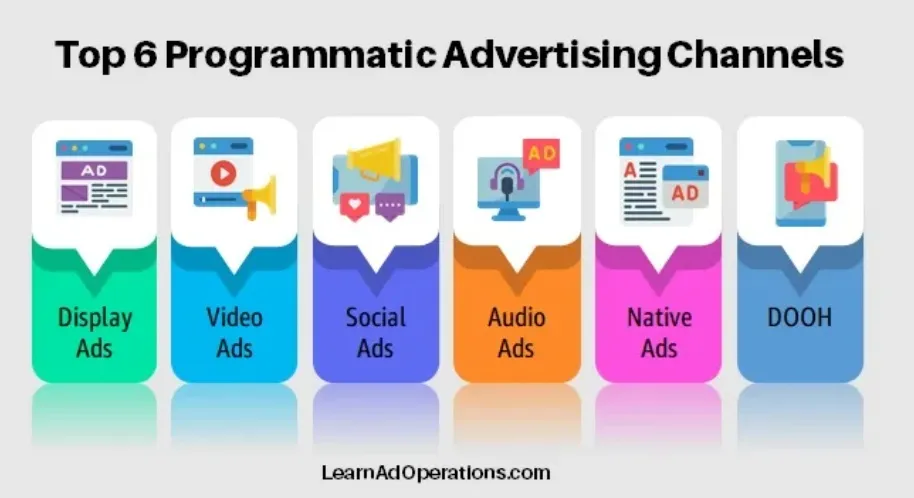
Image Credit: Learn Ad Operations
Programmatic advertising spans a wide range of formats and channels, each designed to meet different marketing objectives and engage audiences in unique ways. The main types include:
- Display Advertising: These are traditional banner ads or rich media placements shown on websites and apps. Display ads work well for increasing brand visibility, promoting products, or retargeting audiences who have previously interacted with your brand. Programmatic display allows for precise targeting based on demographics, interests and browsing behaviour.
- Video Advertising: Video ads, including pre-roll, mid-roll and outstream formats, are highly engaging and effective at capturing audience attention. Programmatic video campaigns can run across desktop, mobile and in-app environments, enabling advertisers to combine visual storytelling with data-driven targeting for better results.
- Native Advertising: Native ads blend right into a website’s content, so they don’t feel disruptive. Since they match the look and tone of the page, they usually grab people’s attention better and help build a stronger connection with the brand.
- Digital Out-of-Home (DOOH): DOOH refers to digital billboards, signage and public screens that can now be bought programmatically.
Using audience targeting technology, advertisers can deliver contextually relevant messages in real time, whether on high streets, shopping centres, or transport hubs, bridging the gap between digital and physical advertising.
- Audio Programmatic: With the rise of streaming services, podcasts and internet radio, programmatic audio allows advertisers to reach listeners in highly targeted ways. Ads can be served based on listener behaviour, location, or demographics, providing an effective method to engage audiences during moments when visual attention is limited.
- CTV (Connected TV) and OTT: Connected TV and over-the-top platforms bring the precision of programmatic targeting to television screens. Advertisers can serve personalised video ads to viewers on smart TVs and streaming devices, combining the scale and impact of traditional TV with the data-driven advantages of digital marketing.
Using a mix of these programmatic channels, brands can run integrated campaigns that reach audiences wherever they spend their time, helping to drive both awareness and conversions.
Programmatic Advertising Checklist for Marketers
Use this checklist to ensure your programmatic campaigns are efficient, targeted and optimised for maximum results:
- Decide if your objective is brand awareness, lead generation, or direct sales.
- Use your own customer data for precise targeting and combine with second or third-party data for extended reach.
- Create audience groups based on behaviour, interests, demographics, or purchase intent for personalised messaging.
- Select DSPs and SSPs that align with your goals, inventory needs and target audience.
- Combine display, video, native, audio and CTV to engage audiences across different touchpoints.
- Rotate ads and run A/B tests to determine which messaging and visuals perform best.
- Limit how often a user sees the same ad to reduce ad fatigue and wasted spend.
- Track CTR, CPM, ROAS, viewability and conversions to evaluate performance.
- Use private marketplaces or allow publishers to keep ads away from inappropriate content.
- Adjust bids, targeting and creatives based on live performance data.
- Stay up to date with GDPR, cookieless targeting and other data privacy regulations.
- Analyse post-campaign performance to improve future programmatic efforts.
Note: This checklist provides general best practices. Specific steps, tools and workflows may vary depending on your agency’s internal processes, campaign objectives, or client requirements.
Mastering Programmatic Advertising in 2026
Programmatic advertising has become a cornerstone of modern digital marketing, offering unprecedented precision, efficiency and scalability. Using automation, AI and real-time bidding, marketers can get their ads in front of the right people at the right time across channels like display, video, audio and connected TV.
The key to success lies in understanding the programmatic ecosystem, including DSPs, SSPs, ad exchanges and data management platforms. It also requires applying best practices such as audience segmentation, creative testing and real-time optimisation.
If businesses take a structured approach, use their data wisely and keep learning from how campaigns perform, they can get the most out of their budget while cutting down on wasted spend.
For marketers looking to get started or elevate their programmatic campaigns, partnering with an experienced agency can make all the difference. Learn how MediaOne can help your business navigate the world of digital advertising to reach the right audience. Contact us now!
Frequently Asked Questions
Can small businesses benefit from programmatic advertising?
Yes. While programmatic is often associated with large-scale campaigns, small businesses can also leverage it to reach highly targeted audiences efficiently. Many DSPs offer flexible budgets, making them accessible to companies of all sizes.
How does programmatic advertising differ from traditional PPC campaigns?
Unlike traditional pay-per-click (PPC) campaigns, where ads are manually placed, programmatic automates the buying process and uses real-time data to target audiences across multiple channels. This increases efficiency, scale and precision.
What role does AI play in programmatic advertising?
AI powers predictive targeting, bid optimisation and creative personalisation. By analysing user behaviour, demographics and engagement patterns, AI ensures that campaigns reach the right people with relevant messages at the optimal time.
With the decline of third-party cookies and stricter data privacy laws (e.g., GDPR), advertisers must rely on first-party data, contextual targeting and privacy-compliant solutions to maintain effective programmatic campaigns.
How do I measure the success of a programmatic campaign?
Campaign success is measured using metrics such as CTR (click-through rate), CPM (cost per thousand impressions), ROAS (return on ad spend), viewability and conversions. Tracking these KPIs helps optimise campaigns in real time and improve future performance.