A successful product launch requires more than visibility. Even great products can fail if your launch lacks relevance or trust. This is why influencer marketing now plays a key role in effective launches.
Influencer marketing lets brands launch products credibly and relatably. Instead of only sharing brand messages, creators show how your product fits real life and why it matters.
This is especially important during a launch, when audiences are still forming their first impressions and deciding whether to engage further.
Influencers do more than drive awareness. They build anticipation before launch, create momentum during launch, and sustain interest after release. They also give brands access to trusted communities and content that make launches feel organic and effective.
If you are looking for a more structured approach to influencer marketing agency product launch campaigns in Singapore, it is worth ensuring your launch strategy is built around the right creators, the right content, and the right business goals from the start.
This guide covers how influencer marketing strengthens product launches, why it matters, and how you can build a more effective creator-led strategy.
Key Takeaways
- Influencer marketing boosts product launches by rapidly building awareness, trust, and engagement through authentic, platform-appropriate content.
- Effective influencer-led launches focus on creator relevance, audience fit, content quality, and clear objectives, not just follower counts.
- Strong launch campaigns plan influencer activity across pre-launch, launch, and post-launch stages, not just a single announcement.
- Measure influencer performance beyond likes and impressions. Track traffic quality, conversions, promo-code use, and the value of reused creator assets.
- For Singapore launches, ensure influencer activity complies with disclosure rules, data policies, and accurate product information for both compliance and results.
What is a Product Launch Campaign?
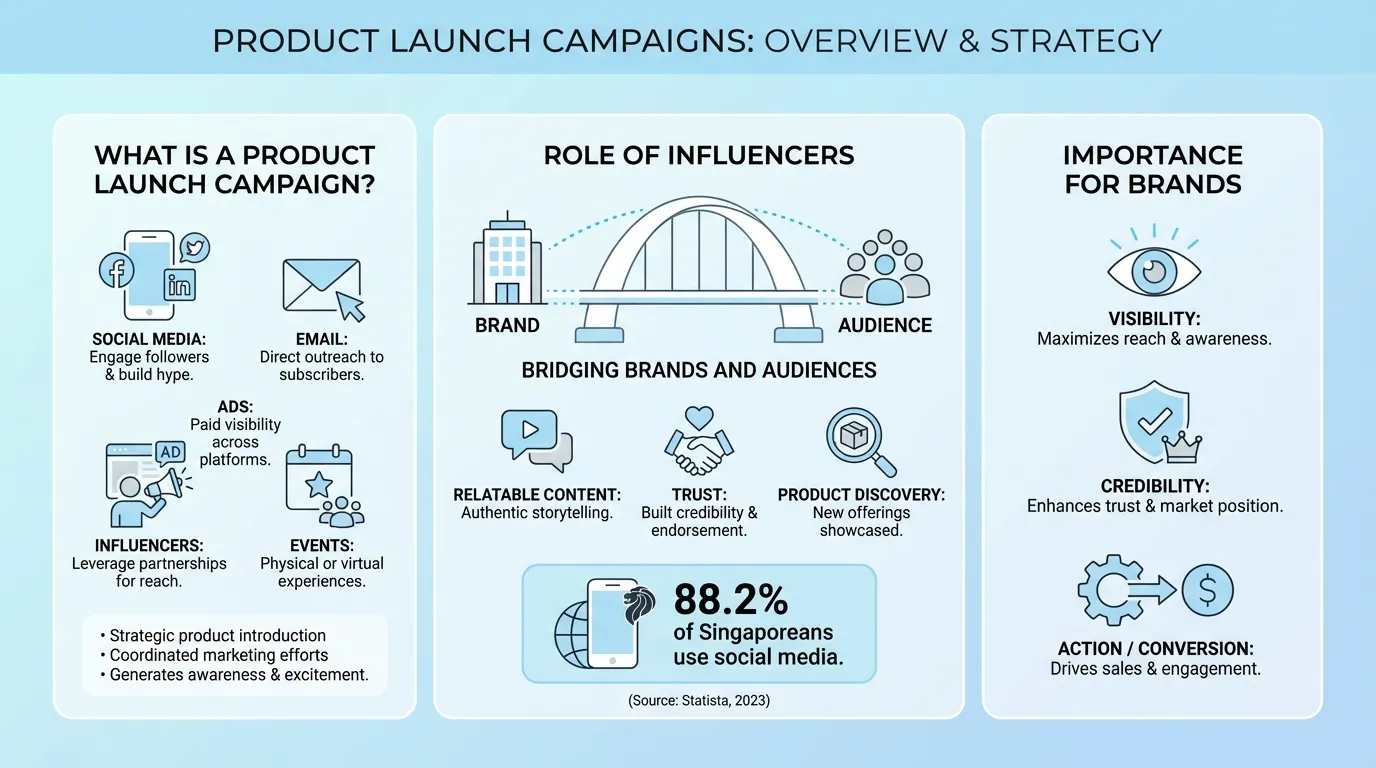
Product launch campaigns are the planned marketing activities used to introduce a new product, service, feature, or collection to the market.
Product launches aim to create awareness, show why the product matters, generate interest, and drive clear action. In Singapore, this is vital because digital discovery is ingrained in consumer behaviour.
According to DataReportal’s Digital 2025 Singapore report, 5.16 million Singaporeans used social media in January 2025, or 88.2% of the population. This is why social visibility should be central to launch planning, not an afterthought.
A good product launch is more than an announcement or email. It’s usually a coordinated effort across social media, email, paid ads, PR, influencers, landing pages, and sometimes events.
For example, a product launch campaign might include:
- teaser posts before release
- influencer content or reviews
- a launch-day email
- paid ads driving traffic to the product page
- limited-time launch offers
- post-launch follow-ups to keep momentum going
Simply put, launch campaigns help brands introduce products so they get noticed, understood, and acted on.
Role Of Influencers In Marketing
Influencers bridge the gap between what brands say and what audiences notice. Brand-owned content presents the product from the company’s view. Creator-led content often makes that message more relatable, more contextual, and more trustworthy.
In a launch campaign, influencers can help by:
- introducing the product to the right audience
- showing how it fits into real-life situations
- turning product benefits into social-first content
- answering doubts through demonstrations, reviews, or tutorials
- creating momentum across multiple stages of the launch
This role has become more important as people increasingly rely on creators for product discovery and evaluation. Google has reported that creators can influence purchase confidence and shorten decision-making journeys, which is a major advantage when you want a launch to gain traction quickly.
Importance For Brands And Businesses
For brands and businesses, product launches are high-pressure moments. A weak launch can stall momentum, slow revenue, and limit returns on the time and budget invested in development, production, and marketing.
When we execute a launch campaign well, we give the product a stronger market entry and a better chance of commercial success. A strong product launch campaign should:
- introduce the product clearly and persuasively
- explain why it matters to the target audience
- differentiate it from competing alternatives
- generate visibility across the right channels
- build trust through proof, demonstration, or endorsement
- drive a clear action, such as sign-ups, enquiries, trials, or sales
When used properly, influencers add more than visibility. They boost campaign relevance, credibility, and response simultaneously.
How Influencers Enhance Product Launch Campaigns
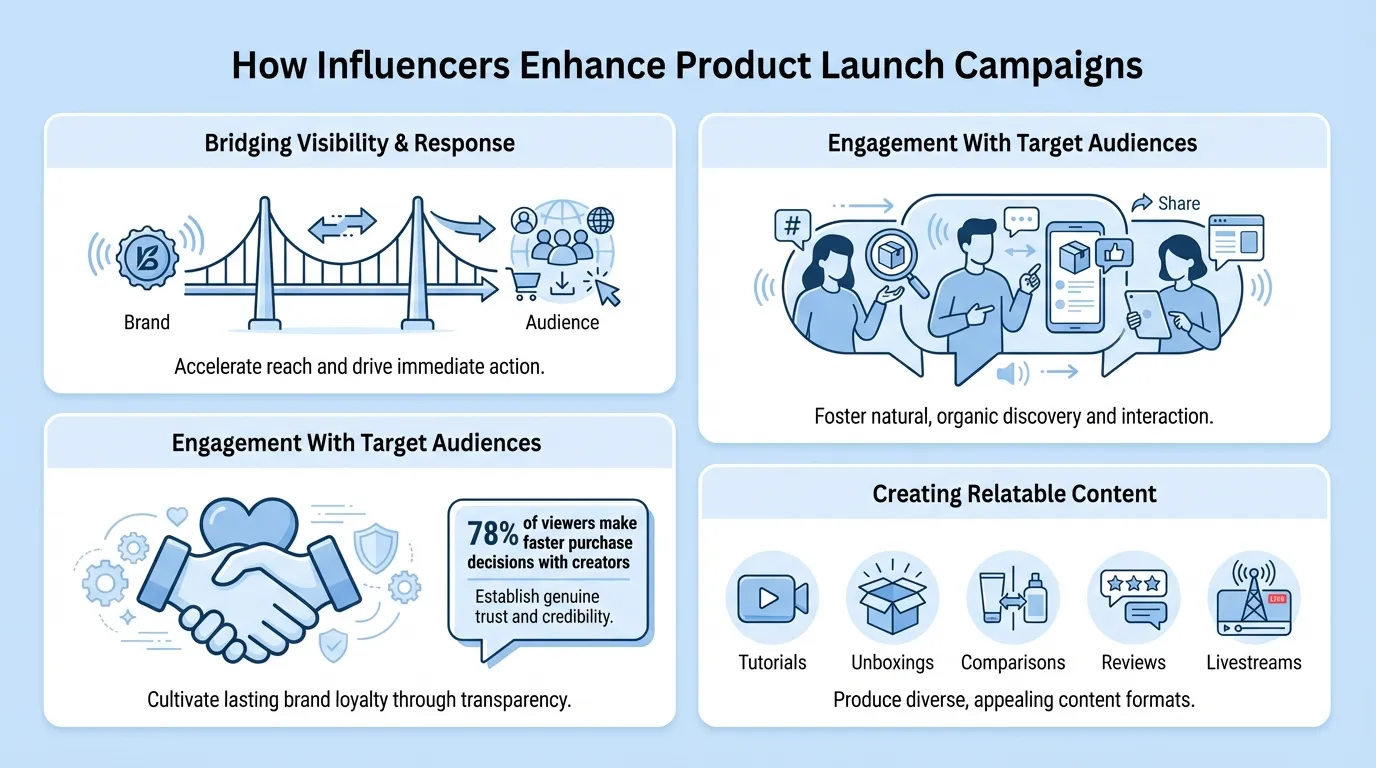
Influencers enhance launches by bridging the gap between visibility and response.
Rather than relying solely on brand messaging, use creators to introduce products in a way that feels relatable, socially relevant, and clear to audiences.
Engagement With Target Audiences
Influencer marketing helps your product enter conversations naturally during a launch. Instead of relying solely on brand messaging, creators make products more relevant, familiar, and attention-grabbing.
Building Authentic Relationships
Influencers already have a relationship with their audiences. That connection builds over time through consistency, familiarity, and authentic content. When a creator introduces a new product in their usual style, the message feels less like an interruption and more like a recommendation.
That matters because trust is crucial for product discovery and early consideration. Google’s creator research found that creator-led environments influence how people evaluate brands and products. A separate YouTube and creator-focused report showed that 78% of viewers say creators help them make faster purchase decisions.
Creating Relatable Content
Launch campaigns often fail when the audience sees the product but doesn’t immediately understand how it fits into their lives. Here, creators excel. They translate product features into real-life use cases through tutorials
- first impressions
- unboxings
- comparisons
- day-in-the-life integrations
- livestream demonstrations
If your product needs more explanation, relatable content is even more important. HubSpot’s marketing statistics reference video-led buying behaviour, noting that explainer and product videos strongly influence purchase decisions.
Expanding Brand Reach
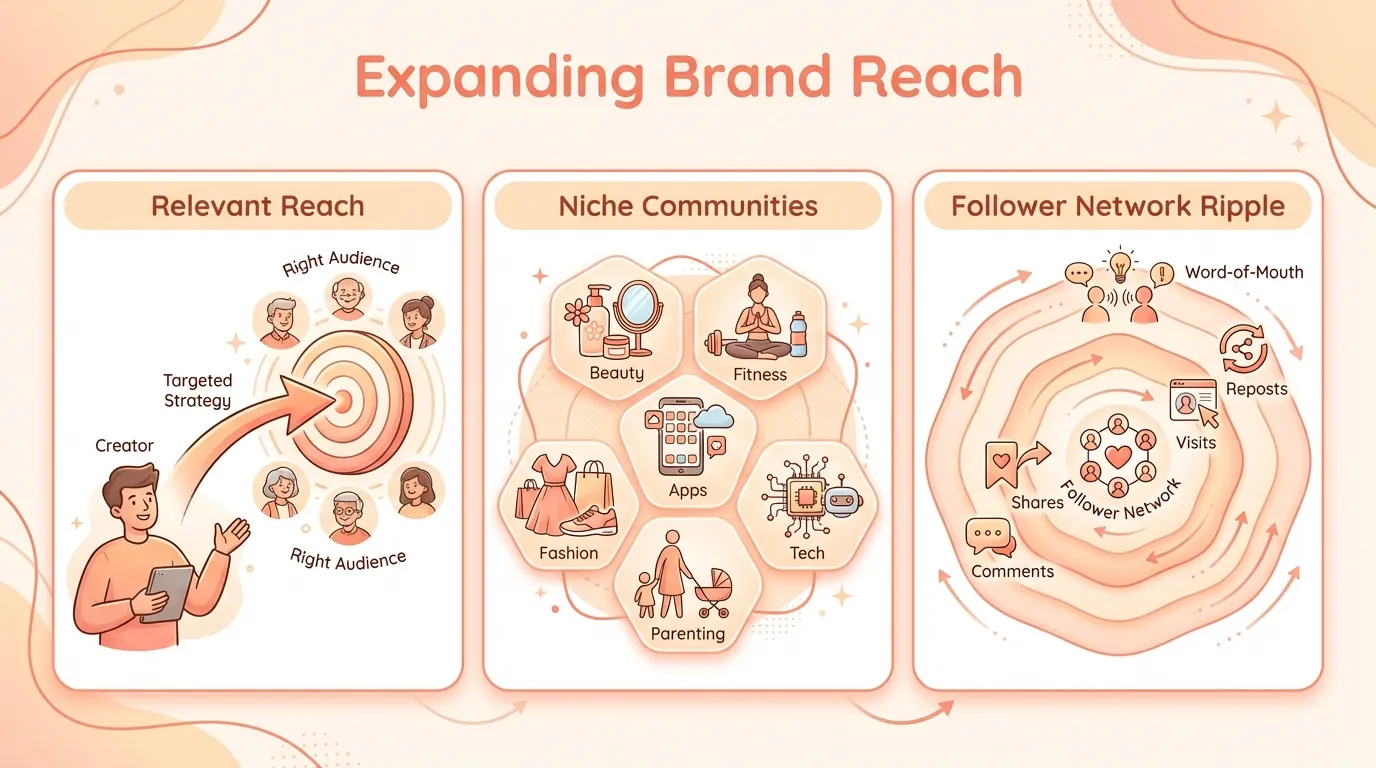
A strong product launch needs more than engagement. It also needs relevant reach. Influencers help expand brand visibility. They do this in a way that is often more targeted than broad paid exposure alone.
Access To Niche Communities
Not every launch needs mass-market visibility immediately. In many cases, it is more effective to reach the right niche first. We see this often with:
- beauty and skincare launches
- fitness and wellness products
- fashion drops
- app launches
- parenting or lifestyle products
- specialist consumer tech
This is one reason influencer marketing works well for product launches. Instead of pushing a generic message to everyone, you can place the product in front of communities already interested in the category.
Leveraging Follower Networks
Creators also help extend launch visibility through their follower networks. A single post can generate more than views. It can trigger:
- saves
- shares
- profile visits
- tagged comments
- reposts
- word-of-mouth conversation
That ripple effect helps during a launch by creating repeated exposure. MediaOne’s published guidance on macro vs. micro influencers also notes that product launches benefit from broader visibility when the right creator tier aligns with the campaign objective.
Driving Conversion Rates

Reach and engagement matter, but most brands care about results. The real question is whether influencer activity actually helps people take action. In launch campaigns, that usually means stronger click-through, more qualified traffic, and a clearer path to purchase.
Influencer Trust And Consumer Behaviour
Influencer content reduces hesitation and drives conversions. If audiences see products demonstrated by someone they trust, the product feels easier to evaluate and lower-risk, especially when creators show:
- how the product works
- what problem it solves
- what makes it different
- whether it is genuinely worth buying
Google’s research finds that creator-led content shapes purchase decisions, and advertisers remain positive about creator-produced content.
From a campaign perspective, this is why we should not evaluate creators only on likes or comments. A creator can deliver real launch value through:
- better-quality traffic
- stronger landing page engagement
- more add-to-cart intent
- higher code redemption rates
- more convincing content for paid amplification
Types Of Product Launch Campaigns
Not every product launch should follow the same format. The right campaign structure depends on what you are launching, how much explanation the product needs, where your audience spends time, and how quickly you want to move them from awareness to action.
In practice, we usually see the strongest launch campaigns built around a mix of live moments, digital content, and performance tracking. That is especially relevant in markets where social discovery and commerce continue to grow.
In Singapore, DataReportal’s Digital 2025 Singapore report shows that social media usage remains deeply embedded in daily digital behaviour, which makes socially led launch formats even more valuable.
Event Management For Product Campaign Launches

Launch events remain one of the most effective ways to create concentrated attention around a new product. They give brands a defined moment to introduce the product, shape the narrative, and generate content across multiple channels at once.
Organising Launch Events
A well-run launch event should do more than gather people in one place. It should create an experience that helps the product feel:
- timely
- credible
- easy to understand
- worth sharing
When we plan launch events, the goal is usually to combine:
- brand storytelling
- product demonstration
- media or creator coverage
- audience interaction
- content capture for post-event distribution
This is where influencers can add real value. Instead of acting only as attendees, they can help by:
- hosting segments
- creating live content from the event
- sharing first impressions
- demonstrating the product
- extending the event’s reach to audiences who are not physically present
Online Vs. Offline Events
Both formats can work well, but they serve different needs.
Offline launch events are usually stronger when you need:
- hands-on product experience
- face-to-face media coverage
- premium brand positioning
- stronger visual staging
- live creator participation on-site
Online launch events are often better when you need:
- broader reach
- lower venue and production costs
- easier access for distributed audiences
- more efficient post-event replay and reuse
- stronger integration with livestream commerce or digital sign-up flows
In many cases, the best approach is hybrid. That gives you the in-person credibility of a physical event while also allowing creators, customers, and prospects to engage digitally.
Event-industry reporting published in 2025 noted that 74.5% of planners were adopting hybrid formats and 63% were increasing their virtual investment, reflecting how event strategies continue to balance reach with experience.
Digital Showrooms

Digital showrooms are a useful launch format when your audience needs product access, education, or demonstration without being physically present.
Virtual Product Showcases
A digital showroom is essentially a virtual environment where your product can be presented through:
- guided walkthroughs
- livestream demonstrations
- video explainers
- product feature highlights
- downloadable assets
- integrated CTAs
- direct commerce links
This format works especially well for launches where the product benefits from explanation or visual storytelling, such as:
- beauty and skincare
- fashion and accessories
- consumer technology
- home and lifestyle products
- product collections or seasonal drops
When influencers are involved, digital showrooms become even more useful because creators can turn that showroom into content. They can:
- host walkthroughs
- record live reactions
- demonstrate features
- answer audience questions
- direct followers to purchase or sign-up pages
Benefits Of Digital Showrooms For a Product Launch Campaign

Digital showrooms can strengthen a launch by making the campaign more scalable and easier to extend over time.
The main advantages include:
- broader audience access
- lower logistical costs than repeated physical showcases
- easier content repurposing
- stronger integration with social and paid media
- more measurable click and engagement behaviour
- better support for livestream and social commerce formats
This matters because live and interactive shopping formats are growing quickly. Grand View Research estimates the global live commerce market reached USD 172.86 billion in 2025 and projects continued rapid growth through 2033, driven by demand for more interactive and immersive shopping experiences.
That does not mean every brand needs a full live commerce programme, but it does show why virtual launch environments and social-led product showcases are becoming more commercially relevant.
Advertising Monitoring
A launch campaign is only as strong as its measurement. If we do not know what drove awareness, engagement, traffic, or sales, we cannot confidently scale what worked or fix what underperformed.
Tracking Campaign Effectiveness
When we monitor launch performance properly, we move beyond vanity metrics and assess whether the campaign is actually influencing behaviour.
For product launch campaigns, I would usually track:
- reach and impressions
- video views and watch time
- saves and shares
- landing page visits
- engaged sessions
- add-to-cart actions
- sign-ups or enquiries
- purchases or code redemptions
- creator-by-creator performance
The key is to measure both content performance and business performance. A creator post may generate strong engagement but weak conversions. Another may produce fewer views but much higher-quality traffic. That is why launch reporting should always go deeper than likes and comments.
Tools For Monitoring Influencer Impact
The right tools depend on the campaign setup, but most launch teams should have some combination of the following:
| Tool / Tracking Method | What It Helps You Measure | Why It Matters In A Product Launch |
| Platform Analytics, such as TikTok, Instagram, or YouTube insights | views, reach, engagement, watch time, saves, shares | shows how creator content is performing on each social platform |
| Google Analytics | traffic quality, engaged sessions, bounce patterns, on-site behaviour | helps you understand whether the creator traffic is actually interested once it lands on your site |
| UTM-Tagged Links | traffic source, campaign source, creator-level visits | makes it easier to attribute visits and actions to specific influencers or campaign assets |
| Creator-Specific Promo Codes | redemptions, purchases, and offer usage | connects creator activity more directly to conversion and sales outcomes |
| E-commerce Platform Reporting | product views, add-to-cart actions, purchases, checkout behaviour | shows how creator-led traffic performs within the buying journey |
| CRM Or Lead-Source Attribution | enquiries, form fills, lead quality, sales pipeline impact | helps service-based or lead-gen businesses connect launch activity to actual leads |
| Social Listening Tools | sentiment, brand mentions, audience reactions, recurring feedback | helps you track how people are talking about the launch beyond your owned channels |
| Dashboard Reporting Tools | side-by-side creator performance, campaign comparisons, trend tracking | gives you a clearer overall view of which creators, content types, or messages are performing best |
Tracking links and promo codes remain especially useful because they connect creator activity to real action.
Shopify’s guidance on campaign measurement highlights the importance of campaign attribution and tracking structures, while broader influencer ROI guides point to UTM links, promo codes, and channel-level analytics consistently as the foundation for measuring impact.
Strategies For Successful Influencer Collaborations

A strong influencer campaign does not start with outreach. It starts with strategy. If you want creators to strengthen a product launch, you need the right fit, the right content structure, and the right platform mix.
Google states that trust, attention, and relevance are central to effective creator marketing. More recent guidance from Sprout Social also suggests that brands are shifting away from follower-count-led partnerships and toward alignment, business impact, and ROI.
Selecting The Right Influencers
Choosing the right influencer is one of the most important parts of any influencer product launch strategy. A creator may have strong reach and still be the wrong fit if their audience, tone, or content style does not align with the product.
Google’s guidance on creator marketing makes it clear that trust, attention, and relevance matter in successful creator campaigns.
Its Southeast Asia consumer insight also notes that brands should work with creators whose audiences align with the brand and who can speak genuinely about the product or service.
Criteria For Influencer Selection
When we assess creators for a launch campaign, we should look beyond follower count and check whether they can genuinely help the product land with the right audience. The most useful selection criteria usually include:
- audience relevance
- geographic fit
- content quality
- engagement quality
- category familiarity
- past branded-content credibility
- ability to explain the product naturally
- commercial terms, usage rights, and turnaround time
Sprout Social’s 2026 guidance also reinforces the importance of a defined, strategic selection process rather than treating creator choice as a manual shortlist based solely on visibility.
Importance Of Alignment With Brand Values
Brand fit is not just about aesthetics. It affects trust, message consistency, and risk. If the creator’s tone, audience expectations, or public persona conflict with the brand, the collaboration may generate visibility but not strengthen the launch. That is why value alignment should cover:
- tone of voice
- audience expectations
- category suitability
- previous brand associations
- content safety and reputation
Sprout Social’s recent platform and strategy materials also highlight brand fit and content suitability as core factors in building more authentic, safer, and higher-performing creator partnerships.
Co-Creating Content

Once the right creators are selected, the next step is to build content with them, not just assign tasks. The best launch campaigns usually perform well because the brand brings strategic direction while the creator brings audience understanding and platform fluency.
Hootsuite’s 2026 trends coverage suggests that brands are increasingly adopting a creator mindset, particularly as authenticity and measurable performance become more closely linked.
Collaborative Content Creation Strategies
Co-creation works best when the brief is clear but not overly restrictive. If the brand controls every word, the content can lose the creator’s natural voice. If the brief is too loose, the message can become inconsistent or lack commercial appeal. A better middle ground is to align on the essentials, then allow the creator to shape how the message is delivered.
A strong collaboration framework should usually include:
- campaign objective
- target audience
- product proof points
- mandatory claims
- prohibited claims
- disclosure requirements
- CTA
- platform format
- approval process
- usage rights
This is especially important in launches because content often needs to educate, persuade, and convert within a short window.
Ensuring Brand Messaging Consistency
Consistency does not mean every creator says the same thing in the same way. It means the audience should come away with the same core understanding of the product, no matter which creator they saw first. To achieve that, we should make sure every creator brief anchors around:
- the same key launch message
- the same audience problem or need
- the same product differentiators
- the same CTA or next step
- the same compliance requirements
That allows for creative variation without fragmenting the launch narrative. This matters even more in a crowded social environment like Singapore, where DataReportal reports that there were 5.33 million social media user identities in October 2025, equal to 90.6% of the total population. In a market with that level of social saturation, message clarity becomes even more important.
Best Platforms For Influencer Marketing Product Launch Campaigns
The best platform depends on the product and the role the creator is meant to play.
Here is the simplest way to think about it:
| Platform | Best Use In A Launch | Strongest Creator Formats |
| TikTok | fast awareness, social commerce, trend-led discovery | demos, reactions, live shopping, short-form videos |
| visual desirability, saves, story-driven engagement | Reels, Stories, carousels, creator posts | |
| YouTube | education, trust, long-form proof, reviews | tutorials, comparisons, deep dives, Shorts |
| community amplification, older audience reach, event support | launch announcements, creator shares, community posts | |
| B2B or professional launches | expert commentary, founder-led posts, event coverage |
If your campaign targets Singapore consumers, it is also worth remembering that local social usage remains very high, which means the platform choice should be driven by audience behaviour and content fit, not brand preference alone.
Strategies For Maximising Social Media Reach
To maximise reach, we should not rely on a single creator post and hope the algorithm does the rest. Launch campaigns are usually stronger when we combine creator content with sequencing, amplification, and cross-platform reuse.
The most practical ways to extend reach include:
- using multiple creator tiers for broader audience coverage
- staggering content across pre-launch, launch week, and post-launch
- repurposing top creator assets into paid ads
- combining short-form and long-form content
- using Stories, Lives, and posts together rather than in isolation
- pairing creator content with social listening and performance monitoring
Hootsuite’s 2026 trends report notes that creator partnerships are increasingly expected to deliver measurable performance, not just awareness, which is why reach strategy now needs to be closely tied to business objectives and reporting.
Examples Of Influencer-Driven Product Launch Campaigns
Influencer-led launches tend to perform best when creators are not treated as an afterthought. The strongest examples usually involve creators early in the campaign, build content around platform-native behaviour, and connect launch content to a clear commercial objective.
Samsung Galaxy S24
This video showcases the official launch of the Samsung Galaxy S24, highlighting its key features, design upgrades, and AI-powered capabilities. It offers a strong example of how major brands execute product launch campaigns to capture attention.
Samsung’s Galaxy S24 campaign on TikTok is a strong example of how creator-led launch content can improve upper-funnel performance when the creative is built for the platform rather than adapted from traditional advertising.
TikTok for Business reports that Samsung’s Galaxy S24 campaign achieved a 28% lift in brand awareness, along with 18% lifts in ad recall and consideration.
The key takeaway here is not just that Samsung used TikTok. The launch content was designed to feel native to a social environment where audiences expect speed, entertainment, and relevance.
If you want influencer marketing for product launches to work, this is one of the clearest lessons: platform fit matters as much as the message itself..
The Beauty Story

For a more commerce-focused example, The Beauty Story shows how creator-led launch or promotional activity can move beyond awareness into measurable sales impact.
TikTok for Business reports that The Beauty Story campaign achieved 12.5x ROAS on Catalogue Ads, 6.6x ROAS on LIVE Shopping Ads, and reached more than 66,000 users on average.
If your product launch is tied to e-commerce or social commerce, this shows how creators can play a direct role in driving conversions when content, shopping tools, and offers are properly connected.
In other words, influencer-led product launches work best when you give the audience a clear path from discovery to checkout.
Brand Performance Metrics for a Product Launch Campaign
If you want to evaluate whether an influencer-led launch is working, you need to measure more than likes, views, and comments. A good launch reporting framework should show how creator activity influenced both attention and action.
Metrics To Measure Success
The right metrics depend on the launch objective, but I would usually group them into four layers:
| Performance Layer | Metrics To Track | Why It Matters |
| Awareness | reach, impressions, video views, average watch time | shows whether the launch is being seen |
| Engagement | saves, shares, comments, profile visits | shows whether the content is resonating |
| Traffic | CTR, landing page visits, engaged sessions | shows whether audiences are moving beyond the platform |
| Conversion | purchases, sign-ups, code redemptions, ROAS, CPA | shows whether the campaign is driving business outcomes |
Samsung’s creator-focused TikTok campaign is a useful reminder that metrics like watch time, CTR, and CPC efficiency can tell us more about the quality of creator content than vanity engagement alone.
The Beauty Story example is also useful because it shows why ROAS and conversion-oriented metrics should be part of launch reporting where commerce is involved.
If your campaign is more upper-funnel, metrics such as brand awareness lift, ad recall, and consideration can also be valuable. Samsung’s Galaxy S24 campaign is a good example of this, since the reported results focused on awareness and consideration rather than direct sales.
Tools For Data Analysis And Reporting
To properly monitor influencer impact, we should combine content data with traffic and conversion data. The most useful setup usually includes:
| Tool Type | Examples | What It Helps Measure |
| Platform Analytics | TikTok Analytics, Instagram Insights, YouTube Analytics, Meta Business Suite | Views, reach, engagement, watch time, audience demographics, saves, shares |
| UTM Tracking | Google Analytics 4, Campaign URL Builder | Creator-specific traffic, sessions, landing page visits, and assisted conversions |
| Promo Codes and Affiliate Tracking | ReferralCandy, Impact, PartnerStack, Shopify Discount Codes | Sales driven by each creator, code redemptions, and revenue contribution |
| E-commerce Reporting | Shopify Analytics, WooCommerce Analytics, Magento | Product page visits, add to carts, checkout behaviour, sales by campaign |
| CRM and Lead Attribution | HubSpot, Salesforce, Zoho CRM | Leads, enquiries, pipeline contribution, customer source tracking |
| Dashboard Reporting | Looker Studio, Tableau, Power BI | Side-by-side creator comparisons, campaign summaries, and ROI reporting |
| Social Listening Tools | Brand24, Mention, Meltwater, Sprout Social | Brand mentions, sentiment, share of voice, campaign buzz beyond direct post metrics |
| Influencer Platform Reporting | Aspire, CreatorIQ, Upfluence, GRIN | Creator performance benchmarking, campaign management, and deliverable tracking |
| Link Tracking Tools | Bitly, Rebrandly, Pretty Links | Click-through rates, creator link performance, and audience response by channel |
| Email and Lead Capture Tracking | Mailchimp, Klaviyo, Typeform | Sign-ups, lead form completions, email driven conversions from creator campaigns |
| Paid Media Amplification Tracking | Meta Ads Manager, TikTok Ads Manager, Google Ads | Performance when creator content is boosted as paid media, CPC, CPA, ROAS |
| Heatmaps and On Site Behaviour Tools | Hotjar, Microsoft Clarity | How creator traffic behaves on the site, scroll depth, drop-off points, and user friction |
This matters even more as creator ecosystems become more measurable and more integrated into paid media.
In March 2026, YouTube announced that brands can access more than 3 million creators in the YouTube Partner Program through its Creator Partnerships offering, with Gemini-powered discovery designed to help advertisers find relevant creators more efficiently.
YouTube also says that 78% of viewers believe YouTube has the most trusted creators for product recommendations.
Tips For Running Innovative Product Launch Campaigns
A strong launch campaign should do more than announce a product. It should make people want to pay attention, participate, and share. If every creator post looks the same, uses the same talking points, and pushes the same call to action, the campaign can feel repetitive very quickly.
That is why innovative campaigns tend to perform better when we combine creative variety with audience participation. The product still needs to stay central, but the campaign should give people more than a reason to look. It should give them a reason to engage.
Creative Approaches To Influencer Marketing

Creativity matters because audiences respond more strongly to launch content that feels fresh, relevant, and platform-native. If you want creators to strengthen a launch, the campaign should allow room for ideas that go beyond a standard product mention.
Unique Campaign Ideas
Some of the most effective launch ideas are built around how the product is introduced, not just what is being promoted. Depending on the brand and category, this can include:
- teaser drops before the full reveal
- first-impression content from selected creators
- side-by-side comparisons with existing habits or routines
- challenge-based content that encourages participation
- creator-led countdowns or launch-day reveals
- limited early-access codes tied to specific influencers
- themed product bundles or exclusive creator editions
- behind-the-scenes content that shows how the product is made or used
The goal is to make the launch feel like an experience rather than a one-off promotional post. When we do this well, the campaign gives the audience more reasons to remember the product and more angles from which to engage with it.
Incorporating User-Generated Content
User-generated content can make a launch feel more credible and more dynamic, especially once the initial creator wave is live.
Instead of relying solely on influencer content, we can build a second layer of social proof by encouraging customers and followers to create and share their own content about the product.
This can include:
- reposting customer reactions
- featuring community unboxings
- highlighting testimonials
- encouraging review or challenge participation
- running a hashtag campaign tied to the launch
- rewarding selected community submissions
UGC is useful because it extends the campaign’s lifespan. It also helps shift the launch from brand-led promotion to broader community validation, which can make the product feel more established and more trustworthy.
Engaging Audiences Beyond Products

A launch campaign should not focus only on the product itself. It should also create reasons for the audience to interact with the brand, the creators, and each other. This is where stronger community engagement can make a campaign more memorable and more commercially effective over time.
Building Community Engagement
Community engagement matters because it helps the launch feel active rather than one-directional. If people are only watching content without responding, the campaign may gain visibility but miss the chance to build a stronger connection.
To increase community engagement, we can use:
- creator Q&A sessions
- comment prompts
- polls and voting mechanics
- community giveaways
- audience-led product naming or selection ideas
- launch-themed challenges
- early-access sign-ups for loyal followers
These tactics work well because they invite people into the launch rather than simply pushing messages at them. That tends to create stronger recall and more organic conversation around the product.
Interactive Campaign Elements
Interactive elements help make a product launch feel more immediate and more participatory. They are especially useful when the product benefits from demonstration, exploration, or real-time response.
Examples include:
- livestream product demonstrations
- interactive Stories or polls
- quizzes
- creator-hosted reveal sessions
- limited-time offers unlocked through engagement
- audience voting on colours, features, or bundles
- gamified campaign mechanics tied to sign-ups or sharing
The benefit of these elements is that they turn passive viewers into active participants. That can increase both attention and intent, while also giving the brand real-time insight into how audiences are responding to the launch.
Email Marketing For Product Campaign Launches
Email marketing plays a different role from influencer marketing, but it is still essential in a strong launch campaign. While creators help generate awareness and interest, email helps you capture, nurture, and convert that interest more directly.
It gives you a channel you own, which is especially useful when you want to guide people from curiosity to action with more control over timing, messaging, and follow-up.
For product launch campaigns, email is most effective when it is not treated as a one-off blast. We should use it as a sequence that supports the full launch journey, from anticipation to conversion and post-launch follow-up.
How To Write Product Launch Campaign Emails That Get Opened

A launch email only works if people open it first. That means the subject line, preview text, and level of relevance all matter. If the email feels generic, overly promotional, or badly timed, it is easy to ignore.
Subject Line Strategies
Your subject line should give people a clear reason to pay attention without sounding forced or exaggerated. The best launch subject lines usually do one of three things well:
- create curiosity
- communicate value
- create urgency
In practical terms, that can mean focusing on:
- the product reveal
- early access
- a benefit or outcome
- limited availability
- a launch-day deadline
Examples of stronger subject line angles include:
- Something New Is Coming
- Your Early Access Starts Now
- Meet Our New [Product Category]
- The Launch Is Live
- Last Chance To Get Launch Pricing
The key is to keep the wording clear and specific. Overly vague or overly sales-heavy subject lines can reduce trust, especially if the audience does not yet know why the product matters.
Personalisation Techniques

Personalisation helps make launch emails feel more relevant and less like a mass send. That does not always mean adding someone’s first name. More importantly, it means shaping the message around what the recipient is likely to care about.
This can include personalising by:
- audience segment
- previous purchase behaviour
- sign-up source
- waitlist status
- location
- category interest
- engagement level
For example, someone who joined a launch waitlist may receive:
- an early-access message
- a countdown email
- a launch-day reminder
Whereas an existing customer may receive:
- a loyalty offer
- a product upgrade message
- a recommendation based on past purchases
Good personalisation makes the email feel timely and intentional. It also helps you avoid sending the same launch message to everyone, regardless of context.
7 Types Of Product Launch Email Campaigns

A strong launch sequence usually includes multiple emails. Different emails serve different purposes, and each one should move the audience closer to the next action.
This email is used before the launch to build anticipation.
It usually works best when it:
- hints at what is coming
- creates curiosity
- encourages sign-ups or waitlist joins
- introduces a countdown or launch date
Example strategy: Send a short teaser to your broader list one to two weeks before launch, then direct interested readers to join an early-access list.
2. Waitlist Or Early-Access Email
This email is designed for your most interested audience segment.
It can be used to:
- reward sign-ups
- offer preview access
- create exclusivity
- warm up high-intent subscribers before launch day
Example strategy: Offer waitlist subscribers first access, early pricing, or a bonus available only before the public launch.
3. Launch Announcement Email
This is the main launch-day email that tells people the product is now available.
It should clearly include:
- what the product is
- why it matters
- who it is for
- what action to take next
Example strategy: Use one strong headline, one hero image, one clear CTA, and a short explanation of the main value proposition.
4. Product Education Email
Not every subscriber will convert from the announcement email alone. Some people need more explanation before they act.
This email can focus on:
- product benefits
- how it works
- use cases
- feature breakdowns
- who it is best suited for
Example strategy: Follow the launch announcement with an email that explains the top three things the product helps customers do better.
5. Social Proof Email
This email builds trust by showing how others react to the product.
You can use:
- creator feedback
- testimonials
- customer reviews
- early reactions
- user-generated content
- press mentions
Example strategy: If creators are part of the launch campaign, this is a strong place to feature their thoughts or demonstrate how they used the product in real life.
6. Scarcity Or Reminder Email
This email is useful when there is a real reason to create urgency.
It can be tied to:
- limited stock
- expiring launch pricing
- early-access windows
- bonus expiry
- deadline-based offers
Example strategy: Use this email near the end of the launch window to remind people that the offer or special access will not remain available indefinitely.
7. Last-Call Email
This is the final push before the launch offer or promotion ends.
It should be direct and simple. At this point, the audience already knows the product exists. The job of the email is to make the final action feel timely and worth taking.
Example strategy: Keep the message short, repeat the main benefit, restate the deadline clearly, and use one CTA.
Example Launch Email Flow
Here is a simple structure we can use for a product launch sequence:
| Email Type | Main Purpose | Suggested Timing |
| Teaser Email | build curiosity | 1 to 2 weeks before launch |
| Waitlist Or Early-Access Email | reward interest and build exclusivity | a few days before launch |
| Launch Announcement Email | announce availability | launch day |
| Product Education Email | explain benefits and use cases | 1 to 3 days after launch |
| Social Proof Email | build confidence with proof | mid-launch window |
| Scarcity Or Reminder Email | create urgency | near offer expiry |
| Last-Call Email | prompt final action | final day |
Email Template for a Product Launch CampaignHi {{First Name}}, You signed up early, so we wanted you to be among the first to see what we’ve been working on. Today, we’re officially introducing {{Product Name}}. It’s designed to help you {{primary benefit or outcome}}, without the usual {{pain point}}. As part of our early access group, you can explore it before the public launch. Here’s what you can expect: You can get started here: Early access is limited and will close once we open this to everyone. If you’ve been looking for a better way to {{core use case}}, this is a good time to try it. Let us know what you think once you’ve had a look. Best regards, |
What Makes A Product Launch Email Strategy More Effective
If you want your launch emails to perform better, a few fundamentals matter more than flashy copy.
We usually get stronger results when we:
- write subject lines with a clear reason to open
- segment audiences instead of blasting the same message to everyone
- keep one main CTA per email
- match each email to a specific stage of the launch
- use social proof where it can reduce hesitation
- follow up based on interest or behaviour
Email works best when it supports the wider launch ecosystem rather than sitting apart from it. If creators are driving attention on social, email should help convert that attention into something measurable, whether that is a sale, sign-up, trial, or enquiry.
Turn Influencer Marketing Into An Effective Product Launch Campaign
Influencers play an increasingly important role in product launch campaigns because they help brands do more than generate awareness. They help products enter the market with stronger relevance, clearer social proof, and a more natural connection to the audiences most likely to care.
In a market like Singapore, where DataReportal reported 5.16 million social media user identities in January 2025, equal to 88.2% of the population, social visibility is already deeply tied to how people discover and assess new products.
For brands, the real value of influencer marketing during a launch is not just reach. It is the combination of reach, trust, relatability, and measurable action. When creators are carefully selected, briefed properly, and integrated into a broader launch strategy, they can help shorten the gap between product introduction and consumer response.
Google’s creator marketing guidance has repeatedly pointed to the role of creators in shaping discovery, trust, and purchase decisions, which is exactly why influencer marketing continues to matter in launch planning.
If you want your next launch to do more than attract attention, MediaOne can help you build an influencer strategy aligned with your audience, commercial goals, and the platforms that matter most.
From creator selection and campaign planning to performance tracking and launch support, our team helps brands turn influencer marketing into a more measurable part of product launch success. Contact us and see how we can support your next launch.
Frequently Asked Questions
How Can Influencers Improve Brand Performance During Launches?
Influencers can improve brand performance during launches by helping brands generate awareness, build trust, and create stronger audience engagement in a shorter period of time. Their content often makes a product feel more relatable by presenting it in a real-life setting rather than through purely brand-led messaging. This can help reduce hesitation, especially when the product needs demonstration or explanation.
When the campaign is tracked properly, influencer activity can also contribute to measurable outcomes such as traffic, sign-ups, enquiries, and sales.
What Are Common Misconceptions About Influencer Marketing?
One common misconception is that influencer marketing is only useful for awareness and does not contribute to actual business results. In reality, creators can influence consideration, traffic quality, conversion rates, and content performance when the campaign is well-structured.
Another misconception is that the best influencer is always the one with the biggest following. In most cases, relevance, trust, and audience fit matter far more than follower count alone.
How Do I Measure The Success Of A Product Launch Campaign?
The success of a product launch campaign should be measured against the campaign’s actual objective rather than a generic set of numbers. If the goal is awareness, we should look at metrics such as reach, impressions, views, and watch time.
If the goal is conversion, stronger indicators include click-through rate, landing page sessions, add-to-cart actions, leads, or purchases. The best approach is to measure performance across the full funnel so that we can understand not only what was seen, but what actually influenced action.
What Are Some Examples Of Innovative Product Launch Campaigns?
Innovative product launch campaigns often go beyond standard sponsored posts and create more ways for audiences to interact with the product. This can include creator-led teaser sequences, livestream launches, digital showrooms, early-access drops, UGC-led participation, or creator-specific offers.
What makes these campaigns stand out is not only the creative idea, but how well the campaign is structured around audience behaviour and platform fit. In most cases, innovation comes from making the launch feel participatory rather than purely promotional.
How Do I Choose The Right Influencers For My Brand?
The right influencer is not simply the one with the highest follower count. The better choice is the creator whose audience, tone, content style, and credibility align with your brand and the product you are launching. We should also look at engagement quality, category relevance, professionalism, and whether the creator can present the product naturally. A strong fit usually leads to better trust, stronger content, and more useful campaign outcomes.
Are Micro Influencers Better Than Macro Influencers For Product Launches?
Micro influencers are often more effective when the goal is to build trust, be niche-relevant, and drive stronger engagement within a specific audience segment. Macro influencers can be useful when a brand needs larger-scale visibility and a faster awareness spike.
Neither is automatically better in every campaign, because each serves a different role in the funnel. In many launch campaigns, the best setup is a mix of creator tiers to achieve both relevance and reach.
When Should Influencer Marketing Start In A Product Launch Campaign?
Influencer marketing should ideally start before launch day, rather than only on launch day. Pre-launch content can help build anticipation, seed awareness, and warm up the audience before the main push begins.
Launch-week content can then focus on visibility, explanation, and conversion, while post-launch content can reinforce trust and extend momentum. A phased approach usually works better because it gives the campaign more time to build interest and drive action.
What Type Of Content Works Best For Influencer-Led Product Launches?
The best content depends on the product, the platform, and the audience’s level of familiarity with the category. In most cases, content formats such as demos, tutorials, reviews, comparisons, unboxings, and livestreams perform well because they help people understand how the product works in practice.
Short-form videos are especially useful for discovery, while longer-form formats can help answer deeper questions and reduce hesitation. The most effective launch campaigns usually combine multiple content types rather than relying on a single format.
Do I Need Paid Media If I Am Already Working With Influencers?
Paid media is not always mandatory, but it often strengthens the campaign. Organic creator content can build strong awareness and engagement, but paid amplification helps scale the best-performing assets to a wider and more targeted audience.
This is especially useful during product launches, where timing and momentum are important. If budget allows, combining influencer content with paid support usually creates a more balanced, measurable launch strategy.
What Compliance Issues Should Brands Watch For In Singapore?
In Singapore, brands should pay close attention to disclosure, data handling, and claim accuracy when working with influencers.
Sponsored or commercially connected content should be clearly identifiable, and any launch activity involving sign-ups, forms, or remarketing should comply with PDPA requirements.
Brands should also ensure that product claims are accurate and appropriately reviewed, especially in regulated sectors. The safest approach is to build compliance into the briefing and approval process from the start rather than trying to correct issues after content has already gone live.