You don’t need a five-figure website to look credible. You don’t need a boutique agency, a project manager, or six months of back-and-forth revisions. What you need is something that works—and fast.
Cheap website design doesn’t mean ugly, slow, or broken. It means stripping out what you don’t need, focusing on what actually drives action and lead generation, and using platforms or services that deliver without the fluff. In Singapore, where cost pressure is real and speed matters, getting a clean, mobile-optimised site up for under S$500 isn’t just possible—it’s the smart play.
Thanks to no-code builders, freelance marketplaces, and design-savvy student developers, small businesses here are launching solid websites in days—not months. Many are doing it for less than the cost of a single branded photoshoot.
This article isn’t about hacking together a half-baked landing page. It’s about making smart, lean choices that get your business online fast—with the potential to scale later. You’ll learn:
- When budget-friendly design makes strategic sense
- What your site still needs to convert visitors (even on a tight budget)
- Which online platforms balance price with real performance
- Where to find local freelancers, students, or SME-friendly agencies
- Common traps that waste time or budget—and how to avoid them
- How to launch lean, test fast, and build up from there
Whether you’re a tuition centre trying to capture leads, a home baker building an online menu, or a solo founder proving out your MVP, this is how you do cheap website design—without looking like you did it cheap. Let’s get into it.
Key Takeaways
- A well-designed website in Singapore no longer requires a huge budget, as affordable platforms, freelancers, and DIY tools can deliver professional web design results when chosen strategically.
- Even a lean website should prioritise essential features like mobile responsiveness, fast loading speed, SEO readiness, and trust-building elements to attract and convert visitors.
- Starting with a budget-friendly option is a smart way to get online quickly, provided you avoid common pitfalls such as poor mobile optimisation, lack of CMS access, or hidden maintenance costs.
Why Cheap Website Design Isn’t a Dirty Word

Image Credit: WebFX
Let’s be honest—“cheap” has a branding problem. Say it out loud, and people think “ugly template,” “buggy code,” or “that cousin who dabbles in Photoshop.” But if you’re running a lean operation in Singapore, especially as an SME, startup, or solopreneur, cheap website design isn’t a shortcut. It’s a strategy.
The Cheap Approach Might Be the Right Approach
In a fast-paced, innovation-driven market like Singapore, website page speed and adaptability matter more than perfection. Building an MVP (Minimum Viable Product) is standard startup practice.
So why spend S$5,000 on a bespoke, multi-page site when a S$120 Squarespace or Shopify site will get you online by next week—and already capturing leads or sales? You’re not cutting corners. You’re buying time.
Cost-Efficiency for Lean Startups
Cheap website design lets you validate, iterate, and grow without locking yourself into expensive commitments or endless revisions. The goal is to launch lean and upgrade later. That’s exactly what some of Singapore’s most agile businesses are doing—and winning. Here are scenarios where budget-conscious website design makes total sense:
| Testing a new idea | Whether you’re selling handmade candles or launching an online Mandarin tutoring service, start small, gauge interest, and scale only if the traction’s there. |
| Campaign microsites | Launching a short-term promo, seasonal product, or corporate social responsibility (CSR) initiative? A low-cost one-pager can do the job beautifully. |
| Freelancer and creative portfolios | Graphic designers, writers, and web developers can build polished portfolios using Wix, Carrd, or Webflow for under S$100 per year. |
| Internal projects | Need a knowledge hub, wiki, or internal booking system? A no-code solution like Notion, Tilda, or Google Sites works without over-engineering. |
| Investor decks or landing pages for pre-launch brands | Get attention, collect emails, and build momentum before you even ship a product. |
And here’s the kicker: Most visitors can’t tell whether your website cost S$300 or S$3,000. What they care about is clarity, speed, and trust signals. Your first website doesn’t need to be a forever website. Think of it as version 1.0—good enough to launch, flexible enough to improve, and lean enough not to stress your cash flow.
This approach is not about being cheap. It’s about being resourceful. If you’re strategic with your platform, design, and content marketing, your cheap website can punch way above its weight—and pave the way for smarter upgrades down the line.
Must-Have Features on a Budget Site
Just because you’re not splashing thousands on a web design agency doesn’t mean you should accept sloppy, broken design or half-baked functionality. In fact, when you’re building on a tight budget, every feature needs to pull its weight.
Your website isn’t just a digital brochure—it’s a lead generator, sales assistant, credibility builder, and sometimes your only storefront. At minimum, your affordable site needs to look polished, load fast, and make it stupid-easy for visitors to find what they’re looking for and take action. Here’s what your budget-friendly website must include:
| Feature | Why it matters |
| Mobile responsiveness |
|
| Fast loading speeds |
|
| Clear navigation and layout |
|
| SEO-ready structure |
|
| Trust indicators |
|
| Analytics setup |
|
Your website doesn’t need to be flashy—it needs to be functional, trustworthy, and fast. Nail these essentials and you’ll have a solid foundation for conversion, growth, and long-term credibility, all without blowing your budget.
Best Online Platforms for Cheap Website Design in Singapore
Let’s compare some of the best website builders and hosted platforms that offer quality design for less than S$30 per month.
Wix

Did you know that Wix accounted for 45% of the global website builder market share in 2024? In Singapore, Wix is popular among SMEs for good reason—it’s user-friendly, quick to launch, and visually appealing.
| Pricing |
|
| Pros |
|
| Cons |
|
| Best for |
|
| Local example |
|
WordPress.com
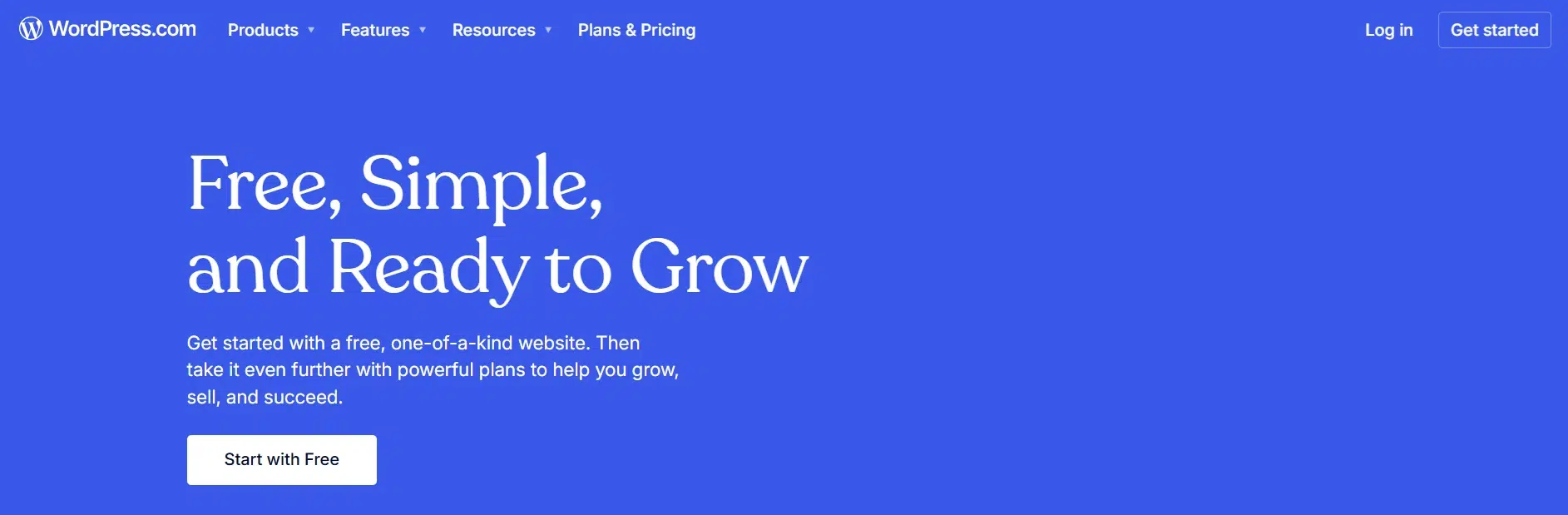
WordPress powers 43% of the web globally—and the hosted WordPress.com version offers a low-cost way to tap into that ecosystem.
| Pricing |
|
| Pros |
|
| Cons |
|
| Best for |
|
| Local example |
|
Shopify Starter or Basic

Shopify is purpose-built for ecommerce functionality. If you’re selling online—even through Instagram DM—Shopify’s entry-level plans give you a lot for the price.
| Pricing |
|
| Pros |
|
| Cons |
|
| Best for |
|
| Local example |
|
Hostinger Website Builder

Hostinger offers a cheap website builder that continues to attract small businesses due to its simplicity and price.
| Pricing |
|
| Pros |
|
| Cons |
|
| Best for |
|
| Local example |
|
Google Sites

If you just need something live—and fast—Google Sites offers a free, no-frills option tied to your Google account.
| Pricing |
|
| Pros |
|
| Cons |
|
| Best for |
|
| Local example |
|
Affordable Web Design Services in Singapore
If you prefer not to DIY, Singapore also has a pool of affordable talent who can build a website for you at a fraction of the rates offered by a typical web design company.
A. Freelancers on Fiverr, Upwork, and Carousell
If you want a custom look without agency pricing, hiring a freelancer through platforms like Fiverr, Upwork, or even Carousell can give you affordable, tailored results for your Singapore business.
| Cost |
|
| Pros |
|
| Cons |
|
| Pro tip |
|
B. Polytechnic and Uni Students
Polytechnic and university students often take on freelance web design as part of their portfolios.
| Where to find them |
|
| Cost |
|
| Pros |
|
| Cons |
|
C. SME-Focused Agencies Offering Professional Website Design Bundles
Some local web design agencies offer affordable web design packages, often bundled, for small businesses.
| Cost |
|
| Includes |
|
| Pros |
|
| Cons |
|
| Pro tip |
|
Comparison Table: Platforms vs Services
| Solution | Best For | Starting Price | Pros | Cons |
| Wix | SMEs, creatives | S$10 per month | Fast setup, drag-and-drop | Not ideal for scale |
| WordPress.com | Bloggers, consultants | S$6 to S$15 per month | SEO, blog, flexible | Slight learning curve |
| Shopify Starter | Ecommerce businesses | S$25 per month | Full ecommerce suite | Costs can grow with apps |
| Zyro | MVPs, landing pages | S$5 per month | Ultra-affordable, simple | Less flexible |
| Google Sites | Internal use, quick setup | Free | No cost, Google-friendly | Limited functionality |
| Freelancers | Custom visual design | S$150 to S$800 | Personalised, flexible | Requires vetting |
| Students | Budget branding projects | S$100 to S$500 | Affordable, portfolio-driven | Variable timelines |
| Boutique Agencies | SME starter website design packages | S$800 to S$2,000 | Bundled budget webdesign services, local support | May upsell or lock in contracts |
Red Flags: When Cheap Website Design Isn’t Worth It
Not all cheap solutions are smart. Here are warning signs that your “bargain” might actually cost you in the long run:
- No mobile optimisation – Your site might look fine on desktop but completely broken on phones. Always test mobile.
- No CMS or editing access – If you can’t update your own content, you’ll be stuck paying for every minor change.
- Hidden fees or renewal traps – Watch out for platforms that offer cheap first-year plans but lock you into high renewal costs.
- No security or backups – One hack or server issue and your entire site could be lost.
- Overly generic designs – A cookie-cutter site might turn visitors away if it doesn’t speak to your audience or differentiate your brand.
If a deal sounds too good to be true, dig deeper. Ask questions. Check the fine print.
How to Maximise a Lean Website Build

A budget website doesn’t mean a compromised one—it just means you need to be intentional, resourceful, and focused. With the right mindset and a few smart tactics, you can stretch every dollar while still launching a site that looks professional and gets the job done. Here’s how to get the most out of your affordable website build:
Write Your Own Copy (But Polish It)
Hiring a copywriting or digital marketing agency can cost hundreds, even thousands. But for a lean build, you can write your own copy—as long as you prioritise clarity over cleverness.
Focus on your value proposition: Who are you helping? What problem are you solving? Why should they trust you? Then run your draft through free tools like Grammarly, Hemingway App, or Quillbot to clean up typos, shorten sentences, and boost readability. Singapore users are direct and efficiency-minded—write like you speak.
Use Free (But High-Quality) Visual Assets
Avoid cheesy stock photos or pixelated images that scream “cheap.” Sites like Unsplash, Pexels, Flaticon, and Canva offer thousands of free, professional-grade images and icons. With Canva, you can even create your own branded graphics, social media platform banners, or infographics—no design degree needed.
Pro tip:
Use consistent colour tones and fonts to maintain visual coherence. Cohesion = perceived quality.
Keep the Site Structure Simple
Trying to build a 10-page website with a S$100 template is asking for trouble. Instead, stick to a clear, 4-page structure:
- Home – Your elevator pitch
- About – Your backstory, team, mission
- Services or Products – What you offer and how it works
- Contact – A form, map, WhatsApp link, or direct booking tool
Each page should have one goal, one primary call-to-action, and a mobile-friendly layout.
Install Basic Analytics
You don’t need a full marketing dashboard to start tracking performance. You can do it via Google Analytics integration. Google Analytics 4 and Microsoft Clarity are free and beginner-friendly. These tools tell you:
- Who’s visiting your site (and from where)
- What pages they’re spending time on
- Where they drop off
This data is gold for future updates, SEO efforts, or conversion tweaks.
Learn How to DIY
Relying on a developer (or professional web development services) for every little update is costly. Instead, invest time in learning your platform—whether it’s WordPress, Wix, or Shopify. There are thousands of free YouTube tutorials and Udemy courses tailored to beginners. If you can learn to update text, swap images, and publish blogs, you’ll future-proof your site and save thousands long-term.

Bottom line:
A cheap website should never be seen as a limitation. Done right, it becomes a launchpad—a lean, fast, mobile-optimised tool that helps you test ideas, attract leads, and build trust while keeping overheads low. Start simple, iterate fast, and grow smart.
Cheap Website Design Doesn’t Mean Amateur

Image Credit: Ohio Digital
A professional website used to cost thousands. Today, it could cost less than a nice dinner out—without sacrificing credibility or functionality. In Singapore’s digital-first landscape, your website is often your first (and sometimes only) chance to impress. That doesn’t mean you need to spend big. With the right tools, strategy, and guidance, even a lean build can:
- Build trust
- Capture leads
- Boost your online visibility
- Drive conversions
Don’t wait for a “perfect” budget. Start lean, but start strong. Your website should grow with your business, not hold it back. Ready to build a high-impact site without breaking the bank? MediaOne offers affordable, conversion-focused website design tailored for Singapore SMEs.
Whether you need a basic landing page or a full-service e-commerce solution, our expert team can guide you from concept to launch—fast. Call us today for a free consultation or a no-obligation quote. You’re closer than you think to launching something great.
Frequently Asked Questions
How long does it take to build a cheap website?
A basic cheap website can be built in as little as one to two weeks, especially if you use a ready-made template or hire a freelancer with a streamlined process. The timeline can be longer if you require custom features or need time to prepare content.
What features should I avoid cutting to save money?
Avoid compromising on mobile responsiveness, security features (like SSL), and SEO essentials, as these directly impact user experience and search visibility. Cutting these corners may save you money upfront but can cost you leads and credibility in the long run.
Will a cheap website rank on Google?
A cheap website can rank on Google if it is built with SEO-friendly code, has relevant content, and loads quickly. However, ongoing optimisation and quality content creation are still necessary to compete with more established websites.
Can I upgrade a cheap website later?
Yes, most platforms and templates allow you to add more pages, features, or integrations later. It’s wise to choose a platform that scales easily so you don’t have to rebuild your site from scratch.
Is it better to use a free website builder or pay for a cheap one?
Free website builders are fine for testing ideas or creating temporary sites, but they often include ads, limited features, and lack a custom domain. A paid cheap option usually offers better credibility, more control, and essential tools for growth.