Simply having a website is no longer enough, especially for businesses that rely on local customers. Local link building’s purpose is to earn genuine, geographically relevant mentions from credible local sources that reinforce your authority within your community.
Let’s explore proven local link building strategies that go beyond outdated directory submissions, including actionable tactics and a 90-day roadmap to help you see measurable gains in rankings, traffic and leads.
Key Takeaways
- A handful of links from credible local sites, press outlets, or partners can have more impact on rankings than hundreds of generic backlinks.
- Focus on links that make geographical and contextual sense like local businesses, directories, events and community organisations.
- Combine fast wins (directories and testimonials) with longer-term efforts (PR campaigns, guest content, scholarships) to build a balanced, natural link profile.
Quick Audit: How to Assess Your Current Local Link Profile

Image Credit: Outreach Monks
Before you launch any new local link building strategies, it’s smart to know where you currently stand. A clear snapshot of your link profile helps you identify what’s working, what’s harmful and where you can gain ground. Here’s how you can do a quick audit:
1. Identify Your Existing Links
Before you can improve your local link profile, you first need to understand what you already have. Think of this step as taking stock of your digital reputation. Every backlink, whether from a local news site, supplier, or directory, shapes how search engines view your authority and relevance within your area.
A thorough backlink inventory gives you a clear picture of your online footprint: which sites are endorsing your business, which pages on your website attract the most links and where there might be gaps or potential risks. It’s also the foundation for measuring progress once you start implementing new link building strategies. Start with a full backlink inventory. Tools like Ahrefs, Moz Link Explorer, or Google Search Console reveal:
- The total number of referring domains
- The authority or trust score of each referring site
The anchor texts being used - The pages on your site receiving the most links
For local SEO local and topical relevance matter the most. A backlink from your local chamber of commerce often carries more value than a high-authority but unrelated site.
2. Segment by Relevance
Not all backlinks contribute equally to your local SEO success. Once you’ve compiled your full backlink inventory, the next step is to segment those links by their relevance, both in terms of location and industry. This helps you distinguish which backlinks genuinely support your local visibility and which might be diluting your authority.
Categorise your existing links by:
- Local links: From websites within your city, region, or country
- Industry links: From niche or professional sources relevant to your sector
- General links: From unrelated sources (which may not add much local weight)
You want a healthy mix of local and industry-relevant domains. Too many general or irrelevant links can signal spam to search engines.
3. Spot Toxic or Low-Quality Links
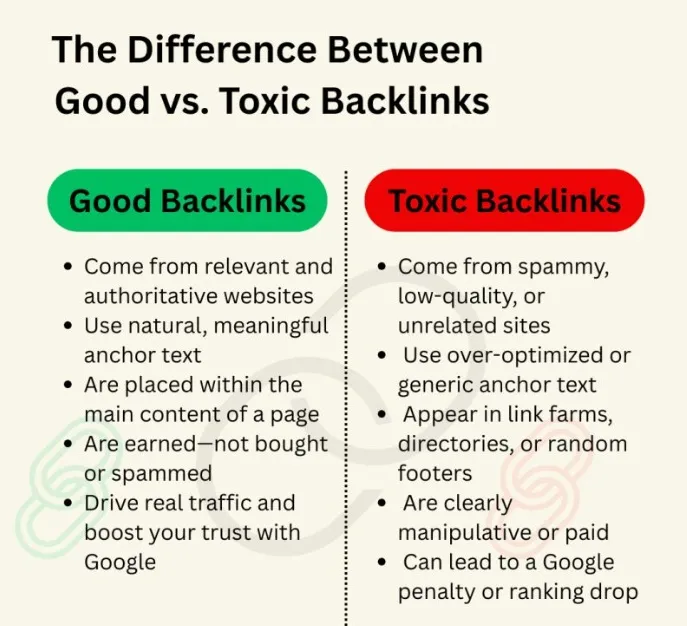
Image Credit: LinkedIn
After identifying and categorising your existing links, always assess their quality and remove any that might be harming your credibility. Toxic or irrelevant backlinks often come from spammy, automated, or low-trust sources that search engines associate with manipulative SEO tactics.
Watch out for links from link farms, irrelevant foreign domains, gambling or adult sites and websites with thin or duplicate content. These links do not provide any local or contextual value and can trigger Google’s spam filters, lowering your site’s authority.
Audit for spammy or irrelevant backlinks, those from link farms, gambling sites, or unrelated foreign domains. These can harm your site’s credibility. If necessary, disavow them through Google Search Console.
4. Benchmark Key Metrics
Before launching any new link building campaign, you need to establish a clear baseline. Benchmarking key performance indicators (KPIs) allows you to measure the real impact of your efforts over time and identify which strategies deliver the strongest returns.
Without this data, it’s difficult to know whether your link building activities are genuinely helping you improve local visibility or simply adding noise to your profile.
Track these KPIs before and after executing new link building strategies:
| Metric | What It Shows | Ideal Trend |
| Referring Domains | Number of unique linking sites | Steady monthly increase |
| Domain Authority (DA) | Strength of overall backlink profile | Upward trend |
| % of Local Domains | How many links come from your local area | At least 25–40% for local-focused sites |
| Top Anchor Texts | Keywords or brand terms used in links | Natural, brand-led mix |
| Referral Traffic | Clicks from external sites | Consistent growth |
To make your benchmarking more actionable, set up a monthly reporting dashboard using Google Looker Studio or similar analytics tools. This enables you to visualise progress, spot emerging trends and quickly pivot if certain tactics are underperforming.
5. Identify Gaps
Once you’ve reviewed your current backlinks and benchmarked key metrics, the next step is to identify what’s missing. It’s the opportunities your competitors are capitalising on that you aren’t using yet. Start by conducting a competitor backlink comparison using tools such as Semrush. Enter your top-ranking local competitors and analyse where their backlinks are coming from.
You can pinpoint these opportunities:
- Few or no links from local publications? Time to pursue digital PR.
- Over-reliance on directories? Diversify with partnerships or guest content.
- Too many links to the homepage? Build deep links to service or location pages.
This audit sets your baseline, allowing you to measure how much your new local link building strategies actually move the needle.
Top 9 Local Link Building Strategies

Image Credit: LinkDoctor
Local link building is more than just collecting backlinks. Link building creates meaningful, geographically relevant connections that strengthen your visibility in local search results. The most effective local link building strategies combine credibility, community involvement and creative outreach.
Below are nine tactics that can help small businesses and multi-location brands build high-quality, location-specific backlinks in 2025.
1. Get Listed in Authoritative Local Directories
Local directories are still a foundational part of any local SEO strategy. They not only supply backlinks but also improve NAP consistency (Name, Address, Phone), which reinforces your business’s trust signals to Google.
What to do:

- Submit your business to reputable local directories such as your chamber of commerce, local council business listings and industry-specific directories (for example, healthcare, hospitality, or legal).
- Avoid low-quality, automated directories that don’t moderate submissions.
Beyond the immediate backlink value, consistent directory listings strengthen your online credibility and ensure potential customers which search engines can easily verify
2. Partner with Local Press and Digital PR Outlets
Links from local newspapers and community magazines carry strong local authority and can drive both rankings and referral traffic. Local journalists are often keen to cover stories about new initiatives, social projects, or events.
What to do:
- Create a local news angle: sponsor a charity event, host a sustainability drive, or launch a local report.
- Pitch the story with relevant visuals and short, factual press releases.
Building genuine relationships with local journalists and digital PR outlets is one of the most sustainable ways to earn high-authority backlinks. Every press mention not only strengthens your domain’s credibility but also boosts brand awareness within your community.
3. Earn Mentions on Local Resource Pages
Local councils, schools and bloggers often curate lists like “Top 10 Cafés in Leeds” or “Local Family-Friendly Activities.” These resource pages provide a great opportunity for relevant, long-lasting backlinks.
What to do:
- Identify resource pages that already list similar businesses.
- Reach out with a short, polite email introducing your service or a useful local resource you’ve created.
- Offer a free guide or downloadable checklist as an additional incentive.
These curated lists often attract consistent local traffic and remain live for years, giving your business ongoing visibility and referral potential. When you offer genuine value, whether through informative resources or community insights, you position your brand as a go-to local authority.
4. Leverage Industry Associations and Supplier Networks
Tapping into your existing professional ecosystem is one of the easiest yet most overlooked ways to earn authoritative backlinks. Links from trade associations, supplier directories and partner pages are highly trusted by search engines because they signal real-world business credibility and verified relationships.
What to do:
- Join a local or national trade association and request a member profile page with a backlink.
- Provide testimonials or case studies to suppliers. Most will include a link back to your business website.
Beyond the SEO benefits, these connections can open doors to collaborations, referrals and shared marketing opportunities.
5. Offer a Local Scholarship or Educational Collaboration
Educational backlinks are valuable because .edu domains are trusted and rarely spammed. By sponsoring a local scholarship or creating a partnership with a nearby college, you can earn strong backlinks and community goodwill.
What to do:
- Create a scholarship or internship programme for students in your field.
- Ask universities or training centres to list it on their website with a backlink.
Beyond SEO, offering scholarships or internship programmes demonstrates your business’s commitment to supporting local talent and community growth. It positions your brand as socially responsible and future-focused, helping you earn recognition from students, educators and local media alike.
6. Sponsor or Participate in Local Events
Sponsoring events such as sports matches, school fairs, or cultural festivals can generate backlinks from event pages, community calendars and partner announcements.
What to do:
- Look for community events seeking small business sponsors.
- Provide branded materials, donations, or co-host a session in exchange for a mention and link on their website.
Even small-scale sponsorships can lead to coverage from local media outlets and influencer blogs.
7. Contribute Guest Posts to Local Blogs

Image Credit: Outreach Monks
Guest posting remains a smart way to earn local backlinks while demonstrating expertise. Unlike link exchanges or paid placements, this method focuses on creating value for readers.
What to do:
- Research local bloggers or neighbourhood platforms that cover your niche.
- Pitch helpful, non-promotional articles — e.g., “Five Ways Small Businesses Can Go Green in Birmingham.”
- Include a natural link to your homepage or a relevant service page in your author bio.
When done ethically and with genuine intent to inform, guest posting builds rapport with local content creators and audiences. Each article you publish reinforces your topical authority and drives referral traffic from readers who already trust the platform.
8. Create Locally Relevant Content That Attracts Links Naturally
High-quality, data-driven content tailored to your community can earn organic backlinks over time. Focus on creating evergreen local resources that people want to share.
Ideas:
- Local statistics reports or “state of the market” studies
- Interactive neighbourhood maps
- Lists such as “Top Family-Friendly Spots in [City]”
- Cost-of-living or rental index infographics
Creating locally focused, high-value content is one of the most sustainable link building strategies available. When you publish resources that genuinely help your community, you naturally attract backlinks from news outlets, bloggers and residents who find your insights useful.
9. Build Reciprocal Value with Testimonials and Case Studies
Testimonials and case studies strengthen relationships with local partners while earning natural backlinks. When you give a testimonial for a supplier, agency, or collaborator, they often feature it to link back to your business site.
What to do:
- Send short, genuine testimonials to partners or vendors you’ve worked with.
- Offer a co-branded case study showing how your partnership achieved results.
Using testimonials and case studies as part of your link building strategy helps you earn backlinks while strengthening professional relationships. Share genuine feedback or create success stories with partners to give them credibility and earn trusted, relevant backlinks for your business.
90-Day Local Link Building Roadmap
Building local links takes time, strategy and consistency. This 90-day roadmap breaks the process into clear, manageable stages to help you steadily grow your local authority

Days 1–30: Build a Solid Foundation
Goal: Establish credibility and fix weak links.
Key Actions:
- Audit your backlink profile using Ahrefs, Moz, or Google Search Console.
- Remove toxic or irrelevant backlinks.
- Record baseline KPIs (referring domains, local links, domain authority).
- Claim and optimise listings on Google, Apple Maps, Bing and niche directories.
- Request testimonials and backlinks from partners or suppliers.
- Set up tracking in Google Analytics and GBP Insights.
Expected Results:
- 10–15 credible local backlinks
- Consistent listings and branding
- A clean, measurable starting point
Days 31–60: Strengthen Authority and Outreach
Goal: Build high-authority and community-driven backlinks.
Key Actions:
- Pitch stories to local media and blogs (community, industry, or CSR topics).
- Sponsor or host local events and get featured on partner websites.
- Create and share linkable assets (local reports, guides, maps).
- Join trade associations and submit testimonials or member listings.
Expected Results:
- 5–10 new backlinks from authoritative local sources
- First local media mentions
- Growth in local keyword rankings and referral traffic
Days 61–90: Scale, Measure and Refine
Goal: Expand what works and prove ROI.
Key Actions:
- Analyse results to identify top-performing backlink sources.
- Deepen partnerships through co-branded content and guest posting.
- Launch a scholarship or internship for .edu backlinks.
- Optimise target pages with proper schema and location signals.
- Track monthly performance metrics (referrals, keyword rankings, conversions).
Expected Results:
- 25–40 total high-quality backlinks (40% locally relevant)
- 10–20% improvement in local visibility
- Documented ROI and repeatable link-building framework
Local link building connects you with your community, shares value and builds trust both online and offline. When you combine simple tactics like directory listings, local partnerships and great content, you naturally strengthen your brand’s local visibility.
Having a clear plan keeps you focused and helps you see what’s working. Every genuine link you earn adds up, boosting your credibility and helping more people in your area find and trust your business. If you’re ready to elevate your local SEO performance with proven, data-driven link building strategies, partner with MediaOne, Singapore’s leading digital marketing agency for sustainable local growth. Contact us today!
Frequently Asked Questions
How long does it take to see results from local link building?
Typically, you’ll start seeing improvements in local search rankings within three to six months, depending on your competition and consistency. However, some results,like increased referral traffic or brand mentions, can appear within the first 60–90 days. The key is to build steadily rather than chase quick, low-quality links.
Are nofollow links still valuable for local SEO?
Yes. Even though nofollow links don’t pass direct ranking authority, they can still drive referral traffic, brand awareness and local relevance. A natural backlink profile includes a mix of dofollow and nofollow links, showing Google your link growth is organic and credible.
What’s the difference between local link building and traditional link building?
Traditional link building focuses on broad, high-authority websites, while local link building targets geographically relevant sources such as local newspapers, business directories and community blogs. The goal is to build authority within your specific region, not just across the web.
Can social media help with local link building?
Absolutely. Sharing your content on Facebook groups, LinkedIn, or community pages can attract attention from bloggers, journalists and other local businesses who may later link to your site. While social links are usually nofollow, they help increase visibility and spark link opportunities.
How can small businesses compete with large brands in local link building?
Small businesses often have the advantage of stronger local connections. Focus on partnerships, community events and local stories that large brands can’t easily replicate. Being active in your community, both online and offline, builds authentic links that reflect real engagement and trust.