One of the fundamentals of local SEO that remains persistently important in 2026 is local citation building: the process of ensuring your business’s Name, Address, Phone number (NAP) and other details appear accurately across key directories and listings.
In this guide, you’ll learn why citations matter, what types you should aim for, updated statistics, and a step-by-step process to build and maintain them for sustained local SEO success.
Key Takeaways
- Consistency is critical. Ensure your business name, address, and phone number (NAP) remain identical across all online platforms to strengthen Google’s trust signals and improve local rankings.
- Quality over quantity. A few accurate, high-authority citations on trusted directories outperform dozens of incomplete or inconsistent listings.
- Audit regularly. Review your listings quarterly to detect errors, duplicates, or outdated contact information before they affect visibility.
What Are Local Citations
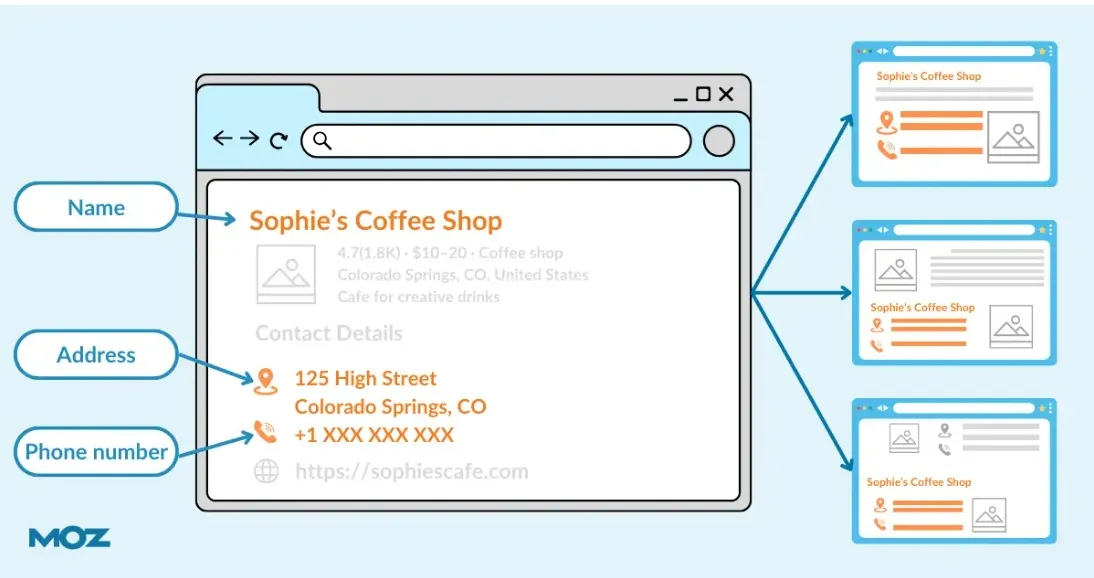
Image Credit: Moz
At its simplest, a local citation is any online mention of your business’s core details. Your Name, Address, and Phone number (NAP) on third-party platforms. A citation is “a mention of your business information on a third-party website, at a minimum your business name, current address and phone number.”
These mentions can appear in online directories, social media platforms, review sites, local blogs, or news articles, and they serve as vital references that confirm your business’s legitimacy to both users and search engines.

There are two main types of local citations:
- Structured citations – Found on business directories such as Google Business Profile, Yelp, Bing My Places, Foursquare, or TripAdvisor, where your business details are entered into set fields.
- Unstructured citations – Appear naturally within content like blogs, articles, press releases, or social media posts where your NAP information is mentioned contextually rather than through a formal listing.
Why Local Citations Matter for SEO in 2026
In 2026, as Google’s algorithms increasingly prioritise business authenticity and data accuracy, maintaining consistent citations has become a main focus for staying competitive in local search. Here’s what it can do for SEO:
- They Strengthen Search Engine Trust: Search engines, especially Google, use citations to verify that your business exists, is active, and serves customers in a specific area. The more consistent your NAP data across trusted platforms, the more confidently Google will display your business in local search results and map packs.
- They Improve Local Rankings: Consistent and authoritative citations are one of the foundational signals in local SEO ranking algorithms. BrightLocal’s research shows that citation signals contribute to roughly 7% of local ranking factors and are still a key component of visibility despite the rise of AI-driven and content-based signals.
- They Build Consumer Confidence: A business that appears accurately across multiple reputable sites feels legitimate and established. When users find the same phone number, address, and operating hours everywhere, they’re more likely to trust your brand and visit your store or book a service.
- They Drive Referral Traffic and Leads: Each citation acts as an external access point to your business. Sites like Yelp and HungryGoWhere not only boost visibility but can also send direct referral traffic to your website or Google Business Profile.
- They Prevent Missed Opportunities: Inconsistent or outdated citations (e.g., old addresses, wrong numbers, or missing websites) can confuse both search engines and potential customers. Incomplete or inconsistent listings can lower a business’s trust score, leading to decreased ranking performance and fewer online conversions.
The Role of Citations in 2026’s Local SEO Landscape
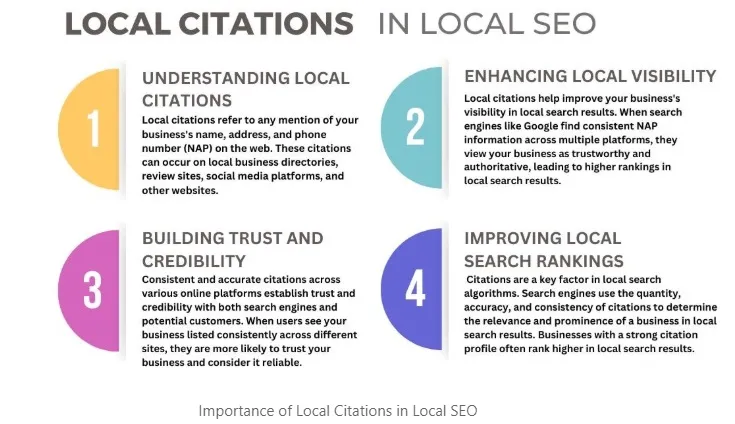
Image Credit: LinkedIn
- As Google continues to refine its local ranking systems and AI-driven results, citations remain part of the “trust layer” of search. While their influence has slightly decreased compared to earlier years, accurate and consistent listings still underpin every other local SEO strategy — from managing Google reviews to optimising voice and mobile searches.
- For Singapore-based businesses, this is especially important. With the rise of “near me” searches and consumers depending heavily on mobile maps, having uniform and verified listings across major platforms like Google Maps and Facebook can make the difference between appearing in the top three map results or being overlooked entirely.
Ways to Strengthen Local SEO with Accurate Listings
Accurate business listings are the backbone of local citation building. When your business information is complete, consistent, and optimised across every platform, search engines view your business as more trustworthy and customers find it easier to contact or visit you.
Here are practical ways to strengthen your local SEO through precise, up-to-date listings.
1. Maintain Consistency Across All Directories
Search engines cross-check your business’s Name, Address, and Phone number (NAP) across multiple sources. Even minor variations such as “Rd.” versus “Road” or different phone formats can create data conflicts that reduce your local search visibility. Keep a centralised master document with your correct NAP format and use it consistently when submitting or updating listings.
2. Complete Every Field in Your Listings
An incomplete listing weakens your local visibility. A strong local presence is more critical than ever. In 2025, they highlight that businesses who maintain complete and accurate profiles with consistent business hours, categories, photos, and URLs, are significantly more trusted by consumers and better positioned in local search rankings.
Add every detail possible: your website, business description, opening hours, logo, and photos. Include keywords naturally in your business description to reinforce relevance.
3. Optimise for Voice and Mobile Search
With voice queries now making up nearly 30% of all local searches, accuracy in listings is more important than ever. Voice assistants like Siri and Google Assistant rely heavily on directory data to answer “near me” questions.
Ensure your listings include short, clear, and natural language descriptions of what you offer (“family-friendly Italian restaurant in Manchester”) so that voice algorithms can identify and recommend your business accurately.
4. Regularly Audit and Update Your Listings
Over time, details like phone numbers, locations, or services can change — and outdated data frustrates customers. A Moz Local study revealed that 40% of consumers lose trust in a business after finding incorrect contact information online. Schedule quarterly audits of your major listings. Correct any errors or outdated information promptly.

5. Include High-Quality Media and Customer Reviews
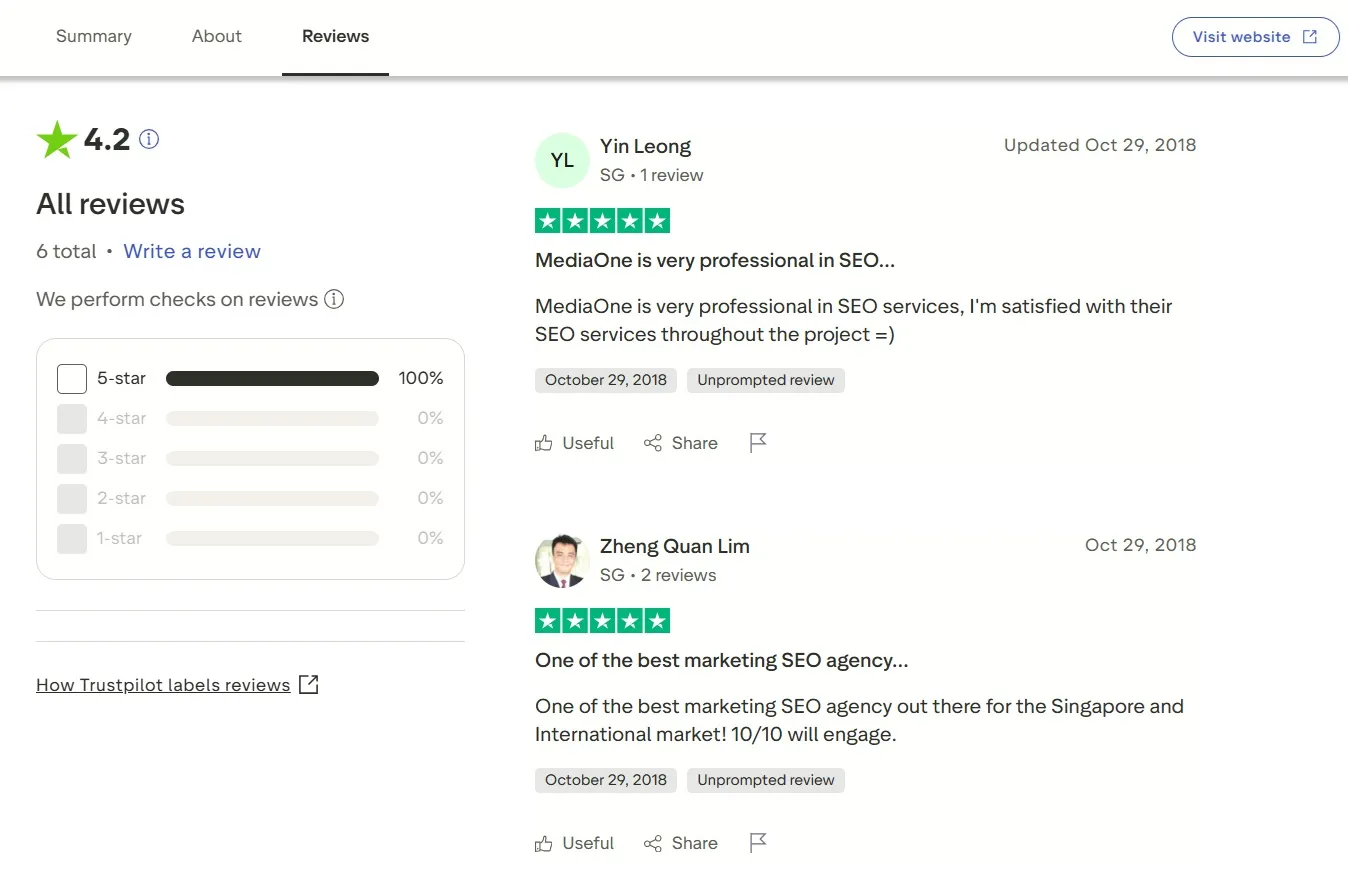
Image Credit: MediaOne Reviews On Trustpilot
Listings with authentic photos and customer reviews enjoy stronger engagement and credibility. Google’s data shows that businesses with photos receive 42% more requests for directions and 35% more website clicks than those without. Upload professional photos that showcase your location, team, and services. Encourage satisfied customers to leave reviews directly on your listings and respond to each one to demonstrate engagement.
6. Leverage Structured Data on Your Website
Accurate listings work best when your website also communicates consistent details. Schema markup (local business schema) helps search engines verify your data and connect it with your citations. Add LocalBusiness schema to your site’s HTML — including your business name, address, phone, and coordinates. This enhances your chances of appearing in rich results and Google Maps features.
7. Focus on Authoritative and Niche Directories
Not all citations carry the same weight. Submitting your business to industry-specific and locally relevant directories builds stronger signals than generic, low-quality sites. Identify high-authority platforms as well as local sources such as regional business chambers, community pages, or niche sites (for example, Find-Lawyer UK for solicitors or OpenTable for restaurants).
8. Monitor Insights and Performance Metrics
Improvement requires measurement. Analysing click-throughs, direction requests, and call actions from listings helps you see what’s working. Use Google Business Profile Insights or citation tracking tools to measure engagement. Compare data before and after updating listings to see their SEO impact.
9. Align Listings with Local Content and Backlinks
Citations alone are powerful, but they’re even stronger when paired with relevant local content and backlinks. For instance, a consistent listing reinforced by local press mentions or event sponsorships signals authority and community connection. Create or sponsor local content that links to your verified business pages such as blog posts about neighbourhood events or partnerships with local organisations.
10. Use Automation Tools Wisely
Manually managing dozens of listings can be time-consuming. Tools such as Moz Local, BrightLocal, and Yext streamline updates across multiple platforms while tracking performance metrics. Adopt an automation tool that fits your scale and budget, but always manually review changes to ensure accuracy and prevent over-automation errors.
Chart: The Relationship Between Listing Accuracy and Local Search Visibility
The accuracy of your business listings has a direct impact on how often your brand appears in local search results. The chart below illustrates how consistent NAP data influences visibility and customer engagement:
| Listing Accuracy Level | Average Local Pack Visibility | Customer Engagement (Clicks & Calls) |
| 100% Accurate Listings | High (Top 3 Results) | 45% higher engagement |
| 75–99% Accurate Listings | Moderate (Top 10 Results) | 20% higher engagement |
| Below 75% Accuracy | Low (Beyond Top 20) | Minimal engagement |
Source: BrightLocal Local Search Industry Report 2024; Google Business Profile Insights 2025
Best Practices & Common Pitfalls to Avoid
An effective citation strategy requires precision and consistency. To maximise your local SEO impact, focus on proven best practices while steering clear of mistakes that can weaken your credibility or confuse search engines.
Do’s
- Ensure NAP consistency across all listings.
- Focus on relevant and authoritative directories rather than chasing volume.
Include full details (website link, categories, images) to enhance listing value. - For multi-location businesses, ensure each location has distinct and correctly attributed listings.
- Track your listings and fix issues proactively (duplicates, old addresses).
Don’ts
- Don’t treat citations like spam links—creating hundreds of low-quality listings doesn’t pay off.
- Don’t use inconsistent business names/addresses across listings—search engines may treat them as separate entities.
- Don’t ignore unstructured mentions—blogs, news, event sites help your prominence.
- Don’t assume “set and forget”—businesses move, phone numbers change, new directories emerge.
Real-World Example & Tactical Checklist
Here’s how local citation building looks in action, plus a tactical checklist to help you standardise your listings, improve visibility, and maintain long-term SEO success:
The Kopi Corner Café (Singapore)

Imagine a local café in Singapore named “The Kopi Corner Café.” They notice inconsistencies in how their business appears online. Some directories list them as “Kopi Corner SG,” others as “The Kopi Corner Café @ Tiong Bahru,” and a few even use an outdated phone number from before their renovation.
To fix this, the owner begins a local citation building audit to align all listings with the correct and updated business information:
- Name: The Kopi Corner Café
- Address: 78 Seng Poh Road, #01-12, Singapore 160078
- Phone: +65 6904 1123
Website: https://kopicorner.sg
They claim and verify key listings on Google Business Profile, Bing Places for Business, and TripAdvisor, making sure each profile includes:
- Accurate business name and phone number
- Updated operating hours and public holiday notes
- Category tags (“Café”, “Coffee shop”, “Local breakfast”)
- Optimised descriptions featuring relevant local keywords such as “Tiong Bahru café” and “traditional kopi in Singapore”
- Recent high-quality photos of their menu, interior and baristas
Next, they extend their presence by submitting their NAP details to Singapore-based directories, including:
- Sgpbusiness.com
- Streetdirectory.com.sg
- Yellow Pages Singapore
- HungryGoWhere
- Trip.com (Singapore listings)
To boost unstructured citations, they collaborate with local food bloggers like Ladyironchef and DanielFoodDiary for reviews, and ensure every feature includes the correct NAP and a backlink to their website. Every quarter, they review and update their listings particularly on Google Business Profile and delivery platforms such as GrabFood and Foodpanda to reflect menu changes and festive promotions.
As a result, The Kopi Corner Café sees measurable improvements:
- A 32% increase in “near me” visibility on Google Maps for keywords like “kopi shop Tiong Bahru”
- 25% more calls and direction requests from Google Business Profile
- A noticeable uptick in foot traffic from tourists searching “local breakfast Singapore”
Tactical checklist (for your own use)
- Audit existing listings and duplicates
- Standardise NAP info in a master document
- Claim and verify core listings (Google, Bing, Yelp, etc)
- Submit to 5-10 relevant niche/local directories
- Update listing profiles fully (hours, description, images)
- Implement monitoring (quarterly review)
- Remove or merge duplicate listings
- Seek unstructured mentions (blogs, local news, event sponsorship)
- Track key metrics (NAP consistency, referral traffic, ranking changes)
What to Expect in 2026 and Beyond
As search evolves—especially with AI, voice and “zero-click” experiences—the foundational role of accurate local information becomes more critical. Local citations will rise in importance as marketers need to “train” the answer engines and ensure consistent narrative across the web. BrightLocal
The takeaway: while you shouldn’t expect citations alone to rocket you to #1 in the local pack, failing to build and maintain them will hold you back. They remain the digital hygiene of local SEO. Get them right, and you clear the path for higher-order tactics (reviews, backlinks, content) to take effect.
Build Stronger Local Roots Through Accurate Citations
In 2026, local citation building remains one of the most reliable ways to boost your visibility, credibility, and search performance. Accurate and consistent listings across Google, directories, and social platforms help search engines verify your legitimacy — and help customers find and trust you faster.
When your business information is consistent everywhere, you send a clear message to both Google and your customers: you’re credible, professional, and here to stay. If you’re ready to improve your visibility and attract more local leads, visit MediaOne Marketing to get expert help with citation management, local SEO, and reputation building.
Frequently Asked Questions
Are voice searches affected by local citations?
Yes. As more Singaporeans use voice assistants like Siri, Alexa, and Google Assistant, accurate local citations help ensure your business information is correctly pulled when users ask for nearby services. Inconsistent listings can cause your business to be skipped entirely in voice-based “near me” results.
Can AI tools help manage local citations?
Absolutely. In 2026, many digital marketers will use AI-powered tools such as BrightLocal, Moz Local, or Yext to detect inconsistent listings, track citation performance, and automate submissions. These platforms save time while ensuring accuracy across hundreds of directories.
Should I include keywords in my business listings?
Yes — but naturally. Adding relevant local keywords (e.g., “café in Tanjong Pagar” or “plumber in Jurong”) to your business description or categories can improve discoverability. Avoid keyword stuffing, as it can make listings look spammy and reduce trust.
What’s the impact of customer reviews on local citations?
Customer reviews enhance the value of your listings. Positive, recent reviews on Google and other platforms act as engagement signals that strengthen your business’s overall credibility. Citations with consistent NAP details and active review responses tend to rank higher in Google’s Local Pack.
How do I handle duplicate business listings?
Duplicate listings can dilute your SEO authority and confuse customers. The best approach is to claim all existing profiles, verify ownership, and request removal or merging of duplicates through the platform’s support. Tools like BrightLocal’s Audit or Semrush’s Listing Management can identify duplicates automatically.