
Your WordPress website could be silently costing you thousands of dollars in lost revenue. The average server delay time for websites in Singapore is 2.0507 seconds, but the recommended industry standard is under 1.3 seconds.
That seemingly small difference translates into real business impact when 73% of consumers would likely try an alternative site if the one they were on was too slow.
In Singapore’s hypercompetitive digital landscape, where over 84% of companies leverage digital marketing and digital advertising expenditure reaches SGD 1.94 billion, your website’s performance determines whether prospects become customers or click away to competitors.
Ready to unlock your WordPress website’s full potential? Contact MediaOne’s SEO specialists for a comprehensive site audit that reveals exactly what’s holding your site back from dominating search results.
Key Takeaways
- A WordPress website audit improves SEO, performance, user experience, and security, which are critical in Singapore’s competitive digital market.
- Optimising for local keywords, mobile speed, and Core Web Vitals ensures visibility and engagement with Singapore’s mobile-first consumers.
- Regular audits prevent lost revenue from slow load times, broken links, or security vulnerabilities and help maintain user trust.
- Professional audits by MediaOne can uncover hidden issues and deliver measurable improvements in traffic and conversions across Singapore’s diverse business districts from Marina Bay to Jurong East.
Why Every Singapore Business Needs a WordPress Website Audit

With WordPress powering 43.4% of all websites globally, your WordPress website sits amongst the most popular content management system worldwide.
But popularity doesn’t guarantee performance in Singapore’s mobile-first market, where smartphone users reached 5.57 million in 2022 and are projected to exceed 6.16 million by 2028.
Singapore’s digital consumers are unforgiving across all regions from Tampines to Woodlands. 25% of website visitors will abandon a site if it takes more than four seconds to load, and when your site fails to meet expectations, 82% of consumers say slow page speeds impact their purchasing decisions.
When your WordPress website doesn’t deliver, they won’t wait—they’ll bounce to competitors who’ve optimised their digital presence.
This behaviour pattern is consistent across Singapore’s diverse neighbourhoods from upscale districts like Tanglin to bustling commercial areas like Chinatown.
Step 1: SEO Audit – Boosting Local Visibility on WordPress
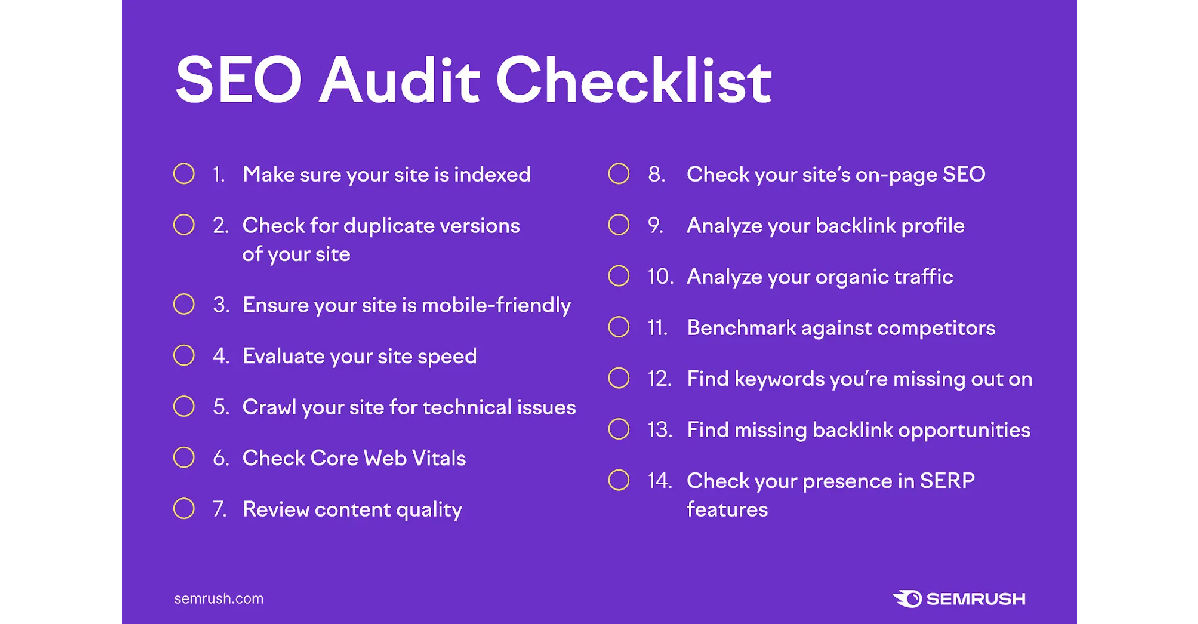
Image Credit: Semrush
Your WordPress website’s SEO performance determines whether Singapore customers can actually find you across the island’s 28 planning areas.
With online search ads commanding SGD 706 million annually in Singapore, organic visibility through proper SEO becomes your competitive advantage against businesses from Sentosa to Sembawang.
On-Page Elements Checklist
- Start with the fundamentals that Google’s algorithms scrutinise on every page targeting Singapore’s multilingual market. Each page needs a unique, compelling title under 60 characters and meta description under 160 characters.
- Include location-specific terms like “Singapore,” neighbourhood names like “Orchard,” “CBD,” “Jurong,” “Tampines,” or “Ang Mo Kio,” and your primary keywords. Poor titles and descriptions directly impact your click-through rates from search results, particularly when competing against established Singapore brands.
- Your H1 should contain your primary keyword and clearly communicate your page’s purpose to Singapore’s diverse linguistic audience. Use H2s and H3s to structure content logically for readers from different cultural backgrounds.
- Singapore search patterns often include conversational queries, so headers like “Best Char Kway Teow in Tiong Bahru” or “Reliable Aircon Servicing in Bedok” perform better than generic “Food Options” or “Services.” Every image requires descriptive alt text that includes relevant keywords and Singapore-specific context.
- File names matter significantly for local SEO—”singapore-office-renovation-marina-bay-2025.jpg” outperforms “IMG_001.jpg” in search rankings. This approach helps capture searches from users across Singapore’s business districts and residential estates.
Local SEO Focus for Singapore Markets
Singapore’s unique linguistic landscape demands special attention for businesses targeting customers from Chinatown’s traditional shops to Orchard Road’s modern retailers.
Your WordPress website must capture searches in English, Mandarin, and local Singlish expressions that resonate with different communities.
People search Google in English, Mandarin, Malay, Tamil, and even slangy Singlish, so optimise for natural queries like “Where can I find good laksa near me lah?” or “Best renovation contractor in Toa Payoh.”
Connect your WordPress website to your Google Business Profile through structured data markup.
This ensures your business information stays consistent across all Google properties and improves local search visibility for customers searching from anywhere between Jurong Point and Tampines Mall.
Implement LocalBusiness schema to help search engines understand your location, operating hours, and contact information.
For Singapore businesses, include your postal code and specific neighbourhood to improve hyperlocal search performance across the island’s 26 districts.
Research terms that locals actually use—”aircon servicing” performs better than “air conditioning maintenance” in Singapore searches.
Tools like Google Keyword Planner reveal these local preferences and help you understand search behaviour patterns from different Singapore communities.
Link Profile Analysis
Create logical pathways between related content that reflect how Singapore customers navigate your business offerings.
A Singapore restaurant’s WordPress website should link their “Menu” page to “Location” and “Reservations” pages, especially if they operate in multiple locations from Clarke Quay to East Coast Park.
Each internal link passes authority and helps search engines understand your site structure. Use tools like Screaming Frog to identify broken internal and external links that frustrate users and signal poor maintenance to search engines.
Analyse your inbound links using tools like Ahrefs or SEMrush to build authority. Singapore businesses benefit from links from local directories, industry associations, and reputable Singapore news outlets like Channel NewsAsia or The Straits Times.
Quality backlinks from Singapore-based websites and local business associations carry more weight for local search rankings.
Focus on building relationships with complementary businesses across Singapore’s diverse commercial landscape from Marina Bay’s financial district to Jurong’s industrial estates.
Mobile SEO Priorities
Online surfing is significantly faster (3.44x or 244% faster) on a computer than on a mobile device, making mobile optimisation crucial for Singapore’s mobile-first population who rely heavily on smartphones for everything from ordering food delivery to booking services.
These aren’t suggestions—they’re ranking requirements that determine visibility across Singapore’s competitive digital landscape. Test your WordPress website across different devices and screen sizes used by Singapore consumers.
Singapore customers use everything from latest iPhones to budget Android devices, so your site must perform consistently across all platforms.
This is particularly important for businesses serving diverse economic segments from premium Orchard Road shoppers to value-conscious residents in heartland areas like Ang Mo Kio or Bedok.
Step 2: Performance Audit – Ensuring Fast Load Times for Singapore Users

Image Credit: WP-Rocket
Website speed directly impacts your bottom line in Singapore’s fast-paced digital economy where efficiency is paramount. Sites that load in 1 second have a conversion rate 5x higher than one that loads in 10 seconds.
For Singapore businesses competing in a market where digital advertising budgets are projected to grow by 9.5%, performance optimisation isn’t optional—it’s survival.
This applies whether you’re a hawker stall in Maxwell Food Centre building an online presence or a multinational corporation in Marina Bay Financial Centre.
Essential Performance Testing Tools
- Google PageSpeed Insights provides Core Web Vitals data using real user experience from Singapore. It shows exactly how your WordPress website performs for actual visitors from Singapore, not just simulated tests.
- GTmetrix offers detailed waterfall charts showing which elements slow down your site. Set the test location to Singapore or Hong Kong for accurate regional results that reflect your customers’ actual experience.
- Pingdom provides global test locations including Singapore for comprehensive performance analysis. Pingdom found that the average page load time of a web page is 3.21 seconds, but Singapore businesses should target under 2 seconds for competitive advantage in the city-state’s demanding digital marketplace.
Performance Optimisation Priorities
Aim for under 2 seconds on desktop and under 3 seconds on mobile across Singapore’s advanced telecommunications infrastructure.
83% of people expect websites to load in 3 seconds or less, and Singapore’s tech-savvy consumers are even less patient given their exposure to world-class digital services.
Images typically account for over three-quarters of a webpage’s total weight. Use modern formats like WebP, implement lazy loading, and resize images appropriately for Singapore’s diverse device landscape.
A hero image shouldn’t exceed 200KB for optimal performance across Singapore’s mobile networks. Remove unnecessary plugins and scripts that accumulate over time.
Every third-party script on a site adds an average of 34.1 milliseconds to load time. WordPress websites often accumulate plugins over time—audit ruthlessly to maintain peak performance for Singapore’s impatient digital consumers.
Install caching plugins like WP Rocket or W3 Total Cache to serve static versions of dynamic content. Caching can improve load times by 50% or more, crucial for competing in Singapore’s crowded digital marketplace.
Server Location and CDN Strategy
Page loading time depends on server location—if the server is located nearby your place then the webpage will open lightning fast. Singapore businesses should prioritise local hosting or regional data centres to leverage the island’s excellent connectivity infrastructure.
Implement Cloudflare or similar CDNs to distribute content across multiple global servers. This ensures fast loading times for visitors from across Southeast Asia and beyond, particularly important for Singapore businesses targeting regional markets.
Clean up your WordPress database regularly, removing spam comments, post revisions, and unused media files. A bloated database slows every page load, impacting user experience across Singapore’s performance-conscious digital landscape.
Step 3: User Experience Audit – Creating Seamless Experiences for Local Visitors


Image Credit: Markup.io
User experience determines whether visitors become customers in Singapore’s sophisticated digital market. Where 85% of Singaporeans are active on social media and have high digital literacy, subpar UX immediately signals poor quality.
Singapore consumers, from tech executives in One Raffles Quay to students in NTU, expect seamless digital experiences that match international standards.
Navigation and Site Structure
Your navigation should reflect how Singapore customers think about your business across the island’s diverse commercial landscape.
A logistics company might structure navigation around “Local Delivery,” “Regional Shipping,” and “Express Services” rather than generic categories that don’t speak to Singapore’s unique position as a regional hub.
Implement robust site search with autocomplete and filters that understand Singapore’s multicultural context. Singapore users expect sophisticated search capabilities similar to what they experience on eCommerce platforms like Shopee or Lazada.
Help users understand their location within your site hierarchy through breadcrumb navigation. This becomes crucial for larger WordPress websites with multiple service areas covering different regions from the Central Business District to industrial estates in Jurong.
Content Clarity and Localisation
When appropriate for your brand, incorporate familiar local expressions that resonate with Singapore’s multicultural audience. A casual dining restaurant in Chinatown might use “shiok” in descriptions, but a law firm in Raffles Place maintains formal English.
Match your content tone to your audience’s expectations and cultural context. Display prices in SGD and include Singapore-specific contact details with local phone number formats (+65) and postal codes for credibility.
Mention familiar landmarks, neighbourhoods, or cultural references that Singapore residents recognise. “5 minutes from Raffles Place MRT” or “Near Orchard Road shopping district” provides more context than “conveniently located in the CBD.”
These local references help both users and search engines understand your Singapore context. Reference familiar locations like “walking distance from Marina Bay Sands” or “opposite Bugis Junction” to create immediate geographical understanding for local customers.
Accessibility Standards
Ensure sufficient colour contrast ratios for readability across Singapore’s diverse population. This improves usability for all visitors and demonstrates attention to detail that Singapore businesses value given the island’s reputation for excellence.
Test that all interactive elements work with keyboard navigation to improve accessibility and help with search engine crawling.
Descriptive alt text helps screen readers and improves SEO simultaneously, particularly important for serving Singapore’s aging population and international residents.
Conversion Optimisation Elements
Position primary CTAs above the fold and repeat them throughout longer pages for Singapore’s mobile-first audience. Use action-oriented language like “Get Your Free Quote” or “Book Your Consultation Today” that reflects Singapore’s direct communication style.
Simplify forms for mobile users across Singapore’s smartphone-dependent population. Singapore’s mobile-first consumers won’t complete lengthy, complex forms on small screens, particularly when using public transport or during busy lunch breaks in business districts.
Display client testimonials, security badges, and local certifications that resonate with Singapore customers. Singapore business directories and industry association memberships add credibility in a market that values trust and established relationships.
Step 4: Security and Maintenance Check
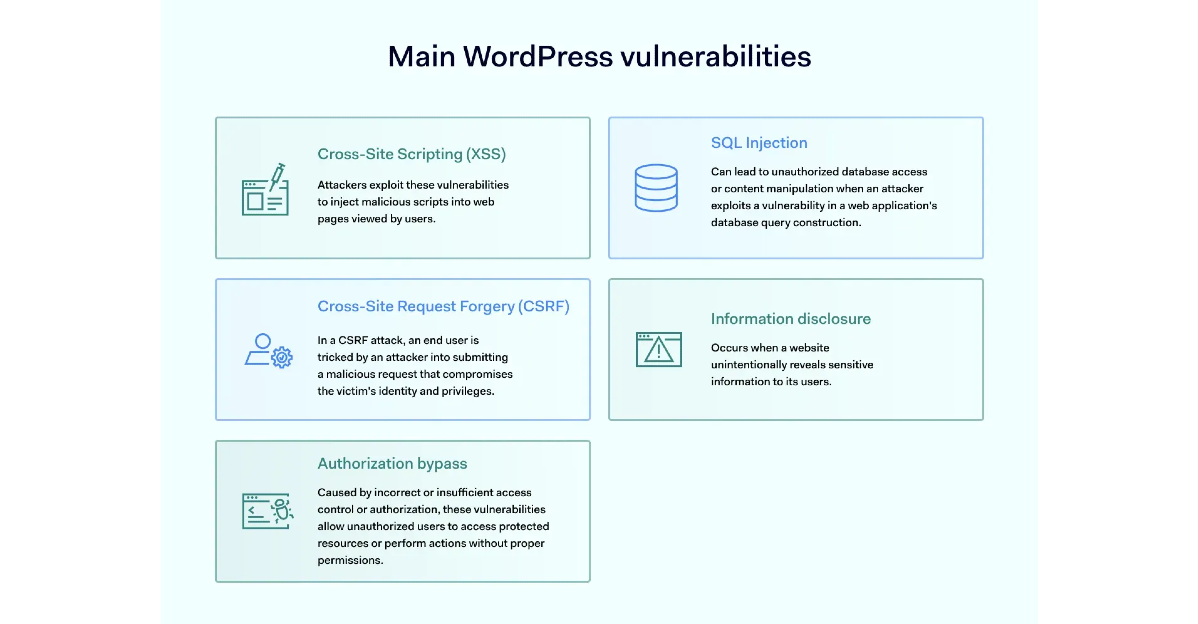
Image Credit: NordLayer
Security breaches can devastate Singapore businesses operating in a regulated environment where data protection is paramount. With WordPress sites facing attacks now occurring on average every 32 minutes, proactive security isn’t paranoia—it’s essential business protection.
Singapore’s strict regulatory environment and sophisticated cyber threats make robust security measures critical for maintaining customer trust and business continuity.
Plugin and Theme Management
Maintain current versions of WordPress core, themes, and plugins as Singapore businesses face constant security threats. Plugins are the primary source of WordPress security issues, accounting for 95% of reported vulnerabilities.
Remove inactive plugins completely rather than just deactivating them to eliminate unnecessary security vulnerabilities. Use reputable theme developers and avoid nulled (pirated) themes, which often contain malicious code that can compromise Singapore businesses’ sensitive data.
SSL Certificate and Security Protocols
Ensure your entire WordPress website runs on HTTPS as Google treats this as a ranking factor. Singapore consumers expect secure connections for all interactions, particularly when sharing personal information or making online purchases.
Implement Wordfence or similar security plugins to monitor threats and block malicious traffic targeting Singapore businesses. Schedule automated backups to secure, off-site locations as Singapore businesses can’t afford extended downtime from security incidents or technical failures.
Compliance Considerations
Ensure your privacy policy reflects current data collection practices and complies with Singapore’s Personal Data Protection Act (PDPA). Singapore’s strict data protection laws require transparent communication about how customer information is collected, used, and stored.
Transparent data practices build trust with privacy-conscious Singapore consumers who are increasingly aware of their digital rights.
Cookie consent implementation, though not required in Singapore, demonstrates commitment to data transparency that resonates with Singapore’s educated consumer base.
When to Call in the Experts: Why Outsourcing to a Local SEO Agency Matters
DIY WordPress website audits can identify surface-level issues, but Singapore’s competitive digital landscape demands deeper expertise.
When the Singapore digital marketing market is projected to grow at a CAGR of 10.70% between 2025 and 2034, businesses need sophisticated strategies that generic tutorials can’t provide.
Singapore’s unique market dynamics require an understanding of local consumer behaviour, cultural nuances, and regulatory requirements that overseas agencies often miss.
Risks of DIY Audits for Singapore SMEs
WordPress websites involve complex technical elements that affect performance and SEO across Singapore’s demanding digital landscape.
Missing critical issues like server response times, database optimisation, or advanced schema markup can cost you rankings and revenue in Singapore’s competitive marketplace.
Singapore’s unique market requires an understanding of local search patterns, competitor strategies, and cultural nuances that generic SEO advice often misses.
Business owners spending hours on technical audits aren’t focusing on core business activities that drive growth in Singapore’s fast-paced economy.
The revenue lost from delayed business decisions often exceeds professional audit costs, particularly in Singapore’s time-sensitive market environment.
Benefits of Singapore-Based Expertise
MediaOne’s team understands Singapore consumer behaviour, competitive landscape, and regulatory requirements across all business districts.
We know that “aircon” outperforms “air conditioning” in local searches and can optimise accordingly for Singapore’s unique linguistic preferences.
When technical issues arise, local support means faster resolution with time zone alignment and cultural understanding that accelerates problem-solving.
Our portfolio includes successful WordPress website optimisations for Singapore businesses across industries—from logistics companies improving load times by 60% to restaurants increasing online reservations by 40%.
Local expertise ensures your WordPress audit addresses Singapore-specific challenges from PDPA compliance to optimising for Singapore’s diverse multilingual audience.

Make Your WordPress Website Work Harder for Singapore Success

Your WordPress website audit reveals the foundation of your digital success in Singapore’s competitive marketplace from Marina Bay’s financial towers to heartland shopping centres.
Every second your site takes to load, every broken link, and every missed SEO opportunity costs you potential customers who are already researching your competitors across Singapore’s well-connected business ecosystem.
The systematic approach outlined here—from SEO fundamentals through performance optimisation to security hardening—provides your roadmap to WordPress website excellence.
Remember: a site that loads in 1 second has a conversion rate 5x higher than one that loads in 10 seconds.
In Singapore’s SGD 1.94 billion digital advertising market, these performance differences determine who wins customers from Jurong to Changi and who watches them click away.
Your WordPress website should be your most powerful business development tool, working 24/7 to attract, engage, and convert Singapore customers across all 28 planning areas.
With properly audited and optimised, it becomes exactly that—a revenue-generating asset that compounds your marketing efforts across all channels. Ready to unlock your WordPress website’s full potential in Singapore’s digital marketplace?
Contact MediaOne’s WordPress specialists today for a comprehensive audit that reveals exactly what’s holding your site back from dominating local search results and converting more visitors into customers across Singapore’s diverse business landscape.
Frequently Asked Questions
How often should I audit my WordPress website?
Conduct comprehensive audits quarterly, with monthly checks on Core Web Vitals and security updates. Singapore’s fast-moving digital landscape requires regular monitoring to maintain competitive advantage across diverse business sectors.
What’s the most critical element to fix first in a WordPress audit?
Security vulnerabilities pose the highest risk, followed by Core Web Vitals compliance. Google’s 2025 standards require LCP under 2.5 seconds, INP under 200 milliseconds, and CLS under 0.1 for optimal search performance in Singapore’s competitive market.
Can I improve my WordPress website’s performance without technical expertise?
Basic improvements like image optimisation and plugin cleanup are manageable for Singapore businesses. However, significant performance gains require technical knowledge of caching, database optimisation, and server configuration best suited to Singapore hosting environments.
How long does it take to see results from WordPress optimisation?
Technical improvements like caching implementation show immediate results across Singapore’s advanced digital infrastructure. SEO improvements typically take 4-8 weeks to impact rankings in Singapore’s competitive market where consistent optimisation is essential for sustained results.
What WordPress hosting is best for Singapore businesses?
Choose hosting with Singapore or regional data centres for optimal performance across the island. Local providers understand Singapore’s infrastructure and provide better support during business hours aligned with Singapore Standard Time operations.